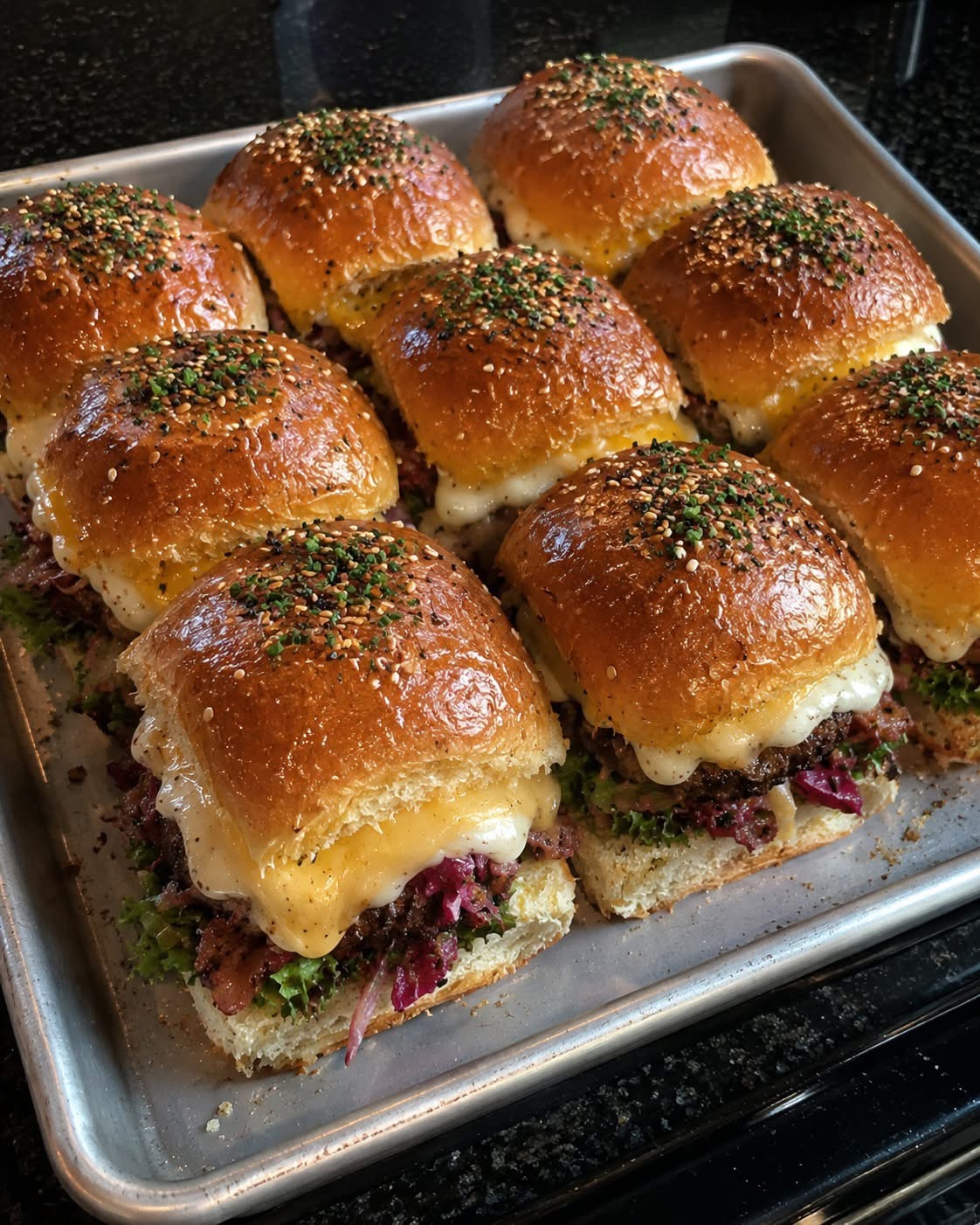
The ultimate Reuben Sliders combine savory corned beef, melted Swiss cheese, tangy sauerkraut, and rich Russian dressing inside a buttery, baked package. They offer a perfect, bite-sized twist on the classic American deli counter sandwich.
🥪 Introduction to the Ultimate Reuben Sliders
The Reuben sandwich is an undisputed king of American deli culture. Traditionally constructed on thick slices of rye bread, loaded with corned beef, blanketed in Swiss cheese, piled with sauerkraut, and slathered with Russian or Thousand Island dressing, it is a masterclass in flavor balancing. This recipe takes those iconic components and transforms them into an accessible, crowd-pleasing party food: Reuben Sliders.
By utilizing sweet, soft slider buns (such as Hawaiian rolls), you introduce an additional element of subtle sweetness that beautifully counters the sharp tang of the sauerkraut and the salty bite of the corned beef. Coated in a rich, savory glaze of melted butter, Dijon mustard, Worcestershire sauce, and a sprinkling of caraway seeds, these sliders are baked until the exterior achieves a crispy crunch while the interior remains gloriously melty. Whether you are hosting a game-day gathering, preparing an easy weeknight family dinner, or looking for the absolute best way to utilize leftover St. Patrick’s Day corned beef, this comprehensive guide will walk you through the history, preparation, and science behind creating the perfect Reuben Sliders.
📜 The Fascinating History of the Reuben Sandwich
The exact origins of the Reuben sandwich are shrouded in a classic culinary mystery, with two primary and fiercely contested theories competing for the title of inventor. Both origin stories paint a vivid picture of early 20th-century American food culture.
The Omaha, Nebraska Claim
The most widely accepted and documented story dates back to the mid-1920s at the Blackstone Hotel in Omaha, Nebraska. A local Jewish-Lithuanian grocer named Reuben Kulakofsky was part of a weekly poker game held at the hotel. The players, who fondly referred to themselves as “the committee,” routinely requested snacks during their late-night card games. One evening, Kulakofsky asked the hotel’s owner, Charles Schimmel, for a sandwich made specifically with corned beef and sauerkraut.
Schimmel’s son, Bernard Schimmel, who was a European-trained chef running the hotel kitchen, took the request and elevated it. He added Swiss cheese, Thousand Island dressing, and grilled it all on dark rye bread. The sandwich was an instant hit among the poker players. Charles Schimmel was so impressed that he officially added it to the Blackstone Hotel’s restaurant menu, calling it the “Reuben” in honor of its mastermind. The sandwich gained national fame when a former employee of the hotel entered the recipe into the 1956 National Sandwich Idea Contest, where it won first prize, cementing Omaha’s claim in culinary history.
The New York City Claim
The alternative story takes place in the heart of New York City at Reuben’s Delicatessen, owned by Arnold Reuben. According to family lore, around 1914, a leading lady starring in a Charlie Chaplin film came into the deli late at night and exclaimed that she was so hungry she could eat a brick. Arnold Reuben set to work, slicing a rye loaf horizontally, and layering it with Virginia ham, roast turkey, Swiss cheese, coleslaw, and his own house-made Russian dressing.
The actress loved it so much she suggested naming it after her, but Reuben insisted on calling it the “Reuben Special.” While this early New York version featured ham and turkey rather than corned beef, later iterations at the deli evolved to incorporate the corned beef and sauerkraut combination we recognize today. Regardless of which story you choose to believe, the Reuben stands as a spectacular testament to the synthesis of Jewish, German, and Irish culinary traditions in America.
🛒 Ingredients Profile and Sourcing Guide
To make 12 premium Reuben Sliders, you will need to gather high-quality ingredients. Because this recipe relies on a few key components, the quality of each item will directly influence your final dish.
For the Sliders
- 1 package (12 count) Sweet Slider Rolls: Sweet Hawaiian rolls provide an exceptional contrast to the tangy fillings. You can also use savory butter rolls or miniature brioche slider buns if you prefer less sweetness.
- ¾ pound (12 oz) Thinly Sliced Corned Beef: Request thinly shaved or deli-sliced corned beef from your local deli counter. Avoid overly thick cuts, which can make the sliders difficult to bite through. Alternatively, use leftover homemade corned beef brisket shredded or sliced thin against the grain.
- ½ pound (8 oz) Sliced Swiss Cheese: Look for aged Swiss cheese, Emmental, or Gruyère for a rich flavor profile and superior melting capability. You will need roughly 6 to 8 standard square deli slices.
- 1 cup Sauerkraut: Use a high-quality canned, jarred, or refrigerated sauerkraut. Fermented, refrigerated varieties found in the deli section often retain a crispier texture and vibrant, lively tang.
- ½ cup Classic Russian Dressing: A robust, peppery dressing provides the authentic base. You can also substitute Thousand Island dressing for a slightly sweeter, pickle-forward flavor profile.
For the Savory Butter Glaze
- 4 tablespoons (½ stick) Unsalted Butter: Melted to form the base of your rich topping glaze.
- 1 tablespoon Dijon Mustard: Adds a sharp, vinegar-based heat that cuts through the rich butter.
- 1 teaspoon Worcestershire Sauce: Provides a deep, umami-rich savory background note.
- 1 teaspoon Caraway Seeds: Essential for mimicking the missing rye bread flavor. Caraway seeds give the classic Reuben its unmistakable aromatic punch.
- ½ teaspoon Garlic Powder: Adds a subtle, savory warmth to the crust.
- ½ teaspoon Onion Powder: Complements the garlic and enhances the overall aroma of the baked buns.
🍽️ Complete Nutritional Information
Understanding the nutritional breakdown of your food helps you integrate it seamlessly into your meal planning. The following data represents the estimated nutritional breakdown per individual slider (assuming a total yield of 12 sliders per batch).
| Nutrient | Amount Per Slider | % Daily Value (DV)* |
|---|---|---|
| Calories | 245 kcal | 12% |
| Total Fat | 13g | 17% |
| Saturated Fat | 6.5g | 33% |
| Trans Fat | 0.2g | — |
| Cholesterol | 42mg | 14% |
| Sodium | 680mg | 30% |
| Total Carbohydrates | 19g | 7% |
| Dietary Fiber | 1g | 4% |
| Sugars | 6g | — |
| Protein | 12g | 24% |
| Vitamin D | 0.1mcg | 0% |
| Calcium | 140mg | 11% |
| Iron | 1.4mg | 8% |
| Potassium | 125mg | 3% |
*Percent Daily Values are based on a 2,000-calorie diet. Individual values may vary depending on specific brands and ingredient selections.
👩🍳 Step-by-Step Cooking Instructions
Follow these precise instructions to achieve structurally sound sliders that boast a crispy top and an evenly melted, hot interior without turning soggy.
Step 1: Prep the Oven and Pan
Preheat your oven to 350°F (175°C). Lightly coat an 11×7-inch or 9×13-inch baking dish with non-stick cooking spray, or line it with parchment paper to prevent any escaping cheese from sticking to the pan.
Step 2: Prepare the Sauerkraut (The Anti-Soggy Crucial Step)
Place 1 cup of sauerkraut into a fine-mesh strainer over the sink. Use a large spoon, a potato masher, or your clean hands to press down firmly, expelling as much moisture as humanly possible.
💡 Chef’s Tip: Wrap the drained sauerkraut in a few layers of paper towels or a clean kitchen towel and wring it tightly. Removing this excess liquid is absolutely essential to prevent your slider bottoms from turning into mush during the baking process.
Step 3: Slice the Slider Buns
Without separating the individual rolls from one another, use a long, sharp serrated bread knife to slice the entire block of slider buns horizontally in half. You want to create one large continuous top sheet and one large continuous bottom sheet. Place the bottom half cut-side-up into your prepared baking dish.
Step 4: Layer the Fillings
- The Dressing Layer: Evenly spread roughly 3 to 4 tablespoons of the Russian dressing directly over the cut side of the bottom bun sheet. This acts as a delicious flavor barrier.
- The First Cheese Layer: Place half of your Swiss cheese slices (about 3-4 slices) across the dressing, overlapping them slightly to cover the surface completely. This layer acts as a moisture shield to keep juices from soaking into the bread.
- The Corned Beef Layer: Fluff up your thinly sliced corned beef and distribute it evenly over the cheese. Avoid placing the meat down in flat, heavy sheets; instead, fold and bunch it slightly to create pockets that trap heat and melt cheese efficiently.
- The Tangy Layer: Scatter your thoroughly dried sauerkraut evenly over the top of the corned beef layer.
- The Second Cheese Layer: Layer the remaining Swiss cheese slices directly on top of the sauerkraut. This creates a “cheese glue” effect that will anchor the top buns securely to the filling.
- The Final Dressing Touch: Spread the remaining Russian dressing onto the cut side of the top bun sheet, then carefully flip the top bun sheet over and press it down onto the cheese layer.
Step 5: Whisk and Apply the Savory Butter Glaze
In a small microwave-safe bowl, melt the 4 tablespoons of unsalted butter. Whisk in the Dijon mustard, Worcestershire sauce, garlic powder, onion powder, and caraway seeds until fully combined. Using a pastry brush, generously paint this seasoned butter glaze over the top of the buns, ensuring it drips down slightly into the crevices between the rolls.
Step 6: Bake to Perfection
Cover the baking dish loosely with a sheet of aluminum foil. This prevents the sweet buns from burning while the interior warms through. Bake in the preheated oven for 15 minutes.
Remove the aluminum foil and return the sliders to the oven for an additional 5 to 8 minutes, keeping a close eye on them. The tops should turn a beautiful golden-brown, and the Swiss cheese should be completely melted and bubbling at the edges.
Step 7: Slice and Serve
Remove the dish from the oven. Let the sliders rest for 3 to 5 minutes to allow the melted cheese to set slightly, which makes clean slicing much easier. Use a sharp chef’s knife to cut down the pre-marked lines of the rolls into 12 individual sliders. Serve immediately while hot and gooey.
🛠️ Cooking Methods and Structural Formation
Creating a perfect slider is an exercise in structural engineering and thermal control. Let us analyze the methods and physical formations that happen during this recipe.
 [TOP BUN] coated in Crispy Caraway-Dijon Butter Glaze
   │
 ╠═════════════╣  Russian Dressing
 ╠═════════════╣  Top Swiss Cheese Layer (The upper structural adhesive)
   │
  ░░░░░░░░░░░░░   Thoroughly Dried Sauerkraut (Moisture minimized)
   │
  █████████████   Fluffed and Layered Deli Corned Beef
   │
 ╠═════════════╣  Bottom Swiss Cheese Layer (The moisture barrier)
 ╠═════════════╣  Russian Dressing Base
   │
 [BOTTOM BUN] Nestled into a lightly greased baking dish
🧠 The Scientific Principles of the Build
- The Dual-Cheese Barrier: Placing cheese on both the top and bottom of the filling serves a critical dual purpose. Functionally, it creates a moisture barrier. The fat content in the melting cheese prevents the wetness of the sauerkraut and dressing from penetrating the bread fibers, preventing sogginess. Structurally, the melted cheese acts as an edible adhesive that binds the top and bottom buns firmly to the slick protein and vegetable interior.
- Convective Air Pockets: When layering the corned beef, bunching the meat rather than stacking it flat creates tiny internal air pockets. These pockets allow the hot air of the oven to circulate within the sandwich core, heating the meat evenly without requiring an extended baking time that would dry out or burn the exterior buns.
- Gelatinization and Maillard Reaction: The savory butter glaze introduces moisture and fat to the surface of the buns. As it bakes, the starches on the crust undergo dextrinization, and the milk solids in the butter combine with the sugars in the Hawaiian rolls to trigger the Maillard reaction. This produces a deeply flavorful, golden-brown crust with a distinct crunch that shatters satisfyingly upon biting.
💡 Health and Dietary Benefits of Reuben Sliders
While Reuben Sliders are an indulgent comfort food, the individual core ingredients bring surprising nutritional value and unique biological benefits to the table.
- Probiotic-Rich Sauerkraut: Authentic, fermented sauerkraut is a powerhouse for gut health. It is loaded with live lactic acid bacteria (lactobacillus), which reinforce your gut microbiome, aid digestion, and boost overall immune function. It also provides an excellent source of dietary fiber, Vitamin C, and Vitamin K2.
- High-Quality Protein Source: Corned beef and Swiss cheese deliver a dense supply of complete proteins, offering all essential amino acids required for muscle repair, tissue synthesis, and sustained metabolic energy.
- Essential Minerals: Swiss cheese stands out as a highly bioavailable source of calcium and phosphorus, both critical for maintaining strong bone density and dental health. A single slider satisfies over 10% of your daily calcium requirements.
- Micronutrients in Caraway Seeds: Caraway seeds are more than just an aromatic addition; they contain potent essential oils (like carvone and limonene) that have historically been utilized as natural digestive aids to alleviate bloating and flatulence.
💖 Why Lovers of Food Adore This Recipe
Food lovers, home cooks, and party hosts gravitate toward Reuben Sliders for several compelling reasons:
- Unbeatable Flavor Synergy: This dish covers almost every primary taste note known to humans: Salty (corned beef), Sweet (Hawaiian buns), Sour/Tangy (sauerkraut and dressing), and Umami (cheese, butter, and Worcestershire). It is a complete sensory experience wrapped in a few small bites.
- Effortless Scaleability: Making individual Reuben sandwiches for a large group requires standing over a hot griddle for an hour. This slider method allows you to assemble and cook 12 to 24 portions simultaneously in a single baking dish, freeing you up to enjoy your guests.
- Texture Contrast: The stark transition from the crispy, buttery, caraway-scented top crust to the soft bread pillow, followed by the gooey cheese, tender meat, and crisp snap of the sauerkraut makes eating these sliders an incredibly engaging culinary experience.
🏁 Final Verdict and Conclusion
Reuben Sliders are a masterclass in modern comfort food design. They preserve the legendary soul of the classic deli creation while adapting it beautifully into an incredibly easy-to-make, shareable format. By managing the moisture of your sauerkraut and applying a deeply seasoned caraway-butter glaze, you transform basic grocery ingredients into a restaurant-quality appetizer. They are warm, cheesy, tangy, and flat-out delicious.
If you want, I can help you customize this recipe to your preferences:
- Provide a scratch-made Russian dressing recipe
- Show low-sodium or lighter ingredient alternatives
- Suggest variations like a Turkey Rachel slider