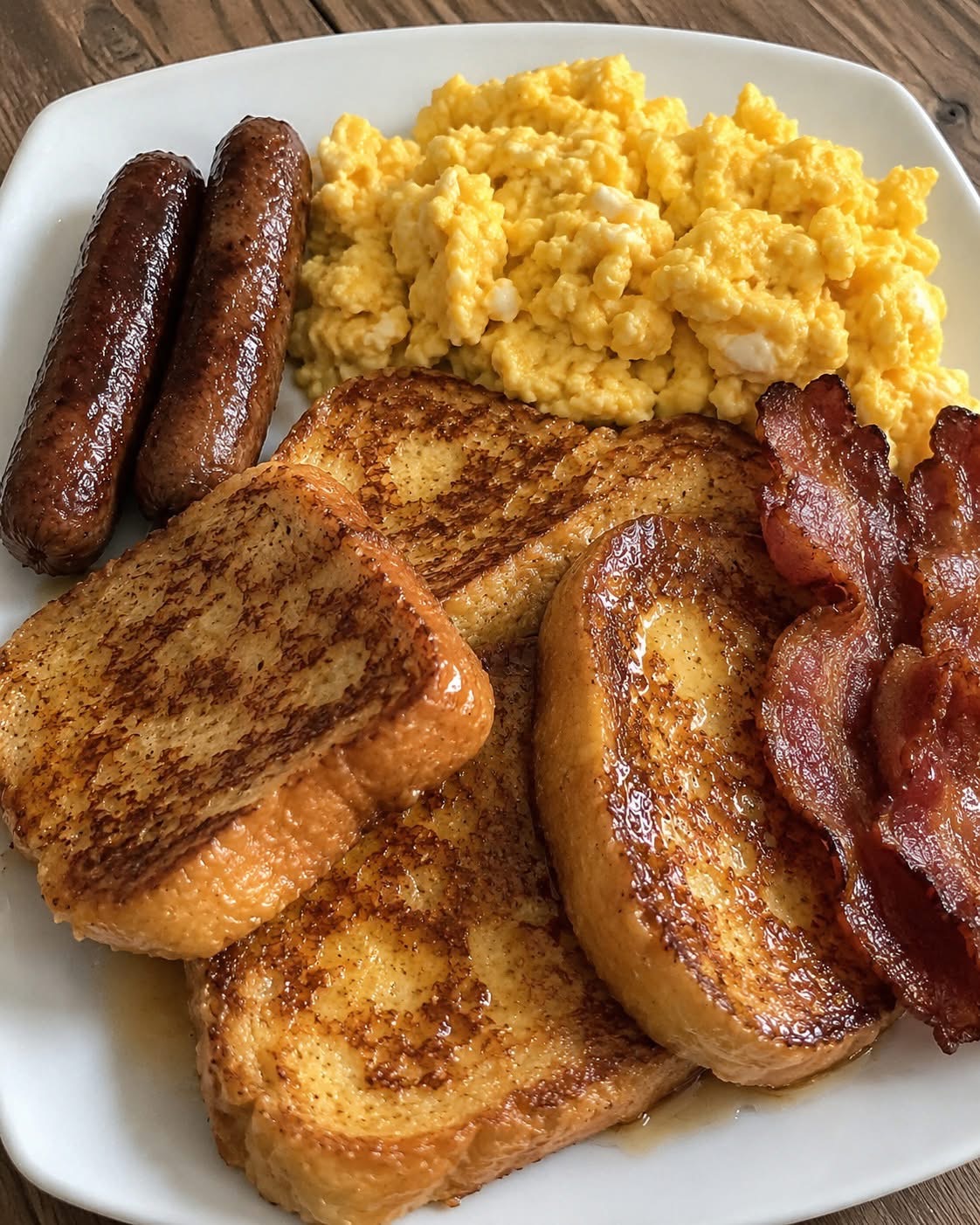
The Ultimate Southern Breakfast Platter is a massive, legendary culinary spread featuring fluffy buttermilk biscuits, rich sausage gravy, stone-ground cheesy grits, crispy fried green tomatoes, thick-cut bacon, savory sausage links, and perfectly scrambled eggs. This iconic spread balances smoky, salty, buttery, and tangy profiles, making it the definitive celebration of traditional Southern hospitality.
🏛️ Comprehensive History of the Southern Breakfast
The American Southern breakfast is not merely a morning meal; it is a complex historical archive served on a plate. To understand the layout of the Ultimate Southern Breakfast Platter, one must explore centuries of agricultural labor, migration patterns, and cultural exchange.
The Agrarian Engine
In the 18th and 19th centuries, the American South was overwhelmingly rural and agrarian. Long before mechanized tractors revolutionized farming, families engaged in grueling, sun-up to sun-down physical labor. A breakfast consisting of light toast or fruit was fundamentally inadequate for a farmer expending several thousand calories before noon. The morning meal evolved to become the most substantial fuel source of the day, designed to sustain workers through intense field labor under punishing heat. High-fat, carbohydrate-dense food was a biological necessity.
Indigenous and West African Roots
The foundations of Southern breakfast staples rest heavily on Indigenous American agriculture and the ingenuity of enslaved West African cooks.
- The Maize Revolution: Long before European contact, Native American tribes—particularly the Muscogee (Creek) and Cherokee—cultivated maize (corn). They perfected the process of nixtamalization and grinding corn into a coarse meal, creating the precursor to contemporary grits.
- The West African Culinary Legacy: Enslaved people brought invaluable agricultural expertise and deep flavor traditions to Southern kitchens. They integrated local ingredients with foundational cooking techniques—such as deep-frying, slow-simmering, and utilizing every part of slaughtered livestock. The complex seasoning profiles and techniques used to fry meats, render fats, and build savory gravies can be traced directly back to these cooks, who served as the primary architects of Southern cuisine.
The Geography of Preservation
The dominance of pork, salt-cured meats, and gravies on the platter is rooted in historical food preservation methods. In the subtropical climate of the South, before the advent of commercial refrigeration, livestock slaughter was an annual late-autumn ritual known as “hog killing time.”
To prevent spoilage, almost every portion of the pig was preserved using salt-curing, smoking, or sausage-making techniques. This produced an abundance of shelf-stable bacon, country ham, and breakfast sausage. The rendered fat, or lard, became the prized cooking medium for frying eggs, seasoning cast-iron skillets, and laminating biscuit dough.
The Biscuit Evolution
While biscuits are now viewed as a ubiquitous comfort food, their status transformed significantly over time. In the colonial era, soft wheat did not grow well in the damp climates of the deep South. Most biscuits were hard, dense “beaten biscuits,” which required hours of manual labor to incorporate air into the dough.
The widespread distribution of soft winter wheat—which has a lower protein content perfect for tender, flaky baking—combined with the commercial invention of chemical leaveners like baking powder and baking soda in the mid-19th century, democratized the modern buttermilk biscuit. It transitioned from an elite Sunday luxury to a daily staple across all socio-economic classes.
🍳 Component 1: Flaky Buttermilk Biscuits
The cornerstone of any genuine Southern platter is the high-rise buttermilk biscuit. A great biscuit must have distinct, visible layers, a golden-brown crust, and a tender, melt-in-your-mouth interior.
Ingredients
- 480g (4 cups) White Lily self-rising flour (or any low-protein soft winter wheat flour)
- 115g (1/2 cup / 1 stick) Unsalted butter, frozen solid
- 55g (1/4 cup) High-quality leaf lard or vegetable shortening, chilled
- 360ml (1.5 cups) Full-fat cultured buttermilk, ice-cold
- 15g (1 tbsp) Granulated sugar (optional, for subtle browning)
- 30g (2 tbsp) Unsalted butter, melted (for brushing post-bake)
Instructions & Methods
- Chill Everything: Place your mixing bowl, pastry cutter, and flour in the freezer for 20 minutes before baking. Keeping the ingredients cold ensures the fats do not melt prematurely, which is critical for creating steam pockets that lift the dough.
- Grate the Fat: Using the large holes of a box grater, grate the frozen solid butter directly into the flour mixture. Add the chilled shortening in small, pea-sized dollops.
- Incorporate Gently: Cut the fats into the flour using a pastry blender or your fingertips until the mixture resembles coarse meal with some pea-sized chunks of butter remaining.
- Hydrate: Create a well in the center of the flour. Pour in the ice-cold buttermilk all at once. Using a rubber spatula, gently fold from the outside inward just until a shaggy dough forms. Do not overmix.
- Lamination Process: Turn the shaggy dough out onto a lightly floured surface. Pat it into a rough rectangle about 1 inch thick. Fold the dough in half. Turn it 90 degrees, pat it down, and fold it again. Repeat this folding process exactly 5 to 6 times. This creates dozens of alternating layers of fat and dough.
- Cut the Biscuits: Pat the dough down to a final thickness of 1 inch. Press a 3-inch round biscuit cutter straight down into the dough and lift cleanly up. Never twist the cutter, as twisting seals the edges of the dough and prevents the biscuits from rising.
- Bake: Arrange the biscuits on a parchment-lined baking sheet so their edges are lightly touching. This forcing them to rise upward rather than spreading outward. Bake in a preheated oven at 230°C (450°F) for 12 to 14 minutes until the tops are deeply golden. Brush immediately with melted butter.
🥓 Component 2: Southern Sausage Gravy
Often called “sawmill gravy,” this rich, milk-based white sauce relies on the browned bits (fond) and rendered fat left behind from pan-searing breakfast sausage.
Ingredients
- 450g (1 lb) High-quality loose pork breakfast sausage (seasoned with sage and black pepper)
- 35g (1/4 cup) All-purpose flour
- 720ml (3 cups) Whole milk, warmed slightly
- 5g (1 tsp) Coarsely cracked black pepper (plus more to taste)
- 3g (1/2 tsp) Kosher salt
- A pinch of cayenne pepper or a dash of hot sauce
Instructions & Methods
- Brown the Sausage: Place a heavy 12-inch cast-iron skillet over medium-high heat. Add the loose pork sausage. Break it apart with a wooden spoon into small crumbles. Cook thoroughly until the sausage is deeply browned and crispy at the edges.
- Retain the Fat: Remove the sausage meat from the skillet using a slotted spoon, leaving the rendered fat behind. You need roughly 3 tablespoons of fat. If you are short, add a touch of butter; if there is too much, ladle out the excess.
- Build the Roux: Reduce the heat to medium. Sprinkle the all-purpose flour evenly over the warm fat. Whisk continuously for 2 minutes. This cooks out the raw flour taste while turning the mixture into a smooth, light-tan roux.
- Simmer and Thicken: Slowly pour in the warm whole milk in a steady stream while whisking vigorously to prevent lumps. Bring the gravy to a gentle simmer. Cook for 5 to 7 minutes, stirring frequently, until the sauce coats the back of a spoon.
- Finish: Stir the cooked sausage crumbles back into the skillet. Add the cracked black pepper, salt, and cayenne. Simmer for one additional minute. Taste and adjust seasoning with extra pepper if desired; it should be boldly savory and peppery.
🌽 Component 3: Stone-Ground Cheesy Grits
True Southern grits are made from coarse, stone-ground corn dried and processed to retain its natural corn flavor and oils. Instant or quick grits should never be substituted.
Ingredients
- 160g (1 cup) Coarse, stone-ground white or yellow corn grits
- 480ml (2 cups) Filtered water
- 480ml (2 cups) Whole milk or heavy cream
- 60g (4 tbsp) Unsalted butter
- 115g (1 cup) Sharp white cheddar cheese, freshly shredded
- 5g (1 tsp) Kosher salt
- 2g (1/4 tsp) White pepper
Instructions & Methods
- The Boil: In a heavy-bottomed saucepan, combine the water, milk, salt, and half of the butter (30g). Bring the liquid to a rolling boil over medium-high heat.
- The Whisk: Slowly rain the stone-ground grits into the boiling liquid while whisking continuously. This initial whisking separates the grains and prevents lumps from forming.
- Low and Slow Simmer: Reduce the heat to the lowest setting. Cover the saucepan with a tight-fitting lid. Cook the grits for 45 to 60 minutes. Every 10 minutes, uncover the pot and vigorously scrape the bottom with a wooden spoon to prevent scorching. The grits are ready when they are thick, velvety, and completely lose their gritty texture.
- Enrichment: Remove the pan from the heat. Stir in the remaining butter, the shredded sharp white cheddar cheese, and white pepper. Stir continuously until the cheese is completely melted and fully emulsified into the grits. Cover and let rest for 5 minutes before serving to set the texture.
🍅 Component 4: Crispy Fried Green Tomatoes
This ingredient adds a crucial element to the platter: acidity. The tartness of unripe green tomatoes cuts through the richness of the gravies, eggs, and cheeses.
Ingredients
- 3 large Firm, unripe green tomatoes
- 120g (1 cup) Fine yellow cornmeal
- 65g (1/2 cup) All-purpose flour
- 120ml (1/2 cup) Buttermilk
- 1 large Egg
- 5g (1 tsp) Smoked paprika
- 3g (1/2 tsp) Garlic powder
- Salt and black pepper to taste
- Peanut oil or lard for shallow frying
Instructions & Methods
- Slice and Salt: Slice the green tomatoes into even 1/4-inch thick rounds. Arrange the slices on a layer of paper towels and sprinkle lightly with kosher salt. Allow them to sit for 15 minutes to draw out excess moisture, then pat them completely dry.
- The Dredging Station: Set up three shallow bowls in an assembly line.
- Bowl 1: Combine the all-purpose flour, paprika, garlic powder, salt, and pepper.
- Bowl 2: Whisk together the buttermilk and egg.
- Bowl 3: Fill with the yellow cornmeal.
- Coat the Slices: Dredge each tomato slice first in the seasoned flour, shaking off the excess. Dip completely into the buttermilk-egg mixture, then press firmly into the cornmeal until uniformly coated.
- Fry: Heat 1/2 inch of oil in a cast-iron skillet to 180°C (350°F). Fry the tomato slices in batches for 2 to 3 minutes per side until the exterior is deeply golden brown and crunchy. Drain on a wire wire rack to maintain crispness.
🥩 Component 5: The Breakfast Meats & Eggs
A true ultimate platter showcases a duo of pork prepared using traditional methods, accompanied by perfectly soft, velvety scrambled eggs.
Ingredients
- 8 thick slices Applewood or hickory-smoked bacon
- 4 premium Pork sausage links (with natural casings)
- 8 large Fresh pasture-raised eggs
- 45ml (3 tbsp) Heavy cream
- 30g (2 tbsp) Unsalted butter
- Chives, finely minced (for garnish)
Instructions & Methods
- Oven-Baked Bacon: Preheat your oven to 200°C (400°F). Lay the thick-cut bacon slices flat on a wire rack set inside a large rimmed baking sheet. Bake for 15 to 20 minutes until the fat renders out completely and the bacon turns deeply red and crispy. This method keeps the strips perfectly flat and evenly cooked.
- Pan-Seared Sausage Links: Place the sausage links into a cold skillet with 2 tablespoons of water. Set heat to medium. As the water evaporates, the sausages will cook through. Once dry, the sausage fat will render, allowing the links to sear beautifully in their own oils. Turn frequently until the casings are snappy and golden brown.
- Low-Heat Scrambled Eggs: Whisk the fresh eggs with the heavy cream and a pinch of salt until uniform and completely aerated. Melt 2 tablespoons of butter in a non-stick skillet over medium-low heat. Pour in the eggs. Using a silicone spatula, constantly move the liquid from the outside edge to the center. Cook gently to form soft, custard-like curds. Remove from heat while they still look slightly wet; residual heat will finish cooking them to a glossy texture.
🍽️ The Art of Formation and Plating
Assembling the Ultimate Southern Breakfast Platter requires structural strategy to ensure crisp textures stay separated from liquid elements until served.
Steps to Build the Platter
- Select the Vessel: Use a large, heavy-duty wooden carving board, a wide stoneware platter, or a seasoned oversized cast-iron comal. Warm the platter slightly in a low oven before assembly to help retain food heat.
- Anchor the Wet Components: Place two small, high-sided ceramic ramekins or mini cast-iron cocottes on the platter. Fill one with the hot, velvety stone-ground grits and top with an extra pat of melting butter. Fill the second with the hot sausage gravy. This keeps the gravy from soaking into items prematurely.
- Build the Biscuit Wall: Stack the warm, split buttermilk biscuits along the upper perimeter of the platter, fanning them out to showcase their flaky, laminated layers.
- Arrange the Proteins: Place the soft scrambled eggs directly in the center of the platter, garnishing them with fresh chives. Flank the eggs with neat stacks of the crispy oven-baked bacon strips and seared sausage links.
- Incorporate the Crunch: Lay the fried green tomatoes along the lower edge of the platter, ensuring they rest against dry items (like the sausage links) rather than the eggs, preserving their crisp cornmeal crust.
- The Final Accoutrements: In the remaining gaps, nestle small jars of sweet elements—such as dark molasses, pure sorghum syrup, or homemade blackberry jam—to allow guests to balance the savory flavor profiles.
🩺 Health Benefits & Nutritional Insights
While this platter is traditionally known as an indulgent comfort food experience, analyzing its elements reveals a variety of dense macronutrients and essential vitamins.
Nutrient Breakdown and Bioavailability
- High-Quality Protein Density: The pasture-raised eggs and fresh pork meats deliver a robust dose of bioavailable, complete proteins. These supply all nine essential amino acids required for muscle synthesis, cellular repair, and hormone regulation.
- Complex Carbs & Iron: Coarse stone-ground grits retain the corn’s germ and bran layer. This offers a steady release of complex carbohydrates rather than a rapid glucose spike, alongside natural dietary fiber, iron, and B-vitamins like thiamine and folate.
- Essential Micronutrients: Green tomatoes are rich in vitamins A, C, and K, as well as alkaloids like tomatine, which possess natural antioxidant properties. Cooking them alongside healthy fats enhances the absorption of these fat-soluble vitamins.
Nutritional Estimation Matrix
The values below represent an estimated breakdown per individual serving (assuming the platter serves a gathering of 6 people):
| Component | Calories | Protein (g) | Total Fat (g) | Carbs (g) | Sodium (mg) |
|---|---|---|---|---|---|
| Buttermilk Biscuit (1 Large) | 310 | 5 | 16 | 36 | 620 |
| Sausage Gravy (1/2 Cup) | 240 | 8 | 19 | 9 | 540 |
| Cheesy Grits (1/2 Cup) | 210 | 6 | 13 | 17 | 410 |
| Fried Green Tomato (2 Slices) | 130 | 2 | 8 | 12 | 280 |
| Bacon & Sausage Duo | 280 | 16 | 24 | 1 | 710 |
| Soft Scrambled Eggs | 140 | 12 | 10 | 1 | 180 |
| Total Estimated (Per Serving) | 1,310 | 49 | 90 | 76 | 2,740 |
❤️ The Lovers of the Southern Platter
The Ultimate Southern Breakfast Platter enjoys an enduring cultural legacy among diverse culinary enthusiasts worldwide.
The Traditionalists and Historians
Culinary preservationists and Southern natives treat this meal with deep respect. For them, it represents a direct connection to ancestral kitchens, requiring authentic ingredients like heirloom corn varieties and soft winter wheat flour. They view the platter as a tool for storytelling, carrying memories of family gatherings and historic food traditions.
The Modern Brunch Enthusiasts
In urban dining hubs, contemporary chefs have adapted this rustic platter into a trendy, shared-board experience. Brunch crowds enjoy the combination of interactive dining and diverse flavor pairings—including matching the salty bacon with sweet sorghum or pouring hot gravy directly over split biscuits.
🏁 Culinary Conclusion
The Ultimate Southern Breakfast Platter showcases how simple, local ingredients can transform through mindful technique into a world-class culinary experience. By layering flaky biscuits, rich pan gravies, slow-cooked grains, and crispy garden vegetables, it elevates basic components into a balanced feast. This platter is more than just a morning meal; it represents a tradition of slow cooking and shared hospitality meant to be enjoyed with family and friends.
If you’d like to tailor this platter to your specific kitchen setup, please let me know:
- Do you have a well-seasoned cast-iron skillet available for frying and making the gravy?
- Would you prefer to include a sweet element on the platter, like Southern-style pancakes or pecan waffles?
- Are there any dietary restrictions you need to accommodate (such as gluten-free or pork-free alternatives)?