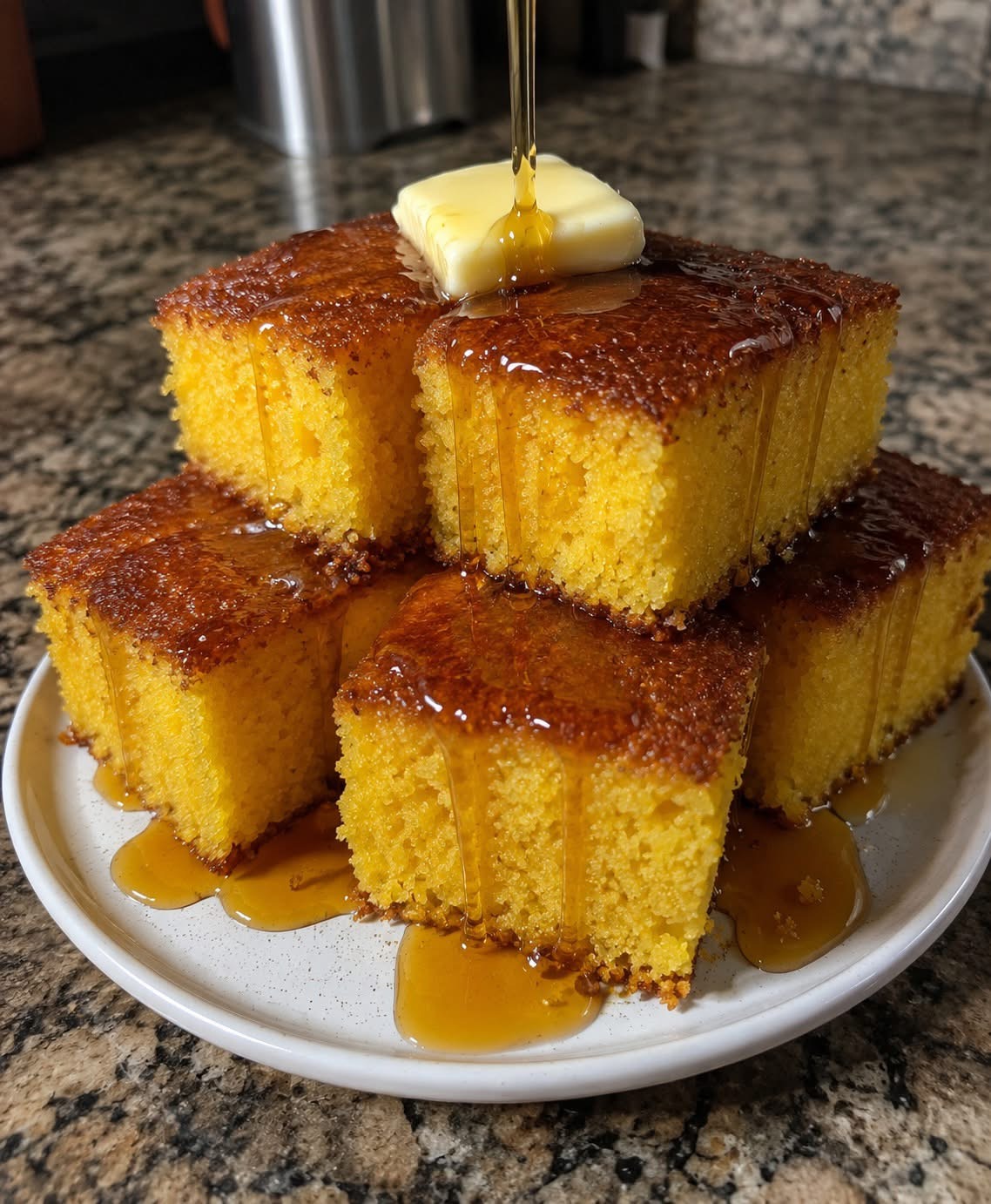
The Ultimate Brown Sugar Honey Butter Cornbread Guide
Brown Sugar Honey Butter Cornbread is the ultimate expression of comfort food, blending a moist, tender crumb with a caramelized, sweet-savory finish. By incorporating deep molasses from brown sugar and a rich glaze of melted honey butter, this recipe upgrades traditional cornbread into a showstopping side dish.
Introduction to Premium Cornbread
Cornbread holds a sacred place in global and regional food cultures. While foundational versions rely purely on cornmeal, salt, and water, modern variations embrace luxury. This specific recipe utilizes dark brown sugar for deep molasses undertones, pure raw honey for floral sweetness, and a heavy hand of salted butter to create an iconic crispy, caramelized edge.
Achieving the perfect balance requires an understanding of how ingredients interact. Too much flour turns the bread into a standard yellow cake; too much cornmeal makes it unpleasantly gritty. This master formula balances grain texture with a cake-like tenderness, ensuring every single bite remains moist for days.
The Master Ingredient List
To build a massive, thick batch of cornbread (perfect for a large 10-12 inch cast-iron skillet or a 9×13-inch baking pan), source high-quality, fresh ingredients.
The Dry Base
- 2 cups Yellow Cornmeal: Opt for stone-ground cornmeal. It retains the corn’s natural oils and provides an authentic, rustic toothsome bite.
- 2 cups All-Purpose Flour: Provides the necessary gluten structure to prevent the bread from crumbling into dust when sliced.
- 2 tablespoons Baking Powder: The primary leavening agent responsible for a dramatic, high-rising, fluffy interior.
- 1 teaspoon Fine Sea Salt: Essential for cutting through the intense sweetness of the sugars and magnifying the natural corn flavor.
The Wet Emulsion
- ¾ cup Dark Brown Sugar: Packed tightly. Dark brown sugar contains more molasses than light brown sugar, offering a richer color and a deeper, almost toffee-like flavor.
- ½ cup Pure Liquid Honey: Wildflower or clover honey works best. This adds a distinct floral note that sugar alone cannot replicate.
- 1 cup Salted Butter (Melted & Cooled): High-fat European-style butter adds an incomparable richness to the crumb.
- 4 Large Eggs (Room Temperature): Binds the batter together and provides structure and rise.
- 1 ½ cups Whole Buttermilk: The acid in buttermilk reacts with the leavening agents to produce a tender crumb while balancing sweetness.
- ½ cup Sour Cream: The secret weapon for moisture. It adds fat and thickness, ensuring the bread never dries out during the baking process.
The Signature Honey Butter Glaze
- ½ cup Salted Butter: Melted hot right as the cornbread exits the oven.
- ⅓ cup Pure Liquid Honey: Whisked seamlessly into the hot butter.
- 1 tablespoon Dark Brown Sugar: Dissolved into the glaze for a glossy, crackly surface.
Step-by-Step Instructions
1. Preparation and Pan Preheating
- Move an oven rack to the center position and preheat your oven to 375°F (190°C).
- If utilizing a heavy cast-iron skillet, place one tablespoon of vegetable oil or butter inside the skillet and set it in the oven while it heats. This creates an incredibly crispy, fried bottom crust. If using a 9×13-inch baking pan, grease it thoroughly with softened butter.
2. Whisking the Dry Ingredients
- In a large mixing bowl, combine the stone-ground yellow cornmeal, all-purpose flour, baking powder, and sea salt.
- Use a wire whisk to stir the dry mixture for at least 30 seconds. This breaks up any flour clumps and evenly distributes the baking powder, preventing uneven pockets of rising.
3. Emulsifying the Wet Ingredients
- In a separate large bowl, add the tightly packed dark brown sugar and liquid honey.
- Pour in the 1 cup of melted, cooled butter. Whisk vigorously until the sugar begins to dissolve and no oil separation is visible.
- Crack the four room-temperature eggs into the mixture one at a time, whisking thoroughly after each addition until the wet base is pale and smooth.
- Pour in the whole buttermilk and scoop in the sour cream. Whisk until completely uniform and smooth.
4. Combining into a Master Batter
- Make a well in the center of your dry ingredients and pour the wet emulsion directly into it.
- Switch to a silicone spatula. Gently fold the ingredients together from the bottom up.
- Stop mixing when the last streaks of flour disappear. The batter should look thick and slightly lumpy. Over-mixing agitates the gluten, turning your cornbread tough and rubbery.
5. The Bake Cycle
- Carefully remove your hot cast-iron skillet or grab your greased baking pan. Pour the thick batter into the center, allowing it to naturally spread to the edges. Smooth the top gently with your spatula.
- Slide the pan onto the center rack of the oven.
- Bake for 35 to 40 minutes. Avoid opening the oven door during the first 25 minutes to prevent a temperature drop.
- The cornbread is done when the edges turn a deep golden brown, separate slightly from the sides of the pan, and a toothpick inserted into the center emerges clean or with a few moist crumbs.
6. Applying the Glaze
- While the cornbread finishes its final minutes in the oven, prepare the glaze. In a small saucepan over low heat, combine ½ cup salted butter, ⅓ cup honey, and 1 tablespoon dark brown sugar. Stir until completely melted, unified, and hot.
- As soon as the cornbread comes out of the oven, use a toothpick to poke small, subtle holes across the entire surface of the hot bread.
- Pour the hot honey-butter glaze evenly over the top. The bread will eagerly absorb the liquid gold, leaving a shiny, tacky, sweet crust. Allow the bread to rest for 15 minutes before slicing.
Technical Methods for Perfect Baking
[Preheat Pan/Skillet] ➔ [Whisk Dry Ingredients Separately] ➔ [Emulsify Sugars, Butter & Dairy]
                                                                        │
[Perfect Golden Crumb] ◀─ [Glaze Immediately Hot] ◀─ [Bake at 375°F] ◀─ [Fold Gently (Do Not Overmix)]
Achieving baker-level results relies on specific scientific methods:
The Cast-Iron Skillet Method
Cast iron retains heat far more effectively than aluminum or glass. Preheating the skillet with a fat source before adding the batter instantly fries the bottom layer of cornmeal. This results in a distinctive, deeply golden, crunchy crust that contrasts beautifully with the soft interior.
The Two-Bowl Method
Keeping dry and wet ingredients isolated until the absolute final moment is a chemical necessity. Once the buttermilk’s acid hits the baking powder, a gas-producing reaction begins immediately. Delayed baking or excessive mixing depletes these bubbles, causing the cornbread to turn out dense and flat.
A Deep History of Cornbread
The narrative of cornbread is woven deeply into the fabric of global agricultural history. Long before European settlers arrived in the Americas, Indigenous populations cultivated maize. Indigenous peoples developed nixtamalization, a process of soaking corn in an alkaline solution (like wood ash water) to unlock nutrients, soften the hull, and create a millable grain. Early versions of cornbread were minimalist: ground cornmeal mixed with water and salt, baked on hot stones or over open hearths, commonly known as ash cakes or johnnycakes.
As European settlers immigrated to the Southern United States, they brought a preference for wheat and rye crops, which failed to thrive in the hot, humid Southern climate. Consequently, they adopted corn as their staple grain. Over centuries, enslaved African cooks transformed rustic cornmeal cakes into a refined culinary art form. They introduced sophisticated baking techniques, utilizing sour milk, buttermilk, and wild leavening agents to add height and richness.
The divide between Northern and Southern styles of cornbread remains a topic of passionate culinary debate. Traditional Southern cornbread is historically savory, baked in a cast-iron skillet with yellow or white cornmeal, bacon fat, and buttermilk, completely omitting sugar. This preference stems from the regional availability of water-mill ground corn, which was naturally sweet.
Northern cornbread, conversely, historically integrated yellow cornmeal with significant amounts of wheat flour and sugar, yielding a taller, sweeter, more cake-like bread. This variation arose because Northern flint corn was less naturally sweet, requiring supplemental sugars.
Our modern Brown Sugar Honey Butter Cornbread bridges these historical paths, celebrating the Southern cast-iron technique while elevating the crumb with the complex, sweet profiles characteristic of contemporary baking.
Nutritional Profile
This decadent cornbread is designed as a rich, celebratory comfort food. Below is an estimated nutritional breakdown per serving based on slicing the recipe into 12 generous portions.
| Nutrient Metric | Value Per Serving | Daily Value (% DV) |
|---|---|---|
| Calories | 480 kcal | 24% |
| Total Fat | 22g | 28% |
| ── Saturated Fat | 13g | 65% |
| ── Trans Fat | 0.5g | — |
| Cholesterol | 115mg | 38% |
| Sodium | 490mg | 21% |
| Total Carbohydrates | 64g | 23% |
| ── Dietary Fiber | 2g | 7% |
| ── Total Sugars | 32g | — |
| Protein | 7g | 14% |
| Calcium | 140mg | 10% |
| Iron | 2.4mg | 13% |
The Benefits of This Recipe
While primarily a dessert-adjacent comfort side dish, this recipe offers distinct structural and sensory advantages:
- Long-Lasting Moisture Retainment: Standard cornbread dries out into crumbly sawdust within 12 hours. The inclusion of sour cream and brown sugar (a natural humectant) binds water molecules tightly. This ensures the bread stays incredibly soft for up to four days.
- Complex Flavor Layering: Instead of a flat, linear sweetness from white sugar, this recipe layers the molasses undertones of dark brown sugar with the bright floral notes of honey, tied together by the lactic tang of buttermilk.
- Energy Density: High in carbohydrates from stone-ground cornmeal and enriched flour, it provides a rapid, sustainable source of energy, making it an excellent companion to protein-heavy winter stews and barbecues.
Structural Formation and Science
Understanding the chemical formation of this bread ensures success every time you bake:
  [Acidic Buttermilk + Sour Cream]  ──┐
                                      ├───► [Immediate CO2 Gas Release] ───► Fluffy, High Rise
  [Alkaline Leavening (Baking Powder)] ┘

  [Molasses in Dark Brown Sugar] ─────┐
                                      ├───► [Hygroscopic Water Binding] ───► Long-Lasting Moisture
  [Fats in Sour Cream & Butter] ──────┘
The crumb texture relies on a delicate balance of competing forces. Gluten forms when flour mixes with liquid, providing strength. However, too much gluten creates a tough, bready texture.
The high fat content from the butter and sour cream coats the flour particles, shortening the gluten strands to keep the crumb incredibly tender. Concurrently, the acidity of the buttermilk softens the proteins in the flour, preventing the cornbread from becoming rubbery.
For the Ultimate Cornbread Lovers
True cornbread enthusiasts know that this dish is incredibly versatile. If you want to customize your bake, consider these elevated pairings and variations:
Salty & Savory Twists
- The Bacon Crub: Fold ½ cup of thick-cut, crispy applewood smoked bacon bits directly into the batter before baking.
- The Jalapeño Popper: Mix in 2 finely diced fresh jalapeños and 1 cup of sharp white cheddar cheese to create a fiery contrast to the sweet honey glaze.
The Ultimate Menu Pairings
This sweet, buttery cornbread pairs beautifully with several classic dishes:
- Texas Smoked Brisket: The sweet molasses notes cut through the heavy, smoky fat of slow-cooked beef.
- Classic Three-Bean Chili: Crumbling a thick slice of honey-glazed cornbread into a spicy, acidic bowl of tomato chili creates an elite flavor combination.
- Holiday Roasted Turkey: Use leftovers of this cornbread as the primary base for a rich, sweet savory holiday stuffing.
Conclusion
Brown Sugar Honey Butter Cornbread is more than just a quick bread; it is a celebration of culinary history and simple baking science. By moving past box mixes and embracing stone-ground grains, real buttermilk, sour cream, and a generous hot honey-butter glaze, you can create a centerpiece dish that stands out at any table.
Whether you cook it in a classic cast-iron skillet for that signature crunchy edge or bake it in a dish for a soft, cake-like texture, this recipe delivers an unbeatable balance of sweetness, moisture, and rich flavor.
To help you get started on your cornbread baking journey, tell me:
- Do you plan to bake this in a cast-iron skillet or a standard baking pan?
- Would you like suggestions for main dishes to pair it with, or ideas for incorporating savory mix-ins?