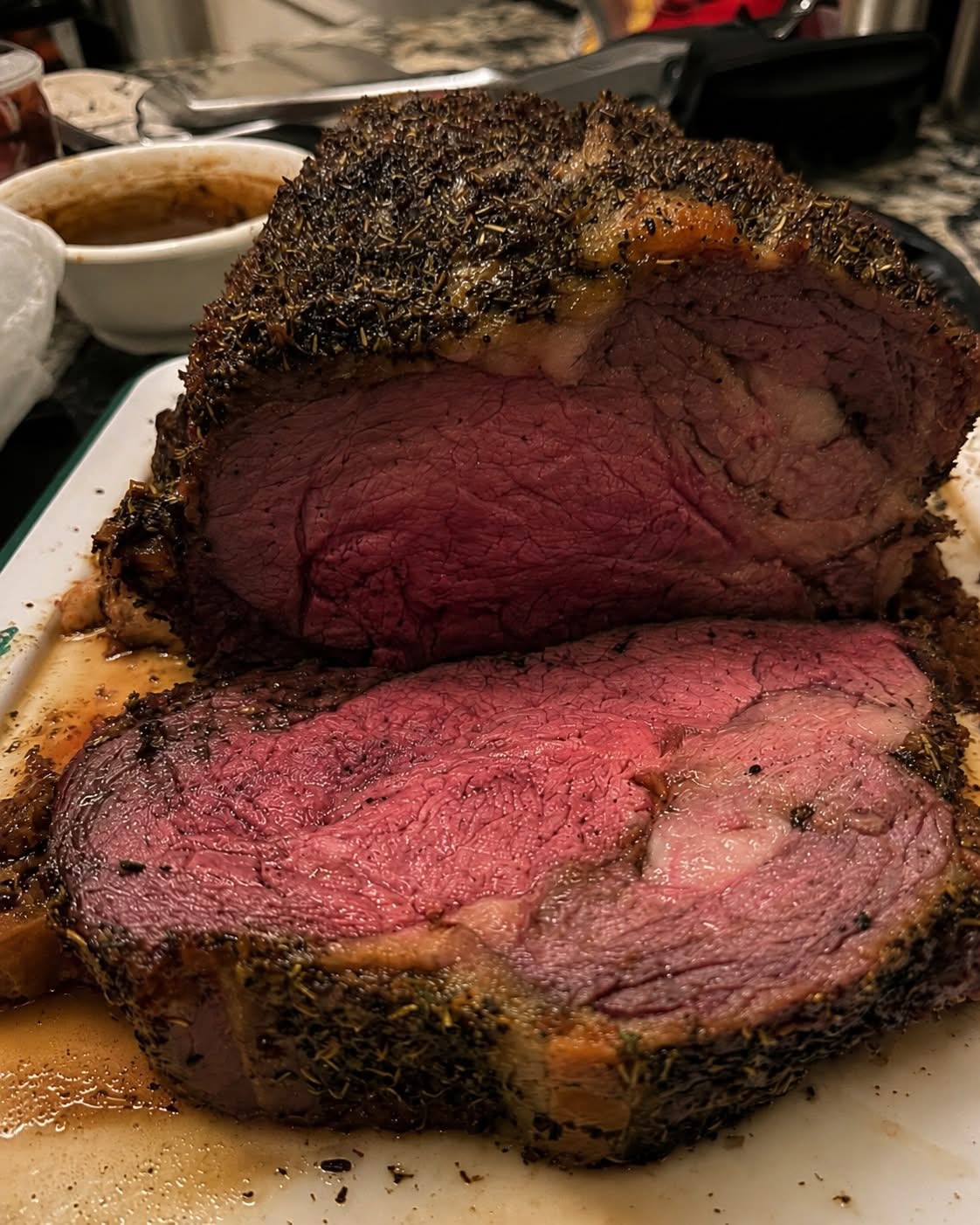
The Ultimate Guide to Herb Crusted Prime Rib Roast
The Herb Crusted Prime Rib Roast stands as the ultimate centerpiece of festive gastronomy, universally revered for its luxurious marbling, tender texture, and aromatic outer crust. Often called the “King of Beef Cuts,” a standing rib roast transforms any dinner table into an upscale steakhouse experience, making it the premier choice for holidays, anniversaries, and grand celebrations.
1. Culinary History of the Prime Rib Roast
British Origins: The Standing Rib Roast
The tradition of the standing rib roast tracks back to the Industrial Revolution in Great Britain and centuries of English agrarian lifestyle. For generations, the British elite favored massive cuts of beef roasted over open hearth fires.
The term “standing” refers explicitly to the architecture of the cut. By leaving the rib bones intact, chefs could place the roast directly on the floor of a brick oven or suspend it over a spit, using the bones themselves as a natural roasting rack to keep the tender loin muscle from touching the hot cooking surface.
This technique yielded an incredibly even cook and permitted the fat cap to melt downward, continually basting the meat. Over time, the Sunday Roast became an indelible cultural ritual across the United Kingdom, celebrated in songs, literature, and art as the pinnacle of comfort and prosperity.
The Journey to American Elite Dining
As British immigrants established communities across North America, they brought their deep love of beef with them. By the late 19th and early 20th centuries, the United States had built vast cattle ranching networks across the Great Plains, leading to an abundance of high-quality beef.
In luxury hotels, high-end private clubs, and burgeoning steakhouses across New York, Chicago, and San Francisco, the prime rib roast quickly emerged as the ultimate symbol of American culinary opulence. It became standard practice for uniform carts made of hammered silver to roll through dining rooms, allowing master carvers to slice thick, juicy slabs of medium-rare beef right at the customer’s table.
This theatrical presentation fixed the prime rib’s reputation as a celebratory meal, a status it firmly retains today.
2. Formation and Anatomy of the Cut
Understanding the anatomical makeup of a prime rib roast is essential to master the cooking process. This specific cut is harvested from the primal rib section of the steer, specifically encompassing ribs 6 through 12.
   [ Rib 1 to 5: Chuck ]  -->  [ Rib 6 to 12: PRIMAL RIB ]  -->  [ Rib 13+: Loin ]
                                       |
                     +-----------------+-----------------+

                     |                                   |
           [ Longissimus Dorsi ]                [ Spinalis Dorsi ]
           (The Eye of Prime Rib)              (The Ribeye Cap)
The cut consists of two primary muscle groups that respond uniquely to heat:
The Longissimus Dorsi (The Eye)
This is the large, central muscle that makes up the core of the roast. Because this muscle runs along the spine and does not do heavy lifting or intensive movement, the tissue remains exceptionally tender. It is characterized by fine webs of intramuscular fat, known as marbling, which melt during roasting to create a rich flavor and a juicy mouthfeel.
The Spinalis Dorsi (The Ribeye Cap)
This muscle wraps around the outer edge of the central eye, separated by a thin strip of fat. Among steak enthusiasts, the spinalis dorsi is widely considered the most delicious, tender, and intensely flavorful muscle on the entire animal. It features heavy marbling and a loose grain texture that absorbs marinades, dry brines, and herb pastes beautifully.
The Rib Bones
Leaving the bones attached protects the delicate eye muscle from drying out during prolonged roasting. The bones also conduct heat slowly into the core of the meat, ensuring a more uniform internal temperature gradient. Furthermore, the connective tissues, collagen, and marrow surrounding the ribs enrich the drippings, providing a savory foundation for pan sauces, gravies, and authentic au jus.
3. Ingredients Profile
To prepare a world-class Herb Crusted Prime Rib Roast, you must gather premium ingredients. Every element should balance the natural richness of the beef without overpowering it.
The Main Roast
- 1 Standing Rib Roast (3 to 4 bones, approx. 7 to 9 lbs): Select USDA Prime or high-tier USDA Choice grade beef. Look for an abundance of white flecks of intramuscular marbling evenly distributed across the face of the meat.
The Aromatic Herb Crust
- 4 tablespoons Fresh Rosemary: Finely chopped. Rosemary delivers piney, woodsy notes that pair excellently with beef fat.
- 4 tablespoons Fresh Thyme: Finely chopped. Thyme adds subtle earthy, floral undertones.
- 2 tablespoons Fresh Oregano or Sage: Finely chopped. This provides a deep, savory punch to break up the richness.
- 1/2 cup Fresh Italian Flat-Leaf Parsley: Finely chopped. Parsley injects a bright, clean note that visually pops against the dark crust.
- 8 to 10 Garlic Cloves: Peeled and finely minced or pressed into a smooth paste.
The Binding Agent & Seasoning
- 3 tablespoons Dijon Mustard: Acts as an emulsifying glue to secure the herbs to the meat while adding a pleasant tang.
- 2 tablespoons High-Quality Olive Oil: thins out the paste to make it easy to spread evenly over the fat cap.
- 2.5 tablespoons Coarse Kosher Salt: Crucial for drawing out moisture, breaking down proteins, and seasoning the thick roast deeply.
- 1.5 tablespoons Coarse Black Pepper: Freshly cracked black pepper provides a bold, spicy bite that cuts through the fat.
4. Comprehensive Kitchen Methods
Achieving a uniform pink interior from edge to edge while building a deeply browned, crispy outer herb crust requires careful temperature management. You can use either of the two industry-standard methods detailed below.
Method A: The Reverse Sear (Recommended Technique)
The reverse sear is favored by modern chefs because it minimizes the unappealing gray ring of overcooked meat just under the crust.
[ Room Temp Roast ] -> [ Low Oven: 225°F/107°C ] -> [ Rest 30 Mins ] -> [ Flash Blast: 500°F/260°C ] -> [ Perfect Carve ]
- Low-Temperature Roast: Place the seasoned roast on a rack inside a shallow pan and bake at a low heat of 225°F (107°C). The low heat gently and evenly warms the meat from the outside in.
- Internal Tracking: Cook until an accurate digital meat thermometer inserted into the thickest part of the core registers 115°F (46°C) for rare or 120°F (49°C) for medium-rare.
- The Mid-Way Rest: Remove the beef from the oven, tent it loosely with aluminum foil, and let it rest for 30 minutes. During this period, the internal juices redistribute throughout the muscle fibers instead of pooling on your cutting board.
- The High-Heat Finish: Crank your oven to its maximum temperature—ideally 500°F to 550°F (260°C to 287°C). Pop the rested roast back in for 6 to 10 minutes until the exterior herb paste crisps up into a gorgeous, sizzling dark-brown crust. Slice and serve immediately.
Method B: The Traditional High-to-Low Sear
This classic method relies on an initial blast of high heat to lock in flavor, followed by a slower roast to cook the center through.
- Initial Blast: Preheat your oven to a hot 450°F (232°C). Roast the prepared beef for 15 to 20 minutes to jumpstart the Maillard reaction, rendering the outer fat and setting the herb crust.
- Temperature Drop: Without opening the oven door, drop the temperature down to 325°F (163°C).
- Slow Bake: Continue cooking for roughly 13 to 15 minutes per pound. Keep a close eye on your internal probe until the meat hits 125°F (52°C) for a beautiful medium-rare finish.
- Final Rest: Move the roast onto a warm carving board, tent it with foil, and let it rest for 20 to 30 minutes before slicing. The internal temperature will climb another 5°F via carryover cooking.
5. Step-by-Step Cooking Instructions
Follow these chronological steps to guarantee a flawless result on your first try.
Step 1: Trim and Tie
Examine the fat cap on your roast. If it is thicker than a quarter-inch, use a sharp boning knife to trim it down slightly so the seasoning can penetrate. To ensure uniform cooking, wrap butcher’s twine tightly between each rib bone, securing the meat into a neat, round cylinder.
Step 2: The Overnight Dry Brine
Pat the entire surface dry with paper towels. Rub the coarse kosher salt evenly over all sides of the beef. Place the salted roast uncovered on a wire rack set inside a sheet pan, then store it in the refrigerator for 12 to 24 hours. This dry-brining process draws moisture out of the surface skin, concentrates the beef’s natural flavors, and helps create a shatteringly crisp crust later.
Step 3: Mix the Herb Paste
In a medium bowl, combine the finely chopped rosemary, thyme, oregano, parsley, minced garlic, cracked black pepper, olive oil, and Dijon mustard. Mix thoroughly until it forms a thick, aromatic, paste-like consistency.
Step 4: Temper and Coat
Remove the dry-brined roast from the refrigerator at least 2 hours before cooking to let it come up to room temperature. This step prevents the exterior from burning while the center remains icy cold. Use a silicone spatula or gloved hands to slather the herb paste over the top, sides, and exposed edges of the beef.
Step 5: Roast to Perfection
Choose either Method A (Reverse Sear) or Method B (Traditional) to cook the beef. Always rely on a digital meat thermometer rather than simple timers, as every individual roast and oven varies.
Step 6: The Vital Rest
Never skip the resting period. Resting allows the contracted muscle fibers to relax, soaking up the savory juices. Slicing too early will cause the delicious liquids to drain out instantly, leaving you with dry beef.
Step 7: Carve and Serve
Snip the butcher’s twine with kitchen shears. Run your knife along the contours of the rib bones to detach the whole loin roast from the skeleton. Slice the boneless meat into thick slabs (around 1/2-inch to 3/4-inch thick). Serve the bones on the side for guests who love eating meat straight off the bone.
6. Nutritional Insights
While prime rib is an indulgent luxury, it provides an array of essential nutrients, healthy fats, and high-quality bioavailable proteins.
| Nutrient Component | Value Per 6 oz (170g) Cooked Serving | Percentage of Daily Value (% DV) |
|---|---|---|
| Calories | 480 kcal | 24% |
| Total Fat | 36 g | 46% |
| Saturated Fat | 15 g | 75% |
| Cholesterol | 145 mg | 48% |
| Sodium | 450 mg (excluding added table salt) | 20% |
| Total Carbohydrates | 1 g (from herb crust & mustard) | <1% |
| Dietary Fiber | 0.5 g | 2% |
| Protein | 38 g | 76% |
| Zinc | 9.8 mg | 89% |
| Iron | 4.2 mg | 23% |
| Vitamin B12 | 4.1 mcg | 170% |
| Selenium | 38 mcg | 69% |
Key Nutritional Takeaways
- Muscle Maintenance: A single standard serving supplies 38 grams of complete protein containing all nine essential amino acids needed for muscle repair and metabolic health.
- Immune & Energy Support: It is exceptionally rich in Vitamin B12 and Zinc, which support neurological function, red blood cell production, and immune health.
- Bioavailable Iron: The heme iron found in red meat is absorbed much more efficiently by the human body than the non-heme iron found in plant sources, helping to ward off fatigue and anemia.
7. Health and Wellness Benefits
Enjoying an herb-crusted prime rib roast yields several clear health benefits when integrated into a balanced lifestyle.
Benefits of the Medicinal Herbs
- Rosemary: Contains high levels of rosmarinic acid and carnosic acid, powerful antioxidants that reduce inflammation and support cardiovascular health.
- Thyme: Rich in thymol, an antimicrobial compound that supports digestive health and strengthens the immune system.
- Garlic: Contains allicin, which is clinically shown to lower blood pressure, improve cholesterol markers, and combat oxidative stress.
Cognitive and Metabolic Advantages
- Satiety and Blood Sugar Regulation: The combination of rich fats and dense protein stabilizes blood glucose levels, avoiding insulin spikes and keeping you full for hours. This makes it an ideal centerpieces for keto, carnivore, and low-carb lifestyles.
- Cognitive Performance: The healthy fats, iron, and B-complex vitamins found in premium beef nourish brain cells, improve focus, and reduce brain fog.
8. For the True Prime Rib Lovers: Pro Tips
For culinary enthusiasts looking to elevate their prime rib game from great to spectacular, keep these advanced insider secrets in mind.
The Umami Flavor Boost
To unlock an extra layer of savory depth, mix 1 tablespoon of white miso paste or 2 finely minced anchovy fillets directly into your herb mixture. These ingredients are rich in natural glutamates, which blend seamlessly into the beef without tasting fishy, amplifying the savory meat flavors.
Perfect Sides and Pairings
- Classic Accompaniments: Pair your roast with standard favorites like creamy garlic mashed potatoes, truffle mac and cheese, or creamed spinach.
- Wine Pairings: Serve the meal alongside bold, high-tannin red wines like a Napa Valley Cabernet Sauvignon, a rustic Bordeaux, or a robust Argentinian Malbec. The wine’s structural tannins cut right through the rich fat of the prime rib, cleansing your palate between bites.
9. Conclusion
The Herb Crusted Prime Rib Roast is much more than a simple recipe; it is a timeless culinary tradition that brings people together around the dinner table. By combining historical cooking principles with precise, modern temperature control like the reverse sear, you can transform a premium cut of beef into an unforgettable dining experience.
With its crispy, aromatic herb crust and tender, juicy interior, this roast is sure to delight your guests and earn a permanent spot in your holiday cooking repertoire.
If you’d like, let me know:
- The number of guests you are hosting so we can calculate the perfect roast size.
- If you need a recipe for homemade Au Jus or Horseradish Cream Sauce.
- Any dietary restrictions (e.g., gluten-free adjustments for sauces).