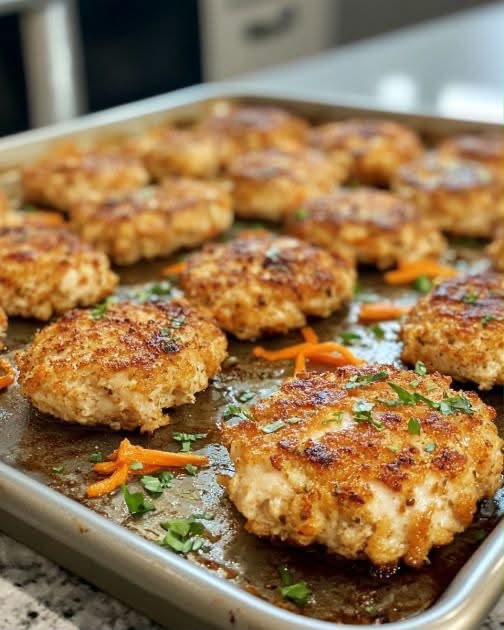
Flaked salmon bound with breadcrumbs and egg, pan-seared until the outside shatters and the inside stays moist. No canned salmon paste, no dense hockey pucks, and a crust that actually crackles.
The technique that matters is flaking the salmon by hand rather than processing it. A food processor turns salmon into a paste, and a paste fries into a dense, rubbery cake. Breaking it into rough flakes with a fork keeps pockets of texture through the cake, which is what makes it taste like fish rather than fish-flavoured putty.
Fifteen minutes of prep, ten at the stove, and twelve cakes off one batch.
Why You Will Love This Recipe
They taste like salmon, not filler. Hand-flaked fish and a light hand with the binder keep the flavour forward.
The crust genuinely crackles. A proper sear in a hot pan with enough oil, not a shallow fry that steams the crust soft.
They use up leftover cooked salmon. A good way to turn last night’s extra fillet into an entirely different meal.
They freeze well raw. Shape a double batch and freeze half for later.
Ten minutes at the stove. Faster than almost any other way to serve salmon.
Recipe Overview
Prep time: 15 minutes
Cook time: 10 minutes
Total time: 25 minutes
Yield: 12 cakes, serving 4
Difficulty: Easy
Best for: Weeknight dinners, using leftover salmon, light lunches
Ingredients
For the salmon cakes
• 1½ pounds cooked salmon, skin and bones removed
• ½ cup panko breadcrumbs
• 2 large eggs
• ¼ cup mayonnaise
• 2 tablespoons Dijon mustard
• 3 green onions, finely sliced
• 2 tablespoons chopped fresh parsley or dill
• 1 tablespoon lemon juice
• ½ teaspoon Old Bay seasoning
• ¼ teaspoon black pepper
• Pinch of salt
For coating and searing
• ½ cup panko breadcrumbs, for coating
• 3 tablespoons olive oil, for the pan
• 2 tablespoons butter
To finish
• Lemon wedges
• Shredded carrot or extra herbs, for garnish
Choosing the Right Salmon
How the salmon is cooked before it goes into the cakes affects the whole texture.
Leftover baked or poached salmon. The best option and the reason this recipe exists. Already cooked, already flavoured, and simply needs flaking.
Fresh salmon, poached specifically for this. Poach fillets in barely simmering water for 8 to 10 minutes, cool, then flake. Gives the cleanest flavour of any method.
Canned salmon. Workable in a pinch, though the texture is softer and more uniform. Drain thoroughly and pick out any large bones or skin.
Smoked salmon. A different dish entirely, much saltier and firmer. Use less salt elsewhere and expect a stronger flavour throughout.
Raw salmon, cooked specifically for cakes. Bake at 400°F for 12 minutes, cool, then flake. Slightly firmer than poached, which some people prefer.
Whatever the source, cool the salmon before flaking. Warm fish falls apart into mush rather than clean flakes.
Why Hand-Flaking and a Light Binder Both Matter
Salmon’s texture comes from muscle fibres arranged in short segments called flakes, held together by thin sheets of connective tissue. Break the whole thing down in a food processor and those segments disappear entirely, replaced by a uniform paste with no internal structure left. Fried, that paste behaves like a firm custard rather than like fish, dense and a little rubbery throughout.
Flaking by hand with a fork breaks the connective tissue between segments while leaving the segments themselves intact. The result is a mixture that is bound together but still made of distinct pieces, and that is what gives a good salmon cake the texture of actually eating fish rather than eating a fish-flavoured patty.
The binder needs the same restraint. Egg and a modest amount of breadcrumbs hold the flakes together through shaping and cooking without dominating the mixture. Too much breadcrumb and the cake tastes like a breadcrumb patty with a little salmon in it. The mayonnaise adds moisture and richness without adding bulk the way more breadcrumbs would.
How to Make Pan-Seared Salmon Cakes
Step 1: Flake the salmon
Break the cooled cooked salmon into rough flakes with a fork, checking for any remaining bones or skin as you go.
Keep the pieces reasonably large. Over-flaking gets you most of the way to the paste texture you are trying to avoid.
Step 2: Mix the binder
In a large bowl, whisk the eggs, mayonnaise, Dijon, lemon juice, Old Bay, pepper, and salt together.
Step 3: Combine gently
Add the flaked salmon, ½ cup panko, green onions, and herbs to the bowl. Fold together with a spatula until just combined.
Fold, do not stir vigorously. Overworking breaks the flakes down further.
Step 4: Chill the mixture
Cover and refrigerate for 15 minutes.
Chilling firms the mixture, which makes shaping and searing much easier and helps the cakes hold together.
Step 5: Shape the cakes
Divide into 12 portions and shape into patties about ¾ inch thick.
Pack them firmly but do not compress hard. Overpacked cakes turn dense.
Step 6: Coat in panko
Press both sides of each cake into the remaining panko, coating evenly.
The second layer of panko is what gives the crisp exterior. Do not skip it even though panko is already in the mixture.
Step 7: Heat the pan
Heat the olive oil and butter in a large skillet over medium heat until the butter foams.
Butter alone burns before the fish cooks through. Oil with it raises the smoke point.
Step 8: Sear in batches
Cook the cakes 3 to 4 minutes per side, until deep golden and crisp, working in batches so the pan is not crowded.
Resist moving them too early. A proper crust needs to form before they will release cleanly from the pan.
Step 9: Drain and serve
Transfer to a paper towel-lined plate briefly, then serve hot with lemon wedges.
Tips for the Best Salmon Cakes
Chill before shaping, always. Warm mixture is sticky and difficult to form into cakes that hold together.
Do not crowd the pan. Crowded cakes steam instead of searing and the crust never crisps.
Use a fish spatula to flip. A thin, flexible edge slides under the cake without breaking the crust.
Keep the heat at medium. Too hot and the panko burns before the centre warms through.
Serve them fresh. These are best within ten minutes of leaving the pan, while the crust is still fully crisp.
Easy Variations
• Add a tablespoon of capers, chopped, for a briny edge
• Swap the dill for tarragon for a different herbal note
• Add ¼ cup of finely diced red bell pepper for colour and crunch
• Use panko mixed with grated parmesan for a nuttier crust
• Add a diced jalapeño for heat
• Serve over a bed of arugula with a lemon vinaigrette instead of a bun
What to Serve With It
A simple tartar sauce or lemon aioli is the classic accompaniment. A dollop of Greek yoghurt mixed with dill and lemon works just as well and is lighter.
For a full meal, a green salad with a sharp vinaigrette or roasted asparagus alongside rounds it out. They also work well tucked into a bun with lettuce and tomato as a sandwich.
Make-Ahead and Storage
Make ahead. Shape the cakes up to a day ahead, coat in panko, and keep covered in the fridge. Sear fresh.
Fridge. Store cooked cakes in an airtight container for up to 3 days.
Freezer. Freeze shaped, coated, uncooked cakes on a tray, then bag them for up to 2 months. Cook from frozen, adding 2 to 3 minutes per side.
Reheating. A 375°F oven for 8 to 10 minutes, or a dry skillet over medium heat for 2 minutes a side. The microwave makes the crust soft.
Frequently Asked Questions
Can I use canned salmon?
Yes. Drain it thoroughly and check carefully for bones. The texture will be softer than fresh cooked salmon.
Why did my cakes fall apart in the pan?
Usually not enough chilling time, or the mixture was overworked and lost its binding structure. Chill for the full fifteen minutes.
Can I bake these instead of pan-searing?
Yes. Bake at 425°F on a well-oiled tray for 12 to 15 minutes, flipping halfway. The crust is less crisp than pan-searing gives.
Can I make these ahead for a party?
Shape and coat them a day ahead and sear just before serving. They lose their crispness if seared too far in advance.
What if I do not have Old Bay?
A mix of paprika, celery salt, and a pinch of cayenne makes a reasonable substitute.
Can I use raw salmon and skip the cooking step?
No. This recipe is built around already-cooked salmon. Raw salmon needs to be baked or poached and cooled first.
Nutrition Information