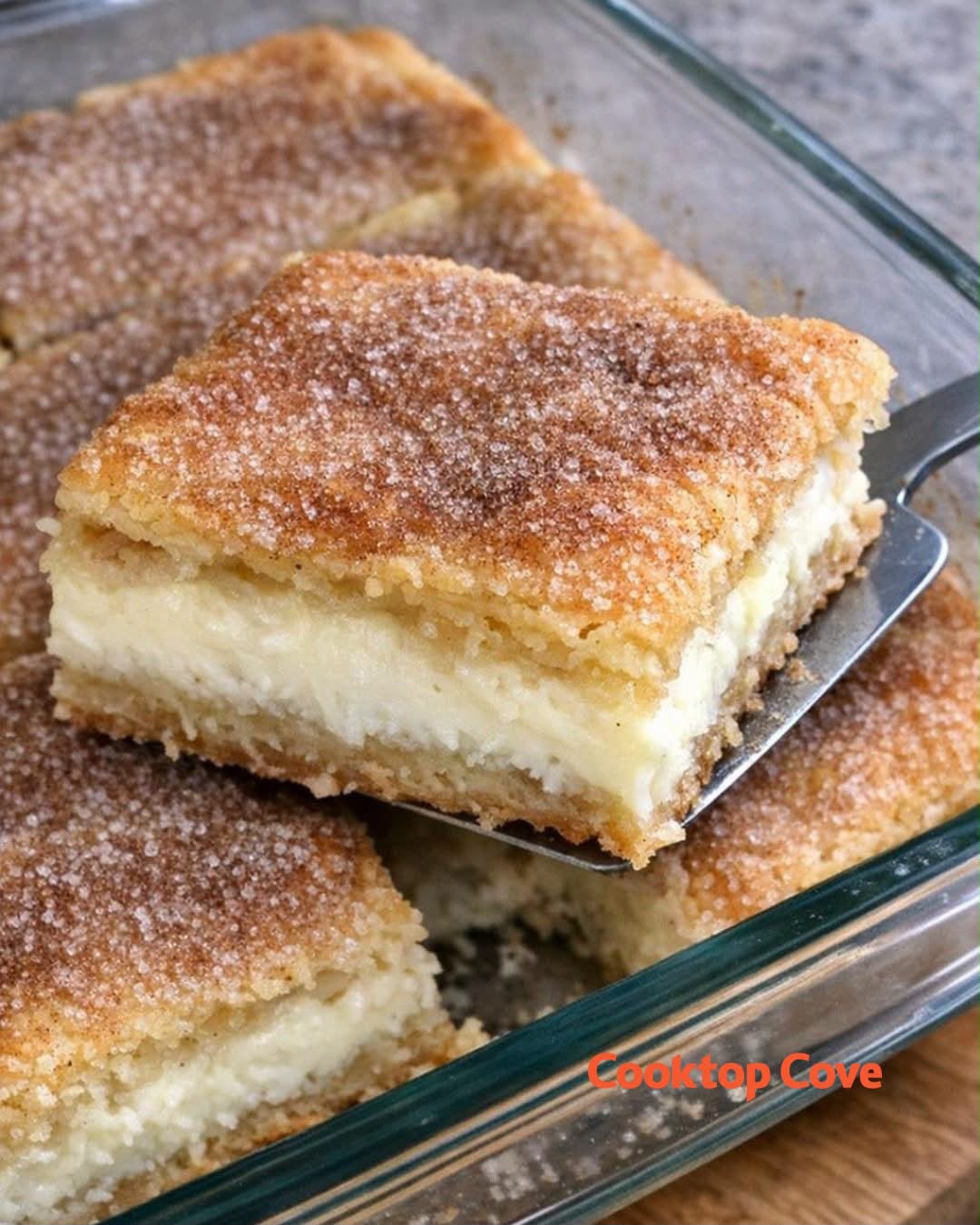
Cinnamon Cream Cheese Bars
Cinnamon Cream Cheese Bars are a delicious combination of buttery pastry, smooth cheesecake filling and a sweet, golden cinnamon-sugar topping. Every square has a soft, creamy centre surrounded by delicate pastry layers, making this simple baked dessert a wonderful choice for family gatherings, afternoon treats and special occasions.
What makes these bars particularly appealing is the contrast between their textures. The bottom layer of crescent roll dough bakes into a tender pastry base, while the middle stays rich and creamy. On top, melted butter helps the cinnamon sugar develop a beautifully golden, lightly crisp finish.
Unlike traditional cheesecake, which often requires a biscuit crust, careful mixing and a lengthy baking process, this recipe uses convenient refrigerated crescent roll dough. The result is a cheesecake-inspired dessert that is much easier to assemble without sacrificing flavour.
The cream cheese filling has just the right balance of sweetness and tanginess. Vanilla adds warmth, while the cinnamon topping brings a comforting bakery-style aroma to every bite.
These cinnamon cream cheese bars are also extremely versatile. Serve them chilled for a firmer cheesecake-like texture, or allow them to come towards room temperature for a softer, creamier experience.
Whether you are preparing dessert for a weekend dinner, sharing something sweet at a celebration or simply making a treat for the family, these golden cinnamon cheesecake squares are an excellent addition to your baking collection.
Recipe Overview
- Recipe Name: Cinnamon Cream Cheese Bars
- Category: Dessert
- Style: American-inspired home baking
- Preparation Time: Approximately 15 minutes
- Cooking Time: 28–32 minutes
- Cooling Time: Until completely cool
- Refrigeration Time: At least 1 hour
- Total Time: Approximately 2 hours 15 minutes, depending on cooling
- Servings: Approximately 12–16 bars
- Difficulty: Easy
- Oven Temperature: 350°F (175°C)
- Baking Dish: 9×13-inch baking dish
- Cooking Method: Oven baking
This easy cream cheese dessert requires a short ingredient list and very little hands-on preparation. Most of the time is spent baking, cooling and chilling, allowing the filling to become firm enough for neat slicing.
Why You’ll Love This Recipe
- Simple ingredients: The recipe uses everyday baking ingredients and convenient refrigerated pastry.
- Rich cheesecake centre: Cream cheese, sugar, vanilla and egg create a smooth, satisfying filling.
- Buttery pastry layers: Crescent dough provides a tender, slightly flaky base and topping.
- Golden cinnamon crust: Cinnamon sugar adds sweetness, warmth and a lovely delicate crunch.
- Easy preparation: There is no need to prepare homemade pastry or a traditional cheesecake crust.
- Ideal for sharing: A 9×13-inch dish produces plenty of dessert squares for a gathering.
- Make-ahead friendly: The bars can be prepared in advance and refrigerated until serving.
- Delicious at different temperatures: Enjoy them chilled or after a short rest at room temperature.
Ingredients
For the Pastry and Cream Cheese Filling
- 2 cans refrigerated crescent roll dough
- 16 oz (approximately 454 g) cream cheese, softened
- 1 cup (approximately 200 g) granulated sugar
- 1 teaspoon vanilla extract
- 1 large egg
- 3 tablespoons (approximately 42 g) melted butter
For the Cinnamon Sugar Topping
- ¼ cup (approximately 50 g) granulated sugar
- 1½ teaspoons ground cinnamon
These quantities make a generous tray of cinnamon cream cheese bars with a substantial creamy filling. The two layers of crescent dough provide enough pastry to support the cheesecake centre while maintaining a pleasant balance between pastry and filling.
Ingredient Notes
Refrigerated Crescent Roll Dough
Crescent roll dough is the foundation of this dessert. It creates the bottom pastry layer and the golden upper crust. Both standard crescent rolls and crescent dough sheets can work, although unperforated sheets are easier to arrange evenly.
Cream Cheese
Full-fat cream cheese gives the filling its rich taste and smooth, firm consistency. Allow it to soften before mixing so it combines easily with the sugar and egg without leaving small lumps.
Granulated Sugar
Granulated sugar sweetens the cheesecake centre and helps create the characteristic sparkling cinnamon topping. Measure the filling sugar separately from the topping sugar to avoid confusion.
Vanilla Extract
Vanilla adds a gentle sweetness and enhances the flavour of the cream cheese. Pure vanilla extract is a good choice, but ordinary baking vanilla extract also works.
Egg
The egg helps the cream cheese mixture set during baking. It also gives the filling a softer, custard-like cheesecake texture without making the dessert overly heavy.
Melted Butter
Butter is brushed over the upper pastry layer before adding cinnamon sugar. This helps the topping adhere and encourages an appealing golden finish.
Ground Cinnamon
Cinnamon contributes the dessert’s signature warm aroma. Its flavour complements both the buttery pastry and the tangy cream cheese filling.
Equipment You’ll Need
- 9×13-inch baking dish
- Large mixing bowl
- Electric hand mixer or sturdy whisk
- Measuring cups and spoons
- Rubber spatula
- Pastry brush
- Small bowl for cinnamon sugar
- Sharp knife for cutting the finished bars
- Cooling rack
A clear glass baking dish is particularly convenient because you can see the pastry layers as they bake. A metal baking tin also works, although baking performance may differ slightly depending on the material and thickness.
How to Make Cinnamon Cream Cheese Bars
Step 1: Preheat the Oven
Preheat your oven to 350°F (175°C). Lightly grease a 9×13-inch baking dish to help prevent the pastry from sticking. Make sure the oven reaches the correct temperature before placing the dessert inside.
Step 2: Prepare the Bottom Pastry Layer
Open one can of refrigerated crescent roll dough and carefully unroll it. Press the dough evenly across the bottom of the prepared baking dish. If using perforated crescent rolls, gently press the seams together to create a continuous pastry base.
Step 3: Make the Cream Cheese Filling
Place the softened cream cheese in a large mixing bowl. Add the 1 cup granulated sugar, vanilla extract and egg. Beat until the mixture is smooth, thick and creamy, scraping down the sides of the bowl as necessary.
Step 4: Spread the Filling
Spoon the cream cheese mixture over the bottom pastry layer. Use a rubber spatula to spread it evenly towards the corners, creating a level filling that will bake consistently.
Step 5: Add the Upper Pastry Layer
Carefully unroll the second can of crescent dough and place it over the cream cheese filling. Handle the dough gently to avoid disturbing the creamy centre. Press together any visible perforations.
Step 6: Brush with Melted Butter
Brush the top layer generously with the 3 tablespoons melted butter. Cover the surface evenly, particularly around the edges, so the cinnamon sugar has a buttery coating to cling to.
Step 7: Add the Cinnamon Sugar
Combine the ¼ cup granulated sugar and 1½ teaspoons ground cinnamon in a small bowl. Stir until evenly mixed, then sprinkle the mixture across the entire pastry surface.
Step 8: Bake Until Golden
Place the baking dish in the preheated oven and bake for 28–32 minutes. The pastry should become deeply golden and the cream cheese filling should appear set rather than liquid. A slight movement in the centre is acceptable, but it should not look wet or runny.
Step 9: Cool and Refrigerate
Remove the dessert from the oven and allow it to cool completely. Transfer it to the refrigerator for at least 1 hour so the cheesecake filling becomes firmer and easier to cut.
Step 10: Slice and Serve
Use a sharp knife to cut the dessert into squares or rectangular bars. Serve chilled for a firmer texture, or allow the bars to rest briefly at room temperature for a softer, creamier filling.
How to Make a Smooth Cream Cheese Filling
The centre is the most important part of these cinnamon cheesecake squares. A smooth filling makes every bite creamy and helps the bars hold their shape when cut.
Start by using properly softened cream cheese. Cold cream cheese is difficult to mix and can leave tiny lumps that remain visible after baking. For best results, let the cream cheese soften at room temperature just until it can be pressed easily with a spoon, without leaving it unrefrigerated for an extended period.
Beat the cream cheese and sugar until well combined, then incorporate the vanilla and egg. Although all the filling ingredients can be mixed together as directed, combining them gradually can make it easier to achieve a smooth texture.
Once the egg has been incorporated, avoid unnecessarily prolonged mixing. The goal is a thick, creamy filling rather than a fluffy mixture full of air bubbles.
When spreading the mixture over the pastry, use gentle strokes with a spatula. Keeping the filling level prevents one area from becoming too thick while another ends up with very little cheesecake.
How to Get Perfect Crescent Roll Layers
The pastry layers play two different roles. The bottom supports the cheesecake filling, while the top develops the buttery cinnamon-sugar crust.
Keep the refrigerated crescent dough cold until you are ready to use it. Dough that becomes too warm may feel sticky and stretch too easily, making it more difficult to arrange.
For the bottom layer, press the dough gently into the baking dish without making it excessively thin. Seal the perforations to reduce gaps through which the filling could seep.
The upper layer requires more care because it rests directly on the soft filling. If necessary, unroll the dough onto a clean work surface first, gently close the seams, then lift it over the cream cheese mixture.
Do not press the upper layer deeply into the filling. Simply position it across the surface so the pastry can bake as a distinct layer.
A properly baked dessert should have a golden top and a cooked pastry base rather than a heavy, doughy layer underneath the filling.
How to Make the Best Cinnamon Sugar Crust
The cinnamon-sugar topping gives these bars their signature finish. Its success depends on the balance between butter, sugar and ground cinnamon.
Mix the cinnamon thoroughly with the granulated sugar before sprinkling. This prevents dark patches of concentrated cinnamon and ensures every piece has a consistent flavour.
Brush the melted butter evenly over the pastry before adding the sugar mixture. The butter encourages the topping to adhere rather than falling off when the bars are sliced.
Sprinkle from a little height to distribute the cinnamon sugar more evenly. Give the edges the same attention as the centre, as the outer bars are often the first pieces to develop a beautifully crisp crust.
During baking, the butter and sugar help create a fragrant golden topping. After chilling, the crust will soften slightly where it meets the cream cheese filling, but the top should retain a pleasant sugary texture.
Expert Tips for Perfect Results
- 1. Soften the cream cheese: This is the easiest way to prevent lumps in the filling.
- 2. Choose full-fat cream cheese: It usually gives the richest and most stable filling.
- 3. Keep the dough chilled: Cold crescent dough is easier to unroll and position.
- 4. Seal pastry seams: Closing perforations helps create an even base and top.
- 5. Use the correct baking dish: A 9×13-inch dish provides the intended pastry-to-filling ratio.
- 6. Spread the filling evenly: Uneven filling can cause inconsistent baking and awkward slices.
- 7. Avoid overmixing: Too much air in the filling may cause unnecessary puffing or cracking.
- 8. Melt the butter gently: Warm, melted butter is ideal; there is no need to brown it.
- 9. Distribute the topping evenly: A consistent cinnamon-sugar coating gives every bar the same flavour.
- 10. Watch the final minutes: Oven temperatures vary, so begin checking the colour near the end of baking.
- 11. Cool before chilling: Allowing the dessert to cool helps reduce condensation inside the storage container.
- 12. Refrigerate before slicing: The chilled filling holds its shape much better.
- 13. Clean the knife between cuts: This creates sharper, more attractive dessert squares.
- 14. Store leftovers promptly: The cream cheese filling makes refrigeration essential.
Common Mistakes to Avoid
1. Using Cold Cream Cheese
Cold cream cheese may not blend smoothly with the sugar and egg. Soften it first for a better filling texture.
2. Leaving Gaps in the Pastry
Unsealed perforations may allow filling to escape. Press seams gently together before assembling the dessert.
3. Spreading the Filling Unevenly
Thick and thin patches can bake differently. Smooth the cheesecake mixture into an even layer.
4. Stretching the Top Pastry Too Thin
Excessively stretched pastry may tear during baking. Handle the upper layer carefully.
5. Adding Cinnamon Sugar Unevenly
Large amounts in one spot may produce an overly sweet or strongly spiced bite. Mix and distribute the topping thoroughly.
6. Removing the Bars Too Early
An underbaked centre may remain loose after chilling. Look for a golden surface and a filling that is mostly set.
7. Baking for Too Long
Overbaking may dry the filling and darken the pastry excessively. Use the recipe’s baking window as a guide.
8. Cutting While Hot
The filling is softer when warm and may squeeze out between the pastry layers. Cool and refrigerate before cutting.
9. Leaving the Dessert at Room Temperature Too Long
Because these bars contain cream cheese and egg, they should not be treated as shelf-stable pastries. Refrigerate leftovers promptly.
Optional Recipe Variations
The original recipe is delicious as written, but the following optional adaptations offer ways to customise the flavour.
1. Lemon Cream Cheese Bars
Add a little finely grated lemon zest to the cream cheese filling for a brighter, fresher flavour.
2. Extra Vanilla Cheesecake Bars
Increase the vanilla slightly for a more pronounced vanilla cheesecake flavour.
3. Brown Sugar Cinnamon Bars
Replace some of the granulated sugar in the topping with light brown sugar for a deeper, caramel-like finish.
4. Apple Cinnamon Cheesecake Bars
Add a thin layer of finely chopped, cooked and cooled apples over the cream cheese filling before adding the top pastry. Avoid excess moisture, and allow for possible changes to the baking time.
5. Berry Cream Cheese Bars
Swirl a small amount of thick raspberry or strawberry preserve into the filling for a fruity contrast.
6. Nutty Cinnamon Bars
Sprinkle a little finely chopped pecan or walnut over the cinnamon-sugar topping before baking.
7. Maple Cinnamon Bars
Add a small amount of maple extract to the cream cheese filling for a warm, sweet flavour.
These are optional suggestions and are not part of the original ingredient list. Adjustments involving extra moisture may affect baking and setting.
How to Serve Cinnamon Cream Cheese Bars
These bars are enjoyable on their own, but a few carefully chosen accompaniments can make them feel even more special.
With Coffee
A cup of freshly brewed coffee balances the sweetness of the filling and cinnamon topping. This makes the bars particularly suitable for an afternoon treat.
With Tea
Black tea, chai or a mild spiced tea complements the warm cinnamon flavour without overwhelming the cheesecake centre.
With Fresh Berries
Strawberries, raspberries or blueberries add colour and a refreshing contrast to the rich filling.
As a Party Dessert
Cut the bars into smaller squares and arrange them on a dessert platter. Their distinct layers make them attractive without needing additional decoration.
As a Chilled Summer Treat
Serve the bars straight from the refrigerator for a firm cheesecake texture that is particularly pleasant in warmer weather.
For a Weekend Brunch
Offer the bars alongside fresh fruit and hot drinks as a sweet addition to a brunch spread.
Storage, Freezing and Make-Ahead Tips
Refrigerating Leftovers
Store cooled cinnamon cream cheese bars in an airtight container in the refrigerator for up to 3–4 days. Separate stacked layers with baking parchment to help prevent sticking.
Freezing the Bars
For longer storage, wrap individual cooled bars securely and place them inside a freezer-safe container. Freeze for up to 2 months for best quality. The pastry may become softer after thawing, but the dessert should remain enjoyable.
Thawing
Transfer frozen bars to the refrigerator and allow them to thaw gradually. Avoid leaving frozen cheesecake bars on the kitchen counter for extended periods.
Reheating
These bars are best served chilled or at room temperature. If you prefer a slightly warm dessert, heat an individual portion briefly until just warmed through. Be aware that warming will soften the cheesecake filling.
Making Ahead
You can prepare and bake the bars the day before serving. Cool them, refrigerate overnight and slice when required. The extended chilling time makes neat cutting easier.
Food Safety
Because the dessert contains dairy and egg, refrigerate it within 2 hours of cooking or serving, or sooner in very warm conditions. Keep stored portions chilled until needed.
Frequently Asked Questions
1. What are cinnamon cream cheese bars?
They are layered baked dessert squares made with crescent roll pastry, sweetened cream cheese filling and a buttery cinnamon-sugar topping.
2. Are these bars the same as cheesecake?
They have a similar creamy filling, but the crescent pastry layers give them a different texture from traditional cheesecake.
3. Can I use crescent dough sheets?
Yes. Crescent dough sheets work particularly well because they do not have triangular perforations that need sealing.
4. Can I use homemade pastry?
Yes, although homemade pastry may produce a different result and require adjustments to the baking method. The original recipe is designed for refrigerated crescent dough.
5. Do I need full-fat cream cheese?
Full-fat cream cheese is recommended for the richest texture. Reduced-fat varieties may produce a softer filling.
6. Why is my cream cheese filling lumpy?
The cream cheese may have been too cold when mixed. Softening it beforehand usually solves this problem.
7. Why is my filling too runny?
The bars may be underbaked, insufficiently chilled or made with a cream cheese product containing too much moisture.
8. Can I leave out the egg?
The egg helps the filling set. Omitting it changes the original recipe and may result in a softer filling, so a tested egg-free version would be preferable.
9. Can I reduce the sugar?
You can experiment with a small reduction, although it will change the sweetness and may affect the texture of the filling and topping.
10. Can I use salted butter?
Yes. Salted butter can work in the topping, although it may introduce a slightly more pronounced salty flavour.
11. How do I know when the bars are baked?
The top should be deeply golden, and the centre should look set rather than liquid. The bars will continue to firm as they cool and chill.
12. Why did my top pastry become too dark?
Your oven may run hot, or the dessert may have baked too long. Check the temperature and monitor the final minutes carefully.
13. Why is the bottom pastry soggy?
Excess moisture in the filling, underbaking or cutting before the bars have properly set can contribute to a soft base.
14. Do these bars need refrigeration?
Yes. The cream cheese and egg filling means they should be stored in the refrigerator.
15. How long should I chill the bars?
At least 1 hour after cooling. Longer chilling can help the filling become firmer and easier to slice.
16. Can I make them the night before?
Absolutely. Baking them the previous day is a convenient way to prepare dessert in advance.
17. Can I freeze cinnamon cream cheese bars?
Yes. Wrap them securely and freeze for up to 2 months for best quality, then thaw in the refrigerator.
18. Can I add fruit?
Yes. A small quantity of cooked apples or thick fruit preserve can work, but fruit adds moisture and may require adjustments.
19. How do I cut clean squares?
Refrigerate the bars thoroughly and use a sharp knife. Wipe the blade clean between cuts.
20. Can I serve the bars warm?
Yes, but the filling will be softer. For the clean layered appearance shown in the photograph, chilling is recommended.
21. What size baking dish should I use?
The original recipe specifies a 9×13-inch baking dish. A smaller dish will create thicker layers and may change the baking time.
22. How many servings does the recipe make?
One 9×13-inch dish can be cut into approximately 12–16 bars, depending on your preferred portion size.
23. Can I prepare these for a bake sale?
Yes, provided they can be stored and transported under appropriate refrigeration. The creamy filling should not be left unrefrigerated for long periods.
24. What makes the cinnamon topping crisp?
The combination of melted butter and granulated sugar helps produce a lightly crisp, golden surface during baking.
25. What is the best way to serve leftovers?
Serve them chilled, or let individual portions stand briefly at room temperature for a slightly softer cheesecake texture.
Cinnamon Cream Cheese Bars Recipe Card
Cinnamon Cream Cheese Bars
Description: Buttery crescent pastry layered with a rich, creamy cheesecake filling and finished with a golden cinnamon-sugar crust.
- Course: Dessert
- Style: American-inspired
- Preparation Time: Approximately 15 minutes
- Baking Time: 28–32 minutes
- Additional Time: Cooling plus at least 1 hour chilling
- Yield: Approximately 12–16 bars
- Oven: 350°F (175°C)
- Method: Baking
Ingredients
- 2 cans refrigerated crescent roll dough
- 16 oz cream cheese, softened
- 1 cup granulated sugar
- 1 teaspoon vanilla extract
- 1 large egg
- 3 tablespoons melted butter
Cinnamon Sugar Topping
- ¼ cup granulated sugar
- 1½ teaspoons ground cinnamon
Instructions
- Preheat the oven to 350°F (175°C) and lightly grease a 9×13-inch baking dish.
- Press one can of crescent dough evenly into the bottom of the baking dish, sealing any seams.
- Beat the softened cream cheese, 1 cup sugar, vanilla extract and egg until smooth and creamy.
- Spread the cream cheese mixture evenly over the bottom pastry layer.
- Carefully place the second can of crescent dough over the filling, sealing any perforations.
- Brush the top evenly with 3 tablespoons melted butter.
- Combine ¼ cup granulated sugar with 1½ teaspoons cinnamon and sprinkle over the pastry.
- Bake for 28–32 minutes, until the top is deeply golden and the filling is set.
- Allow the bars to cool completely, then refrigerate for at least 1 hour.
- Cut into squares and serve chilled or at room temperature.
Recipe Notes
- For the smoothest filling, soften the cream cheese before mixing.
- Crescent dough sheets are convenient because they have no perforations.
- Do not skip the chilling step if you want clean, neatly layered squares.
- Store leftovers in an airtight container in the refrigerator for 3–4 days.
- Freeze individually wrapped bars for up to 2 months for best quality.
Hashtags: #CinnamonCreamCheeseBars #CheesecakeBars #CrescentRollDessert #EasyDesserts #HomemadeBaking