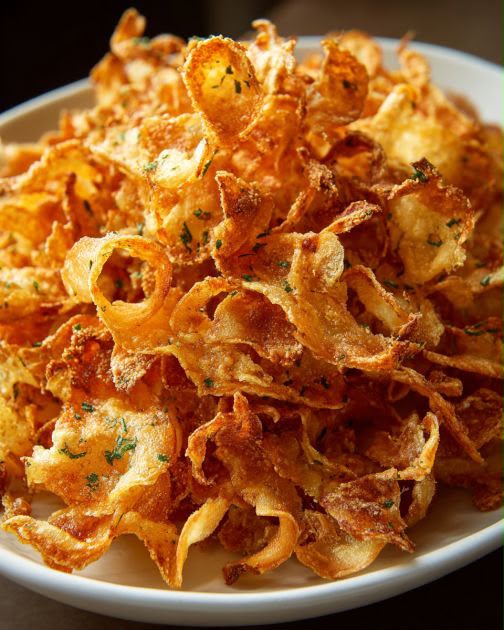
Crispy Fried Onion Strings
Golden, crunchy and wonderfully savoury, these homemade crispy fried onion strings are one of the easiest ways to transform everyday onions into an irresistible snack, side dish or finishing touch for your favourite meals.
There is something particularly satisfying about biting into a handful of freshly fried onion strings. The outside is delicately crisp, the inside is tender and slightly sweet, and every bite carries the comforting flavour of perfectly seasoned golden onions.
Unlike traditional thick onion rings, these crispy fried onion strings are thin, light and wonderfully irregular. Their curled edges create extra surface area, allowing the seasoned coating to turn golden and crunchy in hot oil.
The secret starts with a simple buttermilk soak. This helps the flour mixture cling to the onion slices while contributing a subtle tangy flavour that balances the natural sweetness of the onions.
A combination of plain flour and cornflour gives the strings their distinctive crisp coating. Paprika, garlic powder, onion powder and black pepper provide a gentle savoury warmth, while a small amount of cayenne pepper can introduce extra heat.
These crunchy onions are delicious served straight from the plate, but they are equally useful scattered over burgers, sandwiches, casseroles, salads or creamy mashed potatoes. They add texture and flavour without requiring complicated preparation.
Whether you are preparing a casual weekend snack, organising a family dinner or looking for a homemade alternative to packaged fried onions, this recipe provides a practical method for achieving beautiful golden results.
Recipe Overview
- Recipe Name: Crispy Fried Onion Strings
- Category: Appetiser, snack, side dish or topping
- Style: American-inspired comfort food
- Preparation Time: Approximately 15 minutes
- Soaking Time: 20–30 minutes
- Cooking Time: 2–3 minutes per batch
- Total Time: Approximately 40–55 minutes, depending on batch size
- Servings: Approximately 4–6 as a snack or topping
- Difficulty: Easy
- Cooking Method: Deep-frying or shallow frying in sufficient oil
- Oil Temperature: 350°F (175°C)
- Main Ingredients: Yellow onions, buttermilk, plain flour, cornflour and seasonings
The times and servings are practical estimates. Actual frying time depends on the size of your pan, the thickness of your onions and how many batches you prepare.
Why You’ll Love This Recipe
- Excellent crunch: The flour and cornflour coating creates a delicate, crisp texture that contrasts beautifully with the tender onion centres.
- Simple ingredients: Most of the ingredients are familiar kitchen staples, making the recipe approachable and convenient.
- Versatile serving options: Enjoy them as a snack or use them to add an appealing finishing touch to everyday meals.
- Rich savoury flavour: Garlic powder, paprika and onion powder complement the natural sweetness of cooked onions.
- Quick cooking: Each small batch takes only a few minutes once the oil reaches the correct temperature.
- Customisable seasoning: Adjust the optional cayenne pepper or explore different seasonings to suit your preference.
- Beautiful presentation: The curled, golden strands look especially inviting piled high on a serving plate.
- Great for entertaining: A generous bowl of fresh onion strings makes a satisfying homemade party snack.
Ingredients
This recipe uses two large yellow onions and a simple seasoned coating. The original quantities below are suitable for creating a generous batch of crisp onion strings.
For the Onions
- 2 large yellow onions, thinly sliced
- 1 cup buttermilk (approximately 240 ml)
For the Crispy Coating
- 1 cup all-purpose flour (approximately 125 g plain flour)
- ½ cup cornstarch (approximately 60 g cornflour)
- 1 teaspoon paprika
- 1 teaspoon garlic powder
- ½ teaspoon onion powder
- ½ teaspoon salt
- ¼ teaspoon black pepper
- ¼ teaspoon cayenne pepper, optional
For Frying and Finishing
- Vegetable oil, for frying
- 1 tablespoon chopped parsley, optional
Ingredient Notes
Yellow Onions
Yellow onions are an excellent choice because they develop a pleasant sweetness when cooked while maintaining a savoury onion flavour. Choose large, firm onions without soft patches or signs of spoilage.
Thin, evenly sliced onions are essential for achieving the characteristic delicate texture. Large differences in thickness can cause some pieces to brown too quickly while others remain soft.
Buttermilk
Buttermilk helps moisten the onion slices so that the seasoned flour mixture adheres more evenly. It also provides a subtle tang that complements the sweetness of the cooked onions.
For best results, separate the onion strands before soaking so the buttermilk can reach as much of their surface as possible.
Plain Flour
Plain flour provides the main structure of the coating. When combined with the moisture from the buttermilk and fried at the correct temperature, it develops an appetising golden crust.
Cornflour
Cornflour, known as cornstarch in the United States, helps create a lighter and crisper coating. It is particularly useful for thin fried foods where a heavy batter would overwhelm the main ingredient.
Paprika
Paprika contributes colour and a mild savoury warmth. Ordinary sweet paprika works well with the other seasonings.
Garlic and Onion Powders
These powdered seasonings distribute evenly through the dry coating and give the finished onion strings a rounded, savoury flavour without introducing additional moisture.
Salt and Black Pepper
Salt enhances the natural flavour of the onions, while black pepper adds gentle warmth. A light final seasoning immediately after frying can make the finished strings especially appetising.
Cayenne Pepper
The cayenne pepper is completely optional. The small quantity suggested provides a gentle kick rather than overwhelming heat.
Vegetable Oil
Use a neutral vegetable oil suitable for frying. Sunflower, rapeseed or other appropriate high-temperature frying oils can work well. The amount required depends on the size and depth of your pan.
Fresh Parsley
Chopped parsley is an optional finishing garnish. It brings a little colour to the golden onion strings and adds a fresh herbal note.
Equipment You’ll Need
- Sharp knife or mandoline slicer
- Chopping board
- Two medium mixing bowls
- Deep, heavy-bottomed frying pan or suitable saucepan
- Cooking thermometer
- Kitchen tongs or a wire skimmer
- Large plate or tray
- Kitchen paper or a wire draining rack
- Measuring cups and spoons
A thermometer is particularly helpful for this recipe because the oil temperature has a significant effect on the final crispness. A heavy-bottomed pan also distributes heat more evenly and helps reduce sudden temperature changes.
How to Make Crispy Fried Onion Strings
Step 1: Slice the Onions
Peel the two large yellow onions and slice them into thin rings. Carefully separate the slices into individual rings and strands.
Try to keep the thickness reasonably consistent. Thin slices will develop delicate curled edges and fry more evenly than thick pieces.
Step 2: Soak in Buttermilk
Place the onion slices in a mixing bowl and pour over 1 cup of buttermilk.
Gently turn the onions so that all the pieces are coated, then leave them to soak for approximately 20–30 minutes.
This soaking stage helps the dry mixture cling to the onions and gives the coating a light tangy flavour.
Step 3: Prepare the Seasoned Flour
In a separate bowl, combine the plain flour, cornflour, paprika, garlic powder, onion powder, salt, black pepper and optional cayenne pepper.
Whisk thoroughly to distribute the seasonings evenly. Breaking up any lumps in the flour mixture will help produce a more consistent coating.
Step 4: Coat the Onion Strands
Lift a small portion of onions from the buttermilk and allow the excess liquid to drip back into the bowl.
Transfer the onions to the seasoned flour mixture and toss gently until each strand is coated.
Shake away loose excess flour before frying. Aim for a fine, even coating rather than a thick layer of dry flour.
Step 5: Heat the Vegetable Oil
Add suitable vegetable oil to a deep, heavy-bottomed pan, leaving ample space above the oil to prevent overflow.
Heat the oil to approximately 350°F (175°C). Use a cooking thermometer to check the temperature before adding the onions.
Keep water away from the hot oil and avoid filling the pan more than one-third full with oil.
Step 6: Fry in Small Batches
Carefully lower a small batch of coated onion strands into the hot oil.
Fry for approximately 2–3 minutes, moving the strands gently if necessary to prevent them from sticking together.
The onions are ready when the coating appears deeply golden and crisp. The exact cooking time depends on their thickness and the temperature of the oil.
Step 7: Drain the Fried Onions
Remove the onion strings using tongs or a wire skimmer and transfer them to a plate lined with kitchen paper.
Alternatively, place them on a wire rack set over a tray to allow excess oil to drain without trapping steam underneath.
Step 8: Season and Garnish
While the onion strings are still hot, sprinkle with a little extra salt if desired.
Add the optional tablespoon of freshly chopped parsley for a bright, attractive finish.
Step 9: Serve Immediately
Arrange the fried onion strings on a serving plate and enjoy them while they are hot and crunchy.
They are especially delicious when served fresh, before moisture from the air has time to soften their delicate coating.
How to Slice Onions for the Best Texture
The thickness of the onions is one of the most important details in this recipe. Thin strands cook quickly and create the characteristic light, curled appearance that makes onion strings different from traditional battered onion rings.
Start by peeling away the dry outer layers. Place each onion securely on a chopping board and use a sharp knife to make thin slices. A mandoline slicer can also help create consistent results, but always use its hand guard.
Once sliced, gently separate the rings. Avoid pulling too aggressively because thin onion pieces can tear easily.
Very thick pieces may remain soft in the middle, while exceptionally thin pieces can brown before the coating develops properly. Aim for delicate, reasonably uniform slices.
If the onions release considerable moisture during preparation, allow excess liquid to drain before transferring them to the buttermilk. This prevents unnecessary dilution of the soaking mixture.
How to Get an Extra-Crispy Coating
The combination of plain flour and cornflour is the foundation of the crunchy texture. Plain flour helps the coating hold together, while cornflour contributes a lighter, more delicate finish.
After soaking, remove the onions in small handfuls rather than tipping the entire bowl into the flour. This allows excess buttermilk to drain away and helps prevent the dry mixture from becoming excessively wet.
Toss the onions gently through the seasoned flour, making sure the strands separate rather than forming large clumps.
Before frying, shake away any loose flour. Too much excess coating can fall into the oil, burn and create an unpleasant flavour.
For the most consistent results, coat each batch shortly before frying. Leaving coated onions sitting for too long can allow moisture to soak into the flour, making the surface sticky rather than delicately crisp.
How to Fry Onion Strings Properly
Maintaining the correct frying temperature is essential. At around 350°F (175°C), the coating should cook relatively quickly and develop an appealing golden surface.
If the temperature falls too low, the onions may absorb more oil and become heavy or greasy. If the oil becomes excessively hot, the coating can darken before the onions cook evenly.
Always fry in small batches. Adding too many onion strands at once lowers the oil temperature and can cause the pieces to stick together.
Allow the oil to return to the target temperature between batches. Remove loose browned crumbs with a wire skimmer when necessary so they do not continue cooking and affect the flavour of subsequent batches.
Once fried, drain the onion strings promptly. A wire rack provides good airflow, helping the coating remain crisp while excess oil drips away.
Never leave hot oil unattended. Keep the pan handle secure, lower ingredients carefully and turn off the heat immediately after cooking. If cooking oil catches fire, never pour water onto it.
Expert Cooking Tips
- Choose firm onions. Fresh onions produce better slices and are easier to handle.
- Cut evenly. Consistent thickness helps the strings cook at approximately the same speed.
- Separate every ring. Individual strands coat more evenly than clumps.
- Do not skip the buttermilk soak. It helps the seasoned flour adhere to the onions.
- Whisk the coating thoroughly. Evenly distributed seasonings produce a more balanced flavour.
- Use cornflour as directed. Its contribution to the light texture is particularly useful for delicate onion strings.
- Drain excess buttermilk. Too much liquid can create an overly thick coating.
- Coat in manageable portions. Small batches are easier to handle and prevent clumping.
- Check the oil temperature. A thermometer is more reliable than judging heat by appearance.
- Avoid overcrowding. The onions need enough space to fry evenly.
- Remove browned crumbs. This helps keep the frying oil clean between batches.
- Drain promptly. Remove excess oil without leaving the onions sitting in a pile of grease.
- Season while hot. A little finishing salt adheres nicely to freshly fried onions.
- Serve immediately. These delicate strings are at their best shortly after frying.
Common Mistakes to Avoid
1. Cutting the Onions Too Thickly
Thick pieces require longer cooking and may lack the light texture associated with onion strings. Slice them thinly and consistently.
2. Skipping the Soaking Stage
Without enough moisture, the seasoned flour may not adhere evenly. Give the onions the recommended 20–30 minutes in buttermilk.
3. Adding Too Much Wet Onion to the Flour
Excess buttermilk can turn the coating into a sticky mass. Lift the onions out gradually and let the extra liquid drip away.
4. Leaving Excess Dry Flour on the Onions
Loose flour can fall into the oil and burn. Shake off the excess before frying.
5. Frying at Too Low a Temperature
Cool oil can make the finished onion strings greasy. Monitor the temperature and allow it to recover between batches.
6. Overcrowding the Pan
Large batches make it harder to maintain even heat. Use smaller portions for better crispness.
7. Overcooking the Onions
Thin strands can change from golden to dark brown quickly. Watch closely during the final moments of frying.
8. Stacking the Onions While Draining
Steam can soften the coating when hot onions are piled too high. Spread them out on a rack or draining plate.
9. Preparing Them Too Far in Advance
The coating gradually loses its crispness during storage. Whenever possible, fry the onions shortly before serving.
Optional Recipe Variations
The original recipe already has a delicious savoury flavour. The following ideas are optional changes rather than ingredients required for the main recipe.
1. Spicy Onion Strings
Increase the cayenne slightly or add a little chilli powder to the dry mixture for a warmer, spicier finish.
2. Smoky Paprika Onion Strings
Replace the ordinary paprika with smoked paprika to introduce a subtle smoky flavour.
3. Parmesan Onion Strings
Sprinkle a little finely grated Parmesan over the hot, freshly fried onion strings just before serving.
4. Herb-Seasoned Onion Strings
Add a small amount of dried thyme or oregano to the flour mixture for a more herbaceous savoury flavour.
5. Black Pepper Onion Strings
Increase the black pepper slightly for a more pronounced peppery taste without adding chilli heat.
6. Sweet Onion Strings
Replace the yellow onions with a sweet onion variety for a slightly milder flavour.
7. Gluten-Free Onion Strings
As an optional alternative, experiment with a suitable gluten-free plain flour blend in place of the wheat flour. Results vary between blends, so the coating may require adjustment.
What to Serve with Crispy Fried Onion Strings
One of the best things about these crunchy onion strings is their versatility. They bring a satisfying contrast to soft, creamy and juicy foods.
On Burgers
Pile a small handful over a cheeseburger or grilled chicken burger. The crisp texture works particularly well with melted cheese and a soft burger bun.
With Sandwiches
Add onion strings to roast beef sandwiches, pulled pork rolls or grilled cheese sandwiches for extra crunch.
Over Casseroles
Scatter freshly fried onions over baked vegetable casseroles shortly before serving. They create a delicious finishing layer without requiring additional oven time.
With Grilled Meat
Serve alongside steak, grilled chicken or barbecue-style dishes. Their savoury sweetness complements richly seasoned meats.
Over Mashed Potatoes
A small handful of crispy onion strings can turn creamy mashed potatoes into an appealing side dish with contrasting textures.
As a Party Snack
Offer the warm onions with ketchup, garlic mayonnaise, ranch-style dressing or a spicy dipping sauce.
With Salads
Use a modest amount as a crunchy garnish for chopped salads or hearty salads containing grilled chicken.
Storage and Reheating
Can You Store Fried Onion Strings?
Yes, although the texture is best immediately after frying. Allow leftovers to cool, then refrigerate them in an airtight container within two hours of cooking.
For the best quality, enjoy refrigerated leftovers within 2–3 days. The coating will soften during storage, but careful reheating can restore some crispness.
How to Reheat in the Oven
Preheat the oven to approximately 375°F (190°C). Spread the onion strings in a single layer on a baking tray and heat for about 5–8 minutes, checking frequently until they are hot and crisp.
How to Reheat in an Air Fryer
Arrange the onions in a loose single layer and reheat at approximately 350°F (175°C) for 2–4 minutes, checking frequently. Thin pieces can burn quickly.
Should You Use the Microwave?
Microwaving is not recommended when crispness is the priority. The coating tends to become soft rather than crunchy.
Can You Freeze Fried Onion Strings?
Freezing is possible, but it may affect their delicate texture. For best results, freeze completely cooled strings in a single layer before transferring them to an airtight freezer container. Reheat directly from frozen in a hot oven, checking until thoroughly heated.
Can You Prepare Them Ahead?
You can slice the onions and prepare the dry seasoning mixture ahead of time. Keep the sliced onions refrigerated and the flour mixture in a separate dry container.
For the best texture, soak, coat and fry the onions closer to serving time.
Frequently Asked Questions
1. What are crispy fried onion strings?
They are thin slices of onion coated in seasoned flour and fried until golden and crunchy. They are generally finer and lighter than traditional thick onion rings.
2. Which onions are best for onion strings?
Yellow onions are a reliable choice because they offer a balanced savoury and sweet flavour. Sweet onions are another optional choice.
3. Can I use red onions?
Yes. Red onions can be used, although their flavour and appearance will differ from those of yellow onions.
4. Why do I need buttermilk?
Buttermilk adds moisture that helps the seasoned coating cling to the onions and contributes a subtle tang.
5. Can I use ordinary milk instead?
Ordinary milk can be tried as a substitution, but it will not provide quite the same tangy flavour or coating characteristics.
6. Why is cornflour included?
Cornflour helps create a lighter, crisper coating when combined with plain flour.
7. What temperature should the oil be?
The original recipe recommends approximately 350°F (175°C).
8. How long do onion strings take to fry?
Each small batch generally takes 2–3 minutes, depending on thickness and oil temperature.
9. How do I know when they are ready?
Look for a deeply golden coating and crisp, curled edges. Remove the strings before they become excessively dark.
10. Why are my onion strings soggy?
Common causes include low oil temperature, overcrowding, too much moisture in the coating or trapping steam while draining.
11. Why are my onion strings greasy?
The oil may have been too cool, or the pan may have been overcrowded. Keeping the temperature steady usually improves the result.
12. Can I make onion strings without cayenne?
Absolutely. Cayenne is optional, and the other seasonings provide plenty of flavour.
13. Can I use an air fryer instead?
An air fryer can cook onion slices, but the original wet-to-dry coating may not crisp evenly without enough oil. A separately tested air-fryer method is preferable.
14. Can I bake these in the oven?
Baking is possible as an alternative approach, but the coating and texture will differ from the fried version. The original recipe is designed for frying.
15. Can I prepare the onions the night before?
Yes. Slice and refrigerate them in a covered container, then complete the buttermilk soak and coating shortly before frying.
16. Can I use self-raising flour?
Plain flour is recommended for the original recipe. Self-raising flour may produce a different coating texture.
17. Should I season the onions after frying?
A light sprinkle of extra salt while they are hot can enhance the flavour. Add the optional chopped parsley at the same time.
18. What is the best way to keep onion strings crispy?
Drain them on a wire rack, avoid stacking them too deeply and serve promptly. If preparing several batches, keep finished onions on a rack in a low oven briefly, watching carefully to prevent further browning.
19. Are onion strings the same as onion rings?
They are similar, but onion strings are usually much thinner, with a finer coating and more delicate, curled texture.
20. What dipping sauces go with fried onion strings?
Garlic mayonnaise, ranch-style dressing, ketchup, barbecue sauce and spicy mayonnaise are all suitable accompaniments.
21. Can I reuse the frying oil?
Oil may sometimes be reused if it has not overheated or degraded. Allow it to cool completely, strain out food particles and store it appropriately. Discard oil that smells unpleasant, becomes excessively dark or shows signs of deterioration.
22. How many people does the recipe serve?
Two large onions should provide approximately 4–6 snack or topping portions, depending on appetite and portion size.
Complete Recipe Card
Crispy Fried Onion Strings
Thin yellow onion strands soaked in buttermilk, coated in seasoned flour and cornflour, then fried until beautifully golden, light and crunchy.
- Category: Appetiser, snack, side dish
- Method: Frying
- Prep Time: Approximately 15 minutes
- Soak Time: 20–30 minutes
- Cook Time: 2–3 minutes per batch
- Total Time: Approximately 40–55 minutes
- Yield: Approximately 4–6 servings
- Frying Temperature: 350°F (175°C)
Ingredients
- 2 large yellow onions, thinly sliced
- 1 cup buttermilk
- 1 cup all-purpose flour
- ½ cup cornstarch
- 1 teaspoon paprika
- 1 teaspoon garlic powder
- ½ teaspoon onion powder
- ½ teaspoon salt
- ¼ teaspoon black pepper
- ¼ teaspoon cayenne pepper, optional
- Vegetable oil, for frying
- 1 tablespoon chopped parsley, optional
Instructions
- Peel and thinly slice the onions, separating the slices into individual rings and strands.
- Place the onions in a bowl and cover with the buttermilk. Soak for 20–30 minutes.
- In another bowl, combine the flour, cornstarch, paprika, garlic powder, onion powder, salt, black pepper and optional cayenne pepper.
- Lift the onion strands from the buttermilk and allow the excess liquid to drip away.
- Toss the onions in the seasoned flour mixture until evenly coated. Shake off excess flour.
- Heat suitable vegetable oil in a deep, heavy-bottomed pan to approximately 350°F (175°C).
- Carefully fry the coated onions in small batches for 2–3 minutes, until deeply golden and crisp.
- Remove with a wire skimmer or tongs and drain on kitchen paper or a wire rack.
- Sprinkle with a little additional salt and the optional chopped parsley while hot.
- Serve immediately for the best golden, crunchy texture.
Recipe Notes
- Slice the onions thinly for a delicate texture.
- Avoid excess buttermilk when coating.
- Maintain the oil temperature between batches.
- Do not overcrowd the frying pan.
- Drain thoroughly and serve fresh.
- Use caution when handling hot oil.
Hashtags: #CrispyOnionStrings #FriedOnions #HomemadeSnacks #EasyAppetizers #ComfortFoodRecipes
Try These Crispy Fried Onion Strings
If you enjoy golden, crunchy comfort food, these homemade crispy fried onion strings deserve a place on your next menu. Their simple ingredients, savoury flavour and delicate texture make them a delicious addition to burgers, family dinners and casual gatherings.
Have you tried making onion strings at home? Share your favourite way to serve them in the comments, save this recipe for later and follow along for more easy homemade recipes.