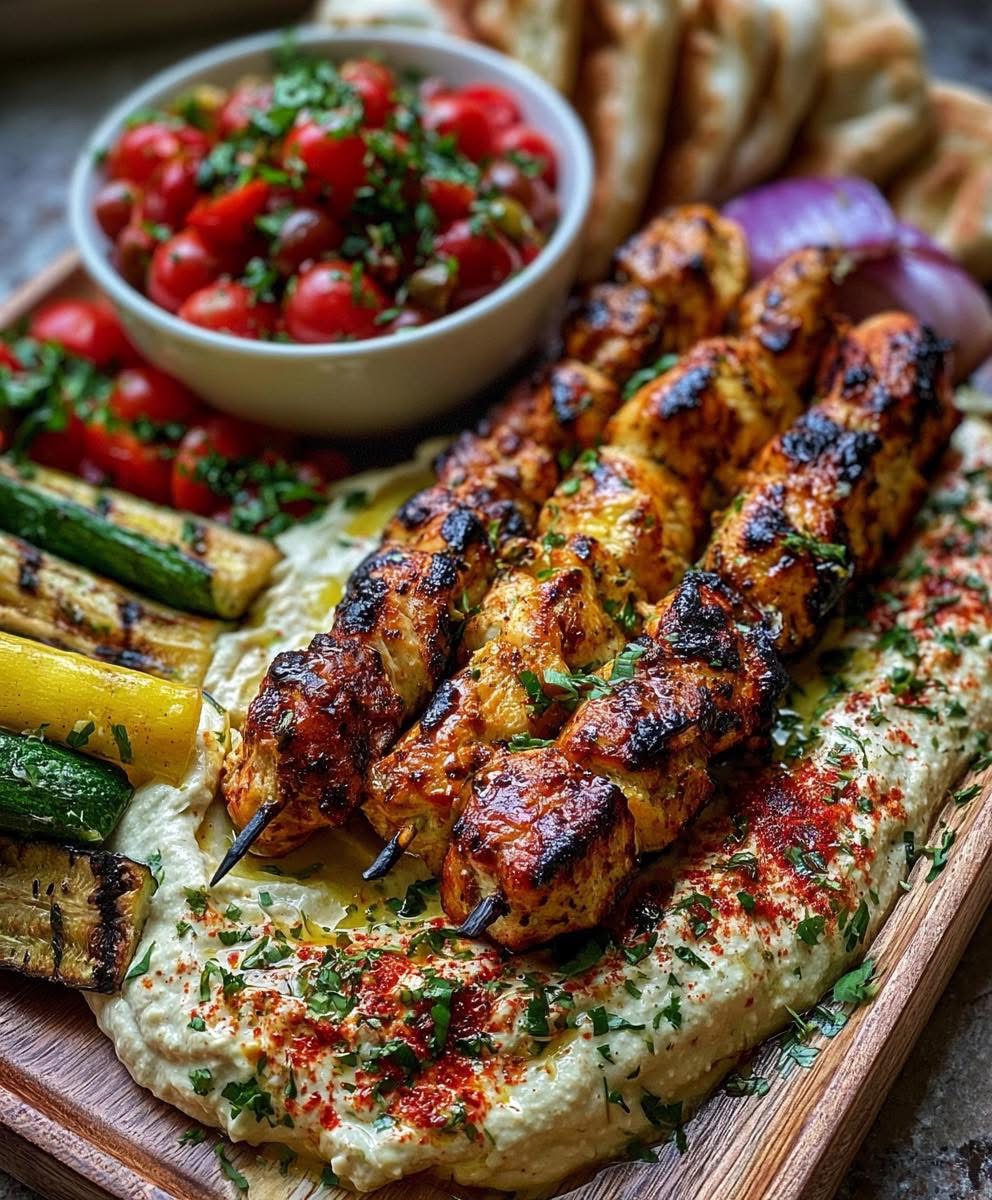
Mediterranean Chicken Skewers with Hummus Spread
The culinary heritage of the Mediterranean basin is a testament to the power of simple, high-quality ingredients harmonized through heat, acid, and aromatic spice. Among the most iconic expressions of this region’s culinary philosophy is the pairing of charred, marinated chicken skewers with a rich, velvety pool of hummus spread. This dish is not merely a modern health trend or an easy weeknight meal; it represents an ancient fusion of Levantine, Ottoman, and North African foodways that has evolved over millennia.
By marrying lean, protein-dense poultry with a nutrient-dense legume base, this recipe balances macro- and micronutrients. In this comprehensive guide, we will explore the historical roots of these components, examine their profound nutritional and physiological benefits, analyze the physical formation and emulsion chemistry behind their textures, and deliver an exhaustive, step-by-step masterclass on replicating this dish at home with professional-grade execution.
🏛️ The Rich History and Global Evolution
To understand this dish, we must trace two distinct historical timelines: the development of skewered meat (the kebab or souvlaki) and the lineage of pureed chickpeas (hummus bi tahini).
The Lineage of the Skewer
Cooking meat on a stick over an open flame is one of human civilization’s oldest culinary methods. Archaeological excavations on the Greek island of Santorini discovered stone support sets for skewers (krateutai) utilized by the Minoan civilization before the 17th century BCE. These ancient tools imply that early Mediterranean societies recognized the efficiency and flavor optimization of grilling uniform, small cuts of meat.
Further east, the word kebab emerged from ancient Semitic roots, specifically the Akkadian kabābu, meaning “to burn” or “to char.” By the medieval era, nomadic Turkic tribes across Central Asia and the Middle East utilized their swords to skewer and roast wild game over open campfires. This functional soldier food was refined during the rise of the Ottoman Empire. Ottoman royal chefs transformed the humble shish kebab into an art form by introducing tenderizing marinades made of wild herbs, garlic, and citrus. As the empire expanded across North Africa, the Levant, and the Balkans, it left behind a permanent footprint of skewered poultry and meat traditions, influencing the Greek souvlaki, the Levantine shish taouk, and the Persian jujeh kabab.
The Legacy of Hummus
The word hummus is the literal Arabic word for chickpea. The full, traditional name of the spread is hummus bi tahini, which translates to “chickpeas with sesame paste”. Chickpeas (Cicer arietinum) are one of the oldest cultivated legumes in human history, with domestication roots tracing back 7,000 to 9,000 years within the Fertile Crescent.
[ Fertile Crescent ] ──> Chickpea Cultivation (7000+ BCE)
[ Mesopotamia ]      ──> Sesame Milling into Tahini (2000 BCE)
[ 13th-Cent. Cairo ] ──> First Written Pureed Chickpea Recipes
[ 18th-Cent. Levant] ──> Modern Evolution of Hummus bi Tahini
While chickpeas were staple food sources for ancient Egyptian, Roman, and Greek civilizations, the earliest recorded recipes for a dish resembling modern hummus appear in 13th-century Arabic cookbooks from Cairo, Egypt. These early versions consisted of cold pureed chickpeas, vinegar, pickled lemons, and oil, but lacked the tahini and garlic we consider mandatory today. The specific formulation of modern hummus bi tahini as we enjoy it today—whipped with rich sesame paste, fresh garlic, lemon juice, and olive oil—most likely stabilized in urban centers of the Ottoman Levant (modern-day Syria, Lebanon, and Palestine) during the 18th century.
The Convergence
The pairing of these two elements represents a natural culinary evolution. In the bustling open-air marketplaces (souks) of Damascus, Beirut, and Jerusalem, street vendors served hot, freshly charred chicken skewers directly off coal grills onto communal platters lined with smooth hummus, wild herbs, and freshly baked flatbreads. The cool, nutty creaminess of the hummus acted as both an insulating base and a sauce for the hot, citrus-infused chicken. Today, this combination is a cornerstone of the global Mediterranean diet framework, celebrated for its flavor harmony and exceptional nutritional efficiency.
🔬 Scientific and Physiological Benefits
Consuming Mediterranean chicken skewers paired with a genuine hummus spread provides an array of health benefits backed by nutritional science. The dietary components align with preventative healthcare models targeting cardiovascular vitality, metabolic control, and intestinal microbiome wellness.
1. High-Density Macro-Nutrient Synergy
- Lean Protein Synthesis: Chicken breast and thigh meat provide highly bioavailable, complete animal protein containing all nine essential amino acids required for tissue repair and muscle maintenance.
- Satiety Management: The pairing of structural animal proteins with the complex carbohydrates and dietary fiber found in chickpeas creates a sustained, dual-stage satiety effect. This slows gastric emptying, delaying the release of hunger hormones like ghrelin and reducing overall caloric intake over a multi-hour window.
2. Glycemic Stabilization
- Low-Glycemic Index (GI): Chickpeas are rich in resistant starch and amylose, which break down slowly in the digestive tract.
- Insulin Control: When combined with healthy fats from tahini and extra virgin olive oil, the digestion of carbohydrates is significantly blunted. This avoids the sharp glucose spikes and subsequent insulin crashes common to refined-carbohydrate meals, making this dish an excellent choice for individuals managing Type 2 diabetes or metabolic syndrome.
3. Cardiovascular Health and Lipid Optimization
- Monounsaturated Fatty Acids (MUFAs): Extra virgin olive oil is predominantly composed of oleic acid, a monounsaturated fat documented to lower circulating Low-Density Lipoprotein (LDL) cholesterol while preserving High-Density Lipoprotein (HDL) levels.
- Polyphenol Content: High-quality cold-pressed olive oil introduces powerful antioxidants, such as oleocanthal and oleuropein, which reduce systemic oxidative stress and inhibit the inflammatory cascades within endothelial tissues.
4. Gastrointestinal Microbiome Enrichment
- Prebiotic Fiber Fuel: Chickpeas deliver high concentrations of raffinose, a soluble prebiotic oligosaccharide.
- Short-Chain Fatty Acid Production: In the colon, beneficial gut bacteria ferment this fiber into short-chain fatty acids (SCFAs), primarily butyrate. Butyrate acts as the primary energy source for colonocytes, reinforcing intestinal barrier integrity and lowering the risk of colorectal pathologies.
🧪 Culinary Mechanics: The Chemistry of Marination and Emulsification
Achieving the ultimate textural and flavor results with this recipe depends on two critical chemical events: structural protein modification via marination and lipid-water emulsion stabilization during hummus processing.
       [ MARINATION MECHANICS ]
Acids (Lemon Juice) + Onions/Garlic Enzymes
              │
              ▼
  Denatures surface proteins,
  retains moisture & infuses flavor

      [ EMULSIFICATION MECHANICS ]
Tahini (Sesame Lipids) + Cooked Chickpeas (Starches)
              │
              ▼
   Blended with ice water to create
  a stable, silky, air-whipped matrix
The Science of the Marinade
Marinating chicken goes beyond simply applying surface seasonings. True tenderization relies on two primary mechanics:
- Acidic Cleavage: Lemon juice exhibits a low pH. When applied to chicken tissue, this acid weakens the structural links of superficial muscle filaments. The proteins unwind (denature) and create a loose matrix capable of trapping moisture, which prevents the meat from drying out when subjected to high cooking heat.
- Enzymatic Action: Fresh minced garlic and onions contain natural proteolytic enzymes that break down tough collagen webs within poultry meat.
- Lipid Flavor Carriers: Spices like dried oregano, smoked paprika, and ground cumin contain fat-soluble volatile compounds. Dissolving these spices in extra virgin olive oil allows these essential flavors to penetrate deeper into the surface layers of the meat, ensuring that every bite delivers a uniform flavor profile.
The Chemistry of the Hummus Matrix
An exceptional hummus spread is defined by its silky, air-whipped texture, achieved through emulsification:
- Tahini as an Emulsifier: Tahini is a dense paste made from ground sesame seeds rich in natural oils (lipids) and proteins. When blended, these sesame proteins act as surfactants, bridging the gap between oil-soluble and water-soluble compounds.
- Starch Stabilization: The natural starches released from pureed cooked chickpeas act as physical stabilizers, preventing the dispersed oil droplets from separating.
- The Ice-Water Paradox: Adding ice water to the blending process quickly cools the friction-generated heat from the food processor blades. This sudden drop in temperature prompts the sesame fats in the tahini to solidify into ultra-fine particles, resulting in a lighter, whiter, and exceptionally smooth spread.
🛒 Complete Ingredient Inventory
This comprehensive ingredient list provides exact measurements to ensure uniform flavor distribution and execution for a gathering of six to eight individuals.
1. For the Ultra-Juicy Chicken Skewers
- Chicken Quantity: 2.5 lbs (1.13 kg) boneless, skinless chicken thighs (highly recommended for moisture retention) or chicken breasts, trimmed of excess connective tissue and cleanly cubed into uniform 1.25-inch pieces.
- Extra Virgin Olive Oil: 1/2 cup (120 mL) cold-pressed extra virgin olive oil (serves as the lipid base for the marinade).
- Fresh Lemon Juice: 1/4 cup (60 mL) freshly squeezed lemon juice (derived from approximately 2 large organic lemons).
- Fresh Garlic: 6 plump cloves of garlic, processed into a smooth paste via microplane or mortar and pestle.
- Dried Greek Oregano: 2 tbsp crushed dried whole-leaf Greek oregano (delivers herbaceous depth).
- Smoked Spanish Paprika: 1 tbsp premium pimentón (imparts a deep red color and a subtle smoky aroma).
- Ground Cumin: 1.5 tsp toasted ground cumin seeds (adds an earthy, warm baseline).
- Ground Coriander: 1 tsp ground coriander (adds a bright, citrusy-floral note).
- Coarse Kosher Salt: 2 tsp (essential for structural salt-brining and moisture retention).
- Freshly Cracked Black Pepper: 1 tsp high-grade black peppercorns, coarsely ground.
2. For the Scratch-Made Silky Hummus Spread
- Dried Chickpeas: 1 cup (200g) dried organic kabuli chickpeas (avoid canned alternatives for the ultimate velvety texture).
- Baking Soda: 1 tsp (critical for breaking down chickpea skins during boiling).
- Premium Tahini: 1 cup (240 mL) pure, runny, single-origin humera sesame tahini.
- Fresh Lemon Juice: 1/3 cup (80 mL) freshly strained lemon juice.
- Fresh Garlic: 2 small cloves, crushed and steeped in lemon juice to temper harsh pungency.
- Ice-Cold Water: 1/2 cup to 3/4 cup (120–180 mL) filtered water, packed with ice cubes.
- Fine Sea Salt: 1.5 tsp, adjusted to taste preference.
3. For the Master Artisan Assembly Platter
- Finishing Olive Oil: 3 tbsp premium early-harvest robust extra virgin olive oil (for pool drizzling).
- Sumac & Aleppo Pepper: 1 tsp of each spice for final surface dustings.
- Fresh English Cucumbers: 2 cups, sliced into thin coins.
- Heirloom Cherry Tomatoes: 2 cups, sliced cleanly in half along the vertical axis.
- Kalamata Olives: 1 cup whole, pitted, brine-cured Greek olives.
- Authentic Greek Feta: 1 cup (150g) barrel-aged sheep’s milk feta cheese, broken into rustic blocks.
- Fresh Flat-Leaf Parsley: 1/2 cup, leaves plucked and chopped thin with a sharp blade.
- Pickled Red Onions: 1/2 cup, cut into translucent slivers.
- Artisan Pita Bread: 4 to 6 pockets of thick, soft, yeast-leavened flatbread.
👩🍳 In-Depth Step-by-Step Instructions
Follow these precise sequential stages to execute this culinary layout with professional results.
Stage 1: The Fabrication and Marination of the Poultry
- Sanitize and Square: Clean your workspace and use a dedicated meat cutting board. Cut the chicken thighs or breasts into uniform 1.25-inch cubes. Keeping them uniform prevents smaller pieces from overcooking before the larger ones develop a proper exterior char.
- Emulsify the Marinade: In a non-reactive glass bowl, combine the 1/2 cup of extra virgin olive oil, 1/4 cup of fresh lemon juice, minced garlic, dried oregano, smoked paprika, ground cumin, ground coriander, kosher salt, and cracked black pepper. Whisk vigorously until the marinade forms a cohesive, emulsified liquid.
- Coat and Seal: Submerge the chicken cubes into the marinade mix. Use your hands to massage the mixture into the meat, ensuring every crevice is coated. Cover the bowl with plastic wrap or transfer to a vacuum-seal bag.
- Cold Cure: Rest the marinating poultry in the refrigerator for a minimum of 2 hours, preferably 4 to 6 hours. Do not exceed 12 hours, as the prolonged acid exposure from the lemon juice can compromise the meat’s structure, giving it a mealy texture.
       [ MARINATION TIMELINE ]
├───────────────┼───────────────┼───────────────┤
0 Hours         2 Hours         6 Hours         12 Hours
(Inadequate)    (Minimum)       (Optimal)       (Max Limit - Acid Over-cure)
Stage 2: Crafting the Silky Hummus from Scratch
- The Overnight Soak: Place the dried chickpeas in a large mixing bowl and submerge them under 4 inches of filtered water. Let them sit at room temperature for 12 to 16 hours. The chickpeas will absorb water and more than double in physical size.
- The Baking Soda Boil: Drain and rinse the plumped chickpeas. Transfer them to a deep heavy-bottomed pot and toss them with 1 teaspoon of baking soda. Cook over medium-high heat for 3 minutes, stirring continuously. This alkalizes the cooking water, weakening the chickpea skins’ pectin bonds so they break down easily during boiling.
- The Soft Cook: Pour 8 cups of water into the pot and bring it to a rolling boil over high heat. Skim away any foam or loose skins that rise to the surface. Lower the heat to medium-low, cover partially, and simmer for 45 to 60 minutes. The chickpeas are done when they are incredibly soft and can be easily mashed between two fingers.
- Drain and Puree: Drain the soft cooked chickpeas completely. Transfer them immediately to the bowl of a heavy-duty food processor. Process the warm chickpeas for 2 to 3 minutes until a thick, uniform paste forms.
- Incorporate Aromatics: While the motor is running, pour in the fresh lemon juice, sea salt, and garlic. Stop and scrape down the sides of the bowl. Next, pour in the 1 cup of premium runny tahini paste. The mixture will seize up and turn thick and chalky—this is completely normal.
- The Ice-Water Whipping Technique: With the processor running continuously, pour the ice-cold water through the feed tube in a slow stream. Watch the color transform from a dull tan to a light cream color. Continue blending for an additional 4 to 5 minutes until the hummus spread is light, airy, and completely smooth. Taste and adjust with a splash of lemon juice or salt if desired, then transfer to a glass bowl to rest at room temperature.
Stage 3: Skewering and Thermal Execution
- Soak Wood Skewers: If you are using natural bamboo or wooden skewers, submerge them completely in warm water for at least 30 minutes before grilling to prevent them from scorching or catching fire.
- Thread the Chicken: Remove the marinated chicken from the refrigerator. Thread 5 to 6 seasoned chicken cubes tightly onto each skewer. Pressing the meat pieces close together helps them retain internal moisture and juices while grilling.
- Preheat the Cooking Surface: Fire up your outdoor lump-charcoal grill, gas barbecue, or an indoor heavy cast-iron grill pan until it reaches medium-high heat (425°F to 450°F / 218°C to 232°C). Wipe down the grates with a clean paper towel dipped in a high-smoke-point oil like avocado oil.
- The Searing Process: Lay the prepared skewers onto the hot cooking grates. Let them sear undisturbed for 4 to 5 minutes on the first side until deep, caramelized grill marks form and the meat releases naturally from the grates.
- Rotate and Flip: Use metal tongs to rotate the skewers 180 degrees. Grill the second side for another 4 to 5 minutes. Continue searing the remaining edges for 1 to 2 minutes until the chicken develops a light char across all surfaces.
- Internal Temp Verification: Insert an instant-read digital meat thermometer into the thickest center cube of chicken. It should register an internal temperature of 165°F (74°C) for chicken breasts, or 175°F (79°C) for chicken thighs, which benefit from slightly higher heat to break down structural fats.
- The Rest Period: Transfer the grilled chicken skewers to an aluminum foil tent or a clean warm platter. Let them rest for 5 minutes to allow the hot internal juices to redistribute throughout the meat fibers.
🍽️ The Platter Formation and Presentation Artistry
The presentation of this dish is rooted in communal Mediterranean dining, transforming a standard meal into an eye-catching, shared culinary centerpiece.
┌──────────────────────────────────────────────────────────┐
│  [ OUTER BORDER ]                                        │
│  Warm Pita Wedges ∙ Cucumber Coins ∙ Cherry Tomatoes     │
│  Feta rustic blocks ∙ Kalamata Olives                    │
│                                                          │
│       ┌──────────────────────────────────────────┐       │
│       │  [ THE HUMMUS CARPET ]                   │       │
│       │  Smooth whipped base with a center well  │       │
│       │                                          │       │
│       │       ┌──────────────────────────┐       │       │
│       │       │  [ THE CENTERPIECE ]     │       │       │
│       │       │  Hot, Charred Chicken    │       │       │
│       │       │  Skewers nestled on top  │       │       │
│       │       └──────────────────────────┘       │       │
│       │                                          │       │
│       │  Drizzled EVOO ∙ Sumac & Aleppo Pepper   │       │
│       └──────────────────────────────────────────┘       │
└──────────────────────────────────────────────────────────┘
- Lay the Hummus Carpet: Select a wide, shallow ceramic platter. Scoop your freshly whipped room-temperature hummus directly into the center. Use the back of a large spoon to spread it outward in a circular motion, creating waves and a deep well in the center.
- Nestle the Skewers: Arrange the hot, resting chicken skewers directly on top of the hummus bed, overlapping them neatly down the center line of the dish.
- The Lipid Drizzle: Pour 3 tablespoons of premium early-harvest extra virgin olive oil directly into the hummus well, allowing it to pool and run into the waves of the spread.
- Dust and Spice: Dust the top with your ground sumac and smoky Aleppo pepper for a pop of color and flavor contrast.
- Arrange the Accompaniments: Scatter the halved cherry tomatoes, sliced cucumber coins, pitted Kalamata olives, and pickled red onions around the borders of the platter.
- Final Garnishes: Crumble the sheep’s milk feta over the sides and sprinkle the chopped flat-leaf parsley across the entire dish. Serve immediately with a side of warm pita wedges.
📊 Micro and Macro Nutritional Breakdown
The values listed below are calculated per serving, assuming a yield of 6 equal portions of chicken and scratch-made hummus spread.
| Nutrient Category | Value Per Individual Serving | % Daily Value (DV) Based on 2,000 Calorie Diet |
|---|---|---|
| Total Energy | 540 kcal | 27% |
| Protein | 42 g | 84% |
| Total Fat | 31 g | 40% |
| Saturated Fat | 6 g | 30% |
| Monounsaturated Fat | 19 g | N/A |
| Polyunsaturated Fat | 6 g | N/A |
| Total Carbohydrates | 24 g | 9% |
| Dietary Fiber | 7 g | 25% |
| Total Sugars | 3 g | N/A |
| Sodium | 680 mg | 30% |
| Calcium | 145 mg | 11% |
| Iron | 4.2 mg | 23% |
| Potassium | 580 mg | 12% |
👥 For the Lovers of Mediterranean Gastronomy
This recipe is curated specifically for a diverse audience of food enthusiasts who view cooking as a shared experience:
- The Health-Conscious Gourmet: Ideal for home cooks who refuse to sacrifice bold, dynamic flavor for clean, nutrient-dense nutrition. This dish fits seamlessly into high-protein, clean-eating meal structures.
- The Communal Host: Perfect for entertainers who love serving food family-style. The vibrant colors and beautiful layout make it a natural conversation piece at any gathering.
- The Meal Prep Strategist: An excellent option for Sunday batch-cooking. The marinated chicken retains its juiciness when reheated, and the homemade hummus keeps beautifully in the fridge all week long.
🏁 Conclusion
The Mediterranean Chicken Skewers with Hummus Spread highlights how simple, wholesome ingredients can be elevated through mindful preparation and classic cooking techniques. By mastering the science of an acidic marinade and the emulsification of a smooth hummus spread, you can transform everyday chicken and chickpeas into an exceptional dining experience. Whether you’re hosting a lively weekend gathering or prepping healthy weeknight dinners, this timeless recipe brings the vibrant flavors and rich culinary heritage of the Mediterranean straight to your kitchen.
I can help you adjust this recipe for your specific needs. Would you like me to share a low-carb, keto-friendly cauliflower hummus variation, or would you prefer a detailed guide on pickling your own Mediterranean red onionsfrom scratch?