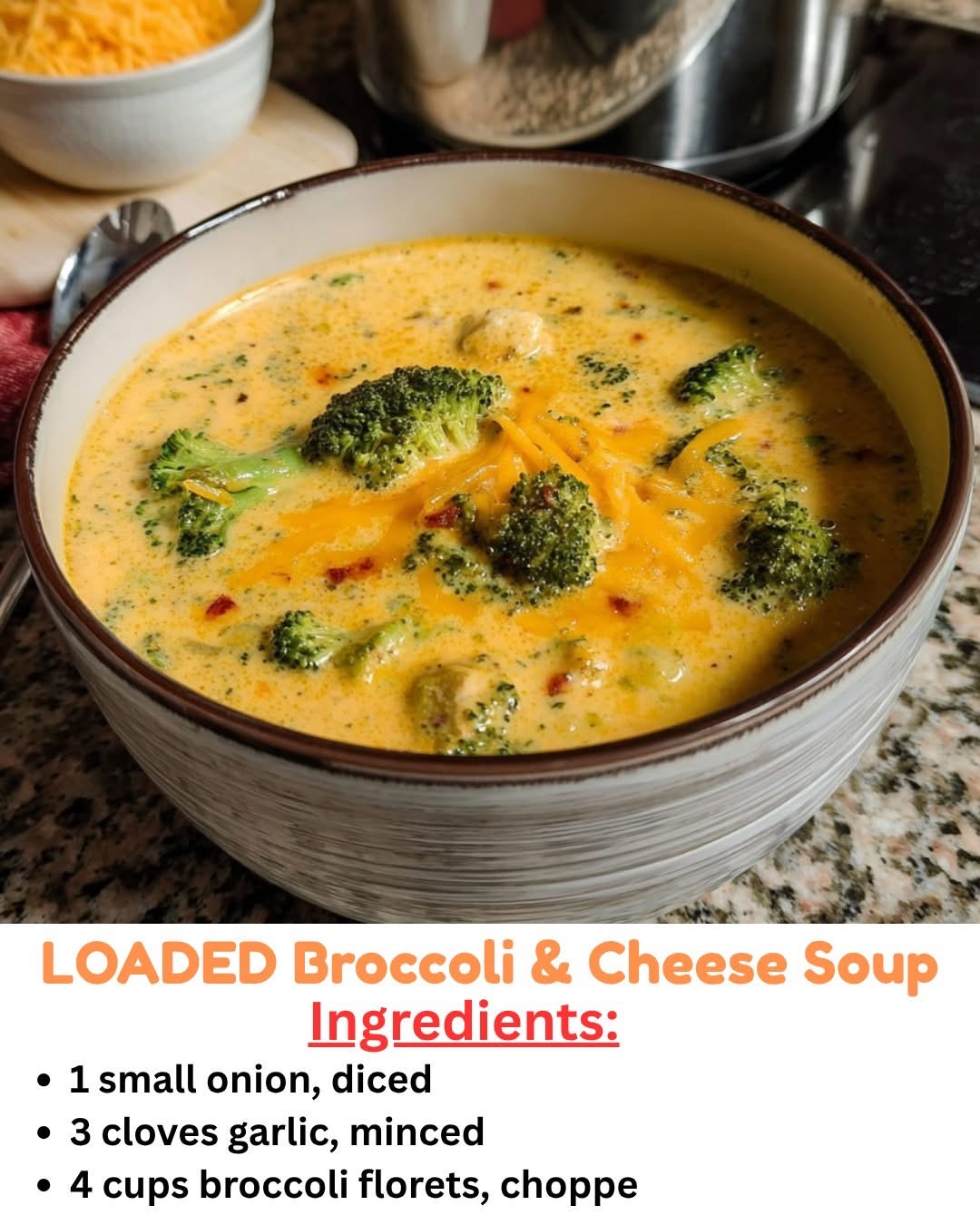
The Ultimate Guide to Loaded Broccoli & Cheese Soup
Loaded Broccoli & Cheese Soup is the ultimate comfort food, combining a rich, velvety cheese base with fresh broccoli florets, savory bacon, and crisp toppings. This comprehensive guide provides everything you need to master this classic dish, from its history and nutritional profile to exact culinary formations and a foolproof, large-scale recipe.
1. Introduction: The Ultimate Comfort in a Bowl
Few dishes evoke the cozy, deeply satisfying feeling of comfort food quite like a steaming bowl of soup. Among the pantheon of classic soups, Broccoli & Cheese holds a legendary status. However, a Loaded Broccoli & Cheese Soup takes this nostalgic classic and elevates it into a decadent, multi-textured, and deeply flavorful culinary masterpiece.
What does it mean for a soup to be “loaded”? While a standard broccoli cheese soup relies entirely on a smooth purée or a simple blend of cheese and vegetables, a loaded version introduces layers of texture and complementary flavor profiles. It incorporates smoky, crispy bacon bits, sharp and melt-in-your-mouth cheddar varieties, tender Yukon Gold potatoes for natural body, and a highly aromatic base of carrots, celery, and onions (the holy trinity of soup building, known as mirepoix).
This soup strikes a perfect balance. It delivers the ultra-creamy, velvety mouthfeel of an artisanal cheese sauce while retaining the crisp-tender bite of fresh green broccoli. It is rich enough to be served as a celebratory centerpiece dish, yet humble enough to warm up a rainy weekday evening. By mastering the ratios of fat, flour, broth, and dairy, anyone can replicate a restaurant-quality, ultra-luxurious loaded soup right in their home kitchen.
2. Cultural & Culinary History
To understand why broccoli and cheese pair so perfectly together, we must look at both culinary science and historical food preservation.
The Rise of Broccoli in the West
Broccoli (Brassica oleracea var. italica) has been cultivated for over 2,000 years, tracing its origins back to the Mediterranean during the Roman Empire. The ancient Romans revered broccoli, often consuming it with various herbs, wine, and oil sauces. However, it wasn’t until the late 19th and early 20th centuries that Italian immigrants widely introduced broccoli to the United States and Northern Europe.
The Chemistry of the Perfect Pair
As broccoli gained mainstream popularity in mid-20th-century America, home cooks and commercial food manufacturers looked for ways to make its sulfurous, slightly bitter brassica notes more palatable to children and families. Enter cheese.
The pairing is a match made in molecular heaven:
- Bitterness Suppressor: Fat and salt are natural suppressors of bitterness. The high milk fat and sodium content in cured cheeses like Cheddar neutralize the compound glucoraphanin (which converts to bitter sulforaphane when broccoli is cut or cooked).
- Umami Multiplier: Broccoli contains natural glutamates. When combined with the heavy, aged glutamates found in matured cheeses, a synergistic umami bomb occurs on the human palate, signaling richness and satisfaction.
Evolution into the Bread Bowl Phenomenon
In the late 1980s and 1990s, casual dining restaurant chains—most famously Panera Bread—popularized the concept of serving thick, creamy broccoli cheddar soup inside a hollowed-out sourdough bread bowl. This transformed the soup from a simple starter or side dish into a heavy, self-contained main course. Today, the “loaded” variation represents the modern evolution of this trend, moving the extra indulgence directly into the soup pot via premium meats, root vegetables, and complex cheeses.
3. Formation: Structural Science of a Creamy Soup
Creating a flawless, velvety loaded soup requires an understanding of emulsion and stabilization. A common pitfall for home cooks is a grainy, split, or greasy soup. This section breaks down the foundational structure required to prevent that.
[ Fat (Butter / Bacon Grease) ] + [ All-Purpose Flour ]
                       │
                       ▼
               [ Roux Base ]
                       │  + Hot Broth & Dairy (Slow Whisk)
                       ▼
         [ Velvety Soup Matrix (Starch-Stabilized) ]
                       │  + Turn off heat, stir in shredded cheese
                       ▼
       [ Smooth, Creamy Loaded Soup (No Graininess!) ]
The Role of the Roux
A roux is a cooked mixture of equal parts by weight of fat and flour. In this soup, we utilize a combination of unsalted butter and rendered bacon fat as our fat source.
- The Mechanism: When flour is cooked in fat, the fat coats the individual starch granules. This prevents the starch from clumping together when it comes into contact with hot liquid.
- The Thickening: As the broth and milk are added and heated, the starch molecules absorb water, swell, and burst, releasing amylose and amylopectin. This process, called starch gelatinization, creates a thick framework that holds the liquid in place.
Preventing a Split Cheese Sauce
Cheese is an emulsion of milk fat, water, and protein matrixes (mostly casein). If you add cheese directly to a boiling liquid, the heat will cause the proteins to instantly tighten, curl up, and squeeze out the fat. This results in clumps of rubbery protein floating in a puddle of clear oil.
To prevent this formation failure, follow three ironclad rules:
- Use Starch Protection: The roux acts as a physical barrier, keeping the fat and water molecules tightly bound so they cannot separate.
- Control the Temperature: Never boil the soup after the cheese has been added. Turn off the heat completely, let the soup cool for one minute, and let the residual heat gently melt the cheese.
- Grate Your Own Cheese: Pre-packaged shredded cheeses are coated in anti-caking agents like potato starch or cellulose. These powders absorb moisture and guarantee a grainy texture in your soup. Always grate high-quality blocks of cheese by hand.
4. Comprehensive Ingredients List
This recipe yields a generous, large-family-sized batch (approximately 8 to 10 servings). It is designed to be substantial, thick, and fully loaded.
The Flavor Base & Aromatics
- Bacon: 8 thick-cut strips, diced into small pieces (renders down to provide cooking fat and a smoky, crispy topping).
- Butter: 4 tablespoons of unsalted butter (used to supplement the bacon fat for the roux).
- Yellow Onion: 1 large onion, finely chopped.
- Carrots: 2 medium carrots, scrubbed and finely diced or coarsely grated.
- Celery: 2 stalks, finely diced.
- Garlic: 4 large cloves, minced.
The Thickening Matrix & Liquids
- All-Purpose Flour: ½ cup (60 grams).
- Chicken Broth or Stock: 4 cups (1 liter) of low-sodium chicken stock (substitute vegetable stock if keeping it vegetarian, minus the bacon).
- Half-and-Half or Whole Milk: 2 cups (500 ml) room temperature (Half-and-half produces a creamier restaurant style; whole milk produces a lighter everyday style).
- Heavy Cream: 1 cup (250 ml) room temperature (adds premium silkiness).
The “Loaded” Core Fillings
- Fresh Broccoli: 5 to 6 cups of chopped broccoli (use mostly the tender florets, chopped small, with a few finely peeled and diced stems).
- Yukon Gold Potatoes: 2 medium potatoes, peeled and diced into ½-inch cubes (these break down slightly, releasing natural starches that add incredible body).
The Cheese Component
- Sharp Cheddar Cheese: 3 cups (approx. 340 grams), freshly grated from a block.
- Gruyère or Monterey Jack Cheese: 1 cup (approx. 115 grams), freshly grated (Gruyère adds a nutty, gourmet depth; Monterey Jack adds ultimate meltability).
Seasonings & Enhancers
- Sea Salt: 1 ½ teaspoons (adjust to taste based on the saltiness of your stock and bacon).
- Freshly Cracked Black Pepper: 1 teaspoon.
- Garlic Powder: ½ teaspoon.
- Smoked Paprika: ½ teaspoon (enhances the wood-fired, smoky undertones of the bacon).
- Ground Nutmeg: A tiny pinch (approx. ⅛ teaspoon). Chef’s Secret: Nutmeg does not make the soup taste like dessert; instead, it rounds out the dairy proteins and cuts through the heavy fat, making the cheese taste cleaner and deeper.
- Dijon Mustard: 1 teaspoon (adds a mild acidity and contains natural emulsifiers that keep the cheese bonded to the liquid).
5. Step-by-Step Cooking Instructions & Methods
Method 1: The Classic Dutch Oven/Stovetop Approach (Recommended)
This traditional method allows you to carefully build depth of flavor through layered searing, rendering, and whisking.
Step 1: Render the Bacon
Place a large, heavy-bottomed Dutch oven or stockpot over medium heat. Add the diced bacon. Cook, stirring occasionally, for 8 to 10 minutes until the bacon is completely crispy and a deep golden brown. Using a slotted spoon, remove the bacon pieces and place them on a plate lined with paper towels. Leave the rendered bacon grease in the pot.
Step 2: Sauté the Aromatics
Leave approximately 2 to 3 tablespoons of the bacon fat in the pot (discard any excess if it’s overwhelming). Add the 4 tablespoons of unsalted butter into the warm bacon fat. Once melted, drop in the chopped yellow onion, diced carrots, and diced celery. Sauté for 6 to 7 minutes, stirring frequently, until the vegetables are soft and the onions are translucent. Stir in the minced garlic and cook for exactly 60 seconds until highly fragrant, ensuring the garlic does not burn.
Step 3: Build the Roux
Sprinkle the ½ cup of all-purpose flour evenly over the sautéed vegetables. Stir vigorously with a wooden spoon to coat the vegetables in the flour-fat paste. Cook this mixture for 2 minutes over medium-low heat. This step is critical because it cooks out the raw, chalky taste of the flour, leaving a warm, nutty aroma.
Step 4: Whisk in the Liquids
Slowly pour in the chicken stock in a thin, steady stream while whisking continuously with your other hand. Pouring slowly prevents lumps from forming. Once the stock is fully incorporated, slowly whisk in the half-and-half (or milk) and the heavy cream.
Step 5: Simmer the Vegetables
Add the diced Yukon Gold potatoes, salt, black pepper, garlic powder, smoked paprika, nutmeg, and Dijon mustard to the pot. Stir well to combine. Bring the mixture to a gentle boil over medium heat, then immediately reduce the heat to low. Cover the pot with a lid and let it simmer for 10 to 12 minutes, or until the potato cubes are easily pierced with a fork.
Step 6: Add the Broccoli
Drop the finely chopped broccoli florets into the simmering base. Stir to submerge them completely. Cover the pot again and continue to simmer on low for an additional 6 to 8 minutes. The broccoli should turn a vibrant green color and become tender, but still retain a slight structural bite.
Step 7: The Gentle Melt (The Finale)
Remove the pot completely from the heat source. Let it sit uncovered for 60 to 90 seconds to drop just below the boiling point. Add the freshly grated Cheddar and Gruyère cheese one handful at a time, stirring gently in a circular motion until completely melted before adding the next handful.
Step 8: The Finishing Touch
Stir three-quarters of your reserved crispy bacon back into the soup, saving the rest for final individual bowls. Taste the broth carefully. If needed, add an extra pinch of salt or pepper. Ladle into deep bowls and serve immediately.
Method 2: The Slow Cooker / Crock-Pot Approach
Perfect for busy days when you want to prep in advance and return home to a hot meal.
- Prep the Base: Fry the bacon in a skillet on your stovetop until crisp. Set the bacon aside, but use 2 tablespoons of the hot grease to sauté the onions, carrots, celery, and garlic in the pan for 4 minutes.
- Load the Crock-Pot: Transfer the sautéed vegetables into your slow cooker. Add the chopped broccoli florets, diced Yukon Gold potatoes, chicken broth, salt, pepper, garlic powder, smoked paprika, nutmeg, and Dijon mustard. (Do not add the flour, dairy, or cheese yet).
- Slow Cook: Cover and cook on Low for 5 to 6 hours (or High for 3 hours), until the potatoes and broccoli are completely tender.
- Thicken with a Slurry: In a small bowl, whisk ½ cup of flour with 1 cup of the room-temperature half-and-half until completely smooth. Stir this slurry directly into the hot slow cooker. Pour in the remaining dairy. Cover and cook on High for an additional 20 to 30 minutes until the soup thickens up beautifully.
- Incorporate Cheese: Turn the slow cooker completely Off. Uncover it and let it rest for 3 minutes. Stir in the grated cheeses a handful at a time until completely smooth. Fold in the cooked bacon bits and serve.
6. Nutritional Profile & Health Benefits
While Loaded Broccoli & Cheese Soup is undoubtedly an indulgent meal, it carries a surprisingly diverse array of micronutrients and health benefits, thanks to its wholesome whole-food ingredients.
| Nutrient | Source In Soup | Primary Health / Bodily Benefit |
|---|---|---|
| Vitamin C | Broccoli | Powerful antioxidant; supports immune function and collagen synthesis. |
| Calcium | Cheddar Cheese, Milk, Cream | Strengthens bone mineral density; aids muscle contraction. |
| Vitamin A / Beta-Carotene | Carrots | Supports optimal eye health, night vision, and cellular repair. |
| Potassium | Yukon Gold Potatoes, Broccoli | Helps regulate fluid balance, blood pressure, and nervous system signals. |
| High-Quality Protein | Cheese, Bacon, Chicken Stock | Provides essential amino acids for muscle maintenance and satiety. |
Deep-Dive into Broccoli’s Micro-Power
Broccoli belongs to the cruciferous vegetable family, famed for containing isothiocyanates. The most heavily researched compound among these is sulforaphane. Clinical studies suggest that sulforaphane assists the liver in processing and neutralizing environmental toxins, supports cardiovascular cellular health, and exhibits anti-inflammatory properties throughout the digestive tract. By consuming broccoli inside a soup, any water-soluble vitamins (like Vitamin C and B-complex vitamins) that leach out during cooking are not thrown down the sink; instead, they are preserved inside the broth you drink.
Satiety and Macronutrient Delivery
The combination of healthy fats from the dairy and dietary fiber from the broccoli, carrots, and potatoes slows down gastric emptying. This means a single bowl of loaded soup provides a sustained, long-lasting release of energy, avoiding the sharp blood-sugar spikes and crashes associated with high-carbohydrate, low-fat processed meals.
7. The Soup Lovers’ Guide: Variations & Pairings
True soup lovers know that customizability and the accompanying sides are what elevate a meal from great to unforgettable.
Dietary Modifications
1. The Gluten-Free Modification
To make this soup completely gluten-free, omit the all-purpose flour roux. Instead, rely on the natural starches of the Yukon Gold potatoes by adding an extra half-cup of diced potatoes to the simmering broth. Once the potatoes are soft, use a potato masher to crush them against the side of the pot to thicken the liquid. Alternatively, whisk 2 tablespoons of cornstarch into cold milk and stir it into the simmering broth during Step 4.
2. The Low-Carb / Keto Modification
If you are tracking macros or following a ketogenic lifestyle:
- Omit the flour completely.
- Swap out the Yukon Gold potatoes for an equivalent amount of chopped white cauliflower florets.
- Thicken the soup by stirring in 4 ounces (115g) of full-fat cream cheese along with the heavy cream, allowing it to melt completely before introducing the cheddar.
Perfect Side Dish Pairings
| Side Dish Option | Flavor / Texture Synergy | Why Soup Lovers Choose It |
|---|---|---|
| Warm Sourdough Boule | Tangy, crunchy, chewy | The natural lactic acidity of sourdough cuts through the heavy cream and rich cheese coating your tongue. |
| Crisp Apple & Walnut Salad | Sweet, bright, highly textural | A bed of arugula or spinach tossed with crisp Granny Smith apple slices and vinaigrette cleanses the palate between rich spoonfuls of soup. |
| Garlic Parmesan Crostini | Ultra-crunchy, savory | Perfect for dipping; handles the heavy weight of the thick soup without falling apart or getting soggy instantly. |
8. Conclusion & Master Tips for Success
Loaded Broccoli & Cheese Soup is more than just a quick meal; it is a celebration of classic culinary techniques, comforting textures, and deep flavors. By prioritizing high-quality ingredients—like grating your own sharp cheddar cheese block, rendering down smokey bacon fat for a traditional roux base, and cooking the broccoli to vibrant perfection—you can create a dish that outshines any store-bought or chain-restaurant alternative.
Final Master Tips for the Perfect Batch:
- The Bright Green Secret: If you like your broccoli looking beautifully green instead of a drab, olive-brown color, do not overcook it. Keep the final simmer under 8 minutes.
- Storing Leftovers: Store any extra soup in an airtight glass container in the refrigerator for up to 3 to 4 days.
- Reheating with Care: Because this is a delicate starch-and-fat emulsion, reheating it on high heat or in a high-powered microwave will cause it to split into oil and clumps. Always reheat leftovers on the stove over low heat, stirring constantly. Add 1 to 2 tablespoons of milk or water to loosen the texture up as it warms.
Gather your ingredients, take your time building your flavorful aromatic base, and enjoy a truly legendary bowl of loaded comfort.
If you’d like, let me know:
- If you want a specific wine pairing recommendation for this meal
- If you want instructions to scale this down for a small two-person serving
- If you prefer to make this in an Instant Pot / pressure cooker
I can tailor the culinary instructions exactly to your kitchen setup!