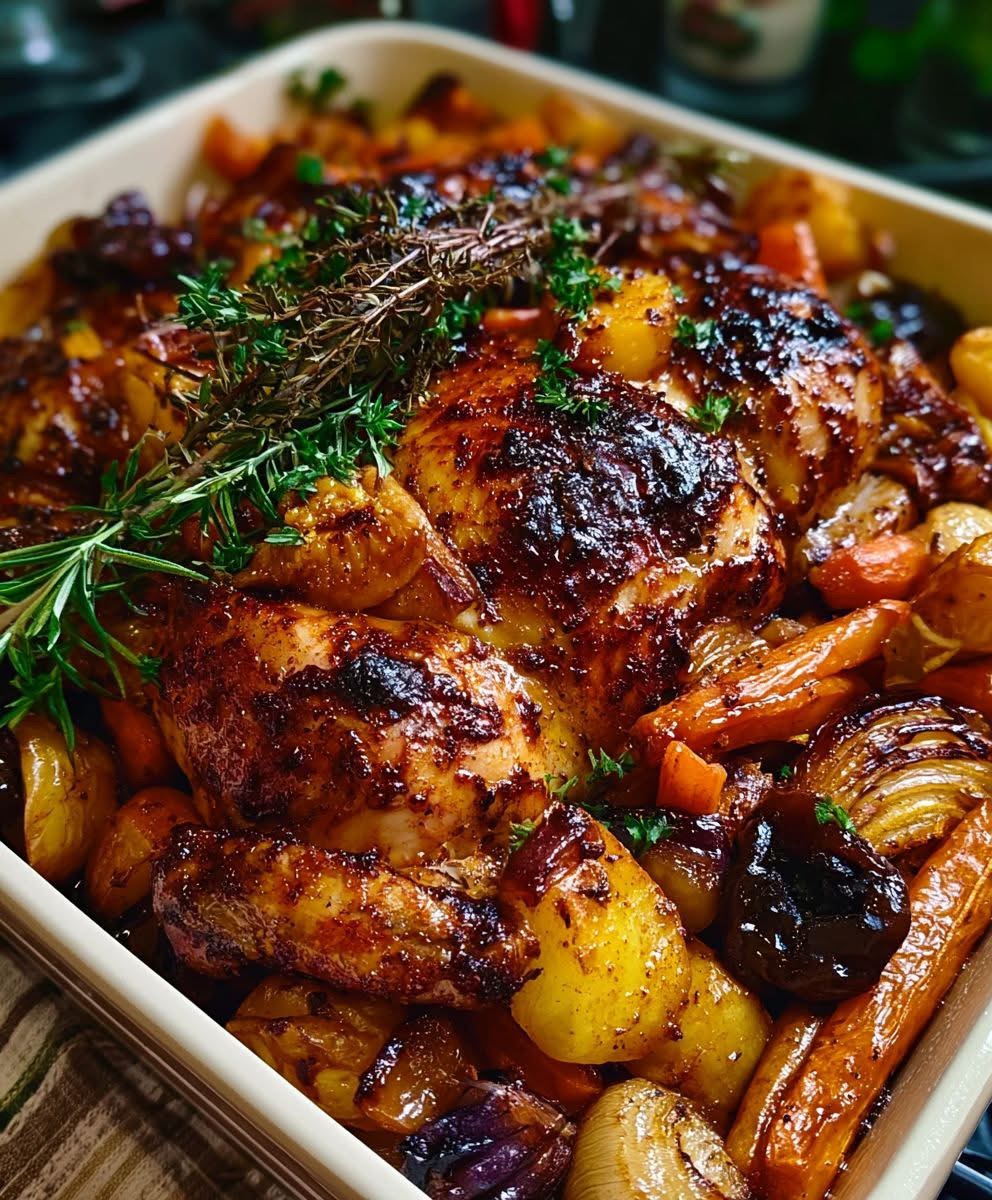
Golden Moroccan-Style Roasted Chicken with Caramelized Vegetables and Sweet Prunes
Introduction
The culinary landscape of North Africa is a brilliant tapestry woven from centuries of trade, cultural exchange, and migration. At its apex sits Moroccan cuisine, renowned for its masterful balancing of contradictory flavor profiles. It seamlessly marries the intensely savory with the deeply sweet, and fiery heat with cooling, aromatic undertones.
This masterclass recipe for Golden Moroccan-Style Roasted Chicken with Caramelized Vegetables and Sweet Prunes brings the authentic, slow-cooked depth of a traditional clay tagine into the modern roasting oven. By utilizing high-heat convection alongside low-and-slow moisture retention, this dish yields a bird with shatteringly crisp, amber skin and flesh that pulls effortlessly from the bone.
The chicken sits atop a vibrant bed of heirloom root vegetables. These melt down into a rich jam during the roasting process, absorbing the rendered chicken fat, warming spices, and sugary juices of plump Mediterranean prunes. It is more than a meal; it is a sensory journey through the spice markets of Marrakesh.
The Rich History of Moroccan Sweet and Savory Poultry Dishes
To truly understand the architecture of this dish, one must travel back through the history of the Maghreb. The practice of cooking meat with dried fruits—known across North Africa as Tajine t’faya or M’ashel—is an ancient culinary tradition with roots stretching back to the medieval Islamic empires of Baghdad and Andalusia.
The Convergence of Civilizations
Moroccan cuisine is not a singular entity but an accumulation of historic influences:
- The Indigenous Amazigh (Berber) Foundation: The Amazigh people invented the tagine—both the clay vessel itself and the method of slow, water-efficient steaming. They contributed the foundational techniques of braising meats with local wild herbs and root vegetables.
- The Arab Influx (7th-11th Centuries): Arab expansions brought the luxurious spices of the Silk Road: Persian saffron, Sri Lankan cinnamon, Indian ginger, and black pepper. They also introduced the sophisticated culinary philosophy of the Abbasid courts, where royal chefs believed combining sweet fruits (like prunes, apricots, and dates) with savory meats balanced the human body’s humors.
- The Andalusian Refugee Influx (15th Century): When the Moors and Sephardic Jews were expelled from Spain during the Reconquista, they fled to Moroccan cities like Fes, Tetouan, and Rabat. They brought complex, refined sweet-and-savory pastry arts, pickling techniques, and the extensive use of orange blossom water, honey, and toasted almonds.
The Symbolic Role of Prunes and Poultry
Historically, sugar and dried fruits were expensive luxury goods reserved for the wealthy merchants of Fes or the royal palaces of Marrakech. Serving a whole roasted chicken adorned with caramelized onions (tfaya), honey-glazed prunes, and fried almonds was a display of immense hospitality (diafa). It remains a centerpiece dish for weddings, Eid celebrations, and honoring esteemed guests.
Culinary Formation and Flavor Philosophy
The structural formation of this recipe relies on three distinct pillars: The Marinade (Chermoula Variant), The Maillard Reaction, and The Caramelization Matrix.
[Spiced Marinade / Chermoula]  --> Penances meat fibers, infuses aromatics
[High-Heat Oven Roasting]      --> Achieves Maillard reaction (crisp golden skin)
[Rendered Poultry Fat + Sugar] --> Glazes the root vegetables and sweet prunes
1. The Spice Matrix (The Ras El Hanout Core)
The backbone of this recipe is the spice blend. Rather than relying on store-bought mixes, this formulation balances specific spice classifications:
- Warm and Aromatic: Cinnamon and nutmeg provide a woody sweetness that bridges the chicken to the prunes.
- Earthy and Pungent: Cumin and turmeric provide a grounded, bitter-musky base that keeps the sweetness from becoming cloying. Turmeric acts as the primary visual agent, tinting the fat and skin into a vibrant golden-yellow hue.
- Sharp and Heat-Producing: Ground ginger and white pepper stimulate the palate and cut through the richness of the dark meat and caramelized sugars.
2. The Liquid Gold: Saffron and Honey Injection
True Moroccan flavor requires saffron (Zaffron al-Hor). The stigmas of the Crocus sativus must be bloomed in warm water to release their water-soluble carotenoids and safranal compound. This provides an irreplaceable, metallic, hay-like aroma. When combined with unpasteurized wildflower honey, it creates a glaze that caramelizes rapidly under direct heat, producing a beautiful lacquer on the chicken skin.
Comprehensive Nutritional Profile
This dish is a nutritionally dense masterpiece. It balances clean, high-quality proteins with complex carbohydrates from root vegetables and dietary fiber from dried fruits.
Macronutrient Breakdown (Per Generous Serving)
The values below represent one serving based on an 8-serving yield of the complete recipe:
| Nutrient | Amount Per Serving | % Daily Value (DV)* |
|---|---|---|
| Calories | 620 kcal | 31% |
| Protein | 42 g | 84% |
| Total Fat | 26 g | 33% |
| ↳ Saturated Fat | 6.5 g | 33% |
| ↳ Monounsaturated Fat | 14 g | — |
| Total Carbohydrates | 54 g | 20% |
| ↳ Dietary Fiber | 8.2 g | 29% |
| ↳ Sugars (Natural) | 22 g | — |
| Sodium | 680 mg | 30% |
*Percent Daily Values are based on a 2,000 calorie diet.
Micronutrient Highlights
- Vitamin A (340% DV): Driven heavily by the beta-carotene found in heirloom carrots and sweet potatoes.
- Iron (25% DV): Sourced from the dark meat of the chicken, cumin, and the dense mineral content of dried prunes.
- Potassium (850 mg): Sourced from the roasting potatoes, prunes, and squash, crucial for cardiovascular health and fluid balance.
Health Benefits and Therapeutic Properties
Beyond its exceptional flavor, this recipe is packed with bioactive compounds, antioxidants, and anti-inflammatory agents that support holistic wellness.
1. Potent Anti-Inflammatory Action (Turmeric & Ginger)
The combination of turmeric and ginger creates a powerful metabolic synergy. Turmeric contains curcumin, a lipophilic polyphenol that inhibits pro-inflammatory enzymes (such as COX-2). Because curcumin requires fat for optimal absorption, rendering it alongside chicken fat and olive oil maximizes its bioavailability in the human digestive tract. Gingerols from the ginger add gastroprotective benefits, easing digestion after a heavy meal.
2. Bone Density and Gastrointestinal Support (Prunes)
Dried prunes (Al-Barquq) are highly valued in nutritional science. They are rich in boron, a trace mineral critical for bone calcification, and vitamin K, which assists in calcium binding. Furthermore, prunes contain high levels of sorbitol and insoluble dietary fiber. This promotes optimal gut motility, supports a healthy microbiome, and prevents blood sugar spikes despite their natural sweetness.
3. Metabolic Preservation (Lean Proteins and Root Carbohydrates)
By roasting a whole chicken on the bone, the meat retains its natural moisture while infusing the vegetable bed with gelatin and collagen. This supports joint health and skin elasticity. The complex, low-glycemic carbohydrates in the carrots, parsnips, and squashes digest slowly. This provides sustained energy without the rapid insulin spikes associated with refined grain side dishes.
Essential Ingredients Master List
To execute this dish flawlessly, secure the highest quality ingredients available. Freshness of spices and geometry of vegetable cuts are vital to the final texture.
For the Poultry and Master Marinade
- 1 Whole Organic Chicken (approx. 2.2–2.5 kg / 5-5.5 lbs): Free-range, air-chilled, and bone-in for superior juice retention.
- 60 ml (4 tbsp) Extra Virgin Olive Oil: Cold-pressed, preferably of Moroccan or Spanish origin.
- 1.5 tbsp Ground Turmeric: High curcumin content for deep golden coloration.
- 1 tbsp Ground Ginger: Freshly ground dried ginger root for sharp aromatics.
- 1 tbsp Ground Cumin: Toasted whole and ground for a musky, smoky baseline.
- 1 tsp Ground Ceylon Cinnamon: Avoid cassia if possible; Ceylon offers a softer, sweeter note.
- 1 tsp Ground White Pepper: Provides a clean, sharp heat that dissolves seamlessly.
- 1.5 tbsp Coarse Sea Salt / Kosher Salt: For protein structural modification and moisture retention.
- 1 Large Bunch Fresh Coriander (Cilantro): Finely minced (leaves and tender stems).
- 1 Large Bunch Fresh Flat-Leaf Parsley: Finely minced.
- 6 Cloves of Garlic: Crushed into a smooth, sulfurous paste.
- 1 Medium Preserved Lemon: Flesh discarded, rind rinsed thoroughly and finely minced.
- 0.5 tsp Saffron Threads: High-grade, gently crushed between fingertips.
- 60 ml Warm Water: To bloom the saffron.
For the Caramelized Vegetable Bed
- 4 Large Carrots (Heirloom varieties preferred): Peeled and sliced lengthwise into thick batons.
- 3 Large Parsnips: Peeled, cored, and cut into matching batons.
- 2 Large Red Onions: Peeled and cut into thick, robust wedges (do not slice thinly, or they will burn).
- 1 Small Butternut Squash: Peeled, deseeded, and cut into 3 cm (1.2-inch) cubes.
- 400g Baby New Potatoes: Halved, skins left on for textural contrast.
- 3 tbsp Extra Virgin Olive Oil: To coat the vegetable matrix.
- 1 tsp Ground Cinnamon: To dust over the vegetable bed.
- 0.5 tsp Sea Salt: To draw out excess vegetable moisture.
For the Sweet Prune and Almond Glaze
- 250g Dried Prunes: Pitted, high-moisture Mediterranean prunes.
- 3 tbsp Pure Wildflower Honey: Unfiltered, for rich enzyme-driven caramelization.
- 1 stick Whole Ceylon Cinnamon: To release slow aromatics into the pan juices.
- 120 ml Organic Chicken Stock: To braise the prunes before high-heat roasting.
- 1 tbsp Orange Blossom Water: Pure distilled distillate; added at the absolute end.
- 75g Whole Blanched Almonds: Toasted in a dry skillet until deeply golden brown.
- 2 tbsp Toasted Sesame Seeds: For a final nutty, texturized garnish.
Cooking Methods and Kitchen Equipment Required
This recipe utilizes a dual-stage cooking approach: Stovetop Infusion combined with Convection Roasting.
Required Equipment
- A Heavy-Duty Stainless Steel or Enameled Cast Iron Roasting Pan: Minimum dimensions 40×30 cm (16×12 inches). It must be large enough to spread the vegetables in a single layer around the bird. This ensures they roast rather than steam.
- A Small Saucepan: For the development of the sweet prune reduction glaze.
- Kitchen Twine: For trussing the poultry to guarantee even thermal distribution.
- An Instant-Read Digital Meat Thermometer: Crucial for verifying internal temperatures without overcooking.
- A Large Mortar and Pestle: For crushing garlic, preserved lemon, and blooming saffron.
Step-by-Step Instructions
Step 1: The Saffron Activation and Marinade Synthesis
- Place the crushed saffron threads into a small glass bowl and pour over the 60 ml of warm water (approx. 65°C / 150°F). Allow to steep for 15 minutes until the liquid turns a deep, glowing crimson-amber color.
- In a large mixing bowl, combine the olive oil, minced garlic paste, minced preserved lemon rind, chopped coriander, and chopped parsley.
- Whisk in the turmeric, ginger, cumin, ground cinnamon, white pepper, and sea salt.
- Slowly pour the bloomed saffron liquid (along with the threads) into the bowl. Whisk vigorously until an emulsion forms. This thick, fragrant paste is your master Moroccan marinade.
Step 2: Poultry Prep and Deep Flavor Marination
- Remove the chicken from the refrigerator at least 45 minutes before preparation to remove the chill from the muscle fibers. Pat the skin completely dry using paper towels. Moisture is the enemy of a crisp, golden skin.
- Gently slide your fingers under the skin of the chicken breast and thighs, loosening it from the meat while keeping the skin intact.
- Spoon approximately one-third of the marinade directly under the skin. Massage it directly onto the breast and thigh meat.
- Coat the entire exterior of the chicken with another third of the marinade, rubbing it thoroughly into every crevice, wing fold, and leg joint.
- Pour the remaining marinade inside the internal cavity of the bird.
- The Resting Phase: Cover the chicken loosely with parchment paper and let it marinate at room temperature for 1 hour. For deep structural flavor penetration, wrap tightly and refrigerate for up to 12 hours. Bring back to room temperature before roasting.
[Prep Chicken] -> [Loosen Skin] -> [Apply Marinade Under/Over Skin] -> [Rest/Marinate]
Step 3: Engineering the Vegetable Foundation
- Preheat your oven to 200°C (395°F). If using a convection/fan-assisted oven, set it to 185°C (365°F).
- In your large roasting pan, arrange the carrot batons, parsnips, red onion wedges, butternut squash cubes, and halved baby potatoes.
- Drizzle with 3 tablespoons of extra virgin olive oil. Season evenly with sea salt and a dusting of ground cinnamon.
- Use your hands to toss the vegetables thoroughly. Ensure every piece is coated in oil and spice, then spread them out to form an even, colorful flat bed across the base of the pan. Leave an open clearing in the dead center for the chicken.
Step 4: Trussing and Positioning the Poultry
- Tuck the wing tips securely behind the chicken’s back to prevent them from burning.
- Cut a length of kitchen twine. Cross the chicken’s legs at the ankles and tie them securely together. This closes the cavity and ensures the breast cooks at the same speed as the thighs.
- Place the marinated chicken directly into the center clearing of the roasting pan, resting comfortably on top of the surrounding vegetable perimeter.
Step 5: The Primary Roasting Phase
- Slide the roasting pan into the center rack of the preheated oven.
- Roast undisturbed for 45 minutes. During this window, the chicken fat will begin to render down, dripping over the surrounding carrots, onions, and potatoes, initiating a rich confit process. The skin will transition from pale yellow to a brilliant burnished gold.
Step 6: Developing the Sweet Prune Reduction
- While the chicken undergoes its initial roast, prepare the sweet element. Place your small saucepan over medium heat.
- Add the pitted prunes, chicken stock, wildflower honey, and the whole cinnamon stick.
- Bring the mixture to a gentle boil, then lower the heat to a simmer. Cook for 12–15 minutes until the prunes swell up, absorbing the liquid, and the honey-stock base reduces into a sticky syrup.
- Remove from heat and stir in the orange blossom water. The steam will carry an unmistakable floral top note through your kitchen. Set aside.
[Prunes + Stock + Honey + Cinnamon] -> [Simmer 15 Mins] -> [Reduce to Syrup] -> [Add Orange Blossom Water]
Step 7: The Integration Phase
- At the 45-minute mark, carefully pull the roasting pan out of the oven.
- Using a large spoon, scatter the plumped prunes and all of their sticky honey-cinnamon reduction evenly among the roasting vegetables.
- Use a spoon to gather some of the rendered golden fat from the bottom of the pan and baste it directly over the chicken breast and legs.
- Return the pan to the oven and continue roasting for another 25 to 35 minutes.
Step 8: Thermal Verification and Resting
- Insert your digital meat thermometer into the thickest part of the chicken thigh, taking care not to strike the bone. The internal temperature must read 74°C (165°F), and the juices must run completely clear.
- Remove the pan from the oven.
- Carefully lift the golden chicken off the vegetable bed and transfer it to a warm carving board. Crucial Step: Allow the chicken to rest uncovered for 15 minutes. This allows the internal juices to redistribute back through the meat fibers, ensuring a tender bite.
Step 9: Final Assembly and Garnish Presentation
- While the bird rests, gently toss the caramelized vegetables and prunes in the pan juices. The onions should be melted, the carrots sweet and tender, and the potatoes crisp on the edges.
- Transfer the glossy vegetables and prunes onto a large, heated communal serving platter, creating a wide, aromatic mound.
- Untie the kitchen twine from the chicken. Place the whole golden roasted bird directly on top of the caramelized landscape.
- Rain the golden toasted blanched almonds and toasted sesame seeds over the top of the entire dish for a striking crunch. Garnish with a few fresh coriander sprigs if desired.
The Recipe Lovers’ Corner: Variations and Master Tips
This section is for passionate cooks who love to experiment and adapt recipes to their unique preferences or dietary needs.
1. The Tagine Purist Adaptation
If you own an authentic clay or ceramic tagine vessel and prefer slow braising over oven roasting, you can easily adapt this recipe.
- Reduce the oven temperature to 150°C (300°F).
- Layer the onions and root vegetables at the bottom of the tagine base.
- Place the marinated chicken on top, add 150 ml of chicken stock to the base, and seal with the conical lid.
- Braise for 2.5 hours. Remove the lid for the final 20 minutes and flash under a broiler to crisp up the skin.
2. The Citrus and Olive Twist
For a savory flavor profile with less sweetness:
- Reduce the prunes by half.
- Introduce 150g of cracked Green cracked olives (Meslalla) along with a second diced preserved lemon during the integration stage. The briny saltiness of the olives cuts through the rich fat beautifully.
3. Texture and Presentation Secrets
- The Perfect Crunch: Always toast your almonds fresh. A dry skillet over medium heat releases the nut oils within 3 minutes. Watch them closely; they turn from pale to burnt in a matter of seconds.
- The Gloss Factor: If your pan juices look too thin at the end, transfer the chicken to rest, pour the juices and vegetables into a skillet, and flash heat for 3 minutes to emulsify the honey and chicken fat into a glossy sauce.
Conclusion
Golden Moroccan-Style Roasted Chicken with Caramelized Vegetables and Sweet Prunes represents the heights of North African hospitality. By balancing bold spices, rich root vegetables, and sweet dried fruits, this dish turns simple ingredients into an aromatic masterpiece.
Whether you are hosting a festive family gathering or looking to expand your culinary horizons on a quiet weekend, this recipe delivers an unforgettable dining experience. Serve it alongside light, fluffy couscous, warm crusty Moroccan Khobz bread, and a hot glass of fresh mint tea to truly complete the journey.
If you want to customize this recipe further, let me know:
- Do you have any dietary restrictions (e.g., gluten-free, low-sodium)?
- Would you like suggestions for authentic side dishes and drink pairings?
- Do you want instructions for using a slow cooker or Instant Pot?