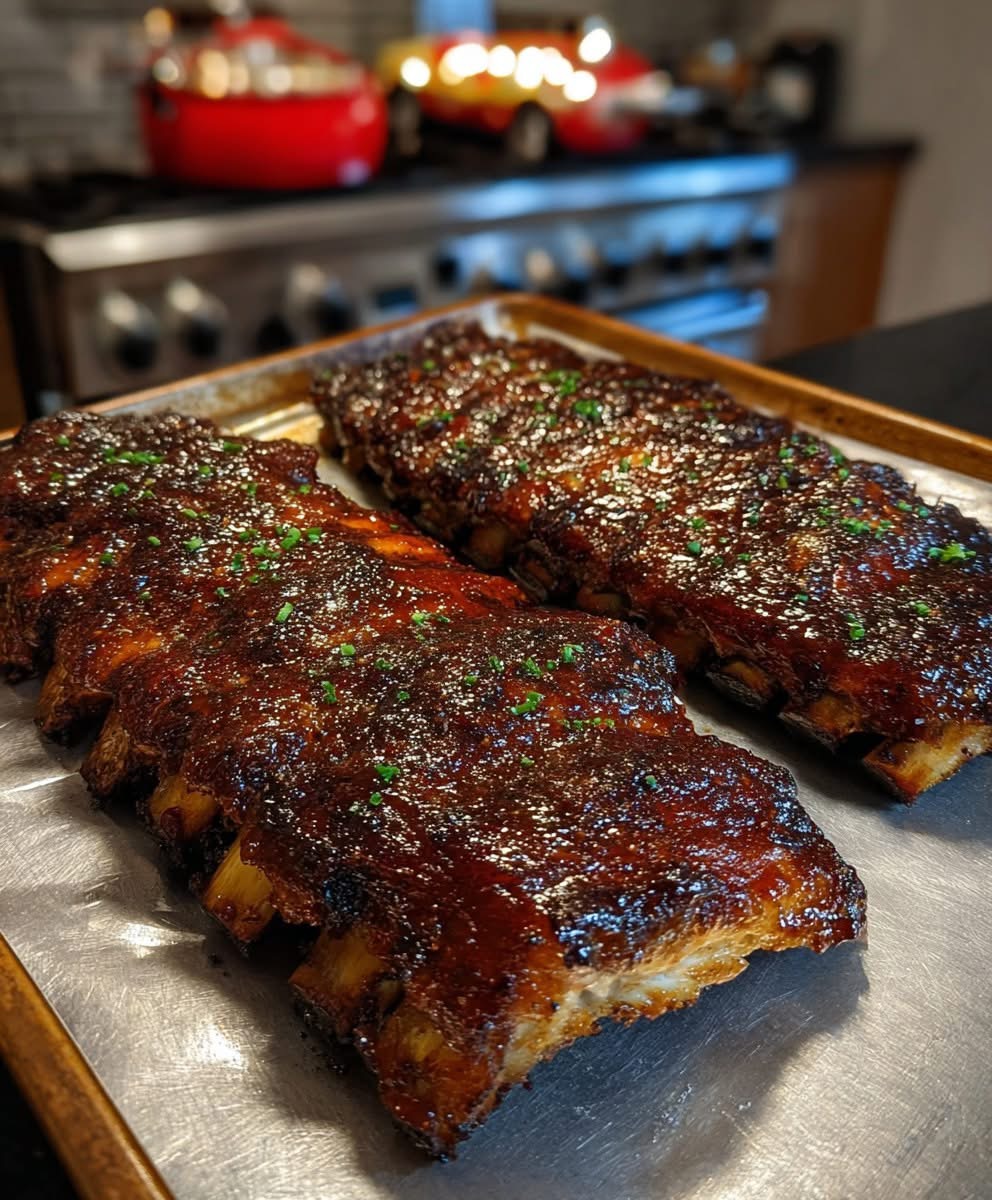
The Ultimate Guide to Sticky Oven-Baked BBQ Ribs
Sticky Oven-Baked BBQ Ribs represent the pinnacle of home-cooked comfort food: tender, juicy, and packed with smoky flavor under a rich caramelized glaze. Slow-cooked until fall-apart tender, these ribs are coated in a bold spice seasoning rub and finished with a thick, glossy layer of barbecue sauce that caramelizes beautifully under the oven broiler.
While classic pitmasters swear by outdoor wood-burning smokers, your kitchen oven is an incredibly powerful tool for duplicating that ultra-tender texture and deep, satisfying flavor profile. By utilizing smart techniques like removing the tough silverskin, sealing the rack in heavy-duty aluminum foil to trap moisture, and low-and-slow roasting, you can easily achieve restaurant-quality results right at home.
Whether you are hosting an expansive backyard gathering, prepping a cozy Sunday family dinner, or looking to master the core culinary chemistry of pork charcuterie, this comprehensive guide will take you step-by-step through the world of oven-baked ribs.
1. The Rich History of BBQ Ribs
The cultural journey of barbecue ribs is a fascinating tapestry woven from global culinary traditions, indigenous cooking techniques, and historical adaptations.
The Deep Roots of Smoke and Fire
Long before European contact, indigenous populations across the Caribbean and the Americas utilized green-wood frameworks over slow fires to smoke, dry, and preserve various meats. The Spanish adaptation of the Taíno word barbacoa eventually morphed into what we recognize today as modern barbecue.
When Spanish explorers brought pigs to the American continent in the 16th century, these animals thrived in the wild, establishing a plentiful, highly sustainable food source across the southern regions.
African-American Culinary Innovation
The true refinement of American barbecue as a distinct art form belongs overwhelmingly to enslaved African-American cooks. Tasked with preparing food from the least desirable, toughest cuts of meat—such as the bony, fat-streaked rib cages of hogs—they developed sophisticated low-and-slow cooking styles.
By slow-roasting these challenging cuts over pits dug into the earth and wood fires, they melted down the tough connective tissues. They paired this technique with complex, highly seasoned mopping sauces made from vinegar, pepper, and regional spices to tenderize and elevate the meat.
The Rise of Regional Rib Styles
Following emancipation, these highly skilled pitmasters migrated across the United States, giving rise to distinct regional barbecue hubs that celebrate ribs in unique ways:
Memphis Style: Focuses heavily on pork ribs, famously served either “dry” (coated in a thick layer of paprika-heavy dry rub spice) or “wet” (brushed with a sweet, tomato-based vinegar sauce).
Kansas City Style: Known as the ultimate melting pot of barbecue, utilizing a wide variety of meats. Kansas City ribs are rubbed generously with sweet spices and continuously slathered in a thick, dark, sweet sauce featuring molasses and tomato.
St. Louis Style: This refers primarily to a specific, neat rectangular cut of spare ribs with the chewy brisket bone removed, typically grilled and heavily sauced with a sweet, tangy tomato liquid.
The Oven-Baked Evolution
As urban living spread and outdoor space became premium, home cooks looked for ways to replicate these complex pit flavors without open wood fire. The home oven became a reliable substitute. By wrapping seasoned ribs tightly in tin foil, home cooks replicated the moist environment of a barbecue pit’s “Texas Crutch” phase, allowing anyone with a standard kitchen oven to enjoy melt-in-your-mouth barbecue year-round.
2. Chemical Formation: How Rib Anatomy Transforms
To cook the perfect rib, it helps to understand the physical and chemical structural makeup of the meat rack and how thermal energy alters its properties.
Structural Anatomy of a Rib Rack
A standard rack of ribs contains interconnected muscle groups interspersed with intramuscular fat, deep fat pockets, and an abundance of tough connective tissues known as collagen. Wrapping the underside of the bones is a dense, elastomeric membrane called the peritoneum, or silverskin.
Unlike the internal collagen, this silverskin does not break down during the cooking process. Leaving it intact creates an impenetrable barrier that blocks seasonings from soaking in and makes the ribs tough to chew.
The Science of Low and Slow (Collagen Breakdown)
Muscle fibers are made of resilient protein structures that contract and squeeze out moisture when exposed to rapid, high heat. If you cook a rack of ribs quickly over direct flame, the meat turns dry and stringy like rubber.
The secret to fall-apart tenderness is the chemical denaturation of collagen. When held at an internal temperature between 160°F and 180°F (71°C to 82°C) over several hours, the tightly wound triple-helix structure of collagen unfolds and dissolves into gelatin. Gelatin is highly water-soluble; it coats the surrounding muscle fibers, creating a rich, luscious, juicy mouthfeel even though the muscle fibers themselves have shed their natural moisture.
The Maillard Reaction and Caramelization
Achieving the ultimate sticky glaze involves two distinct chemical transformations:
- The Maillard Reaction: The reaction between amino acids and reducing sugars that occurs on the surface of the dry-rubbed meat during the initial roasting hours. This creates hundreds of complex flavor compounds, yielding a deep, savory depth.
- Caramelization: This occurs during the final high-heat broiling step. The sugars present in your barbecue sauce break down under direct heat (above 320°F / 160°C), turning a dark amber-brown, thickening into a sticky coating, and developing complex bittersweet notes.
3. Ingredients Profile
An exceptional rack of ribs relies on a precise balance of quality meat, savory spices, and a well-composed sauce.
The Meat
- 2 full racks of Pork Ribs (approx. 3.5 to 4.5 lbs total): You can use either Baby Back Ribs (leaner, smaller, curved bones, cooks faster) or St. Louis Style Spare Ribs (flatter, higher fat content, richer flavor profile). Ensure the meat has a bright pink color with even marbling throughout.
The Signature Dry Spice Rub
- ¼ cup Dark Brown Sugar: Provides a sweet base that balances the heat and encourages surface caramelization.
- 2 tablespoons Smoked Paprika: Adds an essential wood-smoke aroma and a beautiful brick-red color.
- 1 tablespoon Garlic Powder: Delivers a pungent, savory base layer.
- 1 tablespoon Onion Powder: Supplements the garlic with a sweet, sharp background flavor.
- 1 tablespoon Coarse Kosher Salt: Crucial for drawing out proteins and seasoning deep into the muscle layers.
- 1 teaspoon Coarse Black Pepper: Provides a sharp, spicy bite.
- 1 teaspoon Chili Powder: Introduces mild heat and earthy undertones.
- ½ teaspoon Cayenne Pepper (Optional): For those who prefer a noticeable kick of heat.
- ½ teaspoon Dry Mustard Powder: Adds a bright sharpness that cuts beautifully through the rich fat.
The Liquid Cooking Base
- ¼ cup Apple Cider Vinegar: Provides a gentle acidity to tenderize the meat fibers during the steaming process.
- 2 tablespoons Apple Juice or Water: Adds extra humidity inside the foil pouch to prevent the sugar rub from scorching.
The Caramel Glaze
- 1 ½ cups High-Quality Barbecue Sauce: Use your favorite store-bought brand or a homemade mixture. A tomato-and-molasses base works best for achieving that classic sticky sheen.
4. Master Cooking Instructions
Follow these steps carefully to ensure your ribs turn out perfectly tender and glazed.
[Prep: Remove Membrane & Rub] ➔ [Wrap Tightly in Foil] ➔ [Bake Low & Slow (2.5-3.5 hrs)] ➔ [Unwrap & Sauce] ➔ [Broil to Caramelize]
Step 1: Pre-Production and Membrane Removal
- Bring your pork rib racks out of the refrigerator roughly 20 to 30 minutes before cooking to shed their chill. This promotes even heat distribution.
- Place the rack bone-side-up on a large, stable cutting board.
- Locate the thin, translucent membrane covering the bones. Slide a dull butter knife under the tissue over the second or third bone from the edge, lifting it up gently to detach it from the bone.
- Grip the loosened edge with a piece of paper towel for a secure, non-slip hold. Pull the membrane away from the rack firmly in one steady motion. It should peel off cleanly like a sheet of tape. Discard the membrane.
- Pat the entire surface of both racks dry using clean paper towels.
Step 2: Applying the Rub
- In a medium mixing bowl, whisk together the dark brown sugar, smoked paprika, garlic powder, onion powder, kosher salt, black pepper, chili powder, cayenne pepper, and dry mustard until no clumps remain.
- Season both sides of the ribs generously with the dry rub mixture. Use your hands to press the spices firmly into the meat so it sticks. Do not rub vigorously, as this can tear the muscle fibers; simply press to coat evenly.
Step 3: Construction of the Foil Pouches
- Preheat your oven to 275°F (135°C) with the baking rack positioned in the center.
- Tear off four large sheets of heavy-duty aluminum foil, each about six inches longer than the rib racks.
- Lay two sheets down to form a double-thick base layer for each rack. Place one seasoned rib rack right in the middle of each foil assembly, bone-side down.
- Fold up the edges of the foil around the rack to create an open-top boat shape.
- Carefully pour half of the apple cider vinegar and apple juice mixture into the bottom of each boat, making sure not to wash the spice rub off the top of the meat.
- Bring the top sheets of foil together and fold them down tightly. Crimp the side edges securely to create a completely sealed envelope. The foil must be airtight to trap the steaming moisture during cooking.
Step 4: The Low and Slow Bake
- Arrange the wrapped foil pouches side-by-side onto a large, rimmed baking sheet.
- Slide the baking sheet into the preheated oven.
- Bake undisturbed. For Baby Back Ribs, bake for 2.5 to 3 hours. For larger St. Louis Style Spare Ribs, bake for 3 to 3.5 hours.
- Test for doneness: Carefully open a corner of one foil packet (watch out for hot steam). Insert a toothpick into the meat between the bones. If it slides in and out effortlessly with zero resistance, your ribs are ready for glazing.
Step 5: The Sticky Glaze and Final Broil
- Carefully remove the baking sheet from the oven. Carefully open the tops of the foil packages completely, folding the foil back to expose the top side of the meat. Be careful not to let the hot rendering juices spill out.
- Adjust your oven settings to Broil on the high heat setting.
- Using a pastry brush, slather a generous, thick layer of your barbecue sauce over the top surface of both rib racks.
- Return the open, sauced ribs to the oven under the broiler. Watch them closely for 3 to 5 minutes until the sauce begins to bubble vigorously, darken, and develop small caramelized char spots.
- Remove from the oven, apply a second thin layer of fresh barbecue sauce for extra stickiness, and let the meat rest uncovered for 10 minutes before slicing.
5. Alternative Cooking Methods
If you want to try different cooking styles or don’t want to use an oven, here are three popular alternative methods:
Method A: The Classic Pellet or Charcoal Smoker
For authentic wood-fired flavor, use the classic 3-2-1 Smoking Method on a dedicated outdoor cooker:
- The First 3 Hours: Smoke the seasoned, unwrapped rib rack directly on the grill grates at 225°F (107°C) using hardwood chunks like hickory or applewood.
- The Next 2 Hours: Wrap the ribs tightly in heavy aluminum foil along with a splash of apple juice and a few pats of butter, putting them back on the smoker to tenderize.
- The Final 1 Hour: Unwrap the ribs, brush them generously with your barbecue sauce, and finish cooking directly on the grates to set the glaze.
Method B: The Electric Slow Cooker / Crockpot
Perfect for busy weekdays when you want to minimize kitchen time:
- Cut the raw, seasoned rib racks into smaller 3-to-4-bone sections so they fit easily into your slow cooker basin.
- Stand the rib sections upright along the inside walls of the slow cooker, facing the meatier sides outward.
- Pour 1/2 cup of barbecue sauce over the tops of the ribs. Cover and cook on the Low setting for 6 to 7 hours (or High setting for 3 to 4 hours).
- Carefully lift out the tender rib sections, place them onto a baking sheet, brush with extra sauce, and flash-broil in your oven for 3 minutes to get that signature sticky finish.
Method C: The Modern Countertop Air Fryer
Great for quick, smaller portions when you are short on time:
- Slice the raw rack into individual single bones or 2-bone portions and coat them evenly in the dry rub.
- Preheat your air fryer basket to 375°F (190°C).
- Arrange the ribs in a single, uncrowded layer inside the basket, bone-side up.
- Air fry for 15 minutes, flip them over, and cook for another 10 minutes.
- Brush all sides generously with your barbecue sauce and fry for a final 2 to 3 minutes until the sauce turns thick and bubbly.
6. Nutritional Profile and Macromolecules
Understanding the nutritional layout of barbecue ribs helps you balance them nicely into your weekly meal planning. The values listed below represent an estimated average for a standard 4-ounce (approx. 113g) cooked serving of glazed pork ribs:
| Nutritional Component | Value per 4 oz Serving | Daily Percentage Value (% DV) |
|---|---|---|
| Calories | 360 kcal | 18% |
| Total Fat | 22 g | 28% |
| ➔ Saturated Fat | 8 g | 40% |
| ➔ Trans Fat | 0 g | 0% |
| Cholesterol | 85 mg | 28% |
| Sodium | 680 mg | 30% |
| Total Carbohydrates | 14 g | 5% |
| ➔ Dietary Fiber | 0.5 g | 2% |
| ➔ Sugars (Added) | 12 g | 24% |
| Protein | 24 g | 48% |
| Vitamin D | 0.6 mcg | 3% |
| Calcium | 45 mg | 4% |
| Iron | 1.4 mg | 8% |
| Potassium | 320 mg | 7% |
Macro Breakdown Analysis
- Proteins: Pork ribs offer excellent high-quality, complete animal protein containing all essential amino acids required for muscle tissue repair and metabolic maintenance.
- Lipids/Fats: Ribs contain a mix of monounsaturated and saturated fatty acids. The rich marbling keeps the meat juicy during long cooking times, but it does make this a higher-calorie cut.
- Carbohydrates: The carbs come almost entirely from the sugars in the dry rub and the corn syrup or molasses in the barbecue sauce. If you prefer a lower-carb option, you can easily substitute keto-friendly sugar-free sweeteners.
7. Dietary and Health Benefits
While sticky ribs are often enjoyed as an indulgent comfort food, they also provide several excellent health benefits when integrated into a balanced lifestyle.
High-Density Protein Source
A single serving provides nearly half of your recommended daily protein intake. This helps maintain healthy lean muscle mass, supports metabolic rate, and keeps you feeling full and satisfied after eating.
Rich in Essential Micronutrients
- B-Complex Vitamins: Pork is naturally packed with Vitamin B12 and Vitamin B6, which are critical for maintaining healthy brain function, supporting your nervous system, and helping turn food into steady energy.
- Selenium: A powerful antioxidant that plays an important role in supporting thyroid function and boosting your overall immune system.
- Zinc: An essential mineral that helps speed up wound healing, supports cellular growth, and reinforces your body’s immune defenses.
Natural Gelatin for Joint Health
As the abundant collagen in the ribs melts down into gelatin during cooking, it releases beneficial amino acids like glycine and proline. These compounds help support joint integrity, strengthen bone density, and promote healthy skin elasticity and gut lining health.
8. For the True BBQ Lovers: Pairing and Presentation
To transform your sticky ribs into an unforgettable dining experience, pair them with the right side dishes and beverages.
Complementary Side Dish Pairings
Balance out the rich, sweet, and smoky flavors of your ribs with these classic side dishes:
- Creamy Southern Coleslaw: The cool, crisp texture and tangy vinegar dressing cut through the rich fat of the ribs perfectly.
- Cast-Iron Skillet Cornbread: A golden, buttery bread that is perfect for soaking up every last drop of sweet barbecue sauce.
- Smoky Baked Beans: Simmered with bacon and brown sugar, these reinforce the deep barbecue theme of the meal.
- Aged Cheddar Macaroni and Cheese: A rich, baked pasta dish that pairs beautifully with tender meat.
The Ultimate Beverage Pairings
- Craft Beer: Look for an American IPA with bright, hoppy citrus notes to cut through the rich sweetness, or choose a smooth Amber Ale or Porter to complement the smoky paprika rub.
- Wine: A bold, fruit-forward red wine with smooth tannins like a California Zinfandel or an Argentine Malbecmatches the intensity of the caramelized glaze beautifully.
- Non-Alcoholic Options: Classic sweet iced tea with fresh lemon slices, or a crisp, spicy ginger beer provide a refreshing, sharp contrast to the rich meat.
9. Conclusion
Mastering the art of Sticky Oven-Baked BBQ Ribs proves that you do not need an outdoor smoker to enjoy world-class barbecue. By utilizing your home oven for low-and-slow cooking, trapping moisture with heavy-duty foil pouches, and finishing with a quick caramelizing broil, you can consistently create exceptionally tender, juicy ribs with a perfect glossy glaze.
This cooking style beautifully honors the rich culinary traditions of barbecue history while making it accessible for everyday home kitchens. Gather your ingredients, prep your rack, and enjoy the rewarding process of making restaurant-quality ribs right at home.
If you would like to customize this recipe further, let me know if you want to explore:
- A completely sugar-free keto variation
- How to modify this for beef dino ribs
- A scratch-made craft bourbon barbecue sauce recipe