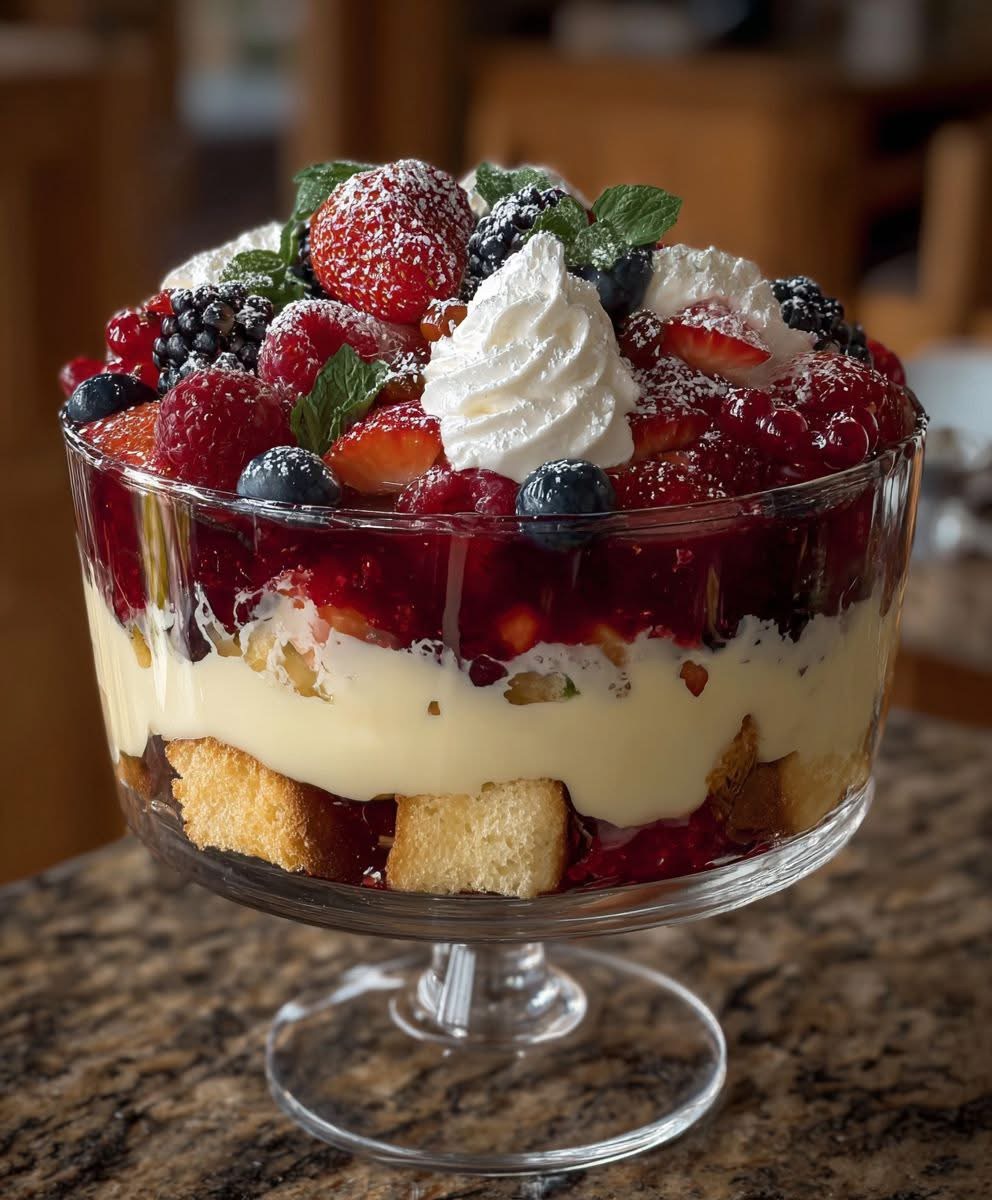
The Berry Cream Trifle is the ultimate showstopping dessert, combining tender sponge cake, rich pastry cream, and vibrant summer berries into a breathtaking layered masterpiece. This comprehensive guide covers everything from its deep historical roots to advanced assembly methods and structural culinary mechanics.
1. Introduction to the Berry Cream Trifle
A trifle is more than just a sweet treat; it is an architectural marvel of the culinary world. Served in a clear glass pedestal bowl, it relies on contrasting textures and colors to captivate guests before they even take their first bite.
The Visual Appeal
The magic of a berry cream trifle lies entirely in its visibility. Each ingredient forms a distinct horizontal band, visible through the glass. The stark white of the cream acts as a canvas. The deep rubies of strawberries, dark sapphires of blueberries, and bright corals of raspberries pop dramatically against it. Golden-brown cake cubes provide a rustic structural anchor.
Texture and Flavor Play
The taste profile strikes a delicate balance between light and indulgent:
- The Crumb: Soft, aerated sponge cake absorbs just enough liquid to become moist without turning to mush.
- The Cream: A velvety, silken dairy layer coats the palate, muting sharp fruit acids.
- The Fruit: Fresh berries provide an explosive pop of juice, cutting through the richness with bright, natural acidity.
2. The Comprehensive History of the Trifle
The trifle has evolved across centuries, transitioning from a simple Tudor kitchen remedy to an opulent Victorian centerpiece. Understanding its history explains why specific ingredients are deemed traditional today.
Tudor Origins (16th Century)
The earliest recorded usage of the word “trifle” in a culinary context dates back to Thomas Dawson’s 1585 cookbook, The Good Huswifes Jewell.
- Early Format: The original trifle did not look like modern versions. It was a thick, smooth cream flavored with rosewater, ginger, and sugar.
- The Name: Derived from the Old French word trufle, meaning something of little value or a whimsical novelty. It was viewed as an effortless, uncomplicated treat.
The Evolution into Layers (17th to 18th Century)
By the mid-1600s, the recipe shifted away from pure cream. Bakers began incorporating alcohol-soaked biscuits and fruit purées at the bottom of the dish.
- The Alcohol Infusion: Sack (a type of fortified Spanish wine) or sweet Sherry became standard ingredients used to drench the dry biscuits, a technique used to preserve stale baked goods.
- The Inclusion of Custard: In her influential 1747 book, The Art of Cookery Made Plain and Easy, Hannah Glasse outlined a trifle that closely mirrors what we eat today: a base of cake and alcohol, a thick mid-layer of cooked egg custard, and a top layer of whipped cream.
Victorian Grandeur (19th Century)
During the Victorian era, the trifle became a symbol of wealth and high social standing.
- Specialized Glassware: Glassmaking technology advanced, making clear glass bowls affordable for the middle and upper classes. The “Trifle Bowl”—a deep glass dish on a thick pedestal stem—was invented specifically to show off the geometric precision of the dessert’s layers.
- Complex Multi-Layers: Victorians loved complexity. They added layers of calf’s foot jelly (gelatin), crystallized edible flowers, ratafia biscuits, and elaborate spun-sugar cages on top.
3. Formations: The Scientific Structure of Layers
An exceptional trifle requires an understanding of physics and food chemistry. Simply throwing ingredients into a bowl creates a soggy, structurally collapsed mess. You must engineer the dessert to withstand the forces of gravity and liquid migration.
+-------------------------------------------------------+

|          TOPPING: Whipped Cream & Whole Berries       |
+-------------------------------------------------------+

|          FRUIT LAYER: Macerated Raspberries           |
+-------------------------------------------------------+

|       CREAM LAYER: Thick Vanilla Pastry Cream        |
+-------------------------------------------------------+

|      BASE LAYER: Soaked, Densely Cubed Sponge Cake    |
+-------------------------------------------------------+
Liquid Migration and Absorption
Cake is porous, acting like a structural sponge. If your cake is too dry, it robs moisture from your pastry cream, leaving the cream rubbery and dense. If your cake is too wet, gravity pulls the liquid to the floor of the bowl, pooling into an unappealing puddle.
- The Solution: Macerating fruit creates a syrup with a high sugar content. This viscosity slows down capillary action within the cake crumb, ensuring the cake stays moist but holds its shape.
Viscosity Stacking
To prevent the layers from sinking into one another, ingredients must be stacked by density.
- Bottom: The heaviest, dense element goes first—the cake soaked in heavy syrup or liqueur.
- Middle: The medium-density element follows—the cooked custard or pastry cream. It must have enough structural body (achieved via cornstarch or egg yolk coagulation) to support weight.
- Top: The lightest element caps the dessert—aerated whipped cream filled with air pockets.
4. Master Ingredient List
To yield a massive, crowd-sized trifle (approximately 16 to 20 servings), you need specific, high-quality ingredients measured accurately.
The Cake Base
- Sponge Cake or Pound Cake: 2 large loaves (approx. 800g total weight). Choose a tight, fine-crumb sponge cake rather than an airy angel food cake, which breaks down too quickly.
- Soaking Liquid: 120 mL (1/2 cup) of Elderflower liqueur, sweet Sherry, or fresh orange juice for an alcohol-free version.
The Berry Compote and Fresh Fruit Element
- Fresh Strawberries: 400g, hulled and cleanly sliced.
- Fresh Raspberries: 300g, left completely whole.
- Fresh Blueberries: 250g, rinsed and thoroughly dried.
- Granulated Sugar (for maceration): 50g (1/4 cup).
- Fresh Lemon Juice: 15 mL (1 tablespoon).
The Crème Pâtissière (Pastry Cream)
- Whole Milk: 750 mL (3 cups).
- Egg Yolks: 6 large yolks (provides color, emulsification, and richness).
- Granulated Sugar: 150g (3/4 cup).
- Cornstarch: 45g (6 tablespoons), acts as our primary heat-activated thickening agent.
- Unsalted Butter: 60g (1/4 cup), chilled and cubed.
- Pure Vanilla Bean Paste: 10 mL (2 teaspoons).
The Whipped Cream Topping
- Heavy Whipping Cream: 500 mL (2 cups), minimum 36% milkfat content.
- Powdered Sugar: 30g (1/4 cup).
- Vanilla Extract: 5 mL (1 teaspoon).
5. Step-by-Step Preparation Instructions
Step 1: Cooking the Pastry Cream
- In a medium saucepan, bring the 750 mL of whole milk and vanilla bean paste to a gentle simmer over medium heat. Do not let it boil over.
- In a separate heatproof bowl, vigorously whisk the 6 egg yolks, 150g of granulated sugar, and 45g of cornstarch together until the mixture turns pale yellow and forms a smooth paste.
- Tempering: Slowly ladle about 100 mL of the hot milk into the egg mixture while whisking constantly. This warms the eggs gradually, preventing them from scrambling.
- Pour the tempered egg mixture back into the saucepan with the remaining hot milk.
- Cook over medium-low heat, whisking constantly. Within 3 to 5 minutes, the cornstarch will hydrate and activate, causing the mixture to bubble and thicken into a dense custard.
- Remove from heat. Stir in the 60g of cold, cubed butter until melted and glossy.
- Strain the custard through a fine-mesh sieve into a clean bowl to catch any stray lumps. Press plastic wrap directly onto the surface of the cream to prevent a tough skin from forming. Chill in the refrigerator for at least 3 hours.
Step 2: Macerating the Berries
- Take 200g of the sliced strawberries and 150g of the raspberries and place them into a mixing bowl.
- Add 50g of sugar and 15 mL of fresh lemon juice. Stir gently.
- Let the mixture sit at room temperature for 30 minutes. Through osmosis, the sugar draws out the natural juices of the berries, creating a glossy, deep red syrup.
- Keep the remaining fresh berries separate; they will be used dry to create crisp visual borders against the glass.
Step 3: Preparing the Cake Component
- Trim away any overly dark, dry crusts from your sponge cake loaves.
- Slice the cake into uniform 2.5 cm (1-inch) cubes. Uniformity ensures even absorption of the soaking liquid.
Step 4: Whipping the Cream Top
- Chill your metal mixing bowl and whisk attachment in the freezer for 10 minutes. Cold tools keep dairy fats stable.
- Pour the 500 mL of heavy cream, 30g of powdered sugar, and 5 mL of vanilla extract into the bowl.
- Whip on medium-high speed until you achieve stiff peaks. The cream should hold its shape firmly when the whisk is lifted but retain a smooth, satin texture.
6. Assembly Methods and Engineering
Assembly requires precision. Follow these mechanical methods to ensure your trifle looks immaculate and doesn’t buckle under its own weight.
The Glass Wall Technique
To achieve the iconic look, always construct your layers from the outside in. Place your cleanest, most uniform fruit slices flush against the glass wall first. Once a secure ring of fruit is established around the perimeter of the bowl, fill in the center space with your cake cubes or chopped fruits. This ensures no gaps or cream bleeding occurs on the exterior surface.
Bowl Wall -> | (Fruit Slice) [Cake Cube] (Fruit Slice) | <- Bowl Wall
The Layer Sequence Order
- Foundation: Lay down half of your cake cubes into the bottom of the trifle bowl. Pack them tightly so there are no large gaps.
- Irrigation: Drizzle half of your soaking liquid (60 mL) evenly over the cake cubes using a spoon or pastry brush.
- Fruit Base: Spoon the macerated berry mixture along with its syrup directly over the soaked cake.
- Cream Isolation: Stir your chilled pastry cream to loosen it up, then spoon half of it over the berries. Use an offset spatula to smooth it flat to the glass edges, creating a solid barrier.
- Border Fruit: Arrange a neat row of fresh, un-macerated strawberries and blueberries face-out against the glass wall on top of the pastry cream.
- Repeat: Repeat steps 1 through 4 with the remaining cake, soaking liquid, macerated fruit, and pastry cream.
- The Crown: Pipe or spread your fresh whipped cream across the top layer. Garnish the crown generously with the remaining whole raspberries, blueberries, and a few mint leaves for color contrast.
7. Comprehensive Nutritional Profile
Trifle is a rich, celebrations-oriented dish. Below is an approximate nutritional breakdown calculated per standard serving size (based on 18 equal servings).
| Nutrient Element | Value Per Serving | % Daily Value (DV)* |
|---|---|---|
| Calories | 340 kcal | 17% |
| Total Fat | 18g | 23% |
| ↳ Saturated Fat | 11g | 55% |
| Cholesterol | 115mg | 38% |
| Sodium | 190mg | 8% |
| Total Carbohydrates | 39g | 14% |
| ↳ Dietary Fiber | 3g | 11% |
| ↳ Total Sugars | 26g | — |
| Protein | 6g | 12% |
*Percentage Daily Values are based on a standard 2,000-calorie diet.
8. Health and Dietary Benefits
While the trifle is an indulgent dessert, its core components—particularly the fresh berries and dairy—offer distinct nutritional advantages.
The Antioxidant Powerhouse of Berries
- Anthocyanins: The deep reds, blues, and purples of strawberries, raspberries, and blueberries come from a group of phytochemicals called anthocyanins. These compounds fight oxidative stress and lower inflammation.
- Vitamin C Synthesis: A single serving of berry trifle delivers a significant dose of Vitamin C, supporting immune cell function and accelerating collagen synthesis in the skin.
High-Quality Bioavailable Proteins
- Egg Yolks: The pastry cream base utilizes egg yolks rich in choline, a micronutrient critical for liver function, brain development, and cellular membrane structural integrity.
- Dairy Amino Acids: The combination of whole milk and heavy cream supplies complete proteins containing all nine essential amino acids needed for muscle maintenance.
9. Trifle Variations for Dietary Inclusivity
You can modify this traditional blueprint to accommodate specific food allergies or lifestyle choices without losing the classic look or flavor.
Gluten-Free Adaptation
Replace standard wheat-based sponge cake with a gluten-free almond flour sponge or store-bought gluten-free ladyfingers. Almond flour adds a pleasant, subtle nuttiness that pairs beautifully with stone fruits and berries.
Vegan / Dairy-Free Alteration
- The Cake: Use an oil-based vegan sponge cake made with oat milk and apple cider vinegar as a leavening activator.
- The Pastry Cream: Substitute whole milk with full-fat canned coconut milk. Thicken using cornstarch and color with a tiny pinch of turmeric to mimic egg yolks.
- The Topping: Use chilled, whipped coconut cream or an aquafaba-based meringue.
10. The Trifle Lovers’ Community Culture
The trifle has inspired a dedicated subculture of passionate bakers, collectors, and dessert lovers around the globe.
Collectible Glassware Enthusiasts
For true trifle lovers, the bowl is just as important as the dessert itself. Antique collectors seek out heavy, hand-cut lead crystal trifle bowls from the Edwardian era. Brands like Waterford and Anchor Hocking are prized for creating brilliant, multi-faceted glass cuts that refract light through the layers of cream and fruit, turning the dessert into a sparkling dining table centerpiece.
Modern Pop Culture Iconography
The trifle occupies a memorable spot in modern pop culture, most notably in the television sitcom Friends (Season 6, Episode 9). The character Rachel Green accidentally combines a traditional English trifle recipe with a Shepherd’s pie recipe due to cookbook pages sticking together. This gave rise to the legendary, real-world humorous cooking challenge of creating “Rachel’s Trifle”—though luckily, modern bakers skip the beef, peas, and onions in favor of extra chocolate and berries!
11. Advanced Troubleshooting Guide
| Problem Observed | Primary Root Cause | Corrective Action Guide |
|---|---|---|
| Bleeding Colors | Berries were wet or macerated too long before assembly. | Pat fresh berries completely dry with paper towels. Only macerate half the fruit. |
| Collapsed, Muddy Layers | Pastry cream or cake was too hot during assembly. | Ensure pastry cream cools to below 10°C before building layers. |
| Soggy Cake Base | Excessive soaking liquid or over-macerated fruit syrup. | Use a pastry brush to apply liqueur lightly; never submerge or pour quickly. |
| Grainy Cream | Pastry cream eggs overheated or curdled during cooking. | Pass the finished cream through a fine-mesh sieve immediately after cooking. |
12. Conclusion
The Berry Cream Trifle stands as a perfect marriage of culinary art, historical tradition, and food science. By selecting structural sponge cakes, creating stabilized pastry creams, and leveraging the natural physics of viscosity stacking, anyone can transform fresh summer fruit and dairy into a gorgeous, crowd-pleasing centerpiece. It honors its deep 16th-century English roots while remaining highly adaptable to modern flavors and dietary needs. Treat it with a bit of patience during assembly, and it will reward you with spectacular layers and unforgettable flavor.
If you want, I can help you customize this recipe! Let me know:
- Do you need to modify this for any allergies or dietary restrictions (e.g., egg-free, keto)?
- Would you like suggestions for alternative flavor profiles (e.g., chocolate-espresso, tropical mango-passionfruit)?
- Are you looking for tips on making this ahead of time or storing leftovers safely?