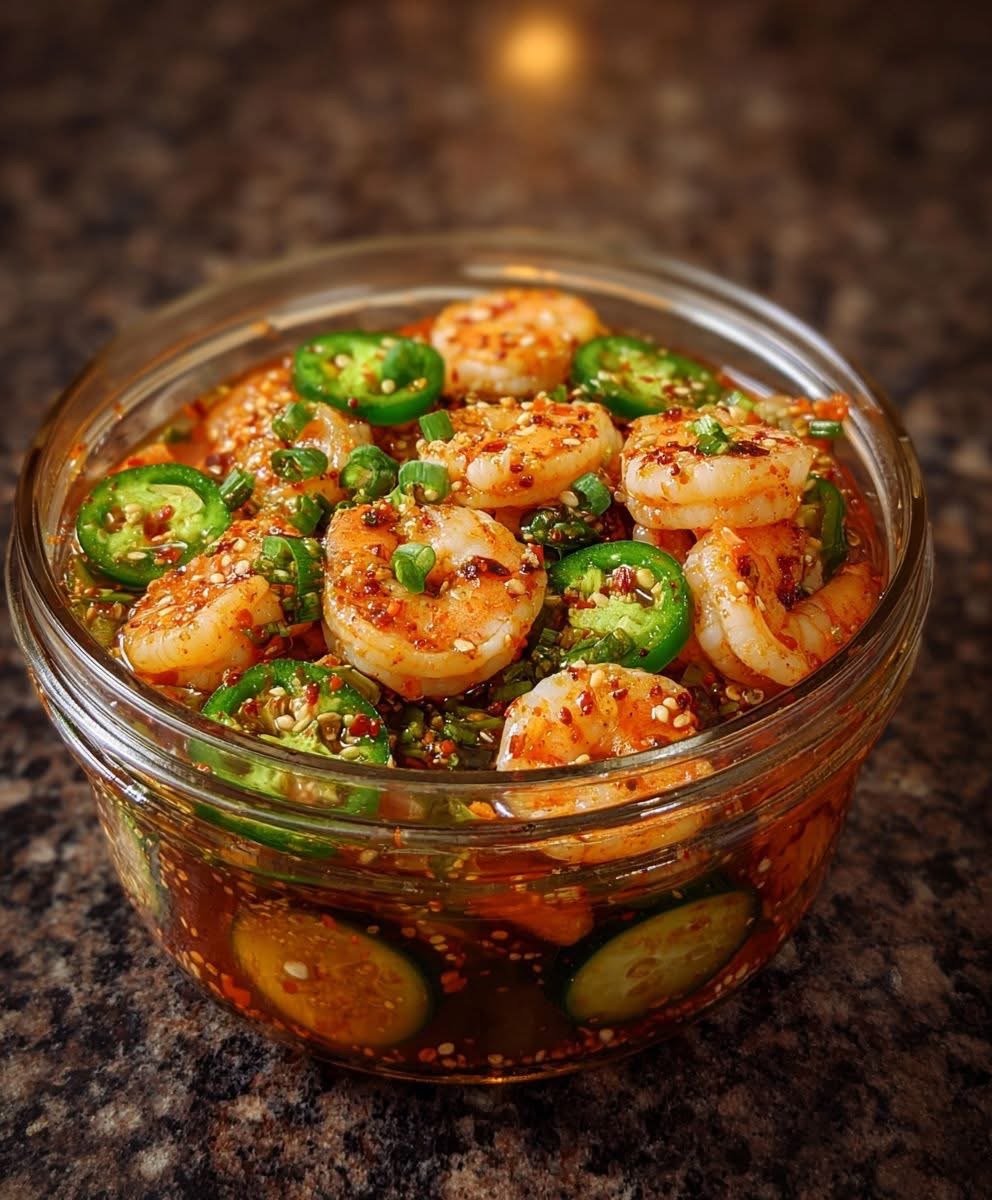
Pickled Shrimp: A Tangy, Spicy Delight!
Pickled shrimp is a timeless coastal delicacy that delivers an explosion of bright, zesty, and fiery notes, balancing tender seafood with an aromatic, herbaceous brine. Perfect as a make-ahead party appetizer, a standalone snack, or a striking addition to a charcuterie board, this dish embodies the ultimate marriage of food preservation mastery and vibrant culinary art.
1. Introduction: The Magic of Pickling Seafood
Pickling is one of humanity’s oldest culinary traditions, originally born out of the absolute necessity to preserve highly perishable foods. When applied to seafood—specifically plump, succulent shrimp—pickling transforms simple protein into a high-impact flavor vessel. Unlike heavy, cream-based seafood appetizers or deeply fried alternatives, pickled shrimp offers a remarkably clean, refreshing profile.
The dish shines because of the contrast between the firm, snap-to-the-bite texture of perfectly poached shrimp and the sharp, penetrating tang of a seasoned vinegar brine. Infused with a rich blend of high-quality oils, sliced citrus, aromatic garlic, and fiery red pepper flakes, it acts as a palate cleanser and a luxury treat all at once. It requires no stove-to-table rushing, as it is served chilled or at room temperature, making it a stress-free crown jewel for hosts and home cooks.
2. Deep Historical Roots & Cultural Evolution
The practice of submerging shrimp in vinegar and oil baths stretches deep into maritime history. To understand its modern iteration, one must look at both historical preservation needs and regional evolutions.
The Maritime Necessity
Before the advent of mechanical refrigeration in the late 19th and early 20th centuries, coastal communities had to find immediate ways to keep catches from spoiling. Seafood decomposes rapidly due to natural bacterial activity and active enzymes. Submerging cooked shrimp in a high-acid vinegar brine effectively lowered the pH environment below 4.6, halting the proliferation of dangerous foodborne pathogens. Sailors, fishermen, and coastal merchants utilized heavy spice blends not just for flavor, but for their natural antimicrobial properties.
The Lowcountry and Southern Heritage
In the United States, pickled shrimp is an undisputed staple of the Lowcountry—the coastal region spanning the South Carolina coast and the Georgia sea islands. Historically, the abundant harvest of sweet wild-caught brown and white shrimp from local salt marshes meant that families had to process immense volumes of seafood simultaneously.
Lowcountry hostesses quickly realized that pickling shrimp in wide-mouthed glass jars with local sweet onions, bay leaves, and lemons created an exceptionally elegant party dish. It became a permanent fixture at high-society cotillions, casual backyard oyster roasts, Sunday suppers, and holiday gatherings.
Global Counterparts
The concept of acid-cured or brine-steeped shrimp spans across world cultures:
Escabeche (Spain and Latin America): A traditional technique where fried or poached fish and shellfish are marinated in a highly acidic, spiced pepper and vinegar sauce, served cold.
Sunomono (Japan): Delicately poached shrimp served alongside thinly sliced cucumbers in a sweet, light rice vinegar dressing.
Nordic Pickled Shellfish: Scandinavian fishing cultures have long relied on dill, white vinegar, mustard seeds, and sugar to pickle cold-water shrimp and herring.
3. Comprehensive Ingredients Breakdown
To build a magnificent batch of pickled shrimp, every single element must be carefully selected. Because the shrimp marinates for days, the flavor of each spice, oil, and acid will intensify.
The Seafood (The Star Component)
- 1.5 to 2 Pounds of Fresh Wild-Caught Shrimp: Look for medium to large sizes (such as 21/25 or 26/30 count per pound). Wild-caught shrimp offer a naturally sweet, clean ocean flavor and a superior snappy texture compared to farm-raised alternatives, which can sometimes turn mushy in an acid bath.
The Aromatic Produce Layering
- 1 Medium Vidalia or Red Onion: Sliced into razor-thin half-moons. Vidalia onions bring a natural sweetness that tames the sharp vinegar, while red onions offer a beautiful pink hue to the final jar presentation.
- 1 Large Lemon: Scrubbed thoroughly and sliced into thin wheels. The lemon slices add real-time citrus oils from the rind, providing a bright top note that vinegar alone cannot achieve.
- 4 to 6 Fresh Garlic Cloves: Smashed flat or thinly slivered. Garlic grounds the brine with a deep, savory pungency.
- 2 Fresh Jalapeño or Serrano Peppers: Split lengthwise or sliced into rounds (retain seeds for maximum heat, or remove them for a milder profile).
The Liquid Gold Brine Base
- ¾ Cup Apple Cider Vinegar or White Wine Vinegar: Apple cider vinegar provides a fruity, mellow tang, whereas white wine vinegar offers a crisp, clean acidity.
- ½ Cup Extra Virgin Olive Oil or High-Quality Avocado Oil: The oil is critical. It coats the palate, tones down the harshness of the pure vinegar, helps suspend the spices evenly, and preserves the plump moisture of the shrimp.
- 2 Tablespoons Fresh Lemon Juice: Added to reinforce the fresh, active citrus elements.
- 1.5 Tablespoons Organic Sugar or Honey: Essential for balancing the sharp acidity; it rounds out the edges without making the seafood taste overtly sweet.
The Spice Drawer Infusion
- 2 Tablespoons Pickling Spice or Old Bay Seasoning: A robust, pre-blended mix containing mustard seeds, coriander, allspice, and cloves.
- 1 Teaspoon Crushed Red Pepper Flakes: For that unmistakable, slow-building background heat.
- 2 Teaspoons Whole Black Peppercorns: Adds a woody, pungent warmth.
- 1 Teaspoon Yellow Mustard Seeds: For a subtle, nutty pop of texture and tang.
- 1 Teaspoon Celery Seeds: Imparts a savory, earthy undertone that complements seafood beautifully.
- 3 to 4 Whole Dried Bay Leaves: Tucked down the sides of the jar to slowly release their herbal, tea-like aroma.
- 1 Teaspoon Coarse Kosher Salt: To draw out the flavors of the aromatics and season the flesh deeply.
4. The Chemistry of Brine Formation
Understanding the science behind the brine explains why this recipe tastes better with time. The formation of the pickling liquid relies on a delicate balance of acidic denaturation, oil emulsification, and osmotic pressure.
[Shrimp Cellular Structure] <=== Osmotic Exchange ===> [Acidic Vinegar + Oil Emulsion]
         (Releases moisture)                             (Infuses spices & citrus)
When you combine vinegar (acetic acid) with oil, spices, and salt, you create a hypertonic solution. When the cooked shrimp are submerged, osmotic pressure causes the shrimp to slowly release a small amount of its internal water, while simultaneously drawing in the acid, salt, and fat-soluble spice compounds.
The oil does not fully mix with the vinegar; instead, it forms a loose, temporary emulsion when shaken. This allows the oil to wrap around the shrimp, creating a protective barrier that prevents the acetic acid from over-cooking or aggressively breaking down the delicate proteins. This is why pickled shrimp stays firm and plump for days in the refrigerator, rather than turning into chalky mush like shrimp left too long in pure lime juice (as seen in raw ceviche applications).
5. Step-by-Step Cooking Instructions
Achieving perfection requires strict adherence to temperature control, particularly during the initial poaching stage. Follow these steps meticulously.
Step 1: The Perfect Shrimp Poach
- Bring a large pot of water (about 3 to 4 quarts) to a rolling boil.
- Add a heavy tablespoon of salt and, optionally, a tablespoon of Old Bay seasoning or lemon halves to the water to build an initial layer of flavor.
- Prepare a large bowl filled with half ice and half cold water right next to the stove. This ice bath is mandatory to stop the cooking process instantly.
- Drop the peeled and deveined shrimp into the boiling water.
- Watch the pot closely. Poach the shrimp for exactly 2 to 2.5 minutes (depending on size), just until they curl into a gentle “C” shape and turn an opaque, delicate pink. Do not let them curl tightly into an “O”, which signifies overcooking.
- Immediately skim the shrimp out with a slotted spoon and plunge them directly into the ice bath. Let them sit for 3 minutes until completely cold to the touch, then drain thoroughly. Pat them dry with paper towels.
Step 2: Whisking the Liquid Brine
- In a medium-sized mixing bowl or a large glass measuring cup, combine the apple cider vinegar, extra virgin olive oil, and fresh lemon juice.
- Add the kosher salt, sugar (or honey), crushed red pepper flakes, black peppercorns, mustard seeds, and celery seeds.
- Whisk vigorously until the salt and sugar are completely dissolved and the oil is broken down into tiny, glittering droplets throughout the vinegar.
Step 3: Layering and Packing the Vessel
- Procure a clean, wide-mouthed 1-quart glass Mason jar or an airtight glass casserole dish. Avoid metallic containers, as the acid will react with the metal and impart an unpleasant, metallic taste.
- Begin layering the components structurally: drop a handful of thinly sliced onions and a few lemon wheels into the bottom of the jar. Tock a bay leaf and a few garlic slivers against the glass.
- Add a generous layer of the chilled, dried shrimp.
- Repeat the process: onions, lemons, garlic, fresh peppers, and shrimp, packing the ingredients down gently but firmly as you move up the jar.
- Pour the whisked brine solution over the top, ensuring it seeps through the cracks and completely submerges every piece of seafood and produce.
- Seal the jar tightly with its lid. Give it a gentle shake and flip it upside down a few times to distribute the spices evenly.
6. Advanced Culinary Methods & Variations
Once you have mastered the classic Lowcountry pickled shrimp, you can explore various global flavor profiles by modifying the base aromatics and acids.
| Style Variation | Acid Base | Primary Herbs & Spices | Unique Aromatics |
|---|---|---|---|
| The Lowcountry Classic | Apple Cider Vinegar | Old Bay, Celery Seed, Bay Leaves | Vidalia Onion, Lemon Wheels |
| The Fiery Citrus-Mex | White Vinegar & Lime | Cumin, Coriander, Red Pepper | Jalapeños, Cilantro, Red Onion |
| The Mediterranean Herb | Red Wine Vinegar | Oregano, Rosemary, Peppercorns | Kalamata Capers, Garlic, Fennel |
| The Nordic Dill | White Wine Vinegar | Fresh Dill Sprigs, Mustard Seed | Shallots, White Peppercorns |
The “Lowcountry Classic” Method
This method leans heavily into regional tradition. It features the inclusion of capers and a dash of hot sauce directly into the brine. It is savory, deeply nostalgic, and pairs naturally with saltine crackers and cold lager beer.
The “Fiery Citrus-Mex” Method
Swap the apple cider vinegar for a combination of white vinegar and fresh lime juice. Replace the pickling spice with toasted cumin seeds, whole coriander seeds, and a handful of rough-chopped cilantro leaves. Introduce sliced serrano peppers and a dash of smoked paprika to give the shrimp an earthy, fiery depth that echoes coastal Mexican roadside stands.
The “Mediterranean Herb” Method
Utilize red wine vinegar and premium cold-pressed olive oil. Stuff the jar with fresh oregano sprigs, sliced garlic cloves, whole black peppercorns, and a quarter cup of drained nonpareil capers. The addition of sliced fennel bulbs creates an incredibly aromatic, sophisticated anise-forward undertone.
7. Granular Nutritional Profile
Pickled shrimp is a dream component for modern dietary structures, including low-carbohydrate, ketogenic, high-protein, and Mediterranean lifestyles. Because it relies on lean protein, healthy fats, and minimal sugar, it delivers immense flavor with an incredibly clean macronutrient foot-print.
The values below represent a standard 4-ounce (approx. 113g) serving of drained pickled shrimp along with its clinging aromatics:
- Calories: 160 kcal
- Derived primarily from the dense protein of the shrimp and the healthy monounsaturated fats from the clinging olive oil.
- Protein: 18 grams
- Complete, high-biological-value protein containing all essential amino acids required for muscle repair, cellular synthesis, and metabolic health.
- Total Carbohydrates: 3 grams
- Exceptionally low. The minimal carbs stem from the natural sugars in the sliced onions, lemon rinds, and the tiny amount of sugar used to balance the brine.
- Dietary Fiber: 0.5 grams
- Total Sugars: 1.5 grams
- Total Fat: 8 grams
- Saturated Fat: 1.1 grams
- Monounsaturated Fat: 5.5 grams (The heart-healthy oleic acid from olive oil)
- Polyunsaturated Fat: 1.4 grams (Including vital marine omega-3 fatty acids)
- Cholesterol: 142 milligrams
- Dietary cholesterol in shrimp has been shown in modern nutritional science to have minimal impact on blood LDL levels for the vast majority of individuals.
- Sodium: 480 milligrams
- Elevated compared to plain shrimp due to the pickling preservation process, but highly manageable as an appetizer or side component.
8. Multi-Faceted Health and Dietary Benefits
Incorporating pickled shrimp into your culinary repertoire brings a broad spectrum of physiological benefits that make it as nourishing as it is delicious.
Premium Lean Protein Source
Shrimp is one of the most protein-dense foods available, offering an exceptionally high protein-to-calorie ratio. It contains ample amounts of selenium, a powerful antioxidant that supports thyroid function and protects the body from oxidative stress, alongside Vitamin B12, which is critical for nerve tissue health and red blood cell production.
Metabolic Boost from Capsaicin and Acid
The inclusion of red pepper flakes and fresh jalapeños introduces capsaicin, a thermogenic compound known to temporarily elevate metabolic rate, support fat oxidation, and promote cardiovascular circulation. Furthermore, the acetic acid in the vinegar base aids digestion by supporting stomach acidity and has been shown to assist in modulating blood sugar spikes when consumed alongside carbohydrate-dense meals.
Cardioprotective Fats
By utilizing extra virgin olive oil as the lipid carrier, this recipe delivers a massive dose of monounsaturated fatty acids and polyphenols. These compounds work systemically to reduce systemic inflammation, protect blood vessels from cholesterol oxidation, and support healthy HDL levels.
9. For the Ultimate Shrimp Lovers: Curing, Serving, and Pairing
This section is dedicated to true seafood aficionados—the lovers of bold textures and big flavors who want to maximize the sensory impact of this dish.
The Curing Timeline (Patience Yields Perfection)
While you can technically eat the shrimp after 4 hours of chilling, true shrimp lovers know that the magic happens between 24 to 48 hours.
- At 4 Hours: The brine has coated the exterior, but the core of the shrimp remains sweet and un-pickled.
- At 24 Hours: The acid has penetrated to the center. The onions have lost their raw bite and transformed into crisp, tangy pickles. The garlic has mellowed into the oil.
- At 48 Hours: Peak flavor harmony. The shrimp have absorbed the perfect amount of heat, citrus oils, and vinegar punch, reaching their ideal firm, snappy texture.
Master-Level Serving Presentations
Don’t just dump the jar into a bowl. Elevate the experience:
- The Lowcountry Coastal Platter: Mound the colorful pickled shrimp, lemon wheels, and pickled onions onto a massive chilled platter. Surround it with premium butter crackers (like Ritz), crisp saltines, and wooden toothpicks for stabbing.
- The Avocado Boat Luncheon: Halve a perfectly ripe Hass avocado, remove the pit, and fill the cavity with a mountain of drained pickled shrimp. Drizzle a spoonful of the jar’s seasoned oil over the top and finish with fresh chopped dill.
- The Ultimate Bloody Mary Garnish: Skewer a pickled shrimp alongside a green olive, a pepperoncini, and a cube of sharp white cheddar cheese to construct an unforgettable, skyscraper garnish for your weekend brunch cocktails.
          [ Toothpick Skewer ]
                 |
         ( Pickled Shrimp )
                 |
         ( Sliced Jalapeño )
                 |
         ( Pickled Onion )
                 |
   =============================
   [ Chilled Crisp Toast Point ]
   =============================
Sophisticated Beverage Pairings
- The Beer Choice: A bone-dry, ice-cold German Pilsner, an American cream ale, or a classic crisp lager. The bright carbonation cuts right through the olive oil coating on the tongue, resetting your palate for the next fiery bite.
- The Wine Choice: A high-acid, mineral-forward white wine is mandatory. Look for a Sancerre (Sauvignon Blanc), an Austrian Grüner Veltliner, or a Spanish Albariño. These wines mimic the citrus notes of the brine and stand up effortlessly to the vinegar.
10. Conclusion: A Timeless Masterpiece for Modern Tables
Pickled shrimp is far more than a simple seafood dish; it is a celebration of culinary balance, intelligent food science, and deep cultural heritage. By understanding the interaction between acidity, fat, and clean marine protein, anyone can create an appetizer that commands attention at any table. It honors the historical necessity of preservation while serving the modern desire for bright, clean, high-protein, and deeply satisfying food.
Pack a jar with care, let the spices work their slow magic in the dark cold of your refrigerator, and share the snappy, tangy, spicy result with those who truly appreciate the finer nuances of coastal cooking.
If you want to customize this recipe further, let me know:
- Your preferred heat tolerance level (mild, medium, or fiery)
- Any dietary restrictions you need to accommodate (e.g., completely sugar-free, low-sodium)
- The specific occasion you are hosting so we can design a complete beverage and side pairing menu!