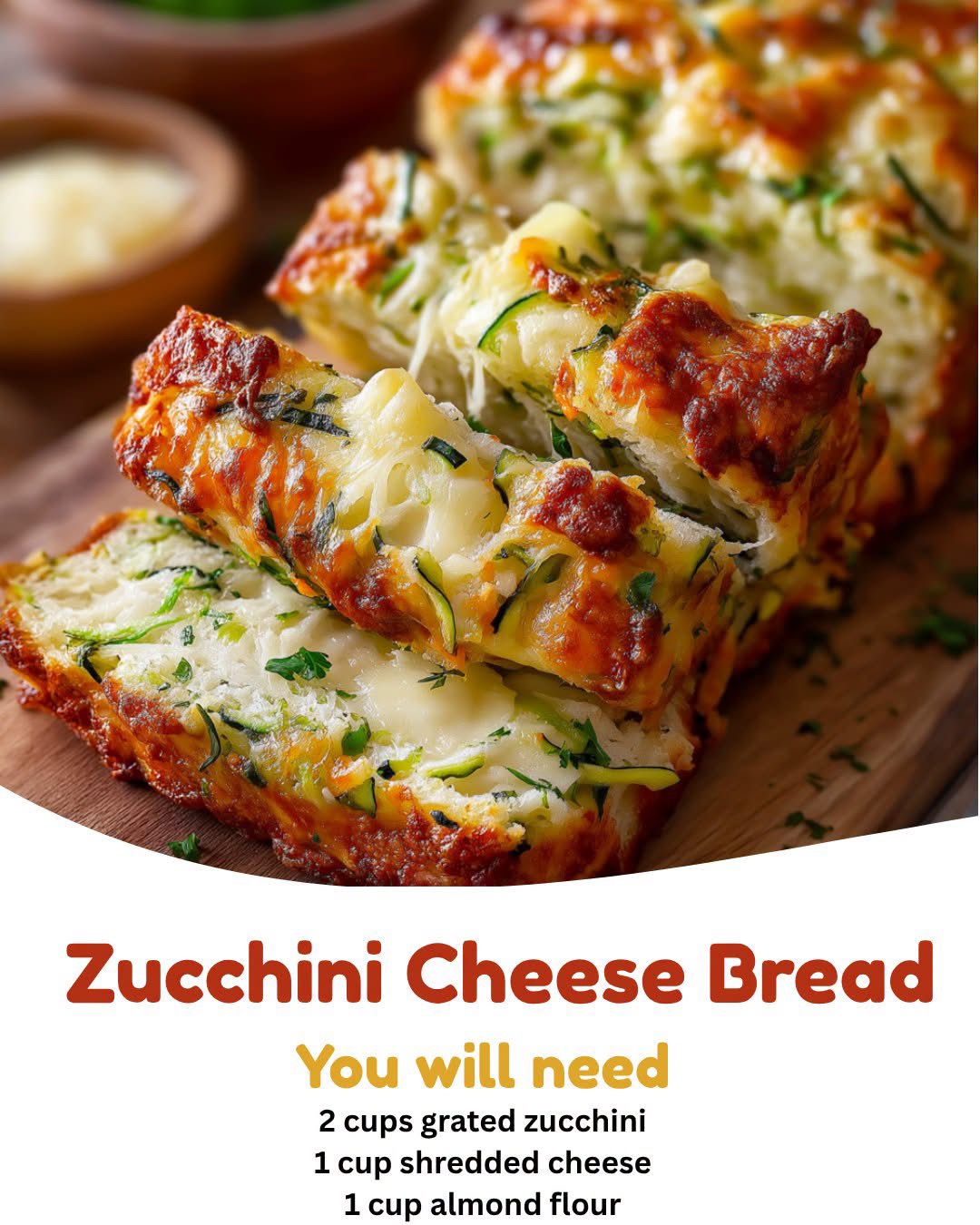
The Ultimate Guide to Savory Zucchini Cheese Almond Flour Bread
Zucchini Cheese Almond Flour Bread is a premium, low-carb alternative to traditional quick breads that blends shredded summer squash, sharp melted cheese, and nutrient-dense nut flour. This ultimate comprehensive guide provides an exhaustive look into this comforting bake—covering its historical origins, functional chemistry, step-by-step preparation, nutritional profiles, and variant methods. Whether you manage an intolerance to gluten, follow a ketogenic lifestyle, or simply want an incredibly moist savory loaf, this recipe delivers exceptional flavor and texture.
1. Introduction: The Evolution of Savory Quick Breads
Traditional quick breads rely heavily on chemical leaveners like baking powder or baking soda rather than biological yeast. While sweet variations like classic banana bread or cinnamon-spiced zucchini loaves dominate Western baking, savory quick breads occupy a unique culinary niche. They combine the ease of a batter cake with the hearty, comforting profiles of traditional cheese and herb dinner loaves.
Using almond flour transforms this paradigm completely. Eliminating standard wheat flour means stripping away gluten—the structural protein network that typically traps gas and causes bread to rise. To overcome this, our recipe utilizes the moisture-retention properties of finely grated zucchini and the structural binding power of whole eggs and melted fats. The result is a bread that is dense yet tender, structurally sound enough to toast, and bursting with umami notes from sharp cheddar and garlic. It functions perfectly as a breakfast slice, a side for roasted meats, or a standalone afternoon snack.
2. Cultural & Culinary History
Understanding how these ingredients converged into a singular contemporary classic helps us appreciate the depth behind every slice.
The History of Zucchini
Zucchini (Cucurbita pepo) is a summer squash native to the Americas, where indigenous populations cultivated its wild ancestors for thousands of years alongside corn and beans. However, the specific dark-green, cylindrical cultivar we recognize today was developed in northern Italy during the late 19th century. Italian immigrants brought the “zucchino” back to the United States in the early 20th century, particularly to California.
During the mid-20th century home-gardening booms, American backyard growers noticed that zucchini grew at an astonishingly rapid rate, frequently leaving households with massive surpluses. To utilize this abundant yield, home cooks began grating the squash into sweet spice cakes and quick breads during the 1960s and 1970s. The vegetable added unparalleled moisture without altering the flavor profile.
The Rise of Grain-Free and Almond Flour Baking
Almond flour consists entirely of blanched, skinned almonds ground down to a fine, flour-like consistency. Historically, nut meals were used across medieval Europe and the Middle East to thicken sauces and create dense, luxury confections like marzipan or traditional Spanish almond cakes (Tarta de Santiago).
The modern renaissance of almond flour as a primary structural substitute for wheat emerged during the early 21st century. This shift was fueled by the rise of celiac disease diagnoses, gluten sensitivities, and the mainstream adoption of low-carb dietary frameworks like the Paleo and Ketogenic diets. Bakers realized that almond flour could recreate the crumb structural sensations of traditional baked goods while keeping insulin spikes to an absolute minimum.
3. Structural Formation & Baking Science
To successfully bake without wheat, you must understand the biochemical “formation” taking place inside your mixing bowl and oven cavity.
+-------------------------------------------------------------+

|                     BATTER FORMATION                       |
+-------------------------------------------------------------+

|  [Almond Flour]  --> Provides Bulk, Fats, and Nut Crumbs    |
|  [Whole Eggs]    --> Provides Liquid Albumin for Structure |
|  [Zucchini]      --> Regulates Long-Term Moisture Release   |
|  [Baking Powder] --> Releases CO2 Gas for Pocket Expansion   |
+-------------------------------------------------------------+
                              ||
                              \/
+-------------------------------------------------------------+

|                    OVEN HEAT ACTIVATION                     |
+-------------------------------------------------------------+

|  1. Egg proteins coagulate (solidify the walls).            |
|  2. Cheese melts, dispersing fat and protein networks.       |
|  3. Moisture vaporizes into steam, puffing the structure.   |
+-------------------------------------------------------------+
The Role of Moisture Mitigation
Zucchini is roughly 95% water by weight. If you grate a raw zucchini and dump it straight into an almond flour batter, the sheer volume of water released during the baking cycle will cause structural collapse. The center of your loaf will turn into a gummy, unbaked pudding.
To achieve proper structural formation, you must extract a specific portion of this water beforehand via osmotic salting or mechanical squeezing. The remaining internal cell moisture then vaporizes gradually at high temperatures (350°F / 175°C), generating internal steam pockets that help lift the heavy nut oils and create a tender, aerated crumb.
Protein Coagulation
Because almond flour lacks gluten proteins (gliadin and glutenin), the loaf must rely entirely on egg proteins (ovalbumin and ovotransferrin) for its setting matrix. As heat penetrates the loaf pan, these liquid egg proteins uncoil and cross-link, binding the ground almond particles and grated zucchini into a solid, sliceable network.
Concurrently, the fats in the shredded cheddar cheese melt into the surrounding flour particles, creating localized pockets of richness and leaving behind golden, crispy cheese lace along the exterior crust edges.
4. Complete List of Ingredients
Achieving the perfect balance of moisture, fat, and rise requires precise measuring. For optimal results, use a digital kitchen scale to measure by weight.
Core Dry Ingredients
- Almond Flour (Super-Fine, Blanched): 2.5 cups (approx. 280 grams). Do not use unblanched almond meal, as the fibrous skins make the bread gritty and dark.
- Baking Powder (Double-Acting): 2 teaspoons (approx. 10 grams). Provides the necessary lifting power without leaving a metallic aftertaste.
- Garlic Powder: 1 teaspoon (approx. 3 grams). Adds an aromatic, savory base layer.
- Onion Powder: 0.5 teaspoon (approx. 1.5 grams). Complements the garlic and cheese profiles.
- Fine Sea Salt: 0.75 teaspoon (approx. 4.5 grams). Crucial for flavor enhancement and regulating moisture.
- Black Pepper (Freshly Cracked): 0.25 teaspoon. Adds subtle warmth to cut through the richness of the cheese.
Core Wet & Fresh Ingredients
- Medium Zucchini: 1 large or 2 medium (yielding roughly 1.5 cups packed or 180 grams after squeezing).
- Sharp Cheddar Cheese: 1.5 cups (approx. 150 grams), shredded at home. Avoid pre-packaged shredded cheeses, as they are coated in potato starch or cellulose powder which prevents proper melting and dries out the crumb.
- Large Eggs: 3 whole eggs (room temperature). Cold eggs can cause melted butter or oils to seize during the mixing process.
- Unsalted Butter or Extra Virgin Olive Oil: 0.25 cup (approx. 56 grams / 60 mL), melted and cooled slightly. Provides rich interior lubrication.
- Apple Cider Vinegar or Lemon Juice: 1 teaspoon (approx. 5 mL). The mild acid activates the double-acting baking powder instantly, boosting the loaf’s ultimate rise.
5. Step-by-Step Instructions & Methods
Follow this sequence exactly to ensure your almond flour loaf rises uniformly and develops a clean internal crumb structure.
Phase 1: Preparing the Zucchini (The Moisture Extraction Method)
- Grate: Use the medium or coarse holes of a standard box grater to shred your unpeeled zucchini.
- Salt & Rest: Place the grated squash into a fine-mesh colander set over a clean bowl. Toss with 0.25 teaspoon of salt. Let it rest undisturbed for 15 minutes. The salt draws internal water out through osmosis.
- Squeeze: Transfer the rested zucchini into the center of a clean cheesecloth or an unbleached lint-free kitchen towel. Gather the corners tightly and twist the fabric with force over the sink. Squeeze repeatedly until no more liquid drips out. You should be left with a compacted, dry ball of green squash flecks.
Phase 2: Mixing the Batter
- Preheat & Prep: Set your oven to 350°F (175°C). Line an 8.5 × 4.5 inch loaf pan with parchment paper, leaving generous overhang tabs on the long sides for easy removal later. Lightly grease the exposed inner ends with olive oil or butter.
- Combine Dry: In a large mixing bowl, whisk together the super-fine blanched almond flour, baking powder, garlic powder, onion powder, remaining salt, and cracked black pepper. Ensure all lumps are completely broken down.
- Combine Wet: In a separate medium bowl, whisk the 3 large eggs vigorously until completely uniform and lightly foamy. Pour in the melted butter (or olive oil) and apple cider vinegar, whisking continuously to emulsify.
- Fold Components: Pour the wet ingredient mixture into the dry ingredient bowl. Use a silicone spatula to fold the components together gently until a thick, uniform paste forms. Do not overmix; since there is no gluten, you cannot make it tough, but you can accidentally deflate any air whipped into the eggs.
- Incorporate Inclusions: Fluff up your squeezed zucchini ball with your fingers, then add it along with 1.25 cups of the shredded cheddar cheese into the batter. Fold gently until the squash and cheese are evenly distributed throughout the dough.
Phase 3: Assembly & Baking
- Transfer: Spoon the thick batter into your prepared loaf pan. Use the back of your spatula or an offset spatula to smooth the surface evenly into the corners.
- Garnish: Scatter the remaining 0.25 cup of shredded cheddar cheese evenly across the top surface of the raw loaf.
- Bake Time: Place the pan on the center rack of your preheated oven. Bake for 45 to 55 minutes.
- The Visual & Physical Check: At the 40-minute mark, check the top crust. If the cheese is browning too quickly, tent a piece of aluminum foil loosely over the top. The bread is fully baked when the top feels firm to a gentle touch and a clean wooden toothpick inserted into the center of the loaf comes out free of wet batter (a few melted cheese crumbs are fine).
Phase 4: Slicing and Setting
- Initial Cooling: Remove the pan from the oven and set it on a wire cooling rack. Do not attempt to remove the bread from the pan immediately. The hot almond flour structure is extremely fragile and will break apart. Let it cool inside the pan for 15 to 20 minutes.
- Final Cool: Use the parchment paper overhang handles to lift the loaf cleanly out of the pan. Place the naked loaf directly onto the wire cooling rack to cool completely for at least 30 more minutes before slicing. This allows the internal fats and proteins to firm up perfectly.
6. Comprehensive Alternative Baking Methods
If your kitchen equipment varies or you prefer a different presentation, use these verified technical modifications.
Method A: The Muffin Pan Modification
Transforming this savory batter into individual muffins reduces your bake time drastically and creates excellent portion-controlled options.
- Adjustment: Line a standard 12-cup muffin tin with parchment or silicone liners.
- Portioning: Divide the thick batter evenly among the cups, filling each roughly three-quarters full. Top each with a pinch of cheese.
- Oven Settings: Bake at 350°F (175°C) for 22 to 25 minutes until the tops are golden brown and springy.
Method B: The Cast-Iron Skillet Method
Baking in cast iron creates an ultra-crispy, caramelized bottom crust reminiscent of rustic cornbread.
- Adjustment: Heat an 8-inch cast-iron skillet inside your oven while it preheats to 350°F (175°C).
- Application: Carefully remove the hot skillet using oven mitts. Drop 1 tablespoon of butter inside, swirling it around to coat the bottom and sides thoroughly.
- Baking: Spread the batter into the hot skillet. It will sizzle instantly. Bake for 35 to 40 minutes until the edges are deep golden brown and pulling away slightly from the cast iron walls.
7. Nutritional Profile & Macro Breakdown
Almond flour zucchini cheese bread stands out due to its excellent micronutrient matrix and low glycemic index. It provides long-lasting energy without the subsequent insulin crashes associated with standard white flour products.
The values below represent an estimated nutritional breakdown per slice, assuming a standard yield of 10 thick slices per single loaf:
| Nutrient Category | Value Per Serving (1 Slice) | Percentage of Daily Value (% DV) |
|---|---|---|
| Calories | 245 kcal | 12% |
| Total Carbohydrates | 6.5 g | 2% |
| Dietary Fiber | 3.5 g | 12% |
| Net Carbohydrates | 3.0 g | — |
| Total Protein | 10.5 g | 21% |
| Total Fat | 20.5 g | 26% |
| Saturated Fat | 6.5 g | 32% |
| Cholesterol | 78 mg | 26% |
| Sodium | 340 mg | 15% |
| Calcium | 165 mg | 13% |
| Iron | 1.4 mg | 8% |
| Potassium | 190 mg | 4% |
Macro-Nutrient Composition Discussion
A single slice contains a mere 3.0 grams of net carbohydrates (calculated by subtracting the 3.5 grams of dietary fiber from the 6.5 grams of total carbohydrates). This balance makes the loaf exceptionally well-suited for metabolic health. The 10.5 grams of high-quality protein combined with healthy mono- and polyunsaturated fats from the almonds ensure your satiety signals are triggered quickly and sustained over several hours.
8. Health & Dietary Benefits
Choosing high-quality, whole-food alternatives yields significant long-term systemic health benefits.
- Low Glycemic Index & Blood Sugar Regulation: Standard wheat flour converts rapidly into glucose upon digestion, causing sudden blood sugar spikes. Almond flour digests slowly, providing a smooth, steady release of energy. This characteristic is beneficial for individuals managing type-2 diabetes or insulin resistance.
- High Vitamin E Content: Almond flour is an excellent source of alpha-tocopherol (Vitamin E), a powerful fat-soluble antioxidant. Vitamin E protects cell membranes from oxidative damage, improves skin health, and supports cardiovascular function.
- Enriched Mineral Delivery: Zucchini and almonds are both rich in vital intracellular minerals. Magnesium supports healthy nerve conduction, muscle relaxation, and blood pressure management. Zinc assists in robust immune cell activation and wound healing.
- Digestive Support via Prebiotic Fibers: The combination of insoluble fibers from the zucchini skin and soluble fibers within the almonds fuels beneficial gut bacteria in your microbiome. This action promotes optimal digestive transit and a healthy gut barrier.
- Naturally Celiac-Safe: This bread is inherently 100% gluten-free. It provides those with celiac disease or non-celiac gluten sensitivity a reliable, savory bread experience without any risk of cross-contamination or systemic inflammation.
9. Flavor Profiles for Specific Bread Lovers
This basic recipe forms an incredibly versatile canvas. Depending on your personal palate, you can easily modify the flavor profile to match your specific cravings.
For the Herb Lover
If you love fresh, vibrant garden notes, fold these inclusions directly into the batter along with the raw zucchini:
- Herbal Blend: Add 2 tablespoons of finely minced fresh rosemary, dill, or chives.
- Cheese Swap: Pair these green herbs with a sharp, tangy Goat Cheese or Feta crumble instead of standard cheddar.
For the Spice Lover
If you prefer a fiery kick that contrasts beautifully with the rich, buttery flavor of the almond flour:
- Heat Infusion: Fold 1 medium jalapeño (finely diced, seeds removed for moderate heat) into the batter.
- Cheese Swap: Substitute the sharp cheddar with an equal amount of Pepper Jack or Smoked Habanero cheese.
- Spice Kick: Add a pinch of cayenne pepper or smoky chipotle powder to the dry ingredient bowl.
For the Umami Lover
If you want maximum depth and a rich, deeply savory, or smoky profile:
- Savory Inclusions: Fold 0.25 cup of cooked, crisped, and crumbled applewood bacon or chopped sun-dried tomatoes into the dough.
- Cheese Swap: Use a combination of Smoked Gouda and finely grated Parmigiano-Reggiano to create a complex, woodsy flavor profile.
10. Conclusion: Storage, Serving, & Final Verdict
Storage and Shelf Life Preservation
Because almond flour breads have a high moisture and fat content, leaving them out at room temperature for more than 48 hours can encourage mold growth. Follow these storage guidelines for best results:
- Refrigeration: Wrap the cooled loaf tightly in plastic wrap or store it in an airtight container in the fridge for up to 7 days.
- Freezing: Slice the loaf completely beforehand. Place pieces of parchment paper between the individual slices, then seal the entire assembly inside a heavy-duty freezer bag. Store frozen for up to 3 months. You can drop a frozen slice directly into a standard toaster oven whenever you want a quick snack.
Expert Serving Recommendations
While this bread is wonderful enjoyed fresh at room temperature, warming it unlocks its full potential. Toast a thick slice in a skillet with a small pat of butter or a drizzle of olive oil until the surface turns golden-brown and crispy. Top it with a poached egg for a complete breakfast, or serve it alongside a steaming bowl of tomato basil soup to create a cozy, comforting meal.
Final Verdict
Zucchini Cheese Almond Flour Bread successfully bridges the gap between clean dietary choices and pure comfort food. By mastering moisture control and leveraging the natural binding properties of whole food ingredients, you can consistently bake a nutritious, low-carb loaf that satisfies everyone at the table.
If you plan to bake this soon, let me know:
- What variety of cheese you intend to use (e.g., Cheddar, Feta, Pepper Jack)?
- Do you have any dietary goals you are targeting (e.g., Keto, Gluten-Free)?
I can suggest the ideal flavor additions or ingredient substitutions for your kitchen!