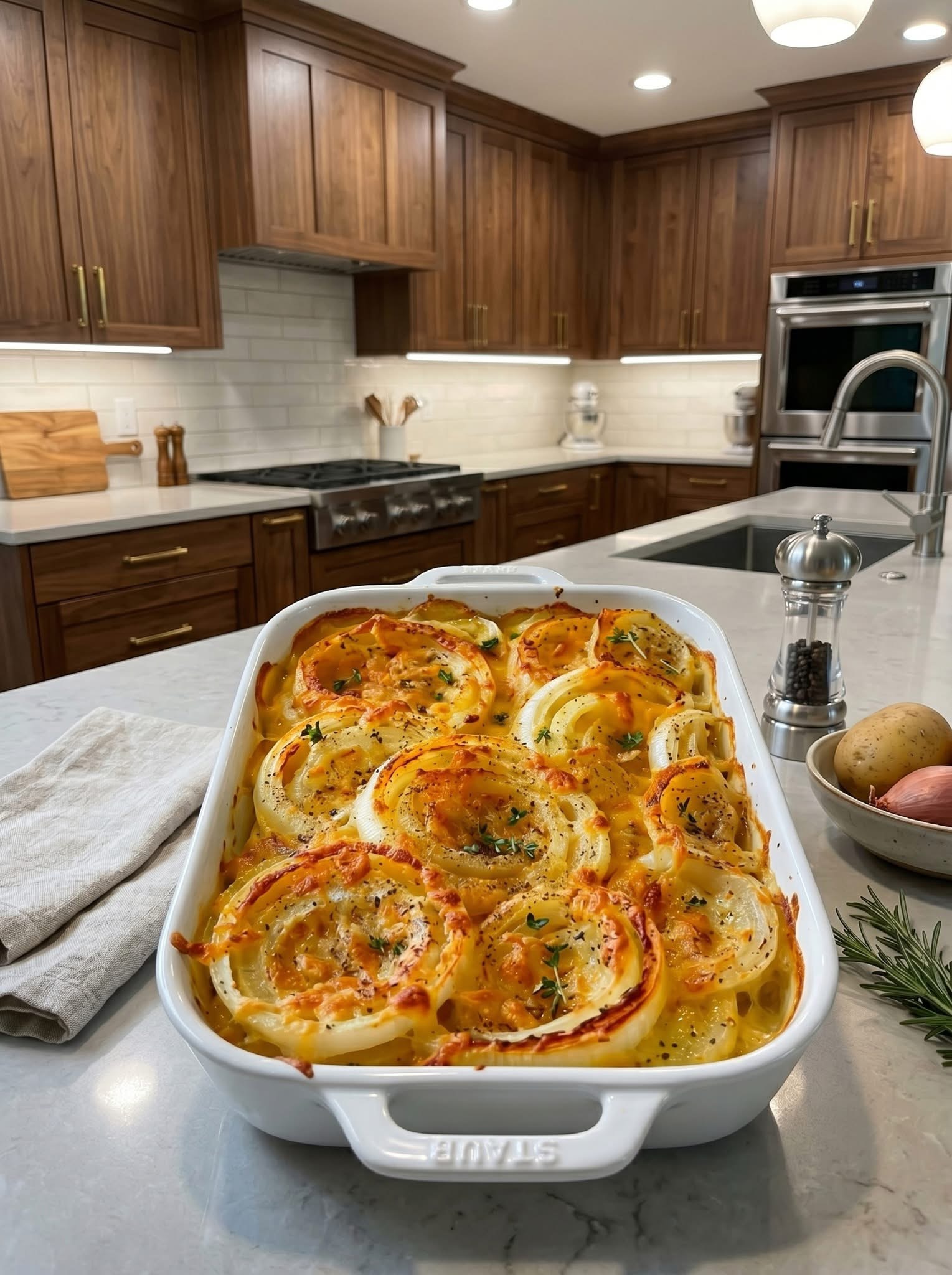
Tennessee Onions are a rich, bubbly, and deeply comforting Southern casserole made of thick-cut sweet onions baked in butter, seasonings, and a triple-cheese blend. This famous side dish achieves everything people love about deep-fried onion rings—sweet, savory, tender onions combined with a crispy, golden crown of melted cheese—without the mess of hot oil, batter, or soggy breading. It is widely celebrated across modern potlucks and holiday spreads as the ultimate hands-off vegetable side dish that outshines traditional fried alternatives.
Below is an extensive, granular breakdown of this viral Southern classic.
Visual Overview
Introduction: What Makes Tennessee Onions Supreme?
Onions are rarely allowed to take absolute center stage in American cuisine. They are routinely chopped, minced, and sweated down to serve as a quiet background base for soups, sauces, and stews. When they do break out into the spotlight, it is usually inside a heavy coat of flour, cornstarch, and breadcrumbs before plunging into a vat of boiling oil. While a perfectly executed onion ring is undeniable, the home-cooking reality is often disappointing: a messy kitchen, a heavy smell of grease, and a crunchy exterior that detaches from a stringy, undercooked onion on the very first bite.
Enter Tennessee Onions. This traditional Southern baking method relies on low, slow heat inside an oven to naturally draw out the sugars of sweet onions, caramelizing them gently in a bath of melted butter. Instead of cornmeal or batter, a trio of Sharp Cheddar, Mozzarella (or an Italian cheese blend), and Parmesan creates a crisp, bubbling crust that locks in moisture.
The resulting dish delivers a flawless texture contrast: soft, melt-in-your-mouth onion rings submerged in a rich, buttery broth, topped with a crunchy, sharp, savory cheese canopy. It is highly customizable, naturally gluten-free, requires fewer than ten minutes of active prep work, and yields a flavor profile that pairs effortlessly with everything from summer barbecue ribs to formal holiday prime rib dinners.
History & Regional Origins
The exact historical origin of Tennessee Onions remains a matter of Southern culinary folklore, but its roots are tied deeply to the agriculture of the Appalachian region and the broader American South.
The Rise of Sweet Onion Agriculture
To understand why this dish developed, one must look to the soil. The southeastern United States possesses specific low-sulfur soils that prevent onions from developing the sharp, eye-watering pungency found in standard yellow or white storage onions. While Georgia became famous for its Vidalia Sweet Onions and Texas for its 1015 sweets, Tennessee home cooks historically relied on regional sweet varieties cultivated in home gardens and local river valleys. Because these onions were remarkably mild and sweet enough to eat raw like an apple, Southern cooks looked for simple ways to celebrate them as a primary vegetable dish rather than a seasoning agent.
Casserole Culture and Church Cookbooks
During the mid-20th century, the expansion of suburban home ovens and the commercial availability of affordable, pre-shredded cheeses revolutionized Southern cooking. Community, church, and junior league cookbooks from Tennessee, Kentucky, and Alabama began featuring variations of “Baked Onions” or “Sweet Onion Gratin.”
Over the decades, the recipe became standardized into what we know today: thick, distinct slices arranged in a baking dish, heavily dotted with real butter, and seasoned with local mainstays like garlic powder, salt, and black pepper before being blanketed in cheese. The name “Tennessee Onions” solidified as a regional identifier, distinguishing this specific butter-and-triple-cheese bake from French onion soup or Midwestern creamed onion casseroles.
Comprehensive Ingredients List
Achieving the perfect balance of sweet caramelization and sharp cheese crunch requires using high-quality, specific ingredients. Substitutions are possible, but the classic formula yields the most authentic texturing.
- 3 to 4 Large Sweet Onions (approx. 2 to 2.5 lbs): Look specifically for Vidalia, Walla Walla, or sweet yellow varieties. They contain high water and sugar contents, which allow them to soften and sweeten drastically as they bake.
- 4 Tablespoons (1/2 stick) Unsalted Butter: Cut into small cubes or thin pats. Using unsalted butter allows you to control the exact sodium levels of the dish, preventing the cheese from becoming overly salty.
- 1 Teaspoon Garlic Powder: Provides a baseline umami layer that bridges the sweetness of the onions with the saltiness of the cheese crust.
- 1 Teaspoon Fine Sea Salt: Draws out internal moisture from the onions during the initial covered stage of baking, helping them steam and soften.
- 1/2 Teaspoon Freshly Cracked Black Pepper: Cuts through the richness of the butter and dairy.
- 1/2 Teaspoon Smoked Paprika (Optional): Adds a subtle, warm depth and an appealing reddish-gold hue to the finished cheese top.
- 1 Cup Sharp Cheddar Cheese (Freshly Shredded): Delivers a robust, tangy flavor and iconic color.
- 1 Cup Mozzarella or Italian Blend Cheese (Freshly Shredded): Provides the classic, gooey, elastic string-cheese pull.
- 1/4 Cup Parmigiano-Reggiano or Pecorino Romano (Finely Grated): Adds a sharp, salty, nutty bite and aids in forming a truly crisp crust on top.
- Fresh Italian Parsley or Chives (Chopped): For garnish, adding a bright pop of color and a fresh herbal finish to cut the heavy fat.
Kitchen Equipment Needed
Before beginning, gather the following standard kitchen tools to ensure a smooth, efficient workflow:
- 9×13-inch Ceramic or Glass Baking Dish: The ideal surface area to spread out the onions, ensuring they cook evenly without piling too deep.
- Sharp Chef’s Knife: Crucial for slicing through dense, whole onions cleanly without crushing their layers.
- Heavy-Duty Aluminum Foil: Essential for trapping steam during the first phase of baking.
- Mandoline Slicer (Optional): Helpful if you prefer paper-thin, uniform layers, though traditional thick hand-cut rings are highly recommended.
- Box Grater: For grating blocks of cheese. Pre-packaged cheeses contain anti-caking agents (like potato starch) that inhibit smooth melting.
Step-by-Step Instructions
Follow these step-by-step instructions carefully to prevent the onions from burning or turning mushy.
[Prep: 10 mins] --> [Slice Onions into 1/2-inch Rings] --> [Layer in 9x13 Dish]
                                                                   |
[Uncover & Broil 5 mins] <-- [Bake Covered at 400°F for 35 mins] <-- [Season & Add Cheese/Butter]
         |
[Garnish & Serve Hot]
Step 1: Oven and Dish Preparation
Preheat your oven to 400°F (205°C) with the baking rack positioned in the center position. Lightly grease your 9×13-inch baking dish with a small pat of butter or a light spray of non-stick olive oil cooking spray.
Step 2: Slicing the Onions
Peel the papery outer skin and the tough first layer from your sweet onions. Place the onion firmly on your cutting board and cut off the top stem end, leaving the root end intact temporarily to hold onto if needed. Slice the onions crosswise into thick, uniform rings measuring roughly 1/2-inch thick. Do not separate the internal rings; leave the rounds intact as whole discs to help them retain structure during the long bake.
Step 3: Layering the Base
Arrange the onion slices along the bottom of your prepared baking dish. It is perfectly fine if they overlap slightly or crowd together. For a denser, more cohesive casserole feel, you can build two complete layers of onion discs.
Step 4: Seasoning and Buttering
Evenly sprinkle the sea salt, garlic powder, black pepper, and optional smoked paprika over the top of the arranged onion rings. Take your cubed pieces of cold, unsalted butter and dot them systematically across the seasoned onions, placing a small piece on or near the center of each large onion disc.
Step 5: The Triple-Cheese Blanket
In a medium bowl, toss together your freshly shredded Sharp Cheddar, Mozzarella (or Italian blend), and finely grated Parmesan until uniformly mixed. Distribute this cheese mixture evenly over the top of the seasoned, buttered onions, ensuring full coverage from edge to edge.
Step 6: The Covered Steam Bake
Cover the baking dish tightly with a sheet of heavy-duty aluminum foil. The foil creates a sealed environment that traps the moisture escaping from the cooking onions. This step allows the onions to steam and braise in the melting butter, softening them thoroughly without drying out or burning the cheese. Place the dish in the preheated oven and bake for 35 minutes.
Step 7: The Uncovered Crisp
Carefully remove the aluminum foil from the dish, watching out for escaping hot steam. Return the uncovered dish to the oven and bake for an additional 10 to 15 minutes. The cheese will melt completely, turn bubbly, and develop rich, golden-brown spots around the outer edges.
Step 8: The Final Broil and Rest
For an extra-crisp crust resembling the crunch of an onion ring, turn your oven to Broil (High) for the last 2 to 3 minutes of cooking. Watch the dish constantly during this stage to prevent the cheese from scorching. Remove the dish from the oven and let it rest for 5 minutes. This resting period allows the hot butter and juices to settle and cool slightly, making the casserole easier to scoop and serve cleanly. Garnish with chopped fresh parsley or chives and serve immediately.
Alternative Preparation Methods
While the classic oven-baked casserole is the most popular method, Tennessee Onions can be adapted to alternative cooking appliances.
Method A: The Cast-Iron Skillet Method (Stovetop to Oven)
Using a heavy 12-inch cast-iron skillet adds a rustic charm and superior heat retention.
- Melt 2 tablespoons of butter directly in the skillet over medium heat on your stovetop.
- Lay your thick sweet onion discs flat in the skillet, letting them sear gently for 3 to 4 minutes until the bottoms take on a light golden color.
- Season with salt, pepper, and garlic powder. Turn off the stovetop heat.
- Top the onions with the remaining butter cubes and your triple-cheese blend.
- Cover the skillet tightly with foil and transfer it into an oven preheated to 400°F (205°C).
- Bake covered for 25 minutes, then uncover for 10 minutes until bubbly. The cast-iron creates a deeper caramelization on the bottom layer of onions.
Method B: The Slow Cooker / Crockpot Method
Ideal for hands-off cooking during hot summer days when you do not want to heat up your entire kitchen.
- Layer your sliced sweet onions inside a greased 6-quart slow cooker.
- Add your seasonings and dot with the cubed butter pieces.
- Cover and cook on High for 2 to 2.5 hours (or Low for 4 hours) until the onions are tender and translucent.
- Remove the slow cooker lid, sprinkle the triple-cheese blend uniformly over the top, and replace the lid for an additional 15 to 20 minutes until the cheese is completely melted and gooey.
Note: The slow cooker will not produce a crunchy, browned cheese crust on its own. To achieve a crisp finish, carefully transfer the slow cooker insert (if oven-safe) or transfer the contents to a baking dish and place under an oven broil for 3 minutes.
Method C: The Outdoor Smoker or Grill Method
This approach introduces a complex, woody background note that transforms the dish into an exceptional companion for barbecued meats.
- Assemble the dish exactly like the classic recipe inside a disposable aluminum foil pan.
- Preheat your smoker or pellet grill to 350°F (175°C) using a mild wood flavor like pecan, apple, or cherry.
- Place the uncovered aluminum pan directly onto the smoker grates.
- Allow the onions to cook uncovered for roughly 45 to 50 minutes. The cheese will slowly melt and absorb the wood smoke, turning a deep amber color while the sweet onions soften underneath.
Nutritional Profile
Onions themselves are naturally low in calories and fat, but Tennessee Onions are an indulgent, celebratory side dish due to the addition of butter and a high volume of cheese.
The nutritional breakdown below represents an estimated average value per standard serving (based on dividing a 9×13 dish into 6 generous portions):
| Nutrient | Amount Per Serving | Daily Value (% DV) |
|---|---|---|
| Calories | 290 kcal | 15% |
| Total Fat | 22g | 28% |
| Saturated Fat | 14g | 70% |
| Trans Fat | 0.5g | — |
| Cholesterol | 65mg | 22% |
| Sodium | 620mg | 27% |
| Total Carbohydrates | 12g | 4% |
| Dietary Fiber | 2g | 7% |
| Sugars (Natural) | 6g | — |
| Protein | 11g | 22% |
| Vitamin C | 6.5mg | 8% |
| Calcium | 280mg | 22% |
| Potassium | 180mg | 4% |
Health & Dietary Benefits of Sweet Onions
Despite the rich profile of the cheeses and butter, the foundational ingredient of this dish—the sweet onion—brings a wealth of powerful nutritional benefits to the table.
- High Concentration of Quercetin: Onions are one of the richest dietary sources of quercetin, a potent antioxidant flavonoid. Research links quercetin to reduced blood pressure, improved cardiovascular health, and lower inflammation throughout the body.
- Prebiotic Fiber for Gut Health: Onions are loaded with inulin and fructooligosaccharides (FOS). These non-digestible prebiotic fibers act as food for friendly probiotic bacteria in your gut, supporting smooth digestion and a robust immune system.
- Rich in Vitamin C: A single serving of cooked onions provides a helpful dose of Vitamin C, which assists in cellular repair, collagen production, and iron absorption.
- Blood Sugar Regulation: Specific compounds found in onions, such as chromium and sulfur compounds, possess properties that help regulate blood sugar levels, preventing sharp insulin spikes.
Flavor Modifications & Creative Variations
Once you master the classic version of Tennessee Onions, you can easily customize the flavor profile to match specific themes or regional cuisines.
1. The Spicy Southern Kick
If you want to cut through the sweet and creamy profile with heat:
- Add 1/2 cup of diced pickling jalapeños or drained canned green chiles between the onion layers.
- Swap out the classic Sharp Cheddar for a Pepper Jack or Habanero Cheddar cheese.
- Dust the top of the dish with a light layer of cayenne pepper or Cajun seasoning mix prior to baking.
2. The French Onion Crossover
To blend American Southern comfort with classic Parisian bistro flavors:
- Replace the Mozzarella and Cheddar with shredded Gruyère, Fontina, or Swiss cheese.
- Splash 2 tablespoons of dry white wine or a splash of Worcestershire sauce over the onions before adding the butter.
- Toss a teaspoon of fresh thyme leaves in with the salt and pepper.
3. The Loaded Potato Baker Variation
Transform the onions into a hearty, main-course-worthy dish:
- Fry 4 strips of thick-cut bacon until crisp, crumble them, and scatter the bits over the cheese layers before baking.
- Once the dish comes out of the oven, top it with a drizzle of full-fat sour cream and a generous handful of sliced green scallions.
Why Onion Lovers Adore This Dish
True “onion lovers”—such as the vibrant culinary communities found on forums like Reddit’s OnionLovers Community—consistently advocate for this recipe over traditional preparations.
No Batter Detachment Issues
The primary frustration with fried onion rings is structural integrity. When you bite into a fried ring, the entire onion strip often slides out of its fried shell in one piece, leaving you with an empty casing of fried batter. Because Tennessee Onions are baked together as a cohesive casserole, the cheese fuses directly to the onion structures. Every forkful yields a perfect, inseparable ratio of tender onion and cheese crust.
Maximum Pure Onion Flavor
Deep frying can mask the natural flavor of a vegetable under layers of grease, flour, and salt. The slow roasting process of Tennessee Onions condenses the onion’s natural juices, elevating its innate sweetness. It honors the vegetable rather than hiding it.
Unbeatable Convenience for Entertaining
Cooking onion rings for a crowd requires standing over a hot stove or deep fryer, working in small batches while your guests eat at different times. Tennessee Onions scale effortlessly. You can double the recipe, assemble it a day in advance, keep it chilled in the refrigerator, and pop it into the oven an hour before dinner is served.
Perfect Culinary Pairings
Tennessee Onions are incredibly versatile, balancing heavy proteins and lighter summer fares alike.
- Steaks and Smoked Meats: The sweetness of the caramelized onions cuts through the intense char and smoke of grilled ribeyes, smoked beef brisket, or barbecued pulled pork ribs.
- Roasted Poultry: Serves as an excellent, juicy alternative to traditional stuffing when paired with a golden-roasted Sunday chicken or holiday turkey.
- The Ultimate Burger Topping: Instead of serving a side dish, scoop a heap of these warm, cheesy Tennessee onions directly on top of a grilled beef patty inside a brioche bun to create an elevated patty melt.
Summary Table: Tennessee Onions vs. Classic Onion Rings
| Feature | Tennessee Onions | Classic Fried Onion Rings |
|---|---|---|
| Primary Cooking Method | Oven Baking (Braising & Broiling) | Deep Frying (Hot Oil Immersion) |
| Active Prep Time | 10 Minutes | 30–40 Minutes (Dredging & Battering) |
| Texture Balance | Soft, juicy interior with a crunchy cheese crust | Uniformly crunchy exterior with a steamed interior |
| Cleanup Difficulty | Very Low (One baking dish) | High (Oil disposal, greasy surfaces, multiple bowls) |
| Gluten Content | Naturally Gluten-Free | High (Flour/breadcrumbs standard) |
| Crowd Utility | High (Serves 6–8 simultaneously from one pan) | Low (Must be fried in immediate small batches) |
Conclusion
Tennessee Onions offer a brilliant masterclass in simple, ingredient-focused Southern cooking. By stepping away from the frying oil and leaning into the magic of slow oven roasting, this recipe transforms the modest sweet onion into a decadent, cheesy masterpiece that reliably earns center stage on any dinner table. It eliminates the structural failures and tedious cleanup of traditional onion rings while amplifying the deep, comforting flavors of caramelized sweetness and sharp, savory dairy. Whether you are planning a casual backyard summer barbecue or looking for a stunning new addition to a Thanksgiving spread, this simple casserole is guaranteed to satisfy everyone at the table.
If you want to tailor this further, let me know:
- Do you need adjustments for a specific dietary restriction (e.g., dairy-free alternatives or lower fat)?
- Would you like suggestions for exact brands of Southern sweet onions available in your region?
- Are you planning to make this ahead of time and need specific freezing or reheating instructions?