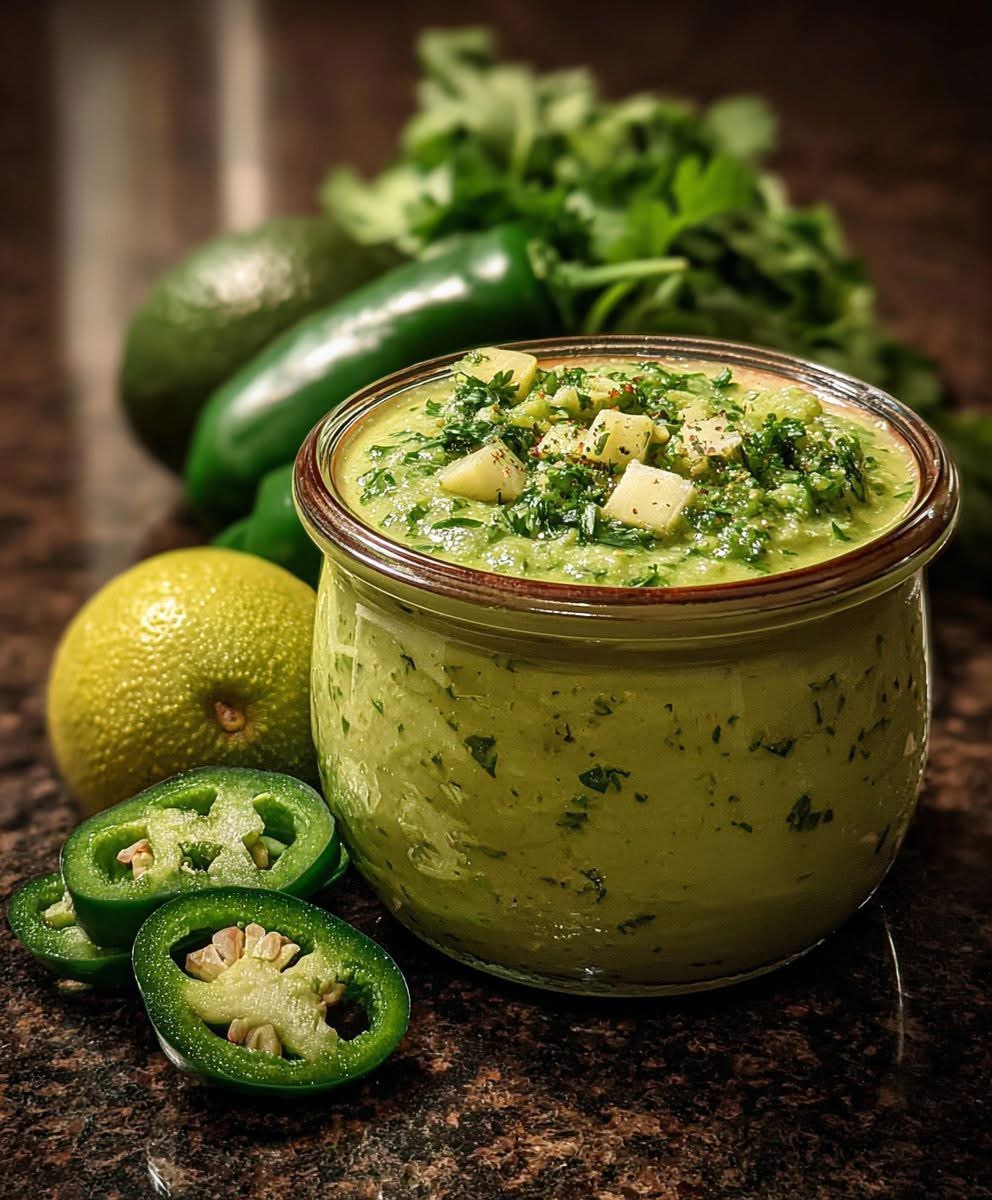
Creamy Tomatillo Jalapeño Avocado Salsa: The Ultimate Masterclass
This Creamy Tomatillo Jalapeño Avocado Salsa is bright, zesty, and incredibly smooth. It balances the acidic crunch of green tomatillos with the rich, buttery texture of fresh avocados and the fiery kick of jalapeños. Often referred to in Mexican taquerías as salsa de aguacate or “fake guacamole” (due to its pourable consistency), this versatile condiment elevates taco nights, grilled meats, and simple tortilla chips into an extraordinary culinary experience.
1. Culinary History & Heritage
To understand this salsa, we must look at the history of Mesoamerican agriculture. Long before Spanish conquistadors arrived in the Americas, indigenous populations cultivated the tomatl (tomatillo) and the ahuacatl (avocado).
The Ancient Tomatillo
Tomatillos (Physalis philadelphica) belong to the nightshade family, making them closer relatives of the gooseberry than the red tomato. Domesticated by the Aztecs in central Mexico around 800 BC, tomatillos were valued for their long storage life, protected inside their papery husks. Their high pectin content gives sauces a natural, gelatinous body.
The Sacred Avocado
Avocados have been cultivated in Mesoamerica for over 10,000 years. Indigenous peoples regarded them as symbols of fertility and sustenance. The combination of acidic tomatillos and fatty avocados developed as a natural pairing to balance heat and richness in traditional Mexican diets.
Evolution of the Modern Taquería Salsa
As street food culture flourished in 20th-century Mexico, vendors needed a sauce that offered the luxurious flavor of guacamole but remained pourable and economical. By blending raw or boiled tomatillos with ripe avocados and hot chiles, taqueros created a legendary salsa that stays bright green and enhances charred, smoky street meats.
2. Formation & Chemistry of the Perfect Emulsion
Achieving a perfectly smooth, velvety salsa requires understanding the science of emulsification.
- Pectin Structure: Tomatillos contain high amounts of natural pectin. When blended raw or gently cooked, this pectin traps water molecules, thickening the liquid matrix.
- Healthy Fats: Avocados provide monounsaturated fats. When processed at high speeds, these fats break down into microscopic droplets.
- The Emulsification Process: The water-based liquid from the tomatillos mixes with the oil-based fats from the avocado. The fibers in the cilantro and garlic act as stabilizing agents, preventing the salsa from separating into layers.
- Oxidation Control: Avocados oxidize and turn brown when exposed to air due to an enzyme called polyphenol oxidase. The high citric acid content in fresh lime juice and the natural acidity of tomatillos lower the pH, deactivating this enzyme and keeping your salsa vibrant green for days.
3. Ingredients Profile
Every ingredient in this recipe serves a functional and structural purpose.
| Ingredient | Measurement | Purpose & Selection Criteria |
|---|---|---|
| Fresh Tomatillos | 8 medium (approx. 1 lb) | Provides the tart, acidic foundation. Look for firm, bright green fruit that fills out its husk completely. |
| Jalapeño Chiles | 2 to 3 medium chiles | Delivers clean, grassy heat. Keep seeds for extra spice; remove them for a milder profile. |
| Ripe Hass Avocados | 2 large avocados | Yields the signature creamy mouthfeel. Select fruit that yields slightly to gentle pressure. |
| Fresh Cilantro | 1 packed cup (leaves & stems) | Adds a bright, herbal top note. Do not discard the stems; they hold concentrated flavor and juice. |
| White Onion | ½ medium onion | Adds sharp, crisp aromatics. White onions are traditional in Mexican salsas for their clean bite. |
| Garlic Cloves | 3 large cloves | Provides a pungent, earthy depth of flavor. |
| Fresh Lime Juice | 2 tablespoons | Brightens the flavor notes and prevents the avocado from browning. |
| Fine Sea Salt | 1 ½ teaspoons (to taste) | Enhances all individual ingredients and tempers the sharpness of the raw onion. |
| Cold Water | ¼ to ½ cup | Used selectively to adjust the viscosity to your preferred pouring consistency. |
4. Preparation Methods & Variations
Depending on your equipment and flavor preferences, you can prepare this salsa using three distinct culinary methods.
Method A: The Raw & Vibrant Blender Method (Fastest)
This style yields a crisp, sharp salsa with a striking green hue.
- Peel off the papery husks from the tomatillos and wash off their sticky residue under warm running water. Cut them into quarters.
- Roughly chop the onion, jalapeños, and garlic cloves.
- Slice the avocados in half, remove the pits, and scoop the flesh directly into a high-powered blender or food processor.
- Add the raw tomatillos, chopped onion, jalapeños, garlic, cilantro, lime juice, and salt.
- Blend on high speed for 60 to 90 seconds until a smooth, uniform green sauce forms. Add water a tablespoon at a time if the blade stalls.
Method B: The Traditional Boiled Method (Smoother & Milder)
Boiling mellows the raw bite of the chiles and softens the tomatillos, resulting in an exceptionally smooth texture.
- Husk and wash the tomatillos. Remove stems from the jalapeños.
- In a medium saucepan, submerge the tomatillos, jalapeños, and onion slices in water. Bring to a rolling boil over medium-high heat.
- Cook for 6 to 8 minutes until the tomatillos change color from bright green to an olive-khaki tone. Do not let them burst open in the water.
- Use a slotted spoon to transfer the hot vegetables to a blender. Let them cool for 5 minutes.
- Add the fresh avocado flesh, cilantro, garlic, lime juice, and salt. Blend until smooth.
Method C: The Fire-Roasted Method (Smoky & Deep)
Roasting caramelizes the natural sugars in the vegetables, creating a rich, complex salsa.
- Preheat your oven broiler or heat a dry cast-iron skillet (comal) over high heat.
- Place the husked tomatillos, whole jalapeños, unpeeled garlic cloves, and thick slices of onion directly onto the hot surface or a baking sheet.
- Char the ingredients for 4 to 5 minutes per side until blackened blisters form on all surfaces.
- Peel the charred skins off the garlic cloves.
- Transfer all roasted ingredients (including any released juices) to the blender alongside the fresh avocado, cilantro, lime juice, and salt. Process until completely smooth.
5. Step-by-Step Production Instructions
Follow these exact steps to ensure a flawless execution of the Raw & Vibrant preparation method.
[Husk & Wash Tomatillos] ──> [Prep Chiles & Aromatics] ──> [Scoop Avocado]
                                                                  │
                                                                  ▼
[Pour into Jars & Chill] <── [Blend on High with Lime & Salt] <───┘
- De-husk and Clean: Strip the sticky husks off your tomatillos. Rinse the fruit thoroughly under warm water to remove the sap-like substance (witherin) on the skin. Pat dry.
- Chop Ingredients: Cut the tomatillos into quarters so they catch the blender blades easily. Halve your jalapeños. If you prefer a milder salsa, scrape out the white ribs and seeds with a spoon. Roughly chop the white onion.
- Load the Blender: Place the denser ingredients—the quartered tomatillos, onions, jalapeños, and garlic cloves—at the bottom of the blender pitcher.
- Add the Aromatics & Fats: Layer the fresh cilantro (stems included) and the flesh of both avocados on top of the vegetables. Pour the fresh lime juice over the avocado.
- Season: Sprinkle in the sea salt.
- Puree: Secure the blender lid tightly. Start blending on low speed to break up the large pieces, then ramp the speed up to high. Process for approximately 1 full minute.
- Adjust Consistency: If the salsa is too thick to pour easily, add cold water 2 tablespoons at a time through the lid cap while the machine is running until you achieve a velvety, pourable texture.
- Taste and Rest: Taste the salsa with a tortilla chip (since chips contain salt). Adjust with a pinch more salt or a squeeze of lime juice if needed. Pour the salsa into a glass jar and chill in the refrigerator for at least 30 minutes before serving to allow the flavors to meld.
6. Nutritional Insights & Health Benefits
This fresh salsa is not just a condiment; it is a nutrient-dense addition to your diet, packed with vitamins, minerals, and heart-healthy fats.
Detailed Nutritional Profile (Per 2-Tablespoon Serving)
- Calories: 45 kcal
- Total Fat: 3.5g (with 2.5g coming from monounsaturated fats)
- Saturated Fat: 0.5g
- Cholesterol: 0mg
- Sodium: 145mg
- Total Carbohydrates: 3g
- Dietary Fiber: 1.5g
- Sugars: 1g
- Protein: 1g
Health-Promoting Compounds
- Heart-Healthy Monounsaturated Fats: The oleic acid found in avocados helps lower LDL (bad) cholesterol levels while maintaining HDL (good) cholesterol, promoting overall cardiovascular wellness.
- Metabolic Boost via Capsaicin: Jalapeños owe their spicy kick to capsaicin. This compound has been shown to boost metabolic rate, aid in weight management, and act as a natural pain reliever by triggering endorphin release.
- Antioxidant & Immunity Support: Tomatillos and lime juice provide an abundance of Vitamin C and Vitamin A, which strengthen the immune system and promote skin health by combatting free radicals.
- Digestive Efficiency: The combination of dietary fiber from the avocados and tomatillos supports a healthy gut microbiome, improves digestion, and maintains steady blood sugar levels.
7. Salsa Lovers’ Pairing Guide
This salsa is celebrated for its ability to cut through rich, fatty dishes while adding a clean layer of brightness. Here is how salsa enthusiasts enjoy it across different culinary landscapes:
- Street Tacos: The ultimate pairing. Drizzle it generously over rich Carne Asada (grilled steak), smoky Al Pastor(marinated pork), or crispy Carnitas (braised pork). The natural acidity cuts through the savory fats of the meat perfectly.
- Seafood Enhancer: Spoon it over grilled shrimp skewers, blackened fish tacos, or ceviche tostadas. The lime and tomatillo notes highlight the natural sweetness of fresh seafood.
- Breakfast Upgrade: Pour it over Huevos Rancheros, breakfast burritos, or soft scrambled eggs. The creamy texture mimics cheese while adding a refreshing element to the plate.
- Grain Bowls & Salads: Use it as a clean, emulsified dressing for quinoa bowls, brown rice plates, or grilled chicken salads.
- The Ultimate Dipping Sauce: Serve it in a wide bowl alongside warm, salted tortilla chips, crispy plantain chips, or fresh raw vegetables like cucumber rounds and jicama sticks.
8. Storage, Preservation & Troubleshooting
Because this recipe contains fresh avocado, proper storage is crucial to maintain its bright color and clean flavor profile.
Storage Rules
- Refrigeration: Store the salsa in an airtight glass jar or container for up to 4 to 5 days.
- Air Barriers: To maximize shelf life, press a piece of plastic wrap directly onto the surface of the salsa before sealing the container lid. This completely eliminates air contact and stops browning.
- Freezing: This salsa does not freeze well. The freezing process breaks down the delicate cell structures of the avocado and tomatillo, causing the salsa to separate and become watery upon thawing.
Troubleshooting Common Issues
- Issue: The salsa is too tart or sour.
- Fix: This is caused by highly acidic tomatillos. Stir in a tiny pinch of granulated sugar or agave nectar (about ⅛ teaspoon) to balance the acidity without making the sauce sweet.
- Issue: The salsa turned brown overnight.
- Fix: This indicates insufficient acidity to stop oxidation. Ensure you use fresh lime juice, and try scraping off the top thin brown layer—the salsa underneath will still be perfectly green and safe to eat.
- Issue: The salsa is too thin and watery.
- Fix: Next time, blend the tomatillos first without any water, or add an extra half of an avocado to emulsify and thicken the body of the sauce.
9. Conclusion
The Creamy Tomatillo Jalapeño Avocado Salsa bridges the gap between a sharp, refreshing salsa verde and a rich, satisfying guacamole. By mastering the balance of fresh ingredients and understanding the simple science behind keeping it green, you can recreate authentic taquería flavors right in your own kitchen. Whether you are hosting a festive backyard barbecue or preparing a simple weekday dinner, this reliable green sauce adds a restaurant-quality finish to any plate.
If you want to tailor this recipe, let me know:
- Your preferred spice tolerance (mild, medium, or authentic heat)
- The kitchen tools you have available (high-speed blender, food processor, or traditional molcajete)
- What specific dish you plan to pair this salsa with
I can easily adjust the ingredient ratios and preparation steps to match your cooking goals.