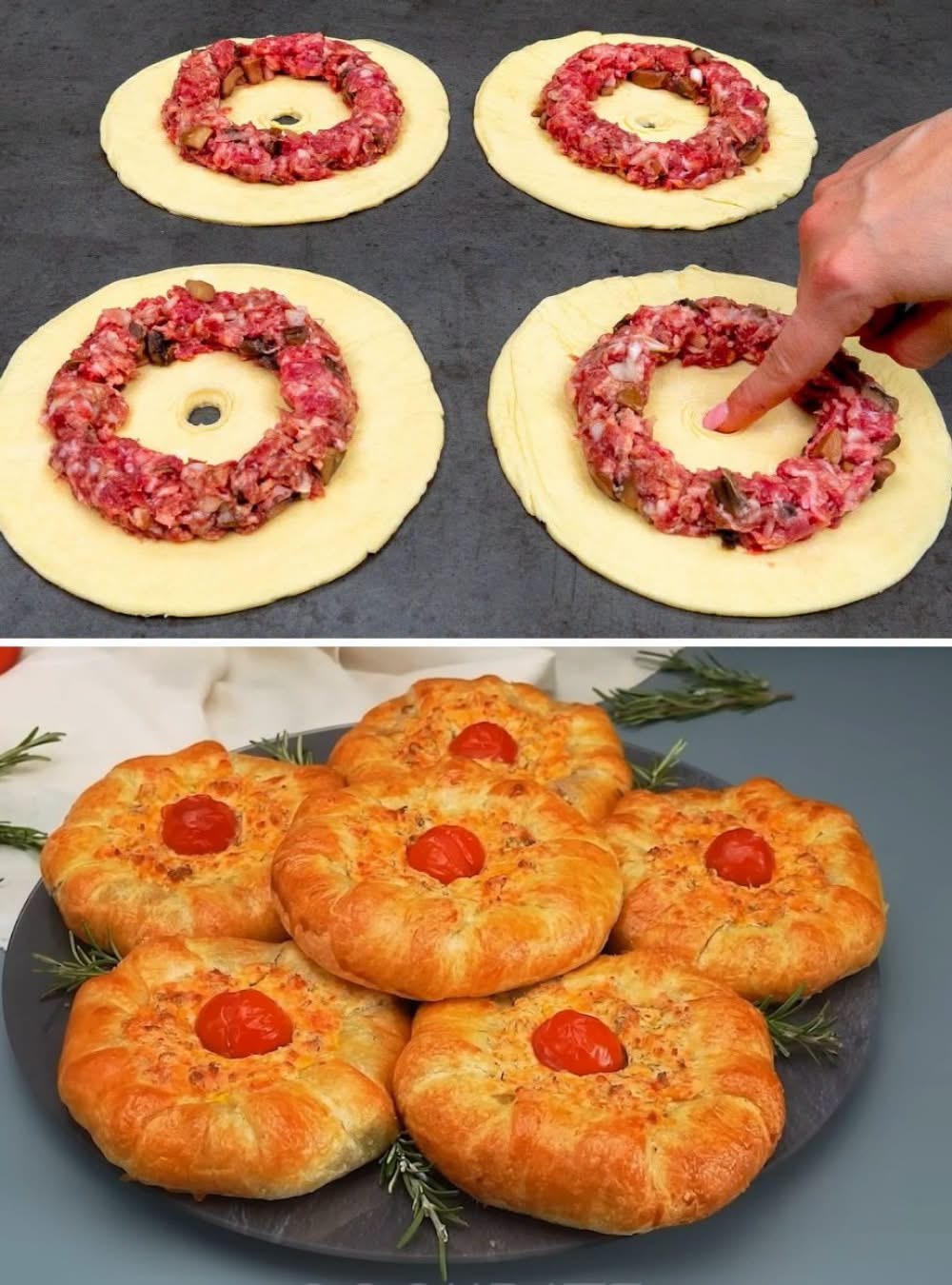
Puff Pastry Rings Stuffed with Juicy Minced Meat and Creamy Cheese Delight!
1. Introduction
The world of baking contains few items as universally celebrated as puff pastry. Its distinctively light, airy, and shattered-crisp layers possess an innate ability to elevate any filling they enclose. When this buttery canvas is shaped into a stunning, crown-like ring and filled with a robust mixture of seasoned mince and melted, velvety cheese, it transcends standard comfort food. It becomes a centerpiece worthy of celebration.
This recipe represents a masterclass in textures and flavors. It balances the high-fat, crisp structural integrity of French-style pastry with a deeply savory, umami-rich meat core and a gooey, multi-cheese filling. The result is a dish that is visually arresting and rich in taste. It is perfect for formal dinner parties, holiday spreads, or indulgent weekend family gatherings.
2. History of the Dish
To understand the lineage of this puff pastry ring, we must trace two distinct culinary timelines: the evolution of laminated dough and the ancient tradition of meat-filled pies.
The Evolution of Puff Pastry (Pâte Feuilletée)
Lamination—the process of layering dough and fat repeatedly to achieve rising action via steam—finds its earliest origins in the Middle East. Ancient styles of phyllo and flaky flatbreads paved the way for layered doughs across the Mediterranean. However, modern puff pastry (pâte feuilletée) was perfected in Europe.
Legend attributes its invention to French painter and apprentice cook Claude Lorrain in the 17th century. While trying to bake a special structured bread for his sick father using butter and dough, Lorrain accidentally devised the basic lamination method. The technique was later refined by the legendary French chef Antonin Carême in the early 19th century. Carême standardized the number of “turns” (folds), ensuring thousands of microscopic layers of butter and dough could produce the dramatic, airy lift seen today.
The Rise of the Festive Savory Ring
The presentation of meat and cheese wrapped in pastry dough in a circular wreath or ring format stems from two cultural influences:
- The Medieval Meat Pie: In medieval European courts, giant pastry crusts (then called “coffins”) were used primarily to preserve, cook, and display seasoned ground game and domestic meats. Over time, as pastry became edible and delicious, these evolved into individual pies, sausage rolls, and en croûte preparations.
- The Festive Crown: Shaping food into a ring or wreath historically symbolized unity, eternity, and celebration. In Northern and Eastern Europe, holiday breads were frequently twisted into circular formats. Combining this architectural presentation with French puff pastry and rich, seasoned ground meats gained massive popularity in mid-20th-century Western cooking, especially through communal, shareable appetizer rings.
3. Formation and Architectural Design
Creating a perfectly round, evenly baked pastry ring requires careful consideration of structural mechanics and thermal dynamics.
The Science of Lamination
Puff pastry does not rely on chemical leaveners like baking powder, nor biological leaveners like yeast. Its dramatic rise is driven entirely by physical vaporization. When the pastry enters a high-temperature oven, the water contained within the layers of butter instantly flashes into steam. This expanding steam pushes the overlapping, paper-thin sheets of flour dough upward. Simultaneously, the fat cooks the flour layers, setting the open, flaky structure before the steam escapes.
Ring Construction Mechanics
If you fill puff pastry haphazardly, the trapped moisture from the meat will soften the bottom layer, creating a heavy, unbaked mass known as a “soggy bottom.” To avoid this, we use a radial assembly technique:
- The Starburst Layout: Overlapping triangles of dough are arranged in a circular formation, creating a wide, stable base to cradle the heavy filling.
- The Secure Tuck: The pointed tips of the dough are wrapped up and over the filling, then tucked firmly underneath the inner rim. This creates a secure, woven skeletal frame that holds its shape as the filling expands and the pastry rises.
- Venting Pathways: The deliberate gaps left between the woven pastry strips act as natural exhaust chimneys. These vents allow steam from the cooking meat and melting cheese to escape freely, keeping the inner pastry dry and crisp.
4. Ingredients
This recipe relies on fresh, high-quality ingredients to achieve its deep flavors and textures.
For the Pastry Shell
- Puff Pastry Sheets: 2 large sheets (approx. 250g each), store-bought (all-butter preferred) or homemade, thawed but kept thoroughly chilled.
- Egg Wash: 1 large egg whisked with 1 tablespoon of cold milk (for a glossy, deep-golden exterior finish).
- Garnish Seeds: 1 tablespoon of white sesame seeds, black nigella seeds, or coarse sea salt for visual contrast and crunch.
For the Juicy Minced Meat Filling
- Minced Meat: 500g ground beef (80/20 lean-to-fat ratio) or a 50/50 blend of minced beef and sweet Italian pork sausage meat.
- Aromatics: 1 large yellow onion (finely minced) and 4 cloves of fresh garlic (grated).
- Vegetables & Herbs: 1 medium red bell pepper (finely diced) and ½ cup of fresh Italian flat-leaf parsley (finely chopped).
- Oil: 1 tablespoon of extra virgin olive oil (for sweating aromatics).
For the Spice Matrix
- Salt: 1½ teaspoons of fine sea salt.
- Black Pepper: 1 teaspoon of freshly cracked black pepper.
- Smoked Paprika: 1 teaspoon (adds a mild, wood-fired undertone).
- Ground Cumin: ½ teaspoon (enhances the deep earthiness of the meat).
- Dried Oregano: 1 teaspoon (provides a sweet, herbal top note).
- Worcestershire Sauce: 1 tablespoon (unleashes an intense blast of savory umami flavor).
For the Creamy Cheese Delight Layer
- Cream Cheese: 150g full-fat cream cheese, softened at room temperature.
- Shredded Mozzarella: 150g low-moisture mozzarella, shredded (for the classic, gooey cheese pull).
- Sharp Cheddar or Gruyère: 100g finely grated sharp cheddar or cave-aged Gruyère (for a bold, complex tang).
5. Kitchen Methods and Equipment
Before starting, ensure your kitchen is equipped with the correct tools. Precision temperature control is crucial when working with laminated doughs.
Required Equipment
- Large Skillet: Cast iron or heavy-bottomed stainless steel for browning the meat uniformly.
- Large Baking Sheet: A heavy-gauge rimmed baking sheet (at least 12×17 inches) to catch any stray juices.
- Parchment Paper: Non-stick silicone-coated parchment paper to prevent sticking.
- Chef’s Knife & Cutting Board: For fine, uniform dicing of your aromatics.
- Rolling Pin & Pastry Cutter: For shaping and trimming the dough sheets cleanly.
- Pastry Brush: Natural bristle or silicone brush for smooth egg wash application.
- Mixing Bowls: One medium bowl for the meat filling and one for blending the cheese.
Crucial Culinary Methods
- Mirepoix Sweating: Cooking onions and peppers over medium-low heat to release sugar and moisture without browning.
- Fat Rendering and Fond Development: Searing minced meat at high temperatures to develop a deep brown crust on the bottom of the pan via the Maillard reaction.
- Temperature Management: Keeping the puff pastry between 4°C and 10°C (39°F–50°F) during assembly to prevent the laminated butter layers from melting prematurely.
6. Step-by-Step Cooking Instructions
Phase 1: Preparing the Savory Meat Filling
- Sauté the Aromatics: Set a large skillet over medium heat. Pour in 1 tablespoon of olive oil. Add the finely minced onion and diced red bell pepper. Sauté for 5 to 6 minutes until soft and translucent. Add the grated garlic and cook for 60 seconds until fragrant.
- Brown the Minced Meat: Increase the stovetop heat to medium-high. Add your minced meat to the skillet. Use a wooden spoon to break the meat apart into tiny crumbles. Cook for 8 to 10 minutes until completely browned.
- Season and Deglaze: Sprinkle the sea salt, black pepper, smoked paprika, ground cumin, and dried oregano evenly over the meat. Stir in the Worcestershire sauce. Continue cooking for another 2 minutes to let the spices toast.
- Cool Completely: Remove the skillet from the heat source. Stir in the chopped fresh parsley. Transfer the meat mixture to a shallow glass bowl. Crucial Step: Let the meat cool down to room temperature, then chill it in the refrigerator for 20 minutes. Putting hot meat directly onto raw puff pastry will melt the butter layers instantly, ruining the pastry’s flaky texture.
Phase 2: Mixing the Creamy Cheese Filling
- Combine the Cheeses: In a medium bowl, combine the 150g of softened cream cheese, 150g of shredded mozzarella, and 100g of grated cheddar or Gruyère.
- Blend Smoothly: Use a silicone spatula to mash and blend the cheeses together until they form a thick, uniform paste. Season with a small pinch of black pepper if desired. Keep this mixture cold until you are ready to assemble.
Phase 3: Constructing the Pastry Wreath Ring
- Setup: Line your large baking sheet with a sheet of parchment paper. Place a wide water glass or an 8-ounce ramekin exactly in the dead center of the parchment paper to use as a spacing guide.
- Cut the Pastry Triangles: Lay your two chilled sheets of puff pastry onto a lightly floured surface. Using a sharp knife or a rolling pizza cutter, slice each sheet into elongated, even triangles (similar to pizza slices or crescent roll wedges). You will need roughly 12 to 16 triangles in total.
- Arrange the Radial Ring: Arrange the pastry triangles in a circular pattern around the central glass guide. The wide bases of the triangles should overlap slightly around the glass, while the sharp points point outward, radiating away from the center. It will look like a large pastry sunburst.
- Layer the Fillings: Gently remove the glass guide from the center. Spoon your chilled cheese mixture in an even ring over the wide bases of the pastry triangles. Next, spoon your cooled minced meat mixture directly on top of the cheese layer. Use your hands to gently pack the filling into a neat, circular mound.
- Wrap and Weave: Take the extended outer point of one pastry triangle. Pull it up over the meat and cheese filling toward the center hole. Tuck the tip securely under the inner rim of pastry to lock it in place. Repeat this process with all the remaining triangles, working your way around the ring. The filling will show through the gaps between the pastry strips, creating an elegant woven pattern.
Phase 4: Egg Washing and Baking
- Preheat the Oven: Preheat your oven to 200°C (400°F). Make sure your oven rack is set to the middle position.
- Apply the Egg Wash: Whisk your egg and milk together in a small dish. Use a pastry brush to apply a thin, even coating of the egg wash over all visible sections of the pastry.
- Add Garnishes: Lightly sprinkle the sesame or nigella seeds over the top of the egg-washed pastry strips.
- Bake to Golden Perfection: Place the baking sheet into the preheated oven. Bake for 30 to 35 minutes. The pastry should puff up dramatically and turn a deep, glossy golden-brown. Watch for bubbles of melted cheese peeking through the vents.
- Rest Before Serving: Remove the pastry ring from the oven. Let it rest undisturbed on the baking sheet for 10 minutes. This brief cooling period allows the melted cheese and meat juices to set, making it clean and easy to slice.
7. Nutritional Architecture
Understanding the macro-nutrient breakdown helps hostesses plan a balanced meal around this indulgent dish.
| Nutrient Component | Value Per Serving (Assuming 8 Equal Servings) | Daily Value Percentage (DV%) |
|---|---|---|
| Calories | 480 kcal | 24% |
| Total Fat | 34 g | 44% |
| Saturated Fat | 16 g | 80% |
| Cholesterol | 85 mg | 28% |
| Sodium | 620 mg | 27% |
| Total Carbohydrates | 26 g | 9% |
| Dietary Fiber | 1.5 g | 5% |
| Sugars | 2 g | — |
| Protein | 18 g | 36% |
Nutritional Deep-Dive
- Lipid Profile: The higher fat content is driven by the butter content within the laminated puff pastry and the full-fat cheeses. It provides an exceptionally high satiety level.
- Carbohydrate Density: The carbohydrate component is derived from unbleached wheat flour within the pastry sheets. Because the carbohydrates are complex, they release energy evenly when paired with high protein.
- Bioavailable Protein: The ground beef, pork sausage, and dairy components offer complete proteins packed with essential amino acids, iron, zinc, and vitamin B12.
8. Health and Dietary Benefits
While this stuffed pastry ring is an indulgent comfort food, its whole-ingredient composition provides several notable nutritional benefits:
High Protein for Muscle Maintenance
A single serving provides 18 grams of complete protein. This protein supplies the structural building blocks required for muscle repair, cellular regeneration, and enzyme production.
Micronutrient Richness
- Heme Iron: The red meat components deliver heme iron, which is absorbed much more efficiently by the human body than non-heme iron found in plants. This helps maintain healthy red blood cells and prevents fatigue.
- Calcium Matrix: The combination of cream cheese, mozzarella, and cheddar cheese provides a concentrated source of calcium and phosphorus. These minerals are vital for preserving bone density and supporting dental health.
- Capsaicin and Antioxidants: The red bell peppers, onions, and fresh garlic supply vitamin C, allicin, and carotenoids. These compounds help support a healthy immune system and reduce inflammation.
9. For the Culinary Lovers (Serving Ideas)
This dish is a favorite among culinary enthusiasts due to its versatility and striking presentation. Here is how to create a memorable dining experience around it:
Perfect Beverage Pairings
- The Wine Lover: Pair this rich dish with a medium-bodied red wine that features good acidity and tannins to cut through the buttery pastry and melted cheese. A Chianti Classico, Syrah, or a bold Rioja work beautifully. For white wine fans, an oaky, buttery Chardonnay complements the puff pastry’s rich flavor profile.
- The Craft Beer Enthusiast: Serve the ring alongside a crisp Belgian Witbier or a slightly bitter India Pale Ale (IPA). The carbonation cuts through the rich oils of the meat and cheese, cleansing your palate between bites.
Complementary Side Dishes
Because this puff pastry ring is rich and savory, pair it with bright, acidic side dishes to balance the meal:
- Shaved Fennel and Citrus Salad: Thinly sliced fennel bulb tossed with arugula, orange segments, and a bright lemon-champagne vinaigrette.
- Garlic-Herb Roasted Asparagus: Fresh asparagus spears roasted at high heat with a squeeze of fresh lemon juice and grated parmesan cheese.
Presentation Tips
Place the golden ring in the center of a rustic wooden board or a large ceramic platter. Fill the empty center hole of the ring with a small ceramic bowl filled with warm marinara sauce, rich garlic aioli, or a spicy tomato chutney for dipping. Garnish the platter with fresh rosemary sprigs and loose pomegranate seeds for a vibrant pop of color.
10. Conclusion
The Puff Pastry Ring Stuffed with Juicy Minced Meat and Creamy Cheese Delight is more than a simple recipe; it is a celebration of classic baking techniques and comforting flavors. By combining centuries-old pastry lamination methods with a rich, modern meat-and-cheese filling, you create a dish that satisfies both casual comfort food cravings and upscale entertaining needs.
The key to success lies in temperature control—keeping your pastry cold and your filling thoroughly cooled before assembly. With its golden, shattered-crisp exterior and rich, savory core, this spectacular savory ring is sure to become a requested favorite for your special gatherings.
What would you like to explore next?
- Show me how to make homemade rough puff pastry from scratch
- Give me a vegetarian alternative filling using mushrooms and spinach
- Suggest a complete three-course dinner party menu around this dish