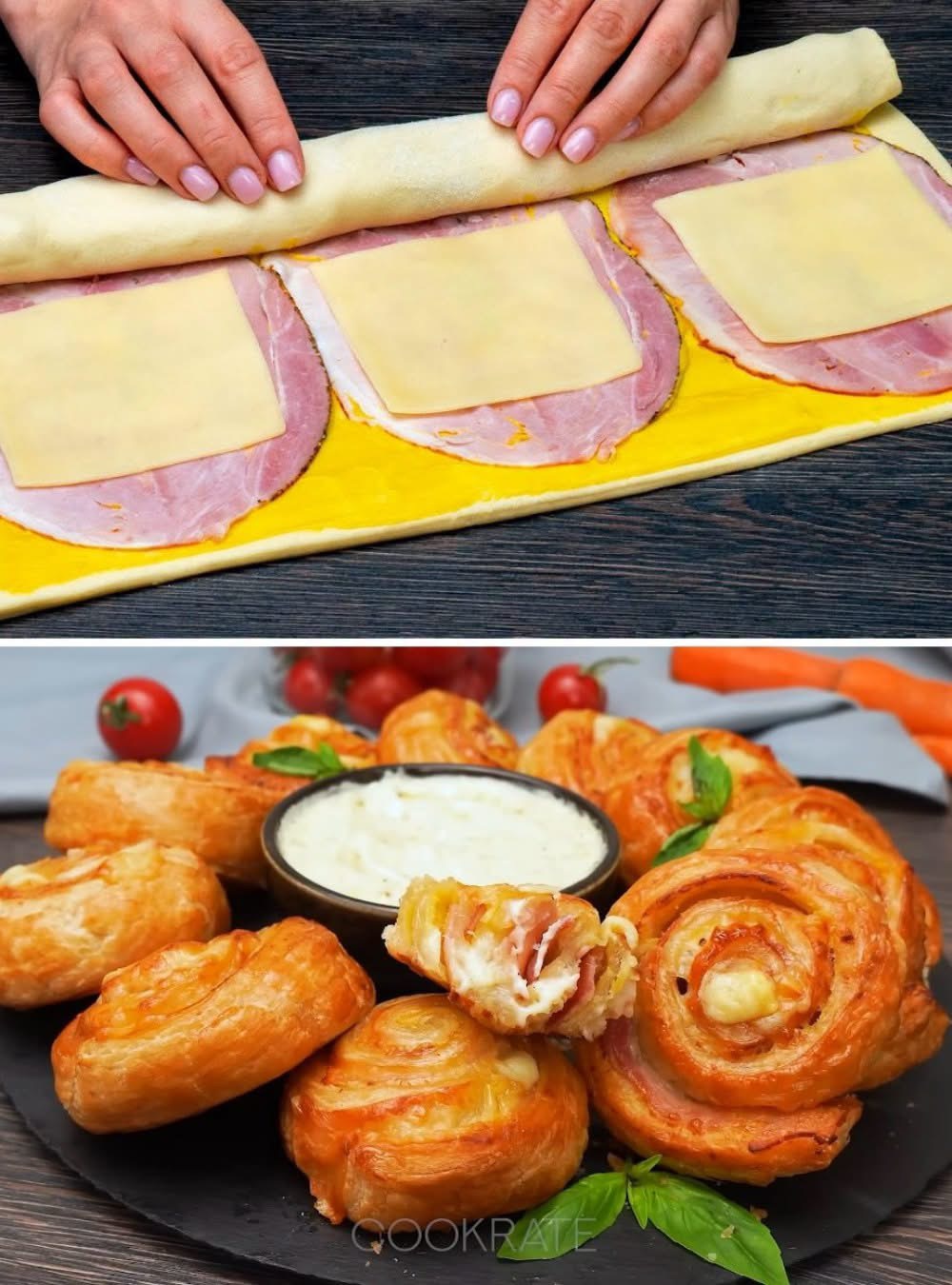
The Ultimate Guide to the Crispy Puff Pastry Snack with Ham and Cheese
Few culinary combinations evoke the universal comfort and sensory delight of smoky ham, melted cheese, and golden, shatteringly crisp puff pastry. This ultimate guide breaks down everything you need to master this beloved family favorite.
1. Introduction: The Magic of Laminated Comfort
The Crispy Puff Pastry Snack with Ham and Cheese represents a pinnacle of comfort baking. It achieves a perfect contrast between an airy, crunchy outer shell and a rich, gooey center. While it looks like it came from a high-end French bakery, it requires minimal effort and uses accessible ingredients.
This snack adapts effortlessly to any occasion. Serve it as a quick after-school treat, a game-day appetizer, or a weekend brunch centerpiece. The recipe relies on simple ingredients, transforming everyday pantry staples into a multi-layered gourmet experience.
2. Complete Historical Background
To truly appreciate this snack, we must look at how its three core components evolved across centuries and cultures before uniting into the comfort food we enjoy today.
[Ancient Empires] Preservation of meats via salting (Early Ham)
       │
       ├──► [12th Century] European Cheesemaking (Cheddar & Gruyère)
       │          │
       │          └──► [17th Century] French Lamination (Pâte Feuilletée)
       │                     │
       │                     └──► [Modern Era] The Ham & Cheese Puff Pastry Snack
The Origins and Science of Puff Pastry (Pâte Feuilletée)
The concept of layering dough with fat dates back to antiquity. Early examples include the paper-thin phyllo doughs used in the Byzantine and Ottoman Empires. However, modern puff pastry relies on a precise technique called lamination.
Legend attributes the invention of modern puff pastry to French painter and apprentice baker Claude Gelée in 1640. Gelée wanted to bake a rich, buttery bread for his sick father, who was prescribed a strict diet. By folding butter directly into the bread dough, he created a laminated structure that puffed up miraculously in the oven.
The method was later refined and systemized by Antonin Carême, the father of French haute cuisine. Carême established the precise folding rules and “turns” that define classic pâte feuilletée, cementing its place as a luxury foundation of Western pastry arts.
The Global Lineage of Curing Ham
Ham—the hind leg of a hog preserved through salting, smoking, or wet-curing—has been an essential human protein source for over two millennia. The ancient Gauls and Romans were masters of pork preservation, relying on salted meats to sustain armies across vast empires.
By the Middle Ages, different European regions developed signature styles:
- Italy: Air-dried prosciutto focused on salt and time.
- Germany: Deeply smoked hams from the Black Forest.
- England: Sweet, glaze-baked hams.
This snack honors that preservation tradition by utilizing thinly sliced deli or tavern ham, which provides a concentrated, savory contrast to the sweet fat of the pastry.
The Heritage and Craft of Cheesemaking
Cheese predates recorded human history, originating as a practical way to preserve milk before refrigeration. For this recipe, we look to two primary European traditions: Gruyère from Switzerland and Cheddar from England.
- Gruyère: Dates back to the 12th century in alpine Swiss valleys, where cheesemakers used massive copper vats to create dense wheels capable of aging through long winters. It is highly valued for its meltability and nutty finish.
- Cheddar: Originated in the English village of Cheddar in Somerset during the late 12th century. The unique local caves provided the ideal constant temperature and high humidity needed for the aging process, producing a sharp, robust cheese that pairs beautifully with smoked meats.
3. Ingredients Profile
To achieve the ultimate crispy texture and rich flavor profile, select high-quality ingredients. Each component serves a distinct structural and chemical purpose during the baking process.
| Ingredient | Quantity | Primary Purpose | Best Varieties to Buy |
|---|---|---|---|
| Puff Pastry Sheets | 2 large sheets (approx. 14–16 oz total) | Forms the flaky, golden structural base of the snack. | Look for brands made with 100% real butter rather than vegetable shortening for the best flavor. |
| Deli Ham | 8–10 thin slices (approx. 6–8 oz) | Provides a savory, smoky, and salty protein layer. | Honey-cured, Black Forest, or classic rosemary-crusted tavern ham. |
| Cheese | 1.5 cups (approx. 6 oz), freshly shredded | Melts to bind the pastry layers and adds a rich, creamy texture. | A mix of Gruyère (for meltability) and sharp Cheddar or Fontina (for tangy flavor). |
| Dijon Mustard | 2 tablespoons | Cuts through the richness of the butter and cheese with a sharp, tangy bite. | Traditional smooth Dijon or whole-grain seeded mustard. |
| Egg (for Egg Wash) | 1 large egg + 1 tbsp water | Promotes deep golden browning and gives the pastry a shiny, professional look. | Standard large farm egg. |
| Coarse Sea Salt & Pepper | To taste | Enhances the natural flavors of the dough and fillings. | Flaky sea salt (like Maldon) and freshly cracked black pepper. |
| Optional Garnishes | 1 tablespoon | Adds visual contrast and a fresh, herbal note. | Sesame seeds, poppy seeds, or finely chopped fresh chives/parsley. |
4. Comprehensive Step-by-Step Instructions
Follow these step-by-step instructions carefully to prevent your pastry from getting soggy or leaking cheese during baking.
Step 1: Thaw the Pastry Correctly
If using frozen puff pastry, transfer the sheets from the freezer to the refrigerator 2 to 3 hours before you plan to bake. This slow thawing keeps the butter inside the dough solid while making the sheets pliable enough to unroll without cracking. Never microwave puff pastry or leave it on a hot counter to thaw quickly, as melted butter will ruin the lamination.
Step 2: Prep Your Workspace and Oven
Preheat your oven to 400°F (204°C). Line a large, sturdy baking sheet with parchment paper or a silicone baking mat. Lightly dust your clean kitchen counter with a tablespoon of all-purpose flour to prevent sticking.
Step 3: Roll and Shape the Dough
Unfold one sheet of thawed puff pastry onto the floured surface. Use a rolling pin to gently roll the sheet into an even 10×12-inch rectangle. Work from the center outward to keep the shape uniform. Repeat this process with the second sheet if you are making a double-layer tart, or leave it ready for individual turnovers.
Step 4: Layer the Condiments and Fillings
Spread a thin, even layer of Dijon mustard across the surface of the pastry, leaving a clean 1/2-inch border around all edges. Arrange the ham slices evenly over the mustard, slightly overlapping them if necessary. Evenly sprinkle the freshly shredded cheese over the ham layer.
Step 5: Assemble and Seal
Depending on your preferred style (see the Alternative Formations section below), either roll the pastry into a tight log for pinwheels or place the second sheet directly over the fillings for a large tart. Brush the exposed 1/2-inch borders lightly with your beaten egg wash. Press the edges together firmly with your fingers, then use the tines of a fork to crimp the borders. This forms a tight seal that prevents cheese from leaking.
Step 6: Vent and Coat
Transfer your assembled pastries onto the prepared baking sheet. Use a sharp paring knife to cut 3 to 4 small diagonal slits on the top crust. These vents allow steam to escape during baking, ensuring the inner pastry cooks through instead of turning soggy. Brush the entire top surface generously with the remaining egg wash, then sprinkle with flaky sea salt, black pepper, and optional sesame seeds.
Step 7: Bake to Golden Perfection
Slide the baking sheet onto the middle rack of your preheated oven. Bake for 20 to 25 minutes. Do not open the oven door during the first 15 minutes, as the sudden drop in temperature can halt the pastry’s rise. The snack is ready when it has puffed up dramatically and turned a deep, even golden brown.
Step 8: Cool and Serve
Remove the pastries from the oven and let them rest on the baking sheet for 5 to 10 minutes. This resting period allows the melted cheese to settle, making clean cuts much easier. Slice into portions using a serrated knife and serve warm.
5. Alternative Formation Methods
You can mold these exact same ingredients into different shapes to suit any occasion.
- The Pinwheel (Palmier) Style: Roll the topped pastry into a tight log. Freeze for 15 minutes, slice into 1/2-inch rounds, and bake flat for elegant, spiral party appetizers.
- Individual Turnovers: Cut the pastry sheet into squares. Fill one half, fold into a triangle, crimp the edges with a fork, and bake for portable, grab-and-go pockets.
- The Elegant Braided Strudel: Place fillings down the middle third of the pastry sheet. Slit the side thirds into strips and braid them over the filling for a stunning centerpiece display.
- Bite-Sized Pastry Cups: Cut pastry sheets into small squares, press them into a mini-muffin tin, fill with diced ham and cheese, and bake into crispy, bite-sized cups.
6. Scientific Formation: How It Puffs
Understanding the kitchen science behind puff pastry will help you master this recipe and troubleshoot any baking issues.
Classic puff pastry relies entirely on physical leavening—meaning it uses no chemical baking powder, baking soda, or biological yeast to rise. Instead, its dramatic expansion is driven by moisture, fat, and heat.
[Cold Laminated Dough] ──► [Hot 400°F Oven] ──► [Water turns to Steam] ──► [Steam lifts layers / Butter sets flakes] ──► [Crispy Flaky Pastry]
- Lamination Structure: Puff pastry is built through a process called lamination. A basic dough made of flour and water (détrempe) is wrapped around a flat block of solid butter (beurrage). The dough is then rolled out and folded over itself multiple times. A standard 6-turn recipe creates up to 729 distinct, microscopic layers of dough alternating with 728 layers of fat.
- The Steam Engine Effect: When the pastry enters a hot 400°F (204°C) oven, the water trapped inside both the dough layers and the butter quickly turns into steam. Because steam expands to over 1,600 times its liquid volume, it forces the individual layers of dough upward.
- Setting the Flakes: At the exact same time the steam pushes the layers apart, the heat melts the butter. The melting fat coats the separate flour layers, keeping them from sticking back together. As the flour cooks, its proteins coagulate and its starches set, locking those separated, airy gaps into place to create a crisp, flaky texture.
7. Nutritional Breakdown
While this snack is a delicious comfort food rather than a low-calorie health food, it provides a solid balance of essential macronutrients. The nutritional profile below represents one standard individual serving (approximately 1/8th of a standard two-sheet tart recipe).
- Calories: 340 kcal
- Total Fat: 22g
- Saturated Fat: 10g
- Cholesterol: 55mg
- Sodium: 580mg
- Total Carbohydrates: 24g
- Dietary Fiber: 1g
- Sugars: 1g
- Protein: 12g
- Calcium: 15% of the Daily Value (DV)
- Iron: 8% of the Daily Value (DV)
8. Culinary and Social Benefits
Making this classic dish at home offers several fantastic benefits:
- Incredible Time Efficiency: By using high-quality store-bought frozen puff pastry, you skip hours of intense dough lamination. This allows you to serve a beautiful, bakery-quality snack in under 45 minutes from start to finish.
- A Crowd-Pleasing Option: The timeless pairing of ham and cheese appeals across generations. It is a reliable choice for picky toddlers, hungry teenagers, and discerning adult party guests alike.
- Clean Out Your Fridge: This base recipe serves as an excellent canvas for leftover ingredients. You can easily substitute or add leftover holiday ham, roasted vegetables, or leftover cheeses from a charcuterie board.
- Make-Ahead Convenience: You can fully assemble, shape, and fill these pastries ahead of time. Wrap them tightly in plastic wrap and store them in the freezer for up to three months. When you are ready to eat, simply bake them directly from frozen—just add 5 minutes to your total baking time.
9. For the True Pastry Lovers: Expert Tips
If you consider yourself a true pastry enthusiast, use these expert tips to elevate this simple recipe into a gourmet masterpiece:
- Upgrade Your Cheese Blend: Move beyond pre-bagged cheeses, which are coated in starchy anti-caking agents that disrupt smooth melting. Instead, hand-grate a blend of Gruyère for its silky, fondue-like melt, Fontina for extra creaminess, and a touch of Parmigiano-Reggiano for a sharp, umami punch.
- Infuse Extra Flavor Layers: Elevate your base spread by mixing your Dijon mustard with a teaspoon of hot honey or a splash of white wine. You can also tuck fresh thyme leaves or a thin layer of caramelized sweet onions between the ham and cheese for a more complex flavor profile.
- Perfect Temperature Control: Always keep your dough cold. If the pastry feels soft, sticky, or greasy while you are shaping it, pause immediately and place the entire baking sheet into the refrigerator for 10 minutes. Keeping the butter cold is the absolute key to achieving maximum flake and height.
- The Wire Rack Cooling Trick: To keep the bottom of your pastries shatteringly crisp, slide them off the hot baking sheet and onto a metal wire cooling rack immediately after baking. This stops steam from trapping underneath the base crust, preventing it from getting soggy.
10. Conclusion
The Crispy Puff Pastry Snack with Ham and Cheese perfectly showcases the power of simple baking. By combining centuries-old culinary traditions—French lamination science, ancient European meat curing, and traditional cheesemaking—into an easy, modern method, you can transform everyday ingredients into an extraordinary dish.
With its golden, flaky layers, rich melted cheeses, and smoky ham, this recipe is sure to become a staple in your kitchen rotation. Serve it hot from the oven, listen to that delightful crunch as you slice into it, and watch it disappear from the table in minutes.
To help you get started on this recipe, tell me:
- Do you prefer using store-bought frozen pastry or would you like a guide to making your own quick rough-puff dough?
- Are you cooking for guests with specific dietary needs (such as vegetarian or pork-free alternatives)?