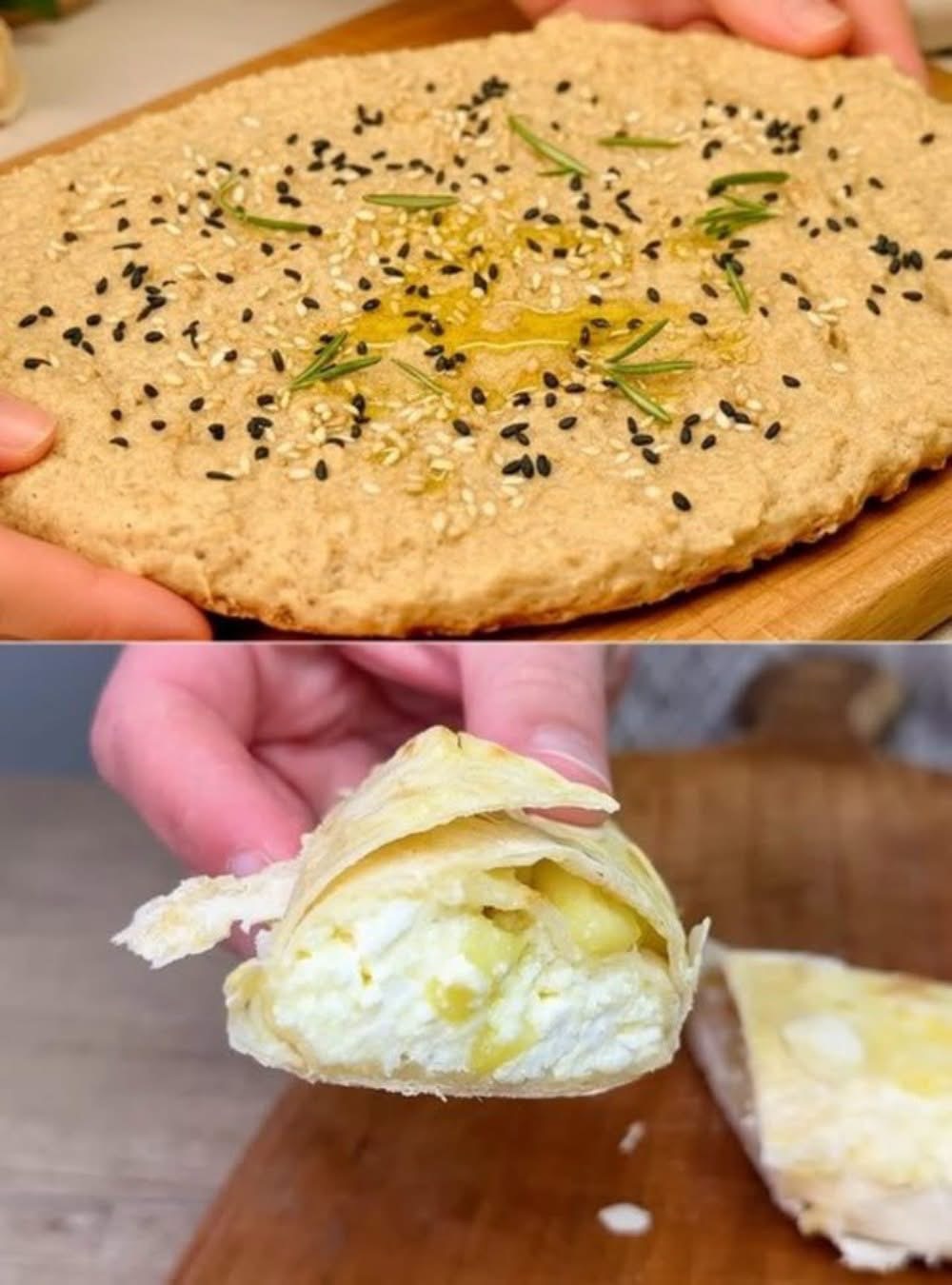
The Ultimate 2-Ingredient Oat and Yogurt Flatbread
The Ultimate 2-Ingredient Oat and Yogurt Flatbread is a revolutionary, health-conscious alternative to traditional leavened breads, requiring only 1 cup of oats and 1 cup of plain yogurt. This nutrient-dense flatbread completely eliminates the need for processed sugar, added dietary fats, and commercial yeast, making it an ideal staple for clean eating, weight management, and gluten-free dietary protocols.
Introduction
In modern home baking, the quest for recipes that balance structural integrity with optimal nutrition has led to a major culinary shift. Traditional flatbreads, while culturally rich, frequently depend on refined white flour, chemical stabilizers, commercial yeast, and added fats to achieve elasticity and tenderness. This comprehensive guide introduces an elegant, minimalist solution: the 2-ingredient oat and yogurt flatbread.
By pairing whole-grain oats with plain yogurt, this formula bypasses the traditional requirements of long proofing times, complex kneading, and precise temperature controls. The chemistry relies on the natural interactions between oat proteins and the lactic acid present in yogurt. This creates a pliable dough that can be cooked immediately in a dry skillet.
Whether you are navigating specific health challenges like gluten sensitivity or simply seeking a rapid, wholesome meal prep strategy, this comprehensive manual explores the history, preparation methods, biochemical formations, and dietary benefits of this incredible culinary innovation.
Essential Ingredients
The core formula relies on a precise 1:1 volumetric or weight-matched ratio of two primary whole-food ingredients. However, the recipe can be adapted with functional additions to enhance flavor, texture, and rise.
Primary Ingredients
- 1 cup (approx. 90-100g) Oats: You can use rolled oats, quick oats, or pre-ground oat flour. If starting with whole oats, they must be processed into a fine, uniform flour using a high-speed blender or food processor.
- 1 cup (approx. 240g) Plain Yogurt: Standard unsweetened plain yogurt or strained Greek yogurt work perfectly. Greek yogurt offers a higher protein content and lower moisture levels, producing a sturdier dough. Regular plain yogurt provides more hydration, which is highly beneficial if your oat flour is exceptionally absorbent.
Optional Functional Enhancers
- 1 teaspoon Baking Powder: While not strictly required for a basic flatbread, adding a small leavener creates tiny air pockets, yielding a lighter, fluffier texture.
- ½ teaspoon Sea Salt: Highly recommended to enhance the naturally sweet and nutty profile of the oats.
- 1-2 tablespoons Water or Milk (As Needed): Depending on the ambient humidity and the exact density of your yogurt, a tiny splash of liquid can help bind any residual dry flour.
- Toppings: Optional additions include sesame seeds, nigella seeds, or fresh rosemary to elevate the visual appeal and aroma.
The History of Minimalist Flatbreads
Flatbreads represent some of mankind’s earliest culinary achievements. Long before the invention of modern commercial ovens or the isolation of yeast strains, ancient civilizations blended crushed wild grains with ambient water sources on heated stones. From the Indian chapati and roti to the Middle Eastern lavash and the Italian piadina, flatbreads served as functional, portable plates and utensils.
The integration of cultivated dairy products like yogurt into flatbread dough emerged as a brilliant preservation and tenderizing method across Central Asia and the Mediterranean. Lactic acid naturally softened the tough grain fibers, extending the shelf-life of the bread while imparting a pleasant, tangy flavor profile.
In the late 2010s and early 2020s, the “two-ingredient dough” phenomenon gained global popularity within wellness communities. Initially popularized using self-rising white flour and Greek yogurt, home cooks soon substituted oats to create a completely whole-grain, gluten-free variation. Today, this recipe bridges ancient minimalist cooking techniques with modern nutritional science.
Biochemical Formation and Structural Mechanics
Understanding how these two ingredients form a functional dough without gluten or yeast requires a quick look at food chemistry.
[Fine Oat Flour] + [Yogurt Lactic Acid & Proteins]
       │
       ▼ (Mixing & Hydration)
[Oat Beta-Glucans Absorb Moisture]
       │
       ▼ (Resting Phase)
[Viscous Polysaccharide Gel Matrix Forms]
       │
       ▼ (Skillet Searing)
[Steam Expansion + Casein Coagulation] ➔ [Pliable, Tender Flatbread]
1. The Role of Oat Beta-Glucans
Traditional bread relies entirely on gluten—a protein complex found in wheat—to trap gas and create an elastic, stretchy network. Oats are inherently gluten-free. Instead, they rely on beta-glucans, which are highly soluble dietary fibers. When oats are finely ground and mixed with yogurt, these beta-glucans absorb the water from the dairy, creating a rich, viscous gel matrix. This gel binds the oat particles together, giving the dough its structure and pliability without needing gluten.
2. Yogurt Acid and Casein Matrix
Yogurt brings three essential elements to this culinary equation: moisture, lactic acid, and casein proteins. The lactic acid acts as a natural dough conditioner, relaxing the oat proteins and fibers to prevent a dense, gummy texture. Simultaneously, the dairy proteins (casein and whey) coagulate when heated in the skillet. This helps set the bread’s structure, ensuring it stays flexible and bendable rather than snapping or crumbling apart.
Nutritional Breakdown
This flatbread is highly valued for its clean macronutrient profile, offering an abundance of complex carbohydrates, prebiotic fibers, and clean proteins.
| Nutrient Component | Value Per Serving (Based on 1 Large Flatbread) |
|---|---|
| Calories | 165 kcal |
| Protein | 8.5 g |
| Total Carbohydrates | 26 g |
| Dietary Fiber | 4.2 g |
| Sugars (Natural Lactose) | 2.5 g |
| Total Fat | 2.8 g |
| Saturated Fat | 0.6 g |
| Calcium | 110 mg |
| Iron | 1.8 mg |
| Sodium | 10 mg (without added salt) |
Health Benefits
Integrating this whole-grain flatbread into your weekly routine offers several clear health advantages:
- Sustained Energy and Blood Sugar Regulation: Unlike white flour breads that trigger sharp glucose spikes, whole oats have a low glycemic index. The combination of slow-digesting complex carbohydrates and beta-glucan fibers delays gastric emptying, ensuring a steady release of glucose into the bloodstream.
- Enhanced Digestive Health: The prebiotic fibers in oats feed beneficial gut bacteria. Additionally, using quality yogurt introduces lactic acid, supporting overall gastrointestinal function and smoother digestion.
- Weight Management and Satiety: Protein and fiber are the two most powerful satiety-inducing nutrients. This flatbread delivers a generous dose of both, helping you feel full for longer and reducing the urge to snack between meals.
- Cardiovascular Support: Soluble fiber actively binds to bile acids in the digestive tract, encouraging the body to clear circulating cholesterol and supporting heart health.
Step-by-Step Cooking Instructions
Follow these clear, sequential steps to turn these two simple ingredients into soft, golden flatbreads.
Step 1: Processing the Grain
If you are using whole rolled oats, place them into a dry, high-speed blender container. Process on high for 30 to 45 seconds until the oats are transformed into a fine, powdery flour with no whole flakes remaining.
Step 2: Mixing the Dough
In a spacious mixing bowl, combine 1 cup of your freshly prepared oat flour with 1 cup of plain yogurt. If you choose to use baking powder or sea salt, whisk them thoroughly into the dry oat flour before adding the yogurt. Use a sturdy spatula to fold the ingredients together until a rough, shaggy dough begins to form.
Step 3: The Hand Kneading Stage
Dust a clean work surface lightly with a pinch of extra oat flour. Turn the dough out onto the surface. Using your hands, gently press and knead the mixture for approximately 1 to 2 minutes. The goal is to bring the ingredients together into a smooth, cohesive, and slightly tacky ball. If the dough feels overly wet, add an extra tablespoon of oat flour; if it feels dry or crumbly, incorporate a tiny splash of water.
Step 4: The Resting Phase (Critical Step)
Shape the dough into a ball and place it back into the bowl. Cover it with a clean kitchen towel and let it rest undisturbed for 5 to 10 minutes. This gives the oat fibers ample time to fully absorb the liquid from the yogurt, resulting in a much smoother, easier-to-roll dough.
Step 5: Dividing and Rolling
Divide your rested dough into 2 equal portions for large flatbreads, or 4 portions for smaller taco-sized rounds. Place a dough ball between two sheets of parchment paper to prevent sticking without adding excess flour. Using a rolling pin, gently roll from the center outward until the dough is uniformly flat, about ¼-inch thick.
Step 6: Skillet Cooking
Preheat a heavy cast-iron skillet or non-stick pan over medium-high heat until it is thoroughly hot. Do not add any oil or butter. Carefully peel away the top sheet of parchment paper, flip the flatbread directly onto the hot, dry skillet, and gently remove the remaining piece of paper.
Cook for 2 to 3 minutes on the first side. You will see small bubbles form on the surface, and the edges will lift slightly. Flip the flatbread using a wide spatula and cook for another 2 minutes on the second side, until beautiful golden-brown spots appear. Wrap the cooked flatbread in a clean cloth to keep it soft and warm while you finish cooking the rest.
Culinary Preparation Methods
Depending on your available kitchen equipment and lifestyle preferences, this versatile dough can be prepared using several different cooking methods:
1. The Stovetop Skillet Method (Recommended)
Cooking on a dry cast-iron skillet provides the best combination of rapid external searing and deep interior cooking. The direct intense contact mimics a traditional clay tandoor oven, producing beautiful char marks and a delightfully smoky aroma.
2. The Sheet-Pan Oven Method
If you are preparing a large batch for meal prep, preheat your oven to 400°F (205°C). Line a large baking sheet with parchment paper, arrange your rolled flatbreads across it, and bake for 10 to 12 minutes, flipping halfway through. This method keeps the flatbreads slightly softer and uniform in color.
3. The Air Fryer Method
For an ultra-crisp finish, place a single rolled flatbread directly onto the greased basket of an air fryer. Cook at 380°F (193°C) for 3 to 4 minutes per side. This rapid air circulation creates a crisp exterior, making it an excellent base for healthy personal thin-crust pizzas.
Flavor Variations and Pairing Ideas
Because this basic flatbread has a wonderfully neutral, slightly nutty profile, it serves as the perfect canvas for both savory and sweet flavor profiles.
Savory Options
- Garlic Herb Bread: Fold ½ teaspoon of garlic powder, dried oregano, and cracked black pepper directly into the dry oat flour before mixing.
- Spiced Mediterranean Flatbread: Top with a sprinkle of za’atar, cumin, and sea salt immediately before searing in the pan.
- High-Protein Meal Prep Wrap: Fill your cooked flatbread with seasoned lean ground beef, shredded chicken, or fresh sliced tomatoes and a vibrant green sauce.
Sweet Options
- Cinnamon Sweet Flatbread: Add a pinch of ground cinnamon to the dough, and top the finished warm flatbread with a drizzle of pure maple syrup or a layer of fresh nut butter and sliced bananas.
Why Healthy Food Lovers Adore This Recipe
Fitness enthusiasts, busy parents, and nutritionists worldwide have embraced this recipe for several compelling reasons:
- Ultimate Minimalist Convenience: It eliminates the traditional mess, stress, and equipment associated with bread making. There is no waiting around for yeast to proof, no intense kneading, and cleanup takes just minutes.
- Dietary Versatility: It effortlessly accommodates multiple health requirements. It is naturally egg-free, sugar-free, oil-free, and can easily be made 100% gluten-free by using certified gluten-free oats.
- Excellent Storage and Meal Prep: These flatbreads stay remarkably soft and pliable. Store them in an airtight container in the refrigerator for up to 5 days, or freeze them with sheets of parchment paper between layers for up to 3 months. A quick 30-second reheat in a hot pan brings back their freshly-baked texture perfectly.
Conclusion
The 1-cup oat and 1-cup yogurt flatbread is a wonderful testament to the power of minimalist cooking. By understanding how simple whole foods interact, you can completely bypass refined sugars, added commercial oils, and industrial leaveners without sacrificing flavor or texture.
This versatile recipe delivers an exceptional balance of complex carbohydrates, clean protein, and gut-healthy fiber in a soft, pliable flatbread. Whether enjoyed as a breakfast wrap, a healthy midday snack, or a quick dinner pizza crust, this simple kitchen staple proves that eating well doesn’t have to be complicated.
To help tailor this recipe perfectly to your kitchen, let me know:
- Do you plan to use regular yogurt or thick Greek yogurt?
- Do you have a high-speed blender on hand to make your own oat flour, or are you buying it pre-ground?
- Are you looking to create a savory meal or a sweet snack with these flatbreads?