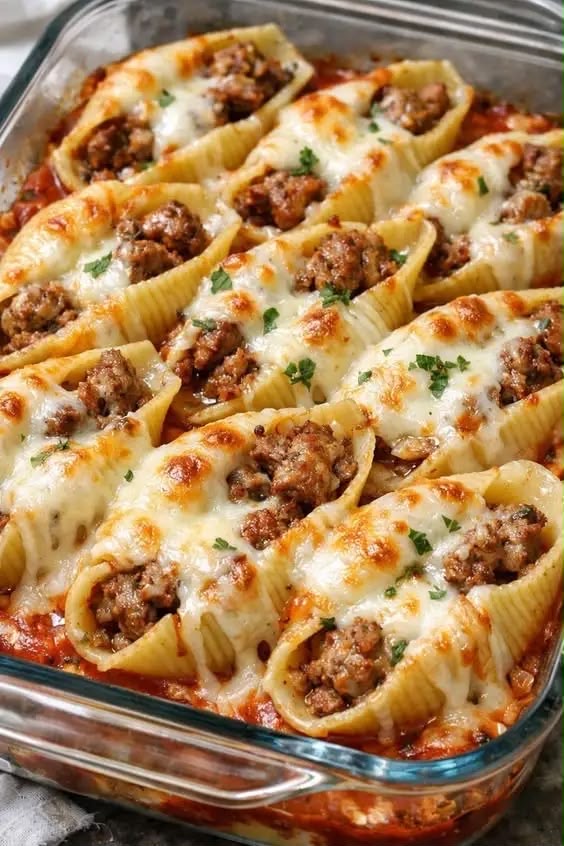
Cheesy Beef Stuffed Shells
Golden, bubbling mozzarella, savoury minced beef, creamy ricotta and perfectly tender pasta shells come together in this irresistible homemade baked pasta dish.
Introduction
Cheesy beef stuffed shells are everything you could want from a comforting homemade pasta dinner. Jumbo pasta shells are filled with a delicious combination of seasoned minced beef, smooth ricotta and Italian cheeses, then nestled into a bed of rich tomato sauce. Once baked, the shells become wonderfully tender while the mozzarella topping melts into a golden, bubbling layer.
What makes this recipe particularly satisfying is the contrast between its different textures. The pasta is soft but still holds its shape, the minced beef adds a hearty savoury bite, and the cheese filling provides a lovely creamy richness. The marinara sauce brings everything together with its bright tomato flavour.
Although stuffed pasta shells look impressive when they come out of the oven, preparing them is surprisingly straightforward. You only need to cook the pasta, brown the beef, mix the filling, assemble the dish and bake it until the cheese is melted and lightly browned.
This is a brilliant choice for family dinners, relaxed weekend meals or occasions when you want something generous and comforting without using complicated ingredients. It also makes an attractive main course when friends visit, especially when served directly from the baking dish.
Another reason to love cheesy beef stuffed shells is their flexibility. You can prepare the filling ahead of time, assemble the casserole before dinner and adjust optional additions according to your preferences. The original version uses a classic combination of minced beef, ricotta, mozzarella, Parmesan and marinara.
Whether you are looking for an alternative to lasagne or simply want a satisfying baked pasta recipe, these cheesy beef stuffed shells deliver familiar Italian-inspired flavours in a particularly inviting presentation.
Recipe Overview
- Recipe Name: Cheesy Beef Stuffed Shells
- Category: Main Course, Pasta Bake
- Cuisine: Italian-inspired
- Preparation Time: Approximately 25–30 minutes (estimate)
- Baking Time: 20–25 minutes
- Total Time: Approximately 45–55 minutes, excluding any additional resting time
- Servings: Approximately 5–6, depending on portion size
- Yield: 20–24 stuffed pasta shells
- Difficulty: Easy to Moderate
- Oven Temperature: 375°F (190°C)
- Cooking Method: Stovetop preparation followed by oven baking
- Baking Dish: A rectangular ovenproof casserole dish large enough to hold the shells in a single layer
- Main Ingredients: Jumbo pasta shells, minced beef, ricotta, mozzarella, Parmesan and marinara sauce
The preparation and serving estimates are provided for planning purposes. Actual timings will vary according to your experience, the pasta brand and the size of your baking dish.
Why You’ll Love This Recipe
- Comforting and satisfying: The combination of pasta, beef, tomato sauce and cheese creates a substantial family meal.
- Beautiful presentation: Each generously filled shell has its own golden cheese topping.
- Simple everyday ingredients: Most ingredients are readily available in supermarkets.
- Wonderful texture: Tender pasta surrounds a creamy, savoury beef filling.
- Perfect for sharing: The casserole-style presentation makes serving several people convenient.
- Easy to prepare ahead: The components can be prepared before baking.
- Flexible serving options: The dish pairs well with salads, vegetables and garlic bread.
- Great for leftovers: Properly stored portions can be reheated for another comforting meal.
Ingredients
This recipe uses the original ingredient quantities supplied. Prepare everything before starting so assembly is smooth and straightforward.
For the Pasta
- 20–24 jumbo pasta shells
For the Beef Filling
- 1 lb (approximately 454 g) minced beef
- 1 small onion, finely chopped
- 2 cloves garlic, minced
- 1 teaspoon Italian seasoning
- ½ teaspoon salt
- ¼ teaspoon black pepper
- 1 tablespoon olive oil
For the Cheese Mixture
- 1 cup ricotta cheese
- 1½ cups shredded mozzarella cheese, divided
- ½ cup grated Parmesan cheese
- 1 large egg
For the Sauce and Garnish
- 2 cups marinara sauce
- 2 tablespoons chopped fresh parsley
Important: Use ½ cup of the mozzarella in the filling and reserve the remaining 1 cup for topping the assembled shells.
Ingredient Notes
Jumbo Pasta Shells
Jumbo shells, often sold as conchiglioni, are large enough to hold generous spoonfuls of filling. Their ridged surface helps capture sauce and melted cheese. Choose shells that are intact rather than cracked, and cook them only until just al dente so they can withstand the final baking stage.
Minced Beef
Minced beef gives the filling its hearty texture and rich savoury taste. A moderately lean variety works particularly well because it provides flavour without leaving excessive fat in the pan. If there is a large amount of rendered fat after browning, drain it before mixing the beef with the cheeses.
Ricotta Cheese
Ricotta gives the filling its creamy, soft texture and balances the heartiness of the beef. If your ricotta contains considerable excess liquid, allow it to drain briefly before mixing. This helps keep the filling rich rather than watery.
Mozzarella Cheese
Mozzarella creates the irresistible melted topping. A low-moisture shredded mozzarella is especially convenient for this kind of baked pasta, as it melts evenly without releasing too much water.
Parmesan Cheese
Parmesan adds a concentrated savoury flavour. Finely grated Parmesan mixes easily into the ricotta and beef, helping to season the filling throughout.
Marinara Sauce
Marinara provides moisture, acidity and rich tomato flavour. Use a marinara sauce you enjoy, whether homemade or shop-bought. The sauce in the base of the dish is particularly important because it helps prevent the shells from drying out during baking.
Onion and Garlic
Finely chopped onion adds sweetness as it softens in olive oil, while garlic gives the filling aromatic depth. Cooking the onion before adding the beef helps distribute its flavour evenly.
Egg
The egg helps bind the ricotta, Parmesan, mozzarella and minced beef together. It contributes to a filling that holds together when the baked shells are served.
Italian Seasoning
Italian seasoning contributes a familiar blend of dried herb flavours. It complements the beef and tomato sauce without overwhelming the cheeses.
Fresh Parsley
Fresh parsley adds a little colour and freshness just before serving. Scatter it over the finished dish after baking for an attractive contrast against the golden cheese.
Equipment You’ll Need
- Large saucepan for boiling pasta
- Colander for draining the shells
- Large frying pan or skillet
- Wooden spoon or heatproof spatula
- Mixing bowl
- Measuring cups and spoons
- Kitchen knife and chopping board
- Rectangular ovenproof baking dish
- Large spoon for filling the shells
- Oven gloves
- Optional food thermometer for checking the meat filling
Choose a baking dish that allows the stuffed shells to sit comfortably in a single layer. A dish that is too small can make assembly difficult and may cause the shells to overlap unnecessarily.
Step-by-Step Instructions
Step 1: Cook the Jumbo Pasta Shells
Bring a large saucepan of salted water to a boil. Add the 20–24 jumbo pasta shells and cook according to the packet instructions until just al dente.
The shells should be tender enough to fill without cracking but still slightly firm, as they will continue cooking in the oven. Drain carefully and allow them to cool slightly so they are comfortable to handle.
Step 2: Soften the Onion
Heat 1 tablespoon olive oil in a large skillet over medium heat. Add the finely chopped onion and cook until softened, stirring occasionally to prevent it from browning too quickly.
Step 3: Brown and Season the Beef
Add 1 lb minced beef to the skillet. Cook until browned, breaking it into small pieces with a wooden spoon or spatula.
Stir in the minced garlic, 1 teaspoon Italian seasoning, ½ teaspoon salt and ¼ teaspoon black pepper. Continue cooking briefly until the garlic is fragrant and the beef is thoroughly cooked. For food safety, minced beef should reach 71°C (160°F).
Step 4: Allow the Beef to Cool Slightly
Remove the skillet from the heat. Allow the beef mixture to cool slightly before incorporating it into the cheese mixture.
This simple pause helps prevent the hot beef from immediately cooking the egg or causing the cheese mixture to become unnecessarily loose.
Step 5: Prepare the Cheese and Beef Filling
In a large mixing bowl, combine 1 cup ricotta cheese, 1 large egg, ½ cup shredded mozzarella and ½ cup grated Parmesan.
Add the slightly cooled beef mixture and stir until everything is evenly distributed. The finished filling should be moist, creamy and substantial enough to spoon into the pasta shells.
Step 6: Add Marinara to the Baking Dish
Preheat the oven to 375°F (190°C).
Spread approximately 1 cup marinara sauce across the bottom of your baking dish, creating an even layer. This helps keep the pasta moist while adding tomato flavour to the bottom of each shell.
Step 7: Stuff the Pasta Shells
Take one cooked jumbo shell and gently open it with your fingers or a spoon. Add a generous spoonful of the beef and ricotta mixture.
Place the filled shell into the prepared baking dish with its opening facing upwards. Repeat with the remaining shells, arranging them neatly in a single layer.
Step 8: Add the Remaining Sauce
Spoon the remaining 1 cup marinara sauce around and over the stuffed shells.
Try to distribute the sauce so that exposed pasta edges receive some moisture while leaving portions of the filling visible.
Step 9: Add the Mozzarella Topping
Sprinkle the remaining 1 cup shredded mozzarella evenly over the shells.
Pay particular attention to the centre of each filled shell so the cheese melts into an appetising golden layer as the casserole bakes.
Step 10: Bake Until Bubbling and Golden
Transfer the baking dish to the preheated oven and bake at 375°F (190°C) for approximately 20–25 minutes.
The dish is ready when the sauce is bubbling, the filling is heated through and the mozzarella is melted with lightly golden patches. Because the filling contains egg, its centre should reach 71°C (160°F).
Step 11: Garnish and Serve
Remove the dish carefully from the oven and sprinkle the finished shells with 2 tablespoons chopped fresh parsley.
Serve hot, spooning a little of the marinara sauce from the baking dish alongside each portion. For easier serving, you may allow the casserole to rest briefly so the filling settles.
How to Cook Pasta Shells Without Breaking Them
One of the most important parts of preparing cheesy beef stuffed shells is cooking the pasta correctly. Jumbo shells need enough room in the saucepan to move without sticking together or becoming damaged.
Use a large pot of generously salted boiling water. Lower the shells into the water carefully and stir gently during the first minute. This helps prevent them from attaching to the bottom of the saucepan.
Check the pasta before the full recommended cooking time has elapsed. You want it just al dente, which means it should retain a slight firmness when bitten. Overcooked shells become fragile and may split when filled.
After draining, spread the shells out gently rather than leaving them compressed in a colander. If they are piled together while very hot, they may stick and tear when you separate them.
Do not worry if a shell has a small tear. Many slightly damaged shells can still hold the filling when placed securely in the baking dish. Reserve the most intact shells for the easiest assembly.
How to Make a Rich Beef and Ricotta Filling
A good beef filling should be savoury, creamy and firm enough to remain inside the pasta shells. The key is controlling excess moisture while distributing the ingredients evenly.
When browning the minced beef, break it into small, even pieces. Large chunks make the filling harder to spoon into the shells, while finely crumbled beef combines more smoothly with ricotta and Parmesan.
Allow the beef to cook properly before adding it to the cheese. If the skillet contains a noticeable amount of excess fat, drain it carefully. Too much grease can separate from the cheese during baking and collect in the bottom of the casserole.
Let the cooked beef cool slightly. Then mix it with the ricotta, egg, ½ cup mozzarella and Parmesan until just combined. Overmixing is unnecessary and can make the texture overly compact.
When filling each shell, use enough mixture to create a generous mound without forcing the pasta open. If the shells are filled carefully, they will keep their attractive shape during baking and serving.
How to Get a Beautiful Golden Cheese Topping
The melted mozzarella topping is one of the defining features of this dish. For the best result, distribute the reserved mozzarella evenly across the shells rather than placing it all in the centre of the casserole.
Low-moisture mozzarella is particularly well suited to baking because it melts into a cohesive layer. Fresh mozzarella can also be used as an optional substitute, but it should be drained thoroughly because it contains more water.
Bake the dish on the middle oven shelf, where heat circulates reasonably evenly. Check towards the end of the 20–25-minute baking period, especially if your oven tends to brown cheese quickly.
If the cheese has melted and the filling is hot but the surface is still pale, an optional very brief finish under the grill can create more golden spots. Watch it constantly and use a grill-safe dish; cheese can brown extremely quickly.
The goal is a glossy, lightly toasted surface rather than a dry or hard crust. Serve the casserole while the mozzarella is still soft and wonderfully stretchy.
Expert Cooking Tips
- Choose genuine jumbo shells: Smaller pasta shapes will not hold the same amount of filling.
- Salt the pasta water: This seasons the shells before they are combined with the sauce.
- Cook the pasta al dente: Remember that it will continue cooking in the oven.
- Handle shells carefully: Use a gentle touch when draining and filling them.
- Chop the onion finely: Smaller pieces distribute more evenly throughout the filling.
- Brown the beef thoroughly: Allow moisture to evaporate so the filling is not watery.
- Drain excess beef fat: This prevents grease from collecting in the finished casserole.
- Cool the beef slightly: Avoid mixing extremely hot meat directly with the raw egg.
- Drain watery ricotta: Excess moisture can affect the filling’s texture.
- Reserve the correct mozzarella quantity: Use ½ cup inside and 1 cup on top.
- Spread sauce underneath: The bottom layer of marinara protects the pasta from drying.
- Avoid overfilling: A generous spoonful is ideal, but forcing in too much mixture may tear the shells.
- Check the oven near the end: Cheese toppings can change from pale to deeply browned quickly.
- Rest briefly before serving: A few minutes can make the shells easier to transfer onto plates.
Common Mistakes to Avoid
1. Overcooking the Pasta
Soft, overcooked shells may collapse when filled. Cook them just until al dente and allow the oven to finish the process.
2. Using Pasta Shells That Are Too Small
Regular small shell pasta is not suitable for this stuffed version. Look for jumbo shells designed to hold filling.
3. Leaving Too Much Fat in the Beef
Excess grease can make the filling heavy and leave an oily layer in the sauce. Drain surplus fat after browning if needed.
4. Adding Very Hot Beef to the Egg Mixture
The heat may start to set the egg prematurely. Allow the cooked beef to cool slightly before combining it with the ricotta.
5. Using Excessively Watery Ricotta
Very wet ricotta can make the filling loose. Drain noticeable excess liquid before mixing.
6. Forgetting the Sauce Beneath the Shells
Without sauce underneath, the pasta may stick and become dry. Spread the first cup of marinara evenly over the base of the dish.
7. Filling the Shells Too Aggressively
Trying to force too much beef mixture inside can tear the pasta. Open each shell gently and fill it using a spoon.
8. Baking Until the Cheese Becomes Dry
Leaving the dish in the oven longer than necessary can make the topping tough. Remove it when the filling is hot and the mozzarella is melted and lightly golden.
9. Serving Before the Filling Is Thoroughly Heated
The surface may look ready before the centre reaches a safe temperature. Check that the filling is hot throughout and reaches 71°C (160°F).
Optional Variations
The following suggestions are optional changes rather than ingredients in the original recipe.
1. Spinach and Beef Stuffed Shells
Mix a small amount of cooked, thoroughly squeezed spinach into the beef and ricotta filling. The spinach adds colour and a gentle vegetable flavour without substantially changing the character of the dish.
2. Extra-Cheesy Stuffed Shells
For a richer finish, add a little extra mozzarella to the topping or incorporate a small amount of additional Parmesan into the filling.
3. Spicy Beef Stuffed Shells
Add a pinch of crushed chilli flakes to the minced beef while it cooks. Begin with a small amount and adjust to suit your taste.
4. Mushroom and Beef Filling
Cook finely chopped mushrooms until their moisture evaporates, then combine them with the browned beef. Mushrooms contribute an earthy savoury flavour.
5. Turkey Stuffed Shells
Replace the minced beef with minced turkey for a different version. Cook turkey thoroughly to 74°C (165°F) and season well.
6. Three-Cheese Vegetarian Shells
For a meat-free alternative, omit the beef and prepare a ricotta, mozzarella and Parmesan filling with suitable cooked vegetables. Adjust the filling quantity as needed.
7. Basil and Tomato Shells
Add fresh basil to the filling or sprinkle a little over the finished casserole. Basil brings an aromatic freshness that pairs naturally with tomato sauce.
Serving Suggestions
Cheesy beef stuffed shells are rich and satisfying enough to serve as the centrepiece of a meal. Pairing them with something fresh, crisp or lightly seasoned helps balance the creamy cheese and hearty beef.
Garlic Bread
Warm garlic bread is a classic accompaniment. Its crisp edges are perfect for soaking up any extra marinara sauce on the plate.
Fresh Green Salad
A simple salad of lettuce, cucumber and tomatoes with a light vinaigrette adds freshness and contrasts nicely with the warm pasta.
Roasted Broccoli
Oven-roasted broccoli provides a slightly crisp vegetable side. A little lemon juice can brighten its flavour before serving.
Steamed Green Beans
Lightly cooked green beans add colour and help create a balanced-looking dinner plate without competing with the pasta’s flavours.
Roasted Courgettes
Courgettes roasted with a little olive oil make a simple side that complements the tomato and Italian herbs.
Extra Marinara Sauce
If you enjoy a saucier pasta dish, serve additional warmed marinara on the side. This is an optional addition beyond the original 2 cups used for baking.
Fresh Parsley or Basil
A final sprinkle of fresh herbs gives the casserole a colourful, freshly prepared appearance.
Storage and Reheating
How to Refrigerate Leftovers
Allow leftover stuffed shells to cool promptly, then transfer them to shallow airtight containers. Refrigerate within two hours of cooking and store at 4°C (40°F) or below.
For best quality and food safety, use refrigerated leftovers within 3–4 days.
How to Reheat in the Oven
Place the leftover shells in an ovenproof dish. Cover loosely with foil to help retain moisture and warm in an oven at approximately 175°C (350°F) until thoroughly heated.
A small spoonful of extra marinara is an optional way to prevent dryness. Check that the centre is piping hot and reaches 74°C (165°F) before serving.
How to Reheat in the Microwave
Transfer an individual portion to a microwave-safe dish and cover loosely. Heat in intervals, rotating or rearranging the shells if necessary, until hot throughout.
Microwave ovens heat unevenly, so allow a brief standing time and check the temperature in the centre of the filling.
Can You Freeze Stuffed Shells?
Yes. Cooked stuffed shells can be frozen in airtight freezer-safe containers. For best quality, use within approximately 2–3 months.
Thaw overnight in the refrigerator before reheating. Avoid leaving the pasta at room temperature for extended periods.
Making the Recipe Ahead
You can cook the beef, prepare the cheese mixture and assemble the stuffed shells in advance. Cover the dish and refrigerate promptly until you are ready to bake.
For a convenient make-ahead dinner, prepare the assembled dish the day before. A refrigerated casserole may require additional oven time beyond the original 20–25 minutes. Check that the centre is thoroughly heated and reaches 71°C (160°F).
Preparing Individual Portions
If you expect leftovers, divide the baked shells into smaller containers once cooled. This makes it easy to reheat only what you need and avoids repeatedly warming the entire casserole.
Frequently Asked Questions
1. What are cheesy beef stuffed shells?
They are large pasta shells filled with a seasoned minced beef and cheese mixture, arranged in tomato sauce and baked beneath a layer of mozzarella.
2. What kind of pasta should I use?
Use jumbo pasta shells, also known as conchiglioni. Their large, curved shape is designed to hold generous amounts of filling.
3. Should I boil the pasta before stuffing it?
Yes. This recipe requires the shells to be cooked in salted boiling water until just al dente before filling and baking.
4. Can I use ordinary small pasta shells?
Small shells are not practical for individual stuffing. You could turn the ingredients into a different pasta bake, but the result would not be the same recipe.
5. What type of minced beef works best?
Moderately lean minced beef provides good flavour and texture. Drain any significant excess fat before mixing it with the cheese.
6. Can I replace the minced beef with turkey?
Yes, as an optional variation. Minced turkey works well with ricotta and marinara, but it should be cooked thoroughly to 74°C (165°F).
7. Why does the filling include ricotta?
Ricotta provides a creamy texture and balances the meat. It also helps make the filling easier to spoon into the shells.
8. Do I need the egg in the filling?
The egg helps bind the cheese and meat mixture during baking. Omitting it may result in a softer filling that holds together less firmly.
9. Can I substitute cottage cheese for ricotta?
Yes, cottage cheese is a possible variation. Drain it well and consider blending it if you prefer a smoother texture.
10. Why should I let the beef cool before mixing?
Very hot beef can begin cooking the egg before baking. Allowing it to cool slightly helps produce a more consistent filling.
11. Can I use homemade marinara sauce?
Absolutely. Homemade or shop-bought marinara works, provided the sauce has a balanced tomato flavour and a suitable consistency.
12. How much marinara sauce do I need?
The original recipe uses 2 cups. Spread approximately 1 cup in the base of the dish and use the remaining cup around and over the filled shells.
13. How do I stop stuffed shells from drying out?
Do not overcook the pasta initially. Use the marinara sauce as directed and avoid baking the casserole longer than necessary.
14. Why did my stuffed shells turn watery?
Excessively wet ricotta, undrained beef fat or a particularly thin tomato sauce can contribute to extra liquid. Drain ingredients when needed and use a reasonably thick marinara.
15. What temperature should I bake them at?
Bake the assembled stuffed shells at 375°F (190°C), as specified in the original recipe.
16. How long should stuffed shells bake?
The original baking time is approximately 20–25 minutes. The cheese should be melted and lightly golden, and the filling should be thoroughly heated.
17. How do I know the beef filling is safely cooked?
Cook the minced beef to 71°C (160°F) before mixing it with the cheeses. Since the filling also contains egg, check that the centre reaches 71°C (160°F) during baking.
18. Can I prepare stuffed shells the night before?
Yes. Assemble the casserole, cover it securely and refrigerate. Bake the following day, allowing extra cooking time if needed for the chilled filling.
19. Can I freeze stuffed shells before baking?
Yes. Assemble them in a freezer-safe container, wrap securely and freeze promptly. Thaw in the refrigerator before baking, then cook until the centre reaches a safe temperature.
20. Can I freeze leftovers after baking?
Yes. Freeze cooled portions in airtight containers and use within approximately 2–3 months for best quality.
21. What is the best way to reheat stuffed shells?
Reheating covered in the oven helps retain moisture. A microwave is convenient for individual servings. In either case, heat leftovers thoroughly to 74°C (165°F).
22. What should I serve with beef stuffed shells?
Garlic bread, a green salad, steamed vegetables or roasted broccoli all complement the creamy, tomato-rich pasta.
23. Can I add spinach to the filling?
Yes. Cook and squeeze the spinach thoroughly before mixing it into the beef and ricotta so it does not release excessive water.
24. How many people does this recipe serve?
The recipe makes 20–24 shells and is estimated to serve approximately 5–6 people, depending on portion size and accompaniments.
25. Can I make this recipe for a family gathering?
Yes. The shells can be arranged neatly in a large baking dish, prepared ahead and served directly from the oven. For a larger gathering, scale the ingredients proportionally and use enough baking dishes to avoid overcrowding.
Complete Recipe Card
Cheesy Beef Stuffed Shells
Description: Tender jumbo pasta shells filled with savoury minced beef, ricotta, mozzarella and Parmesan, baked in marinara sauce beneath a bubbling golden cheese topping.
- Category: Main Course
- Cuisine: Italian-inspired
- Method: Stovetop and Oven
- Prep Time: Approximately 25–30 minutes (estimated)
- Bake Time: 20–25 minutes
- Total Time: Approximately 45–55 minutes
- Servings: Approximately 5–6
- Yield: 20–24 shells
- Oven: 375°F (190°C)
Ingredients
- 20–24 jumbo pasta shells
- 1 lb (approximately 454 g) minced beef
- 1 small onion, finely chopped
- 2 cloves garlic, minced
- 2 cups marinara sauce
- 1 cup ricotta cheese
- 1½ cups shredded mozzarella cheese
- ½ cup grated Parmesan cheese
- 1 large egg
- 1 teaspoon Italian seasoning
- ½ teaspoon salt
- ¼ teaspoon black pepper
- 1 tablespoon olive oil
- 2 tablespoons chopped fresh parsley
Instructions
- Bring a large saucepan of salted water to a boil. Cook the jumbo shells until just al dente. Drain and allow to cool slightly.
- Heat the olive oil in a skillet over medium heat. Add the chopped onion and cook until softened.
- Add the minced beef and cook until browned and thoroughly cooked, breaking it into small pieces as it cooks.
- Stir in the garlic, Italian seasoning, salt and black pepper. Remove the skillet from the heat and allow the mixture to cool slightly.
- In a large bowl, combine ricotta, egg, ½ cup mozzarella, Parmesan and the cooked beef mixture.
- Preheat the oven to 375°F (190°C).
- Spread approximately 1 cup marinara sauce evenly across the bottom of a suitable baking dish.
- Fill the cooked pasta shells generously with the beef and cheese mixture and arrange them in the baking dish.
- Spoon the remaining marinara sauce around and over the filled shells.
- Sprinkle the remaining 1 cup mozzarella evenly over the top.
- Bake for approximately 20–25 minutes, until the sauce is bubbling, the cheese is melted and lightly golden, and the centre of the filling reaches 71°C (160°F).
- Remove from the oven, sprinkle with fresh parsley and serve hot.
Recipe Notes
- Cook the pasta only until al dente to prevent it becoming too soft during baking.
- Drain excess beef fat if necessary before preparing the filling.
- Allow the cooked beef to cool slightly before mixing with ricotta and egg.
- Use ½ cup mozzarella in the filling and the remaining 1 cup for topping.
- Keep a layer of marinara beneath the shells to help prevent drying.
- Refrigerate leftovers promptly and use within 3–4 days.
- Reheat leftovers until the centre reaches 74°C (165°F).
Hashtags
#CheesyStuffedShells #BeefStuffedShells #BakedPasta #FamilyDinner #ComfortFood
Share Your Cheesy Beef Stuffed Shells
There is something special about bringing a bubbling dish of homemade stuffed pasta shells to the dinner table. With their savoury beef filling, creamy ricotta and golden mozzarella, these shells make a comforting meal worth sharing.
If you make this cheesy beef stuffed shells recipe, we’d love to hear how it turned out. Did you serve it with garlic bread, a crisp salad or your favourite vegetables? Share your experience in the comments and tell us which combination your family enjoyed most.
Save this recipe for your next pasta night, share it with someone who loves cheesy baked dinners, and follow along for more homemade recipes and comforting family favourites.