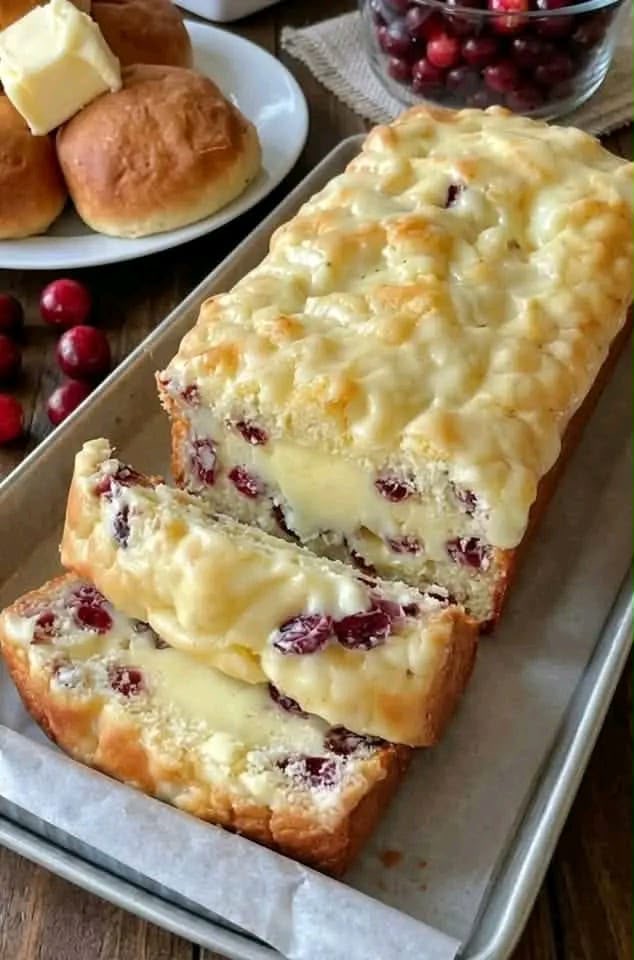
Cranberry Cream Cheese Bread
Cranberry Cream Cheese Bread combines the comforting sweetness of homemade vanilla bread with bright, tart cranberries and a beautifully creamy cheesecake-style centre. Finished with a smooth cream cheese topping, this golden loaf is a wonderful treat for breakfast, afternoon tea, festive gatherings or dessert.
Imagine cutting through a soft, buttery slice of cranberry bread and discovering a delicate ribbon of rich cream cheese filling inside. Each bite brings together a tender crumb, little bursts of cranberry flavour and a velvety topping that makes the loaf feel particularly special.
One of the best things about this recipe is its balance of flavours. The cranberries contribute refreshing tartness, while the sugar, vanilla and cream cheese create a sweet, mellow contrast. The result is rich without being overwhelmingly sugary.
Although it looks impressive when sliced, this cranberry cream cheese loaf uses straightforward baking techniques and familiar ingredients. There is no yeast, no kneading and no complicated shaping involved. Everything comes together in a few mixing bowls and a standard loaf tin.
It is especially appealing during autumn and winter when cranberries are popular in seasonal baking. Nevertheless, frozen cranberries make it possible to enjoy this delicious bread throughout the year, whether you are preparing a Christmas breakfast or simply fancy something homemade with a cup of tea.
If you enjoy moist quick breads, cheesecake-inspired desserts and easy recipes suitable for sharing, this cranberry cream cheese bread deserves a place in your baking collection.
Recipe Overview
This homemade cranberry cream cheese bread is a sweet, cake-like quick bread with three distinct components: a moist cranberry batter, a creamy baked filling and a smooth cream cheese topping added after cooling.
- Recipe name: Cranberry Cream Cheese Bread
- Category: Sweet bread, quick bread, breakfast and dessert
- Style: American-inspired home baking
- Preparation time: Approximately 20 minutes
- Baking time: 50–60 minutes, as supplied; additional time may be needed depending on the oven and filling
- Cooling time: Approximately 1–2 hours, or until completely cool
- Total time: Approximately 2 hours 10 minutes to 3 hours, including cooling
- Yield: One 9×5-inch loaf, approximately 8–10 slices
- Difficulty: Easy to moderate
- Oven temperature: 350°F (175°C)
- Equipment: 9×5-inch loaf tin
- Method: Oven baking
- Main ingredients: Cranberries, cream cheese, flour, butter, eggs, soured cream and vanilla
The actual number of servings depends on how thickly the loaf is sliced. Because the cheesecake filling is rich, moderately sized slices are usually satisfying.
Why You’ll Love This Recipe
- Wonderful flavour contrast: Tart cranberries balance the sweet vanilla bread and creamy cheese filling.
- Beautiful sliced appearance: Ruby-red cranberries stand out against the golden crumb and pale cheesecake centre.
- Soft, moist texture: Butter, milk and soured cream help create a tender loaf.
- No yeast required: Baking powder and bicarbonate of soda provide the rise.
- Perfect for festive baking: The red and white colours are particularly attractive at Christmas.
- Flexible ingredients: Both fresh and frozen cranberries work in the original recipe.
- Ideal for sharing: A single loaf makes several satisfying slices for family gatherings.
- Three delicious layers: The cranberry bread, cream cheese filling and creamy topping work together to create a bakery-style finish.
Ingredients
Gather the following ingredients before beginning. All quantities below are retained from the original recipe.
For the Cranberry Bread
- 2 cups all-purpose flour (plain flour, approximately 250g)
- 1 teaspoon baking powder
- ½ teaspoon baking soda (bicarbonate of soda)
- ¼ teaspoon salt
- ½ cup unsalted butter, softened (approximately 113g)
- ¾ cup granulated sugar (approximately 150g)
- 2 large eggs
- 1 teaspoon vanilla extract
- ½ cup sour cream (soured cream, approximately 120g)
- ½ cup milk (120ml)
- 1 cup fresh or frozen cranberries (approximately 100g)
For the Cream Cheese Filling
- 8 oz cream cheese, softened (approximately 227g)
- ¼ cup granulated sugar (approximately 50g)
- 1 large egg
- 1 teaspoon vanilla extract
For the Cream Cheese Topping
- 4 oz cream cheese, softened (approximately 113g)
- 2 tablespoons icing sugar (powdered sugar)
- 1–2 tablespoons milk
Important: The cream cheese used for the filling and the cream cheese used for the topping are separate quantities. You need 12 oz (approximately 340g) altogether.
Ingredient Notes
Plain Flour
Plain flour provides the structure of the loaf. It has enough protein to support the cranberries and creamy filling while still allowing a tender crumb. For consistent results, weigh the flour when possible rather than packing it firmly into a measuring cup.
Baking Powder and Bicarbonate of Soda
These two raising agents help the quick bread rise. Baking powder provides reliable lift, while bicarbonate of soda reacts with the acidity in the soured cream. Both are important to the intended texture.
Unsalted Butter
Softened butter is beaten with sugar to incorporate air and produce a light, delicate texture. It should be soft enough to press with a fingertip but not melted or oily.
Granulated Sugar
Sugar sweetens the bread, supports browning and helps retain moisture. The additional sugar in the filling balances the tanginess of the cream cheese.
Eggs
The eggs help bind and structure the bread. The separate egg in the cream cheese filling helps it set during baking, creating a cheesecake-like middle rather than a loose frosting.
Vanilla Extract
Vanilla adds warmth and complements both the cranberries and cream cheese. It is included in the bread batter and the filling for consistent flavour throughout.
Soured Cream
Soured cream contributes moisture, richness and a gentle tang. It helps make this loaf softer and more tender than a basic sweet bread.
Milk
Milk loosens the batter and helps blend the ingredients. The small quantity in the topping also controls whether the finished cream cheese mixture can be spread or drizzled.
Cranberries
Cranberries add refreshing tartness and attractive red colour. Fresh berries retain their shape particularly well, while frozen cranberries are a convenient alternative when fresh ones are unavailable.
Cream Cheese
Full-fat block-style cream cheese is generally the most reliable choice for the baked filling. Softer spreadable varieties can produce a looser result because their water content and stabilisers may differ.
Icing Sugar
Icing sugar blends smoothly into the topping without leaving a grainy texture. Its fine consistency helps create a creamy finish.
Equipment You’ll Need
- One 9×5-inch loaf tin
- Parchment or baking paper
- Two or three mixing bowls
- Electric hand mixer or stand mixer
- Balloon whisk
- Rubber spatula
- Measuring cups and spoons
- Kitchen scales, if available
- Wire cooling rack
- Wooden skewer or toothpick
- Sharp bread knife
A digital kitchen thermometer can also be helpful when assessing the middle of a thick loaf, although visual and texture checks remain important.
Step-by-Step Instructions
Step 1: Prepare the Oven and Tin
Preheat your oven to 350°F (175°C). Lightly grease a 9×5-inch loaf tin and line it with baking paper, leaving a little overhang along the longer sides.
The paper overhang makes it easier to lift out the finished loaf without damaging the cream cheese topping or delicate crumb.
Step 2: Combine the Dry Ingredients
In a medium mixing bowl, whisk together the flour, baking powder, bicarbonate of soda and salt.
Mix thoroughly so the raising agents are distributed evenly. This helps prevent uneven rising and large pockets of bicarbonate of soda.
Step 3: Cream the Butter and Sugar
Place the softened butter and granulated sugar into a large mixing bowl. Beat with an electric mixer until the mixture becomes lighter in colour and creamy in texture.
Scrape down the sides of the bowl to ensure the butter and sugar are evenly incorporated.
Step 4: Add the Eggs and Vanilla
Add the two eggs one at a time, beating briefly after each addition. Mix in the vanilla extract.
If the mixture looks slightly curdled, do not worry. It will usually come together once the flour is added.
Step 5: Mix in the Soured Cream and Milk
Stir in the soured cream and milk until the mixture is combined.
These ingredients provide moisture and help create the soft texture of the finished cranberry bread.
Step 6: Add the Dry Ingredients
Gradually add the flour mixture to the wet ingredients. Fold or mix gently just until no obvious dry streaks remain.
Do not beat vigorously at this stage. Excessive mixing encourages gluten development, which can make the finished bread dense or tough.
Step 7: Fold in the Cranberries
Add the fresh or frozen cranberries and fold them into the batter with a spatula.
Use gentle movements to distribute the fruit while minimising broken berries and unwanted streaks of red juice.
Step 8: Prepare the Cream Cheese Filling
In a separate bowl, beat the 8 oz softened cream cheese with the ¼ cup sugar until smooth.
Add the egg and vanilla extract, then mix until thoroughly combined and creamy. Scrape down the bowl as necessary.
Step 9: Assemble the Loaf
Spoon half of the cranberry bread batter into the prepared loaf tin and spread it into an even layer.
Carefully spoon the cream cheese filling over the batter. Spread it gently, avoiding vigorous mixing between the layers.
Add the remaining cranberry batter over the cream cheese filling. Distribute small spoonfuls across the surface before smoothing gently, taking care not to disturb the filling beneath.
Step 10: Bake the Bread
Place the loaf tin on the middle shelf of the preheated oven.
Bake for 50–60 minutes according to the original recipe, or until the loaf is golden and properly set. Because the cheesecake filling adds moisture and thickness, some ovens may require additional time.
Test the bread near the edge with a skewer. It should come out mostly clean, without wet bread batter. The central cream cheese layer should also be set rather than visibly liquid or wobbling strongly.
If the top becomes golden before the centre has finished baking, loosely cover it with foil and continue baking in short intervals.
Step 11: Cool Completely
Remove the loaf from the oven and place the tin on a wire rack.
Allow it to cool until it is stable enough to handle, then carefully lift it out using the baking paper.
Let the loaf cool completely before adding the topping. Cooling is particularly important because the baked cream cheese filling continues to firm as its temperature falls.
Step 12: Prepare the Cream Cheese Topping
Beat the remaining 4 oz softened cream cheese with the icing sugar until smooth.
Add 1 tablespoon of milk and mix. If necessary, add the second tablespoon gradually until the topping reaches your preferred spreading or drizzling consistency.
Step 13: Decorate and Serve
Spread or drizzle the cream cheese topping over the fully cooled loaf.
For neat slices, refrigerate the topped loaf briefly until the filling and frosting are firm enough to cut cleanly.
Use a sharp knife to cut into generous slices, revealing the moist cranberry crumb and creamy cheesecake-style centre.
How to Prepare Cranberries for Baking
The cranberries are one of the defining elements of this bread. Their tart flavour prevents the sweet cream cheese filling from becoming overpowering, while their natural colour creates an attractive contrast within the loaf.
Using Fresh Cranberries
Rinse fresh cranberries under cool water and drain thoroughly. Remove any soft, damaged or discoloured berries before adding them to the batter.
Pat them dry with kitchen paper if they are particularly wet. Excess surface moisture can slightly thin the batter and encourage unwanted colour bleeding.
Using Frozen Cranberries
Frozen cranberries can generally be folded directly into the batter without thawing. Keeping them frozen helps prevent their juices from spreading throughout the mixture.
Frozen fruit may lower the temperature of the batter, so allow for the possibility of a slightly longer bake. Check the centre carefully rather than relying only on the clock.
Whole or Chopped Cranberries?
Whole cranberries create distinct bursts of flavour and attractive red pockets within the bread. Chopped cranberries distribute the tartness more evenly but may release more juice.
The original recipe does not require chopping, so whole berries are a practical starting point.
How to Make a Smooth Cream Cheese Filling
A creamy, properly set filling is what makes this cranberry bread different from an ordinary fruit loaf. The aim is to achieve a soft cheesecake-style centre that remains distinct from the surrounding bread.
Start With Softened Cream Cheese
Cold cream cheese often creates stubborn lumps. Allow it to soften enough to mix easily, without leaving it at room temperature for an extended period.
Beat the cream cheese and sugar first, before adding the egg. This produces a smoother base and helps reduce lumps.
Mix the Egg Gently
Once the cream cheese is smooth, add the egg and vanilla. Mix just until incorporated.
Overbeating can introduce excessive air, which may cause the filling to puff during baking and then sink as it cools.
Keep the Layers Separate
Spread the bottom layer of cranberry batter evenly before adding the filling.
Spoon the cream cheese mixture carefully on top, then distribute the remaining batter in smaller portions. This is easier than tipping all the batter into the centre at once.
A little natural marbling is perfectly acceptable, but excessive swirling will make the filling less distinct.
Allow the Filling to Set
The cheesecake centre may remain softer than the bread around it, even when fully baked. However, it should not resemble raw, runny cream cheese batter.
Cooling completely is essential for a neat cross-section. Chilling before slicing makes the contrast between the bread and filling even more visible.
How to Bake a Moist, Golden Cranberry Loaf
Use the Correct Loaf Tin
A 9×5-inch loaf tin gives the batter enough space to rise while providing a reasonably even baking depth.
A smaller tin may create a taller loaf that requires substantially more baking time and is more likely to brown too quickly on top.
Keep the Oven Temperature Steady
Preheat the oven fully to 175°C (350°F). Place the loaf on the middle shelf, where heat can circulate around the tin.
Avoid repeatedly opening the oven door during the early baking stage, as sudden temperature changes may interfere with rising.
Check More Than the Crust
The top may become golden before the middle is ready. A skewer inserted into the bread portion near the edge helps identify uncooked batter, but it does not independently confirm that the cream cheese filling has set.
Look for a stable centre and a well-risen surface. If the middle remains loose, bake longer and protect the top with foil if necessary.
Prevent Excessive Browning
If the top is becoming too dark, place a loose tent of foil over the loaf. Do not press the foil into the batter or frosting.
Continue baking until the bread and filling are set.
Cool Before Cutting
Freshly baked quick bread is delicate, and the cream cheese centre is especially soft while hot.
Allowing the loaf to cool prevents the filling from smearing across the slices and helps the crumb retain its structure.
Expert Baking Tips
- Measure flour carefully. Excess flour creates a dry, heavy crumb. Weighing approximately 250g is a useful way to measure the original two cups.
- Use room-temperature butter. Softened butter creams more effectively with sugar than cold or melted butter.
- Choose full-fat cream cheese. Block-style cream cheese generally produces a firmer, richer filling.
- Mix the dry ingredients thoroughly. Even distribution of the raising agents encourages consistent rising.
- Avoid overmixing the batter. Stop once the flour has been incorporated.
- Keep frozen cranberries frozen. Adding them directly from the freezer limits colour bleeding.
- Use a flexible spatula. It makes folding the berries and spreading the layers easier.
- Spread the first batter layer evenly. An even foundation helps support the cream cheese filling.
- Add the top batter gently. Small spoonfuls prevent the filling from being displaced.
- Monitor the loaf after 50 minutes. Begin checking around the original baking time without assuming the centre is ready.
- Protect the crust if needed. Loose foil can prevent further browning while the middle finishes baking.
- Cool the loaf completely. Warm cheesecake filling is difficult to slice neatly.
- Adjust topping thickness gradually. Add the milk a little at a time instead of pouring in the full quantity immediately.
- Chill before serving neat slices. A brief period in the refrigerator helps the cream cheese layers firm up.
Common Mistakes to Avoid
1. Using Cold Cream Cheese
Cold cream cheese may remain lumpy even after extensive beating. Soften it before mixing to achieve a smoother filling and topping.
2. Overmixing the Bread Batter
Mixing too long after adding flour can create a chewy or dense texture. Fold gently until the ingredients are just combined.
3. Using Too Much Flour
Packing flour into measuring cups can result in a heavier loaf. Spoon and level the flour or use kitchen scales.
4. Adding Thawed, Wet Cranberries
Thawed cranberries can release excess liquid and streak the batter. Use frozen berries straight from the freezer where practical.
5. Mixing the Cream Cheese Layer Into the Batter
Heavy spreading or vigorous swirling can destroy the distinct filling. Work slowly with small portions of batter.
6. Underbaking the Centre
A golden crust does not guarantee a fully cooked loaf. Check both the bread and the set of the cheesecake filling.
7. Baking in the Wrong-Sized Tin
A significantly smaller or deeper tin changes how quickly heat reaches the centre. Use the specified 9×5-inch size whenever possible.
8. Applying the Topping While Warm
Warm bread can soften the topping excessively and make it slide off. Wait until the loaf is completely cool.
9. Slicing Immediately After Baking
Cutting too early may compress the crumb and cause the filling to spread. Cooling and chilling produce cleaner slices.
Optional Recipe Variations
The following ideas are optional changes to the original recipe, not additional ingredients required for the standard cranberry cream cheese bread.
1. Cranberry Orange Cream Cheese Bread
Add approximately 1 tablespoon of finely grated orange zest to the bread batter. Orange zest brings a bright citrus aroma that complements cranberries beautifully.
2. White Chocolate Cranberry Bread
Fold approximately ½ cup of white chocolate chips into the batter alongside the cranberries for a sweeter dessert-style loaf.
3. Cranberry Walnut Bread
Add about ½ cup of chopped walnuts to the batter. They provide a gentle crunch and a nutty contrast to the creamy filling.
4. Cranberry Pecan Bread
Use ½ cup of chopped pecans for a rich, buttery crunch. Pecans are particularly suitable for festive baking.
5. Lemon Cranberry Bread
Add finely grated lemon zest to the batter for a fresher citrus character. A little lemon zest can also be mixed into the cream cheese topping.
6. Cinnamon Cranberry Bread
Add approximately ½ teaspoon of ground cinnamon to the dry ingredients for a gently spiced, autumn-inspired variation.
7. Individual Cranberry Cream Cheese Muffins
Use the same flavour combination in lined muffin tins, layering small quantities of bread batter and filling. Baking times will be shorter and must be checked separately because the original timing applies only to a loaf.
How to Serve Cranberry Cream Cheese Bread
This loaf is versatile enough to enjoy at breakfast, as an afternoon treat or as a simple homemade dessert.
With Morning Coffee
Serve a slice with freshly brewed coffee. The slight bitterness of coffee balances the sweet cream cheese topping.
With Afternoon Tea
Black tea, Earl Grey or a mild herbal tea pairs nicely with the tart cranberries and vanilla notes.
For a Christmas Breakfast
Arrange slices on a serving platter alongside fresh fruit, warm pastries and other breakfast favourites. The colourful cranberry pieces give the table a festive appearance.
As a Dessert
Serve chilled or allow a slice to lose some of its refrigerator chill before eating. The creamy filling gives it a dessert-like richness without needing additional sauce.
For a Brunch Buffet
Cut the loaf into smaller slices so guests can sample it alongside savoury dishes such as eggs, breakfast potatoes or a fresh fruit salad.
Because the loaf already contains a generous cream cheese topping, it does not require extra butter or frosting to taste delicious.
Storage, Freezing and Make-Ahead Tips
Refrigerating Leftovers
Because this bread contains a baked cream cheese filling and a cream cheese topping, store it in the refrigerator rather than leaving it on the kitchen counter.
Place the completely cooled loaf in an airtight container and refrigerate promptly. For best quality, enjoy within 3–4 days.
Can You Freeze Cranberry Cream Cheese Bread?
Yes. The loaf can be frozen, although the cream cheese filling and topping may change slightly in texture after thawing.
For the best results, freeze the loaf without the final cream cheese topping if you are planning ahead. Wrap the completely cooled bread tightly in food-safe wrapping, then place it inside a freezer-safe container or bag.
For best quality, use within approximately 2 months.
How to Thaw
Thaw the frozen loaf overnight in the refrigerator. Once thawed, add freshly prepared cream cheese topping if it was frozen without frosting.
Can You Warm a Slice?
You can briefly warm an unfrosted slice if you prefer a softer texture. However, the cream cheese centre may soften as it heats.
Frosted slices are generally best enjoyed chilled or cool rather than heated, as the topping may melt.
Making the Bread Ahead
Bake the loaf the day before serving and refrigerate it once completely cooled. Prepare the topping either before refrigeration or shortly before presenting the loaf.
Allowing the bread to chill helps the cheesecake filling become firmer and makes slicing easier.
Food Safety Reminder
Do not leave the finished cream cheese bread unrefrigerated for more than two hours, or one hour in particularly hot conditions. Keep leftover slices chilled and use clean utensils when serving.
Frequently Asked Questions
1. Can I use frozen cranberries instead of fresh?
Yes. The original recipe allows either fresh or frozen cranberries. Frozen berries can generally be added directly to the batter without thawing.
2. Should I chop the cranberries?
No, chopping is not required. Whole cranberries create attractive red pockets and bursts of tart flavour. Chopping is optional if you prefer smaller pieces.
3. Can I use dried cranberries?
Dried cranberries can be used as an optional substitution, but they are sweeter, chewier and less juicy than fresh cranberries. The resulting bread will have a different texture and flavour.
4. Why is my cranberry bread dense?
A dense texture is often caused by overmixing, too much flour or ineffective raising agents. Measure carefully and mix only until combined.
5. Why is the middle of my loaf still wet?
The thick cream cheese filling slows down baking. Your oven or tin may also affect the cooking time. Continue baking until the centre is properly set and the surrounding bread contains no raw batter.
6. How do I know when the cream cheese filling is cooked?
The filling should look set rather than fluid. A slight softness is normal, but it should not be loose or visibly runny. Cooling will help it firm further.
7. Can I use low-fat cream cheese?
It is possible, but the filling may be softer and less rich. Full-fat block-style cream cheese is more dependable for a distinct cheesecake-style layer.
8. Can I use yoghurt instead of soured cream?
As an optional substitution, plain full-fat Greek yoghurt may work, although moisture levels and acidity vary. The original recipe uses soured cream.
9. Can I replace butter with oil?
Oil changes the texture and mixing method because it cannot be creamed with sugar in the same way. For the intended result, softened butter is recommended.
10. Why did my cranberries sink?
Fruit may settle when the batter is particularly loose or the berries are heavy. A properly mixed batter helps hold them in place. A light dusting of flour is an optional technique, but is not part of the supplied method.
11. Why did the top crack?
A central crack is common in quick breads. It happens as the outer crust sets while the centre continues rising and is not necessarily a sign of failure.
12. Can I make this bread without the topping?
Yes. The cream cheese topping is the final finishing layer, and the bread can still be served with its baked cheesecake centre. Omitting the topping will make it less rich.
13. Can I omit the cream cheese filling?
You could make a simpler cranberry quick bread, but this would be a substantial variation. The original recipe is specifically designed around a cheesecake-style filling.
14. Can I make this in a smaller loaf tin?
A smaller tin makes the batter deeper and may require a longer bake. Avoid overfilling, and check the centre carefully. The original recipe specifies a 9×5-inch tin.
15. Why is my cream cheese topping too thick?
The topping may need a little more milk. Add it gradually until the mixture reaches a spreadable consistency.
16. Why is my topping runny?
Too much milk or overly warm cream cheese can make the topping thin. Chill briefly before spreading, and use only as much milk as necessary.
17. Can I prepare the batter the night before?
It is better to bake the batter soon after mixing because the raising agents begin reacting with the wet ingredients. For make-ahead preparation, bake and chill the finished loaf instead.
18. How long should I cool the bread?
Cool it completely before applying the topping. This may take approximately 1–2 hours, depending on room temperature and loaf thickness. Additional refrigeration can improve slicing.
19. Does cranberry cream cheese bread need refrigeration?
Yes. The cheesecake-style filling and dairy topping make refrigeration the safest storage choice.
20. Can I freeze individual slices?
Yes. Wrap slices separately and freeze in a suitable airtight container. Thaw in the refrigerator before eating.
21. Is this a bread or a cake?
It is technically a sweet quick bread, but its buttery crumb, cream cheese filling and topping give it many characteristics of a dessert loaf cake.
22. Is cranberry cream cheese bread suitable for Christmas?
Absolutely. Its red cranberries, pale cream cheese layers and sweet vanilla flavour make it particularly appealing for Christmas breakfasts and holiday dessert tables.
Complete Recipe Card
Cranberry Cream Cheese Bread
Description: A soft, moist cranberry quick bread with a creamy cheesecake-style filling and a smooth cream cheese topping. Perfect for breakfast, brunch, afternoon tea or festive desserts.
- Category: Sweet bread and dessert
- Method: Baking
- Prep time: Approximately 20 minutes
- Bake time: 50–60 minutes, or longer if necessary
- Cooling time: Approximately 1–2 hours
- Yield: One loaf, approximately 8–10 slices
- Oven: 350°F (175°C)
- Tin size: 9×5 inches
Ingredients
Cranberry Bread
- 2 cups all-purpose flour (plain flour)
- 1 teaspoon baking powder
- ½ teaspoon baking soda (bicarbonate of soda)
- ¼ teaspoon salt
- ½ cup unsalted butter, softened
- ¾ cup granulated sugar
- 2 large eggs
- 1 teaspoon vanilla extract
- ½ cup sour cream (soured cream)
- ½ cup milk
- 1 cup fresh or frozen cranberries
Cream Cheese Filling
- 8 oz cream cheese, softened
- ¼ cup granulated sugar
- 1 large egg
- 1 teaspoon vanilla extract
Cream Cheese Topping
- 4 oz cream cheese, softened
- 2 tablespoons powdered sugar (icing sugar)
- 1–2 tablespoons milk
Instructions
- Preheat the oven to 350°F (175°C). Grease and line a 9×5-inch loaf tin with baking paper.
- In a medium bowl, whisk together the flour, baking powder, bicarbonate of soda and salt.
- In a large bowl, beat the softened butter and sugar until light and creamy.
- Add the two eggs one at a time, mixing after each addition. Stir in the vanilla extract.
- Add the soured cream and milk, mixing until combined.
- Gradually add the dry ingredients and mix gently until no dry flour remains.
- Fold in the cranberries with a spatula.
- For the filling, beat 8 oz cream cheese, ¼ cup sugar, one egg and one teaspoon vanilla until smooth.
- Spread half of the cranberry batter in the prepared tin. Add the cream cheese filling, then gently cover with the remaining batter.
- Bake for 50–60 minutes, or until golden and properly set. Check for uncooked batter near the edge and ensure the cream cheese centre is not runny. Extend baking if needed.
- Allow the loaf to cool completely before removing and decorating.
- For the topping, beat 4 oz cream cheese with the icing sugar. Gradually add 1–2 tablespoons milk until creamy.
- Spread or drizzle the topping over the cooled loaf.
- Chill briefly if desired, then slice and serve.
Recipe Notes
- Fresh or frozen cranberries may be used.
- Do not overmix the bread batter.
- Full-fat block-style cream cheese produces a dependable filling.
- The original 50–60-minute baking time is a starting point; a thick, filled loaf may need longer.
- Cool completely before adding the topping.
- Refrigerate leftovers in an airtight container and enjoy within 3–4 days.
Relevant hashtags: #CranberryCreamCheeseBread #CranberryBread #HolidayBaking #HomemadeBaking #ChristmasRecipes