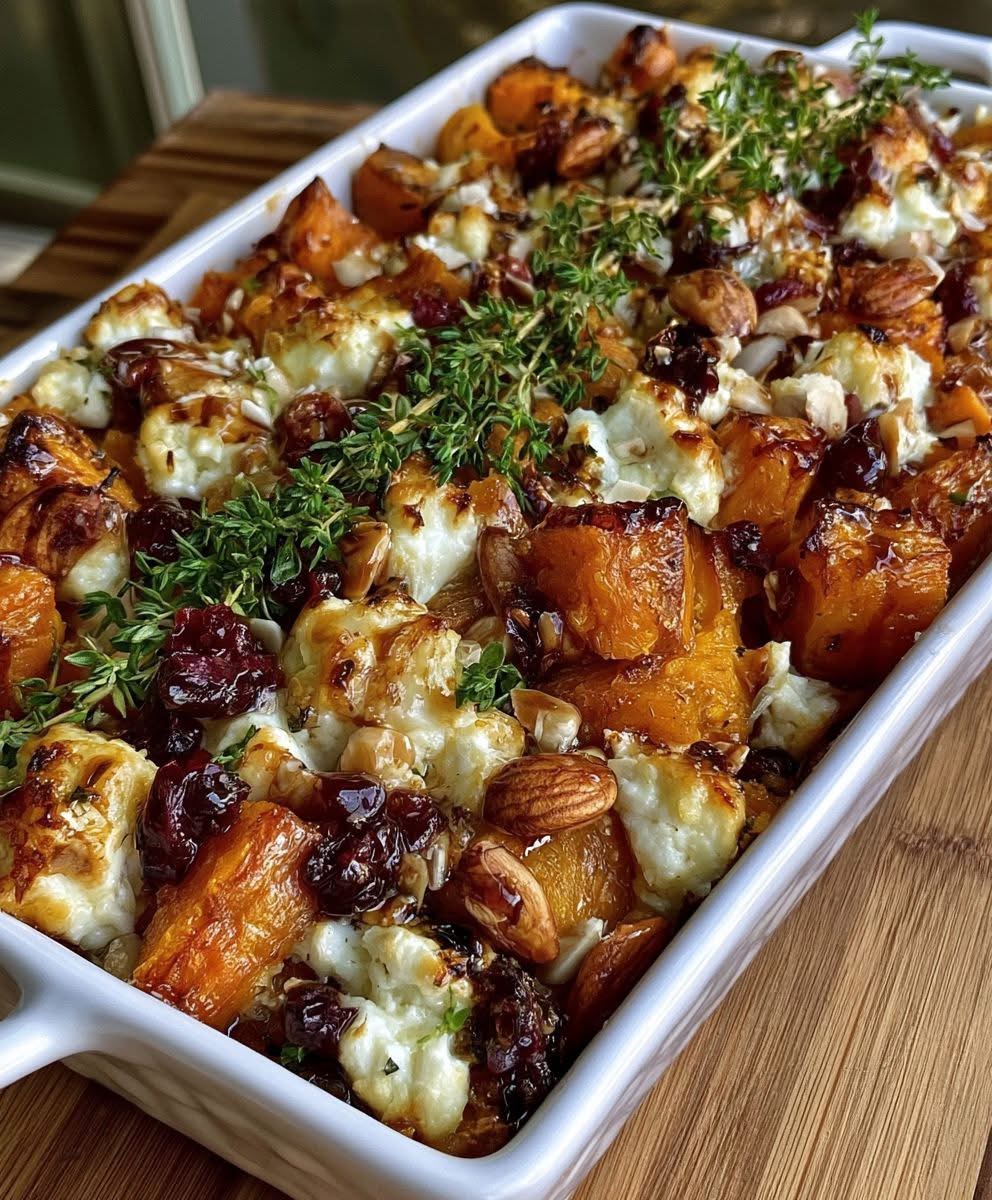
The Carrot, Pumpkin & Sweet Potato Bake with Feta, Almonds & Maple Cranberry Drizzle is a masterful autumn-inspired dish that balances caramelized earthiness with tangy, sweet, and nutty toppings. This comprehensive masterclass covers every aspect of this modern classic, including its historical origins, biological formation, step-by-step methods, nutritional profiles, and culinary benefits.
1. Introduction: The Ultimate Autumn Harvest Masterpiece
When the air turns crisp and leaves shift to shades of amber and gold, our culinary cravings inherently migrate toward warmth, comfort, and deep, grounding flavors. The Carrot, Pumpkin & Sweet Potato Bake with Feta, Almonds & Maple Cranberry Drizzle represents the pinnacle of modern, vegetable-forward cooking. Far from a simple, uninspired side dish, this recipe transforms humble, soil-grown root vegetables and winter squashes into a complex symphony of textures and flavors.
The magic of this bake lies in its deliberate, multi-layered design:
- The Base: Deeply caramelized beta-carotene-rich vegetables offer a soft, jammy texture and natural, concentrated sugars.
- The Counterpoint: Sharp, briny, and creamy Greek feta cheese cuts directly through the intense sweetness of the roasted base.
- The Texture: Golden, toasted slivered almonds introduce an essential crunch that keeps each bite engaging.
- The Finish: A rich, vibrant drizzle made from tart dried cranberries infused in pure maple syrup and a hint of acid ties the entire dish together.
Whether you serve it as the spectacular centerpiece of a vegetarian holiday feast, a nourishing meal-prep companion for busy weekdays, or an elegant accompaniment to roasted meats, this dish commands attention. It celebrates the seasonal bounty while showcasing how thoughtful technique can elevate everyday ingredients into an unforgettable dining experience.
2. History & Culinary Origins
To fully appreciate this contemporary dish, we must examine the fascinating global migrations and cultural convergences of its core ingredients. This bake is not merely a modern internet sensation; it is a culinary tapestry woven from centuries of agricultural history spanning multiple continents.
[North America]  ──────> Pumpkin, Sweet Potatoes, Maple Syrup ──╮
                                                                │
[Central Asia]   ──────> Carrots (Purple to Orange Evolution)  ─┼─> Modern Fusion Bake
                                                                │
[Mediterranean] ──────> Feta Cheese, Almonds, Olive Oil        ──╯
The Evolution of the Ingredients
- The Orange Carrots (Daucus carota): Originally domesticated in Central Asia (modern-day Afghanistan) around the 10th century, early carrots were strictly purple or yellow. The vibrant orange carrots we use today were selectively bred by Dutch growers in the 17th century, allegedly to honor William of Orange. This breeding inadvertently maximized their sugar and beta-carotene content, making them ideal for high-heat roasting.
- The Ancient Pumpkin (Cucurbita): Squashes are among the oldest domesticated crops in the Americas, with archaeological evidence in Mexico dating back over 8,000 years. Indigenous peoples cultivated squash alongside maize and beans in the famous “Three Sisters” companion planting system. Pumpkins provided vital winter sustenance because their thick, protective skins allowed them to be stored safely for months without spoiling.
- The Resilient Sweet Potato (Ipomoea batatas): Also native to tropical Central and South America, the sweet potato was spread throughout the Pacific and Europe by early explorers. It quickly became a foundational carbohydrate in various global cuisines due to its ability to thrive in poor soils where other crops failed.
- The Briny Feta: Hailing from Greece, feta is one of the world’s oldest recorded cheeses, mentioned explicitly in Homer’s Odyssey. Curing curdled sheep or goat milk in wooden barrels filled with intensely salty brine was an ancient, brilliant method of preserving dairy in the hot Mediterranean climate.
- The Liquid Gold (Maple Syrup): Long before European settlers arrived in North America, Indigenous nations across the northeastern woodlands perfected the complex art of tapping sugar maple trees (Acer saccharum) during the early spring thaws. They boiled the clear sap over open fires to produce a thick, mineral-rich sweetener.
The Modern Culinary Synthesis
The assembly of these ingredients into a unified bake represents the “New Nordic” and “Modern Australian” culinary movements pioneered in the early 21st century by chefs like Yotam Ottolenghi. These culinary philosophies championed stripping away heavy, flour-based sauces in favor of enhancing whole vegetables with bright acids, toasted nuts, and unpasteurized cheeses. By pairing the New World sweetness of pumpkins, sweet potatoes, and maple syrup with the Old World salt and crunch of Mediterranean feta and almonds, this recipe achieves a perfect global balance.
3. Botanical Formation & Science of the Ingredients
The success of this dish relies directly on food chemistry. Understanding how these plants grow and react to high heat allows us to execute the recipe flawlessly.
Vegetable Composition and Structural Integrity
- Carrots: Carrots are true taproots. Their cell walls are reinforced with a dense matrix of cellulose and hemicellulose. Because they are structurally compact, they require a slightly smaller dice or a longer cooking time compared to squashes to soften completely without burning on the exterior.
- Sweet Potatoes: Unlike regular potatoes (which are modified underground stems or tubers), sweet potatoes are storage roots. They contain high concentrations of an enzyme called amylase. When heated slowly between 57°C and 75°C (135°F to 167°F), this internal amylase breaks down the vegetable’s tasteless, complex starches into maltose, a sweet sugar. This built-in biological mechanism explains why slow-roasting sweet potatoes makes them taste significantly sweeter than if they are boiled quickly.
- Pumpkins: Pumpkins are gourds containing a significantly higher water content (often exceeding 90%) than carrots or sweet potatoes. Consequently, they shrink dramatically during the baking process as their internal water evaporates. This evaporation concentrates their natural sugars and flavors, preventing the dish from turning watery.
The Chemistry of the Oven: Maillard Reaction vs. Caramelization
When we subject these three vegetables to an oven temperature of 200°C (400°F), two distinct scientific transformations occur simultaneously:
- Caramelization: This is a purely thermal degradation of sugars. The sucrose, glucose, and fructose inside the vegetables break down at temperatures above 160°C (320°F). This reaction generates hundreds of new, complex flavor compounds, yielding characteristic nutty, buttery, and slightly bitter caramel notes.
- The Maillard Reaction: This is a chemical reaction between the plant’s naturally occurring amino acids and reducing sugars. It creates the deeply browned, savory crusts on the edges of the vegetable cubes. This reaction adds a crucial layer of savory depth, ensuring the dish tastes complex rather than flatly sweet.
4. Comprehensive Ingredients List
To achieve restaurant-quality results, select high-quality, fresh ingredients. Avoid pre-cut, bagged vegetables, as they dry out quickly and lose their natural sugars.
For the Roasted Vegetable Base
- Carrots: 500g (approx. 4 large carrots), peeled and cut into 1-inch diagonal batons.
- Pumpkin (Kent, Kabocha, or Butternut): 600g (peeled and deseeded weight), cut into 1-inch (2.5cm) cubes.
- Sweet Potatoes (Beauregard or Jewel): 600g (approx. 2 medium sweet potatoes), peeled and cut into 1-inch cubes.
- Extra Virgin Olive Oil: 4 tablespoons (60ml), divided. Use a robust, peppery oil that can withstand roasting temperatures while adding depth.
- Garlic: 6 plump cloves, left skin-on but gently smashed with the flat side of a knife.
- Fresh Rosemary: 3 whole sprigs, leaves stripped and finely chopped (plus extra for garnish).
- Fresh Thyme: 4 sprigs, leaves stripped.
- Ground Cumin: 1 teaspoon, adding a warm, earthy undertone.
- Smoked Paprika (Pimentón): 1 teaspoon, contributing a delicate, woody smokiness.
- Sea Salt Flakes: 1.5 teaspoons, adjusted to taste.
- Freshly Cracked Black Pepper: 1 teaspoon.
For the Texture & Savory Elements
- Greek Feta Cheese: 200g, traditional barrel-aged sheep’s milk feta. Avoid pre-crumbled varieties, which contain anti-caking agents that prevent smooth melting.
- Slivered Almonds: 80g (approx. 1/2 cup), raw and unsalted.
For the Maple Cranberry Drizzle
- Pure Maple Syrup: 80ml (1/3 cup), Grade A Dark or Amber color for robust maple flavor.
- Dried Cranberries: 60g (approx. 1/2 cup), roughly chopped to release their internal juices.
- Apple Cider Vinegar: 2 tablespoons (30ml), unpasteurized with “the mother” to provide a sharp, clean acidic pop.
- Dijon Mustard: 1 teaspoon, acting as a subtle emulsifier and adding a sharp bite.
- Cold-Pressed Virgin Avocado Oil or Olive Oil: 2 tablespoons (30ml).
5. Kitchen Equipment & Preparation Metrics
Before beginning, gather your kitchen tools to ensure a smooth, efficient cooking process.
Required Equipment
- Extra-Large Rimmed Baking Sheet: Minimum 18×13 inches (Half-Sheet pan). Alternatively, use two medium pans. Overcrowding vegetables causes them to steam instead of roast.
- Large Mixing Bowl: For thoroughly coating the vegetables in oil and spices.
- Sharp Chef’s Knife & Heavy-Duty Vegetable Peeler
- Small Heavy-Bottomed Saucepan: For simmering the maple cranberry drizzle.
- Wire Whisk & Silicone Spatula
- Cast Iron Skillet or Ceramic Baking Dish: Measuring 9×13 inches, used for the final presentation and bake.
- Digital Kitchen Scale: For precise ingredient measurements.
Preparation Metrics
- Total Prep Time: 25 minutes
- Active Cooking Time: 45 minutes
- Total Time Commitment: 1 hour 10 minutes
- Recipe Yield: Serves 6 as a substantial side dish, or 4 as a vegetarian main course.
6. Step-by-Step Culinary Methods
Follow these detailed, sequential instructions to execute this dish perfectly.
Step 1: Prep & Spice Veggies ──> Step 2: High-Heat Roast (30 min) ──> Step 3: Simmer Cranberry Drizzle
                                                                                  │
Step 5: Final Broil (5 min) <── Step 4: Assemble with Feta & Almonds <────────────╯
Step 1: Precision Vegetable Prep and Meticulous Spicing
- Oven Prep: Preheat your oven to 200°C (400°F / Gas Mark 6). Set the oven rack to the middle position.
- Cut Uniformly: Peel your carrots, pumpkin, and sweet potatoes. Cut them into uniform 1-inch pieces. Keeping sizes consistent ensures all vegetables finish cooking at the exact same moment.
- Spice Toss: Transfer the cut vegetables into your largest mixing bowl. Pour over 3 tablespoons of extra virgin olive oil. Add the chopped rosemary, thyme leaves, ground cumin, smoked paprika, sea salt, and black pepper.
- Coating: Use your hands or a large spatula to toss the vegetables for at least 60 seconds. Every single face of the vegetable cubes must be lightly coated in oil and spices to ensure even caramelization.
- Pan Arrangement: Dump the seasoned vegetables onto your large rimmed baking sheet. Spread them out into a single, flat layer. Scatter the smashed, skin-on garlic cloves evenly among the vegetables. Ensure there is visible space between the pieces; if they are piled on top of each other, they will steam and turn mushy rather than developing crispy, roasted edges.
Step 2: The Initial High-Heat Roast
- First Bake: Slide the baking sheet into the preheated oven. Roast undisturbed for 20 minutes.
- The Turn: At the 20-minute mark, remove the pan. Use a wide spatula to flip and turn the vegetables carefully. You should see deep golden-brown crusts forming on the sides in contact with the hot metal sheet.
- Continue Roasting: Return the pan to the oven for another 10 to 15 minutes. Check for doneness by inserting a sharp paring knife into a large piece of sweet potato and carrot. It should slide in effortlessly with zero resistance. Remove the pan from the oven, but leave the oven turned on. Reduce the heat setting to 180°C (350°F).
Step 3: Crafting the Maple Cranberry Drizzle
- Combine: While the vegetables are completing their initial roast, place your small heavy-bottomed saucepan over medium-low heat.
- Simmer: Add the pure maple syrup, chopped dried cranberries, and apple cider vinegar to the pan. Bring the mixture to a very gentle simmer.
- Plump the Berries: Let it simmer for 4 to 5 minutes. The dried cranberries will absorb the liquid, plumping up while infusing the maple syrup with their tart, ruby-red juices.
- Emulsify: Remove the pan from the heat. Whisk in the Dijon mustard, followed by the avocado or olive oil. Whisk vigorously until the oil integrates into a smooth, glossy dressing. Season with a tiny pinch of sea salt. Set aside.
Step 4: Assembly and Toasting the Toppings
- Transfer: Use your spatula to transfer the roasted vegetables into your 9×13 inch ceramic baking dish or a seasoned cast-iron skillet, creating an attractive, rustic arrangement. Locate the smashed garlic cloves, squeeze the sweet roasted paste out of their papery skins directly onto the veggies, and discard the skins.
- Feta: Take your block of Greek feta cheese and crumble it over the hot vegetables using your fingers. Aim for a mix of fine crumbles and large, rustic chunks.
- Almonds: Scatter the raw slivered almonds evenly across the top layer.
- Drizzle: Take your warm maple cranberry drizzle and use a spoon to lace three-quarters of it uniformly across the assembled dish, making sure to coat some of the feta and almonds.
Step 5: The Final Bake and Melt
- Final Bake: Place the fully assembled baking dish back into the oven at 180°C (350°F) for exactly 8 to 10 minutes. During this brief window, the almonds will toast to a perfect golden hue, the feta will soften and warm through, and the maple glaze will bubble and fuse with the vegetable juices.
- Optional Broil: For an extra gourmet touch, turn your oven to “Broil” (Grill mode) for the final 90 seconds. Watch it closely; you want the edges of the feta chunks to develop a beautiful toasted brown color without burning the almonds.
- Garnish & Serve: Remove the dish from the oven. Drizzle the remaining maple cranberry glaze over the top to refresh the glossy shine. Garnish with a few fresh rosemary needles or a sprinkle of flaky sea salt. Serve immediately while hot.
7. Culinary Benefits & Nutritional Profile
This dish is a nutritional powerhouse, offering an array of essential micro- and macronutrients disguised as a comforting luxury food.
Health and Wellness Benefits
- Immune Support: The deep orange hue of carrots, pumpkins, and sweet potatoes comes from beta-carotene, a powerful antioxidant that the human body converts into Vitamin A. A single serving of this dish provides well over 100% of your daily recommended intake, supporting skin health, vision, and immune function.
- Digestive Health: Root vegetables and squashes are rich in dietary fiber. Fiber fuels a healthy gut microbiome, stabilizes blood sugar levels, and promotes long-lasting satiety.
- Heart-Healthy Fats: Extra virgin olive oil and slivered almonds provide monounsaturated and polyunsaturated fatty acids. These healthy fats lower LDL (bad) cholesterol and protect cardiovascular health. Furthermore, healthy fats are chemically required for your body to absorb fat-soluble vitamins (A, D, E, and K) found in the vegetables.
- Anti-Inflammatory Action: Herbs like rosemary and thyme contain polyphenols and rosmarinic acid, which help reduce oxidative stress and inflammation throughout the body.
Detailed Nutritional Breakdown
The values below are calculated per standard serving (assuming the total recipe is divided into 6 equal portions):
| Nutrient | Amount Per Serving | Daily Value (% DV) |
|---|---|---|
| Calories | 345 kcal | 17% |
| Total Fat | 16.5g | 21% |
| ── Saturated Fat | 5.8g | 29% |
| ── Monounsaturated Fat | 8.2g | ── |
| Cholesterol | 22mg | 7% |
| Sodium | 580mg | 25% |
| Total Carbohydrates | 42g | 15% |
| ── Dietary Fiber | 6.5g | 23% |
| ── Sugars (Natural & Added) | 19g | ── |
| Protein | 8.5g | 17% |
| Vitamin A | 14,200 IU | 284% |
| Vitamin C | 28mg | 31% |
| Calcium | 185mg | 14% |
| Iron | 2.1mg | 12% |
8. Recipe Adaptations & Substitutions
This recipe is highly adaptable. It can be modified easily to accommodate dietary restrictions or ingredient availability without sacrificing its core character.
- Making it Strictly Vegan / Dairy-Free: Replace the traditional dairy feta with a high-quality almond- or coconut-oil-based vegan feta alternative. Alternatively, use firm tofu cubes tossed in nutritional yeast, lemon juice, and salt.
- Nut-Free Modifications: If cooking for someone with a tree nut allergy, swap the slivered almonds for raw pumpkin seeds (pepitas) or sunflower seeds. They provide an identical crunch and pair beautifully with autumn flavors.
- Varying the Acid Profile: If you run out of apple cider vinegar, substitute it with fresh orange juice and a splash of white balsamic vinegar. This keeps the bright, fruity acidity needed to cut through the sweetness of the dish.
- Alternate Sweeteners: If pure maple syrup isn’t available, high-quality raw honey or an unrefined dark brown sugar simple syrup can stand in for the glaze.
9. Storage, Reheating & Advanced Prep Guide
This dish handles storage exceptionally well, making it a fantastic candidate for holiday meal planning.
Make-Ahead Strategy
To save time on the day of a big dinner party, prepare the components up to 24 hours in advance:
- The Vegetables: Peel, dice, and toss the carrots, pumpkin, and sweet potatoes in the oil and spice mixture. Store them in an airtight container in the refrigerator.
- The Drizzle: Prepare the maple cranberry drizzle completely, let it cool, and store it in a small glass jar.
- On the day of your event, simply spread the vegetables on your pan and follow the cooking instructions from Step 2 onward.
Proper Storage
Place leftovers in a shallow, airtight glass container and store them in the refrigerator for up to 4 days. Avoid freezing this dish; the cellular structure of roasted squashes and sweet potatoes breaks down when frozen and thawed, causing them to turn watery and mushy.
Reheating Instructions
- The Oven Method (Highly Recommended): Transfer leftovers into an oven-safe dish, cover loosely with aluminum foil to prevent the almonds from burning, and heat at 170°C (325°F) for 15 minutes. Remove the foil for the final 3 minutes to recrisp the edges.
- The Skillet Method: Warm a non-stick skillet over medium heat with a tiny drop of olive oil. Add the leftovers and cook, stirring gently, for 5 to 7 minutes. This method yields delicious, slightly charred edges on the vegetables.
- Avoid the Microwave: Microwaving will steam the vegetables, ruining their roasted texture and turning the feta rubbery.
10. Conclusion: A Celebration of Texture and Taste
The Carrot, Pumpkin & Sweet Potato Bake with Feta, Almonds & Maple Cranberry Drizzle demonstrates how thoughtful culinary design can elevate humble ingredients into something extraordinary. By paying close attention to cutting uniformity, ensuring the vegetables have plenty of space to roast on the pan, and balancing sweet, savory, tart, and crunchy components, you create a dish that satisfies every part of the palate.
It bridges the gap between traditional cold-weather comfort food and vibrant modern cuisine. Every element—from the soft, caramelized core of the squashes to the briny punch of feta and the crisp crunch of toasted almonds—plays an essential role in this recipe. It is guaranteed to become a requested staple at your dinner table for years to come.
Who Will Love This Dish?
- Autumn Flavor Enthusiasts: Anyone who looks forward to comforting, warm holiday side dishes and cozy cold-weather meals.
- Vegetarian Foodies: Those looking for a hearty, complex, vegetable-forward dish that works beautifully as a satisfying main event rather than a boring side salad.
- Texture Lovers: Diners who enjoy a mix of textures, contrasting tender, jammy roasted roots with creamy cheese and crunchy roasted nuts.
- Busy Home Cooks: Families looking for an easy, forgiving sheet-pan dish that stores well and tastes even better the next day.
Would you like me to tailor this guide further? I can easily provide:
- Suggestions for perfect main course pairings (like roasted meats or mains)
- A wine pairing guide that complements the sweet and briny flavors
- Step-by-step instructions to turn these exact ingredients into a smooth, velvety autumn soup