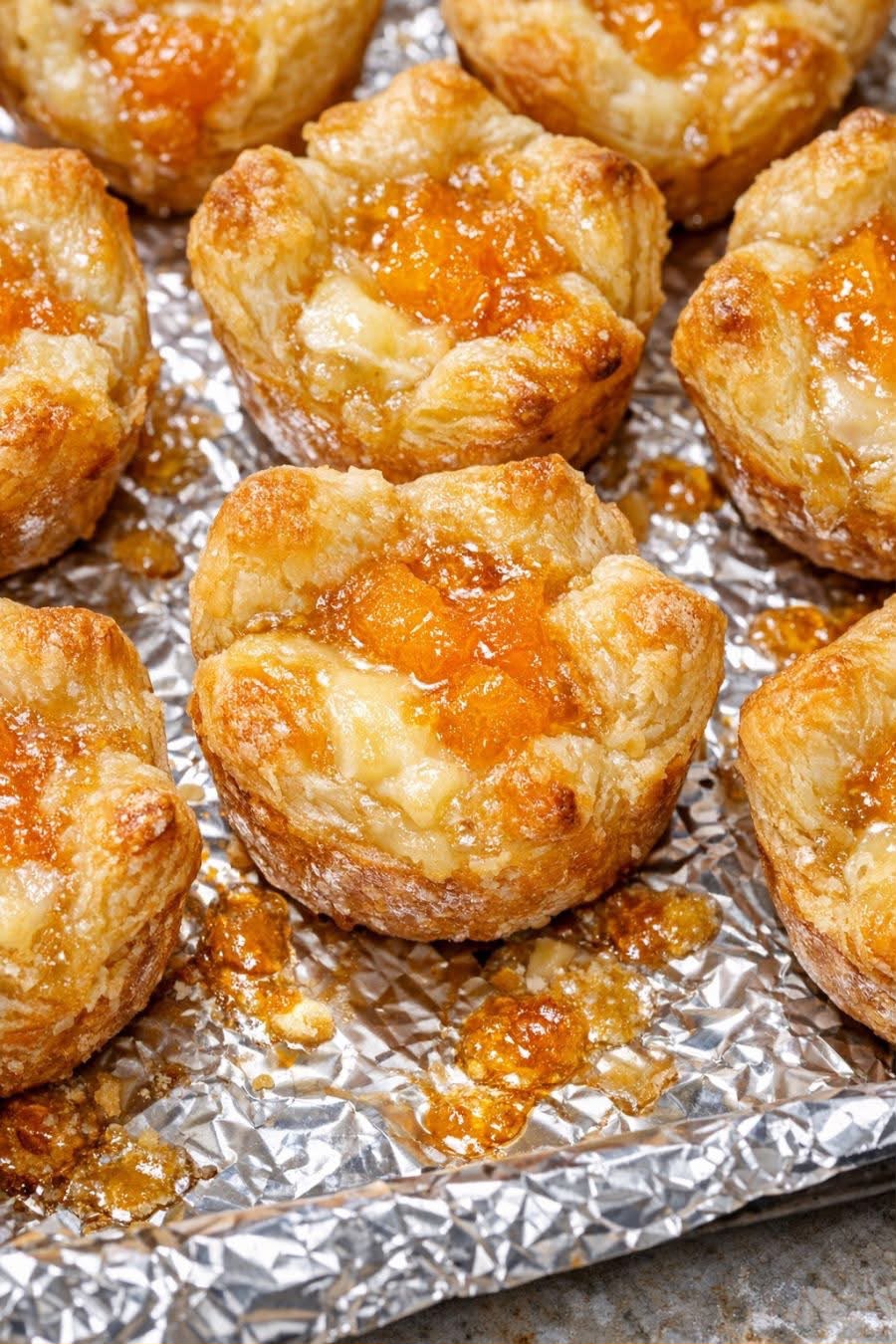
Apricot Cream Cheese Pastry Cups
Golden, flaky puff pastry, a soft vanilla cream cheese filling and a glossy layer of sweet apricot preserves make these Apricot Cream Cheese Pastry Cups a delightful homemade treat. They look like something from a bakery, yet they are surprisingly straightforward to prepare using just a handful of familiar ingredients.
Each little pastry cup has beautifully crisp, buttery layers surrounding a creamy centre. The apricot preserves add a bright fruity sweetness that balances the richness of the cream cheese. The combination creates a dessert that feels indulgent without requiring complicated pastry techniques.
One of the best things about this recipe is its convenience. Ready-made puff pastry saves time, while the filling comes together in one bowl. There is no need to prepare pastry dough from scratch, roll out several layers or use specialist baking equipment.
These little pastries are particularly lovely for weekend breakfasts, brunch gatherings, afternoon tea and family celebrations. Their individual size makes them easy to serve, and the golden, flower-like pastry edges create an attractive presentation.
They are also wonderfully versatile. Although apricot preserves provide the signature flavour, the same basic method works with several other fruit preserves, making this a useful recipe to keep for different occasions.
Whether enjoyed slightly warm or at room temperature, these apricot pastries offer a delicious contrast between crisp pastry, smooth cream cheese and sticky fruit filling.
Recipe Overview
- Recipe: Apricot Cream Cheese Pastry Cups
- Category: Dessert, breakfast pastry, brunch
- Style: Homemade bakery-style pastries
- Preparation Time: Approximately 15 minutes (estimated)
- Cooking Time: 15–18 minutes
- Cooling Time: Approximately 5–10 minutes (estimated)
- Total Time: Approximately 35–45 minutes (estimated)
- Yield: Approximately 8–12 pastry cups, depending on pastry sheet size and muffin tin
- Difficulty: Easy
- Oven Temperature: 400°F (200°C)
- Cooking Method: Oven baking
- Equipment: Muffin tin
- Main Ingredients: Puff pastry, cream cheese, apricot preserves
The recipe uses ready-made puff pastry, allowing you to concentrate on shaping the pastry cups and preparing the filling. The exact number of portions depends on the dimensions of the pastry sheet and the size of your muffin tin.
Why You’ll Love This Recipe
- Beautiful bakery-style appearance: The raised pastry corners create attractive little cups with golden edges.
- Easy preparation: The filling requires simple mixing rather than lengthy cooking.
- Delicious texture: Crisp pastry contrasts with a soft, smooth cream cheese centre.
- Balanced sweetness: Tangy cream cheese complements the fruity apricot preserves.
- Convenient ingredients: Ready-made puff pastry makes the process approachable for beginners.
- Perfect individual portions: Each pastry cup can be served without slicing a large dessert.
- Flexible serving temperature: They taste lovely slightly warm or at room temperature.
- Ideal for entertaining: Their attractive presentation makes them suitable for brunches, parties and afternoon tea.
Ingredients
This recipe uses eight ingredients, including the optional coarse sugar topping.
For the Pastry Cups
- 1 sheet puff pastry, thawed
- 1 egg, beaten, for brushing
- 1 tablespoon coarse sugar, optional
For the Cream Cheese Filling
- 8 oz (approximately 225 g) cream cheese, softened
- ⅓ cup (approximately 67 g) granulated sugar
- 1 teaspoon vanilla extract
- 1 large egg yolk
For the Apricot Topping
- ½ cup (approximately 160 g) apricot preserves
The metric weights are approximate equivalents. The original cup and ounce measurements are retained for convenience.
Ingredient Notes
Puff Pastry
Ready-made puff pastry forms the crisp, layered outer shell of each cup. As the pastry bakes, steam develops between its layers, causing them to rise and become light and flaky.
Choose a good-quality puff pastry sheet and thaw it according to the packaging instructions. It should be flexible enough to unfold or unroll without cracking, but still feel cool.
Cream Cheese
Cream cheese provides the rich, tangy base of the filling. Full-fat cream cheese generally gives a creamier, firmer result than reduced-fat varieties.
Allow the cheese to soften before mixing. This helps prevent lumps and produces a smooth filling.
Granulated Sugar
Sugar sweetens the cream cheese and softens its tanginess. The original amount provides sweetness without completely overpowering the apricot flavour.
Vanilla Extract
Vanilla adds a gentle aroma and rounds out the flavour of the filling. It pairs beautifully with the cream cheese and apricot preserves.
Egg Yolk
The egg yolk helps enrich and bind the cream cheese filling as it bakes. It contributes to the soft, lightly set texture in the centre of each pastry.
Apricot Preserves
Apricot preserves provide the sweet, glossy fruit topping. Their bright orange colour also makes the pastries particularly attractive.
Choose a preserve with a flavour you enjoy. A thicker preserve is easier to portion and less likely to spread excessively during baking.
Beaten Egg
The beaten egg is brushed over the exposed pastry edges. This creates a shiny, golden finish as the pastries bake.
Coarse Sugar
Coarse sugar is optional, but it adds a delicate crunch and a little sparkle to the golden pastry edges.
Equipment You’ll Need
- Standard muffin tin
- Mixing bowl
- Electric hand mixer or sturdy whisk
- Sharp knife or pastry cutter
- Rolling pin, if required
- Measuring cups and spoons
- Small spoon for filling
- Pastry brush
- Cooling rack
- Small offset spatula or butter knife for loosening the baked cups
A standard muffin tin is particularly useful because it supports the pastry while creating individual cups for the cream cheese and apricot filling.
How to Make Apricot Cream Cheese Pastry Cups
Step 1: Preheat the Oven
Preheat your oven to 400°F (200°C). Lightly grease a muffin tin, covering the base and sides of each cup so the pastries can be removed more easily after baking.
Step 2: Prepare the Puff Pastry
Unfold or unroll the thawed puff pastry sheet on a clean work surface. Cut it into equal squares using a sharp knife or pastry cutter.
Make sure the squares are large enough to line the muffin cups with their corners extending slightly above the edges.
Step 3: Shape the Pastry Cups
Gently press one pastry square into each muffin cup. Allow the corners to rise naturally above the rim, creating a slightly rustic, flower-like shape.
Press carefully against the base and lower sides without excessively stretching or flattening the pastry.
Step 4: Make the Cream Cheese Filling
Place the softened cream cheese, granulated sugar, vanilla extract and egg yolk into a mixing bowl.
Beat until the mixture becomes smooth, creamy and evenly combined. Scrape the sides of the bowl as needed to ensure there are no unmixed pockets of cream cheese.
Step 5: Fill the Pastry Cups
Spoon a small amount of cream cheese filling into the centre of each pastry cup.
Divide the filling evenly between the cups, leaving enough space for the apricot preserves and allowing for slight expansion during baking.
Step 6: Add the Apricot Preserves
Add approximately 1 teaspoon of apricot preserves over the cream cheese in each pastry cup.
Place the preserves near the centre rather than spreading them over the pastry edges. This keeps the filling contained and allows the outer pastry to rise.
Step 7: Brush with Egg Wash
Use a pastry brush to lightly coat the exposed puff pastry edges with the beaten egg.
A thin, even coating is sufficient. Avoid allowing excessive egg wash to collect around the pastry folds.
Step 8: Add Optional Coarse Sugar
Sprinkle a little coarse sugar over the exposed pastry edges if desired. This provides a delicate sweet crunch once baked.
Step 9: Bake Until Golden
Place the muffin tin in the preheated oven and bake for 15–18 minutes, until the pastry is puffed and deeply golden and the cream cheese filling appears set.
Check the pastries towards the end of the cooking time. Oven performance and pastry thickness can affect how quickly they brown.
Step 10: Cool Briefly
Remove the muffin tin from the oven and allow the pastries to cool for several minutes.
The preserves will be extremely hot immediately after baking, so avoid touching or tasting the filling straight away.
Step 11: Remove and Serve
Carefully loosen each pastry cup from the muffin tin and transfer it to a cooling rack or serving plate.
Serve slightly warm or at room temperature, enjoying the contrast between flaky pastry, creamy filling and sweet apricot topping.
How to Get Perfectly Flaky Puff Pastry
Good puff pastry depends on maintaining the delicate layers of dough and fat. When the pastry enters a hot oven, moisture turns into steam, pushing the layers apart and creating the familiar airy texture.
For the best results, keep your pastry cool while preparing the cups. If the dough becomes very soft or sticky, place it in the refrigerator briefly before continuing.
Use a sharp knife when cutting the pastry squares. A clean cut helps preserve the layers along the edges.
Avoid pulling or stretching the pastry to fit the muffin tin. Excessive stretching can cause the pastry to shrink or develop uneven shapes as it bakes.
The exposed corners should remain visible above the filling. These corners puff up and become beautifully golden, giving the finished pastries their appealing homemade appearance.
Finally, bake the cups in a properly preheated oven. Starting with sufficient heat encourages the pastry layers to rise rather than becoming heavy and greasy.
How to Make a Smooth Cream Cheese Filling
The cream cheese filling should be smooth enough to spoon easily into the pastry cups while remaining thick enough to hold its shape.
Softening the cream cheese is the most important preparation step. Cold cream cheese is firmer and can produce noticeable lumps when mixed with the other ingredients.
Beat the cream cheese with the sugar first if you find it difficult to achieve a smooth mixture. Then incorporate the vanilla extract and egg yolk until the filling is evenly blended.
Avoid adding extra liquid to make the mixture thinner. Excess moisture may affect how the filling sets and can make the pastry underneath softer.
The finished filling should look creamy and consistent, without visible streaks of egg yolk.
During baking, the filling will firm slightly while maintaining a soft, rich centre. It should no longer look obviously liquid when the pastries are ready.
How to Work with Apricot Preserves
Apricot preserves are an excellent choice for these pastries because they add a pleasant fruity flavour and an attractive amber colour.
For neat results, use a small spoon to place the preserves directly over the cream cheese rather than spreading them across the entire pastry surface.
Thick preserves are generally easier to control than very runny ones. If your preserves contain large pieces of fruit, gently stir them before using so they can be portioned more evenly.
Avoid overfilling the cups. As the pastries heat, the filling and preserves may bubble and spread. Leaving room inside the pastry helps limit overflow.
A few caramelised drips around the edges can add to the rustic appearance, but excessive overflow may cause the pastries to stick to the muffin tin.
For the best presentation, allow the pastries to cool slightly before removing them. This gives the fruit topping time to become less fluid.
Expert Baking Tips
- Keep the pastry cool: Cold puff pastry generally holds its shape better during assembly.
- Use softened cream cheese: This helps create a smooth filling without stubborn lumps.
- Preheat thoroughly: A properly heated oven encourages puff pastry to rise quickly.
- Cut evenly: Similar pastry squares help the cups bake at a consistent rate.
- Do not stretch the dough: Gently ease the pastry into the muffin cups instead.
- Grease the tin lightly: Even a small amount of spilled jam can make removal difficult.
- Leave pastry corners exposed: This allows the edges to become crisp and golden.
- Portion the filling evenly: Overfilled cups are more likely to overflow.
- Keep the jam centred: Avoid coating the pastry edges with preserves before baking.
- Brush lightly: A thin layer of egg wash creates an attractive golden finish.
- Watch the final minutes: Puff pastry can change from golden to overly brown quite quickly.
- Allow brief cooling: The filling becomes easier to handle as it settles.
- Remove carefully: Use a thin spatula to loosen any edges that have stuck.
- Serve reasonably fresh: The pastry texture is usually best on the day of baking.
Common Mistakes to Avoid
1. Using Pastry That Is Too Warm
Very soft puff pastry can become sticky and difficult to shape. Keep it cool and return it briefly to the refrigerator if necessary.
2. Not Softening the Cream Cheese
Cold cream cheese may produce an uneven filling. Let it soften sufficiently before mixing.
3. Overfilling the Pastry Cups
Too much cream cheese or apricot preserve can bubble over the edges and make the pastries difficult to remove.
4. Stretching the Pastry Excessively
Stretched puff pastry may shrink during baking. Press it into the muffin cups gently.
5. Skipping the Egg Wash
The pastries will still bake, but the edges may have a less glossy finish than those brushed with beaten egg.
6. Baking Before the Oven Is Hot
A cool oven can reduce the initial rise of the pastry. Allow the oven to reach the required temperature first.
7. Removing the Cups Immediately
Freshly baked pastry and preserves are fragile and very hot. A short cooling period makes removal easier.
8. Storing the Pastries While Warm
Trapped steam creates condensation, which may soften the flaky pastry. Cool completely before storing.
Optional Recipe Variations
The following ideas are optional adaptations and are not part of the original ingredient list.
1. Raspberry Cream Cheese Cups
Replace the apricot preserves with raspberry preserves for a sharper, berry-flavoured filling.
2. Strawberry Pastry Cups
Use thick strawberry jam for a sweeter, familiar fruit variation.
3. Peach Cream Cheese Pastries
Substitute peach preserves for a delicate stone-fruit flavour.
4. Lemon Cream Cheese Cups
Add a little finely grated lemon zest to the cream cheese filling for a brighter citrus note.
5. Almond Apricot Pastries
Add a small amount of almond extract to the cream cheese mixture and finish the baked cups with toasted flaked almonds.
6. Blueberry Pastry Cups
Replace the apricot preserves with blueberry jam for a rich berry centre.
7. Cinnamon Sugar Pastries
Mix a pinch of cinnamon with the optional coarse sugar before sprinkling it over the pastry edges.
Serving Suggestions
These Apricot Cream Cheese Pastry Cups are delicious on their own, but they also work beautifully as part of a larger breakfast, brunch or dessert spread.
For Breakfast or Brunch
Serve alongside fresh fruit, yoghurt and a cup of coffee. The cream cheese and apricot flavours pair particularly well with a simple breakfast selection.
For Afternoon Tea
Arrange the pastries on a serving platter with black tea or herbal tea. Their individual size makes them easy to enjoy without cutlery.
For Dessert
Serve slightly warm with a small scoop of vanilla ice cream or a spoonful of softly whipped cream, if desired.
For Special Occasions
Display the pastries on a tiered cake stand or arrange them in neat rows on a dessert tray. Their naturally golden edges and bright orange centres provide plenty of visual appeal.
For the best texture, serve after the preserves have cooled enough to eat comfortably but while the pastry remains crisp.
Storage and Reheating
Room Temperature
Because these pastries contain a dairy and egg filling, do not leave them at room temperature for more than two hours. Refrigerate leftovers promptly.
Refrigerator Storage
Allow the pastries to cool, then place them in an airtight container in the refrigerator. Enjoy within 3–4 days.
The pastry may soften slightly during storage because of the moisture in the filling.
Reheating in the Oven
To refresh the pastry texture, place refrigerated cups on a baking tray and warm them in an oven at approximately 325°F (160°C) for 5–8 minutes, or until warmed through. Check frequently to avoid overbrowning.
Air Fryer Reheating
An air fryer can also help restore some crispness. Warm gently at approximately 300°F (150°C) for a few minutes, checking regularly.
Freezing
Freezing is possible, although the cream cheese filling may change texture slightly after thawing. Cool the baked cups completely, freeze individually and transfer to an airtight freezer-safe container.
For best quality, use within approximately one month. Thaw in the refrigerator before reheating.
Making Ahead
You can mix the cream cheese filling ahead of time and store it covered in the refrigerator for up to 24 hours. Keep the puff pastry refrigerated and assemble the cups shortly before baking.
Keep ingredients containing raw egg refrigerated and wash utensils and work surfaces thoroughly after handling them.
Frequently Asked Questions
1. Can I use frozen puff pastry?
Yes. Thaw it according to the package instructions before cutting and shaping.
2. Can I use homemade puff pastry?
Absolutely. Homemade puff pastry works well if it is rolled to a suitable thickness and kept cool during preparation.
3. Do I need to blind-bake the pastry?
No. This recipe places the filling into the unbaked pastry cups before baking everything together.
4. Can I use low-fat cream cheese?
You can, although the filling may be softer and less rich than one made with full-fat cream cheese.
5. Can I use apricot jam instead of preserves?
Yes. Apricot jam is a suitable substitute, particularly if it has a thick consistency.
6. How do I prevent the filling from overflowing?
Avoid overfilling the pastry cups and keep the preserves near the centre of each one.
7. Why did my puff pastry not rise properly?
The pastry may have been too warm, stretched excessively or baked before the oven had fully preheated.
8. Can I prepare these pastries the night before?
They can be baked ahead and refrigerated, but the puff pastry is generally crispest when freshly baked.
9. Can I make them without egg wash?
Yes. They will still bake, although the pastry edges may be less shiny and golden.
10. What does the egg yolk do in the filling?
It enriches the cream cheese mixture and helps the filling set gently during baking.
11. Can I use a mini muffin tin?
Yes, but you will need smaller pastry squares, less filling per cup and a shorter baking time. Watch closely for doneness.
12. Can I substitute another fruit preserve?
Yes. Raspberry, strawberry, peach and blueberry preserves are all reasonable alternatives.
13. Should I refrigerate the finished pastries?
Yes. Because they contain cream cheese and egg, refrigerate any pastries that are not being served promptly.
14. How do I keep the bottom from becoming soggy?
Avoid excess filling, keep the jam centred and bake until the pastry is fully golden. Cooling on a rack also helps moisture escape.
15. Can I serve them cold?
Yes. Chilled pastries are safe and enjoyable, although their texture will be firmer and less flaky than when freshly baked.
16. Can children help make this recipe?
Yes. Children can help spoon the filling and add preserves under supervision. Adults should handle the hot oven and baking tin.
17. Can I add fresh apricots?
Yes, as an optional variation. Use small, well-drained pieces to avoid adding too much moisture.
18. Can I use a dairy-free cream cheese alternative?
Possibly, but results depend on the brand and its baking properties. Choose an alternative suitable for baking.
19. Why is the apricot topping bubbling?
Fruit preserves contain sugar and moisture that heat and bubble during baking. Some bubbling is normal.
20. How do I know when the pastries are done?
The exposed puff pastry should be well risen and deeply golden, and the cream cheese filling should appear set rather than liquid.
21. Can I double the recipe?
Yes. Double the ingredients and use additional muffin tins or bake in batches. Maintain the original oven temperature.
22. Can I reheat them in the microwave?
Yes, but the microwave tends to soften the pastry. An oven or air fryer is better for restoring crispness.
Apricot Cream Cheese Pastry Cups Recipe Card
Description: Flaky, golden puff pastry cups filled with a smooth vanilla cream cheese mixture and sweet apricot preserves. An easy homemade dessert ideal for breakfast, brunch or afternoon tea.
- Category: Dessert, breakfast pastry
- Method: Baking
- Prep Time: Approximately 15 minutes (estimated)
- Cook Time: 15–18 minutes
- Cooling Time: Approximately 5–10 minutes (estimated)
- Total Time: Approximately 35–45 minutes (estimated)
- Yield: Approximately 8–12 cups, depending on pastry and tin size
- Temperature: 400°F (200°C)
Ingredients
- 1 sheet puff pastry, thawed
- 8 oz cream cheese, softened
- ⅓ cup granulated sugar
- 1 teaspoon vanilla extract
- 1 large egg yolk
- ½ cup apricot preserves
- 1 egg, beaten, for brushing
- 1 tablespoon coarse sugar, optional
Instructions
- Preheat the oven to 400°F (200°C) and lightly grease a muffin tin.
- Cut the thawed puff pastry into equal squares.
- Press one pastry square into each muffin cup, leaving the corners slightly above the rim.
- Beat the softened cream cheese, granulated sugar, vanilla extract and egg yolk until smooth.
- Spoon a small amount of cream cheese filling into each pastry cup.
- Add approximately 1 teaspoon of apricot preserves over the cream cheese filling in each cup.
- Brush the exposed pastry edges lightly with beaten egg.
- Sprinkle with coarse sugar if desired.
- Bake for 15–18 minutes, until the pastry is puffed and deeply golden and the filling is set.
- Allow the pastries to cool for several minutes before carefully removing them from the muffin tin.
- Serve warm or at room temperature.
Recipe Notes
- Keep the puff pastry cool for the best rise.
- Use softened cream cheese to avoid a lumpy filling.
- Avoid overfilling the pastry cups.
- Allow hot apricot preserves to cool before eating.
- Refrigerate leftovers promptly and enjoy within 3–4 days.
Hashtags: #ApricotPastry #CreamCheesePastry #PuffPastryDessert #EasyBaking #HomemadeDesserts
Final Thoughts
Apricot Cream Cheese Pastry Cups combine crisp, buttery puff pastry with a smooth vanilla filling and sweet, glossy apricot preserves. They are easy enough for everyday baking yet attractive enough for a special occasion.
With simple preparation, a short baking time and plenty of delicious flavour, these little pastries are a lovely addition to any homemade dessert collection.
If you try this recipe, share your results, leave a comment with your favourite fruit filling and save the recipe for your next baking day. Follow our pages for more easy homemade treats and family favourites!