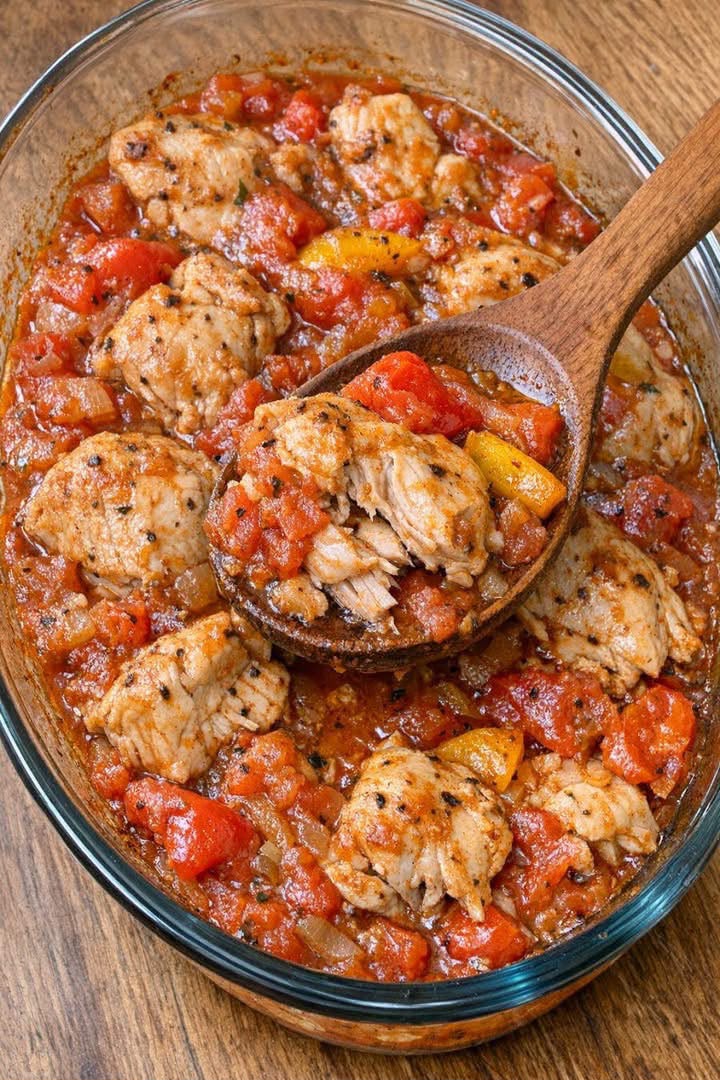
Boneless chicken thighs simmered in a chunky tomato and pepper sauce make one of the most reliable dinners in the entire weeknight repertoire. The thighs stay juicy no matter how long they sit in the pan, and the sauce builds real depth from nothing more than canned tomatoes and a little patience.
This is a one-pan dish that tastes like it belongs on a Sunday table but comes together on a Tuesday. Serve it over rice, pasta or a piece of crusty bread and there is nothing else to make.
Table of Contents
• Why You Will Love This Recipe
• Recipe Overview
• Ingredients
• Why Thighs Beat Breasts in a Braise
• Getting Real Depth Out of Canned Tomatoes
• How to Make Tomato Basil Braised Chicken Thighs
• Tips for the Best Results
• Variations
• What to Serve With It
• Make-Ahead and Storage
• Frequently Asked Questions
• Nutrition Information
• Final Thoughts
[AD PLACEMENT 1 — after table of contents]
Why You Will Love This Recipe
It is genuinely hard to overcook. Chicken thighs have enough fat and connective tissue that an extra ten minutes in the sauce makes them more tender rather than dry.
Everything happens in one pan. Sear, build the sauce, return the chicken, cover, done. There is a single dish to wash at the end.
The ingredient list is pantry-based. Canned tomatoes, an onion, a pepper and dried herbs carry most of the flavor, so this works even on a bare-shelf week.
It tastes better the next day. The sauce continues absorbing flavor from the chicken overnight, which makes it a perfect candidate for cooking ahead.
It fits almost any diet you are working with. Naturally gluten free and dairy free as written, and low carb the moment you serve it over cauliflower rice instead of pasta.
Recipe Overview
Prep time: 15 minutes
Cook time: 35 minutes
Total time: 50 minutes
Servings: 4
Course: Main dish
Cuisine: Mediterranean
Method: Stovetop braise
Difficulty: Easy
Ingredients
For the chicken
• 2 pounds boneless skinless chicken thighs, about 8 thighs
• 1 teaspoon salt
• 1/2 teaspoon black pepper
• 1 teaspoon sweet paprika
• 1/2 teaspoon dried oregano
• 2 tablespoons olive oil
For the sauce
• 1 medium yellow onion, diced
• 1 yellow bell pepper, cut into chunks
• 1 red bell pepper, cut into chunks
• 4 cloves garlic, minced
• 2 tablespoons tomato paste
• 1 can (28 ounces) diced tomatoes, with juice
• 1/2 cup chicken broth
• 1 teaspoon dried basil
• 1/2 teaspoon dried oregano
• 1/2 teaspoon red pepper flakes, optional
• 1 teaspoon sugar
• Salt and black pepper to taste
• 1/4 cup fresh basil, torn, for finishing
[AD PLACEMENT 2 — after ingredients]
Why Thighs Beat Breasts in a Braise
Chicken breast is lean muscle that cooks in a narrow window, and once it passes 165°F the proteins tighten and squeeze out moisture with no way to get it back. In a braise, where the meat sits in hot liquid for half an hour, that window is nearly impossible to hit.
Thighs work on completely different rules. They contain more intramuscular fat and a meaningful amount of collagen, and both of those things improve with extended cooking rather than suffering from it.
Collagen begins converting to gelatin somewhere around 160°F and keeps going as the meat holds temperature. That gelatin does two jobs at once, keeping the meat succulent from the inside and giving the sauce a silkier body than broth alone could produce.
The practical result is a dish with a wide margin for error. Thirty minutes of simmering is the target, but thirty-five or forty will still put a good dinner on the table.
Getting Real Depth Out of Canned Tomatoes
Canned tomatoes straight from the tin taste bright and slightly metallic, which is fine for a quick pasta but thin for a braise. Two techniques close that gap almost entirely.
The first is cooking the tomato paste. Frying two tablespoons of paste in oil for a full minute until it darkens to brick red develops concentrated savory notes that raw paste simply does not have. It is the fastest flavor upgrade available in tomato cookery.
The second is time at a bare simmer. As water evaporates, the sugars in the tomatoes concentrate and the acidity mellows, which is why a sauce that tasted sharp at ten minutes tastes rounded at thirty.
The teaspoon of sugar is insurance rather than sweetening. Canned tomato acidity swings widely between brands and seasons, and a small amount of sugar balances a tart batch without making the sauce taste sweet. Taste before you add it, and skip it if your tomatoes are already mellow.
[AD PLACEMENT 3 — before the instructions]
How to Make Tomato Basil Braised Chicken Thighs
Step 1: Season the chicken
Pat the thighs completely dry with paper towels, then season all over with the salt, pepper, paprika and oregano. Dry meat is the requirement for a real sear, since surface moisture has to evaporate before browning can start.
Step 2: Sear the thighs
Heat the olive oil in a large skillet or Dutch oven over medium-high heat and sear the thighs in batches for three to four minutes per side. They should be deeply golden but still raw in the center.
Transfer them to a plate and leave the browned bits in the pan.
Step 3: Cook the vegetables
Lower the heat to medium and add the onion and both bell peppers to the same pan. Cook for six to seven minutes until the onion turns translucent and the peppers begin to soften at the edges.
Add the garlic and cook for thirty seconds more.
Step 4: Bloom the tomato paste
Push the vegetables to one side, add the tomato paste to the clear space, and stir it in the hot oil for a full minute until it darkens noticeably. Then mix it through the vegetables.
Step 5: Build the sauce
Pour in the diced tomatoes with their juice and the chicken broth, scraping the bottom of the pan to release everything stuck there. Stir in the dried basil, oregano, red pepper flakes and sugar.
Step 6: Return the chicken and simmer
Nestle the seared thighs back into the sauce along with any juices from the plate. Bring to a gentle simmer, cover partially, and cook for 25 to 30 minutes.
Step 7: Reduce and check
Uncover for the last five minutes to let the sauce thicken and cling. The chicken is done at an internal temperature of 175°F, which is the sweet spot for thighs.
Step 8: Finish with fresh basil
Taste the sauce and adjust the salt, then scatter the torn fresh basil over the top just before serving. Adding it at the end keeps the aroma intact, since fresh basil loses almost everything it has to prolonged heat.
[AD PLACEMENT 4 — after the instructions]
Tips for the Best Results
Sear in batches, never all at once. A crowded pan traps steam and the thighs turn gray instead of golden, which costs you the browned fond that flavors the entire sauce.
Cut the peppers into large chunks. Small dice dissolves completely during the braise, while big pieces keep their shape and give the finished dish the texture you see in the photo.
Use a wide pan rather than a deep one. More surface area means faster evaporation and a sauce that thickens without needing any flour or cornstarch.
Cook thighs past the standard 165°F. Unlike breast meat, thighs are at their best around 175°F when the connective tissue has fully broken down.
Save some fresh basil for the plate. A little scattered on each serving right before it goes to the table smells dramatically better than basil stirred into the pot.
Variations
Italian style: Add a splash of dry white wine after the tomato paste, plus a handful of pitted olives and capers for a puttanesca lean.
Creamy tomato version: Stir a half cup of heavy cream into the sauce during the last five minutes for a richer, rosier finish.
Moroccan spiced: Swap the basil and oregano for cumin, coriander and cinnamon, then add chickpeas and finish with fresh cilantro.
With chicken breast: Use breasts cut into large chunks and cut the simmer time to 12 minutes to avoid drying them out.
Add greens: Fold in two big handfuls of spinach or kale in the last three minutes until just wilted.
[AD PLACEMENT 5 — after variations]
What to Serve With It
Rice is the most practical partner, because the sauce is generous and something has to absorb it. Plain long grain, a lemony pilaf or buttered couscous all work equally well.
Crusty bread deserves a mention on its own. Half the pleasure of a tomato braise is mopping the pan, and a good baguette or focaccia does that better than any starch on a plate.
For something lighter, serve it over cauliflower rice or alongside roasted zucchini and a simple arugula salad dressed with lemon and olive oil.
Make-Ahead and Storage
To make ahead: Cook the dish completely up to two days in advance and refrigerate. The flavor improves overnight, making this an excellent Sunday cooking project.
To refrigerate: Store in an airtight container for up to four days.
To freeze: Cool completely and freeze for up to three months. Tomato-based braises freeze better than cream-based ones, with no separation on thawing.
To reheat: Warm gently in a covered pan over low heat with a splash of broth. Avoid boiling, which tightens the chicken fibers and undoes the tenderness you built.
Frequently Asked Questions
Can I use bone-in thighs?
Yes, and the sauce will be even richer. Sear them skin side down first, then extend the simmer to 40 minutes to account for the bone.
My sauce is too thin. How do I fix it?
Remove the chicken and simmer the sauce uncovered for five to eight minutes. Reduction concentrates flavor at the same time, which a cornstarch slurry does not.
Can I make this in a slow cooker?
Sear the thighs and bloom the tomato paste on the stovetop first, then transfer everything to the slow cooker for four hours on low. Skipping the sear costs you most of the depth.
Can I use fresh tomatoes instead of canned?
You can, though you will need about three pounds of ripe tomatoes and a longer simmer to cook off the extra water. Good canned tomatoes are the more consistent choice outside of peak season.
Is this dish spicy?
Not as written, since the red pepper flakes are optional. A half teaspoon adds gentle warmth rather than real heat, and you can double it if you want it noticeable.
[AD PLACEMENT 6 — after the FAQ]
Nutrition Information