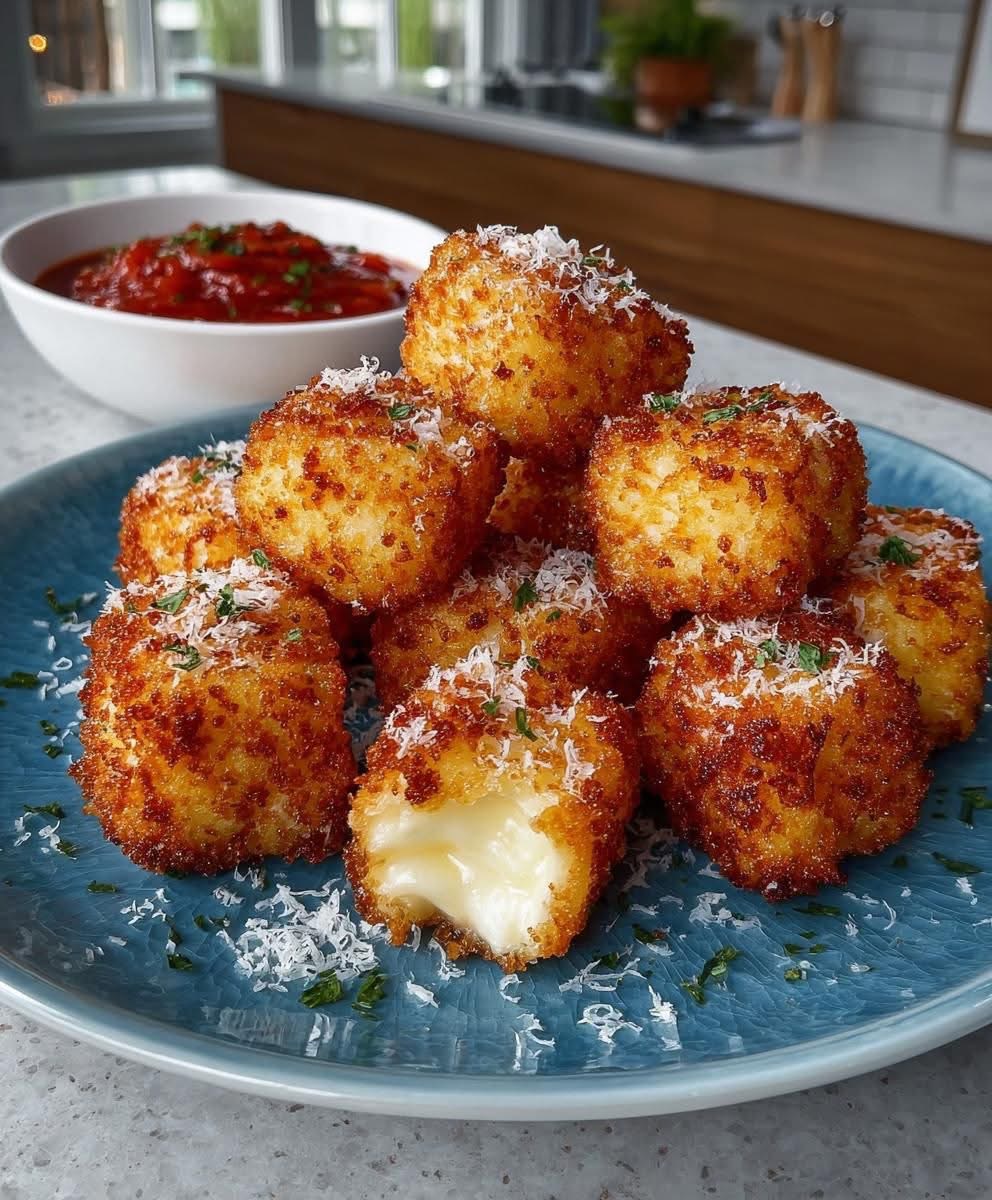
Easy Fried Cheese Bites: Crispy, Gooey & Irresistible!
Fried cheese bites are the ultimate crowd-pleasing appetizer, combining a shattered-glass crispy crust with a molten, stringy center. Whether you are hosting a game-day party, prepping holiday finger foods, or satisfying a late-night craving, these golden nuggets deliver pure comfort food satisfaction. This master textbook-grade guide explores everything you need to know about making perfect fried cheese bites, including their historical origins, the science of cheese melting, full nutritional profiles, health considerations, and diverse culinary preparation techniques.
1. Introduction: The Magic of Deep-Fried Cheese
There is an undeniable culinary synergy that occurs when dairy meets high-heat frying. At its core, the fried cheese bite plays on the sensory contrast of textures: the sharp, abrasive crunch of seasoned breadcrumbs giving way to a velvety, elastic core that stretches with every bite.
Achieving this perfect balance requires an understanding of thermodynamics and structural kitchen techniques. If the cheese is heated too quickly without adequate protection, it bursts through its casing and dissolves into the frying oil, leaving behind a hollow shell. If it is insulated too heavily, the exterior burns before the interior reaches its molten state. This guide provides a bulletproof method using a scientific double-dredging technique and a crucial freezing step to ensure your cheese bites hold their shape perfectly and deliver a flawless cheese pull every time.
2. History & Culinary Evolution
The practice of cooking cheese dates back centuries, evolving across multiple continents as cultures discovered how different varieties reacted to direct and indirect heat.
Ancient Origins
The earliest iterations of cooked cheese trace back to the Roman Empire and medieval Europe.
- Forme del Paradiso: Medieval European texts mention melting cheese over open fires or baking it inside pastry doughs.
- Saganaki: In Greece, pan-searing firm cheeses like Kefalotyri or Graviera in a small copper skillet became a staple technique, creating a rustic, unbreaded crust.
- Queso Frito: Across Spain and Latin America, firm, unaged cheeses with high melting points were thrown directly onto hot griddles, establishing a tradition of warm, savory dairy blocks served alongside staple meals.
The Renaissance of Breaded Appetizers
The modern, heavily breaded, deep-fried cheese bite emerged alongside commercial flash-freezing technology and the boom of American casual dining culture in the late 1970s and 1980s.
As processing plants perfected the art of par-frying and freezing mozzarella sticks, sports bars and diners globally adopted them as the quintessential finger food. Today, the classic mozzarella stick has evolved into versatile, bite-sized geometric shapes—cubes, spheres, and curds—incorporating global spice profiles from Italian herbs to spicy Cajun blends and smoky Mexican chiles.
3. The Structural Formation & Science of Melting
To understand how a cheese bite behaves in hot oil, one must understand its structural formation and underlying food science. Cheese is essentially a concentrated matrix of milk proteins (casein) trapping pockets of water and fat globules.
Melting Points and Moisture
When cheese is exposed to heat, the internal protein bonds begin to break down:
- At 90°F (32°C): The dairy fats inside the cheese matrix begin to melt, liquefying the fat and causing the cheese to soften.
- At 130°F to 150°F (54°C to 65°C): The casein protein network collapses. The water molecules trapped inside escape, allowing the proteins to slide freely past one another. This collapse is what creates the liquid, flowing texture we recognize as “gooey.”
The Role of Calcium and pH
The stretchiness of a cheese bite depends heavily on its pH level and calcium content:
- High Calcium, Moderate pH (e.g., Mozzarella): Mozzarella retains a strong but flexible calcium-casein bridge. When melted, these proteins stretch into long, continuous, elastic strands instead of breaking apart. This creates the classic, photogenic “cheese pull.”
- Low pH / Acidic Cheeses (e.g., Feta, Goat Cheese): Acidic environments cause the calcium bridges to dissolve completely. Lacking this internal binding framework, these cheeses do not stretch; instead, they lose structure and turn soft, grainy, or fluid when exposed to high heat.
4. Ingredients & Sourcing Guide
Making flawless cheese bites requires choosing ingredients that build a durable, moisture-resistant barrier around the cheese.
Core Ingredients
- The Cheese (16 oz / 450g): Low-moisture, part-skim mozzarella blocks are the gold standard for elasticity. Alternatively, use fresh cheese curds, sharp cheddar blocks, Pepper Jack for a spicy kick, or Monterey Jack for supreme meltability.
- All-Purpose Flour (1 cup / 120g): Acts as the primary dry primer coat. It absorbs surface moisture from the cheese, creating a dry, tacky surface that helps the liquid egg wash cling securely.
- Eggs (3 large): Whisked thoroughly to serve as the structural “glue.” The proteins in the egg whites coagulate instantly when hitting hot oil, hardening the breadcrumb shell into a protective shield.
- Whole Milk or Heavy Cream (2 tablespoons): Whisked into the eggs to thin the liquid slightly, ensuring it coats the flour evenly without leaving thick, gummy pockets.
- Panko Breadcrumbs (1.5 cups / 90g): Japanese-style flaky breadcrumbs are ideal. Their large, jagged surface area creates a lighter, airier, and significantly crunchier outer shell than traditional fine breadcrumbs.
- Italian Seasoned Breadcrumbs (1 cup / 110g): Blended with the Panko to fill in the microscopic gaps between the larger flakes, ensuring a solid, leak-proof barrier.
- High-Smoke-Point Frying Oil (1 Quart / 1 Liter): Use neutral oils capable of clean high-heat cooking without burning or imparting off-flavors. Excellent choices include peanut oil, canola oil, corn oil, or refined sunflower oil.
Seasonings & Flavor Enhancers
- Garlic Powder (1 teaspoon): Provides a sweet, savory depth to the breadcrumb mixture.
- Onion Powder (1 teaspoon): Complements the garlic, adding a rich, rounded aromatic base.
- Dried Oregano & Basil (1 teaspoon total): Infuses the crust with classic Mediterranean, pizzeria-style aromas.
- Smoked Paprika (0.5 teaspoon): Adds a subtle earthiness and lends a vibrant golden-orange color to the fried exterior.
- Fine Sea Salt & Freshly Cracked Black Pepper: Split evenly between the flour layer and the breadcrumb layer to ensure every element is seasoned.
5. Comprehensive Step-by-Step Instructions
Follow these steps carefully to ensure your cheese bites hold their shape perfectly and do not leak in the fryer.
Step 1: Cubing the Cheese
- Place your block of low-moisture mozzarella on a clean cutting board.
- Using a sharp chef’s knife, slice the block into uniform 3/4-inch (2cm) cubes.
- Note: Uniform cuts are essential. If pieces vary in size, smaller cubes will liquefy and burst before larger cubes have finished melting in the center.
Step 2: Setting Up the Dredging Station
Arrange three wide, shallow bowls side by side from left to right to create an efficient assembly line:
- Bowl 1 (The Primer): Combine the all-purpose flour, 0.5 teaspoon of salt, and a pinch of black pepper. Whisk to distribute evenly.
- Bowl 2 (The Binder): Crack the 3 large eggs into the bowl, add the 2 tablespoons of milk, and whisk vigorously until completely smooth, liquid, and free of stringy egg white tracks.
- Bowl 3 (The Armor): Combine the Panko breadcrumbs, traditional Italian seasoned breadcrumbs, garlic powder, onion powder, dried oregano, dried basil, smoked paprika, and the remaining 0.5 teaspoon of salt. Toss well.
Step 3: The Double-Dredge Protocol
To prevent blowout leaks during frying, apply a reinforced double layer of breading using a clean “wet hand/dry hand” technique:
- First Flour Coat: Drop a handful of cheese cubes into Bowl 1 (flour). Use your dry hand to toss them until completely coated. Shake off excess flour; the cubes should look dusty, not caked.
- First Egg Bath: Drop the floured cubes into Bowl 2 (egg). Use your wet hand to submerge them fully, ensuring no dry flour spots remain.
- First Breadcrumb Layer: Lift the cubes from the egg, letting excess liquid drip back into the bowl, and transfer them into Bowl 3 (breadcrumbs). Use your dry hand to bury the cubes under the breadcrumbs, pressing firmly to force the crumbs into the egg layer.
- Second Egg Bath: Transfer the breaded cubes back into Bowl 2 (egg) for a quick, complete submersion. This re-wets the surface to accept a second structural coat.
- Second Breadcrumb Layer: Move the cubes back into Bowl 3 (breadcrumbs) for their final coating. Press firmly on all sides to seal any microscopic gaps. The cheese should now be completely encased in a thick, uniform shell.
Step 4: The Mandatory Freezing Phase
- Line a large rimmed baking sheet with parchment paper.
- Arrange the double-breaded cheese bites on the sheet in a single layer, ensuring they do not touch.
- Place the entire baking sheet flat into the freezer for at least 1 to 2 hours.
- Crucial Tip: Do not skip this step. Freezing solidifies the inner cheese. When fried, this step gives the exterior breading time to crisp and brown perfectly in the hot oil before the cheese inside can overheat, expand, and rupture the crust.
Step 5: High-Heat Frying Execution
- Fill a heavy-bottomed Dutch oven, deep cast-iron skillet, or electric deep fryer with your chosen oil to a depth of at least 2 to 3 inches.
- Clip a calibrated deep-fry thermometer to the side of the pan. Heat the oil over medium-high heat until it reaches a stable 375°F (190°C).
- Retrieve only a single batch of cheese bites directly from the freezer; leave the remaining pieces frozen so they do not thaw while waiting.
- Carefully lower 6 to 8 frozen cheese bites into the hot oil using a slotted metal spoon or a wire spider strainer. Do not overcrowd the pan, as adding too many frozen bites will drop the oil temperature, leading to greasy, soggy breading.
- Fry the bites for exactly 90 seconds to 2 minutes. Keep a close eye on them; the moment you notice a speck of white cheese beginning to pinpoint through a crust, immediately remove the batch.
- Use your wire spider to lift the golden-brown bites out of the oil. Hold them over the pot for a few seconds to drain excess fat.
Step 6: Draining and Resting
- Transfer the hot fried cheese bites immediately to a wire cooling rack set over a baking sheet lined with paper towels.
- Note: Resting fried foods directly on paper towels can trap steam underneath, softening the bottom crust. A wire rack allows air to circulate freely underneath, keeping the bites perfectly crisp all around.
- Sprinkle the hot bites with a tiny pinch of fine sea salt or grated Parmesan cheese while the surface oil is still sizzling.
- Allow them to cool for 2 full minutes before serving. This brief rest lets the internal molten cheese settle slightly so it holds its shape instead of instantly running out like liquid when bitten.
6. Alternative Preparation Methods
While deep frying delivers the most traditional bar-style crunch, you can achieve excellent results using alternative modern kitchen appliances.
Method A: The Air Fryer Technique
Air frying uses rapid convection heat to crisp food with a fraction of the oil.
- Preparation: Preheat your air fryer to 400°F (204°C) for 5 minutes. Generously spray the air fryer basket with a high-heat cooking spray (such as avocado oil spray).
- Arrangement: Place the frozen, double-breaded cheese bites into the basket in a strict single layer, leaving at least half an inch of space between each piece to ensure proper airflow.
- Cooking: Lightly spray the tops of the cheese bites with cooking oil to help the dry panko crumbs brown evenly. Air fry for 5 to 7 minutes. Check them at the 4-minute mark; shake the basket gently once. Remove immediately if any cheese begins to seep out.
Method B: Conventional Oven Baking
Baking is an excellent method for cooking large batches simultaneously without managing a pot of hot oil.
- Preparation: Preheat your oven to 425°F (218°C). Line a large baking sheet with aluminum foil and place an oven-safe metal wire cooling rack directly on top of the sheet. Spray the rack thoroughly with non-stick cooking spray.
- Arrangement: Place the rock-hard frozen cheese bites onto the wire rack. Elevating them on a rack allows the hot oven air to circulate underneath, preventing the bottoms from turning soggy.
- Cooking: Mist the bites evenly with cooking oil spray. Bake for 8 to 10 minutes until the crusts are crisp and golden. Watch closely during the final two minutes to prevent blowouts.
7. Nutritional Profile Breakdown
Fried cheese bites are a rich, savory indulgence. Understanding their nutritional layout helps you balance them within an overall diet. The profile below represents a standard single serving of deep-fried mozzarella bites (approximately 4 pieces / 100 grams):
| Nutrient Component | Value Per 100g Serving | Daily Value Percentage (% DV) |
|---|---|---|
| Calories | 330 kcal | 16.5% |
| Total Fat | 21 grams | 27% |
| Saturated Fat | 9 grams | 45% |
| Trans Fat | 0 grams | 0% |
| Cholesterol | 65 milligrams | 22% |
| Sodium | 620 milligrams | 27% |
| Total Carbohydrates | 18 grams | 6.5% |
| Dietary Fiber | 1 gram | 4% |
| Sugars | 1.5 grams | 0% |
| Protein | 16 grams | 32% |
| Calcium | 380 milligrams | 30% |
| Iron | 1.2 milligrams | 7% |
| Vitamin D | 0.4 micrograms | 2% |
Nutritional Insights
- Protein Density: Because cheese is made from concentrated milk solids, these bites provide a significant amount of high-quality dairy protein, which helps promote satiety.
- Calcium Levels: A single serving delivers nearly one-third of an adult’s daily calcium requirement, supporting bone health.
- Sodium Warning: The combination of processed cheese, salted breadcrumbs, and seasoning blends results in a high sodium content. Those monitoring their daily sodium intake should enjoy them in moderation.
8. Health Benefits & Dietary Adaptations
While fried cheese bites are primarily enjoyed as a comfort food or treat, their core ingredients offer notable nutritional benefits when integrated into a balanced lifestyle.
Health Benefits of the Core Ingredients
- High-Bioavailability Protein: The casein and whey proteins found in mozzarella cheese contain all nine essential amino acids required for muscle tissue repair, cellular growth, and metabolic regulation.
- Bone Mineralization Support: The substantial concentrations of calcium and phosphorus found in the dairy matrix work together to support bone density and tooth enamel strength.
- Fat-Soluble Vitamin Carriers: Dairy fats serve as a natural carrier system for essential fat-soluble vitamins, including Vitamin A (crucial for vision and immune health) and Vitamin K2 (which helps direct calcium into the skeletal structure rather than arterial walls).
Dietary Adaptations and Modifications
You can easily modify this recipe to accommodate various dietary preferences and food sensitivities:
- Gluten-Free Adaptation: Replace the standard all-purpose flour with a 1-to-1 gluten-free baking flour blend (such as white rice flour or tapioca starch base). Substitute the Panko and Italian breadcrumbs with crushed gluten-free pork rinds, almond flour, or certified gluten-free cracker crumbs.
- Low-Carb / Ketogenic Adaptation: Omit the flour entirely, or dust the cheese cubes lightly with whey protein isolate powder. For the final crunchy shell, use a mixture of finely grated Parmesan cheese and crushed pork rinds. Skip deep frying in seed oils and fry instead in refined coconut oil, avocado oil, or lard.
- Sodium-Conscious Modification: Swap standard block mozzarella for an unsalted, low-sodium fresh mozzarella variant (making sure to freeze it longer to account for higher water content). Eliminate added table salt from the flour and breadcrumb mixtures, relying instead on heavy doses of dried garlic, onion powder, and Italian herbs like oregano, thyme, and rosemary to build savory flavor profiles.
9. The Ultimate Dipping Sauce Pairings
A fried cheese bite is only as good as its dipping companion. The rich, fatty nature of melted cheese benefits from a bright, acidic, or spicy contrast.
                  ┌───────────────────────────────┐
                  │ Ultimate Fried Cheese Pairings│
                  └───────────────┬───────────────┘
                                  │
         ┌────────────────────────┼────────────────────────┐
         ▼                        ▼                        ▼
 ┌───────────────┐        ┌───────────────┐        ┌───────────────┐
 │ Classic Acid  │        │ Creamy Herb   │        │ Sweet & Spicy │
 └───────┬───────┘        └───────┬───────┘        └───────┬───────┘
         │                        │                        │
         ▼                        ▼                        ▼
  Zesty Marinara           Garlic Aioli             Spicy Hot Honey
  Warm Pomodoro            Herbed Ranch             Sweet Chili Sauce
- The Classic Acidic Counterpart (Zesty Marinara): A warm, rich tomato-based pomodoro sauce infused with garlic, red pepper flakes, and fresh basil provides a bright, acidic contrast that cleanly cuts through the rich dairy fats of the fried cheese.
- The Creamy Herb Alternative (Garlic Aioli or Herbed Ranch): For those who enjoy rich flavor profiles, pairing cheese bites with a cold, garlic-forward aioli or a buttermilk ranch dressing loaded with fresh dill, chives, and black pepper creates a delicious hot-and-cold contrast.
- The Trendy Sweet-Heat Finish (Spicy Hot Honey): Drizzling hot fried cheese bites with raw honey infused with habanero or cayenne pepper creates a wonderful sweet, savory, and spicy flavor combination.
10. For the Cheese Lovers: Pro-Tips & Troubleshooting
Even experienced home cooks can run into issues when deep-frying cheese. Here is how to troubleshoot common problems like an expert.
Troubleshooting Guide
- Problem: The cheese melted completely into the oil, leaving behind empty shells.
- The Cause: You skipped the freezing phase, the oil temperature was too low (causing the bites to sit in the pot too long), or your breading had holes in it.
- The Fix: Ensure the breaded bites are frozen solid before frying. Always verify your oil is at a steady 375°F (190°C) using a deep-fry thermometer before adding a batch, and ensure you use the double-dredging technique to seal the cheese completely.
- Problem: The outside of the bite is burnt, but the inside cheese cube is still cold and hard.
- The Cause: Your frying oil was too hot (over 400°F / 204°C). This cooks the exterior breadcrumbs instantly before the internal thermal energy has time to melt the frozen cheese core.
- The Fix: Lower your burner heat. Allow the oil temperature to drop back down to a stable 375°F (190°C) before frying your next batch.
- Problem: The breading is soggy, oily, and falls away from the cheese.
- The Cause: The oil temperature dropped too low because you overloaded the pan with frozen bites, or you forgot to shake off excess flour during the first step, creating an unstable flour layer.
- The Fix: Fry in small, controlled batches of 6 to 8 pieces at a time. Always shake off excess flour during the first dredge so the egg wash can stick directly to the cheese surface.
11. Conclusion: The Final Verdict on Golden Perfection
Mastering homemade fried cheese bites is a rewarding culinary skill that instantly upgrades your appetizer game. By using a scientific double-dredging technique, selecting the right high-melting-point mozzarella, and committing to the mandatory freezing step, you can reliably create restaurant-quality results right in your home kitchen.
Whether you choose to deep fry for a classic bar-style crunch, air fry for a quick snack, or bake a large batch for a party, these crispy, gooey bites are always an absolute hit. Gather your ingredients, set up your dredging station, and enjoy the ultimate cheese pull!
If you want to customize this recipe further, let me know:
- Would you like to explore more dipping sauce recipes from scratch?
- Are you interested in a specific gourmet cheese blend (like gouda or blue cheese)?
- Do you need help adjusting this recipe for a large party crowd size?