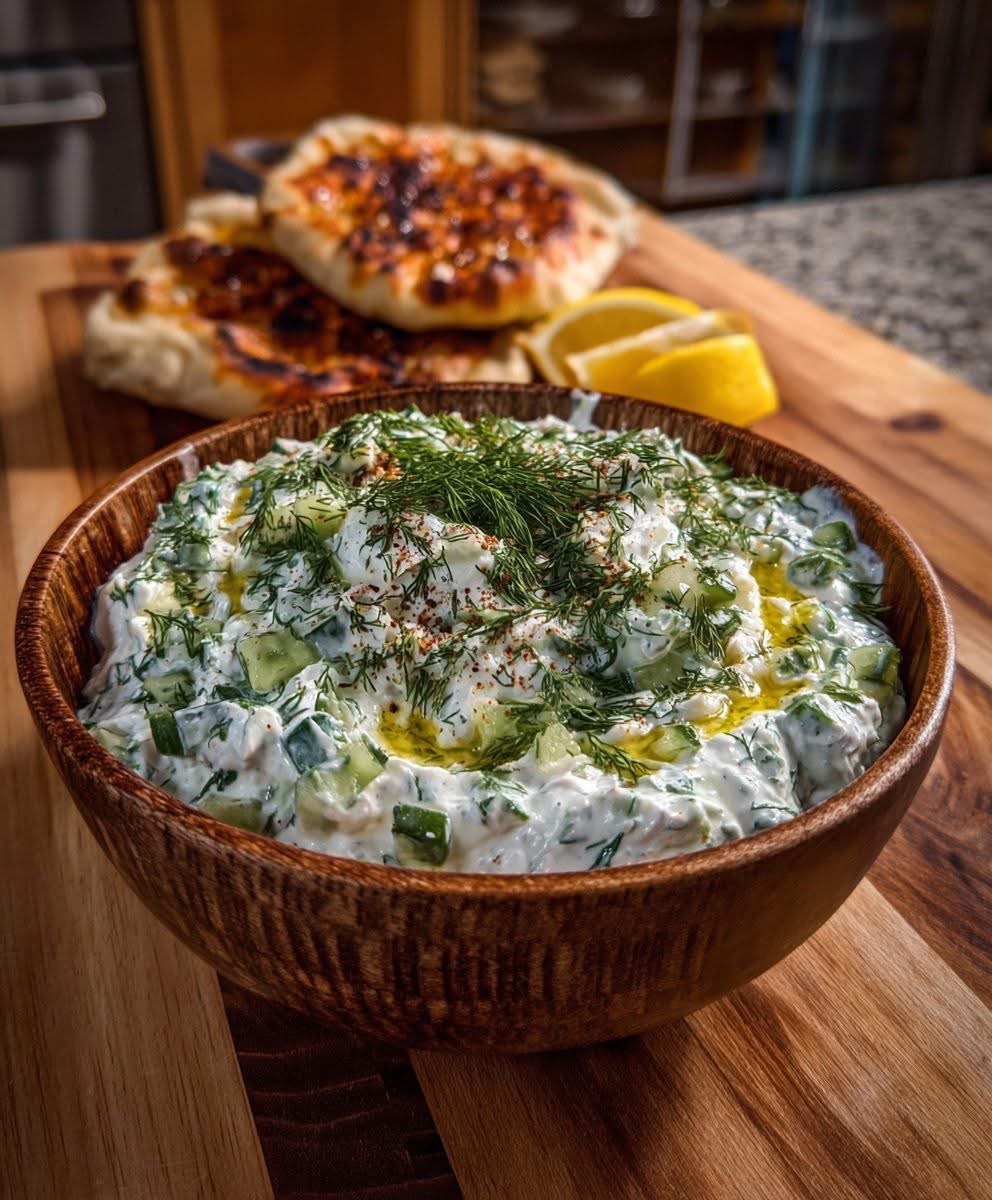
The Ultimate Compendium of Authentic Greek Tzatziki
Tzatziki is a classic Greek condiment made from thick strained yogurt, crisp cucumbers, pungent garlic, high-quality extra virgin olive oil, and fresh herbs.
🏛️ History and Origins
The story of Tzatziki spans thousands of years, weaving together ancient culinary traditions, trade routes, and regional evolution.
Ancient India (Raita) ──► Ottoman Empire (Cacık) ──► Modern Greece (Tzatziki)
Ancient Foundations
The concept of mixing yogurt with herbs and vegetables dates back to ancient civilizations. In ancient India, Raita—a mixture of curd, herbs, and vegetables—was consumed for its cooling properties. Through the expansion of trade routes and the Silk Road, similar dairy-centric culinary practices traveled westward into the Persian Empire.
The ancient Greeks consumed a basic food called Oxygala, which translates to “sour milk.” It was a primitive form of yogurt sweetened with honey or mixed with savory herbs.
The Ottoman Influence
During the Ottoman Empire, the dish evolved significantly. The Turkish word Cacık emerged to describe a refreshing liquid dish or soup made of diluted yogurt, chopped cucumbers, and mint. As the Ottoman Empire expanded across the Balkans and the Mediterranean, regional variations began to take shape.
The Greek Refinement
When the dish integrated permanently into Greek culinary identity, home cooks adapted it to reflect local agriculture:
- Strained Yogurt: They swapped thin yogurt for ultra-thick, rich strained sheep or goat milk yogurt.
- Olive Oil: Heavy usage of premium local extra virgin olive oil replaced other cooking fats.
- Garlic & Vinegar: They favored a sharp, pungent kick of garlic balanced by red wine vinegar or fresh lemon juice.
- Dill: Fresh dill became a signature herb choice alongside or instead of mint.
This transformation turned a loose, liquid soup into a thick, spreadable, globally beloved mezze staple known today as Tzatziki.
🔬 Culinary Formation and Science
Tzatziki relies on a delicate balance of emulsion, moisture extraction, and flavor infusion. Understanding the food science behind it ensures perfect results every time.
+--------------------------------------------------------------+

|                    THE SCIENCE OF TZATZIKI                   |
+--------------------------------------------------------------+

|  [Strained Yogurt]        [Salted Cucumber]       [Garlic]   |
|         │                        │                    │      |
|   Thick Matrix             Removes Water        Allicin Kick |
|         │                        │                    │      |
|         └───────────────┬────────┘                    │      |
|                         ▼                             ▼      |
|                  Emulsified Base ──────────────► Peak Flavor  |
+--------------------------------------------------------------+
1. The Yogurt Matrix (Syneresis Prevention)
Standard yogurt contains a high percentage of whey (liquid). If you use unstrained yogurt, the salt in the recipe will draw even more moisture out, causing the dip to separate into a watery pool—a process called syneresis. Strained Greek yogurt undergoes a filtration process that removes whey, concentrating the proteins (casein) and fats. This creates a stable colloidal matrix capable of holding added ingredients without breaking down.
2. Osmosis in Cucumbers
Cucumbers are roughly 95% water. Mixing raw cucumber directly into yogurt causes immediate watery separation due to osmosis. Salting the grated cucumber creates a high-solute environment on the outside of the vegetable cells. This coaxes internal water out through the cell walls. Squeezing out this water concentrates the cucumber flavor and keeps your dip thick and scoopable for days.
3. Allicin Activation and Mellowing
When garlic cells are crushed, sliced, or grated, an enzyme called alliinase reacts with the amino acid alliin to form allicin. Allicin gives garlic its characteristic sharp, pungent bite.
- In Tzatziki, raw garlic can quickly overpower the dip.
- Allowing the grated garlic to sit directly in the acidic environment of lemon juice, vinegar, or fat-rich olive oil mallows the harsh sulfur compounds.
- This leaves behind a smooth, sweet, and aromatic garlic flavor profiles.
4. Fat-Soluble Flavor Extraction
The essential oils in fresh dill and mint are largely fat-soluble. When you fold these herbs into thick yogurt and extra virgin olive oil, the fat molecules trap the volatile aroma compounds. This creates a richer flavor that deepens over time as the dip rests in the refrigerator.
🛒 Ingredients and Sourcing
Authentic Tzatziki requires high-quality, whole ingredients. Because it is a raw, unheated dip, the quality of each component directly impacts the final taste.
| Ingredient | Role | Sourcing Tips & Substitutions |
|---|---|---|
| Authentic Greek Yogurt | Rich, creamy, tangy base. | Use 5% or 10% full-fat strained Greek yogurt. Avoid “Greek-style” yogurts containing thickeners like cornstarch or gelatin. |
| English or Persian Cucumbers | Crisp texture and clean flavor. | Choose varieties with thin skins and minimal seeds. Standard slicing cucumbers can be used if completely peeled and scooped clean of seeds. |
| Fresh Garlic | Aromatic pungency. | Look for firm cloves with no green sprouts. Avoid pre-minced jarred garlic, which tastes bitter and artificial. |
| Extra Virgin Olive Oil | Smooth mouthfeel and fruity notes. | Use cold-pressed, high-quality Greek extra virgin olive oil. |
| Red Wine Vinegar / Lemon | Bright acidity to balance the fat. | Red wine vinegar provides the most authentic traditional flavor. Fresh lemon juice offers a brighter, citrusy alternative. |
| Fresh Dill or Mint | Herbal freshness. | Use fresh herbs only. Dried herbs turn dusty and lack the bright, volatile oils needed for this raw dip. |
| Sea Salt & Black Pepper | Flavor enhancement and osmosis. | Fine sea salt dissolves evenly. Freshly cracked white or black pepper adds subtle warmth. |
👩🍳 Step-by-Step Instructions
Follow these precise steps to create a flawless, restaurant-quality Greek Tzatziki.
[Grate Cucumber] ──► [Salt & Drain] ──► [Mince Garlic] ──► [Combine & Chill]
Step 1: Prep the Cucumber
- Wash 1 large English cucumber thoroughly.
- Grate the cucumber using the large holes of a box grater. Keep the skin on if using a thin-skinned English cucumber to add vibrant green specks to your dip.
- Place the grated cucumber into a fine-mesh colander set over a bowl.
Step 2: Extract Excess Moisture
- Sprinkle 1 teaspoon of fine sea salt over the grated cucumber. Toss gently to distribute the salt evenly.
- Let the cucumber sit for 15 to 20 minutes. You will see a significant amount of water collect in the bowl below.
- Gather the salted cucumber in a clean kitchen towel or cheesecloth. Wrap it tightly and twist hard to squeeze out every drop of remaining liquid.
Step 3: Mellow the Garlic
- Finely grate or mince 2 to 3 fresh garlic cloves.
- In a small mixing bowl, combine the minced garlic with 1 tablespoon of red wine vinegar (or fresh lemon juice) and 2 tablespoons of extra virgin olive oil.
- Let this mixture rest for 5 minutes to take the raw sting out of the garlic.
Step 4: Mix the Base
- In a large mixing bowl, add 2 cups (500g) of full-fat strained Greek yogurt.
- Add the garlic, oil, and vinegar mixture into the yogurt. Stir thoroughly with a spatula until the oil is fully incorporated and emulsified into the dairy.
Step 5: Incorporate Herbs and Cucumber
- Add the aggressively squeezed, dry grated cucumber to the yogurt base.
- Finely chop 2 tablespoons of fresh dill (discarding the thick stems) and fold it into the mixture.
- Taste the dip. Add a pinch of sea salt or a splash more vinegar if you prefer a sharper tang.
Step 6: The Rest Period (Crucial)
- Cover the bowl tightly with plastic wrap or transfer it to an airtight container.
- Refrigerate for at least 2 hours before serving. This rest allows the flavors to meld, the garlic to distribute, and the texture to firm up.
- Before serving, transfer to a shallow bowl, create a swirl on top with a spoon, and drizzle with a touch more extra virgin olive oil. Garnish with a sprig of fresh dill and a whole Kalamata olive.
🍽️ Serving Methods and Accompaniments
Tzatziki is incredibly versatile. It shifts easily from an appetizer spread component to a condiment for heavy grilled meats.
               ┌──► Mezze Platter (Pita, Olives, Feta)
               ├──► Grilled Meats (Souvlaki, Gyros, Lamb Chops)
TZATZIKI USES ─┼──► Seafood Pairing (Grilled Octopus, Calamari)
               └──► Modern Swaps (Sandwich Spread, Burger Topping)
- The Traditional Mezze Platter: Serve alongside warm, fluffy pita bread, Kalamata olives, stuffed grape leaves (dolmades), marinated feta cheese, and crisp raw vegetables like radishes, bell peppers, and carrots.
- The Ultimate Meat Condiment: It is the essential pairing for Greek Souvlaki (skewered grilled pork or chicken) and Gyros. The cooling yogurt cuts beautifully through the rich fats of charred meats like lamb chops and grilled ribeyes.
- Seafood Enhancer: Dollop over grilled octopus, pan-seared sea bass, or crispy fried calamari. The acidity balances the natural sweetness of fresh seafood.
- Modern Culinary Swaps: Use Tzatziki as a lower-calorie alternative to mayonnaise on turkey sandwiches, as a burger topping, or thinned out with a splash of water and olive oil as a creamy salad dressing.
🩺 Health Benefits and Nutrition
Tzatziki is as nutritious as it is delicious. It fits cleanly into a wholesome Mediterranean diet.
Nutritional Breakdown (Per 100g Serving)
- Calories: ~115 kcal
- Protein: 6g
- Carbohydrates: 3.5g (primarily from natural milk sugars)
- Fats: 8.5g (largely healthy monounsaturated fats from olive oil)
- Calcium: 12% of the Daily Value (DV)
- Sodium: ~280mg (adjustable based on salting preferences)
Key Health Benefits
- Gut Health and Digestion: High-quality fermented Greek yogurt contains live and active probiotic cultures. These support a balanced gut microbiome, optimizing digestion and strengthening immune function.
- Muscle Recovery & Satiety: Concentrated strained yogurt provides high-quality protein containing all essential amino acids. This promotes fullness and aids muscle repair after exercise.
- Heart-Healthy Fats: Extra virgin olive oil delivers powerful monounsaturated fatty acids (like oleic acid) and polyphenols. These combat systemic inflammation and help manage healthy cholesterol levels.
- Hydration and Micronutrients: Cucumber introduces hydrating minerals, while raw garlic delivers powerful antimicrobial and antioxidant properties via its active allicin content.
❤️ Why Tzatziki Lovers Adore This Dish
Tzatziki enjoys a passionate global fan base for several distinct reasons:
- The Temperature Contrast: The pairing of cold, creamy dairy with hot, charred, smoky meats creates a sensory contrast that enhances the enjoyment of grilled foods.
- Guilt-Free Indulgence: Unlike mayonnaise or sour-cream-based dips, Tzatziki offers a rich, velvety texture without high amounts of saturated fats or heavy calories.
- Culinary Simplicity: It showcases how simple ingredients can transform into a complex, satisfying sauce through smart preparation techniques like salting and resting.
🏁 Conclusion
Tzatziki is more than a simple cucumber dip; it is a foundational pillar of Mediterranean cuisine. By selecting authentic ingredients, drawing out excess moisture from your cucumbers, and allowing the raw garlic to mellow in acid and fat, you unlock a restaurant-quality sauce right at home.
Whether you dip warm pita into it, slather it over charred souvlaki, or use it to brighten up a weekday sandwich, mastering this recipe brings a refreshing taste of Greece directly to your kitchen.
If you want to tailor this further, let me know:
- Would you like to scale this recipe for a large party or gathering?
- Do you need vegan or dairy-free adjustments?
- Are you looking for specific Greek main courses to pair with it?