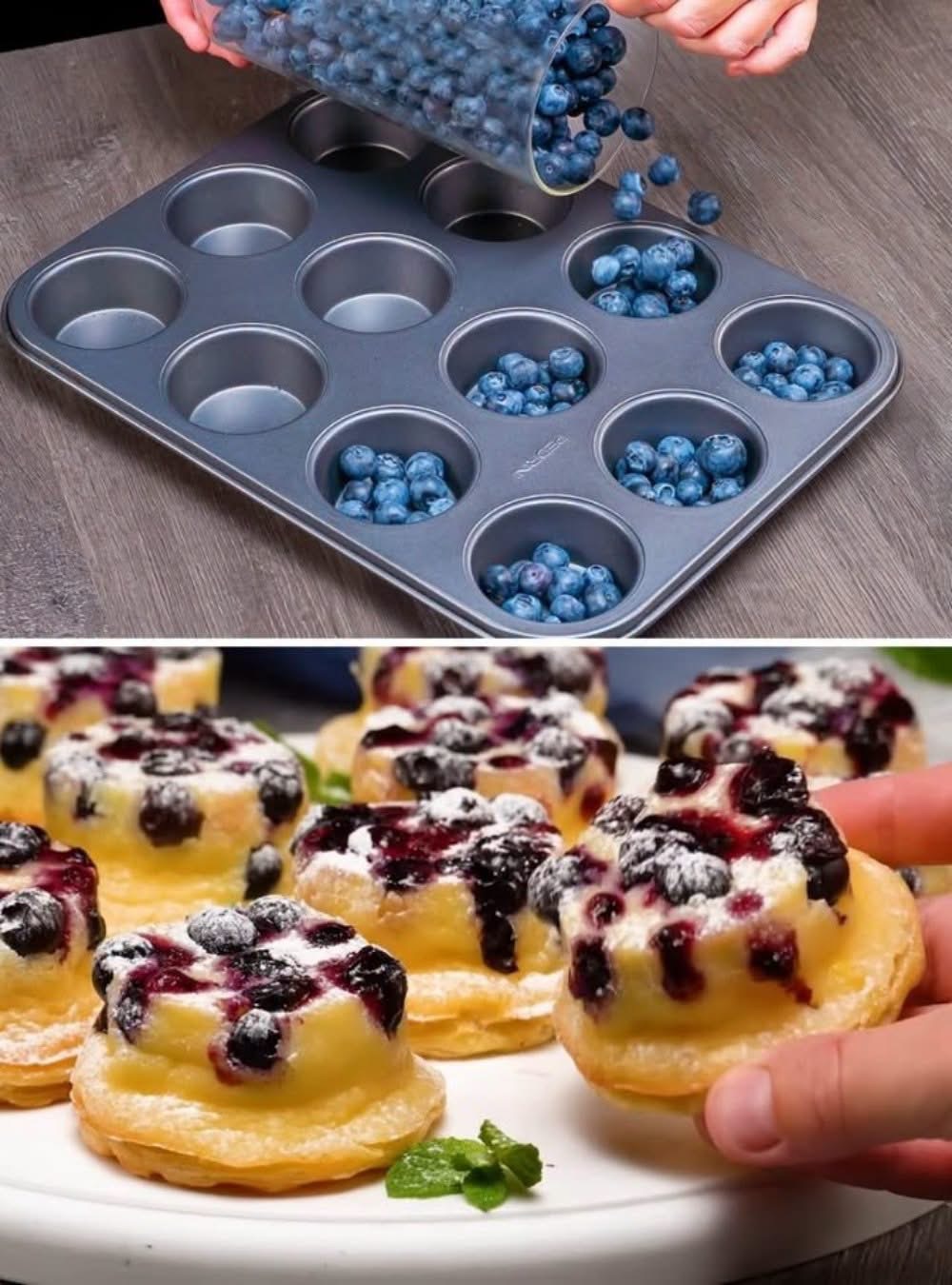
The Masterclass Guide to the Ultimate Chef-Level Blueberry Puff Pastry
1. Introduction
Pastry arts represent the intersection of rigorous scientific engineering and pure visual poetry. Among the wide array of classic desserts, few combinations can rival the contrast of golden, buttery puff pastry layers paired with the vibrant acidity of fresh wild blueberries.
This comprehensive masterclass guide delivers a restaurant-grade blueprint for constructing the ultimate Blueberry Puff Pastry Mille-Feuille Tart. This specific technique relies heavily on professional-grade methods taught in elite pastry schools globally. It optimizes moisture control, maximizes structural crispness, and balances sweetness with natural botanical elements. Whether you are an ambitious home baker or a seasoned cook, understanding the mechanics of dough lamination and fruit gelation will completely transform your approach to dessert composition.
2. History of Lamination and Fruit Tarts
The origin story of puff pastry (pâte feuilletée) is a journey through centuries of culinary evolution. While early variations of layered dough can be traced back to the ancient Middle East—where paper-thin sheets of phyllo dough were layered with honey and nuts—the modern technique of lamination was truly refined in Western Europe.
Legend attributes the discovery of true puff pastry to the French painter and apprentice cook Claude Lorrain in the 17th century. As the story goes, Lorrain was attempting to bake a highly enriched bread for his sick father. He folded cold butter directly into a flour dough, creating a crude structural prototype of lamination.
[Flour Water Dough (Détrempe)] + [Solid Butter Block (Beurrage)]
              │
              ▼
   [Repeated Folding & Rolling]
              │
              ▼
  [Hundreds of Micro-Layers] ──(Oven Heat)──> [Steam Expansion / Flaky Rise]
Later, iconic chefs like Marie-Antoine Carême codified the precise mathematical system of geometric folds (turns). Carême’s system creates hundreds of micro-thin, distinct layers of fat and dough. When hit with high heat, the moisture inside the dough turns to steam. This forces the individual layers upward while frying them in the surrounding butter.
Pairing this complex, architectural crust with fresh fruit like blueberries represents the historical union of rustic orchard harvesting and royal court confectionery. Blueberries, native to North America, were historically used by indigenous tribes in savory pemmicans and sun-dried cakes. When European lamination principles met the abundance of sweet, deeply pigmented wild berries, it birthed a timeless dessert family celebrated for its sensory balance.
3. Formation and Architectural Principles
Achieving the perfect pastry rise depends heavily on fundamental chemical reactions. The architectural framework relies on three separate components:
┌─────────────────────────────────────────────────────────────┐
│             THE BLUEBERRY PUFF PASTRY STRUCTURE             │
├─────────────────────────────────────────────────────────────┤
│  Top Crust: Crisp Flaky Lamination with Caramelized Sugar   │
├─────────────────────────────────────────────────────────────┤
│  Middle: Wild Blueberry Compote + Velvety Pastry Cream      │
├─────────────────────────────────────────────────────────────┤
│  Base Crust: Blind-Baked, Docked Puff Pastry Foundation     │
└─────────────────────────────────────────────────────────────┘
- Détrempe & Beurrage Integration: The base dough must have gluten developed just enough to hold the butter layers without snapping. The fat must match the exact pliability and temperature of the dough. If the butter is too cold, it will break through the layers. If it is too warm, it will melt into the flour and ruin the flaky structure.
- Gelation and Moisture Barriers: Fresh blueberries contain high amounts of water. Placing raw fruit directly onto unbaked puff pastry releases juices that turn the crust soggy. The professional technique uses a double moisture defense:
- A concentrated, low-moisture blueberry compote stabilized with precise amounts of starch or pectin.
- A thin barrier layer of white chocolate or a baked almond cream cushion (frangipane) applied directly to the baked puff pastry sheet.
- Maillard Reaction & Caramelization: The deep golden exterior color is achieved by breaking down carbohydrates and amino acids under intense dry heat. Egg washes combined with a dusting of fine powdered sugar during the final minutes of baking create an ultra-crisp, glass-like caramelized top crust.
4. Complete Ingredients Profile
To ensure perfection, ingredients should be measured accurately by weight using a digital kitchen scale.
The Laminated Puff Pastry Base
- All-Purpose Flour (11.5% Protein): 250 grams
- Unsalted European-Style Butter (82%+ Fat, for the dough): 50 grams
- Unsalted European-Style Butter (for the lamination block): 200 grams
- Ice-Cold Water: 125 milliliters
- Fine Sea Salt: 5 grams
The Pastry Chef’s Blueberry Compote Insert
- Fresh Wild Blueberries (or Premium Cultivated): 400 grams
- Granulated White Sugar: 80 grams
- Freshly Squeezed Lemon Juice: 15 milliliters
- Meyer Lemon Zest: 1 whole lemon
- Cornstarch (Arrowroot or Apple Pectin can substitute): 12 grams
- Cold Water (to dissolve starch): 20 milliliters
- Pure Vanilla Bean Paste: 5 grams
The Velvet Crème Pâtissière (Pastry Cream)
- Whole Milk (3.5% Fat): 500 milliliters
- Egg Yolks (Large, Fresh): 100 grams (approx. 5-6 yolks)
- Granulated White Sugar: 100 grams
- Cornstarch: 40 grams
- Unsalted Butter (Cold, cubed): 50 grams
- Vanilla Bean Pod (Scraped): 1 whole pod
Assembly and Garnish Finishes
- Egg Wash: 1 egg yolk whisked with 10 milliliters of heavy cream
- Powdered Sugar (for caramelization dusting): 30 grams
- Fresh Blueberries (reserved for topping): 150 grams
- Fresh Mint Leaves: Small handful for plating decoration
5. Precise Technical Instructions
Follow these steps carefully to ensure your pastry layers rise correctly and maintain their crisp texture.
Phase 1: Creating the Dough and Butter Block
- Prepare the Détrempe: Mix 250g of flour and 5g of salt in a large bowl. Rub in 50g of softened butter with your fingertips until it forms a sandy texture. Slowly add the ice water, mixing just until a rough dough forms. Shape into a flat disk, wrap tightly in plastic wrap, and chill for 60 minutes.
- Form the Beurrage: Place 200g of cold lamination butter between two large sheets of parchment paper. Use a rolling pin to pound the butter into a flat 15×15 cm square. Ensure the thickness is completely uniform. Place the butter block into the refrigerator for 20 minutes to firm up slightly. It must remain pliable, not rock hard.
Phase 2: Mastering the Lamination Turns
- The Envelope Enclosure: Roll your chilled dough into a 22×22 cm square on a lightly floured surface. Place the pliable butter block diagonally in the middle of the dough. Fold the corners of the dough over the butter so they meet in the center, sealing the seams completely.
- The First Double Turn (Book Fold): Roll the dough package out into a long rectangle roughly 60×20 cm. Fold both short ends inward so they meet exactly in the center line. Fold the dough in half again, closing it like a book. This creates four distinct layers of fat. Wrap and chill for 30 minutes.
       [--- RECTANGLE OF LAMINATED DOUGH ---]
       │                                   │
       ▼ (Fold Outer Ends to Center)       ▼
       [====]                         [====]
          │                             │
          └───────► [== CLOSED ==] ◄────┘
              (Fold in half like a book)
- The Second Single Turn (Letter Fold): Roll the rested dough out again into a 60×20 cm rectangle. Fold one-third of the dough over the middle third, then fold the remaining third over the top, just like a business letter. Wrap and rest in the refrigerator for at least 45 minutes. Repeat this process one more time to achieve hundreds of crisp, flaky layers.
Phase 3: Cooking the Blueberry Compote and Pastry Cream
- Simmer the Berry Compote: Combine 400g of blueberries, 80g of sugar, lemon juice, and zest in a non-reactive saucepan. Heat over medium until the berries begin to break down and release their natural juices. Slurry the cornstarch with 20ml of cold water and pour it into the boiling berries. Whisk constantly for 2 minutes as the mixture thickens into a glossy gel. Stir in the vanilla paste, remove from heat, and let it cool completely.
- Whisk the Pastry Cream: Bring 500ml of whole milk and the scraped vanilla bean seeds to a simmer over medium heat. In a separate bowl, whisk 100g of egg yolks, 100g of sugar, and 40g of cornstarch until pale. Slowly temper the hot milk into the egg mixture while whisking constantly. Return the mixture to the saucepan and boil for 2 minutes, stirring vigorously until thick and glossy. Remove from heat and whisk in 50g of cold cubed butter. Pour onto a shallow tray, cover with plastic wrap pressed directly against the surface, and chill.
Phase 4: Shaping, Baking, and Caramelization
- Preheat and Roll: Set your oven to 200°C (392°F). Roll out the finished puff pastry dough to a uniform thickness of 3 millimeters. Cut the dough sheet into clean rectangular strips (12×4 cm) using a sharp chef’s knife or a pastry wheel. Avoid dragging the blade, which can squash the open laminated edges.
- Dock and Weighted Bake: Place the pastry rectangles onto a baking sheet lined with parchment paper. Dock the dough thoroughly with a fork to prevent uneven ballooning. Place another sheet of parchment paper over the pastry, and top with a second heavy baking sheet to weigh it down. Bake for 20 minutes under the weight. Remove the top baking tray, brush with egg wash, dust lightly with powdered sugar, and bake for another 5 to 7 minutes at 210°C (410°F) until beautifully caramelized.
6. Culinary Methods and Techniques
The success of this recipe relies on mastering a few key culinary techniques:
Temperature Syncing
The dough and the butter block must be kept at the exact same temperature throughout the entire lamination process. If the dough gets too warm, the butter layers will melt into the flour, turning your pastry into a standard pie dough. If you notice the dough resisting or shrinking while rolling, stop immediately, wrap it up, and let it rest in the fridge for 20 minutes to relax the gluten.
Docking and Compression Cooking
Baking puff pastry underneath a weighted second sheet pan is a secret technique used by professional pastry chefs to create the perfect mille-feuille. It limits the vertical rise, resulting in a compressed, ultra-crisp pastry shell with a beautifully uniform flake. This ensures the base remains sturdy enough to hold the moist fillings without breaking apart when bitten.
7. Nutritional Architecture Profile
This pastry is a rich, decadent treat meant to be enjoyed as an occasional indulgence. The table below outlines the estimated nutritional values for a single gourmet serving (approximately 135 grams).
| Nutrient Component | Value Per Serving | Daily Value Percentage (DV%) |
|---|---|---|
| Total Energy Calories | 420 kcal | 21% |
| Total Macronutrient Fat | 24 g | 31% |
| Saturated Fat Content | 14 g | 70% |
| Monounsaturated Fats | 7 g | N/A |
| Cholesterol Level | 115 mg | 38% |
| Sodium Content | 190 mg | 8% |
| Total Carbohydrates | 46 g | 17% |
| Dietary Fiber | 3 g | 11% |
| Total Natural & Added Sugars | 22 g | 44% |
| Protein Content | 6 g | 12% |
| Vitamin C Content | 8 mg | 9% |
| Calcium Percentage | 70 mg | 5% |
| Iron Percentage | 1.8 mg | 10% |
8. Health and Dietary Benefits
While this dessert is rich in butter, its core fruit components offer several excellent health benefits:
- Anthocyanin Density: Blueberries get their deep purple color from powerful antioxidants called anthocyanins. These compounds help combat oxidative stress and support cardiovascular health.
- Brain Health: Regular consumption of wild blueberries is linked to improved cognitive function and memory protection over time.
- Digestive Fiber: The natural fiber found in whole fruits supports a healthy gut microbiome and helps balance sugar absorption.
- Vitamin C Production: Fresh lemon juice and wild berries provide an excellent boost of Vitamin C, supporting immune health and collagen production.
9. For the True Pastry Lovers
This dessert is a true labor of love designed for dedicated pastry enthusiasts. True pastry lovers appreciate the process just as much as the final plate. They find joy in listening to the distinct crackle of crisp pastry layers being sliced with a serrated knife, and marvel at the beautiful contrast between a velvety vanilla cream and the bright pop of fresh berries. It is a sensory experience that rewards patience, precision, and a passion for classic baking techniques.
10. Conclusion
Baking this restaurant-quality blueberry puff pastry is a wonderful way to elevate your dessert skills. By mastering lamination, starch stability, and temperature control, you can transform simple ingredients into a stunning, texturally balanced masterpiece. Follow these professional steps carefully, enjoy the process, and share your beautiful creation with friends and family.
To help you troubleshoot or customize your pastry, tell me:
- Do you plan to make the puff pastry completely from scratch, or use a premium store-bought sheet to save time?
- Would you like any advice on adjusting the fillings to fit gluten-free or dairy-free needs?