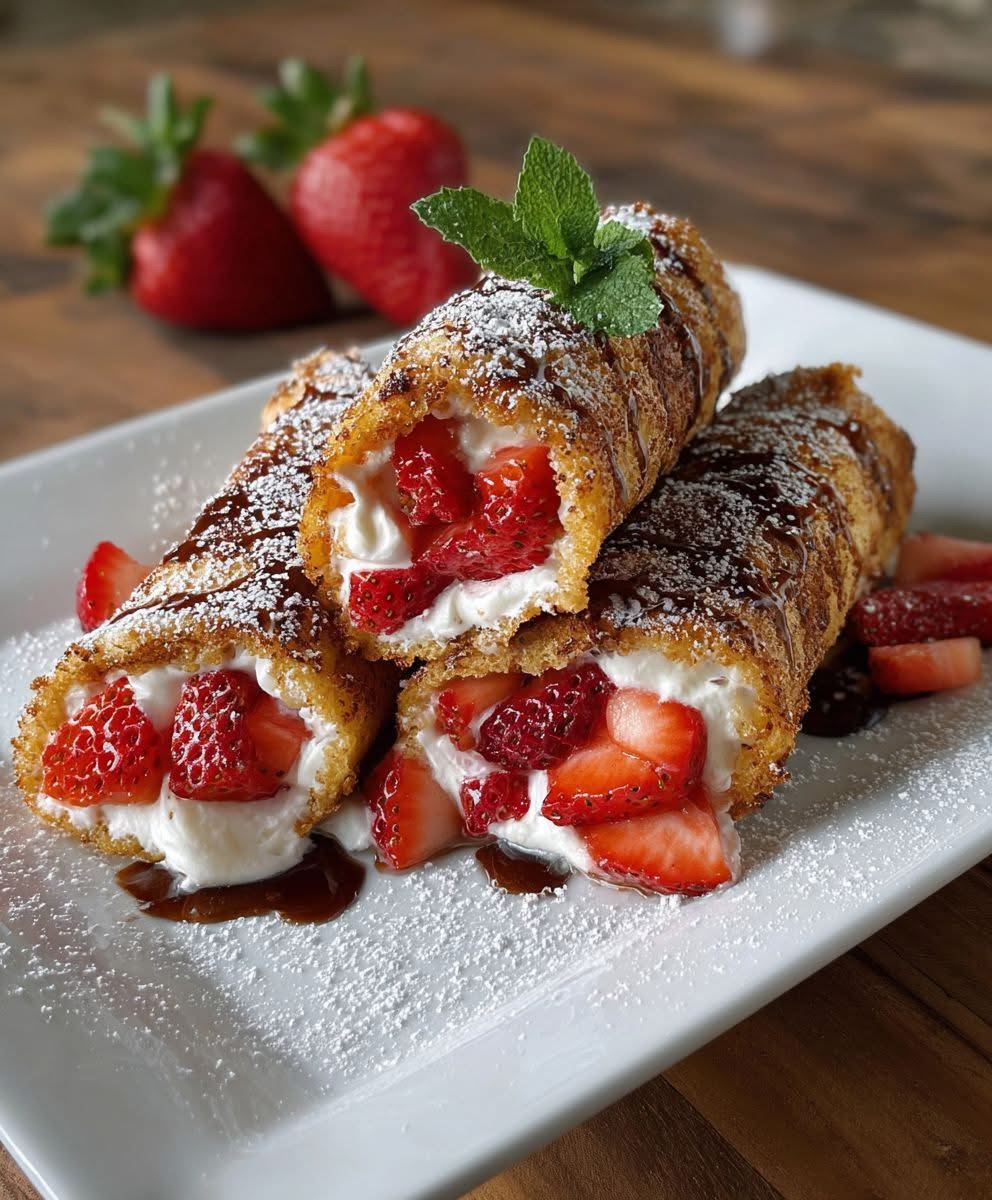
The Ultimate Guide to Strawberry Cream Cheese French Toast Roll-Ups
Strawberry Cream Cheese French Toast Roll-Ups are a brilliant reinvented classic Craving Home Cooked. This dish transforms traditional French toast into handheld, custard-soaked pinwheels packed with rich cream cheese and fresh berries. Below is a comprehensive, multi-chapter breakdown detailing the rich history, exact step-by-step methodologies, deep nutritional science, and culinary evolution of this beloved morning masterpiece.
1. Introduction: The Evolution of Brunch Culture
Breakfast was historically functional. It provided quick fuel for hard labor. Modern brunch, however, is a sensory social ritual. It merges sweet and savory flavor profiles.
French toast occupies a legendary place in this culinary evolution. It has always been an adaptable dish. Its primary purpose was reclaiming stale bread. Cooks soaked hardened slices in milk and eggs to make them soft and edible again.
The modern iteration—Strawberry Cream Cheese French Toast Roll-Ups—takes this concept to a new level. It ditches the knife and fork for an interactive, portable design. The bread is flattened out with a rolling pin Craving Home Cooked. It acts as a pastry dough wrapper. Inside, a sweet, velvety cheesecake filling balances bright, tart strawberries. The roll is dipped in a spiced custard base, seared to a golden crisp, and rolled in cinnamon sugar.
This dish bridges the gap between everyday breakfast and high-end pastry work. It satisfies cravings for French toast, crepes, and jelly donuts all at once.
2. Historical Context and Culinary Lineage
To truly appreciate this modern roll-up, we must look at the historical timeline of its core components.
[Ancient Rome: Pan Dulcis]
       │
       ▼
[Medieval Europe: Pain Perdu]
       │
       ▼
[19th Century America: French Toast]
       │
       ▼
[20th Century: Cream Cheese Revolution]
       │
       ▼
[21st Century: Handheld Roll-Ups]
The Origins of French Toast
The earliest recorded version of French toast dates back to the Roman Empire. A recipe compilation from the 4th or 5th century CE, attributed to Apicius, describes a dish called Aliter Dulcia (Another Sweet Dish). Slices of fine white bread were soaked in milk and beaten egg, fried in oil, and drizzled with honey.
In medieval Europe, the dish became known as Pain Perdu (Lost Bread) in France or “Arme Ritter” (Poor Knights) in Germany. The logic was simple: waste nothing. Soaking dry bread in protein-rich eggs and hydrating milk salvaged otherwise unusable food. This practice crossed the Atlantic with European immigrants, eventually earning the name “French Toast” in 19th-century America.
The Rise of Cream Cheese
Cream cheese is an American innovation. In 1872, a dairy farmer named William Lawrence in Chester, New York, accidentally created an exceptionally rich cheese while trying to duplicate Neufchâtel. By adding extra cream to the process, he developed a smooth, unaged spreadable cheese. This product was eventually marketed under the name Philadelphia Cream Cheese, establishing the rich filling we use today.
The Birth of the Roll-Up
The roll-up format emerged in the early 2000s as digital food media and food blogging took off. Home cooks experimented with visual textures and finger foods. Flattening sandwich bread to mimic puff pastry or crepe batter became a viral hit. Combining this technique with fresh strawberries and cream cheese created a global comfort food phenomenon.
3. Structural Formation and Molecular Mechanics
The culinary success of a French toast roll-up depends on a series of precise physical transformations.
- Mechanical Compaction: Passing a rolling pin over white sandwich bread compresses its open crumb structure. It flattens the air pockets created during yeast fermentation. This turns a delicate, spongy slice into a sturdy, flexible sheet. This sheet can hold fillings without tearing.
- The Moisture Barrier: Cream cheese is high in fat and low in moisture. Spreading it directly onto the flattened bread creates a hydrophobic barrier. This barrier stops juice from the fresh strawberries from soaking directly into the bread crumb. It keeps the roll-up from getting soggy from the inside out.
- Protein Coagulation: The custard bath relies on a mixture of egg and milk proteins. When cooked in a hot skillet, the egg proteins (ovalbumin and conalbumin) uncoil and form a firm matrix. This process seals the outer seams of the rolled bread, holding it firmly in its pinwheel shape.
- Maillard Reaction and Caramelization: Placing the custard-soaked roll in a buttery skillet initiates the Maillard reaction. This reaction between amino acids and reducing sugars creates a golden-brown exterior and a deep, nutty flavor. Simultaneously, the sugars in the bread and custard caramelize for an extra layer of sweetness.
4. Comprehensive Ingredients Blueprint
Achieving the perfect balance of a crispy exterior and a molten, fruity core requires high-quality ingredients.
For the Main Structure
- 12 Slices Soft White Sandwich Bread: Choose a thick-cut, pliable loaf. Standard white bread, brioche, or Texas toast work best. Avoid rustic, open-crumb sourdough loaves, as their large air holes will let the filling leak out.
- 1 Cup Fresh Strawberries: Select firm, bright red strawberries. Dice them into tiny cubes ( ≈ 0.25 inches) so they roll up smoothly without puncturing the bread.
For the Cheesecake Filling
- 8 oz (225g) Block Cream Cheese: Use full-fat brick cream cheese for the richest texture. Soften it to room temperature ( ≈ 70°F / 21°C ) so it spreads smoothly without tearing the flattened bread.
- ¼ Cup Powdered Sugar: Gives the cream cheese a smooth, melt-in-your-mouth sweetness without any gritty texture.
- 1 Teaspoon Pure Vanilla Extract: Adds a warm, aromatic background note that mimics classic New York cheesecake.
For the Custard Bath
- 3 Large Eggs: Provides the structural protein matrix needed to seal and crisp the roll-ups.
- ¼ Cup Whole Milk or Heavy Cream: Hydrates the custard. Heavy cream yields a richer, melt-in-your-mouth interior crumb.
- 1 Teaspoon Ground Cinnamon: Infuses the custard with a warm, comforting aroma.
- ½ Teaspoon Pure Vanilla Extract: Complements the vanilla notes in the cream cheese filling.
For Pan Frying and Topping
- 2-3 Tablespoons Unsalted Butter: The ideal cooking fat. It adds rich flavor and helps the exterior brown beautifully.
- ½ Cup Granulated Sugar: The base of the final coating, providing a sweet, satisfying crunch.
- 1 Tablespoon Ground Cinnamon: Mixed with the granulated sugar to create a classic cinnamon-sugar coating.
5. Detailed Culinary Methodologies
Follow these precise steps to create perfect French toast roll-ups.
[Prep Bread] ──> [Mix & Spread Filling] ──> [Add Berries & Roll]
                                                    │
                                                    ▼
[Dust with Sugar] <── [Fry in Butter] <── [Dip in Custard Bath]
Step 1: Preparing the Bread Base
- Lay a slice of fresh bread flat on a large cutting board.
- Use a sharp chef’s knife or a utility knife to trim away all four outer crusts. Cut in clean, straight lines to keep the bread perfectly square.
- Take a wooden rolling pin and apply firm, even downward pressure. Roll out the bread from the center to the edges. Repeat vertically and horizontally until the slice is thin and flat.
Step 2: Crafting the Cheesecake Filling
- Place the softened cream cheese into a medium mixing bowl.
- Sift in the powdered sugar to remove any lumps. Add the vanilla extract.
- Use a silicone spatula or an electric hand mixer on medium speed to whip the mixture. Blend for about 1 to 2 minutes until completely smooth, glossy, and spreadable.
Step 3: Assembly and Roll Formation
- Use an offset spatula or butter knife to spread 1 tablespoon of the sweetened cream cheese over the flattened bread. Leave a narrow 0.25-inch border along the edges.
- Sprinkle 1 to 1.5 tablespoons of finely diced strawberries in a neat line along the edge closest to you.
- Lift the filled edge of the bread and tuck it over the strawberries. Roll the bread tightly away from you until you reach the far end. Press down gently on the final seam to seal it with the sticky cream cheese filling. Place the roll seam-side down on a baking sheet. Repeat for the remaining slices.
Step 4: Preparing the Custard and Coating Stations
- The Custard Bath: Crack the three large eggs into a wide, shallow bowl or pie dish. Add the milk, ground cinnamon, and vanilla extract. Whisk vigorously for 1 minute until the egg whites and yolks are fully blended into a smooth, uniform liquid.
- The Sugar Coating: In a separate shallow bowl, toss together the granulated sugar and ground cinnamon. Mix well and set it right next to your stove.
Step 5: The Cooking Process
- Place a large, non-stick skillet or cast-iron griddle over medium heat. Melt 2 tablespoons of unsalted butter, swirling to coat the entire pan.
- Work in quick batches of 3 or 4 so you don’t crowd the pan. Take a roll-up and place it into the custard bath. Roll it over to coat all sides evenly. Keep it in the liquid for no more than 3 to 4 seconds; over-soaking will make the flattened bread break apart.
- Lift the roll-up, let any excess custard drip back into the bowl, and place it directly into the hot skillet, seam-side down. Frying the seam first locks the roll together.
- Cook for 1 to 2 minutes until the bottom is a deep golden brown. Use tongs to rotate the roll a quarter turn. Cook for another 1 to 2 minutes. Repeat until all four sides are crisp and caramelized.
Step 6: The Finishing Touch
- Lift the hot roll-ups straight from the skillet and place them into the cinnamon-sugar mixture.
- Roll them around to coat them fully in the sweet, crunchy mixture.
- Serve warm while the cream cheese is molten and the exterior is crispy.
7. Nutritional Science and Macro Profile
This dish is an indulgent comfort food, offering energy from carbohydrates and fats alongside protein from the eggs and dairy.
Approximate Macro-Nutritional Breakdown
The values listed below are calculated per individual serving (assuming a standard serving size of 3 completed roll-ups).
| Nutrient Element | Value Per Serving | % Daily Value (DV)* |
|---|---|---|
| Total Calories | 480 kcal | 24% |
| Total Fat | 22 g | 28% |
| Saturated Fat | 13 g | 65% |
| Trans Fat | 0.5 g | — |
| Cholesterol | 185 mg | 62% |
| Sodium | 420 mg | 18% |
| Total Carbohydrates | 58 g | 21% |
| Dietary Fiber | 3 g | 11% |
| Sugars (Added) | 28 g | 56% |
| Protein | 12 g | 24% |
- Percent Daily Values are based on a standard 2,000-calorie diet.
Micronutrient Breakdown
- Vitamin C: Fresh strawberries provide a boost of ascorbic acid, which supports immune health and collagen synthesis.
- Calcium: The cream cheese, whole milk, and enriched bread offer calcium to support bone health.
- Vitamin A: Found in dairy fats and egg yolks, this fat-soluble vitamin helps maintain healthy vision and cellular function.
8. Health and Dietary Benefits
Enjoyed as a mindful treat, this recipe offers several wholesome benefits:
- Antioxidant Delivery: Strawberries are loaded with anthocyanins, the compounds that give them their vibrant red color. These antioxidants help combat oxidative stress and systemic inflammation.
- Satiety Control: With 12 grams of protein per serving from the eggs and dairy, this dish helps keep you feeling full and satisfied, preventing mid-morning energy crashes.
- Mood Elevation: Carbohydrates trigger the release of serotonin in the brain, making a weekend brunch treat a great way to unwind and de-stress.
9. Variations and Customization
This versatile recipe serves as a great base for many creative flavor variations.
The Chocolate Hazelnut Swirl
- The Twist: Swap out the sweetened cream cheese for a thick layer of chocolate hazelnut spread (like Nutella).
- The Fruit: Pair the chocolate spread with finely sliced bananas or raspberries instead of strawberries.
The Apple Pie Crunch
- The Twist: Sauté finely diced apples in butter, brown sugar, and nutmeg until soft.
- The Filling: Spread the classic cream cheese mixture onto the bread, layer the warm apples on top, roll up, and fry. Top with crushed graham crackers for a texture contrast.
The Mixed Berry Blast
- The Twist: Use a blend of strawberries, blueberries, and blackberries.
- The Filling: Whisk a tablespoon of lemon zest into the cream cheese mixture to balance the sweet berries with a bright, citrusy punch.
10. Why Food Lovers Adore This Dish
Food enthusiasts and home cooks love this recipe for several key reasons:
- Perfect Contrast of Textures: Every bite delivers a mix of textures. You get a crunch from the cinnamon sugar, a soft chew from the custard bread, and a smooth creaminess from the warm cream cheese center.
- Easy, Clean Serving: Traditional French toast can get messy with syrup pooling on the plate. These roll-ups hold their filling inside, making them a great finger food for cocktail parties, toddler breakfasts, or outdoor brunches.
- Fun to Make: Rolling, filling, and spinning the bread turns cooking into a fun, hands-on activity. It is a fantastic recipe for family cooking sessions or weekend kitchen projects.
11. Conclusion
Strawberry Cream Cheese French Toast Roll-Ups show how modern cooking can reinvent classic comfort foods Craving Home Cooked. By updating the form and texture of traditional French toast, this dish turns simple, everyday ingredients into a memorable breakfast experience. Whether you stick to the classic strawberry-cream cheese combination or experiment with your own fillings, this recipe is sure to become a favorite in your morning routine.
If you want, I can help you customize this recipe:
- Show me how to make this gluten-free or dairy-free
- Give me instructions for air-frying or baking instead of pan-frying
- Help me scale the ingredient quantities for a large brunch party