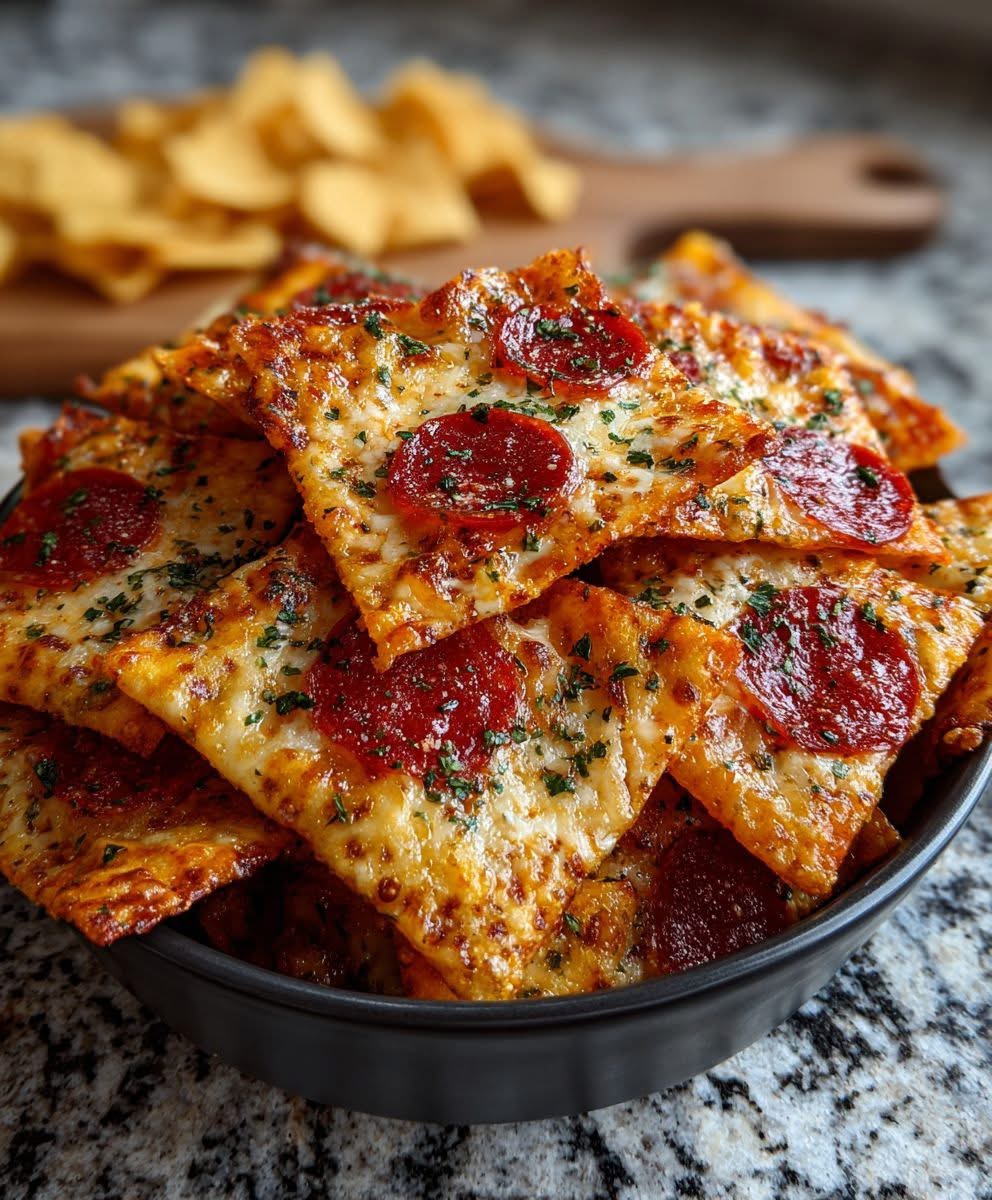
The Ultimate Guide to Pizza Chips
Pizza Chips are an innovative, low-carb, high-protein alternative to traditional pizza that delivers all the rich flavors of a classic pepperoni pie in a single, bite-sized crunch. By utilizing premium cheese as the foundational structural base instead of carbohydrate-dense wheat flour dough, this culinary creation provides a gluten-free solution for snack enthusiasts. This comprehensive guide covers everything from deep-rooted historical context to meticulous formulation techniques, enabling you to master this dish perfectly.
Introduction
Modern culinary arts are defined by functional reimagining. The universal craving for pizza—characterized by the interplay of acidic tomato sauce, rich lipids from melted cheese, and the savory spice of cured meats—often clashes with contemporary dietary lifestyles such as the ketogenic (keto), low-carbohydrate, or gluten-free regimens. Pizza Chipsbridge this gap efficiently.
By manipulating the physical and chemical changes that happen when cheese is baked, you can turn shredded cheese into a sturdy, crunchy canvas. This chip holds toppings securely without getting soggy. This guide delivers a precise, reliable recipe alongside a deep culinary dive into the history, nutrition, science, and sensory appeal of Pizza Chips.
Ingredients
To achieve the ideal balance of a crispy texture and rich flavor, selecting the right ingredients is critical. The ingredients below are scaled to yield approximately 4 servings (24 individual pizza chips).
The Structural Base
- 1.5 cups (approx. 170g) Low-Moisture, Part-Skim Mozzarella Cheese (Shredded fine)
- 0.5 cups (approx. 50g) Aged Parmesan Cheese or Aged Cheddar Cheese (Finely grated to enhance structural rigidity)
The Savory Toppings
- 24 to 48 slices Mini Pepperoni (Alternatively, standard pepperoni slices cut into quarters)
- 1.5 teaspoons Italian Seasoning blend (Comprising dried oregano, basil, thyme, rosemary, and garlic powder)
- 0.25 teaspoons Red Pepper Flakes (Optional, for an authentic pizzeria heat)
The Dipping Accompaniment
- 0.5 cups (approx. 120ml) Premium Marinara or Pizza Sauce (Warm, containing less than 3g of net carbohydrates per serving, with no added sugars)
Instructions
Follow these exact steps to ensure your cheese chips crisp up evenly without burning or sticking to the pan.
- Preheat and Prepare: Preheat your conventional oven to 400°F (205°C) or your convection oven to 375°F (190°C). Line a heavy-duty rimmed baking sheet with high-quality, non-stick silicone baking mats or premium parchment paper.
- Blend the Base: In a dry mixing bowl, thoroughly combine the finely shredded low-moisture mozzarella and the finely grated Parmesan cheese. This ensures an even distribution of moisture and fat contents across all portions.
- Portion the Mounds: Drop the cheese mixture by level tablespoons onto the prepared baking sheet, leaving at least 2 inches of space between each mound. This spacing allows the cheese room to spread out and crisp up properly without melting into one giant sheet. Flatten each mound slightly with the back of a spoon to create flat, uniform disks roughly 2 inches in diameter.
- Season the Base: Dust the top of each cheese disk evenly with the Italian seasoning blend and optional red pepper flakes. Applying seasonings directly to the raw cheese ensures they bond firmly to the melted fat during baking.
- Apply the Toppings: Press 1 to 2 mini pepperoni slices firmly into the center of each seasoned cheese mound. Pressing down slightly prevents the pepperoni from curling too much or separating from the chip due to steam.
- Execute the Bake: Place the baking sheet on the center rack of your preheated oven. Bake for 8 to 10 minutes. Watch the process closely after 7 minutes: the cheese will bubble vigorously, the edges will turn a deep golden brown, and the centers will transform from translucent to an opaque, matte finish.
- Cool and Crisp: Remove the baking sheet from the oven. Let the chips sit undisturbed on the hot sheet for 3 to 5 minutes. During this crucial cooling phase, the proteins solidify as the temperature drops, turning the soft, melted cheese into a rigid, crunchy chip.
- De-oil and Serve: Gently lift each pizza chip using an offset spatula and transfer them to a wire cooling rack lined with paper towels. Dab the tops lightly with a clean paper towel to absorb any excess surface oils released by the pepperoni and cheese. Serve alongside a bowl of warm, low-carb marinara sauce for dipping.
Methods of Preparation
While the standard oven method yields excellent results, you can use other cooking appliances to suit different schedules, quantities, or crispness preferences.
1. Convection Oven / Air Fryer Method
The air fryer uses intense, circulating hot air to remove surface moisture quickly, making it an excellent tool for maximizing crunch.
- Setup: Line your air fryer basket with a fitted piece of perforated parchment paper designed specifically for air fryers.
- Assembly: Arrange the cheese mounds in a single layer, ensuring they do not touch. Top with seasonings and mini pepperoni.
- Cooking Parameters: Set the air fryer to 375°F (190°C) and cook for 5 to 7 minutes. Because the fan generates high airflow, check the basket at the 3-minute mark to ensure the pepperoni slices haven’t blown off the cheese base.
2. Microwave Fast-Track Method
When time is limited, a microwave can quickly dehydrate cheese to create a crisp snack in minutes.
- Setup: Place a sheet of heavy-duty parchment paper directly onto the rotating glass microwave turntable plate.
- Assembly: Space out 4 to 6 mounds of the cheese blend, topping each with a mini pepperoni slice.
- Cooking Parameters: Microwave on high power (1000 watts) for 60 to 90 seconds. The cheese will expand, bubble, and then flatten out. Let them cool completely for 2 minutes directly on the parchment paper to crisp up before removing.
3. Cast-Iron Skillet Method
This stovetop technique creates a rustic, deeply caramelized crust reminiscent of a Detroit-style deep-dish pizza edge.
- Setup: Heat a well-seasoned 12-inch cast-iron skillet over medium-low heat until it reaches an even temperature.
- Assembly: Place small mounds of the cheese mixture directly onto the ungreased skillet surface.
- Cooking Parameters: Allow the cheese to melt completely and form a bubbling disk. Once the bottom forms a dark golden crust (about 4 minutes), place the pepperoni on top, gently flip the chip over with a thin spatula, and sear the pepperoni side for 30 to 45 seconds. Remove and drain on paper towels.
History and Culinary Evolution
The history of the Pizza Chip sits at the intersection of traditional Italian pizza-making techniques and modern low-carbohydrate dietary trends.
+------------------------------------+

|       Ancient Roman Focaccia       |
|  (Flatbread cooked on hot ashes)   |
+------------------------------------+
                  |
                  v
+------------------------------------+

|     1889: Neapolitan Pizza         |
| (Classic Mozzarella/Tomato/Basil)  |
+------------------------------------+
                  |
                  v
+------------------------------------+

|    1940s: Deep-Dish Innovations    |
| (Focus on crispy, caramelized edge)|
+------------------------------------+
                  |
                  v
+------------------------------------+

|   Early 2000s: Italian Frico       |
|  (Fried cheese wafers popularize)  |
+------------------------------------+
                  |
                  v
+------------------------------------+

|     Modern Keto Movement           |
| (Flourless, high-protein snacks)   |
+------------------------------------+
The Foundations: Neapolitan Traditions to American Pizzerias
The core flavor profile of the Pizza Chip is inspired by the iconic Neapolitan Pizza Margherita, created in 1889 by chef Raffaele Esposito. This historic combination of tomatoes, mozzarella, and basil laid the groundwork for pizza variations worldwide. As Italian immigrants brought pizza to America in the early 20th century, baking styles evolved.
Regional styles like Detroit-style and Chicago deep-dish pizzas introduced a coveted element: the frico, a crispy, caramelized cheese edge that forms where the cheese melts against the hot iron baking pan. This crunchy, intensely savory border became highly prized by pizza lovers and inspired chefs to create snacks focused entirely on that texture.
The Ancestor: Friulian Frico
Technically, the direct ancestor of the modern cheese chip is Frico, a traditional dish originating from the Friuli region of northeastern Italy, dating back to at least the 15th century. Originally designed as a clever way to use up recycled leftover cheese scraps, traditional Frico involves frying grated Montasio or Parmesan cheese in a pan until it hardens into a thin, brittle wafer.
The Low-Carb Revolution
During the late 20th and early 21st centuries, nutritional science shifted toward low-carbohydrate, high-fat diets, driven by programs like the Atkins Diet and the therapeutic Ketogenic diet. As home cooks looked for alternatives to flour-based pizza crusts, they began experimenting with modern ingredients.
By combining the historic Italian technique of making crisp frico wafers with classic American pepperoni pizza toppings, creative low-carb cooks developed the Pizza Chip—a modern snack that delivers classic comfort food flavor without the carbohydrates.
Benefits
Choosing Pizza Chips over standard carbohydrate-heavy snacks provides several distinct nutritional, physiological, and practical advantages.
- Metabolic Support and Ketosis Maintenance: Standard snack chips or pizza crusts cause sharp spikes in blood glucose, triggering insulin release and halting fat burning. Pizza Chips contain almost zero digestible carbohydrates, preventing blood sugar spikes and helping keep your body in a fat-burning state of ketosis.
- Satiety Signalling: The high fat and concentrated protein content in melted cheese stimulates your body to release satiety hormones like cholecystokinin (CCK) and peptide YY (PYY). This helps you feel full faster and stay satisfied longer than you would from empty starch-based snacks.
- Celiac-Safe and Gluten-Free: Because this recipe omits all wheat flour, binders, and grains, it is naturally free from gluten. This makes it a safe, delicious option for individuals managing celiac disease or non-celiac gluten sensitivity.
- Dental Health Protection: Unlike traditional potato chips or crackers, which leave sticky starches on your teeth that oral bacteria feed on, cheese does not promote tooth decay. In fact, the calcium and phosphorus in cheese help remineralize tooth enamel.
Culinary Formation and Scientific Mechanics
The transformation of soft, shredded cheese into a rigid, crispy chip relies on specific structural and chemical changes during baking.
+-------------------------------------------------------------+

|                     1. Shredded State                       |
|  - Entangled casein proteins entrap emulsified fat/water    |
+-------------------------------------------------------------+
                              |
                              v
+-------------------------------------------------------------+

|                      2. Heating Phase                       |
|  - Casein matrix relaxes; fats melt and liquefy             |
+-------------------------------------------------------------+
                              |
                              v
+-------------------------------------------------------------+

|                     3. Dehydration Phase                    |
|  - Free water evaporates; proteins concentrate and crosslink|
+-------------------------------------------------------------+
                              |
                              v
+-------------------------------------------------------------+

|                     4. Cooling Phase                        |
|  - Proteins solidify into a rigid, crunchy lattice           |
+-------------------------------------------------------------+
1. Protein Matrix Restructuring
Cheese is primarily an emulsion of milk fat and water held together by a dense network of proteins called casein. When you subject the cheese to heat, this protein matrix relaxes, causing the cheese to melt into a flat pool.
As heating continues at high temperatures, the water trapped inside the cheese evaporates. This reduction in moisture forces the remaining casein proteins close together, causing them to form tight, cross-linked bonds that lock into a rigid structure as the chip cools.
2. Lipid Phase Separation
During baking, the fats within the cheese liquefy and separate from the protein network. This excess oil pools on the surface of the chip. This phase separation is actually beneficial: the hot, liquid fat essentially shallow-fries the surrounding protein matrix, creating micro-textures that give the chip its characteristic crunchy finish. Removing this surface oil after baking leaves behind a crisp, airy structure.
3. Maillard Browning and Caramelization
The appealing golden-brown color and rich, savory aroma of Pizza Chips are the results of the Maillard reaction. This chemical reaction occurs between the amino acids in the dairy proteins and the trace residual sugars (lactose) present in the cheese.
Baking at 400°F (205°C) accelerates this reaction, creating new, complex flavor molecules that give the chips their characteristic oven-baked taste.
Nutrition Profile
The table below provides a detailed breakdown of the macro- and micronutrient profiles for a standard serving of Pizza Chips compared to traditional corn tortilla chips.
| Nutritional Metric | Pizza Chips (Per Serving – Approx. 6 Chips) | Traditional Tortilla Chips (Equivalent Weight) |
|---|---|---|
| Total Calories | 210 kcal | 150 kcal |
| Protein | 14 g | 2 g |
| Total Carbohydrates | 1.5 g | 18 g |
| Net Carbohydrates | 1.1 g | 17 g |
| Dietary Fiber | 0.4 g | 1 g |
| Total Fat | 16 g | 8 g |
| Saturated Fat | 9 g | 1 g |
| Calcium | 380 mg (38% DV) | 20 mg (2% DV) |
| Sodium | 480 mg | 120 mg |
Pizza Chip Lovers and Cultural Appeal
Pizza Chips have developed a dedicated following across several modern food cultures, earning a permanent spot in the contemporary snack world.
The Low-Carb and Keto Communities
For followers of low-carb lifestyles, Pizza Chips are a favorite snack because they satisfy cravings for comfort food without disrupting nutritional goals. They provide the comforting textures and savory flavors of traditional pizza while aligning perfectly with daily macronutrient targets.
Host and Game-Day Entertainers
Hosts frequently serve Pizza Chips because they make excellent party appetizers. They are naturally finger-food friendly, look appealing on a platter, and are easy to prepare in large batches for game days or holiday gatherings. They also serve as a versatile option that accommodates guests with different dietary restrictions, such as gluten sensitivities.
Fitness and Bodybuilding Circles
Athletes and fitness enthusiasts appreciate Pizza Chips as a high-protein savory snack alternative to sweet protein bars and shakes. Packed with high-quality dairy protein containing essential amino acids, these chips offer a satisfying way to hit protein goals while enjoying a classic flavor profile.
Conclusion
Pizza Chips demonstrate how a few simple ingredients can be transformed through smart cooking techniques into a delicious, contemporary snack. By understanding the science of how cheese melts and crisps, anyone can easily make this crunchy, low-carb alternative to traditional pizza crusts. Whether you are hosting a gathering, following a ketogenic lifestyle, or simply looking for a quick and satisfying snack, mastering the Pizza Chip adds a versatile, flavor-packed option to your cooking repertoire.
If you’d like to customize your pizza chips further, tell me:
- Do you have any other dietary restrictions (e.g., dairy-free, low-sodium)?
- What kitchen equipment do you prefer to use (e.g., oven, air fryer, microwave)?
- Do you want to explore alternative flavor variations (e.g., BBQ chicken, white garlic, vegetarian)?