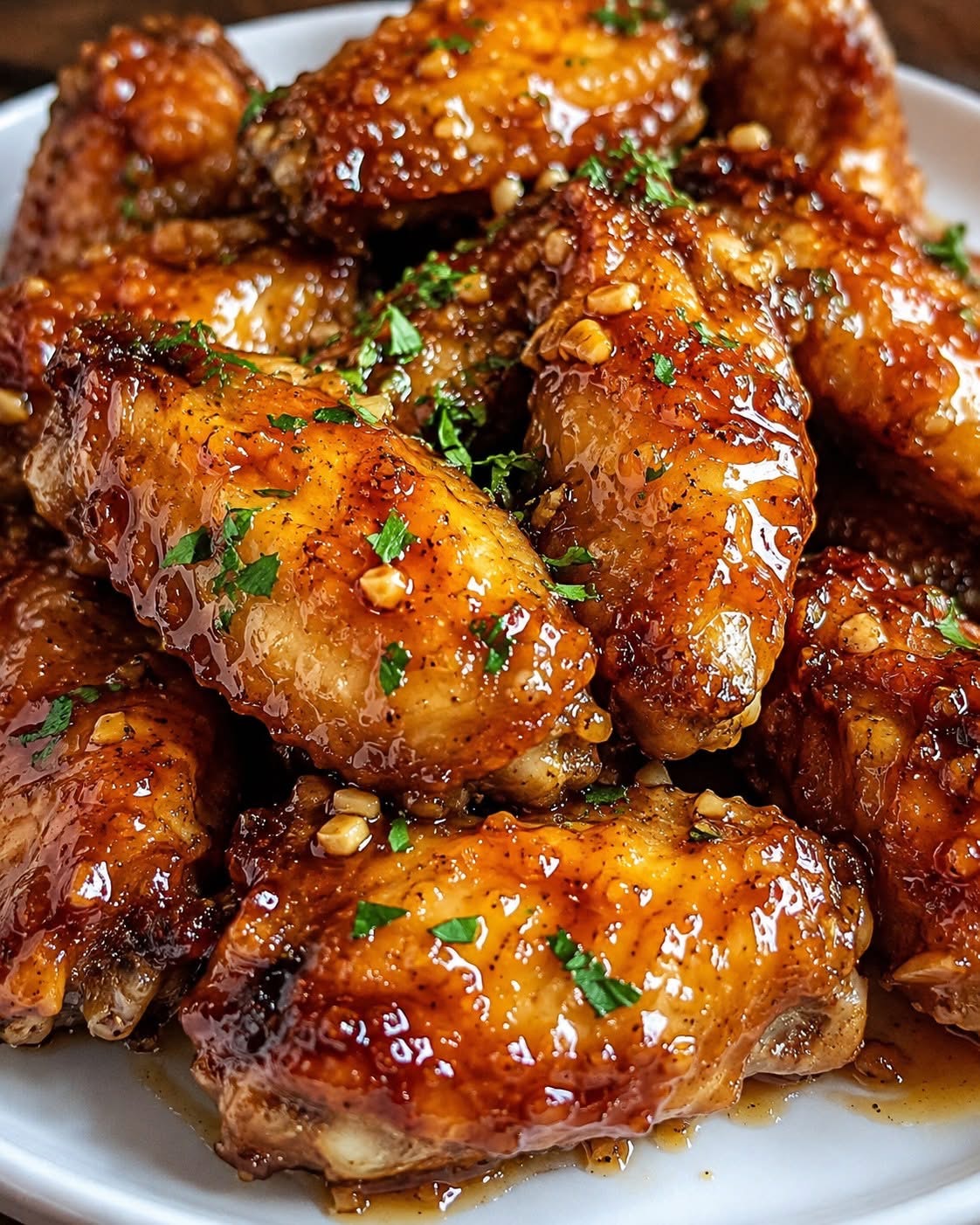
The Ultimate Guide to Honey Garlic Chicken Wings
Honey Garlic Chicken Wings are a legendary pub classic, celebrated worldwide for their perfect balance of sticky sweetness, savory depth, and sharp aromatic punch. This guide delivers a comprehensive breakdown of this iconic dish, including its detailed history, nutritional breakdown, three distinct cooking methods, health benefits, and a multi-step recipe.
1. Introduction to the Dish
Honey garlic chicken wings represent the perfect marriage of sweet and savory flavor profiles. The dish relies on the contrasting combination of pure, viscous honey and sharp, aromatic minced garlic. When cooked down, these ingredients form a thick, glossy glaze that clings perfectly to crispy chicken skin.
The appeal of the wing lies entirely in its texture and structure. Unlike lean chicken breast, the wing contains a high ratio of skin, bone, and collagen. As it cooks, the fat renders out to crisp the exterior, while the internal connective tissue melts into a juicy, tender bite. Whether served as a game-day appetizer or a main course, it remains a global favorite.
2. History and Cultural Evolution
While deep-fried chicken wings are a foundational element of Southern American cooking, the conceptual origin of the modern tossed chicken wing dates back to 1964 at the Anchor Bar in Buffalo, New York. Co-owner Teressa Bellissimo first deep-fried leftover wings, tossed them in a cayenne pepper and butter sauce, and served them to her son’s hungry friends. Around the same time, African-American restaurateur John Young was serving whole, battered wings with his signature tomato-based “mambo sauce” at Wings ‘N Things in Buffalo.
[Traditional Fried Chicken] ──> [1964: Buffalo Wings (Anchor Bar)] ──> [Canadian Adaptation: Honey Garlic Glaze]
The specific honey garlic variation emerged as a distinct culinary staple in Canada. Canadian taverns and Chinese-Canadian restaurants adapted the classic Buffalo tossing method, replacing the sharp vinegar heat with a sweet, soy-and-honey profile influenced by Asian glazing techniques. Today, it stands alongside Buffalo and BBQ as one of the most widely ordered wing flavors globally.
3. Formation and Culinary Science
Achieving the perfect honey garlic chicken wing requires understanding the chemical reactions that happen during both cooking and glazing:
- Moisture Elimination: To achieve maximum crispiness, the surface moisture of the raw chicken must be completely removed. Water creates steam when heated, which prevents the skin from crisping.
- The Role of Alkaline Starches: Coating the skin with a light dusting of cornstarch or baking powder alters the surface pH. This accelerates the breaking down of proteins, resulting in a lighter, bubbles-filled, ultra-crispy crust.
- The Maillard Reaction: This chemical reaction occurs between amino acids and reducing sugars under high heat. It gives the wings their deeply savory flavor and rich, golden-brown color.
- Sugar Reduction and Caramels: Honey consists primarily of fructose and glucose. Heating the sauce reduces its water content, concentrating these sugars and allowing them to thicken into a sticky glaze that adheres perfectly to the meat.
4. Complete Ingredients List
This recipe is scaled to yield 4 substantial servings (approximately 24 to 28 wing pieces).
For the Chicken Wings
- 2.5 lbs (approx. 1.1 kg) Chicken Wings: Split into drumettes and flats, tips removed.
- 1 tbsp Olive Oil or Neutral Vegetable Oil: Used to bind the initial dry seasonings.
- ½ cup Cornstarch: Essential for absorbing moisture and building a crisp exterior crust.
- 1 tsp Garlic Powder: For deep, embedded savoriness within the crust.
- 1 tsp Fine Sea Salt: To draw out internal moisture and season the meat.
- ½ tsp Coarsely Ground Black Pepper: Adds a foundational layer of mild heat.
For the Honey Garlic Glaze
- ½ cup Pure, Liquid Honey: The sweet, viscous base of the glaze.
- ½ cup Low-Sodium Soy Sauce: Provides umami, salt balance, and a dark color.
- 6 Cloves Fresh Garlic: Finely minced or crushed to release active aromatics.
- 1 tbsp Fresh Ginger: Finely grated to cut through the heavy sweetness.
- 1 tbsp Rice Vinegar or Apple Cider Vinegar: Adds acidity to balance the sugars.
- 1 tbsp Unsalted Butter: Whisked in at the end to create a glossy, smooth finish.
For the Garnish
- 1 tbsp Toasted Sesame Seeds: Adds visual contrast and a subtle, nutty crunch.
- 2 Finely Sliced Scallions (Green Onions): Provides a fresh, sharp pop of color.
5. Master Step-by-Step Instructions
Step 1: Prep and Dry the Meat
- Take the wings out of the refrigerator 15 minutes before cooking to lower their temperature.
- Pat each wing piece completely dry using heavy-duty paper towels.
- Transfer the dried wings into a large, clean mixing bowl.
Step 2: Season and Coat
- Drizzle the olive oil over the wings, tossing them thoroughly to coat the skin evenly.
- Whisk the cornstarch, garlic powder, sea salt, and black pepper together in a separate small bowl.
- Dust the cornstarch mixture over the wings, tossing continuously until a thin, translucent layer covers every piece.
Step 3: Cook the Wings
Choose one of the three cooking methods detailed in Section 6 below (Oven Baked, Air Fried, or Deep Fried).
Step 4: Build the Glaze
- Combine the honey, soy sauce, minced garlic, grated ginger, and vinegar in a small saucepan over medium heat.
- Bring the mixture to a gentle boil, stirring continuously to prevent the honey from scorching.
- Reduce heat to low and simmer for 5 to 7 minutes until the sauce reduces and coats the back of a spoon.
- Remove from heat and whisk in the cold unsalted butter until fully melted and integrated.
Step 5: Toss and Serve
- Transfer the hot, crispy cooked wings into a clean, large stainless steel bowl.
- Pour the warm honey garlic glaze over the wings.
- Toss vigorously until every wing is fully coated in the sticky sauce.
- Pile onto a serving platter and garnish immediately with toasted sesame seeds and sliced green onions.
6. Three Core Cooking Methods
| Feature | Method A: Oven Baked | Method B: Air Fried | Method C: Deep Fried |
|---|---|---|---|
| Cooking Time | 40–45 minutes | 25–30 minutes | 10–12 minutes |
| Temperature | 425°F (220°C) | 400°F (205°C) | 375°F (190°C) |
| Texture Target | Evenly rendered, firm crunch | Light, crispy, shell-like crust | Ultra-shatteringly crisp exterior |
| Oil Required | Minimal (1 tbsp spray) | Minimal (1-2 tsp spray) | Substantial (4-6 cups for frying) |
Method A: Oven Baking
- Preheat the oven to 425°F (220°C). Line a large baking sheet with aluminum foil and place a wire cooling rack directly on top.
- Arrange the coated wings on the wire rack in a single layer, leaving at least half an inch of space between each piece.
- Bake for 20 minutes, flip each wing over, and bake for an additional 20 to 25 minutes until the skin turns golden-brown and crispy.
Method B: Air Frying
- Preheat your air fryer to 400°F (205°C) for approximately 5 minutes.
- Arrange the seasoned wings in a single layer in the air fryer basket, ensuring they do not overlap. Work in batches if needed.
- Air fry for 25 to 30 minutes, pulling the basket out to shake and flip the wings every 8 to 10 minutes to ensure even crisping.
Method C: Deep Frying
- Fill a deep Dutch oven with neutral, high-smoke-point oil (such as peanut or canola oil) to a depth of 3 inches. Heat to 375°F (190°C).
- Carefully lower the coated wings into the hot oil in small batches to keep the oil temperature steady.
- Fry for 10 to 12 minutes, turning occasionally, until the wings are deep golden-brown and float to the top. Remove and drain on a wire rack.
7. Nutritional Profile
The following values are an estimate for a 100-gram serving of chicken wings prepared using the baking method with the honey garlic glaze:
- Calories: 290 kcal
- Total Fat: 14.5 g
- Saturated Fat: 4.2 g
- Cholesterol: 85 mg
- Sodium: 580 mg
- Total Carbohydrates: 16.2 g
- Dietary Fiber: 0.3 g
- Sugars (primarily from honey): 13.5 g
- Protein: 22.8 g
Chicken wings provide a solid source of high-quality animal protein and essential micronutrients, including Selenium(which supports immune function), Vitamin B6, and Zinc. However, the inclusion of honey and soy sauce increases both the carbohydrate and sodium counts compared to plain, unglazed chicken wings.
8. Health and Dietary Benefits
- High-Quality Protein: Chicken wings offer a complete protein profile containing all nine essential amino acids needed for muscle repair, tissue growth, and enzymatic functions.
- Natural Antimicrobial Support: Fresh garlic contains allicin, a bioactive sulfur compound well-regarded for its natural antibacterial, antiviral, and cardiovascular health properties.
- Antioxidant Properties: Raw honey contains organic acids and phenolic compounds like flavonoids, which offer antioxidant protection and help combat oxidative stress within the body.
- Metabolic Benefits of Ginger: Fresh ginger contains gingerol, a bioactive substance known for its powerful anti-inflammatory and digestive-aid effects.
9. For the Flavor Lovers: Custom Variations
For true wing enthusiasts who love to experiment, this foundational honey garlic recipe can easily be customized to fit different flavor profiles:
- The Spicy Twist (Honey Garlic Chili): Whisk in 1 tablespoon of sriracha, gochujang, or crushed red pepper flakes into the simmering glaze to add a fiery kick that cuts through the sweetness.
- The Smoky Twist (BBQ Hybrid): Add 2 tablespoons of smoky barbecue sauce and ½ teaspoon of smoked paprika to the glaze to give it a rustic, flame-grilled depth.
- The Citrus Twist (Honey Garlic Lime): Squeeze the fresh juice of one lime into the glaze right after removing it from the heat to introduce a bright, zesty acidity.
10. Conclusion
Mastering Honey Garlic Chicken Wings comes down to balancing texture and flavor: getting the chicken skin incredibly crispy and simmering the glaze until it is perfectly thick and sticky. By drying the meat thoroughly, using a light starch coating, and letting the honey reduce properly, you can easily replicate pub-style quality right at home. This dish is incredibly versatile, allowing you to bake, air fry, or deep fry it to fit your cooking preferences.
If you would like, I can help you customize this recipe further. Let me know:
- Your preferred cooking appliance (e.g., a specific air fryer model or a standard convection oven)
- Any dietary preferences (such as a gluten-free adjustment using tamari)
- How spicy you want the final glaze
I can adjust the steps and ingredients to match exactly what you need!