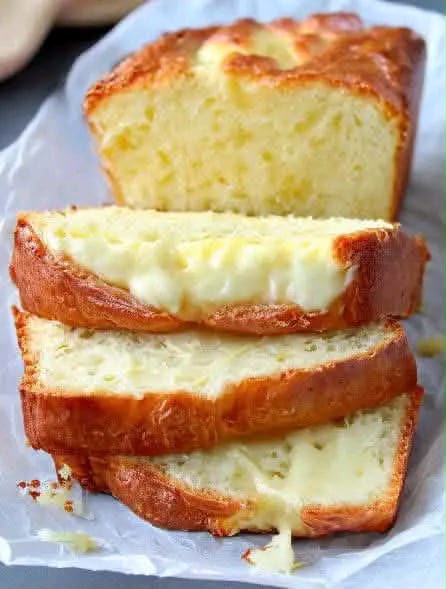
Cheesy Garlic Bread Loaf
A golden, fluffy homemade bread loaded with melted cheese and delicious garlic flavour.
Introduction
There is something especially comforting about freshly baked bread, and this Cheesy Garlic Bread Loaf takes that comfort to another level. With its beautifully golden crust, soft interior and generous amounts of melted cheese, it is the kind of homemade bread that makes an ordinary meal feel special.
Each thick slice delivers a wonderful combination of buttery richness, savoury garlic and creamy cheese. Mozzarella provides a wonderfully soft, melty texture, cheddar adds a deeper cheese flavour, and Parmesan contributes a pleasantly salty finish.
Unlike traditional yeast breads, this recipe uses baking powder to create a tender, fluffy loaf without kneading or waiting for dough to rise. Simply combine the dry ingredients, mix the wet ingredients separately, fold everything together and bake until beautifully golden.
The mixture comes together using ordinary kitchen ingredients, making this a convenient choice when you want homemade bread without a complicated baking process. It is particularly helpful for busy evenings, casual family meals and last-minute gatherings.
Serve this cheesy bread warm alongside soup, pasta or a hearty casserole. It also makes a lovely addition to a weekend brunch or a relaxed afternoon snack. The rich cheese flavour means it is delicious even without a spread.
Whether you enjoy baking from scratch or are trying your first savoury loaf, this straightforward recipe offers a satisfying way to bring freshly baked garlic bread to your table.
Recipe Overview
- Recipe: Cheesy Garlic Bread Loaf
- Category: Savoury bread, side dish
- Style: Homemade quick bread
- Preparation Time: Approximately 15 minutes
- Baking Time: 40–50 minutes
- Resting Time: 10 minutes
- Total Time: Approximately 65–75 minutes
- Yield: 1 loaf, approximately 8–10 slices
- Oven Temperature: 350°F (175°C)
- Cooking Method: Oven baking
- Equipment: Loaf tin
- Main Ingredients: Plain flour, mozzarella, cheddar, Parmesan, garlic powder, eggs and milk
The preparation time and number of slices are practical estimates. The precise yield depends on the size of the tin and thickness of the slices.
Why You’ll Love This Recipe
- No yeast required: Baking powder helps the loaf rise without a lengthy proving process.
- Three delicious cheeses: Mozzarella, cheddar and Parmesan create layers of savoury flavour.
- Soft and tender: Milk, eggs and melted butter help produce a moist crumb.
- Simple preparation: There is no kneading or complicated shaping.
- Everyday ingredients: The recipe relies on familiar baking essentials.
- Versatile serving options: Enjoy it with soup, pasta, casseroles or as a snack.
- Lovely when warm: Fresh slices offer a particularly satisfying combination of tender bread and melted cheese.
- Easy to customise: Herbs, spices and different cheeses can create delicious optional variations.
Ingredients
Gather all the ingredients before starting. Using room-temperature milk and eggs can make the mixture easier to combine, while allowing melted butter to cool slightly helps prevent it from affecting the eggs.
Dry Ingredients
- 2 cups all-purpose flour (approximately 250 g plain flour)
- 1 tablespoon baking powder
- ½ teaspoon salt
- 1 teaspoon garlic powder
Wet Ingredients
- 2 large eggs
- 1 cup milk (approximately 240 ml)
- ¼ cup melted butter (approximately 57 g)
Cheese and Herbs
- 1½ cups shredded mozzarella cheese
- 1 cup shredded cheddar cheese
- ¼ cup grated Parmesan cheese
- 1 tablespoon chopped parsley
Optional Topping
- A little extra shredded mozzarella cheese, if desired
The optional topping is already mentioned in the supplied method. It is not required for the basic recipe.
Ingredient Notes
Plain Flour
Plain flour forms the structure of this loaf. It creates a stable crumb while allowing the baking powder to provide lift. For reliable results, measure the flour carefully rather than packing it tightly into a measuring cup.
Baking Powder
Baking powder is the raising agent that makes this a quick bread. It reacts with moisture and heat, helping the mixture expand as it bakes. Check that your baking powder is still within its recommended shelf life.
Garlic Powder
Garlic powder distributes evenly throughout the mixture and provides a consistent savoury flavour. Unlike pieces of fresh garlic, it does not introduce additional moisture.
Eggs
Eggs help hold the loaf together and contribute to its structure, richness and golden colour. Whisking them with the milk and melted butter ensures they are incorporated evenly.
Milk
Milk hydrates the flour and helps create a soft, spoonable batter. Whole milk can provide a richer flavour, although ordinary milk is suitable.
Butter
Melted butter contributes tenderness and a subtle buttery taste. Let it cool slightly before mixing with the eggs and milk.
Mozzarella
Mozzarella adds moisture and a pleasing melted texture. Low-moisture mozzarella is especially convenient for baking because it releases less liquid than fresh mozzarella stored in brine.
Cheddar
Cheddar provides a stronger, more distinctive cheese flavour. Mature cheddar creates a sharper result, while mild cheddar produces a gentler taste.
Parmesan
Parmesan adds savoury depth and a little saltiness. Grating it finely helps distribute its flavour throughout the bread.
Parsley
Fresh parsley adds colour and a light herbal note that balances the rich cheese. Chop it finely for even distribution.
Equipment You’ll Need
- One loaf tin, preferably approximately 9 × 5 inches
- Two mixing bowls
- Balloon whisk
- Flexible spatula or wooden spoon
- Measuring cups and spoons
- Cheese grater, if using blocks of cheese
- Baking parchment or butter for preparing the tin
- Wire cooling rack
- Skewer or food thermometer for checking doneness
- Serrated bread knife
How to Make Cheesy Garlic Bread Loaf
Step 1: Preheat the Oven
Preheat your oven to 350°F (175°C). Grease a loaf tin lightly or line it with baking parchment, leaving some parchment extending over the sides to make removal easier.
Step 2: Combine the Dry Ingredients
In a large mixing bowl, add the flour, baking powder, salt and garlic powder. Whisk until everything is evenly combined. This helps distribute the raising agent and seasoning throughout the flour.
Step 3: Mix the Wet Ingredients
In a separate bowl, whisk together the eggs, milk and melted butter. Continue until the mixture looks reasonably smooth and uniform. The butter should be melted but not excessively hot.
Step 4: Combine Wet and Dry Mixtures
Pour the wet ingredients into the bowl containing the dry ingredients. Using a spatula, gently stir until the flour is just incorporated. Avoid vigorous beating, as excessive mixing can develop the gluten and make the finished bread tougher.
Step 5: Add the Cheese and Parsley
Fold in the mozzarella, cheddar, Parmesan and chopped parsley. Use gentle movements to distribute the cheese throughout the batter without overworking it.
Step 6: Fill the Loaf Tin
Transfer the mixture into the prepared loaf tin. Spread it evenly and smooth the surface with a spatula. If desired, sprinkle a little extra mozzarella over the top for an additional cheesy finish.
Step 7: Bake Until Golden
Place the loaf tin in the preheated oven and bake for 40–50 minutes. The top should become golden brown, and the loaf should feel set rather than wobbly in the centre.
Insert a skewer into the middle. It should come out without raw batter, although some melted cheese may cling to it. If the top becomes too dark before the centre is baked, loosely cover the loaf with foil for the remaining baking time.
Step 8: Allow the Bread to Rest
Remove the loaf from the oven and let it rest in the tin for approximately 10 minutes. This short cooling period allows the crumb to firm up and makes the bread easier to handle.
Step 9: Slice and Serve
Carefully remove the bread from the tin. Slice with a serrated knife and serve while still pleasantly warm. The crumb should be tender, with melted cheese distributed throughout each slice.
How to Achieve a Soft, Fluffy Texture
The secret to a tender cheese loaf is controlling how much the batter is mixed. Once flour comes into contact with liquid, gluten begins to develop. Some structure is necessary, but too much mixing can produce a dense or rubbery bread.
Whisk the dry ingredients thoroughly before adding the liquids. This distributes the baking powder evenly without requiring excessive mixing later.
When the wet and dry ingredients meet, stir gently until no large pockets of dry flour remain. A slightly uneven batter is acceptable for this type of bread.
The cheese should be folded in rather than beaten into the mixture. Gentle folding preserves the airy texture while keeping the cheese dispersed throughout the loaf.
Finally, give the bread time to rest after baking. Cutting into it immediately can compress the soft crumb while the cheese is extremely hot.
Choosing and Adding the Cheese
Using three cheeses gives this recipe its distinctive flavour and texture. Each cheese contributes something different, so the combination is more balanced than relying on a single variety.
Mozzarella melts smoothly and creates creamy areas throughout the bread. Cheddar brings a more pronounced savoury flavour, while Parmesan adds depth and a subtly nutty finish.
For the most consistent texture, use shredded cheeses that are not excessively wet. Fresh mozzarella packed in liquid should be drained thoroughly if used as an optional substitution.
Distribute the cheese evenly during folding. Large clumps may create heavy areas in the batter, while even distribution gives each slice a satisfying mixture of cheese and soft bread.
A little extra mozzarella on top can create a golden, melted surface. Keep this topping modest so the crust can still develop properly during baking.
How to Bake the Perfect Golden Loaf
Preheating the oven is important because baking powder begins working as the batter warms. Starting in a properly heated oven encourages a steady rise.
Use a suitable loaf tin and avoid overfilling it. A much smaller tin can cause the centre to take longer to cook, while a larger tin may produce a flatter loaf that bakes more quickly.
Place the tin near the centre of the oven for more even heat circulation. Avoid opening the oven door repeatedly during the early part of baking, when the structure is still developing.
Begin checking near the end of the recommended 40–50-minute baking period. Because cheese can cling to a skewer, distinguish melted cheese from genuinely wet, uncooked batter.
The finished loaf should have a rich golden surface, a stable centre and a tender interior. If necessary, allow a little extra oven time, checking frequently to prevent overbaking.
Expert Baking Tips
- Measure flour accurately: Too much flour can create a dry, heavy loaf.
- Use fresh baking powder: An effective raising agent is essential for a good rise.
- Preheat fully: A properly heated oven helps the loaf bake evenly.
- Cool the melted butter slightly: Very hot butter can affect the egg mixture.
- Whisk dry ingredients first: This helps prevent uneven pockets of baking powder.
- Do not overmix: Gentle stirring encourages a more tender crumb.
- Choose low-moisture mozzarella: It reduces the risk of an overly wet loaf.
- Grate Parmesan finely: This allows its flavour to spread evenly.
- Fold the cheese gently: Avoid compacting the batter.
- Prepare the tin thoroughly: Cheese can stick to unlined surfaces.
- Watch the crust: Cover loosely with foil if it browns too quickly.
- Check the centre: A golden top alone does not guarantee the loaf is cooked.
- Rest before slicing: Ten minutes helps the structure settle.
- Use a serrated knife: Gentle sawing preserves the delicate texture.
Common Mistakes to Avoid
1. Adding Too Much Flour
Overmeasuring flour can make the batter stiff and the bread dry. Spoon flour into the measuring cup and level it, or use approximately 250 g for the stated quantity.
2. Overmixing the Batter
Mixing too aggressively can develop excess gluten. Stir gently and stop once the dry ingredients are incorporated.
3. Using Expired Baking Powder
Old baking powder may not provide enough lift, leaving the loaf dense. Check the packaging before beginning.
4. Using Very Wet Cheese
Cheese containing excessive moisture can produce damp areas in the bread. Choose low-moisture mozzarella or drain fresh mozzarella thoroughly.
5. Baking in an Unheated Oven
Starting before the oven reaches temperature can affect how the loaf rises and sets. Preheat completely.
6. Removing the Bread Too Early
A brown crust may hide an underbaked middle. Check the centre before removing the loaf.
7. Leaving the Loaf in the Oven Too Long
Overbaking can dry out the crumb and make the crust excessively firm. Begin checking around 40 minutes.
8. Slicing Immediately
Cutting while the loaf is extremely hot can compress the soft bread. Let it stand for about 10 minutes before slicing.
9. Unevenly Distributing the Cheese
Large concentrated pockets of cheese can make certain areas heavy. Fold it evenly through the batter.
Optional Recipe Variations
The following ideas are optional adaptations and are not part of the original ingredient list.
1. Extra Garlic Bread
For a stronger garlic flavour, increase the garlic powder slightly or add a small amount of finely minced fresh garlic. Fresh garlic introduces additional moisture, so use it sparingly.
2. Italian Herb Cheese Bread
Add a little dried oregano, basil or Italian herb seasoning to the dry ingredients for a more aromatic loaf.
3. Spicy Cheddar Bread
Fold in a pinch of chilli flakes or finely chopped jalapeños for a gentle spicy kick.
4. Smoked Cheese Loaf
Replace part of the cheddar with smoked cheddar for a deeper, smoky flavour.
5. Spring Onion Cheese Bread
Add a small handful of finely chopped spring onions for freshness and a mild onion flavour.
6. Rosemary Parmesan Bread
Use a little finely chopped rosemary to complement the Parmesan and garlic.
7. Mini Cheese Loaves
Divide the batter between smaller prepared loaf tins. Reduce the baking time and check for doneness early, as smaller loaves cook faster.
What to Serve with Cheesy Garlic Bread
Tomato Soup
The savoury cheese and garlic pair particularly well with a smooth tomato soup. The acidity of tomatoes balances the richness of the loaf.
Creamy Pasta
Serve thick slices alongside Alfredo pasta, creamy mushroom pasta or a simple baked pasta dish.
Hearty Casseroles
Cheesy bread is ideal for serving with beef casserole, chicken casserole or a vegetable bake.
Fresh Green Salad
A crisp salad with a light vinaigrette provides a refreshing contrast to the rich cheese.
Scrambled Eggs
Toast leftover slices lightly and serve with scrambled eggs for a savoury breakfast or brunch.
Garlic Butter
For an optional extra-rich serving idea, spread a little garlic butter over warm slices.
Marinara Sauce
Warm tomato-based dipping sauce works beautifully with the mozzarella and cheddar flavours.
Storage and Reheating
Refrigeration
Because this bread contains generous amounts of cheese, eggs and milk, refrigerate leftovers promptly. Once cooled, wrap the loaf or place slices in an airtight container and refrigerate within two hours.
For the best quality, enjoy refrigerated leftovers within 3–4 days.
Freezing
Allow the loaf to cool completely before freezing. Wrap individual slices tightly and place them inside a freezer-safe container or bag.
For the best flavour and texture, use frozen slices within approximately 2–3 months.
Reheating in the Oven
Place slices on a baking tray and warm at approximately 325°F (160°C) until heated through. Cover loosely with foil if they begin to brown too much.
Reheating in the Microwave
Microwave individual slices in short intervals until hot. Avoid overheating, which can make the cheese rubbery and the bread tough.
Toasting Leftovers
Lightly toast a slice until the edges become golden and the cheese is warm. This is particularly delicious with soup or eggs.
Making Ahead
For convenient preparation, grate the cheeses, measure the dry ingredients and prepare the tin in advance. Keep the wet ingredients refrigerated as appropriate and combine everything shortly before baking.
Frequently Asked Questions
1. Can I make cheesy garlic bread without yeast?
Yes. This recipe uses baking powder instead of yeast, so no proving or kneading is required.
2. What makes the bread rise?
Baking powder releases gas when activated by moisture and heat, helping the batter expand during baking.
3. Can I use self-raising flour?
It may work as an optional adaptation, but self-raising flour already contains raising agents. The baking powder and salt quantities would need to be adjusted rather than simply added unchanged.
4. Why is my cheese bread dense?
Common causes include excessive mixing, too much flour or baking powder that has lost its effectiveness.
5. Can I use only mozzarella?
Yes, although the flavour will be milder. Cheddar and Parmesan provide additional savoury depth.
6. Can I replace mozzarella with cheddar?
Yes. The texture and flavour will change, but a cheddar-based loaf can still be delicious.
7. Is freshly grated cheese better?
Freshly grated cheese often melts more smoothly because it generally contains fewer anti-caking ingredients than packaged shredded cheese.
8. Can I use fresh garlic?
Yes, as an optional adaptation. Use a modest quantity of finely minced garlic so the extra moisture does not noticeably affect the batter.
9. Can I substitute butter with oil?
A neutral-flavoured oil may work, but it will change the buttery flavour of the original loaf.
10. Can I use plant-based milk?
Unsweetened plant-based milk may be suitable, though the finished texture and flavour could differ depending on the variety used.
11. Why is my bread wet in the centre?
It may need more baking time, or the cheese may have introduced too much moisture. Check for raw batter before removing the loaf from the oven.
12. How do I know when the loaf is ready?
The top should be golden, the centre should feel set, and a skewer should come out without wet, uncooked batter.
13. Can I bake it in a different tin?
Yes, but the thickness of the batter will affect baking time. Check earlier when using a wider or shallower tin.
14. Can I make muffins instead?
Yes. Divide the mixture between prepared muffin cases or a greased muffin tin. The baking time will be shorter, so check for doneness well before the original loaf baking time.
15. Can I add herbs?
Yes. Rosemary, oregano, basil or chives are suitable optional additions.
16. Should I serve the bread hot or cold?
It is especially enjoyable warm, when the cheese is soft, but the loaf can also be eaten chilled or at room temperature after safe storage.
17. Can I freeze cheesy garlic bread?
Yes. Wrap cooled slices individually to make thawing and reheating easier.
18. How long does it last in the fridge?
Store it in an airtight container and aim to eat it within 3–4 days.
19. Can I prepare the batter the night before?
It is better to mix the wet and dry ingredients shortly before baking. Leaving prepared batter overnight may reduce the effectiveness of the baking powder.
20. Can I add more cheese?
A modest amount of extra cheese can be added as an optional variation, but too much may make the loaf heavy or excessively moist.
21. Why is the crust browning too quickly?
The top may be receiving more direct heat than the centre. Cover it loosely with foil and continue baking until the middle is cooked.
22. Can I make this loaf for a party?
Absolutely. Bake it in advance, slice it into portions and warm the slices shortly before serving.
23. What is the best way to slice it?
Allow the loaf to rest for about 10 minutes, then use a serrated bread knife with gentle sawing motions.
24. Can I serve it with a dipping sauce?
Yes. Marinara, garlic butter or a simple herb dip can complement its rich savoury flavour.
25. Is this a traditional yeast bread?
No. It is a savoury quick bread. Its texture is usually more cake-like and tender than a kneaded yeast loaf.
Cheesy Garlic Bread Loaf Recipe Card
Description: A soft, golden savoury quick bread packed with mozzarella, cheddar, Parmesan and garlic. Easy to prepare without yeast or kneading.
- Category: Bread, side dish
- Cooking Method: Baking
- Preparation: Approximately 15 minutes
- Cooking: 40–50 minutes
- Resting: 10 minutes
- Total: Approximately 65–75 minutes
- Yield: 1 loaf, about 8–10 slices
- Oven: 350°F (175°C)
Ingredients
- 2 cups all-purpose flour
- 1 tablespoon baking powder
- ½ teaspoon salt
- 1 teaspoon garlic powder
- 2 large eggs
- 1 cup milk
- ¼ cup melted butter
- 1½ cups shredded mozzarella cheese
- 1 cup shredded cheddar cheese
- ¼ cup grated Parmesan cheese
- 1 tablespoon chopped parsley
- Optional: A little extra mozzarella for topping
How to Make
- Preheat the oven to 350°F (175°C) and grease or line a loaf tin.
- In a large bowl, whisk together flour, baking powder, salt and garlic powder.
- In a separate bowl, whisk eggs, milk and melted butter.
- Pour the wet ingredients into the dry ingredients and stir gently until just combined.
- Fold in mozzarella, cheddar, Parmesan and chopped parsley.
- Transfer the batter to the prepared loaf tin and smooth the surface.
- Sprinkle with a little extra mozzarella if desired.
- Bake for 40–50 minutes, until golden and cooked through.
- Allow the loaf to rest for approximately 10 minutes before removing it from the tin.
- Slice and serve warm.
Recipe Notes
- Avoid overmixing to keep the crumb tender.
- Low-moisture mozzarella helps prevent an overly wet loaf.
- Check the middle for uncooked batter before removing the loaf from the oven.
- Cover loosely with foil if the top browns too quickly.
- Refrigerate leftovers promptly and reheat before serving if preferred.
Hashtags: #CheesyGarlicBread #HomemadeBread #CheeseBread #GarlicBread #EasyBakingRecipes
Share Your Cheesy Garlic Bread
Have you baked this Cheesy Garlic Bread Loaf? We’d love to hear how it turned out! Share your favourite way to serve it, tell us which cheese combination you used, and let other home cooks know your best baking tips.
Save this recipe for your next family dinner, weekend brunch or cosy baking day. If you enjoyed making it, share it with friends and follow along for more comforting homemade recipes.