Cheddar Stuffed Biscuits
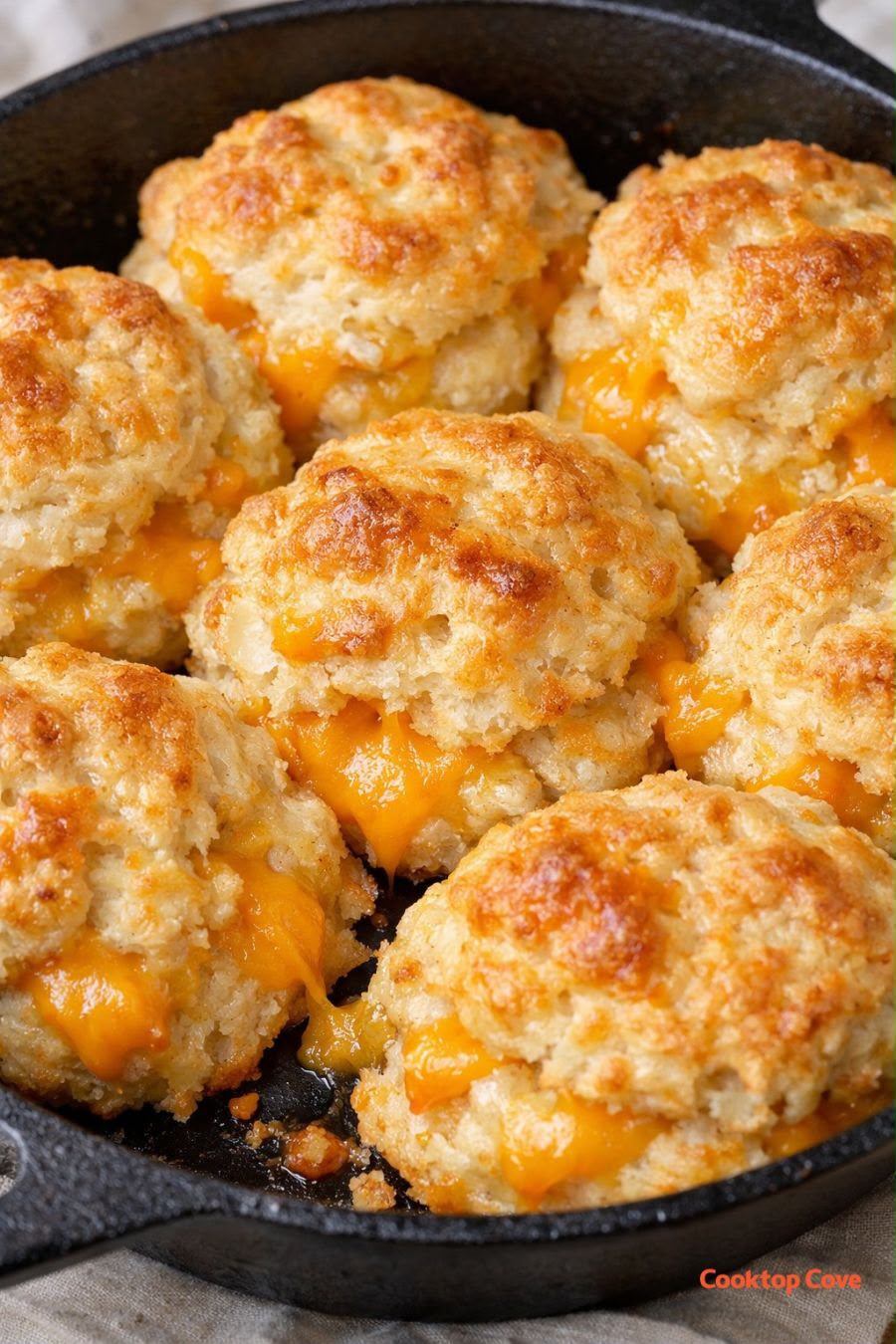
Golden, buttery homemade biscuits with tender, fluffy centres and a generous filling of warm, melted cheddar cheese.
Introduction
There is something wonderfully comforting about a freshly baked biscuit, especially when it is golden on the outside, beautifully soft inside and filled with rich, melted cheddar cheese. These cheddar stuffed biscuits combine everything people love about traditional American-style buttermilk biscuits with the irresistible addition of a gooey cheese centre.
Unlike ordinary cheese biscuits, which usually contain grated cheese mixed throughout the dough, this recipe places a generous piece of sharp cheddar directly inside each biscuit. As the biscuits bake, the cheese softens and melts, creating a delicious centre that becomes visible when the warm biscuit is pulled apart.
The dough itself is wonderfully straightforward. Plain flour, baking powder, cold butter, buttermilk and a little seasoning come together to form tender, rustic biscuits. There is no yeast, no lengthy rising process and no complicated shaping technique.
One of the best features of this recipe is the contrast in textures. The outside develops a lightly crisp, golden crust, while the interior stays soft and slightly flaky. The melted cheddar adds a savoury richness that works beautifully with the buttery biscuit dough.
These biscuits are particularly appealing when baked close together in a cast-iron skillet. The skillet gives them an attractive homemade presentation, and the biscuits rise into soft, golden rounds. A little melted butter brushed over the tops helps create that inviting bakery-style finish.
Serve cheddar stuffed biscuits for a weekend breakfast, a relaxed brunch, alongside homemade soup or as a savoury addition to a family dinner. They are especially delicious while still warm, when the cheese filling is soft and satisfyingly stretchy.
Recipe Overview
- Recipe: Cheddar Stuffed Biscuits
- Category: Breakfast, Brunch, Side Dish
- Cuisine: American-inspired
- Preparation Time: Approximately 15–20 minutes
- Baking Time: 15–18 minutes
- Resting Time: A few minutes
- Total Time: Approximately 35–43 minutes
- Yield: Approximately 8 biscuits, depending on size
- Oven Temperature: 425°F (220°C)
- Cooking Method: Oven baking
- Recommended Baking Dish: Cast-iron skillet or baking dish
- Difficulty: Easy
- Main Ingredients: Flour, butter, buttermilk and sharp cheddar cheese
Why You’ll Love This Recipe
- Gooey cheddar filling: Every biscuit contains a generous centre of melted cheese.
- Beautiful golden crust: The butter-brushed tops bake into an appetising golden finish.
- Soft, tender texture: Cold butter and buttermilk help create delicate biscuit layers.
- No yeast required: Baking powder provides the lift, so there is no proving time.
- Simple ingredients: The recipe uses familiar ingredients found in many home kitchens.
- Versatile serving options: Enjoy them at breakfast, brunch, lunch or dinner.
- Comforting homemade flavour: Sharp cheddar gives the biscuits a wonderfully savoury taste.
- Great for sharing: A skillet filled with warm cheese biscuits makes an inviting centrepiece for the table.
Ingredients
This recipe uses a short ingredient list to produce tender biscuits with a rich cheddar filling. Keep the butter and buttermilk cold until you are ready to mix the dough.
For the Biscuit Dough
- 2 cups all-purpose flour (plain flour, approximately 250 g)
- 1 tablespoon baking powder
- ½ teaspoon salt
- ½ teaspoon garlic powder
- ½ cup cold unsalted butter, cubed (approximately 113 g)
- ¾ cup cold buttermilk (approximately 180 ml)
For the Cheese Filling
- 1½ cups sharp cheddar cheese, cut into small cubes or thick pieces (approximately 170 g, depending on how it is measured and cut)
For Brushing
- 2 tablespoons melted butter (approximately 28 g)
Important: These are the original ingredients and quantities. The optional variations later in the article are separate suggestions and are not required for the basic recipe.
Ingredient Notes
All-Purpose Flour
Plain flour gives these cheddar stuffed biscuits their structure while allowing the crumb to remain tender. Measure the flour carefully, ideally with kitchen scales. Too much flour can make the dough dry and prevent the biscuits from rising properly.
Baking Powder
Baking powder is responsible for helping the biscuits rise. Because this recipe does not contain yeast, fresh and effective baking powder is especially important. Old baking powder may produce dense biscuits with little lift.
Salt
Salt balances the buttery flavour and enhances the savoury cheddar filling. The amount is modest because sharp cheddar already contributes saltiness.
Garlic Powder
Garlic powder gives the biscuit dough a subtle savoury flavour without overpowering the cheese. It blends evenly into the dry ingredients and complements the sharpness of the cheddar.
Cold Unsalted Butter
Cold butter is one of the most important ingredients in this recipe. Small pieces remain distributed throughout the dough and release moisture as they heat, contributing to tender, slightly flaky biscuits. Unsalted butter also gives you better control over the seasoning.
Cold Buttermilk
Buttermilk adds moisture, gentle tanginess and tenderness to the dough. Its acidity works with the leavening ingredients, while its consistency helps bring the flour and butter mixture together without requiring excessive mixing.
Sharp Cheddar Cheese
Sharp cheddar is the star of the filling. Its robust flavour creates a pleasing contrast with the mild, buttery biscuit. Small cubes or thick pieces are preferable to finely grated cheese because they create a more concentrated melted centre.
For the most reliable results, use a good-quality cheddar that melts smoothly. Very mature, crumbly cheddar can sometimes become slightly oily or grainy when heated. A firm, melt-friendly sharp cheddar is ideal.
Melted Butter
Brushing melted butter over the biscuit tops adds flavour and encourages an attractive golden surface. Apply it lightly so the tops are coated without becoming saturated.
Equipment You’ll Need
- Large mixing bowl
- Measuring cups and spoons
- Kitchen scales, optional but useful
- Whisk
- Pastry cutter, two forks or fingertips
- Sharp knife for cubing the butter and cheese
- Cast-iron skillet or ovenproof baking dish
- Pastry brush
- Spatula for serving
- Cooling rack, optional
A cast-iron skillet gives these biscuits a rustic appearance and retains heat well. However, an ordinary ovenproof baking dish also works. Choose a dish that allows the biscuits to sit close together without being excessively crowded.
How to Make Cheddar Stuffed Biscuits
Step 1: Preheat the Oven
Preheat your oven to 425°F (220°C). Lightly grease a cast-iron skillet or suitable baking dish to prevent the biscuits from sticking. Position the oven rack near the centre for even baking.
Step 2: Combine the Dry Ingredients
Place the flour, baking powder, salt and garlic powder in a large mixing bowl. Whisk thoroughly to distribute the baking powder and seasonings evenly throughout the flour.
Step 3: Cut in the Cold Butter
Add the cubed cold butter to the flour mixture. Use a pastry cutter, two forks or your fingertips to work the butter into the flour until the mixture resembles coarse crumbs with some small pieces of butter still visible.
Avoid working the butter until it completely disappears. Those small cold pieces help produce a tender biscuit texture during baking.
Step 4: Add the Buttermilk
Pour the cold buttermilk into the flour and butter mixture. Stir gently with a fork or spatula until a soft dough forms. Stop mixing as soon as the ingredients come together.
The dough may look slightly rustic rather than perfectly smooth. This is normal and preferable to overmixing.
Step 5: Divide the Dough
Turn the dough onto a lightly floured work surface if necessary. Divide it into equal portions, aiming for approximately eight biscuits depending on your preferred size.
Handle each portion gently to avoid compressing the dough.
Step 6: Add the Cheddar Filling
Flatten one dough portion slightly into a thick round. Place a generous piece of sharp cheddar cheese in the centre. Keep the cheese away from the outer edges so there is enough dough to enclose it completely.
Step 7: Seal the Biscuits
Bring the edges of the dough over the cheese and pinch them together firmly. Make sure the cheese is fully enclosed and there are no visible gaps.
Gently shape the sealed dough into a round biscuit. Repeat with the remaining portions and cheese.
Step 8: Arrange in the Skillet
Place each filled biscuit into the prepared cast-iron skillet with the sealed side facing down. Arrange the biscuits close together so they can rise against one another and develop soft sides.
Do not press them tightly into the skillet. Leave enough room for a little expansion during baking.
Step 9: Brush with Melted Butter
Use a pastry brush to lightly coat the tops with the 2 tablespoons of melted butter. This adds richness and helps give the finished biscuits their beautiful golden appearance.
Step 10: Bake Until Golden
Transfer the skillet to the preheated oven and bake for 15–18 minutes, until the biscuits are puffed, golden on top and cooked through.
Look for lightly browned surfaces and biscuit dough that no longer appears wet or raw at the seams. Because ovens vary and larger biscuits may need slightly more time, check for doneness rather than relying on colour alone.
Step 11: Allow a Short Rest
Remove the skillet carefully from the oven and allow the biscuits to rest for a few minutes. This gives the crumb time to settle slightly and allows the very hot cheese filling to cool enough for safer eating.
Step 12: Serve Warm
Lift the biscuits gently from the skillet using a spatula. Serve them while warm, when their buttery crusts are tender and the cheddar centres are still beautifully melted.
Why Cold Butter Makes Better Biscuits
One of the easiest ways to improve homemade biscuits is to pay close attention to butter temperature. Cold butter behaves differently from softened or melted butter when mixed into flour.
When small pieces of cold butter remain in the dough, they melt gradually during baking. The moisture within the butter creates steam, while the fat helps keep parts of the dough tender. This contributes to the distinctive texture associated with American-style biscuits.
If the butter becomes too warm before baking, it can blend completely into the flour. The biscuits may still taste pleasant, but they can become heavier and less flaky.
For the best results, cut the butter into cubes before beginning the recipe and keep it chilled until needed. Work quickly when combining it with the flour. If your kitchen is particularly warm, briefly chilling the mixed dough before shaping may help maintain its texture.
It is also important not to knead the dough excessively. Unlike bread, biscuit dough does not benefit from extensive gluten development. Gentle handling helps the finished biscuits stay soft and tender.
How to Stop the Cheddar from Leaking
A generous cheese filling makes these biscuits especially delicious, but melted cheddar can escape if the dough is not properly sealed. A few small adjustments during shaping help keep most of the cheese where it belongs.
Use Thick Pieces of Cheese
Cut cheddar into compact cubes or thick pieces rather than using finely grated cheese. A concentrated piece melts into a substantial centre rather than dispersing throughout the biscuit.
Keep the Filling in the Middle
Place the cheddar directly in the centre of each flattened dough portion. Leave a clear border of dough around it. If the cheese touches the edge, the seam can be difficult to close securely.
Pinch the Dough Firmly
Bring the edges together and pinch until the seam is completely closed. Inspect the sides for small holes and cover any gaps with nearby dough.
Bake Seam-Side Down
Position the shaped biscuits with their sealed sides against the skillet. This helps support the closure as the dough rises.
Avoid Overfilling
Generous filling is desirable, but adding more cheese than the dough can comfortably enclose increases the chance of leakage. Divide the supplied cheddar evenly and adjust the shape of the pieces to fit.
A little escaped cheddar is not necessarily a problem. Cheese that melts against the hot skillet can develop crisp, golden edges, which many people enjoy.
How to Get Fluffy Biscuits with Golden Tops
The most appealing cheddar stuffed biscuits have a noticeable contrast between their crisp-looking golden surfaces and soft, tender interiors. Achieving this texture depends on several simple details.
First, preheat the oven fully before adding the skillet. A properly heated oven encourages the baking powder to act quickly and gives the dough a good initial rise.
Second, use fresh baking powder. Because this is a quick bread rather than a yeast dough, the raising agent is essential for creating a light texture.
Third, mix the dough only until combined. Overworking it develops gluten and can produce biscuits that are tough instead of tender.
Fourth, arrange the shaped biscuits close together. This helps support their height as they bake, while maintaining soft sides where the biscuits touch.
Finally, apply the melted butter evenly over the tops. The butter enhances browning and adds a delicious finishing flavour. Keep an eye on the biscuits during the final minutes, since a cast-iron skillet can retain considerable heat.
The finished biscuits should feel set, show a nicely browned exterior and reveal a cooked, fluffy interior when opened. The cheddar filling should be melted and creamy.
Expert Tips for Perfect Cheddar Stuffed Biscuits
- Chill the butter: Start with cold, firm butter so small pieces remain visible in the dough.
- Keep the buttermilk cold: Cold liquid helps maintain the temperature of the butter during mixing.
- Measure the flour properly: Spoon flour into the measuring cup and level it, or weigh it for greater accuracy.
- Check the baking powder: Fresh baking powder encourages a better rise.
- Avoid overmixing: Stir just until a soft dough forms to maintain tenderness.
- Cut cheddar into thick pieces: This creates a more noticeable melted cheese centre.
- Portion the dough evenly: Similar-sized biscuits bake more consistently.
- Seal every seam: Proper sealing reduces the amount of cheese that escapes.
- Place seams underneath: This supports the filled dough while it bakes.
- Choose the right pan: A skillet or baking dish that holds the biscuits close together helps them rise attractively.
- Brush gently: A light butter coating is sufficient for a golden finish.
- Watch the final minutes: Oven temperatures vary, so check the colour and doneness near the end.
- Rest briefly: Allow a few minutes before serving because melted cheddar can be extremely hot.
- Enjoy freshly baked: These biscuits have their best texture and most appealing filling while warm.
Common Mistakes to Avoid
1. Using Soft Butter
Soft butter can blend too thoroughly into the flour, making it harder to achieve a light, slightly flaky texture. Keep the butter refrigerated until you need it.
2. Adding Too Much Flour
Excess flour produces a dry, stiff dough. Measure carefully and use only a light dusting of extra flour when shaping.
3. Mixing the Dough Too Long
Overmixing can make the biscuits dense or chewy. Stop when the flour is incorporated and the dough holds together.
4. Using Finely Shredded Cheese for the Centre
Finely shredded cheddar tends to spread through the dough rather than forming one noticeable pocket. Thick pieces are better suited to the original stuffed-biscuit method.
5. Leaving Open Seams
Gaps in the dough allow melted cheese to flow out during baking. Inspect and pinch the seams carefully.
6. Making the Biscuits Uneven
Very different biscuit sizes can lead to uneven cooking. Divide the dough as evenly as possible.
7. Baking Before the Oven Is Ready
A cool oven delays the initial rise and may cause the butter to melt before the biscuits develop structure. Wait until the oven is fully preheated.
8. Removing Them Too Early
Golden tops do not always mean the centres are fully baked. Check the dough near the middle of a biscuit, particularly if you made larger portions.
9. Serving Immediately from the Oven
The melted cheese can be extremely hot. A short rest improves handling and helps prevent burns.
Optional Recipe Variations
The original recipe is delicious as written, but these optional ideas offer different flavours and textures. Any additional ingredients mentioned here are suggestions rather than part of the supplied recipe.
1. Jalapeño Cheddar Biscuits
Add a small amount of finely chopped jalapeño to the cheddar filling for gentle heat. Remove the seeds if you prefer a milder result.
2. Bacon Cheddar Biscuits
Include a little cooked, finely chopped bacon with the cheese. Ensure the bacon is cooled before adding it to the dough.
3. Garlic Herb Biscuits
Add a small amount of dried parsley or chives to the dry ingredients to complement the garlic powder.
4. Pepper Jack Stuffed Biscuits
Replace the sharp cheddar with pepper Jack cheese for a slightly spicy, creamy filling.
5. Mozzarella and Cheddar Biscuits
Use a combination of cheddar and low-moisture mozzarella for a milder flavour and a more stretchy melted centre.
6. Smoked Cheddar Biscuits
Try a good melting smoked cheddar for a deeper, savoury flavour that pairs particularly well with soups and grilled meats.
7. Chive and Cheddar Biscuits
Stir finely chopped fresh chives into the dough for a mild onion flavour and attractive flecks of green.
What to Serve with Cheddar Stuffed Biscuits
Breakfast and Brunch
Serve warm biscuits with scrambled eggs, crispy bacon or breakfast sausage. Their rich cheddar filling pairs well with simple egg dishes and fresh fruit.
Homemade Soups
Cheddar stuffed biscuits are excellent alongside tomato soup, potato soup or vegetable soup. Their tender crumb is ideal for dipping into a warm bowl of soup.
Chilli and Stews
These biscuits also make a satisfying side for homemade chilli, beef stew or hearty bean dishes. The cheese filling adds extra richness to the meal.
Chicken Dinners
Pair them with roast chicken, grilled chicken or creamy chicken dishes for a comforting family dinner.
Fresh Salads
A crisp green salad with a tangy dressing offers a refreshing contrast to the buttery, cheese-filled biscuits.
Dipping Sauces
For a casual snack, serve with warm tomato sauce, a mild mustard dip or a small bowl of garlic butter.
For an attractive presentation, bring the warm cast-iron skillet to the table on a heatproof trivet and allow everyone to take a biscuit. Remind guests that the skillet and cheese filling may still be hot.
Storage, Freezing and Reheating
How to Store Leftover Biscuits
Allow the biscuits to cool, then transfer them to an airtight container. Because they contain a substantial cheese filling, refrigerate leftovers promptly, within two hours of baking.
Store refrigerated biscuits for up to 3–4 days. Use clean utensils when handling leftovers and avoid leaving them sitting at room temperature for extended periods.
How to Reheat in the Oven
Preheat the oven to approximately 350°F (175°C). Place the biscuits on a baking tray or in an ovenproof dish and heat until warmed thoroughly through the centre, generally around 8–12 minutes depending on their size and starting temperature.
Cover loosely with foil if the tops begin to brown too quickly.
Can You Reheat Them in the Microwave?
Yes. Place a biscuit on a microwave-safe plate and heat in short intervals until thoroughly hot. The microwave is convenient, although the biscuit crust may become softer than when reheated in the oven.
How to Freeze Baked Biscuits
Cool the biscuits completely, wrap them individually and place them in a freezer-safe container or bag. For best quality, use within approximately 2–3 months.
Defrost in the refrigerator before reheating thoroughly. The biscuit texture may be slightly less delicate after freezing, but the cheddar filling will soften again when warmed.
Making Them Ahead
You can measure the dry ingredients in advance and keep the butter and buttermilk chilled separately. For the freshest results, mix, shape and bake the biscuits close to serving time.
If preparing shaped biscuits ahead of time, keep them refrigerated and bake them as soon as practical. Avoid leaving the dough at room temperature because the butter needs to remain cold.
Frequently Asked Questions
1. What are cheddar stuffed biscuits?
Cheddar stuffed biscuits are American-style savoury biscuits made with tender quick-bread dough wrapped around pieces of cheddar cheese. The cheese melts during baking to create a rich, gooey centre.
2. Are these biscuits sweet or savoury?
They are savoury. The dough contains garlic powder and salt, while the sharp cheddar filling provides a rich cheese flavour.
3. Can I use self-raising flour?
Self-raising flour already contains raising agents and usually salt, so it is not a direct one-for-one replacement without adjusting the recipe. Plain flour is recommended for the supplied quantities.
4. Can I make these biscuits without buttermilk?
For an optional substitute, mix ordinary milk with a little lemon juice or white vinegar and allow it to stand briefly before using. However, this may produce a slightly different texture and flavour from real buttermilk.
5. What is the best cheese to use?
A firm, good-quality sharp cheddar that melts smoothly is ideal. It provides a stronger cheese flavour than mild cheddar while creating a satisfying molten centre.
6. Can I use grated cheddar instead of cubes?
You can, but thick pieces are more reliable for producing a concentrated cheese filling. Finely grated cheese may disperse through the dough or escape more easily through the seams.
7. Why did my cheese leak out?
The biscuits may have been overfilled or the seams may not have been fully sealed. Make sure the cheddar is centred and pinch the dough closed firmly before baking.
8. Why are my biscuits dense?
Dense biscuits are often caused by overmixing, excessive flour, warm butter or ineffective baking powder. Use cold ingredients and handle the dough gently.
9. Why are my biscuits dry?
Too much flour or excessive baking can make the biscuits dry. Measure accurately and check for doneness near the end of the recommended baking time.
10. Can I bake them without a cast-iron skillet?
Yes. A lightly greased ovenproof baking dish works well. The biscuits may brown differently depending on the material and depth of the dish.
11. Can I use a muffin tin?
A muffin tin can help support the shape of individual biscuits, although the results will differ from the skillet version. Grease the tin well and monitor baking carefully.
12. How many biscuits does this recipe make?
The supplied recipe does not specify a precise yield. Dividing the dough into approximately eight equal portions is a practical estimate, but you can make fewer large biscuits or more small ones.
13. Can I add fresh herbs?
Yes. Chives, parsley or a small amount of finely chopped rosemary can complement the cheddar filling. These are optional additions.
14. Can I use salted butter?
Yes, although you may wish to reduce the added salt slightly because both salted butter and cheddar contribute saltiness.
15. How do I know when the biscuits are fully baked?
The biscuits should be puffed, golden and set, with no wet or raw dough visible inside. Check one of the larger biscuits if necessary.
16. Can I prepare the dough the night before?
For the most reliable rise, prepare the dry ingredients in advance and add the cold butter and buttermilk shortly before baking. Fully mixed biscuit dough is generally best baked promptly.
17. Can I freeze the finished biscuits?
Yes. Cool them completely, wrap individually and freeze in an airtight container. Defrost in the refrigerator and reheat thoroughly before eating.
18. Can I make mini cheddar stuffed biscuits?
Yes. Divide the dough into smaller portions and use proportionately smaller pieces of cheese. Mini biscuits will usually need closer monitoring because they may bake faster.
19. Why didn’t my biscuits turn golden?
The oven may not have been fully heated, or the biscuits may have needed a little more time. Ensure they are brushed lightly with melted butter and bake until cooked through.
20. Can children help prepare this recipe?
Yes. Children can help whisk the dry ingredients and shape the dough with supervision. An adult should handle the hot oven, skillet and melted cheese.
21. Can I serve these biscuits cold?
They can be eaten cold when properly stored, but the texture and flavour are usually better when gently reheated because the cheddar becomes soft again.
22. Are these biscuits suitable for parties?
Absolutely. Their individual portions make them convenient for sharing at brunches, family gatherings and casual celebrations. Serve them warm for the best cheese-filled experience.
Cheddar Stuffed Biscuits Recipe Card
Cheddar Stuffed Biscuits
Description: Homemade golden buttermilk biscuits with fluffy, buttery dough and a rich melted sharp cheddar cheese filling.
- Category: Breakfast, Brunch, Side Dish
- Style: American-inspired
- Method: Baking
- Prep Time: Approximately 15–20 minutes
- Cook Time: 15–18 minutes
- Total Time: Approximately 35–43 minutes, including a short rest
- Yield: Approximately 8 biscuits
- Oven: 425°F (220°C)
Ingredients
- 2 cups all-purpose flour
- 1 tablespoon baking powder
- ½ teaspoon salt
- ½ teaspoon garlic powder
- ½ cup cold unsalted butter, cubed
- ¾ cup cold buttermilk
- 1½ cups sharp cheddar cheese, cut into small cubes or thick pieces
- 2 tablespoons melted butter, for brushing
Instructions
- Preheat the oven to 425°F (220°C) and lightly grease a cast-iron skillet or baking dish.
- In a large bowl, whisk together the flour, baking powder, salt and garlic powder.
- Cut the cold butter into the dry ingredients until the mixture resembles coarse crumbs.
- Add the cold buttermilk and stir gently until a soft dough forms.
- Divide the dough into equal portions.
- Flatten each portion slightly and place a generous piece of cheddar in the centre.
- Fold the dough over the cheese and pinch the edges firmly to seal.
- Shape each portion into a round biscuit and arrange the biscuits close together in the prepared skillet, seam-side down.
- Brush the tops lightly with the melted butter.
- Bake for 15–18 minutes, until puffed, deeply golden and cooked through.
- Allow the biscuits to rest for a few minutes before serving.
- Serve warm while the cheddar cheese filling is soft and melted.
Recipe Notes
- Keep the butter and buttermilk cold for a tender biscuit texture.
- Avoid overworking the dough.
- Use thick cheddar pieces to create a noticeable melted centre.
- Seal the seams thoroughly to minimise cheese leakage.
- Exact yield depends on biscuit size.
- Store leftovers in the refrigerator for up to 3–4 days.
- Reheat thoroughly before serving for the best texture.
Hashtags: #CheddarStuffedBiscuits #HomemadeBiscuits #CheesyBiscuits #EasyBaking #ComfortFood
Final Thoughts
These cheddar stuffed biscuits are a simple but satisfying homemade bake, combining golden buttery dough with a generous melted cheese centre. With just a few everyday ingredients and a straightforward method, they make a delicious addition to breakfast, brunch or dinner.
For the best results, keep the butter cold, handle the dough gently and serve the biscuits while they are still warm. The combination of tender biscuit layers and rich cheddar filling makes every bite especially comforting.
Share Your Cheddar Stuffed Biscuits
Have you tried making these golden, gooey cheddar stuffed biscuits? Share your results in the comments and tell us whether you prefer classic cheddar, spicy jalapeño cheddar or a garlic-herb variation.
Save this recipe for your next family breakfast or cosy weekend brunch, and share it with anyone who loves homemade cheesy comfort food. Follow our pages for more easy recipes, delicious baked treats and family favourites.