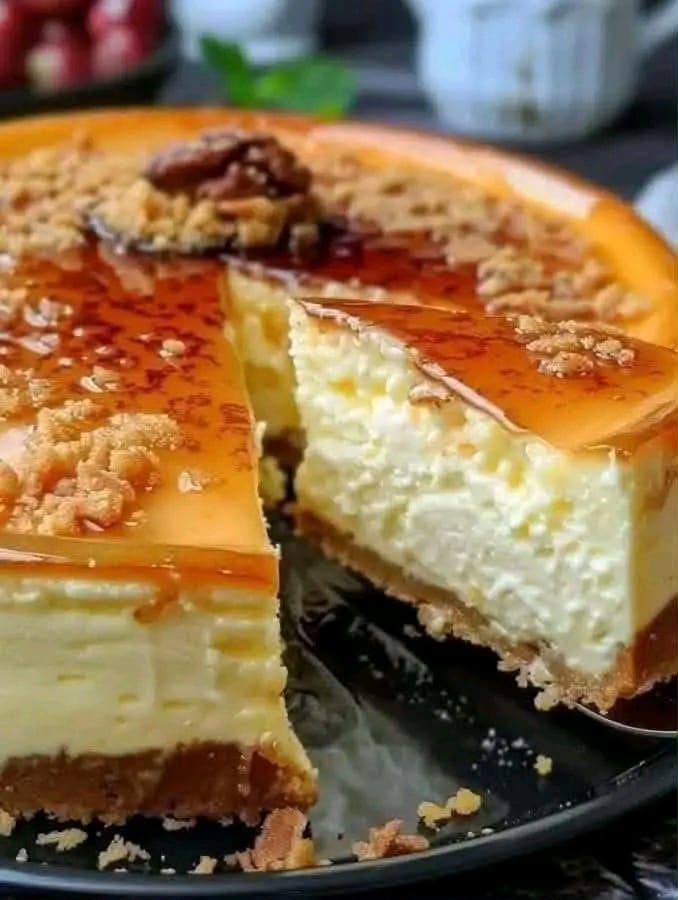
Caramel Pecan Cheesecake
There is something irresistible about a beautifully baked caramel pecan cheesecake. From the buttery biscuit crust to the thick, creamy vanilla filling and glossy caramel topping, every layer brings a different flavour and texture to the table.
This homemade cheesecake combines the gentle tang of cream cheese with sweet caramel and the satisfying crunch of pecans. The result is a rich, elegant dessert that feels special without requiring complicated ingredients or professional baking equipment.
One of the best things about this recipe is the contrast between its layers. The crisp graham cracker base provides structure, the smooth filling almost melts in your mouth, and the caramel pecan topping adds a beautiful finishing touch.
Although cheesecake has a reputation for being difficult, this version uses a straightforward mixing and baking method. With softened ingredients, gentle mixing and enough chilling time, even a beginner can achieve a delicious homemade dessert.
Caramel pecan cheesecake is particularly lovely for Christmas, Thanksgiving, birthdays, Sunday family dinners and celebrations. It can also be prepared the day before serving, making it convenient when you have guests coming.
If you enjoy creamy desserts, buttery biscuit bases and the warm, nutty flavour of pecans, this is a recipe worth adding to your collection.
Recipe Overview
This caramel pecan cheesecake is a classic baked cream cheese dessert with a sweet biscuit crust and a caramel-nut topping. The filling is baked slowly at a moderate temperature, cooled gently and refrigerated until firm enough to slice.
- Recipe: Caramel Pecan Cheesecake
- Category: Dessert
- Style: American-inspired baked cheesecake
- Preparation time: Approximately 20–25 minutes
- Crust baking time: 8–10 minutes
- Cheesecake baking time: 50–60 minutes
- Oven cooling time: Approximately 30 minutes
- Additional cooling: Until sufficiently cool for refrigeration
- Chilling time: At least 4 hours, preferably overnight
- Oven temperature: 325°F (165°C)
- Yield: Approximately 10–12 slices
- Baking tin: 9-inch (23 cm) springform tin
- Difficulty: Moderate
The recipe is particularly suitable for making ahead because the cheesecake needs several hours in the refrigerator to develop its final consistency.
Why You’ll Love This Cheesecake
- Rich, creamy filling: Cream cheese and soured cream create a luxurious texture with a pleasant tang.
- Buttery biscuit crust: Graham cracker crumbs and brown sugar make a delicious base.
- Beautiful caramel finish: The glossy topping makes the cheesecake look impressive.
- Crunchy pecans: Chopped pecans provide a lovely contrast to the soft filling.
- Make-ahead convenience: Prepare the cheesecake the day before your gathering.
- Simple ingredients: Most components are easy to find in supermarkets.
- Great for celebrations: A single cheesecake can serve a small gathering.
- Customisable presentation: Decorate with extra pecans, biscuit crumbs or artistic caramel swirls.
Ingredients
The following quantities make one 9-inch caramel pecan cheesecake.
For the Crust
- 2 cups graham cracker crumbs
- ½ cup unsalted butter, melted
- ¼ cup brown sugar
For the Cheesecake Filling
- 24 oz (approximately 680 g) cream cheese, softened
- 1 cup granulated sugar
- 3 large eggs
- 1 cup soured cream
- 1 teaspoon vanilla extract
- 2 tablespoons plain flour
For the Caramel Pecan Topping
- ¾ cup caramel sauce
- ¾ cup chopped pecans
- Extra graham cracker crumbs, optional
Ingredient note: Graham crackers are common in American baking. If they are unavailable, digestive biscuits can be used as an optional substitution, although the flavour will be slightly different.
Ingredient Notes
Cream Cheese
Full-fat cream cheese is the main ingredient responsible for the cheesecake’s rich flavour and dense, creamy structure. Choose a thick cream cheese suitable for baking rather than a particularly loose or whipped variety. Allow it to soften before mixing so the filling becomes smooth without excessive beating.
Graham Cracker Crumbs
The crumbs form the buttery cheesecake base. Finely crushed crumbs pack together more evenly than large pieces and help the finished crust remain stable when sliced.
Unsalted Butter
Melted butter binds the biscuit crumbs together. It also contributes a rich flavour and helps the crust firm up during baking and chilling.
Brown Sugar
Brown sugar introduces a subtle caramel-like note to the crust, complementing the topping beautifully.
Granulated Sugar
White granulated sugar sweetens the cream cheese filling without overpowering its characteristic tang.
Eggs
Eggs give baked cheesecake its structure. Add them individually and mix gently. Overbeating after the eggs have been added can introduce excess air and increase the chance of cracks.
Soured Cream
Soured cream softens the richness of the cream cheese and provides moisture, producing a filling that tastes creamy rather than overly heavy.
Vanilla Extract
Vanilla gives the cheesecake a warm, rounded flavour that pairs especially well with caramel and pecans.
Plain Flour
A small quantity of flour helps stabilise the filling and supports neat slices after chilling.
Caramel Sauce
Use a thick, pourable caramel sauce that will spread easily over the cold cheesecake. A very thin sauce may run down the sides rather than forming an even topping.
Pecans
Pecans have a naturally buttery, slightly sweet flavour. Chop them into a mixture of small and medium pieces for a topping with varied texture. Lightly toasted pecans are an optional way to intensify their flavour.
Equipment You’ll Need
- 9-inch springform cheesecake tin
- Large mixing bowl
- Electric hand mixer or stand mixer
- Medium mixing bowl
- Measuring cups and spoons
- Rubber spatula
- Food processor or rolling pin for crushing biscuits
- Cooling rack
- Refrigerator
- Sharp knife for serving
A springform tin is especially useful because its removable side makes it easier to release the cheesecake without disturbing the soft filling.
How to Make Caramel Pecan Cheesecake
Step 1: Preheat the Oven
Preheat your oven to 325°F (165°C). Lightly grease a 9-inch springform tin, ensuring the base and sides are prepared for the cheesecake.
Step 2: Mix the Crust Ingredients
Combine the graham cracker crumbs, melted unsalted butter and brown sugar in a mixing bowl. Stir until the mixture resembles evenly moistened crumbs.
Step 3: Press the Crust into the Tin
Transfer the crumb mixture to the prepared springform tin. Press it firmly and evenly across the bottom using the base of a measuring cup or a flat-bottomed glass.
Step 4: Bake the Crust
Bake for 8–10 minutes. Remove the tin from the oven and allow the crust to cool slightly while you prepare the cheesecake filling.
Step 5: Beat the Cream Cheese and Sugar
Place the softened cream cheese and granulated sugar in a large bowl. Beat until smooth and creamy, stopping occasionally to scrape down the sides of the bowl.
Step 6: Add the Soured Cream, Vanilla and Flour
Add the soured cream, vanilla extract and plain flour. Mix until everything is combined and the filling has a smooth, uniform appearance.
Step 7: Incorporate the Eggs
Add the three eggs one at a time, mixing on low speed after each addition. Stop mixing as soon as the eggs are incorporated. Avoid whipping the mixture unnecessarily.
Step 8: Fill the Cheesecake Tin
Pour the cheesecake filling over the slightly cooled biscuit crust. Smooth the surface gently with a spatula so it bakes evenly.
Step 9: Bake the Cheesecake
Place the tin in the preheated oven and bake for 50–60 minutes. The edges should appear set, while the centre should still have a gentle wobble when the tin is moved slightly.
The cheesecake will continue to firm up as it cools. Avoid baking until the centre becomes completely rigid, as this can lead to a dry or cracked filling.
Step 10: Cool Slowly in the Oven
Turn off the oven, open the door slightly and leave the cheesecake inside for approximately 30 minutes. This gradual cooling stage helps reduce sudden temperature changes.
Step 11: Refrigerate Until Firm
Remove the cheesecake from the oven and allow it to cool further. Once it is cool enough for refrigeration, cover and chill for at least 4 hours, preferably overnight.
Step 12: Add the Caramel Sauce
Once thoroughly chilled, carefully release the cheesecake from the springform tin. Pour ¾ cup caramel sauce over the surface and spread it gently to create a glossy layer.
Step 13: Add the Pecans
Sprinkle ¾ cup chopped pecans over the caramel topping. Add a little extra graham cracker crumble if desired.
Step 14: Slice and Serve
Cut the cheesecake into neat slices using a sharp knife. Wipe the blade between cuts for a cleaner finish. Serve chilled and enjoy the combination of rich cheesecake, buttery crust, sweet caramel and crunchy pecans.
How to Make a Perfect Cheesecake Crust
A good cheesecake crust should be firm enough to support the filling but tender enough to cut easily with a fork.
Begin with finely crushed biscuits. Large pieces leave gaps that can make the crust crumble unevenly. A food processor gives consistent results, but a sealed bag and rolling pin work just as well.
Once the melted butter and brown sugar have been mixed into the crumbs, press the mixture evenly into the bottom of the tin. Pay particular attention to the edges, where loose crumbs can create a weak base.
The short baking stage helps set the butter and creates a more stable crust. Allowing the base to cool slightly before adding the filling also makes the assembly easier.
For neat slices, use steady pressure when cutting rather than sawing repeatedly through the biscuit layer.
How to Make a Smooth Cheesecake Filling
The secret to a creamy cheesecake begins before the ingredients reach the mixing bowl. Softened cream cheese is easier to combine evenly with sugar, helping prevent lumps.
Beat the cream cheese and sugar first, when the mixture can tolerate more mixing. Once it looks smooth, incorporate the soured cream, vanilla and flour.
The eggs should be added last and mixed gently. Eggs help the cheesecake set, but too much beating introduces air bubbles that expand in the oven and may contribute to cracking.
Temperature control is equally important. Baking at 325°F (165°C) allows the filling to set gradually. Look for a stable outer edge and a gently wobbling centre rather than a completely firm surface.
Finally, remember that chilling is part of the recipe, not simply a storage step. Refrigeration allows the cheesecake to become properly sliceable and gives the filling its characteristic dense, creamy texture.
How to Add the Caramel Pecan Topping
The caramel pecan topping is the finishing touch that makes this dessert visually striking and adds extra flavour.
Always wait until the cheesecake is thoroughly chilled before adding the sauce. A cold, firm surface supports the caramel and helps prevent the topping from disturbing the filling.
If the caramel sauce is extremely thick, let it become slightly more pourable before spreading, but avoid pouring hot caramel directly onto the cheesecake.
Spread the sauce from the centre towards the edges with the back of a spoon or an offset spatula. You can create an even coating or allow a little caramel to settle naturally around the outer edge.
Sprinkle the chopped pecans while the caramel is still tacky so they stay in place. For a presentation similar to the photograph, concentrate some pecans around the outer edge and leave areas of the glossy caramel visible.
A small scattering of biscuit crumbs adds another layer of texture without overwhelming the cheesecake.
Expert Tips for the Best Cheesecake
- Use softened cream cheese. Cold cream cheese is more likely to produce a lumpy filling.
- Choose full-fat cream cheese. It provides the rich texture expected from a traditional baked cheesecake.
- Crush the biscuits finely. Even crumbs create a more stable crust.
- Press the crust firmly. Use a flat-bottomed glass for even pressure.
- Measure the flour carefully. Too much flour can make the filling heavier.
- Scrape the mixing bowl. This prevents unmixed cream cheese from remaining near the bottom.
- Add eggs individually. Gentle mixing helps maintain a consistent filling.
- Avoid overbeating. Excess air can affect the finished surface.
- Keep the oven temperature steady. Frequent door opening can cause sudden temperature changes.
- Watch the centre. A gentle wobble is preferable to a completely rigid cheesecake.
- Cool gradually. The oven-resting stage helps prevent abrupt contraction.
- Chill thoroughly. Overnight chilling gives the cleanest slices.
- Use thick caramel. A sauce that is too runny can slide off the surface.
- Clean the knife between cuts. This gives each serving a professional-looking edge.
Common Cheesecake Mistakes to Avoid
1. Using Cold Cream Cheese
Cold cream cheese does not blend easily and can leave unwanted lumps. Allow it to soften before mixing.
2. Making a Loose Crust
If the crumbs are not firmly pressed into the tin, the crust may break when sliced. Compact it evenly before baking.
3. Overmixing the Eggs
Excessive mixing creates air bubbles that may expand and collapse during baking. Use low speed and stop as soon as the eggs are incorporated.
4. Baking at Too High a Temperature
High heat can cause the edges to become overcooked before the centre sets. Follow the specified oven temperature.
5. Overbaking the Cheesecake
Waiting until the entire cheesecake is completely firm can result in a dry texture. The centre should still wobble gently at the end of baking.
6. Cooling Too Quickly
Moving a hot cheesecake directly into a cold environment can cause the filling to contract rapidly. Follow the gradual cooling method.
7. Removing the Tin Too Early
A warm cheesecake may still be delicate. Chill it thoroughly before releasing the springform side.
8. Adding Hot Caramel
Very hot caramel can soften or damage the finished surface. Allow the topping to reach a suitable pouring temperature first.
9. Cutting Before Chilling
A cheesecake that has not chilled properly may appear soft or fall apart. Allow at least four hours in the refrigerator.
Optional Cheesecake Variations
The original recipe is delicious as written, but these optional ideas provide ways to create different flavours without changing the basic baking technique.
1. Salted Caramel Pecan Cheesecake
Use salted caramel sauce instead of regular caramel for a sweet-and-salty contrast.
2. Chocolate Caramel Cheesecake
Decorate the finished cheesecake with a small drizzle of melted chocolate alongside the caramel.
3. Toasted Pecan Cheesecake
Lightly toast the chopped pecans and allow them to cool before adding them to the topping.
4. Cinnamon Caramel Cheesecake
Add a small pinch of cinnamon to the biscuit crust for a warmer flavour.
5. Digestive Biscuit Crust
Replace graham cracker crumbs with finely crushed digestive biscuits when graham crackers are difficult to find.
6. Extra Vanilla Cheesecake
For a more pronounced vanilla flavour, use a little additional vanilla extract in the filling.
7. Caramel Swirl Presentation
Instead of spreading the topping completely flat, make gentle swirls with a spoon before adding the pecans.
How to Serve Caramel Pecan Cheesecake
This cheesecake tastes best when served chilled, with its layers firm enough to hold their shape while remaining creamy.
For a special occasion, place individual slices on white dessert plates so the golden caramel and creamy filling stand out. A few extra chopped pecans around the plate can create an elegant finish.
Fresh strawberries or raspberries are lovely accompaniments because their gentle acidity balances the richness of the dessert. A small portion of unsweetened whipped cream is another optional addition.
For drinks, serve the cheesecake with freshly brewed coffee, espresso, black tea or a glass of cold milk. The mild bitterness of coffee works especially well with sweet caramel.
Because the cheesecake is rich, relatively modest slices are often sufficient, particularly when it is served after a full meal.
Storage, Freezing and Make-Ahead Tips
Refrigerating Leftovers
Store leftover caramel pecan cheesecake in a covered container in the refrigerator. For best quality, enjoy within 3–4 days.
Because the filling contains cream cheese, soured cream and eggs, the cheesecake should not be left at room temperature for longer than two hours.
Freezing the Cheesecake
For the best texture, freeze the baked and completely chilled cheesecake before adding the caramel pecan topping.
Wrap the cheesecake or individual slices tightly in food-safe wrapping and place them in a freezer-safe container. For best quality, use within approximately two months.
Thaw overnight in the refrigerator, then add the caramel sauce and pecans before serving.
Can You Make It Ahead?
Yes. In fact, making this cheesecake the day before serving is highly recommended because the extended chilling period allows the filling to set fully.
Prepare and bake the cheesecake, cool it carefully, and refrigerate it overnight. Add the topping shortly before serving for the freshest nutty texture and cleanest appearance.
Should You Reheat Cheesecake?
No reheating is necessary. This dessert is designed to be enjoyed chilled.
Frequently Asked Questions
1. What is caramel pecan cheesecake?
It is a baked cream cheese dessert with a biscuit crust, creamy filling and a topping made from caramel sauce and pecans.
2. Can I make caramel pecan cheesecake the day before?
Yes. Preparing it a day ahead gives it plenty of time to chill and develop a firm, creamy texture.
3. How long does the cheesecake need to chill?
At least four hours, although overnight chilling is preferable for neat slices.
4. Can I use digestive biscuits instead of graham crackers?
Yes. Finely crushed digestive biscuits are a suitable optional alternative, but their flavour and sweetness may differ.
5. Do I need a springform tin?
A springform tin is recommended because it makes removing the cheesecake much easier. A regular cake tin is more difficult to use without damaging the dessert.
6. Why did my cheesecake crack?
Cracking may result from overmixing, overbaking or rapid cooling. Gentle mixing and gradual cooling can help reduce the risk.
7. Is a cracked cheesecake still edible?
Yes, provided it has been cooked and stored safely. The caramel topping can also help conceal minor cracks.
8. How do I know when the cheesecake is baked?
The edges should be set while the centre still has a small, gentle wobble. It will continue to firm as it cools.
9. Can I use low-fat cream cheese?
You can experiment with it, but the texture may be softer and less rich. Full-fat cream cheese is recommended for the original recipe.
10. Do I need a water bath?
The supplied recipe does not require a water bath. Careful baking and cooling can still produce a creamy cheesecake.
11. Can I use homemade caramel sauce?
Yes. Homemade or shop-bought caramel sauce works, provided it has a thick, pourable consistency and is not hot when added.
12. Should I toast the pecans?
Toasting is optional. It can enhance their nutty flavour, but ordinary chopped pecans are suitable for the original recipe.
13. Why is my cheesecake filling lumpy?
The cream cheese may have been too cold or insufficiently mixed before the eggs were added. Begin with softened cream cheese for smoother results.
14. Can I add the caramel before baking?
For this recipe, the caramel is added after the cheesecake has baked and chilled. This preserves the intended glossy topping.
15. How do I slice cheesecake neatly?
Use a sharp knife and wipe it clean between slices. A well-chilled cheesecake is much easier to cut.
16. Can I freeze individual slices?
Yes. Wrap the chilled slices individually and freeze them in a suitable container, ideally before adding the caramel topping.
17. How long will the cheesecake last in the refrigerator?
For best quality, use it within three to four days when properly covered and refrigerated.
18. Can I leave the cheesecake out for a party?
Keep it refrigerated until serving and avoid leaving it at room temperature for more than two hours.
19. Can I make the crust thicker?
A thicker crust is possible as an optional adaptation, but additional crumbs and butter would be needed. The original quantities create a suitable base for a 9-inch cheesecake.
20. What makes this cheesecake creamy?
The combination of softened cream cheese, soured cream, eggs, gentle mixing and controlled baking produces the characteristic creamy texture.
21. Can I use walnuts instead of pecans?
Yes, as an optional variation. Walnuts give the cheesecake a slightly different, more pronounced nutty flavour.
22. Is caramel pecan cheesecake suitable for holidays?
Absolutely. Its rich flavour and elegant appearance make it a lovely dessert for Thanksgiving, Christmas and family celebrations.
Caramel Pecan Cheesecake Recipe Card
Description: A rich, creamy baked vanilla cheesecake with a buttery graham cracker crust, glossy caramel sauce and crunchy chopped pecans.
- Course: Dessert
- Style: American-inspired
- Method: Oven-baked
- Prep time: Approximately 20–25 minutes
- Crust bake: 8–10 minutes
- Cheesecake bake: 50–60 minutes
- Oven cooling: 30 minutes
- Additional cooling: Until cool enough to refrigerate
- Chill time: At least 4 hours, preferably overnight
- Servings: Approximately 10–12
- Oven: 325°F (165°C)
- Tin: 9-inch springform tin
Ingredients
Crust
- 2 cups graham cracker crumbs
- ½ cup unsalted butter, melted
- ¼ cup brown sugar
Cheesecake Filling
- 24 oz cream cheese, softened
- 1 cup granulated sugar
- 3 large eggs
- 1 cup soured cream
- 1 teaspoon vanilla extract
- 2 tablespoons plain flour
Caramel Pecan Topping
- ¾ cup caramel sauce
- ¾ cup chopped pecans
- Extra graham cracker crumbs, optional
Instructions
- Preheat the oven to 325°F (165°C) and lightly grease a 9-inch springform tin.
- Combine the graham cracker crumbs, melted butter and brown sugar.
- Press the mixture firmly into the bottom of the tin.
- Bake for 8–10 minutes, then allow the crust to cool slightly.
- Beat the softened cream cheese and sugar until smooth and creamy.
- Add the soured cream, vanilla extract and plain flour, mixing until combined.
- Add the eggs one at a time, mixing on low speed just until incorporated.
- Pour the cheesecake filling over the prepared crust and smooth the top.
- Bake for 50–60 minutes, until the edges are set and the centre still wobbles slightly.
- Turn off the oven, leave the door slightly open and cool the cheesecake inside for approximately 30 minutes.
- Allow to cool further, then refrigerate for at least four hours, preferably overnight.
- Carefully remove the chilled cheesecake from the springform tin.
- Pour ¾ cup caramel sauce over the surface.
- Sprinkle with ¾ cup chopped pecans and optional extra graham cracker crumbs.
- Slice with a sharp knife, wiping the blade between cuts, and serve chilled.
Recipe Notes
- Use softened, full-fat cream cheese for the smoothest filling.
- Avoid excessive mixing after adding the eggs.
- Do not overbake; the centre should still wobble slightly.
- Chill the cheesecake completely before adding the caramel topping.
- Store leftovers covered in the refrigerator for up to 3–4 days.
Hashtags: #CaramelPecanCheesecake #HomemadeCheesecake #CheesecakeRecipe #CaramelDessert #PecanDessert
Final Thoughts
Caramel pecan cheesecake is a wonderful combination of creamy vanilla filling, buttery biscuit crust, rich caramel and crunchy pecans. With careful baking and plenty of chilling time, it becomes a beautiful homemade dessert that is perfect for sharing.
Save this recipe for your next celebration, share your results in the comments and follow along for more delicious homemade desserts and family favourites.