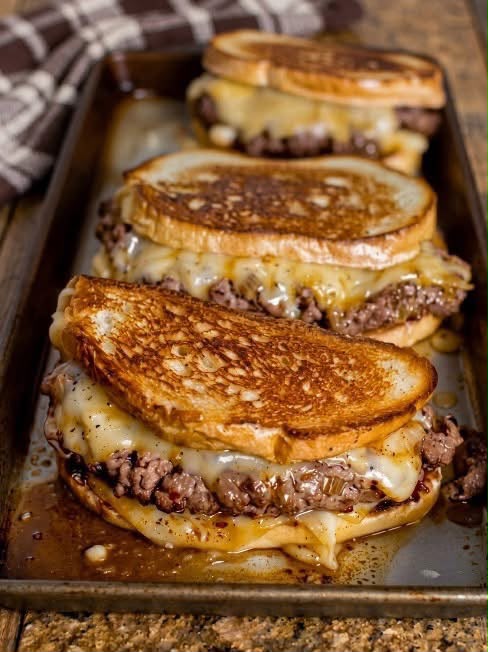
Cheesy Beef Patty Melts
Cheesy beef patty melts bring together everything that makes a homemade toasted sandwich irresistible: juicy beef, sweet caramelised onions, golden buttery bread and plenty of melted cheese. Each bite combines a crispy exterior with a rich, savoury filling that feels wonderfully comforting.
Unlike an ordinary cheeseburger, a traditional patty melt is made with slices of sandwich bread rather than a burger bun. The bread is toasted directly in a frying pan, allowing the butter to develop a beautifully golden crust while the cheese melts around the beef.
This version includes two delicious cheeses. Cheddar gives the sandwich a rich, familiar flavour, while provolone or Swiss cheese creates a smooth, creamy layer that holds the filling together.
The onions are another important part of the recipe. Cooking them in the same pan used for the beef allows them to pick up some of the savoury flavour left behind. A little Worcestershire sauce adds extra depth.
These homemade patty melts are perfect for a relaxed family dinner, weekend lunch or satisfying evening meal. Serve them with crispy chips, a fresh salad or your favourite dipping sauce.
Best of all, the recipe uses straightforward ingredients and a simple frying-pan method. With a little attention to heat and timing, you can make restaurant-style cheesy beef sandwiches in your own kitchen.
Recipe Overview
- Recipe: Cheesy Beef Patty Melts
- Category: Main course, lunch or dinner
- Cuisine: American-inspired
- Preparation Time: Approximately 10 minutes
- Cooking Time: Approximately 20–30 minutes
- Total Time: Approximately 30–40 minutes
- Servings: 3 sandwiches
- Cooking Method: Stovetop frying pan
- Difficulty: Easy
- Main Ingredients: Minced beef, bread, onions, cheddar, provolone or Swiss cheese
These times are practical estimates. Actual cooking time depends on pan size, patty thickness and whether the sandwiches are toasted in batches.
Why You’ll Love This Recipe
- Two layers of cheese: Cheddar and provolone or Swiss cheese provide a wonderfully creamy filling.
- Golden toasted bread: Butter creates a crisp crust with a delicious, rich flavour.
- Juicy beef: Thin beef patties cook quickly and fit neatly between the bread slices.
- Sweet onions: Slowly cooked onions balance the savoury beef and cheese.
- Everyday ingredients: The recipe relies on familiar supermarket staples.
- Simple cooking method: Everything can be prepared using a frying pan.
- Easy to customise: Different breads, cheeses and condiments can be used.
- Family-friendly: The combination of toasted bread, beef and melted cheese makes a hearty, satisfying meal.
Ingredients
For the Beef Patties
- 1 lb (approximately 454 g) minced beef
- ½ teaspoon garlic powder
- ½ teaspoon salt
- ¼ teaspoon black pepper
For the Onions
- 1 large onion, thinly sliced
- 1 tablespoon Worcestershire sauce
- 1 tablespoon butter, taken from the total amount below
For Assembling the Patty Melts
- 6 slices sandwich bread or Texas toast
- 6 slices provolone or Swiss cheese
- 6 slices cheddar cheese
- 2 tablespoons butter in total, including the tablespoon used for the onions
Important: The two tablespoons of butter are shared between cooking the onions and buttering the bread. No additional butter is required for the original recipe.
Ingredient Notes
Minced Beef
Minced beef forms the centre of each sandwich. Choose fresh beef with enough fat to retain moisture during cooking. Very lean beef may produce a firmer, less succulent patty.
The recipe makes three patties from one pound of beef. Shape them slightly larger than the bread because they will shrink as they cook.
Sandwich Bread or Texas Toast
Ordinary sandwich bread produces a classic patty melt, while thicker Texas toast creates a more substantial sandwich. Choose bread that can support the filling without tearing.
Provolone or Swiss Cheese
Provolone has a mild, creamy flavour and melts smoothly. Swiss cheese brings a slightly nutty taste. Either works beautifully with beef and caramelised onions.
Cheddar Cheese
Cheddar adds a distinctive savoury richness. Medium or mature cheddar works particularly well. Sliced cheese distributes evenly and helps hold the sandwich together.
Onion
A large onion provides enough sweet, savoury flavour for all three sandwiches. Slice it thinly and evenly so the pieces soften at a similar rate.
Worcestershire Sauce
This concentrated sauce enhances the savoury character of the onions. Stir it through near the end of cooking so its flavour coats the softened slices.
Butter
Butter helps brown the bread and adds richness to the onions. Spread it thinly and evenly across the bread to encourage consistent toasting.
Garlic Powder, Salt and Pepper
These seasonings enhance the natural flavour of the beef without overwhelming the cheese and onions. Distribute them evenly across both sides of the patties.
Equipment You’ll Need
- Large frying pan or cast-iron skillet
- Spatula for turning patties and sandwiches
- Sharp kitchen knife
- Chopping board
- Small plate or tray for cooked patties
- Butter knife
- Food thermometer for checking the beef
- Kitchen tongs, optional
A heavy-bottomed frying pan is particularly useful because it distributes heat evenly and helps create a consistent golden crust.
How to Make Cheesy Beef Patty Melts
Step 1: Shape the Beef Patties
Divide the minced beef into three equal portions. Gently shape each portion into a thin, flat patty approximately the size of your bread slices.
Avoid squeezing or overworking the meat. A light touch helps prevent the cooked patties from becoming too dense.
Step 2: Season the Beef
Sprinkle both sides of each patty with the garlic powder, salt and black pepper, dividing the seasonings evenly.
Press the seasoning gently onto the surface so it stays in place during cooking.
Step 3: Cook the Patties
Heat a frying pan over medium-high heat. Add the patties and cook for approximately 3–4 minutes per side, until browned.
The precise cooking time depends on thickness. Check that the centre reaches 71°C (160°F) using a food thermometer before removing the beef from the heat.
Transfer the cooked patties to a plate and set aside while preparing the onions.
Step 4: Soften the Onions
Reduce the heat to medium. Add one tablespoon of butter to the same pan, followed by the thinly sliced onion.
Cook for approximately 6–8 minutes, stirring frequently, until softened and golden.
For a deeper caramelised flavour, continue cooking gently for longer if needed, reducing the heat to prevent burning.
Step 5: Add Worcestershire Sauce
Stir one tablespoon of Worcestershire sauce into the softened onions.
Toss until the onion slices are evenly coated, then remove them from the pan.
Step 6: Butter the Bread
Spread the remaining tablespoon of butter thinly across one side of each of the six bread slices.
The buttered sides will face outwards when the sandwiches are assembled.
Step 7: Assemble the Patty Melts
Place one bread slice in the frying pan with its buttered side facing down.
Layer two slices of cheddar cheese over the bread, followed by one cooked beef patty.
Divide the onions into three equal portions and spoon one portion over the beef.
Add two slices of provolone or Swiss cheese, then finish with another bread slice, buttered side facing upwards.
Repeat for the remaining two sandwiches.
Step 8: Toast Until Golden
Cook the assembled sandwiches over medium-low heat for approximately 3–4 minutes per side.
Press gently with a spatula to encourage contact with the pan, but do not flatten the filling excessively.
Turn carefully when the underside is golden and crisp. Continue cooking until the second side is browned and both cheese layers have melted.
Step 9: Serve Hot
Transfer the patty melts to a serving plate or tray. Allow them to rest briefly so the melted cheese settles slightly.
Slice each sandwich diagonally if desired and serve while the bread is crisp and the cheese is still wonderfully gooey.
How to Cook Juicy Beef Patties
The beef is the heart of a good patty melt. Because the sandwiches contain generous amounts of cheese and onion, it is important that the patties are flavourful without becoming excessively thick.
Start by dividing the beef evenly. Each portion should be shaped into a thin patty that extends close to the edges of the bread. This ensures that every bite contains a balanced amount of beef.
Heat the pan before adding the patties. A sufficiently hot surface creates a browned exterior without requiring the meat to cook for an unnecessarily long period.
Once the patties are cooking, avoid continually moving them. Allow the first side to brown before turning with a spatula.
Try not to press down hard while cooking. Excessive pressure can squeeze juices out of the beef and leave the finished sandwich dry.
Use a food thermometer to confirm an internal temperature of 71°C (160°F). Browning alone is not a reliable indicator that minced beef is fully cooked.
How to Make Sweet, Golden Onions
Golden onions contribute an essential layer of flavour to cheesy beef patty melts. Their natural sweetness balances the richness of the beef and the salty character of the cheese.
Begin by slicing the onion as evenly as possible. Thin slices soften more quickly and distribute easily across the patties.
After cooking the beef, retain the flavourful browned residue in the pan. Add the butter and onions, then stir regularly to prevent sticking.
The original recipe gives the onions 6–8 minutes. This produces softened, golden onions when the slices are thin and the pan is sufficiently warm. Deeply caramelised onions generally require longer cooking over lower heat.
Watch the colour carefully. If the onions begin to brown too rapidly, reduce the heat rather than allowing them to burn.
Once softened, add the Worcestershire sauce. It gives the onions a rich, savoury finish that complements the beef without the need for a separate sauce.
How to Make Crispy, Golden Patty Melts
The distinctive texture of a patty melt comes from the bread. It should be deeply golden on the outside while remaining tender enough to bite through easily.
Butter the outer surfaces evenly. Thick clumps of butter can create uneven browning, while a light, consistent layer encourages a crisp crust.
Medium-low heat works best for the assembled sandwiches. It allows the cheese time to melt before the bread becomes too dark.
Use a spatula to turn the sandwich carefully. Supporting the underside prevents the filling from slipping out during flipping.
If the bread is browning before the cheese has melted, reduce the heat and allow the sandwich to cook more gently.
A brief rest before slicing helps keep the filling neatly inside the bread. However, patty melts are at their best when served immediately after cooking.
Expert Cooking Tips
- Choose sturdy bread. Bread with a firm texture holds the beef and melted cheese more effectively.
- Shape the patties thinly. Thin patties make the finished sandwiches easier to eat.
- Make patties slightly oversized. Beef naturally shrinks as it cooks.
- Season both sides. Even seasoning produces more consistent flavour.
- Preheat the pan. This helps achieve a nicely browned beef surface.
- Do not overcrowd. Cook the patties in batches if the pan is too small.
- Use the same pan for onions. The beef residue contributes delicious savoury flavour.
- Slice onions uniformly. Even slices soften at a similar rate.
- Drain excessive grease. Too much rendered beef fat can make the sandwiches heavy and soggy.
- Layer cheese on both sides of the filling. This helps the sandwich hold together.
- Keep the toasting heat moderate. High heat can burn the bread before the cheese melts.
- Flip carefully. Support the whole sandwich with a wide spatula.
- Serve promptly. Freshly toasted bread provides the best contrast to the soft filling.
Common Mistakes to Avoid
1. Making the Beef Patties Too Thick
Very thick patties can make the sandwiches difficult to assemble and eat. Shape them thinly for a more traditional patty melt.
2. Overworking the Beef
Mixing and compressing the meat excessively can produce a tough texture. Shape the patties gently.
3. Cooking Over Excessively High Heat
High heat is useful for browning the beef, but assembled sandwiches need gentler cooking so the cheese can melt.
4. Burning the Onions
Dark, bitter onions can overpower the filling. Stir frequently and reduce the heat if they colour too quickly.
5. Using Too Much Butter
Excess butter can leave the bread greasy. Spread the measured amount thinly and evenly.
6. Adding Excess Beef Grease
Too much liquid fat can soak into the bread. Remove excess grease from the pan when necessary.
7. Overfilling the Sandwiches
Divide the cheese and onions evenly between the three patties to prevent ingredients from falling out.
8. Pressing Too Firmly
Gentle pressure helps toast the bread, but excessive pressing can force the filling out and compress the sandwich.
9. Relying Only on Beef Colour
A browned exterior does not guarantee safe cooking. Check the centre of each patty with a food thermometer.
Optional Recipe Variations
The following ideas are optional changes to the original recipe.
1. Mushroom Patty Melts
Add sautéed mushrooms alongside the onions for an earthy, savoury filling. Cook the mushrooms until their released moisture has evaporated.
2. Spicy Beef Patty Melts
Add sliced jalapeños or a little hot sauce to the filling for extra heat.
3. Bacon Cheeseburger Melts
Include a few slices of cooked crispy bacon between the patty and cheese.
4. Rye Bread Patty Melts
Replace the sandwich bread with rye bread for a more traditional American diner-style flavour.
5. Mozzarella Beef Melts
Use mozzarella in place of provolone for a mild, stretchy cheese layer.
6. Garlic Butter Patty Melts
Mix a small amount of crushed garlic into the butter before spreading it over the bread.
7. Turkey Patty Melts
Replace the minced beef with minced turkey and cook the patties to 74°C (165°F) before assembling the sandwiches.
What to Serve with Beef Patty Melts
These sandwiches are satisfying enough to serve as a main meal, but the right accompaniments make them even better.
- Crispy chips: A classic accompaniment that complements the toasted bread.
- Potato wedges: Seasoned wedges make a hearty family dinner.
- Coleslaw: Cool, crunchy cabbage provides a refreshing contrast.
- Green salad: Fresh lettuce, cucumber and tomatoes balance the rich filling.
- Pickles: Their sharp flavour cuts through the cheese and beef.
- Tomato soup: A warming option for a comforting lunch.
- Mustard or burger sauce: Serve separately for dipping.
For an attractive presentation, arrange the sandwiches on a large serving tray and slice them diagonally to reveal the melted cheese and beef filling.
Storage and Reheating
Refrigerating Leftovers
Allow cooked sandwiches to cool briefly, then refrigerate promptly in airtight containers. Do not leave perishable food at room temperature for more than two hours.
For best quality, enjoy refrigerated leftovers within 3–4 days.
Reheating in a Frying Pan
Place a sandwich in a dry frying pan over medium-low heat. Warm gently, turning occasionally, until the filling is thoroughly heated and the bread becomes crisp again.
Reheating in the Oven
Place the sandwiches on a baking tray and warm at approximately 180°C (350°F) until thoroughly heated. Monitor the bread to prevent excessive browning.
Can You Use a Microwave?
A microwave can heat the filling, but it often softens the bread. For a better texture, use a frying pan or oven instead.
Freezing
For best results, freeze the cooked patties separately rather than freezing fully assembled sandwiches. Wrap the cooled patties securely and freeze for up to 2–3 months for best quality.
Thaw in the refrigerator and reheat thoroughly before assembling fresh sandwiches.
Preparing Ahead
The onions can be cooked ahead and refrigerated. The patties may also be prepared in advance and kept refrigerated safely.
Assemble and toast the sandwiches shortly before serving to preserve the crisp bread and melted cheese texture.
Frequently Asked Questions
1. What is a patty melt?
A patty melt is a toasted sandwich traditionally filled with a beef patty, cheese and cooked onions. It is usually prepared in a frying pan rather than served in a burger bun.
2. What makes a patty melt different from a cheeseburger?
A cheeseburger normally uses a soft burger bun, while a patty melt is made with sliced bread toasted until golden and crisp.
3. What is the best bread for patty melts?
Rye bread, sturdy sandwich bread and Texas toast all work well. The best choice is one that supports the filling without becoming soggy.
4. Can I use ordinary white bread?
Yes. Ordinary white sandwich bread works well, particularly if it is thick enough to hold the beef and cheese.
5. Can I use sourdough bread?
Yes. Sourdough is a delicious optional substitution and provides a slightly tangy flavour and crisp crust.
6. Which cheese melts best?
Provolone, Swiss, cheddar and mozzarella are all suitable. The original combination of cheddar with provolone or Swiss provides both flavour and creaminess.
7. Can I use only cheddar cheese?
Yes. You can replace the provolone or Swiss with cheddar, although the flavour and melting texture will change slightly.
8. Do I need to caramelise the onions?
Soft, golden onions are sufficient for the original recipe. Cooking them longer over gentle heat creates additional sweetness if you prefer deeper caramelisation.
9. Can I make patty melts without onions?
Yes. Simply omit the onions, although they contribute much of the classic patty melt flavour.
10. How do I prevent soggy bread?
Drain excess grease, avoid overfilling the sandwiches and toast them over medium-low heat until both sides become crisp.
11. Should I cook the beef before assembling?
Yes. Cook the patties completely before putting them between the bread and cheese.
12. How do I know the beef is cooked safely?
Use a food thermometer to check that the centre reaches 71°C (160°F).
13. Can I use frozen beef patties?
Yes, provided they are cooked fully according to appropriate food-safety guidance before sandwich assembly.
14. Can I use minced turkey instead of beef?
Yes. Minced turkey is a possible variation, but it must reach an internal temperature of 74°C (165°F).
15. Can I cook several sandwiches at once?
Yes, if your pan is large enough. Leave enough room to flip them safely and maintain even contact with the cooking surface.
16. Why is my bread burning before the cheese melts?
The pan is probably too hot. Reduce the heat and allow the sandwich to toast more slowly.
17. Can I make these on a griddle?
Yes. A flat griddle is excellent for preparing multiple sandwiches and achieving even browning.
18. Can I prepare the patties ahead of time?
Yes. Cook them fully, cool promptly and refrigerate safely until you are ready to reheat and assemble the sandwiches.
19. Are patty melts suitable for lunch?
Absolutely. They make a filling lunch, especially when paired with a fresh salad or pickles.
20. Can I add a sauce?
Yes. Mustard, burger sauce or a little mayonnaise can be added as optional variations. Avoid using too much liquid sauce because it may soften the bread.
21. How can I keep the sandwiches warm?
Keep finished sandwiches briefly in a low oven while preparing the remaining portions. Avoid leaving them for too long because the bread can dry out.
22. Can I double the recipe?
Yes. Double all the ingredients to make six sandwiches. Cook in batches so the beef browns properly and the bread toasts evenly.
Complete Recipe Card
Cheesy Beef Patty Melts
Description: Golden, buttery toasted sandwiches filled with juicy beef patties, sweet caramelised onions, cheddar and creamy melted provolone or Swiss cheese.
- Category: Main course
- Style: American-inspired comfort food
- Method: Frying pan
- Prep Time: Approximately 10 minutes
- Cook Time: Approximately 20–30 minutes
- Total Time: Approximately 30–40 minutes
- Yield: 3 sandwiches
Ingredients
- 1 lb (454 g) minced beef
- 6 slices sandwich bread or Texas toast
- 1 large onion, thinly sliced
- 6 slices provolone or Swiss cheese
- 6 slices cheddar cheese
- 2 tablespoons butter, divided between onions and bread
- 1 tablespoon Worcestershire sauce
- ½ teaspoon garlic powder
- ½ teaspoon salt
- ¼ teaspoon black pepper
Instructions
- Divide the minced beef into three equal portions and shape into thin patties.
- Season both sides evenly with garlic powder, salt and black pepper.
- Heat a frying pan over medium-high heat and cook the patties for approximately 3–4 minutes per side, until browned and the centre reaches 71°C (160°F).
- Remove the cooked patties and set aside.
- Add one tablespoon of butter and the sliced onion to the same frying pan.
- Cook for 6–8 minutes, stirring frequently, until the onions are soft and golden. Continue cooking gently if deeper caramelisation is desired.
- Stir in the Worcestershire sauce and remove the onions from the pan.
- Spread the remaining tablespoon of butter over one side of each bread slice.
- Place one slice of bread, buttered side down, in the frying pan.
- Add two slices of cheddar, one beef patty, one-third of the cooked onions and two slices of provolone or Swiss cheese.
- Top with another bread slice, buttered side facing upwards.
- Repeat to assemble the remaining sandwiches.
- Cook over medium-low heat for approximately 3–4 minutes per side, turning carefully, until the bread is golden and the cheese has melted.
- Serve immediately while warm and crispy.
Recipe Notes
- Use sturdy bread for the best toasted texture.
- Do not press the patties excessively while cooking.
- Check that minced beef reaches 71°C (160°F).
- Cook the onions longer at lower heat for deeper caramelisation.
- Reduce the heat if the bread browns before the cheese melts.
- Serve fresh for the best crispy exterior and creamy filling.
Hashtags: #PattyMelts #CheesyBeef #EasyDinnerRecipes #ComfortFood #HomemadeSandwiches