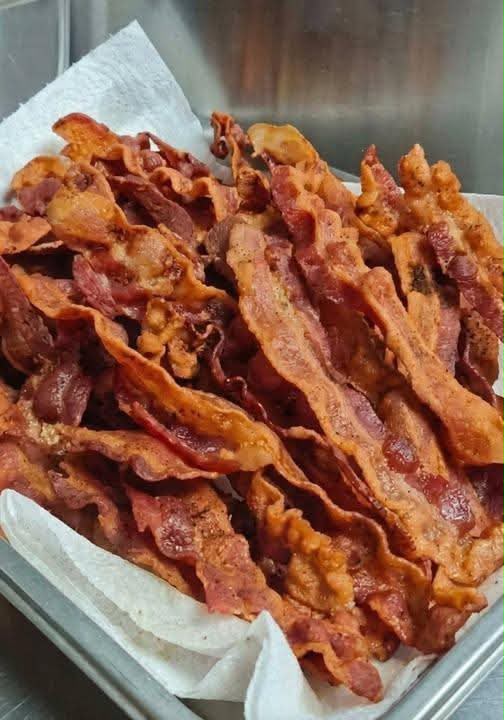
Oven-Baked Crispy Bacon
There is something wonderfully satisfying about perfectly cooked bacon. Its rich, savoury flavour, golden-brown edges and irresistible crunch make it a favourite at breakfast tables and weekend brunches. This oven-baked crispy bacon recipe gives you all those delicious qualities without spending your morning standing over a frying pan.
Baking bacon in the oven is one of the simplest ways to prepare several portions at once. Instead of cooking a few strips in a crowded pan, you can arrange the bacon across a large baking tray and allow the oven to do most of the work. The result is beautifully browned bacon with crisp edges and a satisfying texture.
Another advantage is how little attention the method requires. Once the bacon is arranged on the tray, it cooks in approximately 15–20 minutes, depending on its thickness. A quick check towards the end helps you achieve your preferred level of crispness.
This recipe uses just four ingredients, including two optional additions. Bacon provides the familiar smoky, salty flavour, while black pepper adds a gentle warmth. For something different, a little brown sugar brings a subtle caramelised sweetness, and smoked paprika adds an extra layer of smoky flavour.
Whether you are preparing a full English breakfast, making sandwiches, assembling a brunch platter or adding a crunchy topping to homemade dishes, this easy oven bacon recipe is a useful technique to master.
Best of all, you do not need complicated equipment or specialist cooking skills. A large baking tray, a little patience and a hot oven are enough to produce deliciously crispy bacon at home.
Recipe Overview
- Recipe Name: Oven-Baked Crispy Bacon
- Category: Breakfast, Brunch, Side Dish
- Style: American-inspired home cooking
- Preparation Time: Approximately 5 minutes
- Cooking Time: 15–20 minutes
- Resting Time: A few minutes
- Total Time: Approximately 25–30 minutes
- Yield: 1 lb (454 g) cooked bacon before moisture and fat loss; approximately 4–6 portions depending on use
- Oven Temperature: 400°F (200°C)
- Cooking Method: Oven baking
- Equipment: Large rimmed baking tray
- Main Ingredient: Bacon
- Difficulty: Easy
Why You’ll Love This Recipe
- Simple preparation: You only need a few minutes to arrange and season the bacon.
- Beautifully crisp texture: The oven’s heat helps the bacon brown while its fat gradually renders.
- Less hands-on cooking: There is no need to constantly move strips around a frying pan.
- Great for families: A large tray makes it easier to prepare several portions together.
- Customisable flavour: Keep it classic with pepper or try the optional sweet and smoky seasonings.
- Easy clean-up: A lined baking tray can make removing cooled grease and cleaning the tray simpler.
- Versatile: Enjoy the bacon with breakfast or use it in sandwiches, salads, burgers and baked potatoes.
- Reliable technique: Once you know how your oven cooks, it is easy to adapt the timing to your favourite bacon thickness.
Ingredients
This straightforward oven-baked bacon recipe uses the following ingredients.
- 1 lb (454 g) bacon
- 1 tablespoon brown sugar, optional
- ½ teaspoon black pepper
- ¼ teaspoon smoked paprika, optional
The brown sugar and smoked paprika are entirely optional. For a more traditional savoury result, simply use the bacon and black pepper.
Ingredient Notes
Bacon
Bacon is the star ingredient, so choosing a good-quality product makes a difference. Streaky bacon is particularly suitable for this method because its layers of fat gradually render during baking, helping the strips develop a crisp texture.
Regular-cut bacon generally cooks more quickly, while thick-cut bacon often needs additional time. The exact cooking time also depends on moisture content, sugar content and how your oven distributes heat.
Brown Sugar
Brown sugar is an optional addition for anyone who enjoys a sweet and savoury combination. As it warms, the sugar melts and begins to caramelise, creating a lightly sticky coating on the bacon.
Because sugar can darken quickly in a hot oven, watch sweetened bacon carefully towards the end of baking.
Black Pepper
Black pepper adds a little warmth and balances the richness of the bacon. Freshly ground pepper is particularly aromatic, although ready-ground pepper works perfectly well.
Smoked Paprika
Smoked paprika provides an extra smoky note and a warm reddish colour. It is especially useful when you want a more pronounced savoury flavour without adding another sauce or seasoning mixture.
Equipment You’ll Need
- Large rimmed baking tray
- Aluminium foil or oven-safe baking parchment
- Kitchen tongs
- Kitchen paper
- Heat-resistant oven gloves
- Plate or tray for draining cooked bacon
Choose a rimmed tray rather than a flat baking sheet. The raised edges help contain the hot rendered bacon fat and reduce the risk of spills when removing the tray from the oven.
How to Make Oven-Baked Crispy Bacon
Step 1: Preheat the Oven
Preheat your oven to 400°F (200°C). Allow it to reach the correct temperature before adding the bacon so that the strips begin cooking evenly.
Step 2: Prepare the Baking Tray
Line a large rimmed baking tray with foil or baking parchment. Make sure the lining sits securely inside the tray and does not extend towards the oven’s heating elements.
A properly lined tray also helps make clean-up easier once the rendered bacon fat has cooled.
Step 3: Arrange the Bacon
Place the bacon strips across the prepared tray in a single layer. Avoid overlapping the strips because crowded areas may cook unevenly and remain softer than the exposed edges.
If you are preparing a full pound of bacon, use a second tray if necessary rather than piling the strips together.
Step 4: Add the Seasonings
Sprinkle the bacon lightly with the black pepper. If you want sweet and smoky bacon, add the optional brown sugar and smoked paprika.
Distribute the seasoning as evenly as possible. The bacon does not need additional oil because it releases its own fat while cooking.
Step 5: Bake Until Golden
Place the tray in the preheated oven and bake for approximately 15–20 minutes, depending on the thickness of the bacon.
Start checking before the expected finishing time, especially when using thinner bacon or adding brown sugar. The edges should become golden and crisp, with much of the visible fat rendered.
Step 6: Flip for Even Crispness
For extra-even crispiness, carefully turn the bacon strips once halfway through cooking using kitchen tongs. Return the tray to the oven and continue baking.
Flipping is helpful but not essential for every oven. The most important thing is to avoid leaving the bacon unattended during the final minutes.
Step 7: Check the Texture
Continue baking until the bacon is deeply golden and reaches your preferred crispness. Remember that bacon can firm up slightly as it cools.
Very dark or blackened edges indicate that it has cooked too far, particularly when sugar is used.
Step 8: Drain the Excess Fat
Carefully remove the tray from the oven. Using tongs, transfer the cooked strips to a plate or tray lined with kitchen paper.
The kitchen paper absorbs surface grease while the bacon rests.
Step 9: Allow a Short Rest
Leave the bacon for a few minutes. This short resting period allows the surface to settle and often improves the final crisp texture.
Step 10: Serve and Enjoy
Serve the bacon warm alongside your favourite breakfast dishes or use it as a crunchy ingredient in sandwiches, burgers, salads and other recipes.
How to Make Bacon Extra Crispy
Extra-crispy bacon begins with good spacing. When bacon strips overlap, some surfaces are shielded from direct heat and remain soft. Giving each strip enough space encourages better browning.
Fat rendering is another important part of the process. As bacon cooks, its fat gradually melts and collects on the baking tray. Allowing enough cooking time for this process helps create the familiar crisp texture.
A rimmed tray is especially useful because it holds the rendered fat safely. Avoid trying to pour away hot grease while the tray is still in the oven.
For particularly crunchy bacon, choose regular-cut streaky bacon and monitor it closely during the final minutes. Thinner slices can become crisp relatively quickly, whereas thicker slices may remain pleasantly chewy in the centre.
Finally, do not skip draining. Transferring the cooked strips to kitchen paper removes some of the grease clinging to the surface and helps preserve their texture.
How Bacon Thickness Affects Cooking
Regular-Cut Bacon
Regular-cut bacon is ideal when you want thin, crispy strips with curled edges. It usually cooks within the recipe’s approximate 15–20-minute window, although thinner slices may finish earlier.
Thick-Cut Bacon
Thick-cut bacon offers a meatier bite and can develop crisp outer edges while retaining a slightly tender centre. It may require a few additional minutes beyond the original cooking time.
Very Thin Bacon
Very thin slices need extra attention because they can move from golden to overdone quickly. Check them early rather than relying on a fixed timer.
Sweetened Bacon
When using brown sugar, the surface can darken faster than unseasoned bacon. Lowering the cooking temperature slightly is an optional adjustment for heavily sweetened variations, but the original recipe uses 400°F (200°C).
Best Oven Temperature for Bacon
The original recipe uses 400°F (200°C), a practical temperature for developing crisp edges and rendering fat without requiring an excessively long cooking time.
At this temperature, most regular-cut bacon takes approximately 15–20 minutes. However, cooking time should always be treated as a guide rather than an absolute rule.
Different ovens can have hot spots, and baking trays vary in thickness and heat retention. Bacon itself can also vary considerably in moisture and fat content.
If you are using a fan-assisted oven, follow the manufacturer’s temperature guidance and monitor the bacon closely. A fan oven may cook some products more quickly than a conventional oven.
When in doubt, begin checking several minutes before the expected finish and remove the bacon when it is cooked according to the pack instructions and has reached your desired texture.
Expert Tips for Perfect Crispy Bacon
- Use a rimmed baking tray. It contains the rendered bacon fat and makes handling safer.
- Preheat the oven fully. Starting at the correct temperature helps create consistent results.
- Avoid overlapping strips. Bacon cooks more evenly when each strip has its own space.
- Choose streaky bacon for crunch. Its fat distribution is well suited to crisp oven cooking.
- Check early. Begin inspecting the bacon before the final cooking time, especially with thin slices.
- Use tongs when flipping. They make it easier to turn hot bacon without tearing it.
- Keep sugar light. Too much brown sugar can create a thick sticky coating that darkens rapidly.
- Do not add oil. Bacon generally releases enough fat on its own.
- Keep the tray level. Rendered fat can be extremely hot and may spill if tilted.
- Drain immediately after baking. Removing excess surface grease helps the bacon stay appealingly crisp.
- Allow a brief rest. The strips often become firmer after leaving the oven.
- Cook in batches when needed. Two properly spaced trays are better than one overcrowded tray.
- Watch the final minutes carefully. Bacon can brown rapidly near the end of cooking.
- Save cooled bacon fat if desired. Strained and promptly refrigerated fat can be used sparingly for cooking, provided it has been handled and stored safely.
Common Mistakes to Avoid
1. Overcrowding the Tray
When strips overlap, they can cook unevenly. Spread them into a single layer and use another tray if needed.
2. Not Preheating the Oven
Starting with an oven that has not reached the required temperature changes the cooking process and makes the timing less predictable.
3. Ignoring Bacon Thickness
Thin and thick bacon do not always cook at the same speed. Adjust the baking time according to the product.
4. Using Too Much Sugar
Excessive brown sugar can darken or burn before the bacon finishes cooking. Use the optional tablespoon sparingly across the full batch.
5. Leaving the Bacon Unchecked
The final few minutes are important. Check the colour and texture regularly to prevent overcooking.
6. Using a Tray Without Raised Edges
A flat tray can allow hot bacon fat to escape. Always use a suitable rimmed baking tray.
7. Handling Hot Grease Carelessly
Rendered bacon fat remains dangerously hot after cooking. Move the tray slowly and let the fat cool before disposing of it.
8. Skipping the Draining Step
Leaving bacon sitting in pooled fat can make it seem greasier. Transfer it carefully onto kitchen paper.
9. Expecting Every Oven to Cook Identically
Oven performance varies. Use the suggested cooking time as a starting point and judge the finished bacon by its actual condition.
Optional Bacon Variations
The following ideas are optional variations and are not part of the original ingredient list.
1. Maple Bacon
Brush the bacon lightly with maple syrup for a sweeter finish. Monitor closely because syrup can caramelise rapidly.
2. Honey-Glazed Bacon
For a glossy sweet finish, brush a small amount of honey onto partially cooked bacon and return it to the oven briefly.
3. Spicy Bacon
Add a light sprinkle of cayenne pepper or chilli flakes for gentle heat.
4. Garlic Pepper Bacon
Combine the black pepper with a small amount of garlic powder for a stronger savoury flavour.
5. Brown Sugar and Paprika Bacon
Use both optional ingredients from the original recipe to create a sweet, smoky coating.
6. Herb-Seasoned Bacon
Add a very light sprinkling of dried thyme or rosemary for an aromatic variation.
7. Extra Peppery Bacon
Increase the black pepper slightly if you enjoy a bold peppery finish.
When experimenting with sugary glazes, use smaller quantities at first and keep a close eye on browning.
What to Serve with Crispy Bacon
Classic Breakfast
Serve crispy bacon with scrambled eggs, fried eggs, grilled tomatoes and toast. Its salty crunch contrasts beautifully with soft eggs and warm bread.
Breakfast Sandwiches
Layer the bacon into toasted bread, muffins or breakfast rolls with eggs and cheese for a filling morning meal.
Pancakes and Waffles
The combination of savoury bacon and sweet pancakes is a familiar brunch favourite. A little maple syrup can bring the flavours together.
Homemade Burgers
Add a few crispy strips to a burger for extra savoury flavour and texture.
Loaded Baked Potatoes
Chop the cooled bacon into small pieces and sprinkle it over baked potatoes with cheese and spring onions.
Fresh Salads
Crumble a little bacon over lettuce, tomatoes and a creamy dressing to introduce a crunchy element.
Soups and Pasta
Use chopped bacon as a finishing garnish for creamy soups, macaroni cheese or comforting pasta dishes.
Brunch Platters
Arrange the cooked strips on a platter alongside eggs, toast, fruit and roasted vegetables for a relaxed family brunch.
Storage and Reheating
Refrigerating Leftover Bacon
Allow the cooked bacon to cool briefly, then transfer it to an airtight container and refrigerate promptly, within two hours of cooking. Use refrigerated leftovers within 4–5 days for best quality and safe handling, following any shorter pack guidance.
Freezing Cooked Bacon
Cooked bacon can be frozen. Arrange cooled strips between pieces of baking parchment and place them in a freezer-safe container or bag.
For best flavour and texture, aim to use frozen cooked bacon within approximately 1–2 months.
Reheating in the Oven
Arrange the bacon on a lined baking tray and warm in an oven at approximately 350°F (175°C) for 5–8 minutes, or until thoroughly heated. Check frequently to avoid drying it out.
Reheating in an Air Fryer
Place the bacon in a single layer and warm briefly at approximately 350°F (175°C). Cooking time will depend on the appliance and the bacon’s thickness.
Reheating in the Microwave
Place the bacon between sheets of kitchen paper on a microwave-safe plate and heat in short intervals until thoroughly hot. This method is convenient, although the texture may be less crisp.
Making Bacon Ahead
For busy mornings, bake the bacon in advance, cool and refrigerate it safely, then reheat the amount you need just before serving.
Handling Leftover Bacon Fat
Do not pour liquid bacon fat down the sink, where it can solidify and block drains. Let it cool and solidify before transferring it to a suitable waste container.
Frequently Asked Questions
1. What temperature is best for crispy bacon in the oven?
This recipe uses 400°F (200°C), which helps render the bacon fat and develop golden, crisp edges.
2. How long does bacon take to cook at 400°F?
Approximately 15–20 minutes for many regular-cut varieties. Thicker bacon may take longer, while thin slices can finish earlier.
3. Do I need to flip bacon in the oven?
Flipping is optional, but turning the strips halfway through can encourage more even crispiness.
4. Can I bake bacon without adding oil?
Yes. Bacon contains fat that renders naturally during cooking, so additional oil is generally unnecessary.
5. Should bacon strips overlap?
No. Arrange them in a single layer so that they brown more evenly.
6. Is baking bacon easier than frying it?
It can be, particularly when preparing several servings, because it requires less active attention than cooking multiple batches in a frying pan.
7. Can I use thick-cut bacon?
Yes. Thick-cut bacon works well, although it often needs a little longer in the oven.
8. How do I know when the bacon is ready?
Look for browned edges, rendered fat and your preferred degree of crispness. Follow the bacon packaging’s cooking guidance where provided.
9. Why is my bacon still chewy?
It may need additional cooking time, or it may be a thicker variety that naturally retains more tenderness.
10. Why did my bacon burn?
The slices may have been particularly thin, the oven may run hot, or a sugary coating may have caramelised too quickly.
11. Can I use brown sugar on oven bacon?
Yes. The original recipe includes one optional tablespoon of brown sugar for the full pound of bacon.
12. What does smoked paprika add?
It contributes a warm colour and an additional smoky flavour that complements the bacon.
13. Is foil or baking parchment better?
Both can work if suitable for the cooking temperature. Foil is convenient for collecting grease, while parchment may reduce sticking. Always check the lining manufacturer’s temperature limit.
14. Can I cook bacon on two trays?
Yes. Keep the strips in single layers and rotate the trays if needed for even cooking.
15. Should I drain bacon after baking?
Yes. Placing cooked bacon on kitchen paper helps absorb excess surface grease.
16. Does bacon become crispier as it cools?
It can firm up slightly during the first few minutes after cooking, so avoid unnecessarily overbaking it.
17. Can I make oven bacon ahead of time?
Yes. Bake it, refrigerate it promptly and reheat individual portions when needed.
18. Can cooked bacon be frozen?
Yes. Freeze cooled bacon in an airtight, freezer-safe container, preferably with parchment between the strips.
19. What is the best way to reheat bacon?
Reheating briefly in the oven or an air fryer is useful when you want to restore some of the original crispness.
20. Can I use bacon as a topping?
Absolutely. Crumbled bacon adds a savoury crunch to salads, baked potatoes, soups, sandwiches and pasta.
21. Is black pepper necessary?
Black pepper is part of the supplied recipe, but you can reduce the amount if you prefer a milder flavour.
22. Can I make the bacon without brown sugar?
Yes. The brown sugar is optional, and the recipe works perfectly well as a simple savoury bacon dish.
23. How can I reduce the mess from cooking bacon?
Use a large rimmed tray, line it properly, avoid overcrowding and allow the grease to cool before cleaning up.
24. Can I prepare crispy bacon for a crowd?
Yes. Baking several trays in batches is an easy way to cook more bacon while keeping the strips evenly spaced.
25. What makes this method suitable for beginners?
The ingredient list is short, the preparation is straightforward and the cooking process mostly involves checking the bacon as it browns.
Complete Recipe Card
Oven-Baked Crispy Bacon
Description: Deliciously crispy oven-baked bacon with golden edges, rich smoky flavour and optional sweet or peppery seasoning. A simple recipe for breakfast, brunch or adding crunch to your favourite dishes.
- Category: Breakfast and Side Dish
- Cooking Method: Oven
- Prep Time: Approximately 5 minutes
- Cook Time: 15–20 minutes
- Total Time: Approximately 25–30 minutes including resting
- Yield: Approximately 4–6 portions
- Temperature: 400°F (200°C)
Ingredients
- 1 lb bacon
- 1 tablespoon brown sugar, optional
- ½ teaspoon black pepper
- ¼ teaspoon smoked paprika, optional
Instructions
- Preheat the oven to 400°F (200°C).
- Line a large rimmed baking tray with foil or oven-safe baking parchment.
- Arrange the bacon strips in a single layer without overlapping.
- Sprinkle lightly with the black pepper, brown sugar and smoked paprika, using the optional ingredients only if desired.
- Bake for 15–20 minutes, depending on the thickness of the bacon.
- Flip once halfway through cooking if you want extra-even crispiness.
- Continue baking until the bacon is deeply golden and crisp, checking frequently near the end.
- Transfer the bacon to a kitchen paper-lined tray to absorb excess grease.
- Let it rest for a few minutes before serving.
- Serve hot for crunchy, smoky bacon with crisp edges and a rich savoury flavour.
Recipe Notes
- Regular-cut bacon often becomes crisp faster than thick-cut bacon.
- Cooking time may vary depending on your oven and the bacon brand.
- Brown sugar and smoked paprika are optional.
- Use a rimmed baking tray to help contain hot bacon grease.
- Avoid overlapping the strips for more even cooking.
- Store cooked leftovers safely in the refrigerator and reheat until thoroughly hot.
Hashtags: #CrispyBacon #OvenBakedBacon #EasyBreakfastRecipes #HomemadeBacon #BreakfastIdeas
Final Thoughts
Oven-baked crispy bacon is a simple way to create a delicious breakfast favourite with minimal hands-on preparation. With just a few ingredients, a hot oven and careful timing, you can enjoy beautifully browned bacon with crunchy edges and plenty of rich savoury flavour.
Try the classic peppered version first, then experiment with the optional brown sugar and smoked paprika to discover your favourite combination.
If you make this recipe, share how your bacon turned out in the comments. Save the recipe for your next breakfast or weekend brunch, and follow along for more easy homemade cooking ideas.