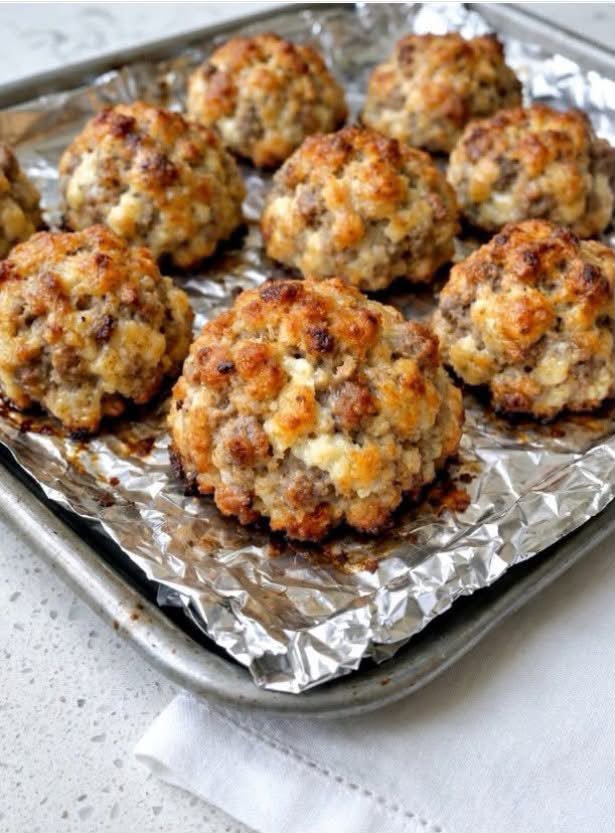
Cheesy Sausage Balls
Golden, savoury and packed with melted cheddar, these Cheesy Sausage Balls are an easy homemade favourite. Made with breakfast sausage, biscuit baking mix, cream cheese and a handful of seasonings, they bake into delicious bites with lightly crisp outsides and soft, tender centres.
Introduction
Cheesy Sausage Balls are the sort of comforting homemade food that disappears quickly from the serving plate. Each golden bite combines seasoned sausage with rich cheddar and soft cream cheese, creating a wonderful balance of savoury flavour and satisfying texture.
One of the best things about this recipe is its simplicity. There is no complicated preparation, no need to cook the sausage beforehand and no difficult shaping technique. Everything comes together in one mixing bowl before being rolled into balls and baked in the oven.
The biscuit baking mix helps bind the sausage and cheese together while giving the finished balls a tender, slightly bread-like texture. The cream cheese adds moisture and richness, preventing the mixture from becoming excessively dry when properly baked.
As the sausage balls cook, the cheddar melts into the mixture, the sausage develops its hearty flavour and the outside becomes beautifully golden. A short resting period after baking helps the balls hold their shape and allows the interior to settle.
These sausage balls work brilliantly for weekend breakfasts, brunch gatherings, family celebrations, game-day snacks and festive appetiser platters. They are easy to serve, simple to portion and delicious alongside a selection of dipping sauces.
Whether you are making a casual snack or preparing food for guests, this easy cheesy sausage balls recipe offers a dependable way to turn everyday ingredients into something special.
Recipe Overview
- Recipe: Cheesy Sausage Balls
- Category: Appetiser, snack, breakfast
- Style: American-inspired comfort food
- Preparation Time: Approximately 15 minutes
- Cooking Time: 20–25 minutes
- Optional Broiling: 1–2 minutes
- Resting Time: 5 minutes
- Total Time: Approximately 40–45 minutes
- Estimated Yield: 20–24 medium sausage balls
- Oven Temperature: 375°F (190°C)
- Cooking Method: Oven baking
- Difficulty: Easy
- Main Ingredients: Breakfast sausage, biscuit baking mix, cheddar cheese and cream cheese
The preparation time and yield are estimates. Larger sausage balls may require additional baking time, while smaller ones may cook more quickly.
Why You’ll Love This Recipe
- Easy preparation: All the ingredients are combined in one bowl, making the mixture simple to prepare.
- Rich cheese flavour: Cheddar provides a pronounced savoury taste, while cream cheese contributes a smooth, creamy texture.
- Golden baked exterior: The outside develops delicious browned edges without requiring deep-frying.
- Great for gatherings: The individual portions are convenient for parties, buffets and shared appetiser platters.
- Simple ingredients: The recipe uses familiar ingredients that are easy to find in many supermarkets.
- Make-ahead friendly: The mixture can be shaped ahead of time and refrigerated until baking.
- Customisable: Different cheeses, sausages and seasonings can create exciting variations.
- Versatile: Enjoy them for breakfast, brunch, as an afternoon snack or as part of a comforting family meal.
Ingredients
This recipe uses the following original ingredients and quantities.
- 1 lb (454 g) breakfast sausage
- 2 cups biscuit baking mix
- 1½ cups shredded cheddar cheese
- 4 oz (113 g) cream cheese, softened
- 1 large egg
- ½ teaspoon garlic powder
- ½ teaspoon onion powder
- ¼ teaspoon black pepper
- ¼ teaspoon paprika
For the most consistent result, measure the biscuit baking mix carefully and allow the cream cheese to soften before combining it with the other ingredients.
Ingredient Notes
Breakfast Sausage
Breakfast sausage is the primary source of savoury flavour in this recipe. Its seasoning and natural fat contribute to the finished texture. Choose a sausage you enjoy eating, as its flavour will be noticeable in every bite.
Use raw breakfast sausage for this recipe. Remove any casings before mixing if you are using sausage links rather than loose sausage meat.
Biscuit Baking Mix
Biscuit baking mix provides structure and helps absorb moisture released by the sausage and cheeses. It allows the mixture to hold together without becoming a dense meatball.
A commercially prepared American-style biscuit mix is the intended ingredient. Plain flour alone is not an equivalent replacement because biscuit mixes generally contain additional ingredients such as raising agents and fat.
Shredded Cheddar Cheese
Cheddar brings a rich, slightly sharp flavour and melts throughout the sausage mixture. Medium or mature cheddar both work well, depending on the intensity of cheese flavour you prefer.
Freshly grated cheddar often distributes more smoothly than some pre-shredded varieties, although either can be used.
Cream Cheese
The cream cheese adds richness and helps keep the interior tender. Softening it beforehand is important because cold cream cheese is more difficult to mix evenly into the sausage.
Full-fat cream cheese is a suitable choice for a creamy result, although alternative varieties may produce slightly different textures.
Large Egg
The egg helps bind the ingredients as the sausage balls bake. It contributes to the structure of the mixture, particularly when combined with the biscuit baking mix.
Garlic Powder
Garlic powder adds a gentle savoury depth without introducing extra moisture. Its fine texture makes it easy to distribute throughout the mixture.
Onion Powder
Onion powder complements the sausage and cheddar. It provides a mild sweetness and aromatic flavour that blends naturally with the other seasonings.
Black Pepper
Black pepper contributes a subtle warmth. Since breakfast sausage is usually already seasoned, the modest quantity helps avoid overpowering the cheese.
Paprika
Paprika adds gentle earthy flavour and supports the warm golden colour of the baked sausage balls. Sweet paprika is suitable for the original recipe.
Equipment You’ll Need
- Large mixing bowl
- Measuring cups and spoons
- Kitchen scales, optional
- Sturdy spoon or spatula
- Small cookie scoop, optional
- Large baking tray
- Aluminium foil or baking parchment
- Oven gloves
- Instant-read food thermometer
- Serving plate or platter
A scoop is helpful for making evenly sized portions, but it is not essential. You can shape the mixture by hand instead.
Step-by-Step Instructions
Step 1: Preheat the Oven
Preheat your oven to 375°F (190°C). Line a large baking tray with aluminium foil or baking parchment. This helps prevent sticking and makes cleaning up easier.
Allow the oven to reach the correct temperature before baking so the sausage balls cook evenly from the beginning.
Step 2: Combine the Ingredients
Place the breakfast sausage, biscuit baking mix, shredded cheddar, softened cream cheese and egg into a large mixing bowl.
Add the garlic powder, onion powder, black pepper and paprika. Keep all the ingredients together in the bowl so they can be mixed into one consistent mixture.
Step 3: Mix Until Combined
Use a sturdy spoon, spatula or clean hands to combine the ingredients. Continue until the biscuit mix is incorporated, the cream cheese is distributed and there are no large pockets of unmixed ingredients.
The mixture should be thick, slightly sticky and firm enough to shape. Avoid prolonged or aggressive mixing once everything is evenly incorporated, as excessive handling can make the texture compact.
Step 4: Shape the Sausage Balls
Scoop portions of the mixture and roll them between your palms to form compact balls. Aim for a consistent size so they cook at approximately the same rate.
Press each portion just firmly enough to hold together. Over-compressing the mixture can produce a heavier finished texture.
Step 5: Arrange on the Baking Tray
Place the sausage balls on the prepared tray, leaving a little space between each one. This allows hot air to circulate and helps the outside brown.
If the mixture produces more balls than will fit comfortably on one tray, bake in batches or use two trays, rotating them if necessary for even cooking.
Step 6: Bake Until Golden
Bake for 20–25 minutes, until the sausage balls are cooked through and the surfaces are golden brown.
Check the largest sausage ball with an instant-read thermometer inserted into its centre. Pork breakfast sausage should reach at least 160°F (71°C), while poultry sausage should reach 165°F (74°C). The exact cooking time depends on the size of the balls and your oven.
Step 7: Broil for Extra Browning
If you would like darker, crispier tops, turn on the broiler or overhead grill for the final 1–2 minutes.
Watch closely during this step. Cheese-rich surfaces can change from golden to burnt very quickly. Broiling is optional and should only be done once the sausage balls are fully cooked.
Step 8: Rest Before Serving
Remove the baking tray from the oven and allow the sausage balls to rest for approximately 5 minutes.
This brief resting period helps the hot cheese settle and makes the balls easier to transfer without breaking apart.
Step 9: Serve Warm
Transfer the sausage balls to a serving plate or platter. Serve while warm for the best combination of a savoury, cheesy centre and lightly crisp golden edges.
How to Keep Sausage Balls Tender
The secret to tender cheesy sausage balls lies in balancing the sausage, biscuit baking mix and cheeses. Each ingredient plays an important part in the final texture.
The sausage releases moisture and fat as it cooks. The biscuit mix absorbs some of this liquid, while the cheeses add richness and help create a soft interior. When the ingredients are measured correctly, they work together to produce a sausage ball that holds its shape without becoming unpleasantly dry.
Using too much biscuit baking mix can result in a crumbly, floury texture. Avoid packing the mix tightly into the measuring cup. Instead, spoon it into the cup and level the top.
Softened cream cheese is another important detail. When it mixes thoroughly with the sausage, it creates a more consistent texture throughout each ball. Large lumps of cold cream cheese may remain unevenly distributed.
Finally, avoid baking the balls for longer than necessary. Check them near the lower end of the cooking time, then continue cooking until they reach the appropriate safe internal temperature.
Shaping Perfect Sausage Balls
Uniform shaping is one of the simplest ways to improve the finished recipe. If some balls are much larger than others, the smaller ones may become dry before the larger ones are fully cooked.
For medium-sized appetisers, a small cookie scoop provides a convenient way to portion the mixture. A yield of approximately 20–24 balls is a reasonable estimate, depending on how generously you scoop.
Once portioned, gently roll each piece between your hands. The balls do not need to be perfectly smooth. A slightly uneven surface can develop attractive golden ridges as it bakes.
If the mixture feels difficult to handle because it is sticky or soft, refrigerating it briefly can make shaping easier. This is an optional preparation technique and does not change the original ingredient quantities.
When arranging the balls, leave a small gap between them. Crowding them together can encourage steaming rather than even surface browning.
Getting Golden, Crispy Edges
These sausage balls develop their golden colour as the sausage cooks and the cheese melts and browns. The heat of the oven produces a lightly crisp exterior while the interior remains tender.
Preheating the oven properly helps the sausage balls begin cooking at the intended temperature. Placing them into an oven that is still warming can lead to less predictable baking times and texture.
Use a large enough tray to provide airflow around each ball. A foil-lined tray is particularly convenient for collecting any rendered fat, while baking parchment can help reduce sticking.
The optional final broiling step adds extra browning to the tops. If you choose this method, keep the tray under constant observation and remove it as soon as the desired colour develops.
For the best combination of flavour and texture, allow the finished balls to rest briefly before serving. This helps them remain intact when moved from the tray.
Expert Cooking Tips
- Use softened cream cheese: It incorporates more evenly into the sausage mixture.
- Measure the biscuit mix accurately: Excess mix can make the finished balls dry.
- Grate your own cheddar when practical: Freshly grated cheese generally combines well with the other ingredients.
- Choose well-seasoned sausage: The sausage supplies much of the finished flavour.
- Mix thoroughly but gently: Incorporate every ingredient without unnecessarily compacting the mixture.
- Use a scoop for portioning: Evenly sized balls cook more consistently.
- Avoid oversized portions: Very large balls may require longer cooking and closer temperature checking.
- Leave space on the tray: Small gaps encourage better surface browning.
- Preheat completely: A properly heated oven produces more predictable results.
- Use a food thermometer: The browned exterior alone does not confirm that the sausage is safely cooked.
- Watch the broiler carefully: Cheese can brown very quickly under direct overhead heat.
- Let the balls rest: Five minutes helps the structure settle before serving.
- Serve warm: The cheese is softer and the texture is especially enjoyable shortly after baking.
- Keep leftovers chilled: Refrigerate promptly and reheat only the amount needed.
Common Mistakes to Avoid
1. Using Cold Cream Cheese
Cold cream cheese can remain in large lumps, making it difficult to distribute evenly. Let it soften before mixing with the other ingredients.
2. Adding Too Much Biscuit Mix
Extra biscuit mix may absorb too much moisture and create a dry texture. Use the original measured quantity of 2 cups.
3. Overmixing the Ingredients
Mixing excessively can compact the mixture. Stop once all the ingredients are properly combined.
4. Making Unevenly Sized Balls
Different sizes need different cooking times. Portion the mixture consistently for more reliable results.
5. Overcrowding the Baking Tray
When the balls are packed tightly together, they may cook less evenly. Leave space around them.
6. Baking in an Unheated Oven
Starting at a temperature below 375°F (190°C) can affect browning and cooking time. Preheat the oven fully.
7. Judging Doneness Only by Colour
Golden surfaces do not always mean the centre is cooked safely. Use an instant-read thermometer to check the largest ball.
8. Broiling for Too Long
The broiler can quickly scorch the cheese. Limit the optional step to approximately 1–2 minutes and watch continuously.
9. Serving Immediately from the Oven
Very hot sausage balls may be fragile and the melted cheese can be extremely hot. Allow the recommended 5-minute rest.
Optional Variations
The following ideas are optional modifications rather than ingredients in the original recipe.
1. Spicy Sausage Balls
Use hot breakfast sausage instead of regular sausage, or add a small amount of cayenne pepper for a warmer finish.
2. Extra Cheesy Sausage Balls
Experiment with a combination of cheddar and Monterey Jack. Keep the overall cheese quantity similar to the original for a comparable texture.
3. Smoked Paprika Version
Replace the regular paprika with smoked paprika for a subtle smoky flavour.
4. Turkey Sausage Balls
Substitute turkey breakfast sausage for pork breakfast sausage. Because poultry sausage can be leaner, texture may vary. Cook to an internal temperature of 165°F (74°C).
5. Herb and Cheese Sausage Balls
Add a small amount of finely chopped parsley or chives for a fresh herbal note that complements the cheddar.
6. Pepper Jack Sausage Balls
Swap some or all of the cheddar for pepper Jack cheese to introduce a mild spicy flavour.
7. Mini Party Sausage Balls
Shape smaller balls for bite-sized appetisers. Reduce the baking time as needed and confirm safe doneness with a thermometer.
Serving Suggestions
Cheesy Sausage Balls are particularly enjoyable when served warm, either on their own or with a simple dipping sauce.
For Breakfast
Pair the sausage balls with scrambled eggs, fresh fruit and toast. Their savoury flavour provides a satisfying contrast to lighter breakfast foods.
For Brunch
Arrange them on a serving platter alongside fresh berries, mini pancakes or a vegetable frittata. Their convenient size makes them well suited to buffet-style brunches.
For Parties
Serve with small bowls of honey mustard, barbecue sauce or ranch dressing. These sauces complement the rich sausage and cheddar without requiring additional preparation of the original recipe.
For Game Day
Combine the sausage balls with vegetable sticks, baked potato wedges and other easy finger foods for a relaxed snack spread.
For a Family Snack
Offer a few warm sausage balls with cucumber slices, cherry tomatoes or a crisp salad to balance the richness of the cheese and sausage.
Storage and Reheating
Refrigerating Leftovers
Allow leftover sausage balls to cool briefly, then transfer them to an airtight container and refrigerate within 2 hours of cooking. Store at 40°F (4°C) or below and use within 3–4 days.
Reheating in the Oven
Preheat the oven to 350°F (175°C). Arrange the chilled sausage balls on a baking tray and heat until thoroughly hot, usually around 8–12 minutes depending on size and starting temperature. Reheat leftovers to 165°F (74°C).
Reheating in an Air Fryer
An air fryer can help restore some exterior crispness. Heat at approximately 325°F (165°C) for a few minutes, checking frequently and continuing until the centres reach 165°F (74°C).
Microwave Reheating
Place the sausage balls on a microwave-safe plate and heat in short intervals until thoroughly hot. The microwave is convenient, although the exterior may become softer.
Freezing Cooked Sausage Balls
Once completely cooled, place the cooked sausage balls in a freezer-safe container or bag. Freeze promptly and use within approximately 2–3 months for best quality.
Reheat from frozen or thaw overnight in the refrigerator before reheating. Ensure the centres are fully heated to 165°F (74°C).
Preparing Ahead
You can mix and shape the raw sausage balls ahead of time. Keep them covered in the refrigerator and bake within 24 hours for best quality, always observing the sausage’s use-by date.
Because the mixture contains raw sausage and egg, keep it chilled until you are ready to bake and avoid leaving it at room temperature for extended periods.
Frequently Asked Questions
1. What are cheesy sausage balls made from?
They are made from breakfast sausage, biscuit baking mix, cheddar cheese, cream cheese, egg and a blend of garlic powder, onion powder, black pepper and paprika.
2. Can I use regular pork sausage?
Yes, although the flavour may differ from seasoned breakfast sausage. Choose a suitable raw sausage and remove any casings before mixing.
3. Do I need to cook the sausage first?
No. The original recipe uses raw breakfast sausage mixed directly with the other ingredients before baking.
4. Why is cream cheese added?
Cream cheese adds richness, moisture and a softer texture to the inside of the sausage balls.
5. Can I leave out the cream cheese?
You can experiment with a cream-cheese-free variation, but the texture and moisture balance will change. The original recipe is designed to include 4 oz of cream cheese.
6. What temperature should I bake sausage balls at?
Bake the original recipe at 375°F (190°C).
7. How long do cheesy sausage balls take to bake?
Approximately 20–25 minutes for medium-sized balls, although the exact time depends on their size and your oven.
8. How do I know when they are cooked?
Check the centre of the largest ball with a food thermometer. Pork sausage should reach 160°F (71°C), and poultry sausage should reach 165°F (74°C).
9. Why are my sausage balls dry?
Dryness can result from excess biscuit mix, lean sausage, oversized cooking times or overbaking. Measure carefully and check the temperature rather than relying only on appearance.
10. Why are my sausage balls falling apart?
The mixture may not have been combined thoroughly, or the ingredients may have been measured incorrectly. Mix until evenly incorporated and roll the portions firmly enough to hold together.
11. Can I use pre-shredded cheddar cheese?
Yes. Pre-shredded cheddar works, although freshly grated cheese can offer a slightly different melting texture.
12. Can I use another type of cheese?
Yes. Monterey Jack, Colby or pepper Jack can be used as optional substitutions. The flavour and texture may change slightly.
13. Can I make the sausage balls smaller?
Yes. Smaller portions make convenient bite-sized appetisers. They may need less baking time, so monitor them carefully.
14. Can I make larger sausage balls?
Yes, but larger portions generally take longer to cook through. Check the internal temperature before removing them from the oven.
15. Do I need to use a food processor?
No. A large bowl and a sturdy spoon or spatula are sufficient for mixing this recipe.
16. Can I make sausage balls in advance?
Yes. Shape the uncooked balls, cover and refrigerate them until baking, preferably within 24 hours.
17. Can I freeze cheesy sausage balls?
Yes. Cooked sausage balls freeze well when stored in a suitable airtight freezer container or bag.
18. Can I reheat them in an air fryer?
Yes. Reheat at a moderate temperature until thoroughly hot, checking frequently to avoid drying them out.
19. What dipping sauce goes best with sausage balls?
Honey mustard, ranch dressing and barbecue sauce are popular choices because their contrasting flavours balance the rich sausage and cheese.
20. Can I make these with turkey sausage?
Yes. Turkey sausage is a possible variation, although it can produce a different texture. Cook poultry sausage to at least 165°F (74°C).
21. Why aren’t my sausage balls browning?
The oven may not have been fully preheated, or the balls may be too close together. Allow adequate space and use the optional brief broiling step if necessary.
22. How long should sausage balls rest?
Let them rest for approximately 5 minutes before serving. This helps the cheese settle and makes the balls easier to handle.
Complete Recipe Card
Cheesy Sausage Balls
Description: Easy oven-baked sausage balls made with seasoned breakfast sausage, biscuit baking mix, cheddar and cream cheese. Golden on the outside and tender in the centre, they are ideal for breakfast, brunch or party appetisers.
- Category: Appetiser, snack, breakfast
- Method: Oven baking
- Prep Time: Approximately 15 minutes
- Cook Time: 20–25 minutes
- Rest Time: 5 minutes
- Total Time: Approximately 40–45 minutes
- Yield: Approximately 20–24 medium balls
- Temperature: 375°F (190°C)
Ingredients
- 1 lb breakfast sausage
- 2 cups biscuit baking mix
- 1½ cups shredded cheddar cheese
- 4 oz cream cheese, softened
- 1 large egg
- ½ teaspoon garlic powder
- ½ teaspoon onion powder
- ¼ teaspoon black pepper
- ¼ teaspoon paprika
Instructions
- Preheat the oven to 375°F (190°C) and line a baking tray with foil or baking parchment.
- In a large mixing bowl, combine the breakfast sausage, biscuit baking mix, shredded cheddar, softened cream cheese and egg.
- Add the garlic powder, onion powder, black pepper and paprika.
- Mix until all the ingredients are evenly incorporated.
- Scoop the mixture into portions and roll into compact balls of similar size.
- Arrange the sausage balls on the prepared baking tray, leaving a little space between them.
- Bake for 20–25 minutes until golden brown and cooked through. Check the centre of the largest ball with a thermometer; pork sausage should reach 160°F (71°C), or 165°F (74°C) for poultry sausage.
- For extra browning, broil for 1–2 minutes at the end, watching closely to prevent burning.
- Remove from the oven and let rest for approximately 5 minutes.
- Serve warm for a savoury, cheesy centre and crisp golden edges.
Recipe Notes
- Use softened cream cheese for easier mixing.
- Do not add extra biscuit baking mix unless deliberately adapting the recipe.
- Shape the balls evenly for consistent cooking.
- Use a food thermometer to check safe doneness.
- For extra golden tops, use the broiler carefully during the final 1–2 minutes.
- Store cooked leftovers in the refrigerator for up to 3–4 days.
Hashtags: #CheesySausageBalls #EasyAppetizers #SausageRecipes #CheesyRecipes #HomemadeSnacks