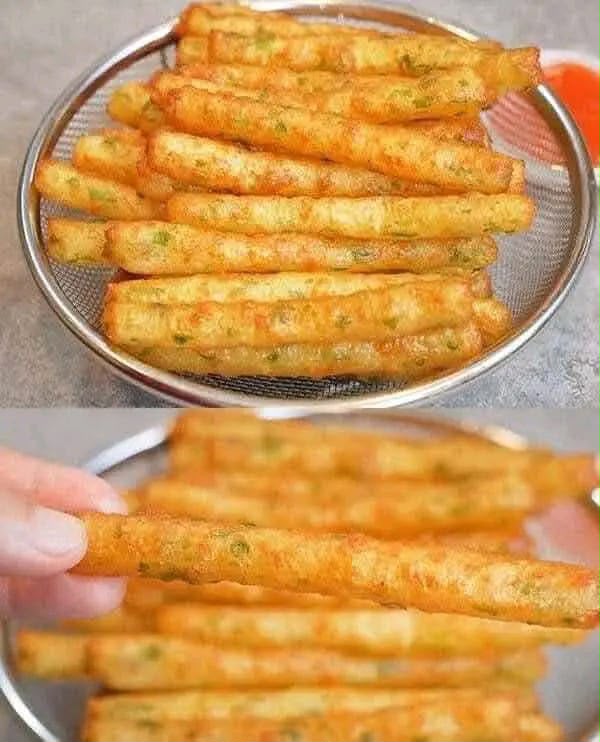
Crispy Potato Cheese Sticks
Crispy potato cheese sticks are a delicious homemade snack made with fluffy mashed potatoes, melted mozzarella, a little flour and simple seasonings. Fried until beautifully golden, they have a delicate crunchy exterior and a tender, cheesy centre that makes every bite satisfying.
There is something irresistible about freshly fried potato snacks. The crisp coating, comforting potato flavour and warm cheese create a combination that feels both familiar and special. These sticks offer all of that goodness in a convenient finger-food shape.
Unlike ordinary potato fries, these homemade sticks begin with cooked and mashed potatoes. This gives them a smooth interior and allows the cheese, seasonings and spring onions to blend evenly throughout the mixture.
Another wonderful feature is their versatility. Serve them as a weekend snack, a party appetiser, an after-school treat or a comforting side dish alongside your favourite homemade meal.
The recipe uses everyday ingredients, including potatoes, mozzarella, cornflour, plain flour, an egg and vegetable oil. With careful preparation and the correct frying temperature, you can create crisp potato fingers without needing complicated techniques or specialist cooking equipment.
Whether you enjoy them with ketchup, ranch dressing or spicy mayonnaise, these crispy potato cheese sticks are best served freshly cooked, when their golden exterior is at its crunchiest and the cheese inside is still warm.
Recipe Overview
- Recipe: Crispy Potato Cheese Sticks
- Category: Snack, appetiser, side dish
- Style: Homemade comfort food
- Preparation time: Approximately 25 minutes, excluding potato cooling
- Cooking time: Approximately 20–30 minutes, depending on boiling time and number of frying batches
- Resting time: 1–2 minutes after frying
- Total time: Approximately 45–60 minutes, plus any cooling time required
- Servings: Approximately 4–6, depending on stick size
- Cooking method: Boiling and deep or shallow frying
- Frying temperature: 350°F (175°C)
- Main ingredients: Potatoes, mozzarella, cornflour, plain flour, egg and spring onions
- Difficulty: Easy to moderate
The preparation times and yield are practical estimates because the original recipe does not specify the potato weight, exact number of sticks or boiling duration.
Why You’ll Love This Recipe
- Golden and crispy: The fried exterior develops a satisfying crunch while the inside stays tender.
- Cheesy goodness: Mozzarella adds a mild, creamy flavour to the potato mixture.
- Simple ingredients: Most ingredients are common kitchen staples.
- Family-friendly: The mild seasonings make these snacks suitable for many different tastes.
- Perfect for dipping: Their finger-food shape works beautifully with sauces.
- Customisable: You can experiment with different cheeses, herbs and seasonings.
- Great for gatherings: The sticks are easy to share at parties and casual get-togethers.
- Useful for cooked potatoes: Properly cooled, relatively dry leftover mashed potatoes can also be suitable, provided their existing ingredients are taken into account.
Ingredients
Gather the following ingredients before beginning. The quantities below follow the original recipe.
- 3 large potatoes, peeled and boiled
- 1 cup shredded mozzarella cheese
- ½ cup cornstarch (cornflour)
- ¼ cup all-purpose flour (plain flour)
- 2 tablespoons chopped green onions (spring onions)
- 1 teaspoon garlic powder
- ½ teaspoon paprika
- ½ teaspoon salt
- ¼ teaspoon black pepper
- 1 large egg
- Vegetable oil, for frying
For serving: Ketchup, ranch dressing, spicy mayonnaise or another favourite dipping sauce, as desired. These are optional accompaniments rather than ingredients in the potato mixture.
Ingredient Notes
Potatoes
Potatoes form the foundation of this recipe. A floury variety, such as Maris Piper or Russet, is particularly useful because it mashes smoothly and tends to contain less moisture than waxy potatoes.
Choose potatoes that are firm and free from green patches. After boiling, drain them thoroughly so the finished mixture is not excessively wet.
Mozzarella Cheese
Shredded mozzarella adds a creamy, mild cheese flavour. Low-moisture mozzarella is especially convenient because it blends into the potato mixture without releasing as much liquid as fresh mozzarella stored in brine.
Cornflour
Cornflour, known as cornstarch in American recipes, helps absorb moisture and supports the structure of the sticks. It also contributes to their crisp surface when fried.
Plain Flour
Plain flour helps the potato mixture hold together so it can be rolled and cut into even pieces. It works alongside the cornflour rather than replacing it.
Spring Onions
Finely chopped spring onions provide fresh savoury flavour and tiny green flecks throughout the finished sticks. Chop them small so larger pieces do not interfere with shaping.
Garlic Powder and Paprika
Garlic powder gives the mixture a gentle savoury warmth, while paprika brings a little colour and subtle depth. Regular sweet paprika is suitable for the original recipe.
Salt and Black Pepper
These basic seasonings balance the natural sweetness of the potatoes and the richness of the mozzarella.
Egg
The egg acts as a binder, helping the mashed potatoes, flour and cheese form a cohesive dough. Use a large egg as specified.
Vegetable Oil
Use a neutral vegetable oil suitable for frying at 175°C. Sunflower oil or rapeseed oil are practical options. The quantity depends on the width and depth of your pan.
Equipment You’ll Need
- Large saucepan for boiling potatoes
- Colander for draining
- Potato masher or potato ricer
- Large mixing bowl
- Mixing spoon or spatula
- Two sheets of baking parchment
- Rolling pin
- Sharp knife or pizza cutter
- Deep, heavy-bottomed frying pan or suitable saucepan
- Kitchen thermometer
- Slotted spoon or metal tongs
- Wire cooling rack or kitchen paper
Step-by-Step Instructions
Step 1: Boil the Potatoes
Peel the three large potatoes and boil them in water until very tender. A knife should slide through the centre easily without resistance. The exact cooking time depends on potato size and whether they are cut into pieces.
Drain thoroughly, allowing excess steam to escape. Removing as much unnecessary moisture as possible makes the finished dough easier to shape.
Step 2: Mash Until Smooth
Transfer the drained potatoes to a large mixing bowl. Mash until smooth and free from noticeable lumps.
Allow the potatoes to cool until they are no longer hot before adding the cheese and egg. This helps prevent the cheese from melting prematurely and the egg from beginning to cook during mixing.
Step 3: Add the Cheese and Dry Ingredients
Add 1 cup shredded mozzarella, ½ cup cornflour, ¼ cup plain flour and 2 tablespoons finely chopped spring onions.
Sprinkle in the garlic powder, paprika, salt and black pepper. Distribute these ingredients evenly throughout the potatoes.
Step 4: Add the Egg and Mix
Add the large egg and mix everything together until a soft but reasonably firm dough forms.
The mixture should be cohesive enough to roll and cut without flowing or spreading. Avoid excessive mixing once the ingredients are combined.
Step 5: Roll the Dough
Place the potato dough between two sheets of baking parchment. Use a rolling pin to flatten it into a thick, even rectangle.
A thickness of approximately 1.5–2 cm is a useful shaping guide, although the original recipe does not specify an exact measurement.
Step 6: Cut into Long Sticks
Remove the upper sheet of parchment and cut the potato rectangle into long, relatively even sticks.
Try to keep the pieces similar in thickness so they cook at approximately the same rate. Lift them carefully to avoid breaking the soft dough.
Step 7: Heat the Frying Oil
Pour vegetable oil into a suitable deep, heavy-bottomed pan, keeping the pan safely below half-full. Heat the oil to 350°F (175°C).
Monitor the temperature with a kitchen thermometer, and never leave hot oil unattended.
Step 8: Fry Until Golden
Carefully lower a small batch of potato sticks into the hot oil. Fry for approximately 3–4 minutes, turning as necessary, until the exterior becomes deeply golden and crisp.
Avoid overcrowding the pan because adding too many sticks at once can reduce the oil temperature and produce greasy results.
Step 9: Drain and Rest
Remove the cooked potato sticks using a slotted spoon or metal tongs. Transfer them to a wire rack or kitchen paper-lined plate to drain excess oil.
Allow them to rest for 1–2 minutes before serving. A wire rack is particularly helpful because air can circulate around the fried surface.
Step 10: Serve Warm
Arrange the golden potato cheese sticks on a serving plate and offer your favourite dipping sauces alongside.
Serve while warm for the most enjoyable contrast between the crisp outer layer and tender cheesy middle.
Preparing the Perfect Potato Dough
The most important part of this recipe is controlling moisture. Potatoes absorb water during boiling, and overly wet mashed potatoes can produce a sticky mixture that is difficult to cut into neat sticks.
Once the potatoes are tender, drain them completely. Returning them briefly to the warm, switched-off pan can help excess steam evaporate. Take care not to scorch the potatoes.
For the smoothest mixture, mash while the potatoes are still warm, then cool before adding the remaining ingredients. A potato ricer works particularly well, although an ordinary masher is sufficient.
Avoid using a food processor for prolonged mixing. Overworking cooked potatoes can make their starches gummy, changing the texture of the finished snack.
The finished dough should feel soft and slightly tacky while holding its shape. The exact consistency may vary depending on the potato variety and size. If the mixture is particularly soft, chilling it briefly before shaping can make handling easier.
Shaping the Potato Sticks
Uniform shaping is essential for attractive potato cheese sticks. If some sticks are much thicker than others, they will need different cooking times and may brown unevenly.
Rolling the dough between baking parchment helps prevent it from sticking to the rolling pin. It also avoids the need for large amounts of additional flour, which could change the texture.
Shape the dough into a rectangle before cutting. Straight edges make it easier to create long fingers, while trimming uneven sections allows the pieces to look more consistent.
Use a sharp knife or pizza cutter and make deliberate, clean cuts. If the dough clings to the blade, wipe it between cuts.
Handle the uncooked sticks gently. If the pieces feel too delicate to transfer, refrigerating the shaped dough briefly can help it firm up. This is an optional handling tip rather than a required step in the original recipe.
How to Fry Potato Cheese Sticks Until Crispy
Frying at the correct temperature is one of the keys to a crisp result. The original recipe specifies 350°F (175°C), which provides a useful balance between browning the exterior and heating the cheese-filled centre.
If the oil is too cool, the sticks may spend longer absorbing oil before they develop a proper crust. If the oil is excessively hot, the surface may brown too quickly while the inside remains insufficiently heated.
Use a thermometer instead of guessing. Check the temperature between batches and allow the oil to recover before adding more sticks.
Lower each piece carefully into the oil to prevent splashing. Do not drop the sticks from a height, and keep water away from the frying pan.
During cooking, turn the sticks gently as required to encourage even browning. Avoid disturbing them continuously because the exterior needs time to set.
Once the sticks are golden and firm on the outside, remove them promptly and drain on a rack. Do not pile freshly fried pieces on top of each other, as trapped steam can soften the crust.
Expert Cooking Tips
- Choose floury potatoes: They generally produce a lighter, less watery mash.
- Drain thoroughly: Excess moisture makes potato dough harder to shape.
- Mash out lumps: Smooth potatoes create neater sticks and a more consistent texture.
- Cool before adding egg: Hot potatoes can begin cooking the egg during mixing.
- Use low-moisture mozzarella: It helps avoid unnecessary liquid in the mixture.
- Finely chop spring onions: Small pieces distribute more evenly.
- Measure the flour and cornflour: Too much can create a dense interior.
- Keep the sticks uniform: Similar sizes encourage even frying.
- Chill delicate dough: A brief refrigeration period can improve handling when necessary.
- Use a thermometer: Maintain the oil close to 175°C.
- Fry small batches: This reduces temperature drops and prevents crowding.
- Drain on a rack: Air circulation helps preserve the crispy surface.
- Serve promptly: Freshly fried sticks have the most appealing texture.
Common Mistakes to Avoid
1. Using Wet Mashed Potatoes
Excess water can create loose dough and cause the sticks to lose their shape. Drain the potatoes properly and allow steam to escape before mixing.
2. Mixing the Ingredients While Too Hot
Very hot mashed potatoes can melt the cheese prematurely and partially cook the egg. Let the mash cool first.
3. Leaving Large Potato Lumps
Lumps can make the dough uneven and difficult to cut. Mash thoroughly for the smoothest result.
4. Overworking the Dough
Excessive mixing may create a heavy or gummy texture. Combine the ingredients just until evenly distributed.
5. Cutting Uneven Sticks
Very thin pieces can brown before thicker ones are ready. Aim for consistent dimensions.
6. Frying in Oil That Is Too Cool
Insufficient heat encourages a greasy surface. Check the oil temperature before every batch.
7. Overcrowding the Pan
Too many sticks lower the oil temperature and make the pieces difficult to turn. Work in batches.
8. Moving the Sticks Too Aggressively
Freshly added dough can be delicate. Let the exterior begin to firm up before turning gently.
9. Stacking the Fried Sticks
Steam trapped between hot pieces can soften their crispy surfaces. Spread them out on a rack.
Optional Variations
The following are suggested variations and are not part of the original ingredient list.
Cheddar Potato Sticks
Replace some or all of the mozzarella with grated mature cheddar for a stronger cheese flavour. Be aware that different cheeses may change how the mixture melts and holds together.
Spicy Potato Cheese Sticks
Add a small pinch of cayenne pepper or chilli flakes to the dough for a warmer, spicier finish.
Herb and Garlic Sticks
Mix finely chopped parsley or chives into the potatoes alongside the spring onions for extra freshness.
Smoked Paprika Sticks
Replace regular paprika with smoked paprika to introduce a deeper, slightly smoky flavour.
Parmesan Potato Sticks
Substitute a portion of the mozzarella with finely grated Parmesan for a more pronounced savoury taste.
Extra Spring Onion Sticks
Increase the chopped spring onions slightly for a fresher onion flavour and more visible green flecks.
Air-Fryer Experiment
For a different cooking method, lightly oil well-chilled sticks and experiment with an air fryer at around 190°C. Turn carefully and cook until golden and heated through. Results and cooking times will vary, and the texture will not necessarily match the original fried version.
Serving Suggestions
These crispy potato cheese sticks work particularly well as a starter or shareable snack, although they can also accompany simple main dishes.
Ketchup
Classic tomato ketchup provides a sweet and tangy contrast to the rich potato and cheese.
Ranch Dressing
The creamy, herby flavour of ranch makes it an excellent dip for the warm, crunchy sticks.
Spicy Mayonnaise
Mix mayonnaise with a little hot sauce to create a creamy dip with gentle heat. Adjust the seasoning to taste.
Garlic Yoghurt Dip
For a lighter-tasting accompaniment, combine thick plain yoghurt with a little crushed garlic and lemon juice.
Fresh Salad
Serve the sticks beside a crisp green salad, cucumber salad or simple tomato salad. Fresh vegetables provide a pleasant contrast to the fried snack.
Party Platters
Arrange the potato cheese sticks with small bowls of different sauces and other finger foods. Provide enough space between the pieces to help maintain their texture.
Storage and Reheating
Refrigerating Leftovers
Allow leftovers to cool promptly, then transfer them to a covered container and refrigerate within two hours of cooking. Store at 4°C or below and use within 3–4 days.
Reheating in the Oven
Place refrigerated sticks on a baking tray and reheat at approximately 190°C (375°F) for 8–12 minutes, or until thoroughly hot in the centre. The exact time depends on their thickness and starting temperature.
Reheating in an Air Fryer
Arrange the sticks in a single layer and reheat at around 180°C for approximately 4–7 minutes, checking regularly. This can help restore some surface crispness.
Can You Microwave Them?
Microwaving will warm the sticks but usually softens their fried exterior. Use the oven or air fryer when preserving crunch is the priority.
Freezing
For make-ahead preparation, arrange shaped, uncooked sticks on a parchment-lined tray and freeze until firm. Transfer to a suitable freezer container or bag and keep frozen at -18°C or below. For best quality, aim to use within 1–2 months.
Thaw safely in the refrigerator before frying, and handle carefully because freezing and thawing may affect the dough’s structure. Do not leave raw egg-containing dough at room temperature for extended periods.
Make-Ahead Preparation
The dough can be prepared and shaped ahead of time, then covered and refrigerated promptly. For the best texture and safe handling, cook it within 24 hours.
Frequently Asked Questions
1. What are crispy potato cheese sticks?
They are finger-shaped snacks made from seasoned mashed potatoes, cheese, binding ingredients and egg, then fried until golden and crisp.
2. Which potatoes are best for this recipe?
Floury potatoes such as Maris Piper or Russet are good choices because they mash smoothly and generally hold less moisture than waxy varieties.
3. Can I use leftover mashed potatoes?
Yes, provided they have been stored safely and are not excessively wet. Mash containing butter, milk or cream may require different handling because its moisture and fat content will differ from the original recipe.
4. Why is my potato dough sticky?
The potatoes may contain too much moisture or may still be warm. Allow the mixture to cool and chill briefly if necessary before shaping.
5. Why do the sticks fall apart while frying?
Excess moisture, uneven mixing, fragile shaping or insufficiently heated oil can contribute. Ensure the dough is cohesive and the frying oil is near 175°C.
6. Can I use cheddar instead of mozzarella?
Yes. Cheddar gives a stronger flavour, but it can behave differently during frying. Start by replacing only part of the mozzarella if you want to retain a similar texture.
7. What does cornflour do in this recipe?
It helps absorb some moisture, supports the dough and contributes to a crisp fried exterior.
8. Can I leave out the plain flour?
Removing the flour changes the structure of the dough. A tested alternative binding combination would be needed for consistent results.
9. Is the egg necessary?
The egg binds the ingredients. An egg-free version is possible to develop, but it requires testing an alternative binder rather than simply omitting the egg.
10. Can I bake potato cheese sticks?
Baking may work with a modified method, but it will produce a different crust from frying. Chill the shaped sticks, lightly oil their surfaces and monitor them carefully in a hot oven.
11. Can I cook them in an air fryer?
You can try air frying a small batch, preferably after chilling the sticks. The exact temperature and duration depend on the appliance, and fragile dough may not hold its shape as reliably as when fried.
12. What temperature should the frying oil be?
The original recipe specifies 350°F (175°C). Use a kitchen thermometer for consistent control.
13. How long should I fry the sticks?
Approximately 3–4 minutes per batch, turning when necessary, until golden and crisp. Actual timing depends on thickness and oil temperature.