Introduction
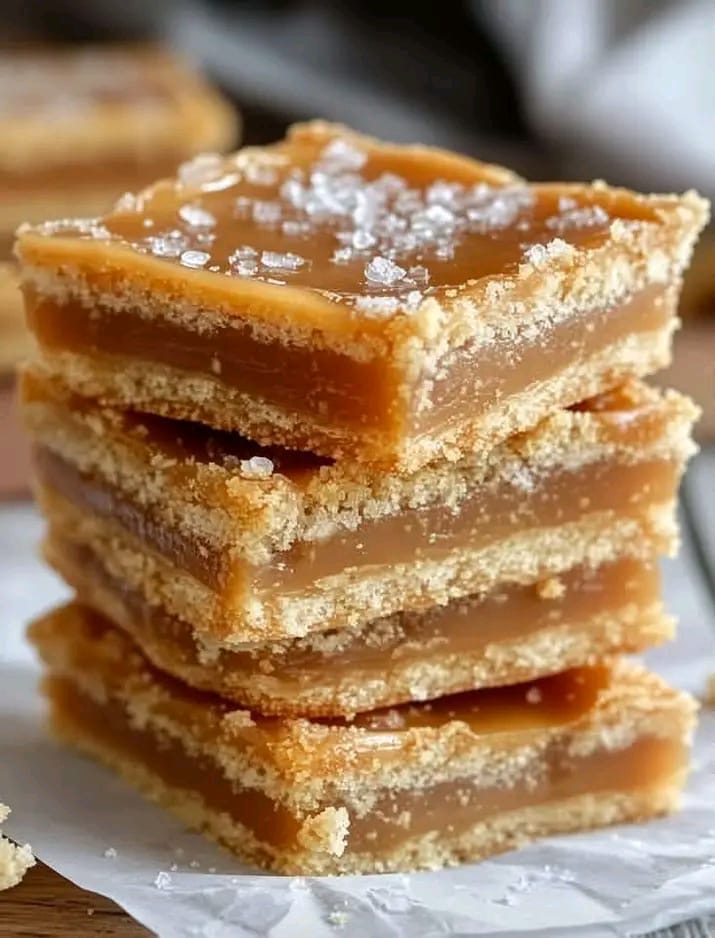
These Salted Caramel Shortbread Bars combine three irresistible textures in every bite: a buttery shortbread base, a thick and chewy homemade caramel center, and a smooth caramel topping finished with flaky sea salt.
The sweet-and-salty combination makes these bars perfect for holiday baking, cookie trays, family gatherings, potlucks, or an afternoon treat with coffee. They look impressive when sliced into neat squares, yet they use familiar pantry ingredients and straightforward baking techniques.
The secret is giving each layer enough time to set. A crisp but tender shortbread crust provides structure, while the caramel remains soft enough to bite without running out of the bars.
Why This Recipe Is Popular
Salted caramel desserts have become favorites because a small amount of salt balances caramel’s deep sweetness.
These bars are also convenient because one pan creates plenty of servings. Unlike individual cookies, there is no need to shape or bake multiple batches.
The shortbread layer can be prepared quickly, and the caramel filling uses basic ingredients such as butter, brown sugar, sweetened condensed milk, and vanilla.
Once chilled and sliced, the bars have beautiful defined layers that make them particularly attractive on dessert platters.
Recipe Information
Prep Time: 25 minutes
Bake Time: 25–30 minutes
Caramel Cooking Time: 10–15 minutes
Chilling Time: 2 hours
Total Time: About 3 hours
Servings: 16–20 bars
Difficulty: Easy to Moderate
Main Ingredients
Butter: Butter is essential in both the shortbread and caramel. Use unsalted butter so you have better control over the final salt level.
Flour: All-purpose flour gives the shortbread enough structure while keeping it tender.
Brown sugar: Brown sugar provides caramel notes and a soft texture.
Sweetened condensed milk: This creates a thick, creamy caramel filling without requiring an overly complicated candy-making process.
Vanilla: Vanilla rounds out the buttery caramel flavor.
Flaky sea salt: A small sprinkle on top provides the signature salted caramel contrast.
Ingredients
For the Shortbread:
1 cup unsalted butter, softened
½ cup granulated sugar
2 cups all-purpose flour
¼ teaspoon salt
1 teaspoon vanilla extract
For the Caramel Layer:
¾ cup unsalted butter
1 cup packed light brown sugar
1 can (14 ounces) sweetened condensed milk
¼ cup light corn syrup
1 teaspoon vanilla extract
¼ teaspoon salt
For the Top:
½ cup thick caramel sauce
½–1 teaspoon flaky sea salt
How to Choose the Best Ingredients
Use real butter rather than margarine. Butter provides the characteristic flavor and crumbly texture expected from shortbread.
Light brown sugar works beautifully in the caramel because it adds molasses notes without overpowering the other flavors. Dark brown sugar can be substituted if you prefer a deeper caramel taste.
Make sure you purchase sweetened condensed milk rather than evaporated milk. The two products behave very differently in caramel recipes.
For finishing, use flaky sea salt rather than ordinary table salt. Large delicate flakes give small bursts of saltiness without making the entire dessert taste salty.
Prepare the Shortbread
Preheat the oven to 350°F (175°C).
Line an 8×8-inch or 9×9-inch baking pan with parchment paper. Leave some parchment extending above two sides of the pan so the finished bars can be lifted out easily.
In a large mixing bowl, beat the softened butter and granulated sugar until smooth and creamy.
Add the vanilla.
Gradually mix in the flour and salt.
The mixture may initially look crumbly. Continue mixing just until it begins holding together when pressed.
Transfer the shortbread mixture to the prepared baking pan.
Press it into a firm, even layer, making sure the corners have approximately the same thickness as the center.
Bake the Shortbread
Bake for approximately 20–25 minutes, or until the edges are lightly golden.
Avoid baking until the entire surface becomes dark brown. Shortbread should remain relatively pale with lightly toasted edges.
Remove the pan from the oven and allow the crust to cool slightly while preparing the caramel.
Prepare the Caramel Filling
Place the butter, brown sugar, sweetened condensed milk, corn syrup, and salt in a medium heavy-bottomed saucepan.
Heat over medium-low heat.
Stir continuously as the butter melts and the ingredients combine.
Once the mixture begins gently bubbling, reduce the heat if necessary and continue cooking for approximately 8–12 minutes, stirring constantly.
The caramel should gradually become thicker and slightly darker.
Make sure your spoon or spatula reaches the bottom and corners of the saucepan. Caramel can scorch quickly if left unstirred.
Remove the saucepan from the heat.
Stir in the vanilla extract.
Step-by-Step Instructions
Pour the warm caramel over the baked shortbread crust.
Use an offset spatula or the back of a spoon to spread it evenly from edge to edge.
Allow the caramel to cool at room temperature for approximately 30 minutes.
For an extra glossy caramel layer like the bars pictured, gently warm the additional caramel sauce until spreadable.
Spread a thin layer over the cooled caramel filling.
Sprinkle flaky sea salt across the top.
Do not completely cover the surface with salt. A small amount provides enough contrast.
Transfer the pan to the refrigerator.
Chill for at least 2 hours, or until the caramel is firm enough to slice cleanly.
Use the parchment overhang to lift the entire dessert from the pan.
Place it on a cutting board.
For clean squares, use a large sharp knife. Wipe the blade clean between cuts.
Cut into 16 larger squares or approximately 20 smaller bars.
Allow them to sit at room temperature for a few minutes before serving if you prefer a softer caramel center.
Tips for Best Results
Do not rush the caramel. Medium-low heat allows the mixture to thicken gradually without scorching.
Stir continuously once the caramel begins heating.
A heavy-bottomed saucepan distributes heat more evenly and reduces the chance of burning.
Avoid overbaking the shortbread. The base should be crisp enough to support the caramel but still tender when bitten.
Chilling is essential before slicing. Warm caramel will drag across the knife and prevent clean layers.
For especially neat squares, refrigerate the bars thoroughly and use a warm, dry knife for each cut.
Add the flaky sea salt while the top caramel is still slightly tacky so the flakes stay in place.
Flavor Variations
For chocolate salted caramel bars, spread melted dark chocolate over the chilled caramel and sprinkle the sea salt on top.
For pecan caramel bars, add toasted chopped pecans between the shortbread and caramel layers.
For a stronger vanilla flavor, use vanilla bean paste instead of regular vanilla extract.
A small amount of espresso powder can also be added to the caramel for a coffee-caramel variation.
For holiday baking, sprinkle finely chopped toasted nuts around the edges before the caramel completely sets.
How to Serve
These bars are rich, so relatively small portions work well.
Serve them at room temperature for a softer, chewier caramel texture or slightly chilled for firmer, cleaner layers.
They pair especially well with hot coffee, espresso, black tea, or cold milk.
For a dessert platter, arrange the squares alongside chocolate cookies, brownies, and butter cookies.
A few visible flakes of sea salt on each square make the bars especially attractive without requiring additional decoration.
Meal Prep and Storage
Salted caramel shortbread bars are excellent for preparing ahead because the texture improves once the caramel has completely set.
Store the bars in an airtight container in the refrigerator for up to 5–7 days.
Place parchment paper between layers to prevent them from sticking together.
For the best eating texture, remove the desired number of bars from the refrigerator approximately 10–15 minutes before serving.
The bars can also be frozen. Wrap individual portions well and place them in a freezer-safe container.
Thaw overnight in the refrigerator before serving.
Common Mistakes to Avoid
One of the biggest mistakes is cooking the caramel over excessively high heat. This can burn the sugar before the mixture develops the proper consistency.
Another mistake is stopping the caramel cooking too early. If it remains extremely thin, the filling may not hold its shape when sliced.
Do not substitute evaporated milk for sweetened condensed milk. They are not interchangeable in this recipe.
Avoid cutting the bars while they are still warm.
Finally, be careful with the sea salt. Salted caramel needs contrast, but too much salt can overwhelm the buttery caramel flavor.
Frequently Asked Questions
Can I make salted caramel shortbread bars ahead of time?
Yes. They are actually an excellent make-ahead dessert because the caramel benefits from several hours of chilling.
Why is my caramel too soft?
The caramel may not have cooked long enough or the bars may need additional chilling time.
Can I use store-bought caramel?
Store-bought thick caramel sauce can work for the thin topping. For the substantial center layer, homemade caramel provides better structure.
Can I make these without corn syrup?
You can use another caramel recipe designed without corn syrup, but simply removing it from this particular formula may alter the consistency.
Why is my shortbread crumbly?
Shortbread naturally has a tender crumb, but it should still hold together. Measure the flour carefully and firmly press the dough into the pan before baking.
Should these bars be refrigerated?
Refrigeration keeps the caramel firm and makes storage easier. Let the bars warm slightly before serving for a softer texture.
Can I add chocolate?
Absolutely. A layer of dark or milk chocolate over the caramel turns these into a delicious chocolate-caramel shortbread dessert.
Final Thoughts
These Salted Caramel Shortbread Bars bring together buttery shortbread, thick chewy caramel, and delicate flakes of sea salt in a dessert that looks as good as it tastes.
The recipe is simple enough for weekend baking but attractive enough for Christmas cookie trays, parties, and special occasions. Give the caramel plenty of time to set, slice the bars with a clean sharp knife, and finish each piece with just a touch of flaky sea salt for that classic sweet-and-salty combination.