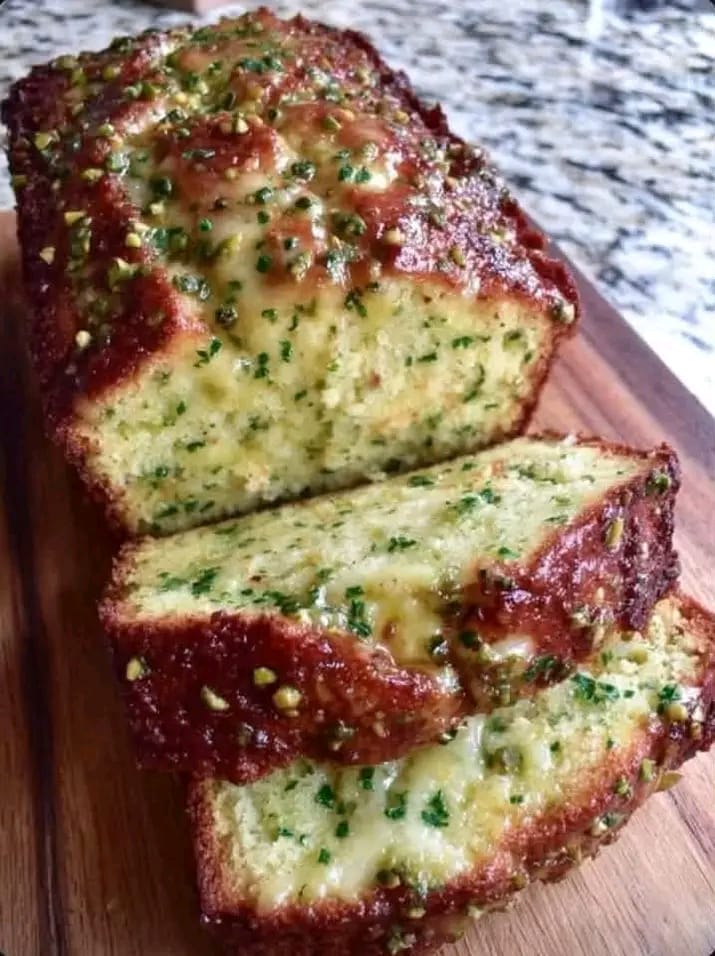
There is something irresistible about a warm loaf of bread covered in golden garlic butter and filled with melted cheese. This Garlic Butter Cheese Bread Loaf combines a crisp, deeply browned crust with a tender center packed with herbs, garlic, butter, and gooey cheese.
Unlike ordinary garlic bread made by spreading butter over pre-baked slices, this recipe creates a rich homemade-style loaf that can be sliced thickly and served alongside pasta, soup, steak, roasted chicken, or a simple family dinner.
It is also an excellent recipe for parties, holiday tables, game-day food, and weekend baking. The ingredients are straightforward, and most are inexpensive pantry staples.
Why This Garlic Butter Cheese Bread Is So Good
The best part of this recipe is the contrast in texture. The outside becomes dark golden and slightly crunchy while the interior stays soft and moist.
Garlic butter adds richness without making the bread overwhelmingly heavy. Fresh parsley gives every slice a fresh herbal flavor, while mozzarella creates those delicious pockets of melted cheese.
Another advantage is versatility. You can serve the loaf as a side dish, appetizer, snack, or part of a larger dinner.
It also looks impressive when brought to the table whole. Slice it while it is still warm and the buttery interior and melted cheese immediately become the star of the meal.
Main Ingredients
Bread flour or all-purpose flour: Bread flour provides a slightly chewier structure, while regular all-purpose flour creates a softer loaf. Either works well.
Garlic: Freshly minced garlic provides a stronger, fresher flavor than garlic powder alone.
Butter: Unsalted butter is ideal because it allows you to control the amount of salt.
Mozzarella cheese: Low-moisture mozzarella melts beautifully without releasing too much liquid into the dough.
Parmesan: Parmesan adds salty, savory depth and helps create a flavorful golden exterior.
Fresh parsley: Parsley adds freshness and gives the bread its attractive green herb-speckled interior.
Yeast: Instant or active dry yeast gives the loaf its soft, airy structure.
Ingredients
For the Bread Dough
- 3 cups all-purpose flour or bread flour
- 2¼ teaspoons instant yeast
- 1 tablespoon granulated sugar
- 1 teaspoon salt
- ¾ cup warm milk
- ¼ cup warm water
- 2 tablespoons melted unsalted butter
- 1 large egg
For the Garlic Herb Butter
- 6 tablespoons unsalted butter, softened
- 4–5 garlic cloves, finely minced
- 3 tablespoons finely chopped fresh parsley
- ½ teaspoon garlic powder
- ½ teaspoon Italian seasoning
- ¼ teaspoon salt
- ¼ teaspoon black pepper
For the Cheese Filling
- 1½ cups shredded low-moisture mozzarella
- ½ cup freshly grated Parmesan cheese
- 1 tablespoon chopped parsley
For the Top
- 2 tablespoons melted butter
- 1 minced garlic clove
- 1 tablespoon chopped parsley
- 2 tablespoons grated Parmesan
How to Make Garlic Butter Cheese Bread
Start by preparing the dough. Add the warm milk and warm water to a large mixing bowl. They should feel comfortably warm rather than hot. Excessively hot liquid can damage the yeast.
Stir in the sugar and yeast. If you are using active dry yeast, allow the mixture to stand for approximately 5–10 minutes until slightly foamy.
Add the melted butter and egg and mix until combined.
Gradually add the flour and salt. Mix until a rough dough forms.
Transfer the dough to a lightly floured surface and knead for approximately 8–10 minutes. The finished dough should feel smooth, elastic, and slightly tacky without sticking heavily to your hands.
You can also knead the dough in a stand mixer fitted with a dough hook for approximately 6–7 minutes.
Let the Dough Rise
Lightly grease a clean bowl and place the dough inside.
Cover it with a clean kitchen towel or plastic wrap and leave it somewhere warm for approximately 60–90 minutes.
The dough should roughly double in volume.
Temperature matters more than an exact rising time. In a warm kitchen, the dough may rise relatively quickly. In a cooler kitchen, it can require additional time.
Avoid trying to speed up the process with excessive heat.
Prepare the Garlic Butter
While the dough rises, prepare the garlic herb butter.
Combine softened butter, minced garlic, parsley, garlic powder, Italian seasoning, salt, and black pepper.
Mix thoroughly until the garlic and herbs are distributed evenly throughout the butter.
For stronger garlic flavor, use five cloves. For a milder loaf, three or four cloves will usually be enough.
Shape and Fill the Loaf
Grease a standard 9 × 5-inch loaf pan.
After the dough has risen, gently press it down to release large pockets of air.
Transfer it to a lightly floured work surface.
Roll the dough into a large rectangle approximately ½ inch thick.
Spread most of the garlic herb butter evenly over the surface, leaving a small border around the edges.
Sprinkle the mozzarella evenly over the butter, followed by Parmesan and additional parsley.
Roll the dough tightly into a log.
Pinch the seam gently to seal it.
Place the loaf seam-side down inside the prepared loaf pan.
Alternatively, divide the dough into several pieces and layer them with garlic butter and cheese. This creates a more rustic pull-apart texture.
Second Rise
Cover the prepared loaf loosely and allow it to rise again for approximately 25–40 minutes.
During this stage, preheat the oven to 350°F (175°C).
The loaf should look visibly puffier before it enters the oven, but avoid allowing it to overproof.
Bake Until Golden
Combine two tablespoons of melted butter with one minced garlic clove.
Brush some of this mixture over the loaf.
Sprinkle Parmesan and parsley over the surface.
Bake for approximately 30–35 minutes, or until the exterior is deeply golden.
If the top browns too quickly, loosely cover it with aluminum foil during the final 10 minutes.
For greater accuracy, the center of a yeast bread loaf is generally done when its internal temperature reaches approximately 190–200°F (88–93°C).
The exact baking time can vary depending on the oven and loaf pan.
The Secret to a Crispy Crust and Soft Center
One of the biggest mistakes with cheese bread is adding too much wet cheese or butter inside the loaf.
More filling does not necessarily produce better bread. Excess moisture can prevent the center from baking correctly.
Use low-moisture mozzarella rather than fresh mozzarella packed in liquid.
The butter should also be softened rather than completely melted when spreading it inside the dough. Soft butter remains where you put it, while liquid butter can leak toward the bottom of the pan.
Another important step is resting the finished loaf.
It may be tempting to slice it immediately, but wait approximately 10–15 minutes after removing it from the pan.
This allows the interior structure to settle while keeping the cheese pleasantly warm.
How to Make the Garlic Flavor Better
Fresh garlic is essential for a pronounced garlic-bread flavor, but combining fresh garlic with a small amount of garlic powder produces a more rounded result.
Fresh garlic delivers sharper aromatic notes. Garlic powder distributes more evenly throughout the butter.
Parsley is the classic herb, although basil, oregano, rosemary, or chives can also be incorporated.
Avoid adding excessive herbs. Garlic, butter, and cheese should remain the dominant flavors.
Best Cheese for This Bread
Mozzarella is the easiest choice because it melts smoothly and provides the familiar cheese pull.
However, you can combine several cheeses.
A mixture of mozzarella and sharp cheddar creates stronger flavor. Monterey Jack makes the interior especially creamy. Provolone introduces a slightly sharper Italian-style character.
Parmesan is best used as a supporting cheese rather than the primary filling because it has a stronger, saltier flavor.
For a particularly flavorful loaf, try:
1 cup mozzarella + ½ cup sharp cheddar + ¼–½ cup Parmesan.
Garlic Butter Cheddar Variation
Replace half of the mozzarella with shredded sharp cheddar.
Cheddar provides a stronger cheese flavor and creates attractive golden pockets throughout the bread.
Because cheddar can be salty, slightly reduce the added salt if necessary.
Spicy Garlic Cheese Bread
For a spicy version, add:
- ¼ teaspoon crushed red pepper flakes
- ¼ teaspoon smoked paprika
- A small amount of finely chopped jalapeño
Mix the seasonings into the garlic butter before spreading it over the dough.
This version works particularly well with chili, grilled meat, and hearty soups.
Extra Herb Version
For a fresher herb flavor, combine parsley with finely chopped chives and basil.
Use approximately three to four tablespoons of fresh herbs altogether.
Fresh herbs usually provide better flavor and appearance here than using a large amount of dried seasoning.
What to Serve With Garlic Butter Cheese Bread
This loaf is versatile enough to accompany many meals.
Serve thick warm slices with spaghetti and meatballs, baked ziti, lasagna, creamy chicken pasta, tomato soup, vegetable soup, steak, grilled chicken, or roasted vegetables.
It also works as an appetizer.
Place warm slices on a large serving board with marinara sauce for dipping.
For parties, cut the bread into smaller pieces and serve alongside pizza sauce, garlic sauce, or a warm cheese dip.
How to Store Leftovers
Allow leftover bread to cool completely before storing it.
Place it in an airtight container or tightly wrapped food-safe storage bag.
Because this bread contains plenty of cheese and butter, refrigeration is the safest option for longer storage. Refrigerate it for up to about 3–4 days.
For the best texture, reheat individual slices before serving.
Best Way to Reheat Garlic Cheese Bread
An oven or air fryer provides better results than a microwave because dry heat helps restore the crisp exterior.
For the oven, loosely wrap the bread in foil and warm at 325°F (165°C) until heated through. Open the foil for the final few minutes if you want a crispier surface.
For individual slices, an air fryer can restore the crust quickly.
Microwaving is convenient, but the crust will become softer.
Can You Freeze Garlic Butter Cheese Bread?
Yes.
Allow the baked loaf to cool completely before freezing.
You can freeze the entire loaf, although individual slices are much more convenient.
Place parchment paper between slices and transfer them to a freezer-safe container.
Freeze for up to approximately 2 months for the best quality.
Individual pieces can then be reheated whenever you want warm garlic bread without preparing another full loaf.
Common Mistakes to Avoid
Using liquid-packed mozzarella: It can introduce excessive moisture. Low-moisture mozzarella is preferable.
Using milk that is too hot: Very hot liquid can harm the yeast and prevent proper rising.
Adding too much flour: A dry dough produces a dense loaf. Add additional flour gradually and only when necessary.
Skipping the second rise: The second rise contributes to the soft texture of the finished loaf.
Overfilling the bread: Too much butter and cheese can leak out and leave the center heavy or underbaked.
Cutting immediately: Give the loaf at least 10 minutes to settle before slicing.
Overbaking: A beautifully browned exterior does not require a dry interior. Check the bread toward the end of the recommended baking time.
Frequently Asked Questions
Can I use store-bought bread dough?
Yes. Store-bought pizza or bread dough provides a useful shortcut. Allow refrigerated dough to come closer to room temperature before shaping it so it stretches more easily.
Can I use pre-shredded cheese?
Yes, although freshly shredded cheese generally melts more smoothly because packaged shredded cheeses often contain anti-caking ingredients.
Can I prepare the loaf ahead of time?
You can prepare the garlic butter and shred the cheese in advance. For the best rise and texture, prepare and bake the dough according to the recipe rather than leaving a fully proofed loaf sitting for a long period.
Why is my bread dense?
Common causes include inactive yeast, insufficient kneading, adding excessive flour, or not allowing enough rising time.
Why is the center still doughy?
The loaf may need additional baking time, especially if it contains a generous cheese filling. If the surface is already brown, cover it loosely with foil and continue baking until the center is properly cooked.
Can I make it without Parmesan?
Yes. Mozzarella and cheddar can make a delicious loaf without Parmesan, although Parmesan adds excellent savory flavor to the crust.
Final Thoughts
This Garlic Butter Cheese Bread Loaf turns simple ingredients into an impressive homemade bread with a crisp golden crust, soft herb-filled interior, and plenty of melted cheese.
The key is balance: use enough garlic butter to flavor every bite without soaking the dough, choose low-moisture cheese, allow both rises to develop properly, and bake until the center is completely cooked