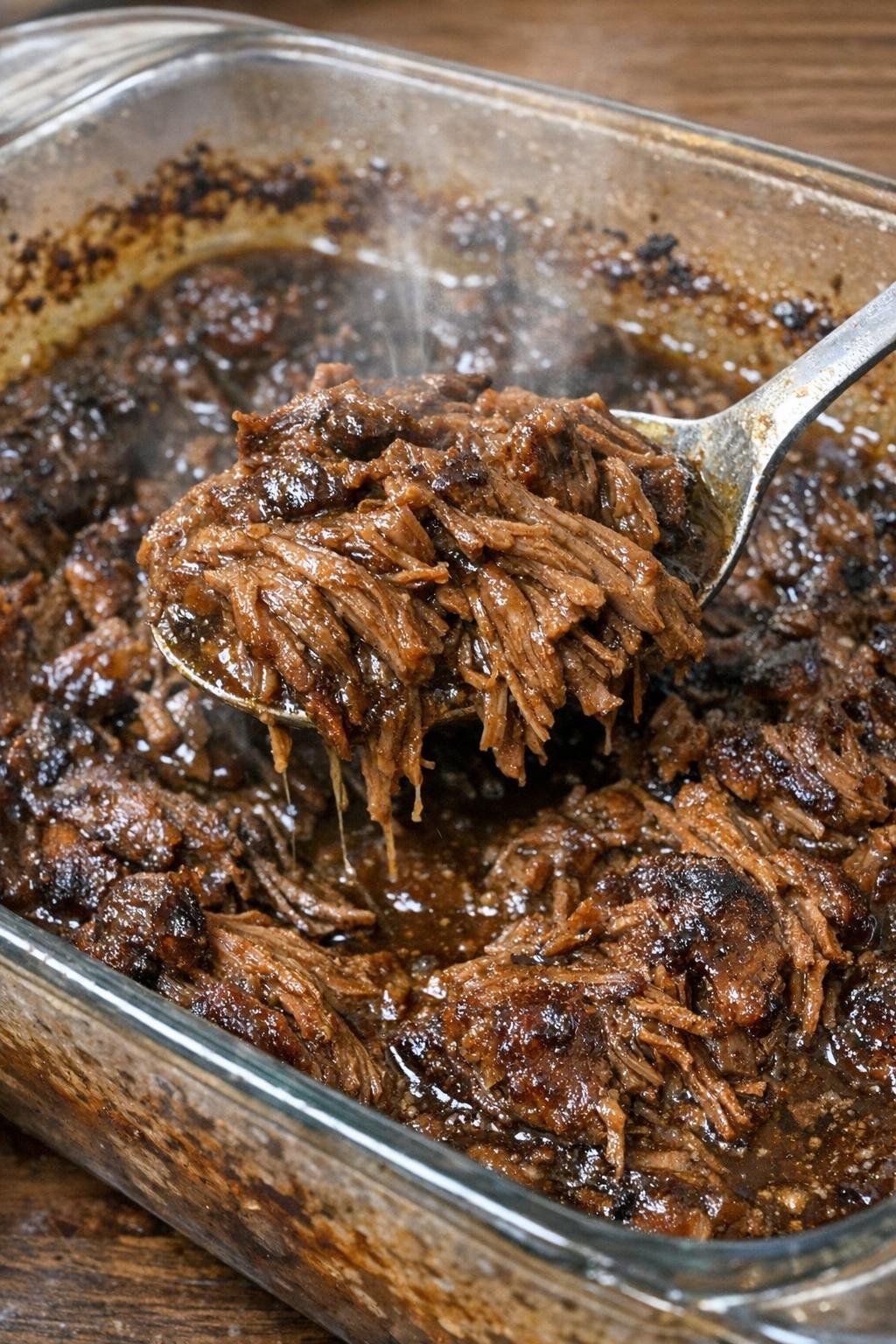
This Slow-Baked Shredded Beef with Rich Onion Gravy is pure comfort food: tender beef cooked slowly until it practically falls apart, then shredded directly into a deep, savory brown gravy.
The long, gentle cooking process is what makes this dish special. A well-marbled beef chuck roast starts firm, but after several hours in the oven, the connective tissue softens and the meat becomes juicy enough to separate easily with a fork. Meanwhile, onions, garlic, beef broth, Worcestershire sauce, and the browned juices from the meat create a glossy gravy that coats every strand.
Serve this beef over mashed potatoes, rice, egg noodles, polenta, or thick slices of toasted bread for an easy and satisfying family dinner.
Why You’ll Love This Recipe
This recipe requires relatively simple ingredients but delivers the deep flavor of a meal that has been cooking all afternoon.
Chuck roast is ideal for slow cooking because it contains enough marbling and connective tissue to become tender instead of drying out.
Most of the cooking time is also hands-off. Once the beef is browned and everything is assembled in the baking dish, you simply cover it and allow the oven to work slowly.
The finished beef is versatile too. Serve it as a traditional dinner on the first night, then turn leftovers into sandwiches, tacos, loaded potatoes, or pasta.
Ingredients
For the beef:
3½–4 pounds beef chuck roast
2 tablespoons olive oil
1½ teaspoons salt
1 teaspoon freshly ground black pepper
1 teaspoon garlic powder
1 teaspoon onion powder
1 teaspoon smoked paprika
For the onion gravy:
1 large yellow onion, finely chopped
4 garlic cloves, minced
2½ cups beef broth
2 tablespoons Worcestershire sauce
1 tablespoon tomato paste
1 teaspoon dried thyme
½ teaspoon dried rosemary
½ teaspoon black pepper
2 tablespoons butter
For a thicker gravy:
- 2 tablespoons cornstarch
- 3 tablespoons cold water
Best Beef for Shredded Beef
Chuck roast is one of the most dependable cuts for this recipe.
Unlike very lean cuts, chuck contains marbling and connective tissue that benefit from long, moist cooking.
During the first part of cooking, the beef may still seem relatively firm. As it continues cooking, collagen gradually breaks down and creates the tender texture needed for shredding.
Brisket can also work, as can some boneless beef short ribs, but chuck is generally an economical and convenient choice.
Prepare the Beef
Preheat the oven to 325°F (165°C).
Cut the beef into approximately 4–6 large chunks.
Pat each piece dry with paper towels.
Season all sides with salt, black pepper, garlic powder, onion powder, and smoked paprika.
Drying the beef before searing is important because excess surface moisture can prevent proper browning.
Sear for Maximum Flavor
Heat the olive oil in a large skillet or Dutch oven over medium-high heat.
Once hot, add the beef pieces without overcrowding the pan.
Sear each side until deeply browned, approximately 2–4 minutes per side.
Work in batches if necessary.
You aren’t trying to cook the meat through.
The objective is developing a dark brown crust because those browned flavors will eventually become part of the gravy.
Transfer the browned beef to a plate.
Cook the Onion
Reduce the heat to medium.
Add the chopped onion to the same skillet.
Cook for approximately 5 minutes, stirring and scraping the browned pieces from the bottom of the pan.
Those browned bits contain concentrated beef flavor, so don’t discard them.
Once the onion has softened, add the garlic.
Cook for another 30–60 seconds, just until fragrant.
Add the Tomato Paste
Stir one tablespoon of tomato paste into the onions.
Cook for approximately one minute.
Cooking tomato paste briefly before adding liquid helps deepen its flavor and contributes to the rich color of the gravy.
You don’t want the finished dish to taste strongly of tomato—the small amount simply supports the beef flavor.
Make the Brown Gravy
Slowly pour in the beef broth.
As you pour, scrape the bottom of the skillet to release any remaining browned bits.
Add Worcestershire sauce, thyme, rosemary, black pepper, and butter.
Bring the mixture to a gentle simmer.
Taste cautiously before adding more salt because both beef broth and Worcestershire sauce can already contain considerable sodium.
Assemble the Dish
Arrange the browned beef pieces in a large baking dish.
Pour the onion gravy over the beef.
The liquid does not need to completely cover the meat.
Cover the baking dish tightly with aluminum foil.
A tight cover helps trap moisture during the long cooking process and prevents the beef from drying out before it becomes tender.
Slow-Bake the Beef
Bake at 325°F (165°C) for approximately 3–3½ hours.
Start checking around the three-hour mark.
Instead of relying only on the clock, test the largest piece with a fork.
Push the fork into the beef and gently twist.
If the meat still resists and feels tough, cover the dish again and continue cooking.
Depending on the thickness of the pieces and the characteristics of the particular roast, it may require additional time.
The Secret to Fall-Apart Beef
Patience is the most important ingredient.
A common mistake is removing chuck roast when it is technically cooked but hasn’t become tender enough.
For shredding, the beef needs additional time beyond basic doneness so that the connective tissue can soften.
When properly cooked, you shouldn’t need to fight with the meat.
A fork should easily separate it into juicy strands.
Shred the Beef
Carefully remove the baking dish from the oven.
Transfer the beef pieces to a large plate or cutting board.
Use two forks to pull them into thick shreds.
Remove large pieces of excess fat if necessary.
Return the shredded beef directly to the hot gravy.
Stir gently so that every strand becomes coated.
Allow the shredded meat to rest in the sauce for approximately 5–10 minutes before serving.
This gives it time to absorb additional flavor.
How to Make the Gravy Thicker
The natural cooking juices may already have the consistency you prefer.
If you want a thicker gravy, combine:
- 2 tablespoons cornstarch
- 3 tablespoons cold water
Whisk until completely smooth.
Stir a portion of the slurry into the hot gravy.
Return the dish to the oven uncovered for approximately 10 minutes, or simmer the gravy briefly in a saucepan.
Add additional slurry only if necessary.
The goal is a silky sauce that clings to the meat rather than an extremely thick gravy.
How to Make the Gravy Darker and Richer
The beautiful dark color should primarily come from browning.
Sear the beef thoroughly rather than lightly cooking its surface.
Allow the onions to develop some color.
Cook the tomato paste briefly.
Most importantly, dissolve all the flavorful browned bits from the skillet into the broth.
These simple techniques create considerably more flavor than relying on excessive seasoning.
Extra Onion Version
If your family loves onion gravy, use two large onions.
Slice them thinly and cook them slowly after searing the beef.
Allow the onions to soften and develop a light golden color.
During slow baking, they will become extremely tender and blend into the gravy.
This version is particularly delicious over mashed potatoes.
Mushroom and Onion Shredded Beef
Add 8 ounces sliced mushrooms for another comforting variation.
Brown the mushrooms after searing the beef.
Set them aside temporarily, prepare the onion gravy, then return them to the baking dish.
Their earthy flavor complements the beef and makes the gravy even heartier.
Garlic Butter Shredded Beef
For stronger garlic flavor, increase the garlic to six cloves.
Once the beef has finished cooking, stir an additional tablespoon of butter into the gravy.
The butter gives the sauce a rich finish and glossy appearance.
Fresh parsley can be added just before serving.
BBQ Shredded Beef
This recipe can easily become barbecue-style shredded beef.
Once the beef is tender and shredded, remove some of the brown gravy and stir in your favorite barbecue sauce.
Return the meat to the oven uncovered for approximately 10–15 minutes.
Serve the BBQ beef on toasted rolls with pickles or coleslaw.
Shredded Beef Sandwiches
One of the best ways to use leftovers is making hot beef sandwiches.
Pile reheated shredded beef onto a toasted hoagie roll.
Add provolone, mozzarella, or cheddar.
Place under the broiler briefly until the cheese melts.
Serve with a small bowl of warm gravy for dipping.
What to Serve With Shredded Beef
The rich gravy pairs especially well with simple starches and vegetables:
- Creamy mashed potatoes
- Buttered egg noodles
- White rice
- Roasted potatoes
- Polenta
- Green beans
- Roasted carrots
- Broccoli
- Corn
- Dinner rolls
- Crusty bread
Mashed potatoes are probably the classic choice because they soak up all that flavorful brown gravy.
Turn It Into Loaded Mashed Potatoes
Place a generous scoop of mashed potatoes in a bowl.
Top with hot shredded beef and plenty of gravy.
Add shredded cheddar, chopped parsley, or crispy onions.
This is an easy way to transform leftovers into another complete meal.
Slow Cooker Method
You can also prepare this recipe in a slow cooker.
Sear the seasoned beef first.
Cook the onions and garlic and deglaze the skillet with some of the broth.
Transfer everything to the slow cooker.
Cook until the beef is completely fork-tender, typically around 8–9 hours on LOW or 5–6 hours on HIGH, although exact timing varies by slow cooker and meat size.
Shred the beef and return it to the cooking juices.
Make-Ahead Instructions
This recipe is excellent for meal preparation.
Cook and shred the beef, then allow it to cool with some of its gravy.
Transfer to an airtight container and refrigerate promptly.
When reheated the following day, the meat will still be flavorful because it has been stored in its cooking liquid.
If excess fat solidifies on the surface after chilling, it can easily be removed before reheating.
Storage
Refrigerate leftovers in airtight containers within 2 hours of cooking.
Properly refrigerated cooked beef is generally best used within 3–4 days.
Always store the meat with plenty of gravy.
This helps maintain moisture and prevents the shredded strands from becoming dry.
Freezing Instructions
Shredded beef freezes very well.
Place cooled portions into freezer-safe containers along with enough gravy to cover and protect the meat.
For best quality, use within approximately 2–3 months.
Thaw overnight in the refrigerator before reheating.
How to Reheat Without Drying It Out
Place the beef in a saucepan with its gravy.
Heat slowly over medium-low heat, stirring occasionally.
If the gravy has become very thick, add a splash of beef broth.
You can also reheat it covered in the oven at 325–350°F (165–175°C).
Slow reheating helps preserve the tender texture.
Common Mistakes to Avoid
Skipping the browning step: Searing provides much of the deep beef flavor.
Using a very lean roast: Lean meat may become dry during extended cooking.
Cooking at excessively high heat: Gentle cooking gives connective tissue time to soften.
Removing the beef while it is still tough: If it doesn’t shred easily, it usually needs more time.
Cooking uncovered: The liquid may evaporate before the beef becomes tender.
Adding too much cornstarch: Thickening should enhance the gravy rather than turn it into paste.
Discarding the cooking juices: They contain much of the dish’s flavor.
Frequently Asked Questions
Why is my shredded beef still tough?
It probably needs additional cooking time. Cover it again and continue cooking until a fork slides in and twists easily.
What is the best beef cut?
Chuck roast is one of the best choices for slow-baked shredded beef.
Can I skip searing?
Technically yes, but browning the beef gives the gravy considerably deeper flavor.
Can I use beef stock instead of broth?
Yes. Beef stock works very well and can provide an even richer flavor.
Can I add carrots and potatoes?
Yes. Cut them into relatively large pieces so they don’t completely break down during the long cooking time.
Can I make this without cornstarch?
Absolutely. The cooking juices can be served naturally or reduced on the stovetop until they reach your preferred consistency.
Final Thoughts
This Slow-Baked Shredded Beef with Rich Onion Gravy is a classic example of how slow cooking can transform a simple beef roast into something incredibly tender and flavorful.
The key is to brown the beef well, build the gravy from those caramelized pan juices, keep the meat covered while it slowly cooks, and give it enough time to become truly fork-tender.
Once shredded and returned to the glossy brown gravy, every piece becomes juicy and richly seasoned. Serve it steaming hot over mashed potatoes or noodles for an easy comfort-food dinner that is just as good for Sunday dinner as it is for meal prep during a busy week. 🥩🍲✨