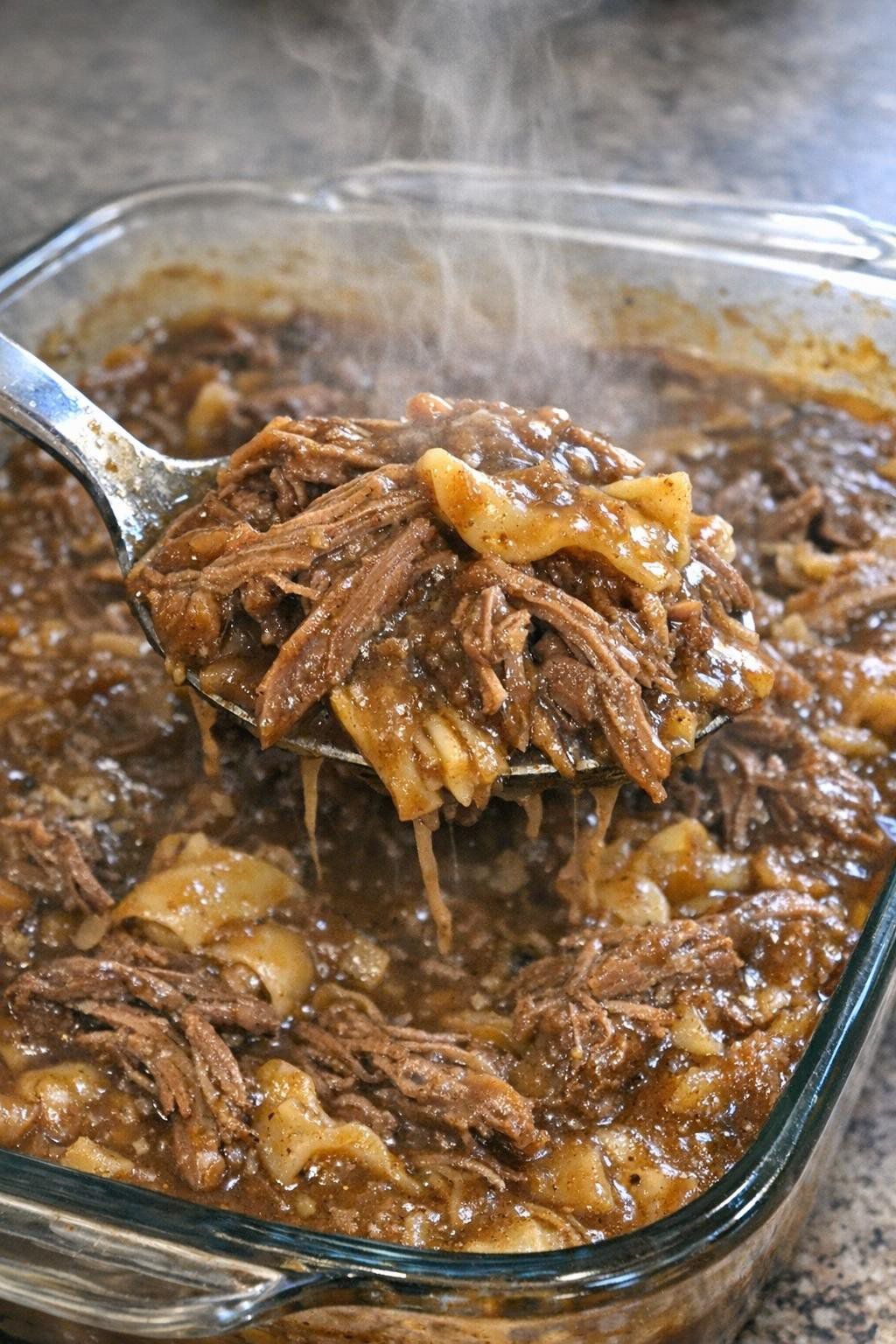
This Slow-Baked Shredded Beef in Rich Brown Gravy is the kind of comfort-food dinner that becomes incredibly tender after several hours of gentle cooking. Large pieces of beef slowly cook in a savory onion-and-garlic gravy until they can be pulled apart effortlessly with a fork.
The long cooking time allows the beef juices, broth, Worcestershire sauce, onions, and seasonings to develop into a deep, glossy gravy. Once the meat is shredded and mixed back into those juices, every strand becomes coated in rich beef flavor.
Serve it over mashed potatoes, buttered noodles, rice, or warm bread for an easy family meal.
Why You’ll Love This Recipe
This recipe uses an inexpensive, tougher beef cut and transforms it through slow cooking.
Chuck roast is particularly good because it contains connective tissue and marbling that soften during a long cook. Instead of becoming dry, properly cooked chuck develops a tender texture that pulls apart easily.
Another advantage is that most of the cooking is hands-off. Once the beef is browned and the gravy mixture is assembled, the oven does the work.
It is also an excellent make-ahead dinner because the flavor can become even better after the beef rests in its gravy.
Ingredients
For the beef:
3½–4 pounds beef chuck roast
2 tablespoons olive oil
1½ teaspoons salt
1 teaspoon black pepper
1 teaspoon garlic powder
1 teaspoon onion powder
1 teaspoon smoked paprika
For the gravy:
1 large yellow onion, finely diced
4 garlic cloves, minced
2½ cups beef broth
2 tablespoons Worcestershire sauce
1 tablespoon tomato paste
1 teaspoon dried thyme
½ teaspoon dried rosemary
½ teaspoon black pepper
1 tablespoon brown sugar, optional
2 tablespoons butter
For thickening:
- 2 tablespoons cornstarch
- 3 tablespoons cold water
Choosing the Best Beef
Beef chuck roast is one of the best choices for this recipe.
Chuck contains enough fat and connective tissue to remain flavorful during long cooking. As the beef cooks slowly, collagen gradually softens, creating the fork-tender texture needed for shredded beef.
Other suitable cuts include brisket or boneless beef short ribs, although cooking times may vary.
Very lean cuts are less suitable because they can become dry before reaching the same pull-apart texture.
Cut and Season the Beef
Preheat the oven to 325°F (165°C).
Cut the chuck roast into several large chunks.
Pat the surface dry with paper towels.
Season generously with salt, black pepper, garlic powder, onion powder, and smoked paprika.
Drying the surface helps the beef develop a better crust during browning.
Sear the Beef
Heat olive oil in a large oven-safe Dutch oven or heavy skillet over medium-high heat.
Add the beef in batches.
Avoid overcrowding the pan.
Brown each piece for approximately 2–3 minutes per side until a dark golden crust develops.
You aren’t trying to cook the beef completely at this stage.
The goal is to create browned flavors that will later enrich the gravy.
Transfer the seared beef to a plate.
Cook the Onion and Garlic
Reduce the heat to medium.
Add the diced onion to the same pan.
Cook for approximately 4–5 minutes, stirring frequently and scraping the browned beef bits from the bottom.
Add the garlic and cook for another 30 seconds.
Next, stir in the tomato paste.
Cook it for about one minute.
Briefly cooking tomato paste removes some of its raw flavor and gives the gravy greater depth.
Build the Rich Brown Gravy
Slowly pour in the beef broth while scraping the bottom of the pan.
Add Worcestershire sauce, thyme, rosemary, black pepper, butter, and optional brown sugar.
Stir until combined.
The brown sugar isn’t intended to make the beef sweet. A small amount can simply round out the savory flavors.
Bring the liquid to a gentle simmer.
Assemble the Beef
Place the browned beef pieces into a large baking dish.
Pour the hot gravy mixture over the meat.
The beef doesn’t need to be completely submerged.
Cover the baking dish very tightly with foil.
Keeping the dish covered is important because trapped steam and moisture help the beef become tender.
Slow-Bake Until Fork Tender
Bake at 325°F (165°C) for approximately 3–3½ hours.
Begin checking the beef around the three-hour mark.
Cooking time isn’t the only indicator.
Insert a fork into one of the largest pieces and twist gently.
If the beef resists, it needs more time.
Properly cooked chuck should separate easily without requiring significant force.
For food safety, whole beef roasts have a lower minimum safe temperature than the temperature normally needed for shredding; for this dish, the beef is intentionally cooked much further until the connective tissue softens and the meat pulls apart easily.
How to Know When the Beef Is Ready
One of the most common mistakes with slow-cooked beef is assuming that toughness means it has been overcooked.
With chuck roast, toughness after a couple of hours can actually mean the connective tissue hasn’t softened enough yet.
Give it additional covered cooking time and check again.
When ready, the meat should be moist and easy to separate using two forks.
Shred the Beef
Carefully remove the baking dish from the oven.
Transfer the beef pieces to a large plate.
Using two forks, pull the meat apart into thick shreds.
Discard any large pieces of excess fat or connective tissue that haven’t softened.
Return all of the shredded beef to the baking dish.
Stir it thoroughly into the cooking juices.
At this point, the meat will begin absorbing some of that concentrated beef gravy.
How to Thicken the Gravy
If you prefer a thicker gravy, mix the cornstarch with cold water until completely smooth.
Remove the beef temporarily or move it toward the sides of the dish.
Gradually stir the slurry into the hot cooking liquid.
Return the dish to the oven uncovered for approximately 10–15 minutes, or transfer the liquid to a saucepan and simmer until thickened.
Add only as much slurry as necessary.
The gravy should coat the shredded beef without becoming gummy.
For an Extra-Rich Finish
Once the gravy reaches your preferred consistency, stir in approximately 1 tablespoon of cold butter.
This gives the sauce additional richness and a slightly glossier appearance.
Taste before adding additional salt because beef broth and Worcestershire sauce already contain sodium.
Finish with freshly ground black pepper if desired.
The Secret to Dark, Flavorful Gravy
A rich brown gravy doesn’t require artificial coloring.
Flavor and color come naturally from several steps.
First, brown the beef thoroughly.
Second, cook the onions until softened and lightly golden.
Third, cook the tomato paste briefly.
Finally, scrape all the browned bits from the pan into the cooking liquid.
Those browned bits contain concentrated flavor and help create the deep color associated with slow-cooked beef gravy.
Onion Gravy Variation
If you love onions, use two large yellow onions instead of one.
Slice them rather than finely dicing them.
Cook until lightly caramelized before adding the garlic and broth.
After several hours in the oven, the onions become extremely soft and practically melt into the gravy.
This variation is particularly good over mashed potatoes.
Mushroom Shredded Beef
Add approximately 8 ounces sliced mushrooms.
Brown the mushrooms after searing the beef.
Remove them temporarily, prepare the gravy, then return them to the baking dish with the meat.
Mushrooms add an earthy flavor that works naturally with beef and brown gravy.
Garlic Butter Variation
For a stronger garlic flavor, roast several whole garlic cloves alongside the beef.
Once soft, mash them directly into the gravy.
Finish the sauce with butter after shredding the beef.
This produces an especially rich gravy for mashed potatoes or egg noodles.
BBQ Shredded Beef Variation
The same slow-cooking technique can be adapted into BBQ beef.
Reduce the beef broth slightly and add your favorite barbecue sauce during the final stage of cooking.
After shredding, mix the beef thoroughly with the sauce and return it to the oven uncovered for several minutes.
Serve on toasted sandwich rolls with coleslaw.
What to Serve With Shredded Beef
This rich beef works beautifully with simple sides:
- Creamy mashed potatoes
- Buttered egg noodles
- Steamed rice
- Roasted potatoes
- Green beans
- Roasted carrots
- Broccoli
- Corn
- Dinner rolls
- Crusty bread
Mashed potatoes are especially good because they absorb the rich gravy.
Turn It Into Beef Sandwiches
Leftover shredded beef makes an excellent sandwich filling.
Warm the meat with enough gravy to keep it moist.
Pile it onto toasted rolls and add provolone or mozzarella.
Broil briefly until the cheese melts.
You can also add caramelized onions or sautéed mushrooms.
Make-Ahead Instructions
This is an excellent recipe to prepare one day ahead.
Cook the beef completely and shred it into the gravy.
Cool and refrigerate promptly in a covered container.
The next day, any excess fat that solidifies on the surface can be easily removed if desired.
Reheat the beef slowly with its gravy until thoroughly hot.
How to Store Leftovers
Transfer leftovers to shallow airtight containers and refrigerate within 2 hours of cooking.
Use refrigerated cooked beef within approximately 3–4 days.
Store plenty of gravy with the meat because it helps prevent the shredded beef from drying out during reheating.
Can You Freeze Shredded Beef?
Yes.
This dish freezes particularly well because the gravy protects the meat from drying out.
Allow the beef to cool and transfer it with some gravy to freezer-safe containers.
For best quality, use within approximately 2–3 months.
Thaw overnight in the refrigerator before reheating.
Best Way to Reheat
Place the beef and gravy in a covered saucepan over medium-low heat.
Add a small splash of beef broth if the sauce has become too thick.
Heat gently, stirring occasionally, until thoroughly hot.
You can also reheat it covered in the oven.
Avoid prolonged high heat because already-shredded beef can eventually lose moisture.
Common Mistakes to Avoid
Skipping the sear: Browning adds significant flavor to the final gravy.
Using too little cooking time: Chuck needs time for its connective tissue to soften.
Cooking uncovered from the beginning: Too much liquid can evaporate before the beef becomes tender.
Adding too much cornstarch: The gravy should remain silky rather than becoming paste-like.
Using an extremely lean cut: A well-marbled braising cut produces better shredded beef.
Throwing away the cooking juices: Those juices are the foundation of the gravy.
Frequently Asked Questions
Why isn’t my beef shredding?
It probably needs additional cooking time. Keep it covered and continue cooking until a fork twists through it easily.
Can I use a slow cooker?
Yes. Brown the beef first for maximum flavor, then transfer everything to the slow cooker. Cook until completely fork-tender.
Can I make this without cornstarch?
Absolutely. You can leave the gravy thinner or reduce the cooking liquid gently on the stovetop.
Can I add potatoes?
Yes. Larger potato pieces can be added during cooking, although their exact cooking time depends on size.
What is the best cut for shredded beef?
Chuck roast is one of the most reliable choices because its marbling and connective tissue work especially well with slow cooking.
Can I prepare this for a crowd?
Yes. The recipe can be scaled up as long as the beef isn’t packed so tightly that it cooks unevenly.
Final Thoughts
This Slow-Baked Shredded Beef in Rich Brown Gravy turns a simple chuck roast into tender strands of beef coated in a deeply savory homemade sauce.
The key isn’t a complicated ingredient list. It is giving the beef enough time to cook gently until the connective tissue softens and the meat practically falls apart.
Spoon the steaming shredded beef and glossy gravy over creamy mashed potatoes, rice, or buttered noodles for a hearty comfort-food dinner that’s especially good when you want something warm, rich, and satisfying. 🥩🍲✨