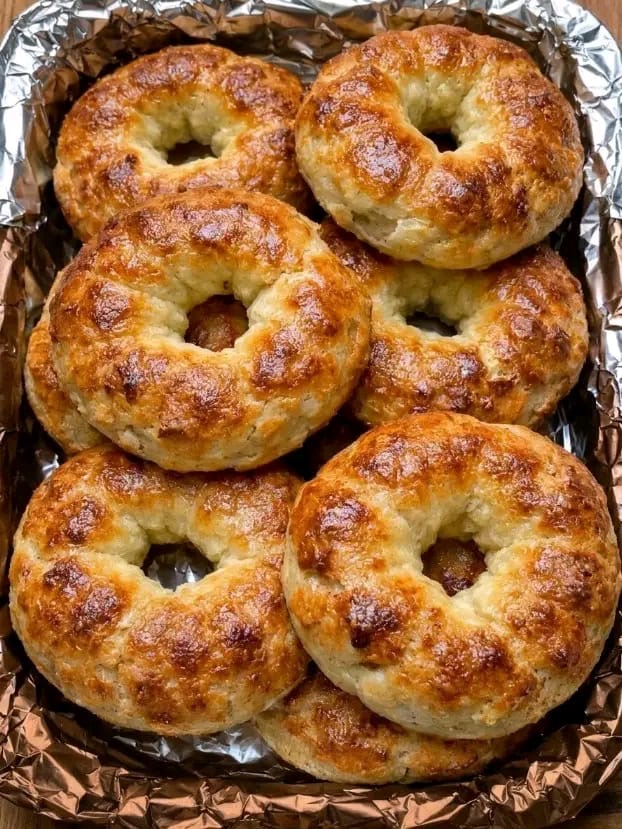
These Easy Homemade Baked Bagels are beautifully golden on the outside, soft and pleasantly chewy inside, and surprisingly simple to prepare at home. With a handful of everyday ingredients, you can make fresh bagels that are perfect for breakfast, brunch, sandwiches, or an easy afternoon snack.
The best part is their versatility. Enjoy them warm with butter or cream cheese, turn them into breakfast sandwiches, or add your favorite toppings before baking.
Why You’ll Love These Homemade Bagels
Homemade bagels give you complete control over the ingredients, size, and toppings. Fresh from the oven, they have a texture and aroma that packaged versions simply cannot match.
This recipe is also easy to customize. Keep the bagels plain, sprinkle them with sesame or poppy seeds, add everything seasoning, or make a cheesy variation.
They’re also excellent for meal prep because you can make a batch, freeze the extras, and reheat them whenever you want a quick breakfast.
Ingredients
- 3½ cups bread flour, plus extra if needed
- 1¼ cups warm water
- 2¼ teaspoons active dry yeast
- 1 tablespoon granulated sugar
- 1½ teaspoons salt
- 1 tablespoon olive oil, optional
- 1 egg for egg wash
- 1 tablespoon water for egg wash
For boiling:
- 8 cups water
- 1 tablespoon honey or brown sugar
- 1 teaspoon baking soda, optional
Optional toppings:
- Sesame seeds
- Poppy seeds
- Everything bagel seasoning
- Shredded cheese
- Coarse salt
Why Bread Flour Works Best
Bread flour is ideal for bagels because its higher protein content helps develop a stronger gluten structure.
That gluten development is what gives traditional bagels their characteristic chewy bite.
All-purpose flour can work if that’s what you have, but the final bagels may be slightly softer.
Activate the Yeast
Pour the warm water into a large mixing bowl. The water should feel comfortably warm rather than hot.
Add the sugar and yeast.
Stir gently and allow the mixture to sit for approximately 5–10 minutes.
You should begin seeing a light foamy layer on the surface. This indicates that the yeast is active.
If nothing happens after 10 minutes, your yeast may be old or the water may have been too hot or too cold.
Prepare the Bagel Dough
Add the flour and salt to the yeast mixture.
Mix until a rough dough begins to form.
Transfer the dough to a lightly floured work surface and knead for approximately 8–10 minutes.
The finished dough should feel smooth, elastic, and relatively firm. Bagel dough is generally stiffer than ordinary sandwich-bread dough, so avoid adding excessive water.
If the dough is extremely sticky, sprinkle in a little additional flour.
Let the Dough Rise
Lightly grease a large bowl.
Place the dough inside and turn it once to coat the surface lightly.
Cover with a clean kitchen towel or plastic wrap.
Leave it in a warm area for approximately 60–90 minutes, or until noticeably increased in size.
The exact rising time depends on your room temperature.
How to Shape Homemade Bagels
Gently press the risen dough down and transfer it to your work surface.
Divide it into 8 equal portions.
Shape each portion into a smooth ball.
Using your finger, make a hole through the center of each dough ball.
Gently stretch and rotate the dough until the center hole measures approximately 1½–2 inches across.
Don’t make the hole too small because the dough expands during boiling and baking.
Place the shaped bagels onto parchment paper and let them rest for approximately 10–15 minutes.
Why Bagels Are Boiled Before Baking
This is one of the most important steps.
Boiling sets the outside of the dough before it enters the oven. It helps create the distinctive bagel crust and chewy texture.
Bring a large pot of water to a gentle boil.
Add the honey or brown sugar. You can also add the optional baking soda.
Carefully lower 2–3 bagels into the water at a time.
Boil for approximately 30–45 seconds on the first side, flip them, and boil for another 30–45 seconds.
Use a slotted spoon to remove them and allow excess water to drain.
Transfer them onto a parchment-lined baking sheet.
Add the Golden Egg Wash
Preheat your oven to 425°F (220°C).
Whisk together one egg and one tablespoon of water.
Brush a thin, even layer over each boiled bagel.
The egg wash helps produce the beautiful shiny, deep-golden surface.
If you’re adding sesame seeds, poppy seeds, coarse salt, or everything seasoning, sprinkle them over the bagels immediately after applying the egg wash.
Bake Until Beautifully Golden
Bake the bagels at 425°F (220°C) for approximately 18–23 minutes.
The exact time depends on their size and your oven.
Look for a rich golden-brown exterior.
Once baked, transfer the bagels to a cooling rack and allow them to rest for at least 10–15 minutes before slicing.
The interior continues setting as the bagels cool.
How to Get Soft and Chewy Bagels
Proper kneading is essential.
Kneading develops gluten, creating the characteristic chewy texture. Don’t stop as soon as the ingredients come together; continue until the dough becomes smooth and elastic.
Boiling time matters too.
A shorter boil generally produces a slightly softer crust, while a longer boil creates a chewier exterior.
Finally, avoid overbaking. You want a beautifully browned crust without drying out the center.
Everything Bagel Variation
Everything seasoning is one of the easiest ways to transform the basic recipe.
After boiling and applying the egg wash, generously sprinkle the tops with everything bagel seasoning.
It usually contains a combination of sesame seeds, poppy seeds, dried garlic, dried onion, and salt.
Bake normally until golden.
Cheesy Bagels
Cheese lovers can sprinkle shredded cheddar, Parmesan, or another good melting cheese over the egg-washed bagels.
Add the cheese during the final several minutes if you prefer a softer topping, or before baking if you want deeper browning.
Cheddar bagels are particularly good for breakfast sandwiches.
Cinnamon Variation
For something sweeter, add a little cinnamon to the dough.
You can also fold raisins into the dough after kneading to create homemade cinnamon-raisin bagels.
Serve them toasted with butter, cream cheese, or a little honey.
What to Serve With Homemade Bagels
Fresh bagels are delicious while still slightly warm.
For a simple breakfast, serve them with butter, cream cheese, jam, peanut butter, or honey.
For something more substantial, make a breakfast sandwich with eggs, cheese, and your favorite breakfast protein.
You can also use bagels for lunch sandwiches with chicken, turkey, cheese, lettuce, and tomato.
Common Bagel-Making Mistakes
Using excessively hot water for yeast: High temperatures can damage yeast. Warm water is enough.
Making the dough too soft: Bagel dough should be relatively firm.
Not kneading enough: Proper gluten development is important for chewy bagels.
Making tiny center holes: They may close completely as the bagels expand.
Skipping the boiling step: You can bake bread rings without boiling, but they won’t have the same classic bagel texture.
Overcrowding the boiling water: Work in small batches so you can flip and remove the bagels easily.
How to Store Homemade Bagels
Allow the bagels to cool completely before storing.
Keep them in an airtight bag or container at room temperature for approximately 2 days.
For longer storage, freezing is usually the better choice.
Avoid refrigerating bread unnecessarily because refrigeration can make bread become stale more quickly.
How to Freeze Bagels
Once completely cool, slice the bagels in half before freezing. This makes them much easier to toast later.
Wrap them individually or place parchment between them, then store them in a freezer-safe bag.
They can maintain good quality in the freezer for approximately 2–3 months.
When you’re ready to eat one, toast it directly from frozen or allow it to thaw first.
Frequently Asked Questions
Can I use all-purpose flour?
Yes. The recipe will still work, although bread flour generally creates a chewier texture.
Why did my bagel holes disappear?
The holes were probably too small when you shaped the dough. Make them larger than you think you need because the dough expands considerably.
Do I really need to boil bagels?
For a classic bagel texture, yes. Boiling is one of the key differences between bagels and ordinary ring-shaped bread.
How do I make the tops shiny?
Brush them with egg wash immediately before baking.
Can I prepare the dough ahead?
Yes. A slow overnight rise in the refrigerator can be convenient and can also develop additional flavor.
Can homemade bagels be frozen?
Absolutely. Freezing is one of the best ways to keep a homemade batch available for future breakfasts.
Final Thoughts
These Easy Homemade Golden Baked Bagels combine a beautifully browned exterior with a soft, satisfying, chewy center.
The process is straightforward: prepare the dough, let it rise, shape the rings, briefly boil them, brush with egg wash, and bake until deeply golden.
Once you’ve mastered the basic recipe, you can experiment with everything seasoning, sesame seeds, cheese, cinnamon-raisin, or your own favorite combination.
Serve one warm from the oven with cream cheese and you’ll understand why a fresh homemade bagel is worth the extra few steps. 🥯✨