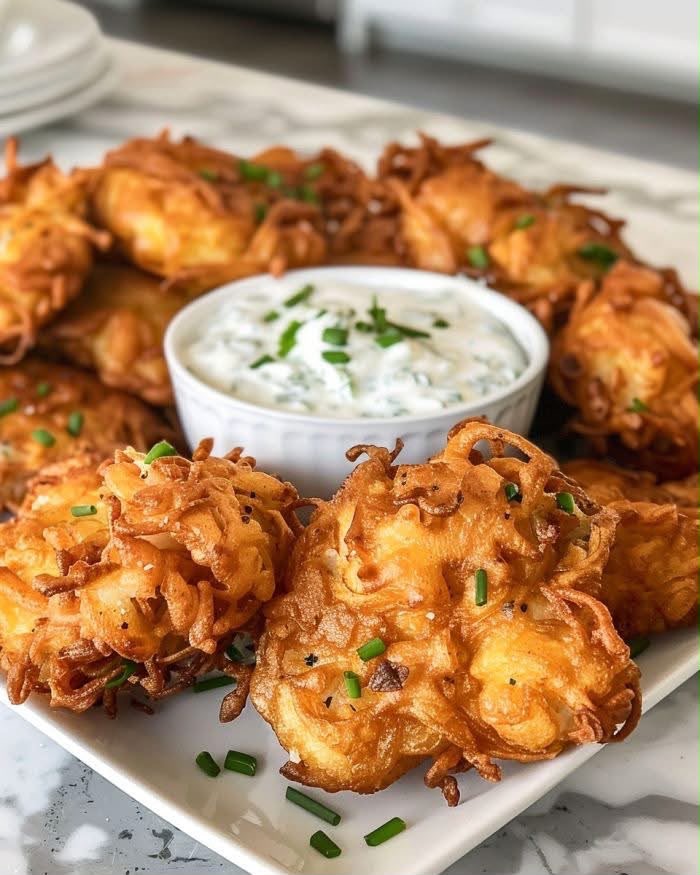
Thin-sliced onions bound in a light spiced batter and fried until the edges go lacy and dark. These are the fritters that stay crisp on the plate instead of collapsing into soft dough within five minutes.
The technique that decides everything is salting the onions first. Onions are about 89% water, and if that water is still inside them when they hit the batter, it leaches out in the oil and steams the fritter from within. Fifteen minutes with salt draws it out beforehand, and it also gives you the liquid you need to bring the batter together.
Twenty-five minutes of prep including the resting time, about fifteen at the stove, and they are best eaten within the hour.
Why You Will Love This Recipe
They actually stay crisp. The salted onions and the cornstarch in the batter both work against the sogginess that ruins most homemade fritters.
They cost almost nothing. Two large onions, flour, and a few spices feed a table of people as a starter.
The batter needs no liquid. The onions release enough of their own moisture that you add water by the spoonful, if at all.
They fry in under three minutes. Small and thin, so a batch is done almost as fast as you can drop it in.
The dip comes together while they rest. Sour cream, herbs, and lemon, mixed in the time the onions are draining.
Recipe Overview
Prep time: 25 minutes, including resting
Cook time: 15 minutes
Total time: 40 minutes
Yield: About 16 fritters, serving 4
Difficulty: Easy
Best for: Starters, party food, rainy afternoons, tea time
Ingredients
For the fritters
• 2 large yellow onions, halved and sliced very thin
• 1 teaspoon salt, for drawing out moisture
• ¾ cup chickpea flour, or all-purpose flour
• ¼ cup cornstarch
• 1 teaspoon cumin
• 1 teaspoon coriander
• ½ teaspoon turmeric
• ½ teaspoon chilli powder, or to taste
• ½ teaspoon baking powder
• ½ teaspoon black pepper
• 2 tablespoons chopped fresh chives, plus more to finish
• 2 to 4 tablespoons cold water, only if needed
• Neutral oil, for frying
For the herb dip
• ¾ cup sour cream
• ¼ cup mayonnaise
• 2 tablespoons chopped chives
• 1 tablespoon chopped fresh dill or parsley
• 1 tablespoon lemon juice
• 1 small garlic clove, grated
• Salt and pepper to taste
Choosing the Right Onions
The onion determines both the sweetness and how well the fritter holds together.
Yellow onions. The standard choice and the most reliable. Enough sugar to caramelise at the edges, enough structure to hold its shape in the batter.
Sweet onions, such as Vidalia. Milder and noticeably sweeter, and they brown faster because of the higher sugar. Watch the oil temperature more closely with these.
Red onions. Attractive and slightly sharper, though they lose most of their colour in the oil and turn a dull purple-brown.
Shallots. Excellent flavour and worth using if you have a glut, but you will need eight or nine, and slicing them takes real patience.
White onions. Sharper and more assertive raw, which mellows in frying. Perfectly usable, just less sweet at the edges.
Slice as thin as you can manage, around ⅛ inch. A mandoline gives the most even result, though a sharp knife and a steady hand work fine.
Why Salting the Onions and Using Cornstarch Both Matter
Frying is a drying process. Oil at 350°F drives water out of the food as steam, and that steam escaping through the batter is what creates the crisp shell. The problem is that an onion holds a very large amount of water for its size, and it keeps releasing it long after the exterior has set.
Once the crust has formed, that continuing steam has nowhere to go. It softens the batter from the inside, which is why fritters that came out crisp go limp on the plate within minutes. Salting the onions for fifteen minutes pulls a surprising volume of liquid out beforehand, so the fritter has far less water to lose in the oil.
The salted onions also solve the batter. Rather than adding water and diluting the flavour, you use the liquid the onions have given up. The batter clings closer to the onion and fries thinner.
Cornstarch does the rest. It contains no gluten, so it cannot form the elastic network that makes a flour-only batter chewy, and it fries harder and drier than wheat flour. A quarter cup against three quarters of a cup of flour is enough to change the texture noticeably without making the coating brittle.
How to Make Crispy Onion Fritters
Step 1: Slice and salt the onions
Slice the onions as thinly as possible, put them in a large bowl, and toss with the teaspoon of salt. Leave for 15 minutes.
You will see liquid pooling at the bottom. That is exactly what you want, and you are going to use it.
Step 2: Squeeze gently and keep the liquid
Press the onions lightly with your hands to release a little more moisture, but do not drain the bowl.
The liquid stays in. It is the only wet ingredient the batter needs.
Step 3: Add the dry ingredients
Sprinkle the chickpea flour, cornstarch, cumin, coriander, turmeric, chilli powder, baking powder, and black pepper directly over the wet onions. Add the chives.
Step 4: Mix with your hands
Work everything together with your fingers until the onions are coated in a thick, clinging batter.
It will look too dry at first. Keep mixing for a full minute before you consider adding water. Add cold water only a tablespoon at a time, and only if it refuses to come together.
Step 5: Heat the oil
Pour 2 inches of oil into a heavy pot and bring it to 350°F. Use a thermometer if you have one.
Without a thermometer, drop in a small piece of batter. It should sizzle steadily and rise within a couple of seconds, not sink or spit violently.
Step 6: Make the dip
While the oil heats, stir the sour cream, mayonnaise, chives, dill, lemon juice, and grated garlic together. Season and refrigerate.
Step 7: Drop in loose spoonfuls
Take a heaped tablespoon of the mixture and drop it into the oil, letting the strands sit loosely rather than packing it into a ball.
Loose spoonfuls give you the lacy edges. A compacted ball fries into something dense with a raw centre.
Step 8: Fry in small batches
Cook 4 or 5 at a time for 2 to 3 minutes, turning once, until deep golden all over.
Crowding the pot drops the oil temperature, and cool oil soaks into the batter instead of crisping it. Let the temperature recover between batches.
Step 9: Drain on a rack
Lift them out with a slotted spoon onto a wire rack set over a tray. Season with a little salt while hot.
Use a rack rather than paper towels. Paper traps steam underneath and softens the base you just crisped.
Tips for the Best Onion Fritters
Slice thin and slice evenly. Thick slices stay raw and crunchy inside while the batter around them burns.
Do not skip the 15-minute rest. It is the single step that separates these from soggy fritters.
Keep the batter thick. It should cling to the onions, not run off them. Thin batter spreads in the oil and fries into flat, greasy discs.
Watch the oil between batches. Let it come back to 350°F each time, and turn the heat down slightly if the fritters darken in under two minutes.
Serve them fast. These are at their best within twenty minutes of leaving the oil.
Easy Variations
• Add a grated potato, squeezed dry, for a heartier fritter
• Stir in a handful of chopped spinach or fenugreek leaves
• Use garam masala in place of the individual spices for a quicker version
• Add ½ cup of grated cheddar for a richer, less traditional bite
• Swap the herb dip for mango chutney or tamarind sauce
• Add a finely chopped green chilli to the batter for real heat
What to Serve With It
The herb dip is the classic pairing, and a squeeze of lemon over the fritters just before serving lifts everything. Mango chutney or a mint yoghurt sauce both work if you want something sweeter or cooler.
As part of a larger meal, serve them alongside a lentil curry and rice, or as one dish among several at a table of small plates. With tea on a cold afternoon they need nothing at all.
Make-Ahead and Storage
Make ahead. The dip keeps for 3 days in the fridge and improves overnight. The batter is best mixed and fried immediately, since the onions keep releasing water and thin it out.
Fridge. Store fried fritters in an airtight container for up to 2 days. They will have softened.
Freezer. Freeze fried and fully cooled fritters in a single layer for up to 2 months.
Reheating. A 400°F oven for 6 to 8 minutes, or an air fryer at 375°F for 4 minutes, brings the crispness back. The microwave does not, under any circumstances.
Frequently Asked Questions
Can I bake these instead of frying?
You can, at 425°F for about 20 minutes on an oiled tray, turning halfway. They come out good but noticeably less crisp and lacy at the edges.
Can I air fry them?
Yes. Spray generously with oil and cook at 375°F for 12 to 14 minutes, shaking the basket halfway.
Why are my fritters greasy?
The oil was below 350°F, usually from adding too many at once. Fry fewer per batch and let the temperature recover.
Chickpea flour or all-purpose?
Chickpea flour is traditional and gives a nuttier flavour and a crisper result. All-purpose works and is milder.
Can I prepare the batter in advance?
Not usefully. Within thirty minutes the onions release enough extra water that the batter loosens and the fritters spread in the oil.
How do I keep them warm for a crowd?
Hold them on the rack in a 200°F oven while you finish the remaining batches. They will keep for about half an hour.
Nutrition Information
• Calories: 165 per fritter, before dip
• Protein: 4g
• Fat: 9g
• Carbohydrates: 17g
• Fiber: 2g
• Sodium: 310mg
The dip adds roughly 60 calories per tablespoon. Nutrition is estimated and will vary with portion size, oil absorption, and brands used.
Final Thoughts