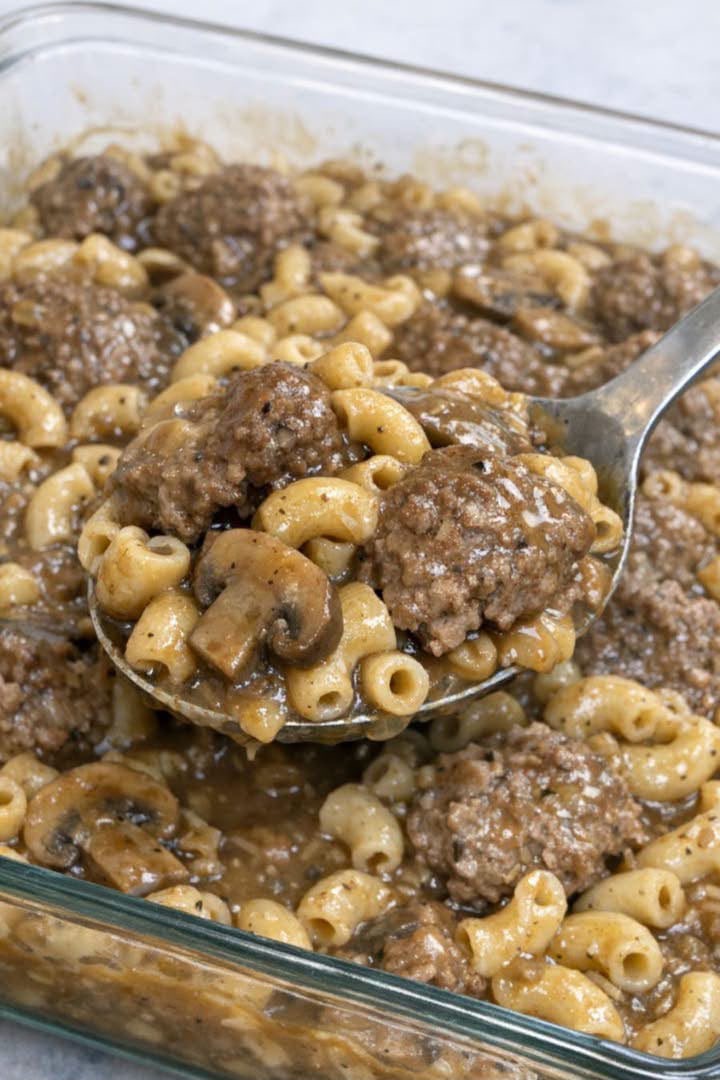
There is a specific kind of comfort that only shows up when ground beef, brown gravy and pasta land in the same dish. This casserole takes everything people love about old-school Salisbury steak and turns it into tender meatballs simmered in a mushroom onion gravy, all folded through elbow macaroni.
It is the kind of weeknight dinner that feeds a crowd for very little money and still tastes like someone spent the afternoon on it. One pan, one spoon, zero complaints at the table.
Table of Contents
• Why You Will Love This Recipe
• Recipe Overview
• Ingredients
• The Secret to Meatballs That Stay Tender
• Building a Mushroom Gravy with Real Depth
• How to Make Salisbury Steak Meatball Casserole
• Tips for the Best Results
• Variations
• What to Serve With It
• Make-Ahead and Storage
• Frequently Asked Questions
• Nutrition Information
• Final Thoughts
[AD PLACEMENT 1 — after table of contents]
Why You Will Love This Recipe
It tastes like Salisbury steak without the work. Instead of shaping and pan-searing large patties that crack and fall apart, you roll quick meatballs that cook evenly and hold their shape in the gravy.
Everything finishes in one dish. The meatballs, the mushroom gravy and the pasta all come together in the same baking dish, so cleanup stays at one pan plus a skillet.
It stretches a pound of beef into six real servings. Between the pasta and the gravy, a single package of ground beef feeds a whole family with leftovers for lunch the next day.
The gravy is the star. Deeply savory, glossy and loaded with sliced mushrooms and soft onion, it coats every elbow of macaroni instead of sitting in a puddle at the bottom.
Kids actually eat it. Meatballs and pasta are a universally accepted food combination, and the mushrooms disappear into the sauce for anyone who claims not to like them.
Recipe Overview
Prep time: 20 minutes
Cook time: 35 minutes
Total time: 55 minutes
Servings: 6
Course: Main dish
Cuisine: American
Method: Stovetop and oven
Difficulty: Easy
Ingredients
For the meatballs
• 1 pound ground beef, 80/20 for the best flavor
• 1/3 cup panko breadcrumbs
• 1 large egg
• 3 tablespoons whole milk
• 1 tablespoon Worcestershire sauce
• 1 teaspoon onion powder
• 1/2 teaspoon garlic powder
• 1 teaspoon Dijon mustard
• 3/4 teaspoon salt
• 1/2 teaspoon black pepper
For the mushroom gravy
• 2 tablespoons butter
• 1 tablespoon olive oil
• 8 ounces cremini or white mushrooms, sliced
• 1 medium yellow onion, finely diced
• 2 cloves garlic, minced
• 3 tablespoons all-purpose flour
• 3 cups beef broth, low sodium
• 1 tablespoon Worcestershire sauce
• 1 teaspoon Dijon mustard
• 1/2 teaspoon dried thyme
• Salt and black pepper to taste
For the pasta
• 12 ounces elbow macaroni
• 2 tablespoons chopped fresh parsley, optional
[AD PLACEMENT 2 — after ingredients]
The Secret to Meatballs That Stay Tender
The difference between a rubbery meatball and a tender one comes down to a technique called a panade, which is nothing more than starch soaked in liquid. Mixing the panko with milk before it touches the beef lets the breadcrumbs swell with moisture that stays trapped inside the meat as it cooks.
Without it, the proteins in ground beef tighten and squeeze out their own juices, which is exactly how you end up with dry, bouncy little spheres. With it, you get the soft texture you see in the photo, where a spoon presses straight through the meatball.
The second half of the equation is how you handle the meat. Mix with your fingertips only until the ingredients disappear into each other, then stop. Overworking develops the proteins the same way kneading develops gluten in bread, and compacted meat cooks up dense no matter how good your recipe is.
Fat content matters more than most people expect here. Lean ground beef at 93/7 will produce noticeably drier meatballs, so 80/20 or 85/15 is the right choice when the meatballs are the centerpiece rather than a background ingredient.
Building a Mushroom Gravy with Real Depth
A brown gravy made from broth and flour alone tastes flat, and no amount of salt fixes it. What you actually need is browning, and mushrooms are the fastest route to it.
Give the sliced mushrooms room in a hot pan and leave them alone for the first few minutes. They will release their water, the pan will look wrong, and then the liquid evaporates and the real browning begins. That layer of caramelization is where the savory backbone of the gravy comes from.
Worcestershire sauce and Dijon mustard are the two ingredients doing quiet work in the background. Worcestershire brings fermented anchovy and tamarind notes that read as deep beef flavor, while Dijon adds a low acidity that keeps the gravy from tasting heavy and one-note.
Whisk the flour into the fat and vegetables and let it cook for a full minute before any broth goes in. Raw flour tastes like paste, and that minute of cooking is the difference between a gravy that tastes finished and one that tastes like it needs something.
[AD PLACEMENT 3 — before the instructions]
How to Make Salisbury Steak Meatball Casserole
Step 1: Soak the breadcrumbs
Combine the panko and milk in a large bowl and let them sit for five minutes until the crumbs have absorbed the liquid completely. This small pause is what keeps the meatballs tender.
Step 2: Mix and roll the meatballs
Add the ground beef, egg, Worcestershire, onion powder, garlic powder, Dijon, salt and pepper to the soaked panko. Mix gently with your hands just until combined, then roll into 24 meatballs about one and a half inches across.
Step 3: Brown the meatballs
Heat the olive oil in a large skillet over medium-high heat and brown the meatballs in batches, about two minutes per side. They do not need to cook through here, since they will finish in the oven.
Transfer the browned meatballs to a plate and leave every bit of the fond in the pan.
Step 4: Cook the mushrooms and onion
Add the butter to the same skillet, then the mushrooms in a single layer. Cook undisturbed for three minutes, stir, and continue cooking until golden, then add the onion and cook another four minutes until soft.
Stir in the garlic and cook for thirty seconds until fragrant.
Step 5: Make the gravy
Sprinkle the flour over the vegetables and stir constantly for one minute. Pour in the beef broth gradually while whisking, scraping the browned bits off the bottom of the pan, then add the Worcestershire, Dijon and thyme.
Simmer for four to five minutes until the gravy thickens enough to coat the back of a spoon, then season with salt and pepper.
Step 6: Cook the pasta
While the gravy simmers, boil the macaroni in salted water for two minutes less than the package directions. It will finish cooking in the oven, and undercooking now prevents mushy pasta later.
Drain well without rinsing.
Step 7: Assemble the casserole
Combine the drained pasta and the mushroom gravy in a 9×13 baking dish and stir until every piece is coated. Nestle the meatballs into the pasta, spacing them evenly so each serving gets its share.
Step 8: Bake and rest
Cover with foil and bake at 375°F for 20 minutes, then uncover and bake for 5 more minutes. Let the casserole rest for 10 minutes before serving so the gravy tightens around the pasta.
[AD PLACEMENT 4 — after the instructions]
Tips for the Best Results
Use a cookie scoop for the meatballs. A 1.5 tablespoon scoop gives you identical meatballs that cook at the same rate, which matters far more than the shape being perfect.
Do not skip the browning step. The fond left in the skillet after searing is a free flavor ingredient, and dissolving it into the broth is what makes the gravy taste like it simmered for hours.
Keep the gravy slightly thinner than you want it. The pasta will continue absorbing liquid in the oven, so a gravy that looks a little loose going in will be exactly right coming out.
Season the pasta water aggressively. Pasta that was boiled in bland water will taste bland in the finished dish no matter how well seasoned the gravy is.
Taste the gravy before assembling. Broths vary enormously in salt content, and this is the last easy moment to adjust before everything is combined.
Variations
Ground turkey version: Swap in ground turkey thigh and add an extra tablespoon of milk to the panade to compensate for the lower fat content.
Creamy stroganoff style: Stir a half cup of sour cream into the gravy off the heat just before assembling for a tangier, richer sauce.
Cheesy top: Scatter a cup of shredded mozzarella or Gruyère over the casserole before the uncovered bake for a browned, bubbling finish.
Extra vegetables: Add a cup of frozen peas or sautéed green beans with the pasta for color and a little sweetness against the savory gravy.
Egg noodle swap: Wide egg noodles work beautifully in place of macaroni and lean the dish further toward its stroganoff cousins.
[AD PLACEMENT 5 — after variations]
What to Serve With It
A sharp green salad with a vinaigrette is the ideal partner, since the acidity cuts straight through the richness of the gravy. Keep the dressing lemony rather than creamy.
Roasted broccoli or green beans with a squeeze of lemon add texture that the casserole itself does not have. Garlic bread is technically redundant next to pasta, but nobody has ever complained about having something to mop the plate with.
For a lighter table, steamed asparagus or a simple cucumber salad balances the meal without competing for attention.
Make-Ahead and Storage
To make ahead: Assemble the entire casserole, cover tightly and refrigerate for up to 24 hours, then add 10 minutes to the covered baking time when cooking from cold.
To refrigerate: Store leftovers in an airtight container for up to four days. The pasta will absorb more gravy overnight, so add a splash of broth when reheating.
To freeze: Freeze the fully assembled unbaked casserole for up to three months, wrapped in foil and then plastic. Thaw overnight in the refrigerator before baking.
To reheat: Warm individual portions in the microwave with a tablespoon of broth, or cover the whole dish with foil and reheat at 350°F for 20 minutes.
Frequently Asked Questions
Can I use frozen meatballs?
Yes, and it cuts the prep time roughly in half. Use about 24 fully cooked frozen meatballs, thaw them first, and skip the browning step entirely.
Why did my gravy turn out lumpy?
Broth added too quickly to the flour is almost always the cause. Pour in the first cup slowly while whisking constantly, and the rest can go in faster once the base is smooth.
Can I make this gluten free?
Substitute gluten free breadcrumbs in the meatballs, a one-to-one gluten free flour blend in the gravy, and a corn or chickpea pasta that holds its shape when baked.
My casserole came out dry. What happened?
Either the pasta was fully cooked before baking or the gravy was already thick when it went into the dish. Both problems are solved by undercooking the macaroni and keeping the gravy loose.
Can I cook this entirely on the stovetop?
You can. After adding the pasta to the gravy, return the browned meatballs to the skillet, cover, and simmer over low heat for 12 to 15 minutes until the meatballs are cooked through.
[AD PLACEMENT 6 — after the FAQ]
Nutrition Information
Per serving, based on 6 servings:
• Calories: 545
• Protein: 30 g
• Carbohydrates: 52 g
• Fat: 23 g
• Saturated fat: 9 g
• Fiber: 3 g
• Sugar: 5 g
• Sodium: 780 mg
These values are estimates and will vary with the fat content of the beef and the sodium level of the broth used.
Final Thoughts
This is the recipe to keep in your back pocket for the nights when the fridge looks uninspiring and the budget is tight. Ground beef, a box of pasta and a handful of mushrooms turn into something that genuinely feels like a proper meal.
Make it once as written, then start adjusting. Add the sour cream, add the cheese, swap the noodles — the gravy is forgiving enough to carry whatever direction you take it.