Introduction
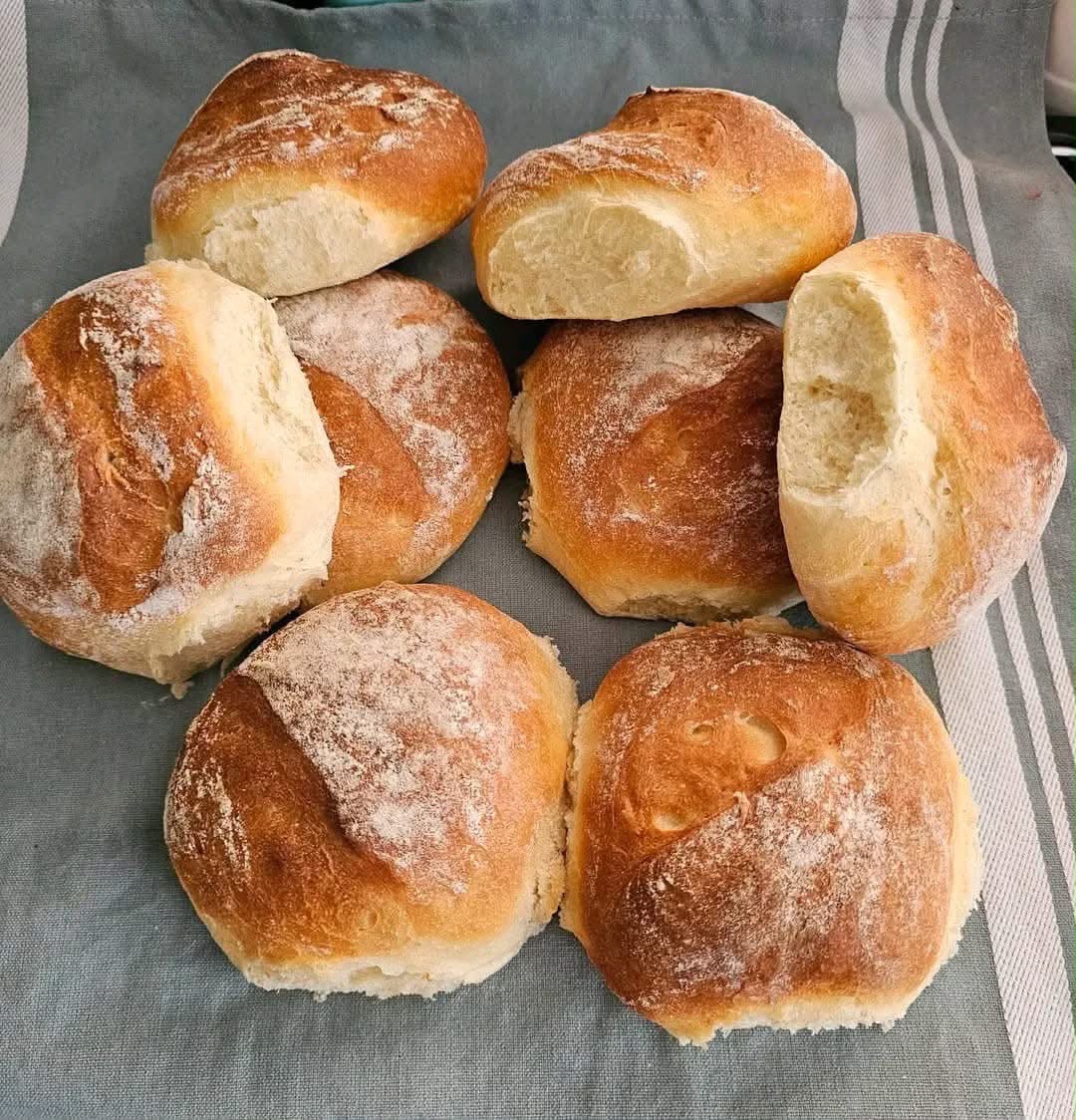
Soft Homemade Crusty Bread Rolls are a wonderful addition to any family meal. With their beautifully golden crust, light flour-dusted tops and soft, fluffy centres, these traditional bread rolls bring the comforting taste of freshly baked bread straight into your kitchen.
There is something special about the aroma of homemade bread baking in the oven. As the dough rises and the crust begins to turn golden, the kitchen fills with a warm, inviting fragrance that makes everyone eager to taste the finished rolls.
These rustic bread rolls combine two delicious textures. The outside develops a lightly crisp, golden crust, while the inside remains soft, airy and tender. Their rounded shape and naturally cracked tops give them the charming appearance of traditional bakery rolls.
Although homemade bread may seem complicated, this recipe uses simple ingredients and straightforward techniques. You do not need professional baking equipment or years of experience to achieve excellent results.
The secret is allowing the dough enough time to rise, kneading it properly and baking it in a well-preheated oven. A little steam at the beginning of baking also helps develop the beautiful crust.
These easy homemade bread rolls are perfect for breakfast, lunch, dinner and special occasions. Serve them warm with butter, fill them with cheese or sandwiches, or enjoy them alongside homemade soup.
Once you experience the flavour and texture of freshly baked bread rolls, you may find yourself making them regularly.
Why You Will Love This Recipe
Soft and fluffy centres: The dough produces tender bread with a light, airy crumb.
Beautiful golden crust: High-temperature baking and a little steam help create an appealing rustic finish.
Simple everyday ingredients: You only need flour, yeast, water, sugar, salt and a little oil.
Budget-friendly: Homemade bread rolls are an economical alternative to buying fresh bakery bread.
Perfect for beginners: The instructions are easy to follow, even if you have never baked bread before.
Versatile: Enjoy these rolls with breakfast, sandwiches, soups, stews or family dinners.
Freezer-friendly: Bake a batch in advance and freeze the extras for later.
No special equipment required: A mixing bowl, baking tray and oven are enough to prepare these delicious rolls.
Recipe Information
Preparation time: 20 minutes
First rising time: 60–90 minutes
Second rising time: 30–45 minutes
Baking time: 20–25 minutes
Cooling time: 15 minutes
Total time: Approximately 2 hours 30 minutes to 3 hours
Yield: 8 large bread rolls
Difficulty: Easy
Cooking method: Oven
Cuisine: European-inspired home baking
Course: Bread, breakfast or side dish
Main Ingredients
Strong White Bread Flour
Strong white bread flour is the main ingredient in this recipe.
It contains more protein than ordinary plain flour, helping the dough develop the gluten structure needed for soft, airy bread.
As the dough rises, gluten traps the gas produced by yeast, creating the small air pockets responsible for a fluffy interior.
You can use plain flour if strong bread flour is unavailable, although the texture may be slightly less chewy.
Warm Water
Water hydrates the flour and activates the yeast.
The temperature is important because excessively hot water can damage the yeast.
Aim for water that feels pleasantly warm, approximately 35–40°C.
Instant Yeast
Yeast allows the dough to rise and creates its light texture.
Instant yeast is convenient because it can be mixed directly with the flour.
Active dried yeast can also be used, but it may need to be activated according to the manufacturer’s instructions.
Sugar
A small amount of sugar adds a gentle sweetness and contributes to browning.
The bread will not taste noticeably sweet.
Salt
Salt enhances flavour and helps strengthen the dough.
Without enough salt, homemade bread can taste bland.
Olive Oil
A little olive oil adds softness and improves the texture of the crumb.
It also makes the dough easier to handle.
Ingredients
4 cups (500 g) strong white bread flour
1½ cups plus 1 tablespoon (375 ml) lukewarm water
2¼ teaspoons (7 g) instant dried yeast
1 tablespoon (12 g) granulated sugar
1½ teaspoons (9 g) fine salt
2 tablespoons (30 ml) olive oil
2 tablespoons plain flour, for dusting
Optional:
- A little extra olive oil for greasing the bowl
- Water for creating steam in the oven
How to Choose the Best Ingredients
Choosing the right ingredients is one of the easiest ways to improve homemade bread.
Use fresh flour that has been stored in a cool, dry place.
Strong bread flour generally produces a better structure than low-protein flour.
Check the expiry date of your yeast before beginning.
Old or improperly stored yeast may not rise effectively.
Use lukewarm water rather than hot water.
If you do not have a thermometer, the water should feel comfortably warm against your finger, never hot.
Fine salt distributes more evenly throughout the dough than coarse salt.
Olive oil provides a pleasant flavour, but sunflower oil or another neutral cooking oil can also be used.
Preparing the Dough
Before mixing the ingredients, make sure your work surface is clean.
Measure the flour accurately using kitchen scales if possible.
Place the flour in a large mixing bowl.
Add the instant yeast and sugar.
Stir briefly to distribute them evenly.
Add the salt and mix again.
Pour in most of the lukewarm water, followed by the olive oil.
Begin mixing with a wooden spoon or your hands.
Gradually add the remaining water until the ingredients form a soft, slightly sticky dough.
The dough should feel moist and flexible rather than stiff.
Avoid adding too much extra flour because this can make the finished rolls dense.
Step-by-Step Instructions
Step 1: Mix the Dry Ingredients
Place the strong white bread flour in a large mixing bowl.
Add the instant yeast, sugar and salt.
Stir until evenly combined.
Step 2: Add the Water and Oil
Pour the lukewarm water into the flour mixture.
Add the olive oil.
Mix with a wooden spoon until a rough dough forms.
Continue mixing until no dry flour remains.
Step 3: Knead the Dough
Transfer the dough to a lightly floured work surface.
Knead for approximately 10–12 minutes.
Push the dough forward with the heel of your hand, fold it back and rotate it.
Repeat until the dough becomes smooth and elastic.
If using a stand mixer fitted with a dough hook, knead on low to medium-low speed for approximately 7–9 minutes.
The finished dough should stretch without tearing immediately.
Step 4: First Rise
Lightly grease a large bowl with olive oil.
Place the dough inside and turn it once to coat the surface.
Cover the bowl with a clean kitchen towel or reusable cover.
Leave in a warm, draught-free place for approximately 60–90 minutes.
The dough should roughly double in size.
Rising time may vary depending on room temperature.
Step 5: Divide the Dough
Once the dough has risen, gently press it down to release some of the trapped gas.
Transfer it to a lightly floured surface.
Divide into eight equal portions.
For consistent results, weigh each piece.
Each portion should weigh approximately 110–115 g.
Step 6: Shape the Bread Rolls
Take one portion of dough.
Fold the edges towards the centre to create surface tension.
Turn the dough over so the seam faces down.
Cup your hands around the dough and gently rotate it against the work surface to form a rounded roll.
Repeat with the remaining portions.
Avoid pressing out all the air.
Step 7: Prepare the Baking Tray
Line a large baking tray with baking parchment.
Arrange the shaped rolls on the tray.
Leave approximately 5 cm between them to allow room for expansion.
Step 8: Second Rise
Cover the rolls loosely with a clean kitchen towel.
Leave them to rise for another 30–45 minutes.
They should become noticeably puffy.
Avoid allowing them to rise excessively because overproofed dough may collapse during baking.
Step 9: Preheat the Oven
Preheat the oven to 220°C (425°F), or 200°C fan.
Place an empty, sturdy metal baking tray on a lower oven shelf if you intend to create steam.
Do not use glass or ceramic cookware for this step.
Step 10: Dust the Rolls
Lightly sprinkle flour over the tops of the risen rolls.
This creates the attractive rustic finish shown in the photograph.
For a more pronounced opening, make one shallow slash across each roll using a sharp bread lame or knife.
Step 11: Create Steam
Place the rolls in the preheated oven.
Carefully pour approximately ½ cup of hot water into the preheated metal tray on the lower shelf.
Close the oven door immediately.
Keep your face and hands away from the rising steam.
Steam helps delay crust formation during the first few minutes, allowing the rolls to expand.
If your oven manufacturer advises against adding water or steam, skip this step.
Step 12: Bake Until Golden
Bake for approximately 20–25 minutes.
The rolls should develop a deep golden-brown crust.
They should feel light and sound hollow when tapped underneath.
For greater accuracy, the internal temperature should reach approximately 93–96°C (200–205°F).
Step 13: Cool the Bread
Remove the rolls from the oven.
Transfer them to a wire cooling rack.
Allow them to cool for at least 15 minutes before slicing.
Cooling helps the crumb finish setting and prevents the interior from becoming gummy.
Step 14: Serve
Serve the bread rolls warm or at room temperature.
Slice them horizontally and spread with butter, jam or your favourite filling.
They are also delicious alongside soups, stews and roasted meals.
Tips for Perfect Homemade Bread Rolls
The best homemade bread rolls depend on a few simple techniques.
Measure the flour carefully. Too much flour produces a dry, dense dough.
Use fresh yeast. Active yeast is essential for a good rise.
Keep the dough slightly soft. A moderately hydrated dough produces a lighter crumb.
Knead thoroughly. Proper kneading develops gluten and helps the bread hold its shape.
Allow enough rising time. The dough should become noticeably larger and airy before shaping.
Avoid excessive flour during shaping. Too much additional flour can make the rolls dry.
Preheat the oven completely. A properly heated oven encourages good oven spring.
Use steam carefully. Steam helps create a crisp crust and allows the rolls to expand.
Cool before cutting. Slicing immediately can compress the soft interior.
How to Make the Bread Extra Soft
If you prefer especially soft bread rolls, there are several small adjustments you can make.
First, avoid adding too much flour during kneading.
The dough should remain slightly tacky but manageable.
Second, make sure the dough rises properly.
Underproofed dough often produces heavy bread with a tight crumb.
Third, avoid baking longer than necessary.
Overbaking removes too much moisture and can make the rolls dry.
For softer crusts, brush the freshly baked rolls lightly with melted butter.
Cover them loosely with a clean towel while cooling.
This softens the exterior slightly.
For a crustier finish like the photograph, skip the butter and cool the rolls uncovered on a wire rack.
How to Achieve a Golden Crust
A beautiful crust is one of the most appealing features of rustic homemade bread.
Begin with a thoroughly preheated oven.
The initial heat causes the dough to expand quickly.
A small amount of steam during the first stage of baking helps keep the surface flexible.
As baking continues, the crust dries and develops its golden colour.
Dusting the dough lightly with flour before baking creates a traditional bakery appearance.
Avoid applying too much flour because thick patches can remain powdery after baking.
For a darker crust, leave the rolls in the oven for another minute or two, checking carefully to prevent burning.
Delicious Bread Roll Variations
Garlic Herb Bread Rolls
Add two finely minced garlic cloves and one tablespoon of chopped fresh herbs to the dough.
Rosemary, thyme and parsley work particularly well.
Wholemeal Bread Rolls
Replace 150 g of the white bread flour with wholemeal bread flour.
You may need a little additional water because wholemeal flour absorbs more moisture.
Cheese Bread Rolls
Fold 100 g grated mature Cheddar into the dough during the final stage of kneading.
The cheese adds savoury flavour and a slightly richer texture.
Sesame Bread Rolls
Brush the shaped rolls lightly with water before baking.
Sprinkle sesame seeds over the tops.
Rosemary Olive Oil Rolls
Add one tablespoon of finely chopped rosemary to the dough.
Use extra virgin olive oil for a stronger flavour.
Soft Milk Bread Rolls
Replace half the water with lukewarm milk.
This produces a slightly richer crumb and a softer crust.
How to Serve Homemade Bread Rolls
Fresh homemade bread rolls are incredibly versatile.
For breakfast, slice them and spread with butter, strawberry jam or honey.
They also taste wonderful toasted with scrambled eggs.
For lunch, fill them with cheese, roasted vegetables, sliced chicken or tuna salad.
Their sturdy crust and soft centres make them ideal for sandwiches.
At dinner, serve them alongside hearty soups, casseroles or stews.
They are particularly delicious with tomato soup, vegetable soup, beef stew and creamy chicken dishes.
For family gatherings, arrange the rolls in a bread basket lined with a clean cloth.
Serve with softened butter or a small dish of olive oil.
Perfect for Family Dinners
Homemade bread rolls are a lovely addition to family meals because they complement so many different dishes.
Their neutral flavour allows them to pair with both mild and strongly seasoned foods.
Serve them alongside roasted chicken, slow-cooked beef, vegetable casseroles or pasta dishes.
They are also ideal for soaking up delicious sauces and gravies.
For a casual weekend meal, place the warm rolls in the centre of the table and allow everyone to help themselves.
Fresh bread has a way of making even a simple dinner feel special.
Meal Prep and Storage
Room Temperature Storage
Allow the bread rolls to cool completely.
Place them in an airtight container or bread bag.
Store at room temperature for approximately 2–3 days.
Avoid refrigerating bread unnecessarily because refrigeration can make it become stale more quickly.
Freezing
Homemade bread rolls freeze very well.
Allow them to cool completely.
Wrap individually or place in a freezer-safe bag.
Remove as much air as possible.
Freeze for up to three months for best quality.
Reheating in the Oven
Preheat the oven to 160°C (325°F).
Place the rolls on a baking tray.
Warm for approximately 5–8 minutes, or until heated through.
For frozen rolls, allow additional time.
Refreshing the Crust
To refresh slightly stale rolls, lightly mist the crust with water.
Place them in a preheated oven at 180°C (350°F) for approximately 5 minutes.
This can help restore some of their original crispness.
Common Mistakes to Avoid
Dough Not Rising
This may happen when the yeast is old, the water is too hot or the room is too cold.
Use fresh yeast and lukewarm water.
Bread Rolls Becoming Dense
Dense bread may result from insufficient kneading, too much flour or inadequate proofing.
Make sure the dough becomes smooth and elastic.
Rolls Spreading Instead of Rising
This can happen when the dough is too wet, insufficiently kneaded or overproofed.
Shape the rolls firmly enough to create surface tension.
Crust Becoming Too Hard
Excessive baking can make the crust unusually thick and hard.
Check the rolls towards the end of baking.
Pale Bread Rolls
A pale crust may indicate insufficient oven heat or underbaking.
Preheat the oven fully before adding the dough.
Gummy Interior
Cutting the bread too soon can make the crumb appear sticky.
Allow the rolls to cool before slicing.
Uneven Sizes
Unevenly sized rolls may bake at different rates.
Divide the dough into equal portions for consistent results.
Frequently Asked Questions
Can I Make These Bread Rolls Without a Stand Mixer?
Yes. The dough can be kneaded entirely by hand.
Can I Use Plain Flour Instead of Bread Flour?
Yes, although strong bread flour usually produces better structure and a slightly chewier texture.
Can I Prepare the Dough the Night Before?
Yes. After mixing and kneading, cover the dough and refrigerate it overnight.
The following day, allow it to warm slightly, shape the rolls and let them rise before baking.
Why Are My Bread Rolls Hard?
Overbaking, too much flour or insufficient hydration can produce hard rolls.
How Do I Know When the Dough Has Risen Enough?
The dough should roughly double in size during the first rise.
During the second rise, the shaped rolls should look noticeably puffy.
Can I Freeze the Dough?
Yes. Shape the dough after its first rise and freeze the portions.
Thaw in the refrigerator, then allow them to rise before baking.
How Do I Make the Crust Softer?
Brush the warm rolls with melted butter and cover loosely with a clean towel while cooling.
Can I Add Seeds?
Yes. Sesame, sunflower, pumpkin and poppy seeds are all suitable additions.
Can I Make Smaller Bread Rolls?
Absolutely. Divide the dough into 12 smaller portions and reduce the baking time as necessary.
Can I Bake These Without Steam?
Yes. The rolls will still bake successfully, although the crust may be slightly different.
Nutritional Information
Approximate nutritional values per roll, based on eight large rolls:
- Calories: 275 kcal
- Carbohydrates: 49 g
- Protein: 7 g
- Total fat: 5 g
- Saturated fat: 0.7 g
- Fibre: 2 g
- Sugar: 2 g
- Sodium: 440 mg
These values are estimates and depend on the ingredients and final portion sizes.
Final Thoughts
Soft Homemade Crusty Bread Rolls are a delicious reminder that freshly baked bread does not need to be complicated.
With a handful of simple ingredients, a little patience and the right baking techniques, you can create beautiful golden rolls with lightly crisp crusts and wonderfully soft centres.
The key to success is using fresh yeast, preparing a soft dough, kneading thoroughly and allowing enough time for both rises.
A properly preheated oven and a little steam can help create the attractive rustic appearance that makes these bread rolls so inviting.
Whether you enjoy them warm with butter, fill them with your favourite sandwich ingredients or serve them alongside a comforting family dinner, these homemade bread rolls are sure to become a regular favourite.
Once you have mastered this simple recipe, you can experiment with herbs, cheese, seeds and different flours to create your own delicious variations.
Fresh, golden and wonderfully comforting, these Soft Homemade Crusty Bread Rolls bring the pleasure of traditional home baking to any table.