Introduction
Old-Fashioned Pecan Pralines are a classic Southern American sweet made with crunchy pecans, buttery brown sugar and a rich, creamy caramel-like coating. These delightful homemade candies have a distinctive texture that is both tender and slightly crumbly, with toasted pecans adding a satisfying crunch to every bite.
If you love traditional homemade sweets, these pecan pralines are a wonderful recipe to try. They require only a handful of everyday ingredients, yet the finished candies taste wonderfully indulgent.
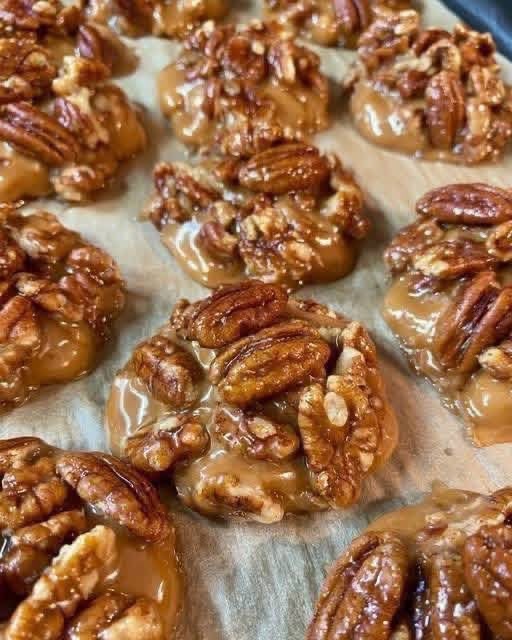
The beautiful pralines shown in the image feature generous clusters of pecans surrounded by a glossy, golden-brown sugar mixture. As the mixture cools, it gradually sets into individual candies that are perfect for sharing, gifting or serving during special occasions.
Pecan pralines are particularly popular throughout the American South, especially in Louisiana, where they are associated with traditional confectionery shops and family recipes passed down through generations.
Although they may look complicated, homemade pecan pralines are surprisingly straightforward when you understand the importance of temperature, timing and proper mixing.
The secret is to cook the sugar mixture to the correct stage, allow it to cool slightly and stir until it begins to thicken before spooning the candies onto parchment paper.
This complete guide explains how to make traditional pecan pralines, choose the best ingredients, avoid common mistakes and achieve that irresistible combination of buttery sweetness and crunchy pecans.
Why You Will Love This Recipe
Old-Fashioned Pecan Pralines are a timeless treat that combines simple preparation with exceptional flavour.
The rich sweetness of brown sugar pairs beautifully with the natural buttery taste of pecans.
Unlike many elaborate desserts, pralines do not require an oven, complicated decorations or special baking equipment.
They are also wonderfully versatile. You can prepare them for Christmas celebrations, Thanksgiving gatherings, homemade gift boxes or an occasional sweet treat.
Another advantage is that the ingredients are easy to find in most supermarkets.
Once you understand the basic cooking method, you can make pralines with consistent results and experiment with subtle flavour variations.
Their rustic appearance is part of their charm. Each praline forms its own slightly irregular shape, with pecan halves and pieces visible throughout.
Recipe Information
Preparation time: 10 minutes
Cooking time: 15–20 minutes
Setting time: 30–45 minutes
Total time: Approximately 1 hour
Servings: 18–24 pralines
Difficulty: Moderate
Cooking method: Stovetop
Cuisine: Southern American
Course: Dessert, sweets, confectionery
Main Ingredients and Their Roles
Pecans
Pecans are the star ingredient in this recipe.
Their naturally rich, buttery flavour balances the sweetness of the caramelised sugar mixture.
Using a combination of pecan halves and chopped pecans creates attractive clusters with plenty of texture.
Lightly toasting the pecans before adding them to the candy mixture enhances their flavour.
Brown Sugar
Brown sugar contributes a deep, caramel-like flavour.
Its molasses content gives pralines their characteristic golden-brown colour and rich sweetness.
Light brown sugar creates a milder flavour, while dark brown sugar produces a more pronounced molasses taste.
Granulated Sugar
White granulated sugar helps create the traditional praline structure.
Using both brown and white sugar provides a balanced flavour and texture.
Heavy Cream
Heavy cream adds richness and helps create the smooth sugar mixture before crystallisation begins.
It also contributes to the tender, creamy consistency associated with traditional Southern pralines.
Butter
Butter enhances flavour and adds richness.
Unsalted butter is preferable because it allows better control over the final salt content.
Vanilla Extract
Vanilla complements the brown sugar and pecans without overpowering their natural flavours.
Salt
A small amount of salt balances the sweetness and brings out the buttery notes.
Ingredients
For approximately 18–24 pecan pralines, you will need:
1½ cups (300 g) light brown sugar, packed
½ cup (100 g) granulated sugar
¾ cup (180 ml) heavy whipping cream
4 tablespoons (55 g) unsalted butter
2 cups (220 g) pecan halves and pieces
1 teaspoon vanilla extract
¼ teaspoon salt
Optional:
- ¼ teaspoon ground cinnamon
- ½ teaspoon maple extract
The optional flavourings can be added for variation, but the traditional version is delicious without them.
How to Choose the Best Pecans
The quality of the pecans has a significant influence on the finished candies.
Choose pecans that smell fresh and pleasantly nutty.
Avoid nuts with a bitter, stale or rancid smell.
Pecan halves create an attractive appearance, particularly when placed on top of each candy.
Chopped pecans distribute more evenly throughout the sugar mixture.
For the best balance, use approximately half pecan halves and half large pecan pieces.
If your pecans have been stored for several months, taste one before using them.
Fresh pecans produce a noticeably better result.
Preparing the Pecans
Toasting pecans is optional, but it adds a wonderful depth of flavour.
Preheat your oven to 160°C (325°F).
Spread the pecans in a single layer on a baking tray.
Toast for approximately 6–8 minutes, stirring once halfway through.
Watch carefully because pecans can burn quickly.
Remove them when they smell fragrant and appear slightly darker.
Allow them to cool before adding them to the praline mixture.
If you prefer a softer nut flavour, you can use the pecans without toasting.
Equipment You Will Need
A few basic kitchen tools make this recipe easier and safer.
Heavy-bottomed saucepan
Wooden spoon or heat-resistant silicone spatula
Sugar thermometer
Baking tray
Parchment paper
Measuring cups and spoons
A sugar thermometer is strongly recommended.
Pralines depend on reaching the correct sugar temperature, and guessing can lead to inconsistent results.
Step-by-Step Instructions
Step 1: Prepare Your Baking Tray
Line a large baking tray with parchment paper.
Place it on a flat, heat-resistant surface.
Prepare everything before beginning because the praline mixture thickens quickly once it reaches the correct stage.
Step 2: Combine the Sugars and Cream
Add the brown sugar, granulated sugar and heavy cream to a heavy-bottomed saucepan.
Place over medium heat.
Stir gently until the sugars are dissolved and the mixture becomes smooth.
Avoid using excessively high heat, which may cause the sugar to scorch.
Step 3: Add the Butter and Salt
Add the unsalted butter and salt.
Stir until the butter melts completely.
The mixture should become glossy and begin bubbling.
Step 4: Cook to the Correct Temperature
Attach a sugar thermometer to the saucepan without allowing its tip to touch the bottom.
Bring the mixture to a steady boil.
Once boiling, avoid unnecessary stirring.
Cook until the temperature reaches approximately 114–116°C (237–241°F), the soft-ball stage.
This temperature is important because it determines how the pralines will set.
If the mixture is undercooked, the candies may remain sticky.
If it is cooked too far, they may become excessively hard or crumbly.
Step 5: Remove From the Heat
Take the saucepan off the heat immediately.
Allow the mixture to cool undisturbed for approximately 2–3 minutes.
The exact cooling time depends on the saucepan and room temperature.
Step 6: Add the Pecans and Vanilla
Add the prepared pecans and vanilla extract.
Stir gently until the nuts are evenly coated.
The mixture will initially appear shiny and fluid.
Step 7: Stir Until the Mixture Thickens
Continue stirring carefully.
As the mixture cools and sugar crystals begin forming, it will gradually become thicker and less glossy.
Stop stirring when it is thick enough to hold a mound but remains easy to spoon.
Do not continue beating until it becomes completely dry.
Step 8: Form the Pralines
Working quickly, drop generous spoonfuls of the mixture onto the prepared parchment paper.
Leave a little space between each candy.
For a beautiful appearance similar to the image, arrange a few pecan halves on top while the mixture is still soft.
Step 9: Allow the Candies to Set
Leave the pralines undisturbed at room temperature for approximately 30–45 minutes.
They should become firm enough to lift from the parchment paper.
Depending on humidity and cooking temperature, setting may take slightly longer.
Step 10: Serve and Enjoy
Once completely set, carefully remove the pralines from the parchment paper.
Serve immediately or store in an airtight container.
The finished candies should have a rich pecan flavour and a tender, slightly crystalline texture rather than the chewiness of caramel.
Tips for Perfect Pecan Pralines
The most important tip is to use a reliable sugar thermometer.
Even a small temperature difference can affect the texture of the finished candies.
Use a heavy-bottomed saucepan to distribute heat evenly.
Thin pans may create hot spots that cause the sugar mixture to scorch.
Measure all ingredients before starting.
Once the candy reaches the correct temperature, you will need to work relatively quickly.
Avoid making pralines on extremely humid days if possible.
High humidity can slow setting and leave the surface sticky.
Do not stir the boiling mixture excessively.
Unnecessary agitation can encourage premature sugar crystallisation.
After removing the saucepan from the heat, stir only until the mixture reaches the correct spoonable consistency.
If it becomes too thick before you finish forming the pralines, work carefully and avoid adding large amounts of extra liquid.
How to Get the Perfect Praline Texture
Traditional Southern pralines are different from hard caramel sweets.
Their characteristic texture comes from controlled sugar crystallisation.
When the hot sugar mixture cools and is stirred, tiny sugar crystals begin to form.
These crystals give pralines their tender, slightly grainy consistency.
If the mixture is not cooked sufficiently, it may remain soft and sticky.
If it is overcooked or beaten too long, the pralines can become dry and crumbly.
For the best results, focus on the cooking temperature and the appearance of the mixture as it thickens.
The mixture should still be soft enough to spread slightly when spooned onto parchment paper.
Delicious Recipe Variations
Maple Pecan Pralines
Add a small amount of maple extract alongside the vanilla.
This creates a warm, sweet flavour that complements the pecans.
Cinnamon Pecan Pralines
Add ¼ teaspoon ground cinnamon to the sugar mixture.
The gentle spice makes these pralines particularly suitable for autumn and Christmas.
Chocolate Pecan Pralines
Once the pralines have completely set, drizzle a little melted dark chocolate over the top.
Allow the chocolate to harden before storing.
Sea Salt Pecan Pralines
Sprinkle a few flakes of sea salt over each praline while it is still soft.
The contrast between sweet caramel and salt creates a delicious balance.
Mixed Nut Pralines
Replace part of the pecans with walnuts.
The flavour will be slightly different, but the candies will still be delicious.
How to Serve Pecan Pralines
Pecan pralines are wonderful served on their own with a cup of coffee or tea.
They also make an attractive addition to dessert platters.
For special occasions, arrange them on a decorative serving plate alongside homemade cookies, fudge and chocolate truffles.
You can also crumble a praline over vanilla ice cream for a delicious crunchy topping.
Small pieces work beautifully as a garnish for cheesecakes, cupcakes and creamy desserts.
During the Christmas season, wrap individual pralines in food-safe packaging and place them in gift boxes.
Their traditional appearance makes them especially charming as homemade presents.
How to Store Homemade Pecan Pralines
Allow the candies to cool and set completely before storing.
Place them in an airtight container.
Separate layers with parchment paper to prevent sticking.
Store in a cool, dry location at room temperature for approximately 5–7 days.
In humid environments, pralines may become sticky more quickly.
For longer storage, freeze completely set pralines in an airtight, freezer-safe container for up to two months.
Separate the layers with parchment paper.
Thaw them in their closed container at room temperature to reduce condensation.
Avoid refrigerating pralines unnecessarily, as moisture can affect their texture.
Can You Make Pecan Pralines Ahead of Time?
Yes. Pecan pralines are an excellent make-ahead sweet.
Prepare them a day or two before a celebration and store them properly.
This makes them convenient for Christmas parties, family gatherings and homemade gift boxes.
Make sure they are fully set before packaging.
If they are still warm or soft, stacking them may cause the candies to stick together.
Common Mistakes to Avoid
Pralines That Will Not Set
The sugar mixture may not have reached the correct temperature.
Always use a thermometer and cook to the soft-ball stage.
Pralines That Are Too Hard
The mixture may have been cooked to an excessively high temperature.
Remove it from the heat promptly when the target temperature is reached.
Dry, Crumbly Pralines
Overbeating can cause the mixture to crystallise too much before shaping.
Stop stirring when it begins to lose its shine and holds a soft mound.
Burnt Sugar Flavour
Excessively high heat or a thin saucepan may cause scorching.
Use medium heat and a heavy-bottomed pan.
Sticky Pralines
Undercooking, high humidity or improper storage can contribute to stickiness.
Unevenly Distributed Pecans
Stir the nuts thoroughly into the mixture before spooning.
Work quickly so the mixture does not become too thick.
Frequently Asked Questions
What Are Pecan Pralines?
Pecan pralines are traditional Southern sweets made from pecans, sugar, cream and butter.
Are Pecan Pralines the Same as Caramel?
No. Traditional pralines have a tender, crystalline texture, while caramel is usually smoother and chewier.
Can I Make Pralines Without a Sugar Thermometer?
It is possible to use the cold-water soft-ball test, but a thermometer provides more consistent results.
Why Are My Pralines Sticky?
They may have been undercooked or exposed to excessive humidity.
Can I Use Dark Brown Sugar?
Yes. Dark brown sugar creates a stronger molasses flavour and darker colour.
Should Pecans Be Toasted First?
Toasting is optional, but it enhances their nutty flavour.
Can I Use Milk Instead of Heavy Cream?
Heavy cream is recommended because its fat content helps produce the desired richness and texture. Substituting milk may change the consistency.
How Long Do Pecan Pralines Take to Set?
Most pralines set within approximately 30–45 minutes, although conditions may affect the timing.
Can I Freeze Homemade Pralines?
Yes. Store fully set pralines in an airtight, freezer-safe container for up to two months.
Are Pecan Pralines Good for Christmas Gifts?
Absolutely. They are traditional, attractive and easy to package individually once completely set.
Nutritional Information
Approximate values per praline, based on 24 servings:
Calories: 175 kcal
Carbohydrates: 22 g
Protein: 1 g
Total fat: 10 g
Saturated fat: 3 g
Fibre: 1 g
Sugar: 21 g
These figures are estimates and will vary depending on the exact ingredients and portion sizes.
Final Thoughts
Old-Fashioned Pecan Pralines are a wonderful example of how simple ingredients can create an unforgettable homemade sweet.
The combination of buttery pecans, rich brown sugar, smooth cream and vanilla produces a classic Southern treat that is perfect for celebrations or everyday indulgence.
Although the recipe requires attention to temperature and timing, the process becomes much easier once you understand the correct cooking and stirring stages.
For the best results, use fresh pecans, a reliable sugar thermometer and a heavy-bottomed saucepan.
Prepare your baking tray before cooking, work quickly when shaping the candies and allow them to set completely before storing.
Whether you are making them for Christmas, Thanksgiving, a homemade gift or simply because you love pecans, these traditional pralines are sure to become a favourite recipe worth making again and again.