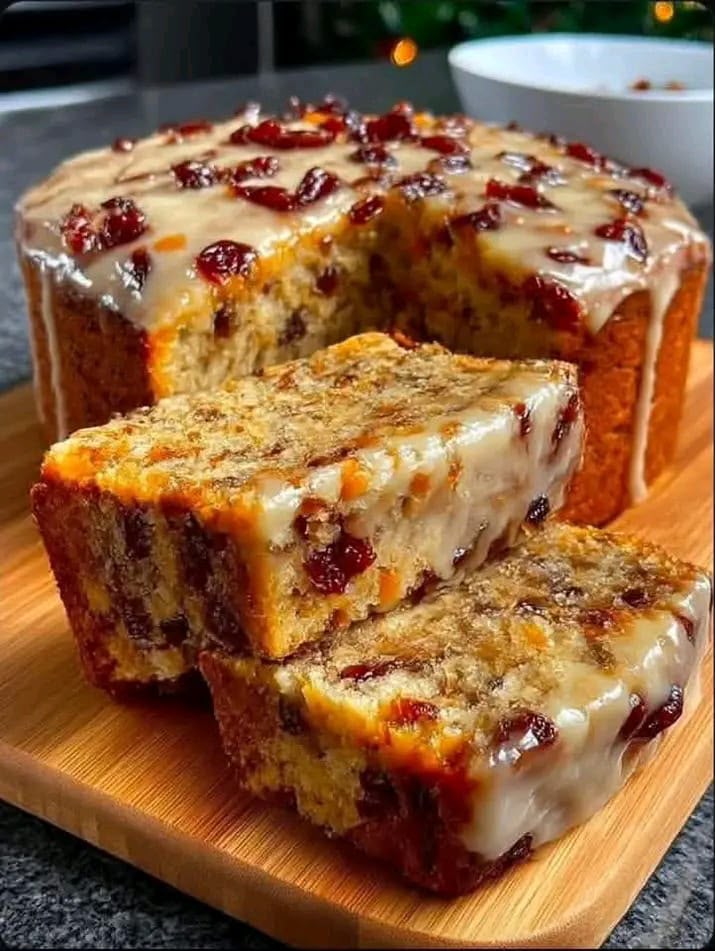
Cranberry Orange Loaf
Soft, buttery and bursting with bright citrus flavour, this cranberry orange loaf is a lovely homemade bake for any occasion. Sweet orange zest, chewy dried cranberries and a smooth orange glaze come together in a golden loaf that looks beautiful sliced and served.
There is something especially inviting about a freshly baked fruit loaf. The warm aroma of orange fills the kitchen, while the cranberries bring little bursts of fruity sweetness to every slice.
What makes this recipe particularly appealing is its tender, moist texture. Butter gives the loaf richness, while soured cream or Greek yoghurt helps create a soft crumb that stays pleasant even after the cake has cooled.
The orange glaze adds the finishing touch. It gently runs down the sides of the loaf, creating a sweet citrus coating that complements the buttery cake without requiring complicated decorating techniques.
This cranberry orange loaf works beautifully for breakfast, afternoon tea, weekend baking, festive gatherings or as a homemade treat to share with friends and family.
Best of all, the ingredients are straightforward, the preparation is beginner-friendly and the finished loaf can be prepared ahead of time.
Recipe Overview
- Recipe: Cranberry Orange Loaf
- Category: Cake, Baking, Dessert
- Style: Homemade American-style sweet loaf
- Preparation Time: Approximately 20 minutes
- Baking Time: 50–60 minutes
- Cooling Time: Approximately 60–90 minutes
- Total Time: Approximately 2 hours 10 minutes to 2 hours 50 minutes
- Yield: Approximately 10 slices
- Oven Temperature: 350°F (175°C)
- Method: Oven baking
- Difficulty: Easy
- Suggested Tin: 9 × 5-inch loaf tin
- Main Ingredients: Flour, butter, sugar, eggs, orange juice, orange zest and dried cranberries
The preparation and cooling times, yield and tin size are practical estimates. The original recipe specifies a baking time of 50–60 minutes.
Why You’ll Love This Cranberry Orange Loaf
- Bright citrus flavour: Fresh orange juice and zest give the loaf a fragrant, refreshing taste.
- Soft, tender texture: Butter and soured cream help produce a rich, moist crumb.
- Sweet and fruity: Dried cranberries add pleasant chewiness and contrast with the orange.
- Easy preparation: The batter comes together using familiar baking ingredients.
- Beautiful presentation: Orange glaze and a cranberry topping make the loaf look inviting.
- Suitable for several occasions: Enjoy it for brunch, dessert, afternoon tea or holiday gatherings.
- Convenient to prepare ahead: The loaf can be baked in advance and glazed before serving.
- Easy to customise: A few optional adjustments can introduce nuts, different citrus notes or a lighter finish.
Cranberry Orange Loaf Ingredients
For the Loaf
- 2 cups all-purpose flour (plain flour), approximately 250g
- 1½ teaspoons baking powder
- ½ teaspoon bicarbonate of soda (baking soda)
- ¼ teaspoon salt
- ½ cup unsalted butter, softened (approximately 113g)
- ¾ cup granulated sugar (approximately 150g)
- 2 large eggs
- ½ cup sour cream (soured cream) or Greek yoghurt (approximately 120g)
- ½ cup orange juice (120ml)
- 1 tablespoon orange zest
- 1 teaspoon vanilla extract
- 1 cup dried cranberries (approximately 120g)
For the Orange Glaze
- 1 cup powdered sugar (icing sugar), approximately 120g
- 2 tablespoons orange juice (30ml)
- 1 teaspoon orange zest
The original recipe also suggests scattering a few extra cranberries over the finished glaze. These are an optional garnish rather than part of the measured ingredient list.
Ingredient Notes and Substitutions
Plain Flour
Plain flour provides the structure needed for a loaf that slices cleanly while retaining a soft interior. Measure carefully, as adding too much flour can make the crumb heavy or dry.
Baking Powder and Bicarbonate of Soda
These raising agents help the batter rise in the oven. The bicarbonate of soda also reacts with the acidity of the soured cream or Greek yoghurt.
Unsalted Butter
Softened butter creams easily with sugar, helping introduce air into the batter. It should feel soft when pressed but not be melted or greasy.
Granulated Sugar
Sugar supplies sweetness, supports browning and helps maintain moisture. The original amount balances the tangy orange flavour and sweetened dried cranberries.
Eggs
Two large eggs bind the ingredients together and contribute structure. Using eggs at room temperature can make the batter easier to combine.
Soured Cream or Greek Yoghurt
Both choices add moisture and gentle acidity. Full-fat varieties are especially suitable for a rich, tender result. Use plain, unflavoured yoghurt if choosing that option.
Orange Juice and Zest
Orange juice contributes liquid and citrus flavour, while zest supplies concentrated aromatic oils. Fresh oranges work particularly well when available.
Dried Cranberries
Dried cranberries bring a chewy texture and fruity contrast. Their naturally concentrated flavour makes them suitable for a loaf cake without introducing excessive extra moisture.
Vanilla Extract
Vanilla softens the sharper citrus notes and complements the buttery cake.
Icing Sugar
Finely powdered sugar dissolves smoothly into the orange juice, creating the sweet glaze that coats the cooled loaf.
Equipment You’ll Need
- 9 × 5-inch loaf tin, recommended
- Two large mixing bowls
- Electric hand mixer or stand mixer
- Whisk
- Rubber spatula
- Measuring cups and spoons or kitchen scales
- Fine grater or citrus zester
- Small bowl for the glaze
- Wire cooling rack
- Wooden skewer or toothpick
- Sharp serrated knife for slicing
How to Make Cranberry Orange Loaf
Step 1: Preheat the Oven
Preheat your oven to 350°F (175°C). Grease a loaf tin thoroughly, paying attention to the corners. For easier removal, you can also line the tin with baking parchment, leaving a little overhang along the sides.
Step 2: Combine the Dry Ingredients
In a medium mixing bowl, whisk together the flour, baking powder, bicarbonate of soda and salt until evenly distributed.
Mixing the dry ingredients separately helps prevent uneven pockets of raising agents in the finished loaf.
Step 3: Cream the Butter and Sugar
In another large bowl, beat the softened butter and granulated sugar until the mixture becomes lighter in colour and creamy in texture.
Scrape down the sides of the bowl when necessary so that all the butter is properly incorporated.
Step 4: Add the Eggs and Wet Ingredients
Add the eggs one at a time, beating after each addition.
Mix in the soured cream or Greek yoghurt, orange juice, orange zest and vanilla extract.
The mixture may look slightly curdled after the orange juice is added. This is generally not a problem; it should come together once the flour mixture is incorporated.
Step 5: Combine the Batter
Gradually add the dry ingredients to the wet mixture, stirring gently until just combined.
A few tiny lumps are acceptable. Avoid vigorous mixing, which can produce a tougher texture.
Step 6: Fold in the Cranberries
Add the dried cranberries and fold them through the batter using a spatula. Try to distribute them evenly so that each slice contains plenty of fruit.
Step 7: Fill the Loaf Tin
Transfer the batter to the prepared loaf tin. Smooth the surface gently with a spatula to help it bake evenly.
Step 8: Bake Until Golden
Place the tin on the middle shelf of the preheated oven and bake for 50–60 minutes.
The loaf should develop a golden brown surface, and a toothpick inserted into the centre should come out clean or with a few moist crumbs rather than wet batter.
If the surface becomes too dark before the centre is cooked, loosely cover it with foil for the remaining baking time.
Step 9: Cool the Loaf
Remove the loaf from the oven and let it rest in the tin for approximately 10–15 minutes. Carefully transfer it to a wire rack and allow it to cool completely.
Cooling is important because icing applied to warm cake can melt and run off too quickly.
Step 10: Prepare the Orange Glaze
In a small bowl, combine the icing sugar, 2 tablespoons of orange juice and 1 teaspoon of orange zest.
Whisk until smooth and creamy, with no visible lumps of sugar.
Step 11: Glaze and Decorate
Pour the glaze generously over the completely cooled loaf, allowing it to drip naturally down the sides.
If desired, scatter a few additional dried cranberries over the top before the glaze sets.
Step 12: Slice and Serve
Allow the glaze to settle briefly, then cut the loaf into generous slices using a sharp serrated knife.
Serve at room temperature for the best balance of soft crumb, fruity sweetness and refreshing citrus flavour.
How to Keep Cranberry Orange Loaf Moist
A good cranberry orange loaf should be tender enough to enjoy on its own, without becoming crumbly or dry. Several small baking techniques make a noticeable difference.
Measure Flour Accurately
When flour is packed tightly into a measuring cup, the batter can contain more flour than intended. For consistency, weigh approximately 250g or spoon flour into the measuring cup and level it off without pressing.
Use Softened Butter
Softened butter creams more effectively with sugar than cold butter. The resulting mixture helps give the loaf a lighter crumb.
Keep the Soured Cream
Soured cream or Greek yoghurt provides moisture and acidity. Avoid leaving it out, because it plays an important role in the recipe’s texture.
Do Not Overmix
Once flour meets the wet ingredients, excessive mixing develops gluten. Fold gently until the batter is combined, then stop.
Avoid Overbaking
Begin checking the loaf near the lower end of the stated baking range. Ovens vary, and an overbaked loaf can become noticeably drier once cooled.
How to Prepare Dried Cranberries for Baking
Dried cranberries are convenient because they hold their shape and add concentrated flavour without releasing as much moisture as fresh berries.
If your dried cranberries are soft and flexible, they can be folded directly into the batter as the original recipe instructs.
If they seem unusually firm, an optional technique is to soak them briefly in warm water or orange juice, then drain and pat them thoroughly dry before adding them to the batter.
Do not add excess soaking liquid to the cake mixture, as this can affect the balance of wet and dry ingredients.
For even fruit distribution, fold the cranberries in gently and check that they are not clumped together before transferring the batter into the tin.
How to Make a Smooth Orange Glaze
The orange glaze is one of the defining features of this recipe. Its sweetness complements the slightly tart cranberries and adds a fresh citrus finish.
Use Finely Sifted Icing Sugar
If your icing sugar contains lumps, sift it before mixing. This creates a smoother glaze without requiring prolonged whisking.
Adjust the Consistency Carefully
The original glaze uses 1 cup icing sugar and 2 tablespoons orange juice. This generally creates a pourable coating.
If the glaze is too thick, add a few drops of extra orange juice as an optional adjustment. If it is too thin, add a little more icing sugar.
Glaze Only When Cool
Place the fully cooled loaf on a wire rack with a tray underneath, then pour the glaze gradually over the centre.
Use a spoon to guide the icing towards the edges and create attractive drips down the sides.
Allow the Glaze to Set
Leave the glazed loaf undisturbed until the surface is no longer excessively sticky. Setting time depends on the glaze thickness and room temperature.
Expert Tips for the Best Loaf
- Use fresh orange zest for a more fragrant citrus flavour.
- Zest the orange before squeezing it, as whole fruit is much easier to grate.
- Avoid grating the bitter white pith underneath the orange peel.
- Bring the butter, eggs and soured cream closer to room temperature before mixing.
- Use a suitable loaf tin rather than a very shallow baking dish.
- Grease the tin properly or line it with parchment to avoid sticking.
- Whisk the flour and raising agents thoroughly before combining them with the wet ingredients.
- Scrape the mixing bowl while creaming the butter to remove unmixed patches.
- Fold the cranberries gently into the batter rather than beating them in.
- Place the loaf on the middle oven shelf for more balanced baking.
- Check for doneness in the centre, not just around the edges.
- Cool the cake completely before pouring over the icing.
- Use a serrated knife and gentle sawing motion for neater slices.
- Store leftover slices in a tightly covered container to minimise drying.
Common Mistakes to Avoid
1. Using Melted Butter
The original method calls for softened butter. Melted butter behaves differently and will not cream with sugar in the same way.
2. Adding Too Much Flour
Excess flour makes the loaf dense. Use accurate measurements and avoid packing flour into the cup.
3. Overmixing the Batter
Mixing too vigorously after adding flour can toughen the crumb. Use gentle folding motions instead.
4. Using an Incorrect Tin Size
A substantially smaller tin may cause overflowing or require extra baking time. A larger tin can create a flatter loaf that bakes faster.
5. Opening the Oven Too Early
Repeatedly opening the oven door during the early stages of baking can interrupt the rise. Wait until the loaf is reasonably well set before checking.
6. Removing the Loaf Before the Centre Is Baked
A golden surface does not always mean the middle is ready. Test the centre with a toothpick.
7. Leaving the Loaf in the Hot Tin Too Long
After a short resting period, transfer the loaf to a rack so trapped steam does not make the bottom excessively damp.
8. Glazing While Warm
Warm cake can melt the icing. Wait until the loaf has cooled fully.
9. Cutting Before Cooling
Cutting very warm cake can compress its delicate crumb and produce uneven slices.
Optional Cranberry Orange Loaf Variations
The following are optional changes to the original recipe, rather than ingredients required for the standard loaf.
1. Cranberry Orange Walnut Loaf
Fold approximately ½ cup chopped walnuts into the batter for extra crunch and a nutty flavour.
2. Cranberry Orange Pecan Loaf
Add ½ cup chopped pecans for a slightly richer, buttery texture.
3. White Chocolate Cranberry Loaf
Fold in approximately ½ cup white chocolate chips for a sweeter, dessert-style loaf.
4. Orange Lemon Loaf
Replace a portion of the orange zest with fresh lemon zest for a sharper citrus aroma.
5. Lightly Spiced Cranberry Loaf
Add ½ teaspoon ground cinnamon to the dry ingredients for a warming autumn or winter flavour.
6. Almond Cranberry Orange Loaf
Add ¼ teaspoon almond extract alongside the vanilla for a gentle almond note.
7. Simple Unfrosted Loaf
Omit the glaze if you prefer a less sweet cake. The orange and cranberries still provide plenty of flavour.
How to Serve Cranberry Orange Loaf
This loaf is delicious at room temperature, particularly once the orange glaze has settled over the surface.
With Tea or Coffee
A slice pairs beautifully with black tea, Earl Grey, cappuccino or freshly brewed coffee. The slight bitterness of the drinks balances the sweetness of the glaze.
For a Weekend Brunch
Serve alongside fresh fruit, yoghurt and other breakfast favourites for a relaxed brunch spread.
As an Afternoon Treat
Cut the loaf into smaller slices and arrange them on a serving plate. This makes an easy addition to afternoon tea.
For Holiday Gatherings
The red cranberries, golden cake and creamy glaze make this loaf especially attractive for Christmas baking and seasonal celebrations.
As a Homemade Gift
Once the glaze has set, wrap the loaf carefully in food-safe packaging. A simple ribbon and label can make it a thoughtful edible gift.
Storage, Freezing and Make-Ahead Tips
Room Temperature Storage
Store the fully cooled loaf in an airtight container in a cool room for approximately 1–2 days. Keep it away from direct sunlight and excess heat.
Refrigeration
For longer storage, keep it covered in the refrigerator for up to approximately 5 days. Let individual slices come towards room temperature before serving for a softer texture.
Freezing
For the best results, freeze the loaf without its glaze. Wrap the cooled loaf tightly in cling film or suitable freezer wrapping, then place it in a freezer-safe container or bag.
Freeze for up to approximately 2–3 months for best quality. Thaw while wrapped, then prepare fresh glaze before serving.
Freezing Individual Slices
Place parchment between slices and wrap them carefully. This allows you to remove only the portions needed.
Reheating
The loaf does not need reheating. If preferred, gently warm an unglazed slice for a few seconds in the microwave. Avoid overheating, which can dry the cake.
Make-Ahead Preparation
Bake the loaf the day before serving and store it tightly covered after cooling. Add the orange glaze once the loaf is completely cool, ideally shortly before presentation.
Frequently Asked Questions
1. Can I use fresh cranberries instead of dried cranberries?
Yes, but this would be a variation. Fresh cranberries are more tart and contain more moisture, so the finished texture and baking time may change.
2. Can I use frozen cranberries?
Frozen cranberries can work in a modified version. Fold them in while still frozen, and expect possible changes to the baking time.
3. Do I have to soak dried cranberries?
No. Soft dried cranberries can be used directly in the batter. Soaking is optional if they are particularly firm.
4. Can I replace soured cream with Greek yoghurt?
Yes. The original recipe specifically allows either ingredient. Choose plain Greek yoghurt for the closest flavour balance.
5. Can I use bottled orange juice?
Yes, although fresh orange juice usually provides a brighter flavour. Fresh zest is especially useful for delivering a noticeable orange aroma.
6. Why is my cranberry orange loaf dry?
Common causes include too much flour, excessive mixing or baking longer than necessary.
7. Why did my loaf sink in the middle?
An underbaked centre, inaccurate raising-agent measurements or opening the oven too early can contribute to sinking.
8. Why is my loaf dense?
Dense texture may result from overmixing, excess flour or raising agents that are no longer effective.
9. How do I know when the loaf is ready?
Insert a toothpick into the centre. It should come out clean or with a few moist crumbs, but no uncooked batter.
10. Can I make the loaf without an electric mixer?
Yes. Cream the softened butter and sugar thoroughly using a sturdy spoon or whisk, then continue with the recipe.
11. Can I leave out the orange glaze?
Absolutely. The cake can be served plain, although the glaze adds extra sweetness and citrus flavour.
12. Why is my orange glaze runny?
It may contain too much liquid. Stir in a little more icing sugar until the desired consistency is reached.
13. Why does my glaze disappear into the cake?
The loaf may still be warm, causing the icing to melt. Let it cool completely before decorating.
14. Can I bake this in a different loaf tin?
Yes, but the batter depth affects baking time. Check the loaf carefully and avoid filling a smaller tin too high.
15. Can I make muffins with this batter?
Yes, as an optional adaptation. Divide the batter between lined muffin cups and begin checking for doneness earlier than the loaf’s original baking time.
16. Can I add nuts?
Yes. Chopped walnuts or pecans complement the cranberries and orange very well.
17. Can I reduce the sugar?
A modest reduction may be possible, but sugar affects moisture, browning and structure as well as sweetness. Results may differ from the original recipe.
18. Can I use self-raising flour?
It is not a direct substitution because the original recipe already contains baking powder and bicarbonate of soda. Plain flour is the most reliable choice.
19. How long should the loaf cool?
Leave it in the tin for approximately 10–15 minutes, then transfer it to a wire rack until completely cool before glazing.
20. Can I freeze cranberry orange loaf?
Yes. Freeze it tightly wrapped, preferably without glaze, for up to approximately 2–3 months for best quality.
21. Can I prepare it the day before serving?
Yes. Making the loaf ahead can be convenient for gatherings. Keep it covered once cool to preserve its texture.
22. What can I serve with cranberry orange loaf?
Tea, coffee, fresh fruit and plain yoghurt all complement its sweet, citrus-rich flavour.
Cranberry Orange Loaf Recipe Card
Moist Cranberry Orange Loaf with Glaze
A soft, buttery loaf filled with dried cranberries and fresh orange flavour, finished with a simple sweet orange glaze.
- Category: Dessert, Cake, Baking
- Method: Oven-baked
- Prep Time: Approximately 20 minutes
- Cook Time: 50–60 minutes
- Cooling Time: Approximately 60–90 minutes
- Servings: Approximately 10 slices
- Temperature: 350°F (175°C)
Ingredients
Loaf
- 2 cups all-purpose flour (plain flour)
- 1½ teaspoons baking powder
- ½ teaspoon baking soda (bicarbonate of soda)
- ¼ teaspoon salt
- ½ cup unsalted butter, softened
- ¾ cup granulated sugar
- 2 large eggs
- ½ cup sour cream (soured cream) or Greek yoghurt
- ½ cup orange juice
- 1 tablespoon orange zest
- 1 teaspoon vanilla extract
- 1 cup dried cranberries
Orange Glaze
- 1 cup powdered sugar (icing sugar)
- 2 tablespoons orange juice
- 1 teaspoon orange zest
Instructions
- Preheat the oven to 350°F (175°C) and grease a loaf tin.
- Whisk together the flour, baking powder, bicarbonate of soda and salt.
- In a separate bowl, beat the softened butter and sugar until light and creamy.
- Add the eggs one at a time, then mix in the soured cream or Greek yoghurt, orange juice, orange zest and vanilla.
- Gradually fold in the dry ingredients until just combined.
- Gently fold through the dried cranberries.
- Pour the batter into the prepared loaf tin and smooth the top.
- Bake for 50–60 minutes, until golden and a toothpick inserted into the centre comes out clean.
- Rest in the tin for approximately 10–15 minutes, then transfer to a wire rack to cool completely.
- Whisk the icing sugar, orange juice and orange zest until smooth.
- Pour the glaze generously over the cooled loaf. Add a few extra cranberries on top if desired.
- Allow the glaze to settle, then slice and serve.
Recipe Notes
- Use softened, not melted, butter.
- Freshly grated orange zest provides the strongest citrus aroma.
- Avoid overmixing after adding the flour.
- Check the centre carefully before removing the loaf from the oven.
- Let the cake cool completely before adding the glaze.
- Keep leftovers covered to maintain moisture.
Hashtags: #CranberryOrangeLoaf #OrangeLoafCake #HomemadeBaking #CranberryRecipes #EasyCakeRecipes
Final Thoughts
This cranberry orange loaf combines a soft buttery crumb, sweet dried cranberries and fresh citrus flavour in one easy homemade bake. The glossy orange glaze makes it look especially inviting, while the straightforward preparation makes it suitable for everyday baking as well as festive occasions.
Serve a slice with your favourite hot drink, share it with family or prepare a loaf ahead of your next gathering. If you try this recipe, leave a comment with your results, save it for later and follow along for more homemade baking ideas.