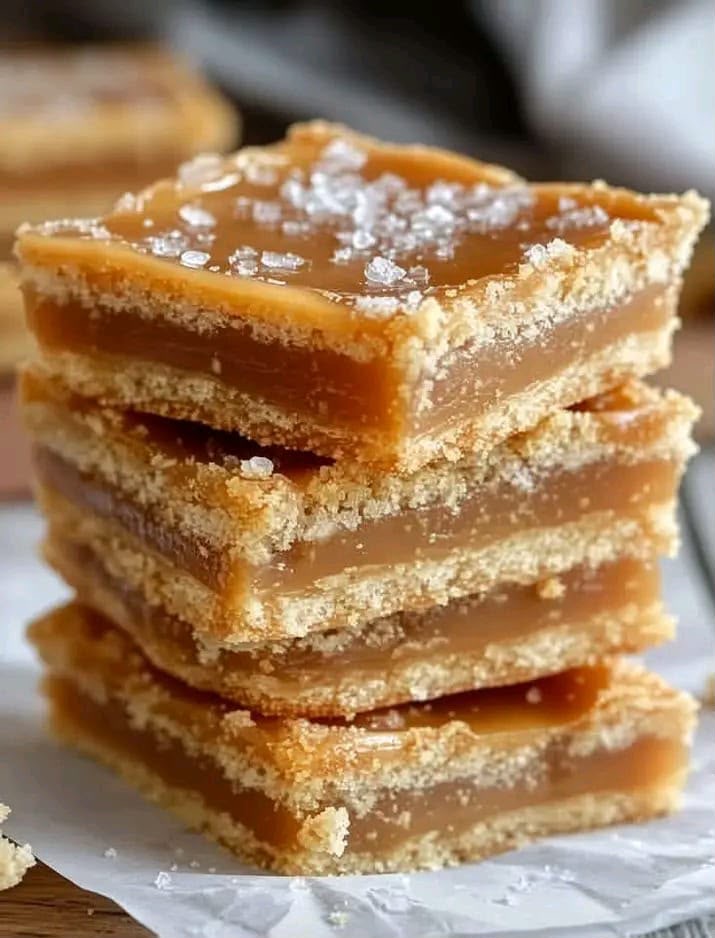
Salted Caramel Shortbread Bars
Salted caramel shortbread bars combine a buttery, crumbly biscuit base with a generous layer of rich, golden caramel and a delicate sprinkling of flaky sea salt. Every bite delivers a satisfying contrast between crisp shortbread, smooth caramel and a balanced sweet-and-salty finish.
There is something particularly comforting about homemade caramel shortbread. The base is simple, tender and full of buttery flavour, while the caramel filling adds a soft, luxurious texture that makes these bars feel like a special bakery treat.
Unlike desserts requiring complicated decorating or multiple baking stages, this recipe uses straightforward ingredients and a manageable preparation process. You bake the shortbread base, prepare the caramel on the hob, spread it over the biscuit layer and allow everything to set before slicing.
The flaky sea salt is an important finishing touch. Just a small amount balances the sweetness of the condensed milk and brown sugar, creating a fuller caramel flavour without overwhelming the buttery shortbread.
These salted caramel shortbread bars are ideal for afternoon tea, festive baking, family gatherings, dessert platters and homemade edible gifts. Because they need time to set in the refrigerator, they are also convenient to prepare ahead of a celebration.
Whether you enjoy them chilled for a firmer bite or allow them to stand briefly at room temperature for a softer caramel texture, these homemade caramel squares are a delicious addition to your baking collection.
Recipe Overview
- Recipe: Salted Caramel Shortbread Bars
- Category: Dessert, Baking, Traybake
- Style: Homemade caramel shortbread
- Preparation Time: Approximately 15 minutes
- Shortbread Baking Time: 18–22 minutes
- Caramel Cooking Time: Approximately 8–10 minutes
- Chilling Time: 1–2 hours, after cooling
- Total Time: Approximately 2–3 hours, including cooling and chilling
- Estimated Yield: 20–24 bars, depending on size
- Difficulty: Easy to moderate
- Oven Temperature: 350°F (175°C)
- Baking Pan: 9×13-inch pan
- Cooking Method: Oven baking and hob cooking
The preparation and serving estimates above are practical planning guides. The exact total time depends on how quickly the caramel cools and sets.
Why You’ll Love This Recipe
- Wonderful texture: The crumbly biscuit base contrasts beautifully with the thick caramel filling.
- Sweet and salty flavour: Flaky sea salt adds balance to the buttery, sweet caramel.
- Simple ingredients: Most of the ingredients are everyday baking essentials.
- Make-ahead friendly: The finished bars can be refrigerated before serving.
- Perfect for sharing: A large tray makes enough squares for gatherings and dessert tables.
- No complicated decoration: A scattering of sea salt provides an attractive finishing touch.
- Customisable: The basic recipe can be adapted with chocolate, nuts or different flavourings.
- Suitable for gifting: Once chilled and sliced, the bars can be arranged in lined gift boxes.
Ingredients
Shortbread Base
- 2 cups all-purpose flour (plain flour)
- ¾ cup unsalted butter, softened
- ½ cup granulated sugar
- ¼ teaspoon salt
- 1 teaspoon vanilla extract
Caramel Filling
- 1 cup unsalted butter
- 1 cup brown sugar
- 1 can sweetened condensed milk
- ¼ cup light corn syrup or honey
- 1 teaspoon vanilla extract
- ½ teaspoon salt
Topping
- Flaky sea salt, for sprinkling
Important: Use sweetened condensed milk rather than evaporated milk. A standard 14-ounce (approximately 397 g) can is commonly used for this style of caramel, although the original ingredient list does not specify the can size.
Ingredient Notes
Plain Flour
Plain flour provides structure for the shortbread. It produces a tender, slightly crumbly base that supports the thick caramel without becoming overly soft.
Unsalted Butter
Butter creates the rich flavour and delicate shortbread texture. The base requires softened butter, while the caramel uses butter melted during cooking. Using unsalted butter also allows you to control the salt level.
Granulated Sugar
Granulated sugar sweetens the biscuit base and helps create its lightly crisp texture. Mix it thoroughly with the softened butter before adding the flour.
Brown Sugar
Brown sugar gives the caramel its warm colour and subtle molasses notes. Light brown sugar produces a gentler flavour, while dark brown sugar gives a deeper taste.
Sweetened Condensed Milk
Condensed milk provides sweetness and helps create a thick, creamy caramel filling. It must be cooked carefully to avoid scorching or developing lumps.
Light Corn Syrup or Honey
Light corn syrup helps discourage unwanted sugar crystallisation and encourages a smooth filling. Honey is the alternative provided in the original recipe, although it introduces its own flavour and may produce a slightly different texture.
Vanilla Extract
Vanilla adds warmth to both the biscuit and caramel layers. Add the caramel’s vanilla after removing the saucepan from the heat.
Flaky Sea Salt
Flaky sea salt gives the bars their distinctive sweet-and-salty character. Its delicate crystals provide small bursts of saltiness without making the whole dessert taste salty.
Equipment You’ll Need
- 9×13-inch baking pan
- Parchment paper
- Large mixing bowl
- Measuring cups and spoons
- Electric mixer or sturdy mixing spoon
- Medium heavy-bottomed saucepan
- Heat-resistant spatula or wooden spoon
- Offset spatula or the back of a spoon
- Sharp kitchen knife
- Wire cooling rack
A heavy-bottomed saucepan is particularly useful because it distributes heat more evenly, reducing the likelihood of the sugary caramel catching on the bottom.
How to Make Salted Caramel Shortbread Bars
Step 1: Prepare the Oven and Baking Pan
Preheat the oven to 350°F (175°C). Line a 9×13-inch baking pan with parchment paper, allowing some paper to extend above the sides. The overhanging edges will make it easier to lift the finished caramel shortbread from the pan.
Step 2: Cream the Butter and Sugar
Place the ¾ cup softened butter, ½ cup granulated sugar and 1 teaspoon vanilla extract in a large mixing bowl. Mix until creamy and evenly combined. The mixture should look smooth and soft.
Step 3: Add the Flour and Salt
Add the 2 cups flour and ¼ teaspoon salt. Mix gently until a soft, crumbly dough forms. The dough does not need to resemble a smooth bread dough; it simply needs to hold together when pressed.
Step 4: Press the Shortbread into the Pan
Transfer the dough to the prepared baking pan. Press it firmly and evenly across the bottom, making sure the corners are filled and the surface is reasonably level. An even base helps the finished bars bake and slice consistently.
Step 5: Bake the Shortbread
Bake for 18–22 minutes, until the edges become lightly golden. Avoid overbaking, as the base should remain tender rather than excessively hard.
Step 6: Combine the Caramel Ingredients
While the shortbread bakes, place 1 cup unsalted butter, 1 cup brown sugar, 1 can sweetened condensed milk and ¼ cup light corn syrup or honey in a heavy-bottomed saucepan.
Step 7: Cook the Caramel
Set the saucepan over medium-low heat. Stir constantly for approximately 8–10 minutes, until the mixture becomes thick, smooth and golden. Scrape the bottom and sides regularly so the caramel cooks evenly.
The exact cooking time depends on your saucepan and hob. The caramel should become noticeably thicker and spreadable rather than remaining runny. If it is still thin at the end of the suggested time, continue carefully over gentle heat while stirring. Bubbling caramel is extremely hot, so avoid touching or tasting it before cooling.
Step 8: Add Vanilla and Salt
Remove the saucepan from the heat. Stir in 1 teaspoon vanilla extract and ½ teaspoon salt until fully incorporated.
Step 9: Spread the Caramel
Pour the warm caramel over the baked shortbread base. Use a spatula to spread it into an even layer, reaching all four corners. Work carefully because the caramel will still be very hot.
Step 10: Add the Sea Salt
Sprinkle a small amount of flaky sea salt over the caramel. Distribute it evenly so each portion receives a balanced finishing touch.
Step 11: Cool and Refrigerate
Allow the bars to cool before placing them in the refrigerator. Chill for 1–2 hours, or until the caramel is firm enough to slice neatly. Depending on the caramel’s final consistency, additional chilling may be required.
Step 12: Slice and Serve
Lift the shortbread from the pan using the parchment paper. Place it on a chopping board and cut into squares or rectangular bars with a sharp knife. Wipe the blade between cuts to keep the edges clean.
How to Make the Perfect Shortbread Base
The biscuit base is the foundation of these homemade salted caramel bars. It needs to be sturdy enough to hold the caramel but delicate enough to provide that characteristic crumbly, buttery bite.
Start with properly softened butter. Butter that is too cold can leave uneven pieces throughout the dough, while melted butter may change how the mixture spreads and bakes.
Once the flour is added, mix only until the dough comes together. Excessive mixing can encourage gluten development, resulting in a tougher base.
Press the mixture evenly into the baking pan. Pay particular attention to the corners, where loose crumbs can create weak spots when the bars are sliced.
The shortbread is ready when its edges become lightly golden. It should not need to turn dark brown. Allowing the base to bake properly helps prevent it from becoming overly soft underneath the caramel.
How to Make Smooth, Thick Caramel
The caramel filling is the defining feature of this dessert. Its success depends on controlled heat, steady stirring and enough cooking to develop a thick consistency.
Use medium-low heat rather than trying to speed up the process. Condensed milk contains milk solids and sugars that can catch on the bottom of a saucepan if exposed to excessive heat.
Stir continuously with a heat-resistant spatula, making sure to reach the edges and base of the pan. As the ingredients melt together, the mixture should become smooth and gradually deepen in colour.
Watch the texture rather than relying exclusively on the clock. The original recipe suggests 8–10 minutes, but some hobs may require longer. Properly cooked caramel should thicken enough to form a substantial layer instead of flowing like a thin sauce.
If a more precise setting check is needed, a sugar thermometer may help. For this style of slice, a caramel temperature around 112–116°C (234–241°F) is a useful guide to a soft but sliceable filling. This is additional technical guidance, not a temperature specified in the original method.
Remove the caramel from the heat before stirring in the vanilla and salt. Spread it over the shortbread while it remains warm and workable.
How to Cut Perfect Caramel Shortbread Bars
Neat slicing begins with properly chilled caramel. If the filling is too warm, it can cling to the knife and pull away from the biscuit base.
Use the parchment paper to lift the entire slab from the baking pan. Transfer it to a flat, stable chopping board.
Choose a large, sharp knife and make firm, controlled cuts. A slightly warmed blade can help move through the caramel smoothly, but dry it thoroughly before cutting.
For attractive presentation, trim the outer edges before dividing the slab into equal portions. This step is optional but can make the bars look particularly tidy on dessert platters.
Cut smaller squares for parties or larger rectangles for an indulgent afternoon treat. Because the filling is rich, modest portions are often especially satisfying.
Expert Tips for the Best Results
- Use room-temperature butter for the shortbread so it mixes evenly with the sugar.
- Measure the flour carefully to avoid making the biscuit base dry.
- Line the baking pan with parchment paper for easier removal.
- Press the dough firmly into the corners to create a uniform base.
- Avoid overmixing the shortbread once the flour has been added.
- Bake until the edges are lightly golden rather than deeply browned.
- Choose a heavy-bottomed saucepan for more even caramel cooking.
- Stir the caramel constantly to prevent scorching.
- Keep the heat controlled instead of rushing the caramel.
- Allow the caramel to thicken properly before pouring it over the base.
- Sprinkle the sea salt while the caramel surface is still soft.
- Cool the bars before refrigerating to reduce condensation.
- Chill thoroughly before attempting to cut clean squares.
- Store the finished bars in an airtight container to protect their texture.
Common Mistakes to Avoid
1. Using Melted Butter for the Shortbread
The original recipe calls for softened butter. Using melted butter can alter the texture of the dough and make it more difficult to achieve the intended crumbly finish.
2. Adding Too Much Flour
Overmeasuring flour can produce a dry, fragile biscuit base. Spoon the flour into the measuring cup and level it, or use kitchen scales for greater consistency.
3. Leaving the Dough Uneven
An uneven base may bake inconsistently. Press the dough into a level layer before placing it in the oven.
4. Cooking the Caramel Over High Heat
High heat increases the risk of burnt sugar and scorched milk solids. Keep the temperature at medium-low and stir continuously.
5. Removing the Caramel Too Early
Undercooked caramel may remain too soft to hold its shape. Look for a thickened consistency before pouring it onto the biscuit base.
6. Using Evaporated Milk
Evaporated milk is not an equivalent replacement for sweetened condensed milk. The products differ significantly in sweetness and consistency.
7. Adding Too Much Sea Salt
A light scattering should enhance the caramel rather than overpower it. Start with a small quantity and distribute it evenly.
8. Slicing Before the Filling Sets
Warm caramel may smear or flow between the biscuit layers. Refrigerate until the filling is suitably firm.
9. Storing the Bars Uncovered
Uncovered caramel shortbread can absorb refrigerator odours and lose its appealing texture. Keep the bars protected in an airtight container.
Optional Recipe Variations
The original salted caramel shortbread bars are delicious without additions, but the following optional variations offer different flavours and textures.
Chocolate-Topped Caramel Shortbread
After the caramel sets, spread a thin layer of melted chocolate over the top. Allow the chocolate to firm before slicing.
Dark Chocolate Sea Salt Bars
Use dark chocolate as an optional topping for a slightly less sweet contrast to the caramel.
Pecan Caramel Shortbread
Sprinkle finely chopped toasted pecans over the caramel for extra crunch and a nutty flavour.
Almond Caramel Bars
Add a small amount of almond extract to the shortbread mixture in place of some of the vanilla for a different aromatic finish.
Espresso Caramel Shortbread
Stir a little instant espresso powder into the caramel for a coffee-inspired variation.
Cinnamon Shortbread Bars
Add a small pinch of ground cinnamon to the biscuit dough for a warm spiced flavour.
Honey Caramel Squares
Choose the honey option already included in the original ingredients for a subtle floral note. Be aware that the caramel’s setting behaviour may differ slightly from the corn syrup version.
Serving Suggestions
These salted caramel shortbread bars are rich enough to serve on their own, but they also pair beautifully with simple drinks and other desserts.
- Afternoon tea: Serve with English breakfast tea or Earl Grey.
- Fresh coffee: The mild bitterness of coffee balances the sweetness.
- Vanilla ice cream: Serve a small caramel square alongside a scoop for a comforting dessert.
- Fresh berries: Strawberries or raspberries provide a refreshing contrast.
- Dessert platters: Arrange with brownies, biscuits and other homemade treats.
- Holiday gifting: Pack chilled squares in parchment-lined gift boxes.
For the most attractive presentation, arrange the bars with their caramel layers clearly visible and finish with a few additional flakes of sea salt if desired.
Storage and Make-Ahead Tips
Refrigeration
Store the finished caramel shortbread bars in an airtight container in the refrigerator for up to approximately 5 days. Separate layers with parchment paper to prevent sticking.
Room Temperature
For a softer caramel texture, allow individual portions to stand at room temperature briefly before serving. Do not leave dairy-rich desserts out for extended periods, particularly in warm conditions.
Freezing
The bars can be frozen for approximately 2 months. Wrap portions individually or separate them with parchment before placing them in a freezer-safe container.
Thawing
Thaw frozen bars in the refrigerator. This allows them to soften gradually and helps maintain their structure.
Make-Ahead Preparation
Prepare the complete tray the day before serving and refrigerate overnight. Slice shortly before arranging on a serving plate for especially neat presentation.
Reheating
Reheating is not necessary. These bars are designed to be served chilled or slightly softened at room temperature.
Frequently Asked Questions
1. What are salted caramel shortbread bars?
They are layered dessert squares made with a buttery shortbread base, a thick caramel filling and a sprinkling of flaky sea salt.
2. Are these the same as millionaire’s shortbread?
They are closely related. Traditional millionaire’s shortbread usually includes a chocolate topping, whereas this recipe finishes with sea salt directly over the caramel.
3. Can I make these bars without chocolate?
Yes. The original recipe does not contain chocolate, making the caramel itself the main feature.
4. Why is my caramel too soft?
The filling may not have cooked long enough to thicken adequately. Proper cooking and thorough chilling are important for a sliceable texture.
5. Why did my caramel become grainy?
Graininess can result from sugar crystallisation or uneven heating. Stir continuously and use gentle heat to encourage a smooth mixture.
6. Can I use salted butter?
Yes, as a substitution, but you may need to adjust the added salt to prevent the dessert from becoming excessively salty.
7. Can I substitute honey for corn syrup?
Yes. The original recipe allows either light corn syrup or honey. Honey contributes a different flavour and may slightly affect the caramel texture.
8. Can I use dark brown sugar?
Yes. Dark brown sugar produces a richer molasses flavour and a deeper caramel colour.
9. Can I use evaporated milk instead of condensed milk?
No. Evaporated milk is not a direct replacement because it lacks the sweetness and concentration required by this caramel recipe.
10. How do I know when the shortbread is baked?
Look for lightly golden edges and a surface that appears set. Avoid waiting until the entire base becomes dark brown.
11. Should I cool the shortbread before adding caramel?
The original method pours the warm caramel over the baked base without requiring it to cool completely.
12. How long should the bars chill?
Refrigerate for 1–2 hours after cooling, or longer if necessary, until the caramel is firm enough to cut.
13. Can I prepare these bars a day ahead?
Yes. Overnight refrigeration makes them convenient for entertaining and can help with neat slicing.
14. Why does my shortbread crumble when sliced?
The base may be too dry, overbaked or insufficiently compressed into the pan. Accurate flour measurement and even pressing help improve its structure.
15. How do I get perfectly clean cuts?
Use a sharp knife, cut the bars while chilled and wipe the blade between slices.
16. Can I make smaller bars?
Yes. Cut the slab into small bite-sized squares for parties or dessert buffets.
17. Can I freeze salted caramel shortbread?
Yes. Wrap the bars carefully and freeze in an airtight container for approximately 2 months.
18. What type of salt is best?
Flaky sea salt is ideal for the topping because its delicate crystals provide contrast without distributing salt too heavily.
19. Can I add nuts?
Yes. Toasted pecans, walnuts or almonds can be added as an optional variation.
20. Can I make these bars gluten-free?
A suitable gluten-free baking flour blend may work as a substitution, although the shortbread texture may differ and the result has not been tested in the original recipe.
21. Why is my caramel separating?
Excessive heat or uneven mixing can contribute to separation. Gentle cooking and continuous stirring help the ingredients remain combined.
22. Can I double the recipe?
Yes, provided you use appropriately sized baking pans and cook the caramel in a saucepan large enough to accommodate the increased quantity safely.
23. Should the caramel be chewy or firm?
It should be thick and soft enough to bite comfortably, while remaining firm enough to hold its shape when sliced.
24. Are these bars suitable for gifting?
Yes. Chill them thoroughly, separate portions with parchment and package them in a suitable food-safe container. Keep them refrigerated until gifting.
Complete Recipe Card
Salted Caramel Shortbread Bars
Description: Buttery homemade shortbread topped with thick, golden caramel and finished with delicate flaky sea salt. A rich, sweet-and-salty dessert perfect for sharing.
- Category: Dessert
- Method: Baking and hob cooking
- Prep Time: Approximately 15 minutes
- Bake Time: 18–22 minutes
- Caramel Cooking Time: 8–10 minutes
- Chill Time: 1–2 hours after cooling
- Yield: Approximately 20–24 bars
- Oven: 350°F (175°C)
- Pan: 9×13 inches
Ingredients
Shortbread Base
- 2 cups all-purpose flour
- ¾ cup unsalted butter, softened
- ½ cup granulated sugar
- ¼ teaspoon salt
- 1 teaspoon vanilla extract
Caramel Filling
- 1 cup unsalted butter
- 1 cup brown sugar
- 1 can sweetened condensed milk
- ¼ cup light corn syrup or honey
- 1 teaspoon vanilla extract
- ½ teaspoon salt
Topping
- Flaky sea salt, for sprinkling
Instructions
- Preheat the oven to 350°F (175°C) and line a 9×13-inch baking pan with parchment paper.
- Mix the softened butter, granulated sugar and vanilla until creamy.
- Add the flour and salt, mixing until a soft, crumbly shortbread dough forms.
- Press the dough evenly into the bottom of the prepared baking pan.
- Bake for 18–22 minutes, until the edges are lightly golden.
- Meanwhile, combine the caramel butter, brown sugar, sweetened condensed milk and corn syrup or honey in a saucepan.
- Cook over medium-low heat, stirring constantly, for approximately 8–10 minutes, until thick, smooth and golden. Continue carefully if the caramel needs more time to thicken.
- Remove from the heat and stir in the vanilla extract and salt.
- Pour the warm caramel over the baked shortbread and spread evenly.
- Sprinkle the surface lightly with flaky sea salt.
- Allow to cool, then refrigerate for 1–2 hours or until firm enough to slice.
- Lift from the pan, cut into squares and serve.
Recipe Notes
- Use softened, not melted, butter for the biscuit base.
- A heavy-bottomed saucepan helps prevent caramel from burning.
- Stir the caramel continuously during cooking.
- Use sweetened condensed milk, not evaporated milk.
- Chill thoroughly for the cleanest slices.
- Store in an airtight container in the refrigerator for approximately 5 days.
Hashtags: #SaltedCaramelShortbread #CaramelBars #HomemadeDesserts #EasyBakingRecipes #ShortbreadRecipe
Final Thoughts
Salted caramel shortbread bars are a wonderful example of how simple ingredients can create an impressive homemade dessert. The buttery biscuit base, thick caramel filling and delicate sea salt topping work together beautifully, offering just the right combination of sweetness, richness and texture.
Make a tray for your next family gathering, save a few pieces for afternoon coffee or prepare a batch as a thoughtful homemade gift. With careful caramel cooking and enough chilling time, these bars are well worth adding to your favourite baking recipes.
Have you tried making these salted caramel shortbread bars? Share your results in the comments, save the recipe for later and follow along for more delicious homemade treats.