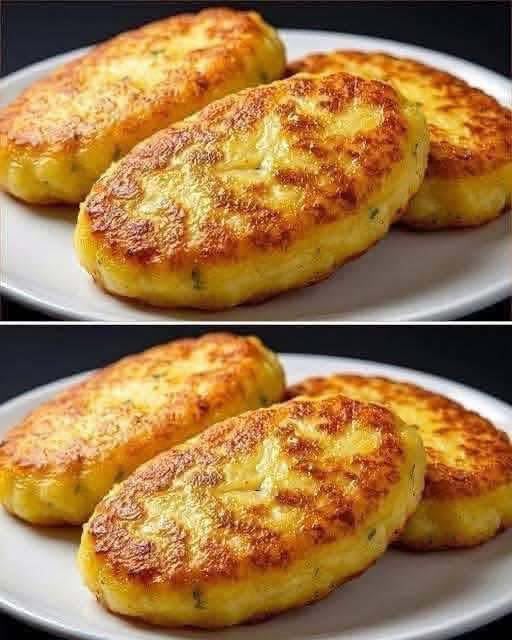
Golden Cheesy Potato Patties
Golden cheesy potato patties turn a handful of everyday ingredients into a comforting dish with crisp edges and a soft, savoury centre. Mashed potatoes provide the base, grated cheese adds richness, and a little parsley, garlic and paprika give each bite extra flavour.
The appeal comes from the contrast in texture. A short spell in a frying pan creates a browned outer crust, while the middle stays tender and gently cheesy. Butter brings flavour to the surface, and vegetable oil helps coat the pan for even frying.
This recipe makes six thick oval patties. They are substantial enough to serve alongside a simple salad for lunch, but also work as a breakfast accompaniment or a family side dish. Serve them freshly cooked to enjoy their best texture.
You can use either mozzarella or cheddar without changing the basic method. Mozzarella gives a milder flavour and a more elastic melted texture, while cheddar brings a stronger savoury character. Both suit the fluffy potato mixture.
The technique is straightforward, with a few details that make a noticeable difference: drain the potatoes thoroughly, let the mash cool slightly before adding the egg, and allow the patties to form a crust before turning them. The guidance below explains how to judge each stage.
Recipe Overview
- Recipe name: Golden Cheesy Potato Patties
- Category: Side dish, breakfast accompaniment or light lunch
- Style: Home-style potato cakes; no specific regional origin supplied
- Preparation time: 15 minutes, as supplied
- Cooking time: 15–20 minutes, as supplied
- Total time: 30–35 minutes, as supplied
- Optional resting time: 15 minutes in the fridge after shaping, additional to the supplied total
- Yield: 6 patties
- Difficulty: Easy
- Cooking method: Boiling, mashing and shallow pan-frying
- Cooking vessel: Saucepan and large non-stick frying pan
- Main ingredients: Potatoes, cheese, egg, plain flour, parsley, garlic, butter and vegetable oil
Timing clarification: The original method includes 12–15 minutes of boiling followed by 6–8 minutes of frying for each batch. Its supplied cooking estimate is therefore tight, especially if the patties need two batches. Allow additional time for bringing the water to the boil, cooling the mash and optional chilling.
Serving clarification: The supplied yield is six patties. The number of people served depends on whether you offer one or two patties per person and what accompanies them.
Why You’ll Love These Cheesy Potato Patties
- Crisp outside, soft inside: Pan-frying gives the potato mixture a satisfying contrast in texture.
- A choice of cheese: Use mild mozzarella or more pronounced cheddar.
- Everyday ingredients: The mixture uses familiar ingredients without a separate breadcrumb coating.
- Flexible serving options: Pair the patties with breakfast favourites, vegetables or a fresh salad.
- Simple shaping: Six thick ovals are easy to portion by hand.
- Useful preparation options: Shape the patties ahead and refrigerate them before cooking.
- Adjustable flavour: The original parsley, garlic and paprika provide a savoury base for optional variations.
Ingredients
For the Potato Mixture
- 3 large potatoes, peeled and cubed
- 1 cup shredded mozzarella or cheddar cheese, approximately 110–115 g depending on the cheese and how it is packed
- 1 large egg
- 3 tbsp plain flour, also called all-purpose flour
- 2 tbsp chopped fresh parsley
- 2 cloves garlic, minced
- ½ tsp salt
- ½ tsp black pepper
- ½ tsp paprika
For Frying
- 2 tbsp butter
- 2 tbsp vegetable oil
For boiling: Water sufficient to cover the potatoes, salted as directed in the original method. The source does not specify a separate quantity of salt for the water; the measured ½ teaspoon listed above belongs in the potato mixture.
Optional adjustments and accompaniments: The original tips allow extra flour, added one tablespoon at a time, if needed. Soured cream, garlic sauce or another favourite dipping sauce may be served alongside; they are not part of the patty mixture.
Ingredient Notes
Potatoes
Starchy potatoes such as Russets mash into a relatively fluffy base. Because “large” potatoes vary considerably in size, the finished mixture may differ in firmness from one batch to another. Judge the texture before shaping rather than assuming it will always need extra flour.
Mozzarella or Cheddar
Mozzarella gives a gentle flavour and a stretchy melted texture. A firmer mozzarella intended for grating is easier to incorporate than fresh mozzarella stored in liquid. Cheddar gives a more noticeable cheese flavour. Finely grated cheese distributes evenly through the mash.
Egg
The egg helps bind the mixture as the patties cook. Add it after the potatoes have cooled slightly so that it mixes through evenly rather than setting in patches against very hot mash.
Plain Flour
The original three tablespoons help the mixture hold its shape. Flour cannot fully compensate for waterlogged potatoes, so drainage comes first. If necessary, follow the supplied adjustment of adding extra flour one tablespoon at a time.
Parsley, Garlic and Seasoning
Fresh parsley brings small flecks of colour and a mild herbal flavour. Mince the garlic finely to avoid large, sharp-tasting pieces. Paprika adds warmth and colour, while salt and black pepper season the potato base.
Butter and Vegetable Oil
Butter adds a rich flavour, while the vegetable oil helps spread the cooking fat across the pan. Keep the heat moderate: butter can still burn when mixed with oil.
Substitution Suggestions
As optional alternatives, a floury potato such as Maris Piper can replace Russets, and finely chopped chives can replace the parsley in the same tablespoon quantity. These are suggestions rather than changes to the original ingredient list.
Equipment You’ll Need
- A vegetable peeler and sharp knife
- A chopping board
- A saucepan large enough to hold the potatoes under water
- A colander
- A potato masher
- A mixing bowl and sturdy spoon
- Measuring cups and spoons
- A large non-stick frying pan
- A wide spatula or fish slice
- A plate or tray for the shaped patties
- Kitchen paper and a serving plate
How to Make Cheesy Potato Patties
-
Boil the Potatoes
Place the three peeled, cubed potatoes in a saucepan of salted water. Bring to the boil and cook for 12–15 minutes, until fork-tender. Cut the cubes to a similar size so that they soften at roughly the same rate.
Test a larger piece before draining. A fork should pass through without meeting a firm centre.
-
Drain, Mash and Cool Slightly
Drain the potatoes thoroughly in a colander, then mash until smooth. Allow the mash to cool slightly before continuing. It should remain easy to stir but should no longer be piping hot.
-
Mix the Patty Ingredients
Add the 1 cup of cheese, large egg, 3 tablespoons of flour, 2 tablespoons of parsley, minced garlic, ½ teaspoon each of salt, black pepper and paprika. Mix until evenly combined and a soft, workable mixture forms.
If it spreads rather than holding a mound, first allow it to cool further. If it is still too soft, add extra flour one tablespoon at a time, as suggested in the original recipe.
-
Shape Six Oval Patties
Divide the mixture into six equal portions. Shape each into a thick oval patty, smoothing the edges and keeping the thickness reasonably even. Avoid making a tall dome in the centre.
For the optional chilling step, refrigerate the shaped patties for 15 minutes before frying. This time is additional to the supplied total.
-
Heat the Frying Pan
Add the 2 tablespoons of butter and 2 tablespoons of vegetable oil to a large non-stick frying pan over medium heat. Allow the butter to melt and the fat to become hot without smoking or turning dark brown.
If your pan cannot hold all six patties with space between them, divide the measured butter and oil between batches.
-
Fry Until Golden
Carefully place the patties in the pan. Cook for 3–4 minutes per side, until golden brown and crisp. Leave them undisturbed while the first side forms a crust, then slide a wide spatula underneath and turn gently.
The centres should be hot and set rather than wet with uncooked mixture. If the surfaces brown too quickly, lower the heat and allow additional cooking time as needed.
-
Drain Briefly
Transfer the cooked patties to a plate lined with kitchen paper to absorb excess surface fat. Arrange them in a single layer rather than stacking them.
-
Serve Warm
Serve while the edges are crisp and the cheese inside is melted. Offer soured cream, garlic sauce or another favourite dipping sauce separately, if desired.
How to Keep the Potato Mixture Dry
Excess moisture is one of the main reasons potato patties spread or break. Cook the potatoes until tender, but avoid leaving them boiling until they disintegrate. Smaller fragments are harder to drain cleanly.
After draining, let visible steam escape before mashing. If water remains on the potatoes, return them briefly to the warm, empty saucepan off the heat and let the residual warmth help the surface moisture evaporate.
Do not add milk, cream or extra butter to the mash. Those ingredients are useful in other mashed potato recipes, but this mixture relies on potatoes firm enough to shape.
How to Shape Patties That Hold Together
A workable mixture should feel soft and slightly tacky but retain an oval shape on a plate. If it sticks heavily to your hands, let it cool further before deciding that it needs more flour.
Press each portion together gently and smooth any cracks around the edge. Those cracks can widen when you lift or turn a patty. Keep the thickness consistent so that the centre heats through before the outside becomes too dark.
The optional 15-minute refrigeration period makes the mixture easier to handle. Use a wide spatula to lift chilled patties from the tray, supporting the whole underside.
How to Create a Golden Crust
The pan should be hot enough for a gentle, steady sizzle when a patty touches the fat. Strong smoking or rapidly darkening butter indicates excessive heat.
Space matters. Patties crowded tightly together are harder to turn and can trap steam between them. Cook in batches when necessary, allowing the pan to return to a steady medium heat before adding the next batch.
Resist moving the patties repeatedly. The surface needs uninterrupted contact with the pan to brown and become sturdy enough to turn. Avoid pressing them down while frying, which can squeeze the soft centre out through the edges.
Expert Cooking Tips
- Cut the potato cubes evenly so that the largest pieces do not remain firm.
- Check tenderness before draining; undercooked lumps are difficult to remove later.
- Use a hand masher rather than a blender or food processor, which can make potatoes gluey.
- Let steam escape before adding the remaining ingredients.
- Grate the cheese finely for even distribution.
- Mince the garlic thoroughly so that each patty has a balanced flavour.
- Mix only until combined rather than repeatedly beating the mash.
- Shape all six patties before heating the pan so that frying proceeds smoothly.
- Use the optional chill if the patties feel delicate when lifted.
- Turn with a broad spatula that supports most of the patty.
- Divide the original frying fat between batches when needed.
- Drain briefly and serve promptly to preserve the crisp surface.
Common Mistakes to Avoid
- Leaving water in the mash: Drain thoroughly and let excess steam escape before mixing.
- Adding egg to very hot potatoes: Cool the mash slightly first to avoid unevenly cooked egg.
- Using wet fresh mozzarella without draining it: Choose a firmer grating mozzarella or drain fresh cheese thoroughly.
- Adding too much flour immediately: Cool the mixture first, then adjust one tablespoon at a time only if necessary.
- Making uneven patties: Thick centres take longer to heat than thin edges.
- Overheating the butter: Keep the pan at medium heat and lower it if the fat darkens rapidly.
- Turning before a crust forms: Allow the first side to become golden before lifting.
- Stacking cooked patties: Keep them in a single layer to limit trapped steam.
Optional Variations
These ideas are optional changes to the original recipe. Make one adjustment at a time so that the potato mixture remains easy to shape.
- Mixed cheese: Use half cheddar and half mozzarella, keeping the combined amount at 1 cup.
- Chive potato patties: Replace the 2 tablespoons of parsley with the same amount of finely chopped chives.
- Smoky flavour: Use ½ teaspoon smoked paprika in place of the regular paprika.
- A little chilli heat: Add a small pinch of chilli flakes to the mixture.
- Spring onion version: Add a small, finely sliced spring onion. Keep the pieces fine so they do not interfere with shaping.
- Smaller patties: Divide the mixture into smaller portions for a sharing plate. Frying time may be shorter, so check the centres as well as the crust.
Serving Suggestions
For breakfast, serve the patties with cooked eggs and grilled tomatoes. The tomatoes add a juicy contrast to the browned potato crust.
For lunch, pair one or two patties with a crisp green salad and a sharp dressing. Cucumber, lettuce and tomato work well alongside the rich potato and cheese mixture.
As a side dish, they suit roasted vegetables, sautéed mushrooms or a simple portion of cooked chicken or fish. Choose accompaniments with different textures so that the plate does not feel uniformly soft.
The supplied suggestions of soured cream and garlic sauce both work well as dips. Serve them on the side to keep the patties crisp. For a drink, offer sparkling water with lemon or an unsweetened iced tea.
Storage and Reheating
Refrigerating Leftovers
Refrigerate leftover patties promptly once their initial heat has dissipated, and within two hours of cooking. Store in a covered container for up to three days, as directed in the original recipe. Avoid leaving them out for extended periods while serving.
Reheating in a Frying Pan
Reheat in a non-stick frying pan over medium-low heat, turning occasionally until hot throughout. A very light coating of oil can help restore the surface if the pan is dry. Keep the heat gentle enough for the centre to warm before the outside becomes too dark.
Reheating in an Air Fryer
Arrange the patties in one layer with space around them. As a suggested reheating method, use approximately 180°C and check after five minutes, continuing as needed until hot throughout. Timing depends on patty thickness and the appliance.
Freezing
For an optional freezer method, cool the cooked patties, freeze them separately on a lined tray, then transfer to a freezer container. Use within about one month for best texture. Thaw in the fridge before reheating; the centres may be slightly softer than freshly made patties.
Making Ahead
The original 15-minute chill can be useful even when cooking straight away. For longer preparation ahead, cover the shaped uncooked patties and refrigerate for up to 24 hours as a suggested method. Keep the egg-containing mixture chilled, and cook until the centres are hot and set.
Frequently Asked Questions
Which potatoes work best?
Starchy potatoes such as Russets are the original recommendation. A floury variety such as Maris Piper is an optional alternative.
Should I use mozzarella or cheddar?
Either works. Choose mozzarella for a milder, more elastic melted texture or cheddar for a stronger cheese flavour.
Can I use leftover mashed potatoes?
As an adaptation, firm, plain leftover mash can work. Mash made with plenty of milk or cream may be too soft. The source gives three large potatoes rather than a measured weight of mash, so a precise leftover-mash quantity is not supplied.
Why is my mixture sticky?
Warmth and excess moisture can both make it sticky. Let it cool further before adding extra flour.
How much extra flour can I add?
The original advice is to add it one tablespoon at a time if needed. Stop when the mixture holds its shape; a large addition can make the patties dense.
Do I have to chill the patties?
No. The 15-minute chill is optional, but helpful when the mixture feels delicate or soft.
Why did my patties fall apart when turning?
The mixture may have been too wet, or the first side may not have developed a firm crust. Use a wide spatula and turn gently.
Can I make round patties?
Yes. The original shape is a thick oval, but rounds work if you keep their thickness similar.
Should I coat them in breadcrumbs?
The original recipe does not use breadcrumbs. The potato mixture browns directly against the frying pan.
Can I leave out the garlic?
As an optional flavour adjustment, yes. The patties will taste milder, while the basic binding method remains the same.
Can I leave out the egg?
The original recipe relies on one large egg for binding. An egg-free version would need separate testing, so simply omitting it may make the patties fragile.
Can I bake these instead?
The supplied recipe is designed for pan-frying. Baking changes the surface texture and cooking time, and no tested oven method is provided.
Can I cook the uncooked patties in an air fryer?
The original method is pan-frying. Air-frying a soft uncooked mixture may require different handling, so the air-fryer guidance here applies to reheating cooked patties.
Why are they dark outside but cool inside?
The pan is probably too hot or the patties are too thick. Lower the heat and give the centres time to become hot and set.
How do I keep them crisp after frying?
Drain briefly, keep them in one layer and serve promptly. Covering or stacking traps steam and softens the surface.
Is the recipe gluten-free?
No. It contains plain wheat flour. A gluten-free flour substitution would be a separate variation and may change the texture.
Does six patties mean six servings?
The confirmed yield is six patties. It can serve six as a small side or fewer people when each person has more than one.
Why might the recipe take longer than 35 minutes?
The source timing is optimistic. Heating water, cooling the potatoes, optional chilling and frying in batches all add elapsed time.
Complete Recipe Card
Golden Cheesy Potato Patties
Thick oval potato patties with melted cheese, parsley and garlic, pan-fried in butter and vegetable oil until golden outside and tender inside.
- Category: Side dish, breakfast accompaniment or light lunch
- Method: Boil, mash, shape and pan-fry
- Preparation: 15 minutes, supplied estimate
- Cooking: 15–20 minutes, supplied estimate
- Total: 30–35 minutes, supplied estimate; allow longer for cooling, water heating or batch frying
- Optional chilling: 15 additional minutes
- Yield: 6 patties
- Difficulty: Easy
Ingredients
- 3 large potatoes, peeled and cubed
- 1 cup shredded mozzarella or cheddar cheese, approximately 110–115 g
- 1 large egg
- 3 tbsp plain flour, also called all-purpose flour
- 2 tbsp chopped fresh parsley
- 2 cloves garlic, minced
- ½ tsp salt
- ½ tsp black pepper
- ½ tsp paprika
- 2 tbsp butter
- 2 tbsp vegetable oil, for frying
Boiling water: Enough salted water to cover the potatoes; the source does not specify the separate boiling-water salt quantity.
Instructions
- Place the cubed potatoes in a saucepan of salted water. Bring to the boil and cook for 12–15 minutes until fork-tender.
- Drain thoroughly and mash until smooth. Allow to cool slightly so the mash is no longer piping hot.
- Add the cheese, egg, flour, parsley, garlic, measured salt, pepper and paprika. Mix until a soft, workable mixture forms. If necessary, let it cool further, then add extra flour one tablespoon at a time only if still too soft.
- Divide into six equal portions and shape into thick oval patties of even thickness. Optionally refrigerate for 15 minutes to help them hold together.
- Heat the butter and vegetable oil in a large non-stick frying pan over medium heat. If cooking in batches, divide the measured frying fat between batches.
- Fry the patties for 3–4 minutes per side until golden and crisp, with hot, set centres. Turn gently with a wide spatula. Lower the heat and allow additional time if they brown before the centres are cooked.
- Transfer to a kitchen-paper-lined plate to remove excess surface fat. Keep in a single layer.
- Serve warm, optionally with soured cream, garlic sauce or another favourite dipping sauce.
Recipe Notes
- Use starchy potatoes such as Russets for the recommended texture.
- Drain thoroughly; excess moisture makes shaping difficult.
- Optional extra flour and dipping sauces are adjustments or accompaniments, not additions to the original base quantities.
- The supplied cooking time is tight: boiling takes 12–15 minutes and frying takes 6–8 minutes per batch.
- Refrigerate leftovers promptly and keep for up to three days. Reheat in a frying pan or air fryer until hot throughout.
#CheesyPotatoPatties #PotatoRecipes #PotatoCakes #EasySideDish #HomemadeCooking