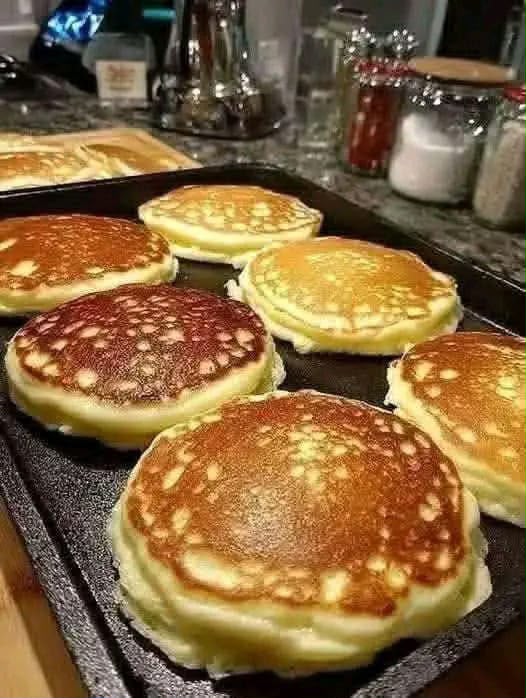
Fluffy Buttermilk Pancakes
There is something wonderfully comforting about a stack of warm, fluffy buttermilk pancakes fresh from the griddle. Their golden-brown surfaces, soft centres and gently buttery flavour make them a breakfast favourite that feels special without requiring complicated ingredients or techniques.
These homemade pancakes are thick, tender and beautifully light. The outside develops a delicate golden crust while the inside remains soft and airy. Add a little butter and maple syrup, and you have a classic breakfast that is difficult to resist.
What makes this recipe particularly appealing is its simplicity. A handful of familiar baking ingredients, fresh eggs, buttermilk and melted butter come together to create a batter that cooks into wonderfully satisfying pancakes.
Buttermilk is the ingredient that gives these pancakes their distinctive character. Its gentle tang balances the sweetness, while its acidity reacts with bicarbonate of soda to help produce a light, fluffy texture.
Another advantage is that the pancakes are cooked on a griddle or in a frying pan rather than baked in the oven. You can prepare them in small batches and serve them straight away, making them ideal for a relaxed weekend breakfast or family brunch.
Whether you prefer traditional maple syrup, fresh berries, honey or a simple pat of melting butter, these fluffy buttermilk pancakes provide a delicious foundation for your favourite breakfast toppings.
Recipe Overview
- Recipe: Fluffy Buttermilk Pancakes
- Category: Breakfast and brunch
- Style: American-style pancakes
- Preparation Time: Approximately 10 minutes
- Batter Resting Time: 5–10 minutes
- Cooking Time: Approximately 15–20 minutes, depending on batch size
- Total Time: Approximately 30–40 minutes
- Yield: Approximately 12–14 medium pancakes
- Servings: Approximately 4
- Difficulty: Easy
- Cooking Method: Stovetop griddle or frying pan
- Main Ingredients: Plain flour, buttermilk, eggs and butter
The cooking times and number of pancakes are estimates. The actual yield depends on how much batter you use for each pancake and how many fit on your griddle at once.
Why You’ll Love These Pancakes
- Beautifully fluffy texture: Baking powder and bicarbonate of soda help create thick pancakes with light interiors.
- Delicious golden surfaces: Cooking on a properly heated griddle produces an appealing toasted finish.
- Simple ingredients: The recipe uses everyday baking essentials without complicated additions.
- Perfect for sharing: The batter makes enough pancakes for a family breakfast.
- Easy to customise: Fresh fruit, chocolate chips and different toppings can be added as optional variations.
- Suitable for beginners: The mixing and cooking techniques are straightforward.
- Great for preparing ahead: Cooked pancakes can be refrigerated or frozen for another morning.
- Versatile serving options: Enjoy them with sweet toppings or alongside classic breakfast favourites.
Ingredients
These are the original ingredients and measurements for the recipe.
Dry Ingredients
- 2 cups all-purpose flour (approximately 250 g plain flour)
- 2 tablespoons granulated sugar
- 2 teaspoons baking powder
- ½ teaspoon baking soda (bicarbonate of soda)
- ½ teaspoon salt
Wet Ingredients
- 2 large eggs
- 1¾ cups buttermilk (approximately 420 ml)
- ¼ cup unsalted butter, melted (approximately 57 g)
- 1 teaspoon vanilla extract
For Cooking
- Butter or oil, for greasing the griddle
Optional Toppings
- Butter
- Maple syrup
- Honey
- Fresh fruit
- Your favourite pancake toppings
Ingredient Notes
All-Purpose Flour
Plain flour provides the structure that allows the pancakes to hold their shape. Measure it carefully, because too much flour can produce a dense, heavy batter.
If using measuring cups, spoon the flour into the cup and level the top rather than pressing it down.
Buttermilk
Buttermilk gives the pancakes a gentle tang and contributes to their tender texture. Its acidity also reacts with bicarbonate of soda, creating gas bubbles that help the batter rise.
Full-fat or low-fat cultured buttermilk can be used. The consistency may vary slightly between brands.
Baking Powder
Baking powder contributes to the rise of the pancakes during cooking. Use baking powder that is still within its recommended shelf life for reliable results.
Bicarbonate of Soda
Bicarbonate of soda works with the acidic buttermilk to create additional lift. The specified amount helps produce a fluffy texture without leaving an unpleasant alkaline flavour.
Eggs
Eggs bind the ingredients together, contribute richness and support the soft structure of the cooked pancakes.
Melted Butter
Unsalted butter adds a rich, buttery flavour and helps keep the interior tender. Allow it to cool slightly before mixing it with the eggs and buttermilk.
Granulated Sugar
Sugar adds mild sweetness and encourages attractive browning on the griddle.
Vanilla Extract
Vanilla adds a pleasant aroma and complements sweet toppings without overpowering the natural buttermilk flavour.
Salt
A little salt balances the sweetness and brings out the flavour of the other ingredients.
Equipment You’ll Need
- One large mixing bowl
- One medium mixing bowl
- Balloon whisk
- Measuring cups and spoons
- Large cast-iron griddle, non-stick frying pan or flat cooking surface
- Wide spatula
- Ladle or ¼-cup measuring cup
- Small bowl for melted butter
- Serving plate
A wide, flat griddle is particularly helpful because several pancakes can cook together. However, a good non-stick frying pan works perfectly well if that is what you have available.
How to Make Fluffy Buttermilk Pancakes
Step 1: Combine the Dry Ingredients
Place the flour, granulated sugar, baking powder, bicarbonate of soda and salt into a large mixing bowl.
Whisk thoroughly until evenly combined. Distributing the raising agents throughout the flour helps the pancakes rise evenly rather than developing irregular pockets.
Step 2: Mix the Wet Ingredients
In a separate bowl, crack in the eggs and whisk gently.
Add the buttermilk, melted butter and vanilla extract. Continue whisking until the mixture is smooth and evenly combined.
Make sure the melted butter is warm rather than hot, so it does not begin cooking the eggs.
Step 3: Prepare the Pancake Batter
Pour the wet ingredients into the bowl containing the dry ingredients.
Using a whisk or spatula, stir gently until the flour is just incorporated. Stop mixing when no large patches of dry flour remain.
The batter should be thick and pourable, with a few small lumps still visible. This is exactly what you want for tender pancakes.
Step 4: Rest the Batter
Leave the batter to rest for approximately 5–10 minutes.
During this time, the flour absorbs some of the liquid and the batter settles. The raising agents also begin working, helping create a light texture.
Avoid vigorous stirring after the resting period, as this can release some of the trapped gas.
Step 5: Heat the Griddle
Place a large griddle or frying pan over medium heat.
Allow the cooking surface to warm evenly, then lightly grease it with butter or oil.
Only a thin coating is needed. Too much fat can cause uneven browning or create an unnecessarily greasy crust.
Step 6: Pour the Batter
Measure approximately ¼ cup of batter for each pancake and pour it gently onto the hot griddle.
Leave enough space between each pancake so they can spread slightly without touching.
Do not flatten the batter with the back of a spoon. Let it settle naturally into a round shape.
Step 7: Cook the First Side
Cook for approximately 2–3 minutes.
Watch for bubbles appearing on the surface and for the edges to begin looking set rather than wet.
The underside should develop an even golden-brown colour. If it darkens too quickly, reduce the heat slightly.
Step 8: Flip the Pancakes
Slide a wide spatula underneath each pancake and flip it carefully in one smooth movement.
Cook the second side for approximately 1–2 minutes, until golden and cooked through.
Avoid pressing the pancake down with the spatula, as this can compress its fluffy interior.
Step 9: Repeat with the Remaining Batter
Transfer the cooked pancakes to a serving plate and repeat with the remaining batter.
Adjust the heat if necessary between batches, especially when using cast iron, which retains heat particularly well.
Step 10: Serve Warm
Stack the finished pancakes on plates and serve while still warm.
Add butter, maple syrup, honey, fruit or your favourite toppings. For the best texture, enjoy them soon after cooking.
How to Make Pancakes Extra Fluffy
The secret to thick, fluffy pancakes is a combination of balanced ingredients, gentle mixing and controlled cooking.
When buttermilk meets bicarbonate of soda, carbon dioxide bubbles begin forming in the batter. Baking powder contributes additional lift as the batter heats on the griddle.
These bubbles expand during cooking, giving the pancakes their characteristic airy texture. However, the batter must be mixed carefully so the developing structure remains tender.
Overmixing encourages gluten development in the flour. While gluten is useful when making bread, too much of it can make pancakes chewy rather than delicate.
That is why a few small lumps in the batter are a positive sign. The mixture does not need to look perfectly smooth.
Resting the batter briefly also helps the flour hydrate. Once the pancakes begin cooking, resist the temptation to press or flatten them.
Instead, allow the heat and raising agents to work together naturally. The result should be a pancake with a lightly browned outside and soft, fluffy middle.
Getting the Griddle Temperature Right
Temperature control makes an enormous difference when cooking homemade pancakes.
If the griddle is too hot, the exterior may become dark before the middle has finished cooking. If the surface is too cool, the pancakes may spread excessively and take longer to develop their golden crust.
Medium heat is a good starting point, although every hob and pan behaves slightly differently.
To check the surface, sprinkle a few drops of water onto the griddle. They should sizzle and evaporate promptly rather than disappearing instantly on contact.
For a more accurate guide, an electric griddle can usually be set near 175–190°C (350–375°F), then adjusted according to the browning of the first pancake.
Cast-iron griddles benefit from gradual preheating. They hold heat extremely well, so a slightly lower hob setting may be necessary after the first batch.
If butter burns quickly, wipe away the darkened residue, reduce the heat and lightly grease the surface again before continuing.
When to Flip Pancakes
Knowing exactly when to flip pancakes is one of the most useful skills to develop.
At first, the poured batter will appear shiny and wet. As the underside cooks, small bubbles begin rising to the surface.
Eventually, the edges become more defined and lose their wet appearance. Some of the bubbles may burst and leave small holes behind.
These are the signs that the pancake is approaching the ideal flipping point.
Carefully slide a spatula beneath the pancake and check that the bottom is golden brown. If it is still very pale or the pancake feels too fragile, allow it to cook a little longer.
Once flipped, the second side usually requires less time because the interior is already partially cooked.
Flipping repeatedly is unnecessary. One controlled turn normally produces the best appearance and texture.
Expert Tips for Perfect Pancakes
- Measure the flour accurately. Excess flour makes the batter heavier and can produce dry pancakes.
- Use fresh raising agents. Old baking powder may not provide enough lift.
- Keep the buttermilk measurement consistent. Too little liquid makes the batter excessively stiff.
- Cool the melted butter slightly. Very hot butter can affect the eggs and cause uneven mixing.
- Combine wet and dry ingredients separately. This helps distribute everything evenly with less mixing.
- Leave a few lumps. Trying to make the batter perfectly smooth can lead to tough pancakes.
- Rest the batter briefly. Five to ten minutes gives the flour time to hydrate.
- Preheat the griddle thoroughly. A cold pan encourages spreading and uneven cooking.
- Grease lightly. A thin film of butter or oil is enough for most griddles.
- Use the same amount of batter each time. Uniform pancakes are easier to cook consistently.
- Watch the edges and bubbles. These are better indicators of flipping time than relying on the clock alone.
- Flip gently. A quick, confident movement helps preserve the pancake’s shape.
- Never press cooked pancakes flat. Pressing squeezes out air and reduces their height.
- Serve them promptly. Freshly cooked pancakes have the most appealing contrast between soft centres and golden surfaces.
Common Pancake Mistakes to Avoid
1. Overmixing the Batter
Too much whisking can create dense, chewy pancakes. Stir only until the ingredients are combined.
2. Using Too Much Flour
Packed measuring cups can introduce more flour than intended. Weigh the flour when possible or use the spoon-and-level method.
3. Cooking on Excessively High Heat
A very hot griddle can burn the outside before the centre cooks. Start with medium heat and adjust gradually.
4. Flipping Too Early
Flipping before the surface has developed bubbles and set edges can cause the pancake to fold, tear or spread.
5. Waiting Too Long to Flip
Leaving the first side cooking excessively long can cause a dry texture and overly dark surface.
6. Flattening the Pancakes
Pressing with a spatula may make pancakes cook faster on the surface, but it also compresses their soft interior.
7. Adding Too Much Butter to the Griddle
Excess butter can pool and brown unevenly. Use a light coating and wipe away any burnt residue between batches.
8. Using Inactive Baking Powder
Raising agents lose effectiveness over time. Check their freshness if your pancakes consistently turn out flat.
9. Letting the Batter Stand Too Long
The original recipe requires only a short rest. Leaving the mixed batter for an extended period may reduce some of its initial lift.
Optional Pancake Variations
The original recipe is delicious as written, but these optional variations offer different flavours and serving experiences.
1. Blueberry Buttermilk Pancakes
Scatter a few fresh blueberries onto each pancake immediately after pouring the batter onto the griddle.
2. Chocolate Chip Pancakes
Add a small handful of chocolate chips to individual pancakes during cooking for pockets of melted chocolate.
3. Cinnamon Pancakes
Mix approximately ½ teaspoon of ground cinnamon into the dry ingredients for a warm, gently spiced flavour.
4. Lemon Buttermilk Pancakes
Add a little finely grated lemon zest to the batter for a fresh citrus aroma.
5. Banana Pancakes
Place several thin banana slices on the uncooked surface of each pancake before flipping.
6. Strawberry Pancakes
Top the finished pancakes with fresh sliced strawberries and a spoonful of yoghurt.
7. Nutty Pancakes
Serve with toasted chopped pecans or walnuts for extra crunch.
8. Maple and Cinnamon Pancakes
Drizzle cooked pancakes with maple syrup and finish with a light dusting of cinnamon.
These additions are suggestions and are not part of the original ingredient list.
What to Serve with Buttermilk Pancakes
Fluffy pancakes are versatile enough to suit a simple breakfast or a generous weekend brunch.
Classic Butter and Maple Syrup
Place a small piece of butter on top of a warm pancake stack and drizzle with maple syrup. The butter slowly melts into the pancakes while the syrup adds sweetness.
Fresh Berries
Strawberries, raspberries and blueberries add freshness and a pleasant contrast to the rich, buttery batter.
Honey and Banana
Sliced banana and a little honey provide a naturally sweet topping with a soft, creamy texture.
Yoghurt and Fruit
A spoonful of thick natural yoghurt with seasonal fruit makes a refreshing accompaniment.
Eggs and Breakfast Sides
For a larger brunch, serve the pancakes alongside scrambled eggs, grilled tomatoes or your preferred breakfast sides.
Tea or Coffee
A cup of freshly brewed coffee or tea complements the warm, comforting character of these homemade pancakes.
How to Store and Reheat Pancakes
Refrigerating Leftovers
Allow leftover pancakes to cool briefly, then place them in an airtight container and refrigerate promptly, within two hours of cooking.
For best quality, enjoy refrigerated pancakes within 3–4 days.
Freezing Pancakes
Place cooled pancakes in a single layer on a tray and freeze until firm. Transfer them to a freezer-safe bag or container, separating layers with baking parchment if necessary.
For best flavour and texture, use within approximately two months.
Reheating in a Toaster
Individual pancakes can be reheated in a toaster on a low setting, provided they fit safely without becoming stuck. Monitor them carefully.
Reheating in a Frying Pan
Warm the pancakes in a dry non-stick pan over low heat, turning occasionally until heated throughout.
Reheating in a Microwave
Place one or two pancakes on a microwave-safe plate, cover loosely and heat in short intervals until hot throughout.
Preparing Ahead
If you want breakfast ready quickly, it is generally better to cook and store the pancakes than to leave the fully mixed batter standing overnight.
You can also combine the dry ingredients in advance and keep them in an airtight container, ready to mix with the wet ingredients when needed.
Frequently Asked Questions
1. What makes buttermilk pancakes fluffy?
Buttermilk reacts with bicarbonate of soda, while baking powder provides additional lift. Gentle mixing helps maintain a tender texture.
2. Can I make pancakes without buttermilk?
Yes. As an optional substitute, add 1 tablespoon of lemon juice or white vinegar to a measuring jug, then add milk to reach 1 cup. Leave for 5–10 minutes before using. Repeat as needed for the quantity required. The flavour and texture may differ slightly from cultured buttermilk.
3. Why are my pancakes flat?
Possible reasons include inactive raising agents, overmixed batter or a griddle that is not hot enough.
4. Why are my pancakes rubbery?
Overmixing can develop too much gluten, creating a chewy texture.
5. Should pancake batter be thick?
Yes. This recipe produces a relatively thick but pourable batter that helps create substantial pancakes.
6. Is it normal for the batter to have lumps?
Absolutely. A few small lumps are preferable to excessive mixing.
7. Why should pancake batter rest?
A short rest allows flour to hydrate and gives the batter time to settle before cooking.
8. Can I use self-raising flour?
It is possible, but self-raising flour already contains raising agents. The recipe would need adjustment, so plain flour is the more reliable choice for the original formula.
9. Can I use salted butter?
Yes. If substituting salted butter, you may wish to reduce the added salt slightly, depending on the butter’s salt content.
10. Can I use oil instead of butter in the batter?
Neutral cooking oil can be used as an optional substitution, although the pancakes will lose some of their buttery flavour.
11. What temperature should the griddle be?
Medium heat is a useful starting point. On an electric griddle, approximately 175–190°C (350–375°F) is a practical guide.
12. How do I know when to flip the pancakes?
Look for surface bubbles, slightly dry-looking edges and a golden underside.
13. Why are my pancakes dark on the outside but raw inside?
The cooking surface is probably too hot. Reduce the heat so the centre has enough time to cook.
14. How can I make evenly sized pancakes?
Use a ¼-cup measuring cup or a consistent-sized ladle for each portion.
15. Can I add fruit directly to the batter?
Yes. Small quantities of berries or sliced fruit can be added, although placing them on each pancake after pouring often gives better distribution.
16. Can I make these pancakes dairy-free?
A dairy-free adaptation is possible using suitable plant-based alternatives, but the texture and raising reaction may change. Such substitutions have not been tested as part of the original recipe.
17. Can I freeze cooked pancakes?
Yes. Cool completely, separate the pancakes and freeze in an airtight freezer-safe container.
18. How long do pancakes last in the fridge?
When stored promptly and correctly, cooked pancakes are generally best used within 3–4 days.
19. Can I reheat pancakes from frozen?
Yes. Reheat using a suitable toaster, oven or microwave until thoroughly hot throughout.
20. How do I keep pancakes warm while cooking another batch?
Place cooked pancakes on an oven-safe tray in a low oven, around 90°C (200°F), for a short period. Avoid leaving them too long, as they may dry out.
21. Are cast-iron griddles good for pancakes?
Yes. Properly preheated and lightly greased cast iron provides steady heat and attractive browning.
22. Why does the first pancake sometimes look different?
The first pancake often reveals whether the griddle has reached the correct temperature and whether the surface needs more or less grease.
23. Can I double this recipe?
Yes. Double each ingredient carefully and cook in batches. Use a large mixing bowl and avoid overmixing the larger quantity.
24. Can I reduce the sugar?
Yes. Reducing the sugar slightly will make the pancakes less sweet and may affect browning, but the basic recipe should still work.
25. What are the best toppings for fluffy pancakes?
Maple syrup, butter, fresh berries, honey, sliced banana and yoghurt are all delicious choices.
Fluffy Buttermilk Pancakes Recipe Card
Description: Thick, tender homemade buttermilk pancakes with beautifully golden surfaces, soft airy centres and a delicious buttery flavour.
- Category: Breakfast
- Style: American
- Method: Griddle or frying pan
- Prep Time: Approximately 10 minutes
- Rest Time: 5–10 minutes
- Cook Time: Approximately 15–20 minutes
- Total Time: Approximately 30–40 minutes
- Yield: Approximately 12–14 pancakes
- Servings: Approximately 4
Ingredients
- 2 cups all-purpose flour
- 2 tablespoons granulated sugar
- 2 teaspoons baking powder
- ½ teaspoon baking soda
- ½ teaspoon salt
- 2 large eggs
- 1¾ cups buttermilk
- ¼ cup unsalted butter, melted
- 1 teaspoon vanilla extract
- Butter or oil, for the griddle
Instructions
- In a large bowl, whisk together the flour, sugar, baking powder, baking soda and salt.
- In a separate bowl, whisk the eggs, buttermilk, melted butter and vanilla extract.
- Pour the wet ingredients into the dry ingredients.
- Stir gently until just combined. A few small lumps are fine; do not overmix.
- Allow the batter to rest for 5–10 minutes.
- Heat a griddle or large frying pan over medium heat and lightly grease with butter or oil.
- Pour approximately ¼ cup of batter onto the hot griddle for each pancake.
- Cook for 2–3 minutes, until bubbles appear on the surface and the edges begin to set.
- Flip carefully and cook for another 1–2 minutes, until golden brown and fluffy.
- Repeat with the remaining batter, adjusting the heat when necessary.
- Serve warm with butter, maple syrup, honey, fresh fruit or your favourite toppings.
Recipe Notes
- Use fresh baking powder and bicarbonate of soda for the best rise.
- A few lumps in the batter help prevent overmixing.
- Keep the griddle at a steady medium temperature.
- Do not press the pancakes with a spatula after flipping.
- Cooking times may vary with pancake thickness and griddle temperature.
- Refrigerate leftovers promptly and reheat thoroughly before serving.
Hashtags: #ButtermilkPancakes #FluffyPancakes #HomemadePancakes #BreakfastRecipes #EasyBreakfast
Final Thoughts
Fluffy buttermilk pancakes are a timeless breakfast favourite for good reason. With their golden-brown surfaces, light texture and gently buttery flavour, they turn simple ingredients into something wonderfully comforting.
The key is to combine the batter gently, allow a short resting period and cook each pancake over steady medium heat. Follow these simple techniques and you can enjoy a delicious stack of homemade pancakes whenever the mood strikes.
If you try this recipe, share your favourite toppings in the comments, save the recipe for your next weekend breakfast and follow along for more easy homemade dishes.